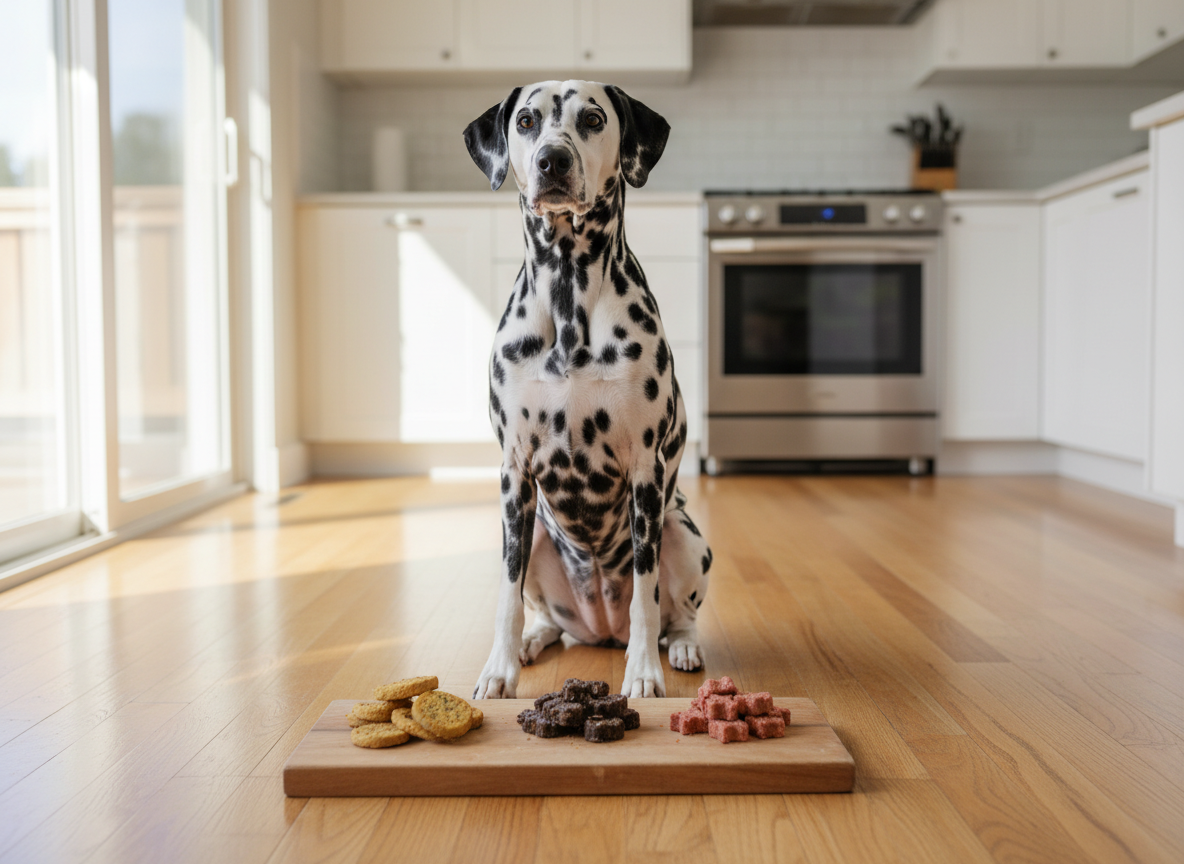
3 Low Purine Dog Treat Recipes Perfect for Dalmatians
If you own a Dalmatian, you’re not just a pet owner; you’re the steward of a unique genetic legacy. That legacy, however, comes with a critical dietary footnote: a predisposition to forming urate bladder stones. The culprit? An inability to properly process purines. Commercial dog treats are a minefield of hidden, high-purine ingredients like organ meats and fish meal, marketed under innocent-sounding names. It’s a nutritional gamble you can’t afford to lose.
I’m The Canine Nutrition Hacker. I don’t follow trends; I follow the science and the ingredient label. My mission is to empower you to take back control of your dog’s nutrition. Forget overpriced ‘prescription’ treats that are often full of low-quality fillers. We’re going into the kitchen to create safe, delicious, and cost-effective low-purine treats that will keep your Dalmatian happy and, most importantly, healthy. This isn’t just about baking; it’s about proactive healthcare. Let’s get to work.
The Purine Problem: A Forensic Breakdown for Dalmatian Owners
Understanding the Enemy: What Are Purines?
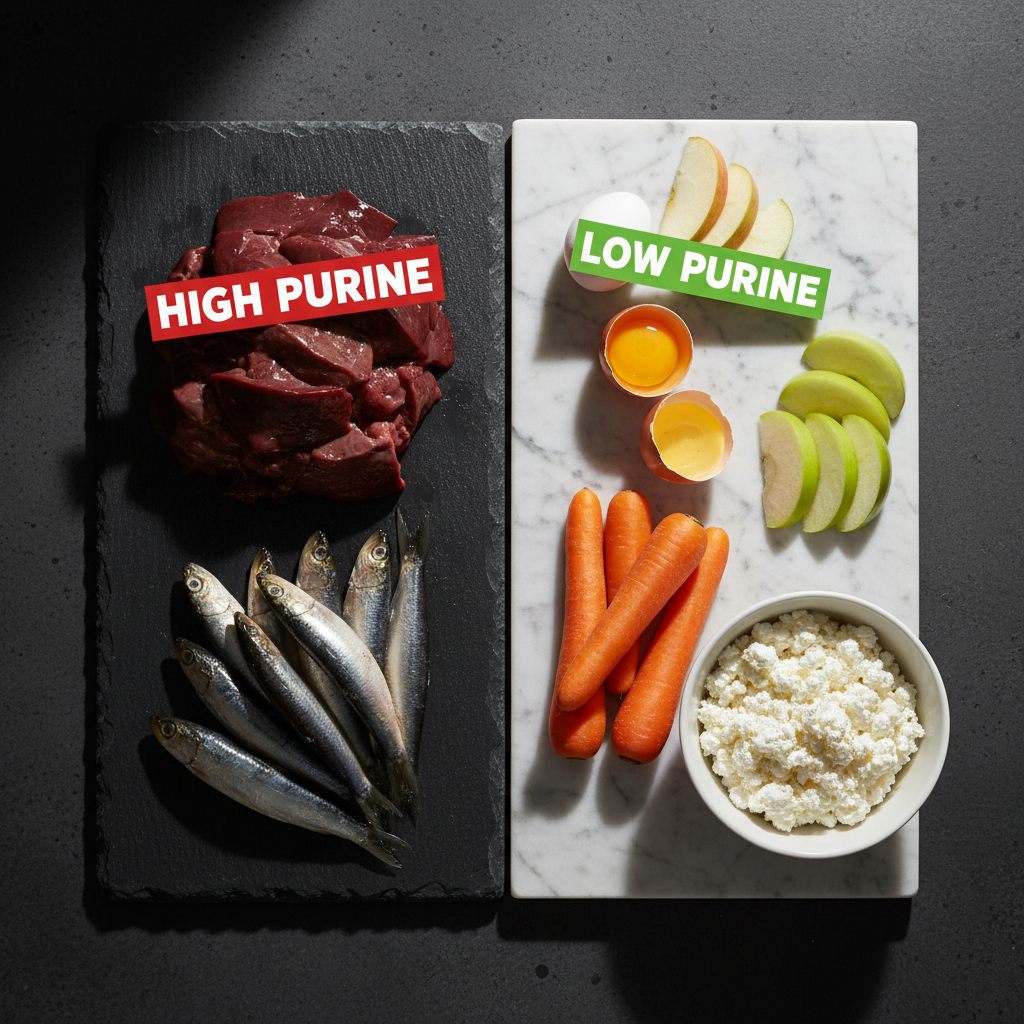
Before we build the solution, we must dissect the problem. Purines are natural chemical compounds found in the cells of all living things. When cells break down, purines degrade into uric acid. Most dog breeds have an enzyme that efficiently breaks down uric acid into a highly soluble substance called allantoin, which is then easily excreted in the urine. Dalmatians, due to a specific genetic mutation, lack this efficiency. Their bodies excrete uric acid directly into their urine. When the concentration of this uric acid becomes too high, it crystallizes, forming sharp, painful, and dangerous urate stones. Your job is to limit the intake of purine-rich foods to keep that concentration safely diluted.
Insider Secret: Commercial treat labels are designed to confuse. Ingredients like ‘animal digest,’ ‘meat by-products,’ or ‘fish meal’ are red flags. These are often concentrates of organ meats and other high-purine components. If the source isn’t specific and low-purine, assume it’s a risk.
The Ingredient Hit List: High-Purine Foods to Avoid
Consider these ingredients off-limits. This is non-negotiable for a Dalmatian’s urinary health.
- Organ Meats: Liver, kidney, heart, and sweetbreads are the worst offenders.
- Game Meats: Venison and other game are typically high in purines.
- Certain Seafood: Sardines, mackerel, mussels, and anchovies are extremely high.
- Yeast: Brewer’s yeast, often used as a supplement, is very high in purines.
- Legumes: Lentils, beans, and peas are moderately high and should be limited.
The Safe List: Your Low-Purine Arsenal
Build your dog’s diet and treats around these nutritional heroes.
- Eggs: A perfect source of protein with very low purine content.
- Dairy: Cottage cheese and plain yogurt (with no xylitol) are excellent choices.
- Most Vegetables: Carrots, sweet potatoes, bell peppers, and zucchini are safe and beneficial.
- Most Fruits: Apples, bananas, blueberries, and watermelon (seedless) are great options.
- Grains: Oats and rice are low-purine carbohydrate sources.
MEDICAL DISCLAIMER: I am a canine nutrition analyst, not a veterinarian. The information and recipes provided here are for educational purposes. Always consult with your veterinarian before making any changes to your dog’s diet, especially for a medical condition like predisposition to urate stones. Your vet can provide guidance tailored to your specific dog’s health needs and may recommend regular urinalysis to monitor their condition.
Recipe #1: Cottage Cheese & Carrot Power Pups
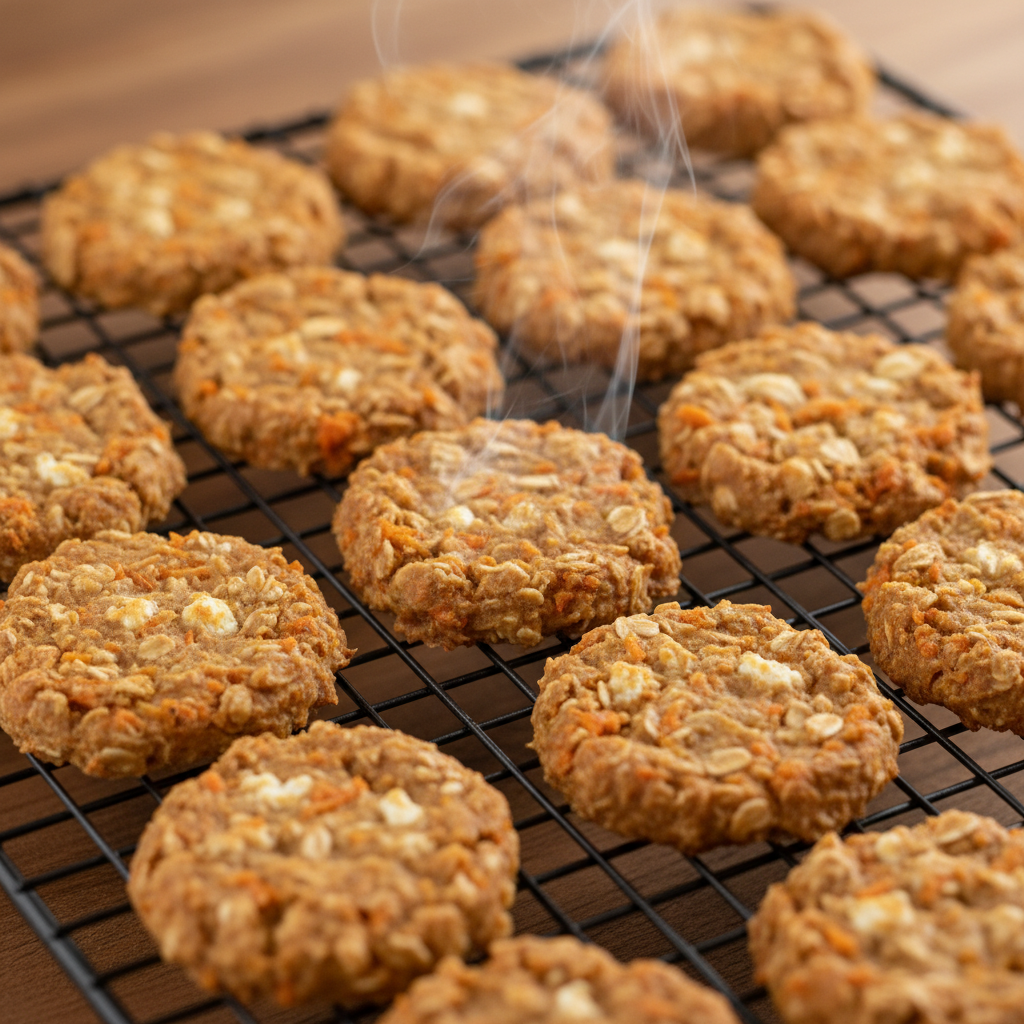
This recipe is a powerhouse of low-purine protein and essential vitamins. The combination of cottage cheese and eggs provides a complete amino acid profile without flooding the system with purines, while carrots offer beta-carotene and fiber. They bake into a firm, satisfyingly chewy treat.
Real Cost Breakdown
Let’s analyze the economics. A 6 oz bag of specialty low-purine commercial treats can cost upwards of $15. Here’s what a batch of these Power Pups will run you.
| Ingredient | Approximate Cost |
|---|---|
| 1 cup Low-Fat Cottage Cheese | $1.50 |
| 2 Large Eggs | $0.70 |
| 1 cup Shredded Carrots | $0.50 |
| 2 cups Rolled Oats (ground) | $1.00 |
| Total Cost Per Batch (approx. 40 treats) | $3.70 |
Ingredients:
- 1 cup low-fat plain cottage cheese
- 2 large eggs
- 1 cup finely shredded carrots
- 2 cups old-fashioned rolled oats, ground into a flour in a blender
- 2 tablespoons water, if needed
Instructions:
- Preheat your oven to 350°F (175°C). Line a baking sheet with parchment paper.
- In a large bowl, combine the cottage cheese and eggs. Whisk until well-blended.
- Stir in the shredded carrots.
- Gradually add the ground oat flour to the wet ingredients, mixing until a thick, workable dough forms. If the dough is too dry and crumbly, add water one tablespoon at a time.
- Lightly flour your work surface with a little extra oat flour. Roll the dough out to about 1/4-inch thickness.
- Use a small cookie cutter (a bone or circle shape works well) to cut out the treats. Place them on the prepared baking sheet.
- Bake for 20-25 minutes, or until the edges are golden brown and the treats are firm to the touch.
- Turn off the oven and let the treats cool inside the oven with the door ajar for an hour. This will make them harder and crunchier.
Batch Cooking & Storage Tip:
These treats will last for up to one week in an airtight container in the refrigerator. For long-term storage, place them in a single layer on a baking sheet and freeze until solid. Then, transfer the frozen treats to a freezer-safe bag. They will keep for up to 3 months. Thaw a few at a time as needed.
Recipe #2: Sweet Potato & Apple Dehydrator Chews
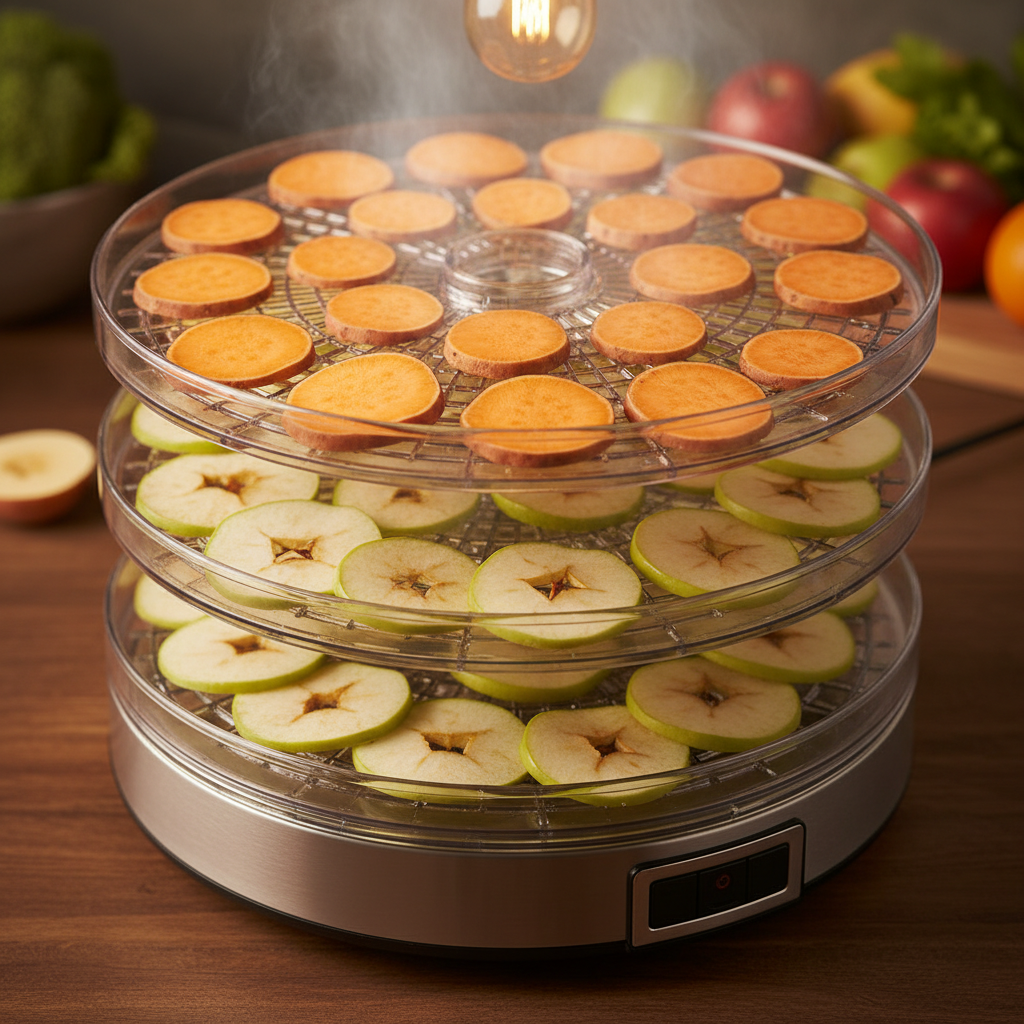
Dogs need to chew. It’s instinctual. Unfortunately, many commercial chews like bully sticks or rawhide are dietary disasters for a Dalmatian. These simple, two-ingredient chews provide a safe, long-lasting chewing experience packed with fiber, vitamins, and natural sweetness. No dehydrator? No problem. An oven on its lowest setting works just as well.
Ingredients:
- 2 large sweet potatoes, washed and scrubbed well
- 2 large apples (Fuji or Gala work well), cored
Instructions:
- Preparation: Set your oven to its lowest temperature, typically around 170-200°F (75-95°C), or set your dehydrator to 135°F (57°C).
- Slicing: Using a sharp knife or a mandoline for uniform slices, cut the sweet potatoes and apples into 1/8 to 1/4-inch thick rounds. Consistency in thickness is key for even drying. You can leave the skin on the sweet potato for extra fiber.
- Arrangement: Place the slices in a single layer on your dehydrator trays or on wire racks set inside baking sheets (using wire racks allows air to circulate underneath for better drying). Ensure the slices are not overlapping.
- Drying: Dehydrate for 6-10 hours. The time will vary greatly depending on your appliance, humidity, and the thickness of your slices.
- Checking for Doneness: The chews are ready when they are leathery and flexible but not brittle. If you want them crispier, you can leave them in longer.
- Cooling: Let the chews cool completely at room temperature before storing. They will become chewier as they cool.
Hacker Tip: The texture is all in the timing. For a tougher, more jerky-like chew that takes longer to get through, pull them when they are leathery but still pliable. For a brittle, crunchy ‘chip,’ let them go for an extra hour or two until they snap easily. Experiment to find your dog’s preference.
Storage Tip:
Store these chews in an airtight container at room temperature for up to two weeks. For longer storage, keep them in the refrigerator or freezer. They make a great ‘special occasion’ chew to keep your Dalmatian occupied.
Recipe #3: Frozen Yogurt & Berry Bites
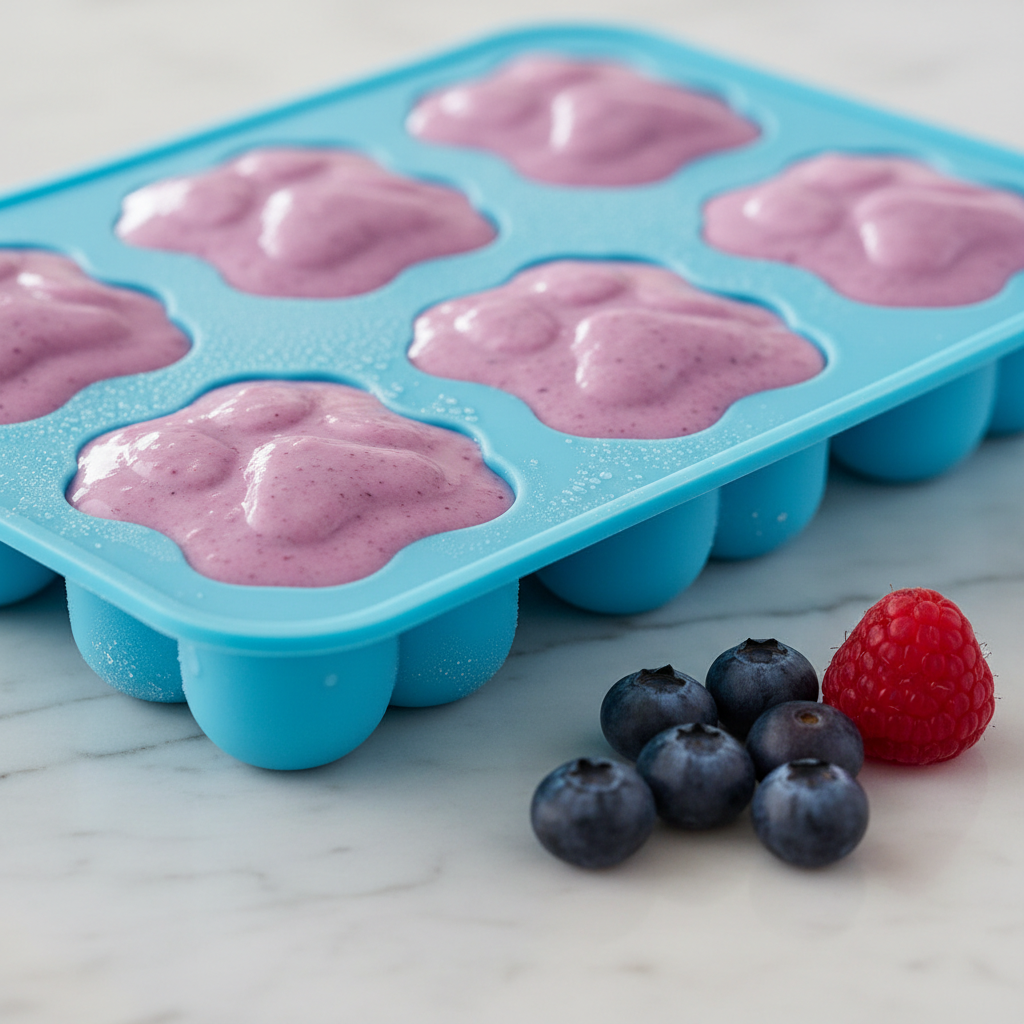
This is the ultimate low-effort, high-reward treat, especially in warmer months. It combines the probiotic benefits of yogurt with the antioxidant power of berries. These frozen bites are soothing for the gums and provide a hydrating, low-purine snack that takes minutes to prepare.
Ingredients:
- 1 cup plain, unsweetened yogurt (Greek or regular). CRITICAL: Ensure it contains NO XYLITOL or any other artificial sweeteners.
- 1/2 cup mixed berries (blueberries and raspberries are excellent low-purine choices), fresh or frozen.
Equipment:
- A blender or food processor
- Silicone ice cube trays (paw print or bone shapes are fun)
Instructions:
- If using frozen berries, let them thaw for about 10-15 minutes to make blending easier.
- Combine the yogurt and berries in a blender.
- Blend until the mixture is smooth. It will have a vibrant color depending on the berries you used.
- Carefully pour or spoon the mixture into the silicone ice cube trays.
- Place the trays on a level surface in your freezer.
- Freeze for at least 4 hours, or until completely solid.
- Once frozen, you can pop the treats out of the molds and serve one to your dog.
Batch Cooking & Storage Tip:
The best part about these treats is their shelf life. Once the bites are fully frozen, you can remove them from the silicone trays and store them in a labeled freezer-safe bag. They will stay fresh in the freezer for up to six months, giving you a ready supply of healthy treats whenever you need them.
Conclusion
You now have three distinct, safe, and cost-effective recipes in your arsenal to protect your Dalmatian’s urinary health. By taking a hands-on approach to their treats, you eliminate the guesswork and risk associated with commercial products. You are no longer just a consumer; you are your dog’s personal chef and staunchest health advocate. Remember, managing a low-purine diet is a marathon, not a sprint. Consistency is your greatest tool. Continue to read labels with a critical eye, build your dog’s diet around the ‘safe list,’ and always maintain an open dialogue with your veterinarian. You have the knowledge and the power to provide the best for your spotted companion.