How to Conduct a Dog Food Elimination Diet: Step-by-Step
The endless scratching. The chronic ear infections. The unpredictable digestive upset. As a dedicated dog owner, there is nothing more frustrating than seeing your companion in constant discomfort and not knowing the cause. You’ve tried different foods, supplements, and treatments, yet the symptoms persist. This is where the guesswork ends and the real investigation begins. The Canine Nutrition Hacker is here to guide you through the single most effective tool for identifying food sensitivities: the elimination diet.
This isn’t a quick fix or a trendy fad; it’s the gold-standard diagnostic method used by veterinarians and nutritionists to systematically pinpoint the exact ingredients causing your dog’s adverse reactions. It requires patience, diligence, and an almost forensic attention to detail. But the payoff—a comfortable, happy, and thriving dog—is immeasurable.
MEDICAL DISCLAIMER: This guide is for informational purposes only and is not a substitute for professional veterinary advice. An elimination diet should always be conducted under the supervision and guidance of your veterinarian or a board-certified veterinary nutritionist. They can help rule out other medical conditions and ensure your dog’s nutritional needs are met throughout the process.
Deciphering the Distress: Is It an Allergy or an Intolerance?
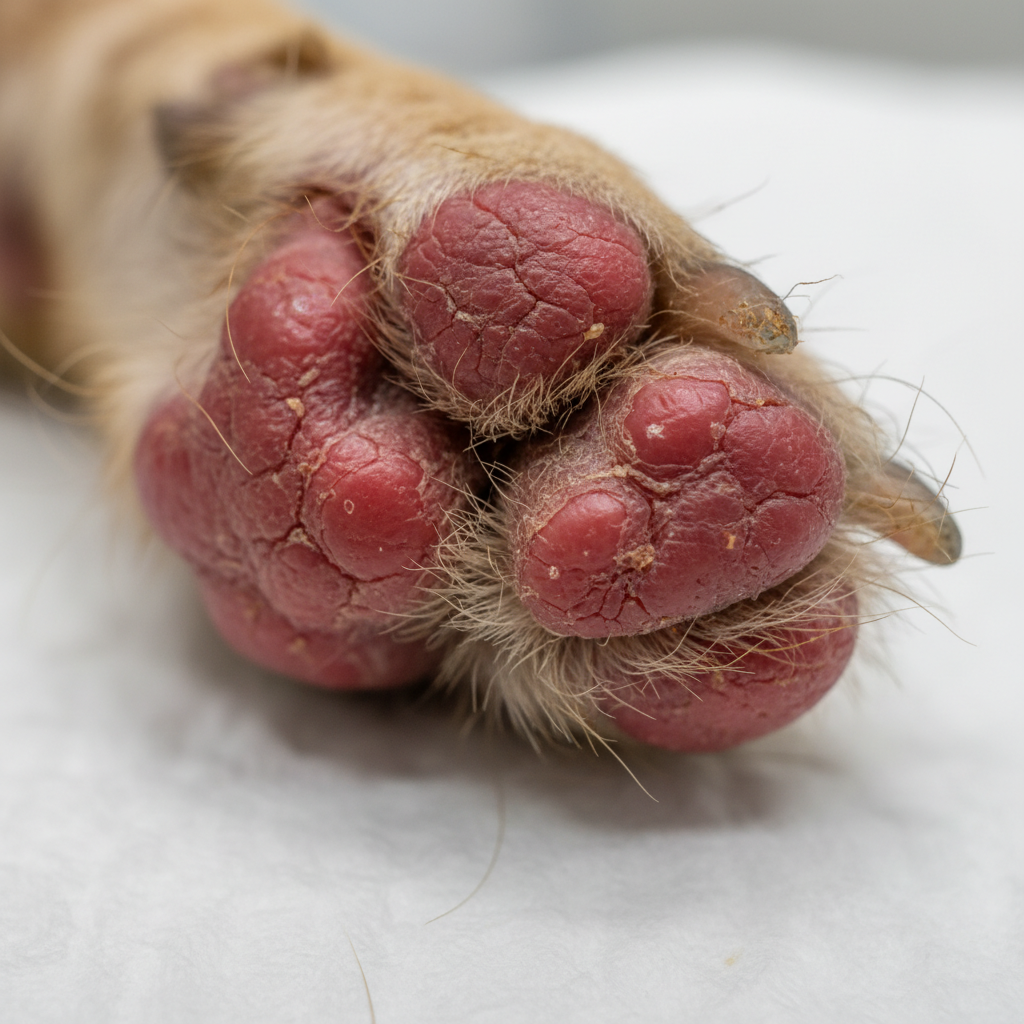
Before we begin, it’s crucial to understand what we’re hunting for. The terms ‘allergy’ and ‘intolerance’ are often used interchangeably, but they are fundamentally different physiological responses. Understanding the distinction helps clarify why an elimination diet is so effective.
Food Allergy (The Immune System Overreaction)
A true food allergy is an immune system response. The body mistakenly identifies a specific protein in a food as a harmful invader and launches an attack. This triggers the release of histamines and other inflammatory chemicals, leading to symptoms that often manifest in the skin.
- Primary Symptoms: Intense itching (pruritus), especially on the paws, ears, face, and belly; hives; hot spots; chronic ear infections; and sometimes, gastrointestinal signs like vomiting or diarrhea.
Food Intolerance/Sensitivity (The Digestive Mishap)
A food intolerance, or sensitivity, does not involve the immune system. It’s a digestive issue where the body struggles to properly break down a certain ingredient. Think of it like lactose intolerance in humans. The symptoms are typically gastrointestinal.
- Primary Symptoms: Gas, bloating, diarrhea, vomiting, and general abdominal discomfort.
Ultimately, the treatment for both is the same: complete avoidance of the trigger ingredient. The elimination diet is the only reliable way to identify that trigger, regardless of whether the reaction is immune-mediated or digestive. The most common culprits—what I call the ‘Enemy Ingredients’—are proteins that dogs have been widely exposed to for decades in commercial pet foods. These include: beef, chicken, dairy, wheat, soy, and corn.
Phase 1: The Elimination – Selecting Your Novel Ingredients
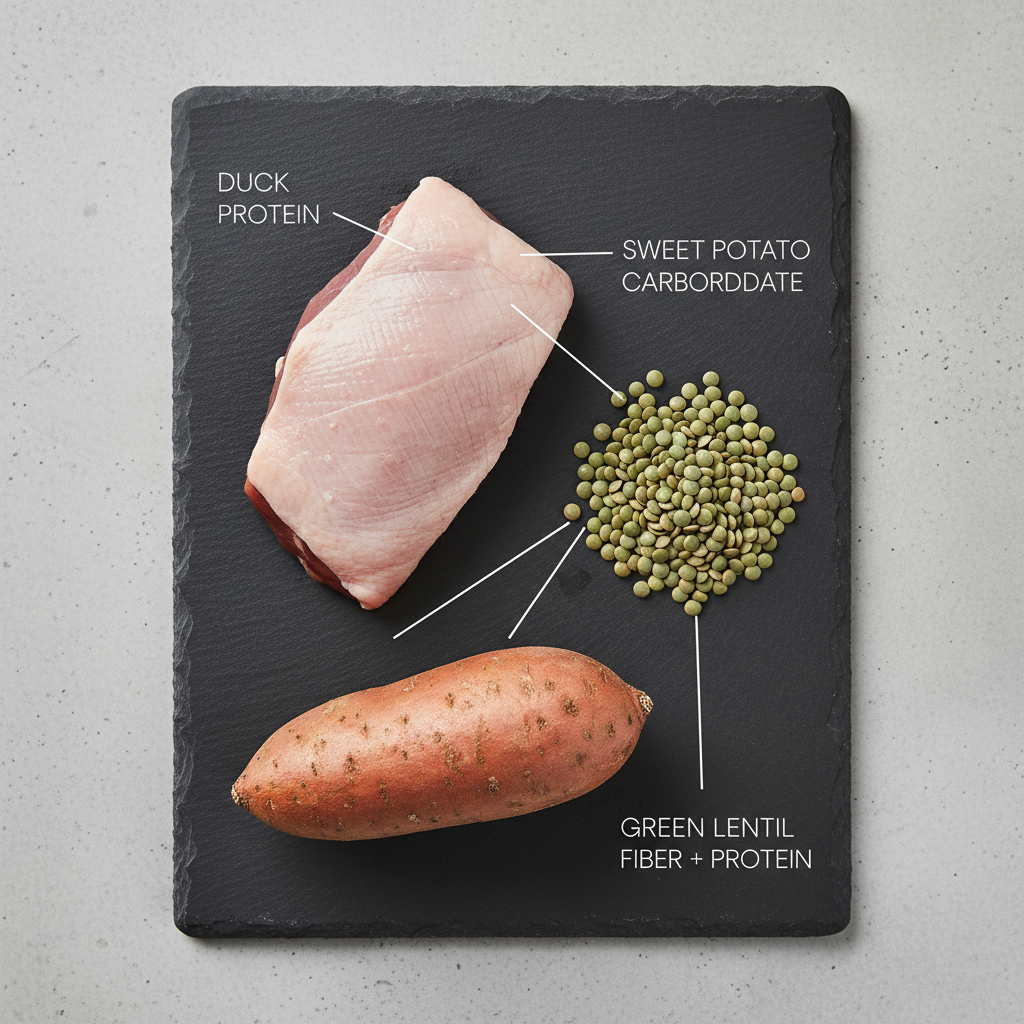
The core principle of the elimination phase is to feed your dog a diet composed of ingredients it has never been exposed to before. This is a clean slate. We remove all potential ‘Enemy Ingredients’ and introduce ‘Hero Ingredients’—a single novel protein and a single novel carbohydrate. This phase typically lasts for 8 to 12 weeks, which is the time required for the old allergens to clear the system and for the associated inflammation to fully subside.
Choosing Your Diet
You have three primary pathways for sourcing an elimination diet. Your choice depends on your budget, time, and your veterinarian’s recommendation.
| Diet Type | Description | Pros | Cons |
|---|---|---|---|
| Veterinary Prescription Diet | Formulated specifically for diagnostics. Comes in two forms: Hydrolyzed Protein (proteins are broken down so small the immune system doesn’t recognize them) or Novel Protein (e.g., Kangaroo & Oats). | Gold standard; nutritionally complete; removes guesswork. | Highest cost; may require a prescription; some dogs dislike the taste. |
| Limited Ingredient Diet (LID) | Commercial over-the-counter food with a single protein and minimal ingredients. Must be a truly novel protein for your specific dog. | More accessible; often less expensive than prescription diets. | Risk of cross-contamination in manufacturing; hidden ingredients (e.g., chicken fat for flavor). Extreme label scrutiny required. |
| Home-Prepared Diet | A diet you cook yourself using a single novel protein and carbohydrate. | Total control over every ingredient. | High risk of nutritional deficiency if not formulated by a veterinary nutritionist. Time-consuming. |
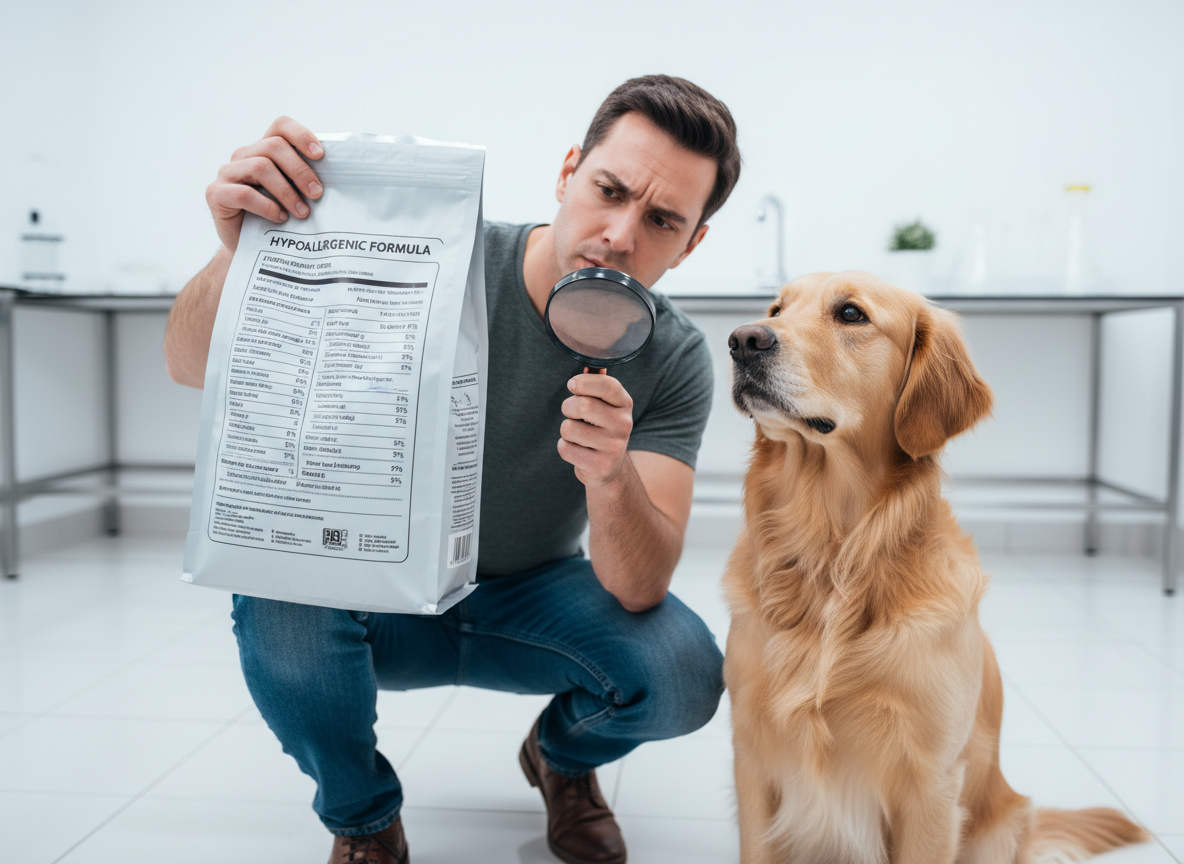
Insider Secret: When scrutinizing a commercial Limited Ingredient Diet, ignore the marketing on the front of the bag. Read the full ingredient panel. A food marketed as ‘Lamb & Pea Recipe’ can legally contain ‘chicken fat’ or ‘fish oil’ for flavor and fatty acids. For a true elimination trial, these are unacceptable contaminants.
To select your ingredients, you must become a historian of your dog’s diet. Make a comprehensive list of every food and treat your dog has ever eaten. If chicken, beef, and rice are on that list, they are off the table. You might choose a combination like venison and sweet potato, or duck and lentils. The key is that the ingredients must be completely new to your dog’s system.
Executing the Protocol: A Guide to the 8-12 Week Trial

This is where discipline becomes paramount. The success of the entire process hinges on 100% compliance for the full 8-12 week period. A single mistake can invalidate weeks of effort and require you to start over. There are no cheat days.
- Transition Slowly: Do not switch foods abruptly. Over 7-10 days, gradually mix the new elimination diet into the old food, increasing the ratio of new to old each day until you are feeding 100% of the new diet. This minimizes digestive upset.
- Eliminate ALL Other Food Sources: This is the most critical rule. For the next 8-12 weeks, your dog can consume nothing but the chosen elimination diet and water. This means:
- No treats (unless made from 100% of your chosen novel ingredients).
- No table scraps or tidbits.
- No flavored medications (work with your vet to find unflavored or compounded alternatives).
- No dental chews or rawhides.
- No flavored toothpaste.
- No flavored toys.
- Control the Environment: Inform every member of your household, your dog walker, and your groomer about the strict protocol. Ensure food bowls are washed separately. If you have other pets, feed them in a separate room to prevent your dog from sneaking a bite of the wrong food.
- Keep a Detailed Journal: This is your data. Every day, log what your dog ate, the quality of their stool (use a 1-5 scale), a rating of their itchiness (1-10 scale), and any other symptoms you’re tracking. This objective record will be invaluable for assessing progress.
Be patient. It can take up to 8 weeks for the existing allergens to fully clear your dog’s system and for the inflammation to resolve. You may not see dramatic improvement overnight. Trust the process and stick to the plan.
Phase 2: The Reintroduction Challenge – Identifying the Culprit
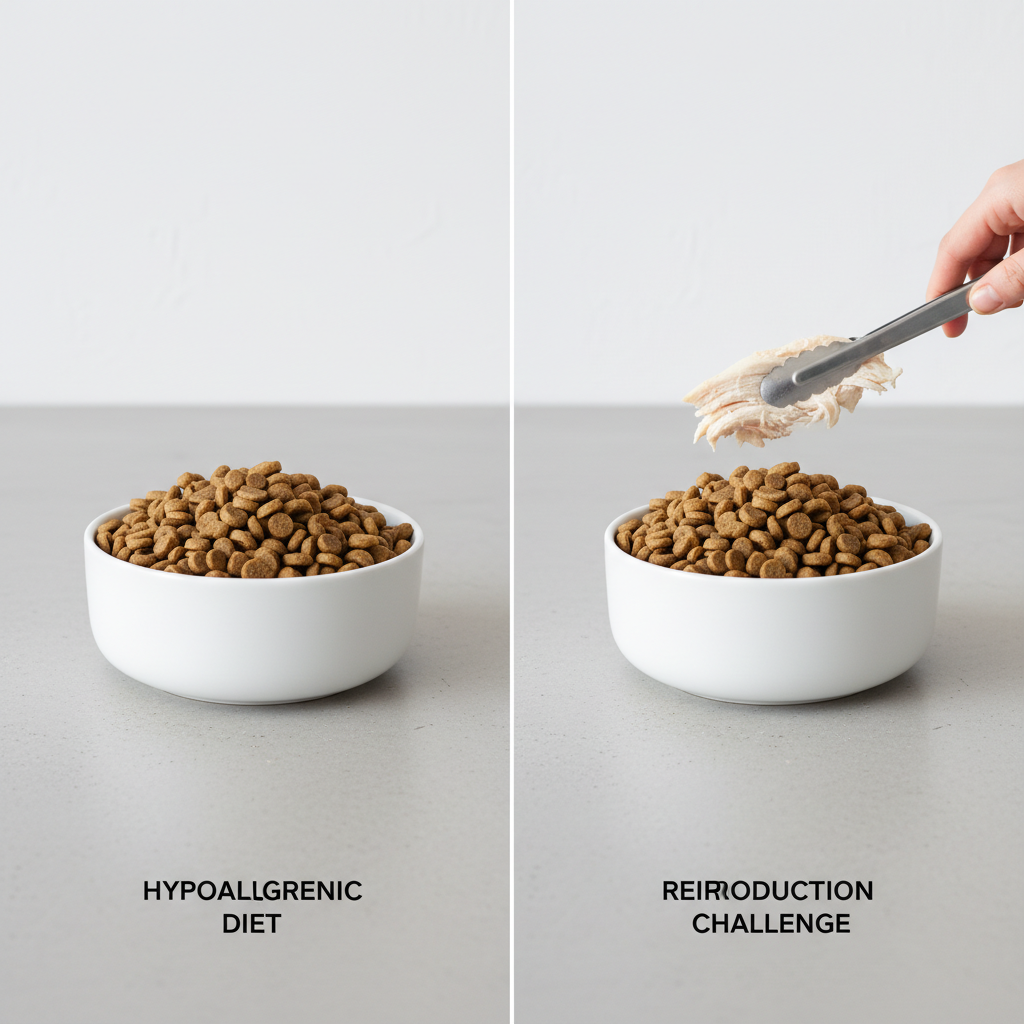
After 8-12 weeks, if your dog’s symptoms have significantly improved or resolved completely, you have successfully established a baseline. Congratulations. Now, the true diagnostic work begins. The goal of the reintroduction phase, or ‘challenge,’ is to systematically reintroduce the old ingredients one at a time to see which one provokes a reaction.
This must be done methodically. Do not rush this phase.
- Select a Single Ingredient: Choose one ingredient from your dog’s old diet to test. Let’s say you suspect chicken. You will use plain, cooked chicken with no seasonings.
- Introduce and Monitor: While continuing to feed the base elimination diet, add a small amount of the challenge ingredient (e.g., a teaspoon of chicken for a small dog, a tablespoon for a large dog) to their food once a day. Do this for up to two weeks.
- Watch for a Reaction: Carefully monitor your journal. Are the original symptoms—the itching, the loose stool, the ear-scratching—returning? If symptoms reappear, you have found a trigger ingredient. Stop the challenge immediately and wait for the symptoms to resolve before moving on.
- The Washout Period: If, after two weeks, there is no reaction to the challenge ingredient, it is likely safe. Stop feeding it, and return to feeding only the base elimination diet for a one-week ‘washout’ period. This ensures the system is clean before the next test.
- Repeat with the Next Ingredient: After the washout period, select the next ingredient to test (e.g., beef) and repeat the entire process. Continue this until you have tested all the primary ingredients from your dog’s original diet.
Hacker Tip: Start the challenge phase with the ingredient you most suspect as the culprit. Confirming a major trigger early in the process can be highly motivating and provides immediate, actionable information for your dog’s long-term diet.
Beyond the Diet: Crafting a Sustainable Long-Term Nutrition Plan

Completing an elimination diet is a major achievement. You are now armed with invaluable, specific knowledge about your dog’s unique dietary needs. The final step is to use this data to construct a safe, nutritious, and sustainable long-term diet.
Building the ‘Safe’ List
Your challenge phase has provided you with two lists: a list of trigger ingredients to be avoided at all costs, and a list of ‘safe’ ingredients that produced no reaction. Your dog’s new diet should be built exclusively from the ‘safe’ list.
The Label Forensic Scientist
From this point forward, you must read every single ingredient label for every food, treat, or supplement you give your dog. Manufacturers change formulas. ‘New and Improved’ can mean the introduction of a trigger ingredient. Be vigilant. Teach your family and friends about your dog’s specific restrictions to prevent well-meaning but harmful treats.
The Power of Rotation
To reduce the risk of developing new sensitivities in the future, it is wise to rotate between several different ‘safe’ protein sources. If you’ve confirmed that your dog is fine with duck, venison, and fish, consider rotating their main food between these proteins every few months. This provides a variety of nutrients and prevents the immune system from being overexposed to a single protein for years on end.
By transforming from a passive consumer into an informed nutrition hacker, you have taken ultimate control of your dog’s well-being. You have replaced confusion with clarity and provided the foundation for a long, comfortable, and healthy life.
Conclusion
The dog food elimination diet is the definitive process for unmasking the dietary culprits behind your dog’s chronic discomfort. It is a testament to your dedication as a pet owner—a journey that demands precision, patience, and partnership with your veterinarian. You have now moved beyond the confusing marketing claims and the trial-and-error approach that yields few results. You possess the methodology to gather clear, undeniable evidence about what nourishes your dog’s body and what harms it.
Use this knowledge with confidence. Continue to be a vigilant advocate for your dog’s health, scrutinizing every label and making informed choices. You have done the hard work of forensic nutrition. The reward is the profound peace of mind that comes from seeing your best friend happy, healthy, and finally, comfortable in their own skin. Stop guessing, and keep investigating. Your dog’s relief is worth every bit of the effort.