Slow Feeder vs. Snuffle Mat: Which Stops Fast Eating Better?
That sound—the frantic clatter of kibble against a bowl, followed by a series of concerning gulps—is all too familiar to many dog owners. Your dog isn’t just enjoying their meal; they’re inhaling it. While it might seem like a harmless quirk, this behavior, known as food bolting, is a significant red flag. It’s a direct path to digestive upset, choking, and even the life-threatening condition known as bloat. In the world of canine care, two primary tools have emerged to combat this issue: the engineered slow feeder bowl and the instinct-driven snuffle mat. But they are not created equal. One is a mechanical barrier; the other is a psychological puzzle. Choosing the wrong one for your dog can lead to frustration, destruction, or simply fail to solve the problem. This is a forensic breakdown of both options, designed to arm you with the data you need to choose the right tool, protect your dog’s health, and reclaim mealtime sanity.
The Anatomy of a Fast Eater: Why Gulping is a Critical Risk
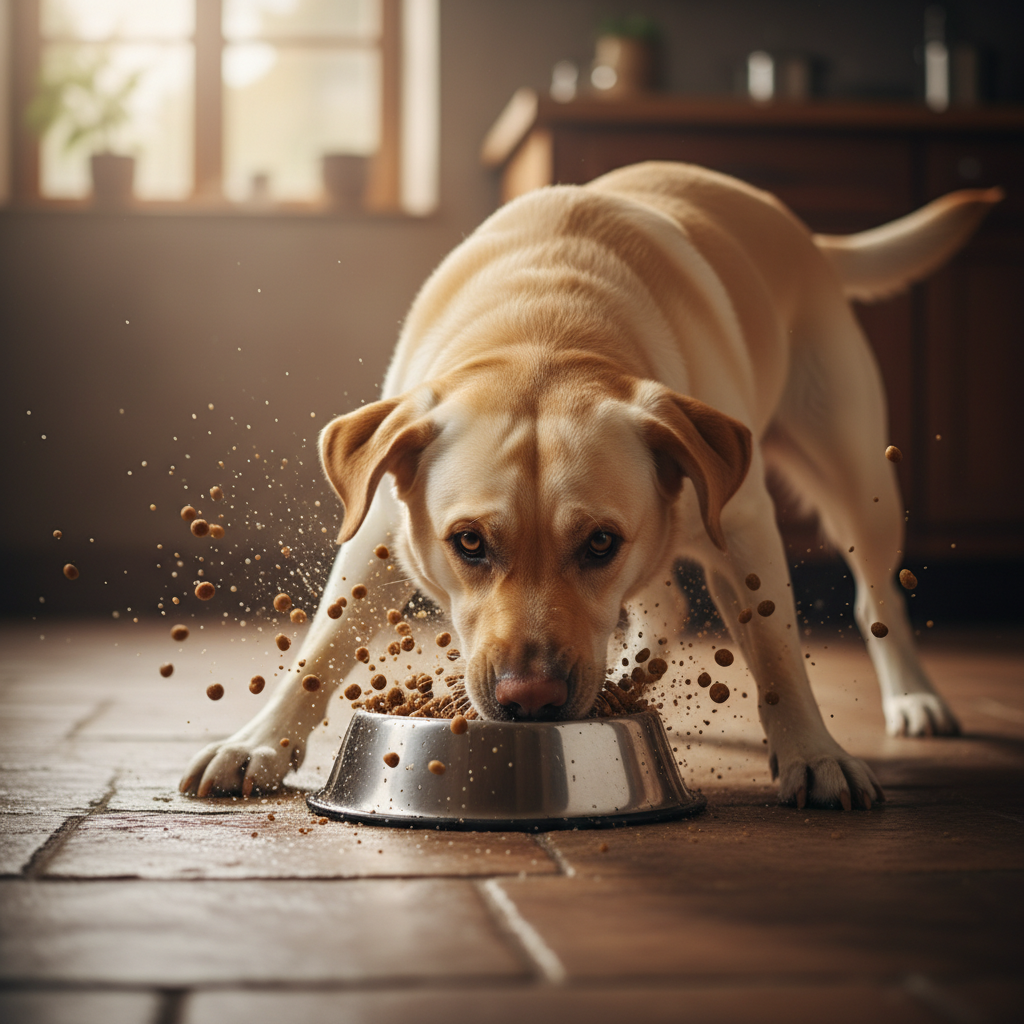
Before we analyze the hardware, we must understand the threat. A fast-eating dog isn’t just being greedy; they are engaging in a behavior with serious medical and psychological implications. When a dog bolts its food, it swallows large amounts of air along with unchewed kibble. This is where the danger begins.
The Medical Fallout
The most immediate risk is choking or gagging as large pieces of kibble get lodged in the esophagus. More insidiously, the excess air can lead to a terrifying condition called Gastric Dilatation-Volvulus (GDV), or bloat. This is a medical emergency where the stomach fills with gas and twists on itself, cutting off blood flow to vital organs. Without immediate veterinary intervention, it is almost always fatal. Studies have consistently shown that speed of eating is a primary risk factor for GDV, particularly in deep-chested breeds like Great Danes, Weimaraners, and German Shepherds.
The Behavioral Blueprint
Why do they do it? The reasons are often rooted in instinct and history:
- Competitive Instinct: In a litter, the fastest puppy gets the most milk. This behavior can carry into adulthood, even in single-dog households. They eat fast because their primal brain tells them another dog might steal their resource.
- Past Scarcity: For rescue dogs, a history of food insecurity or having to fight for meals can hardwire a need to eat as quickly as possible.
- Boredom and Under-stimulation: For some dogs, mealtime is the most exciting part of their day. Their frantic eating is a release of pent-up energy and a symptom of a broader lack of mental enrichment.
Understanding this ‘why’ is crucial. Are you trying to solve a purely mechanical problem (slowing the physical act of eating) or a psychological one (boredom and anxiety)? The answer will heavily influence whether a slow feeder or a snuffle mat is the superior choice.
Forensic Analysis: The Slow Feeder Bowl
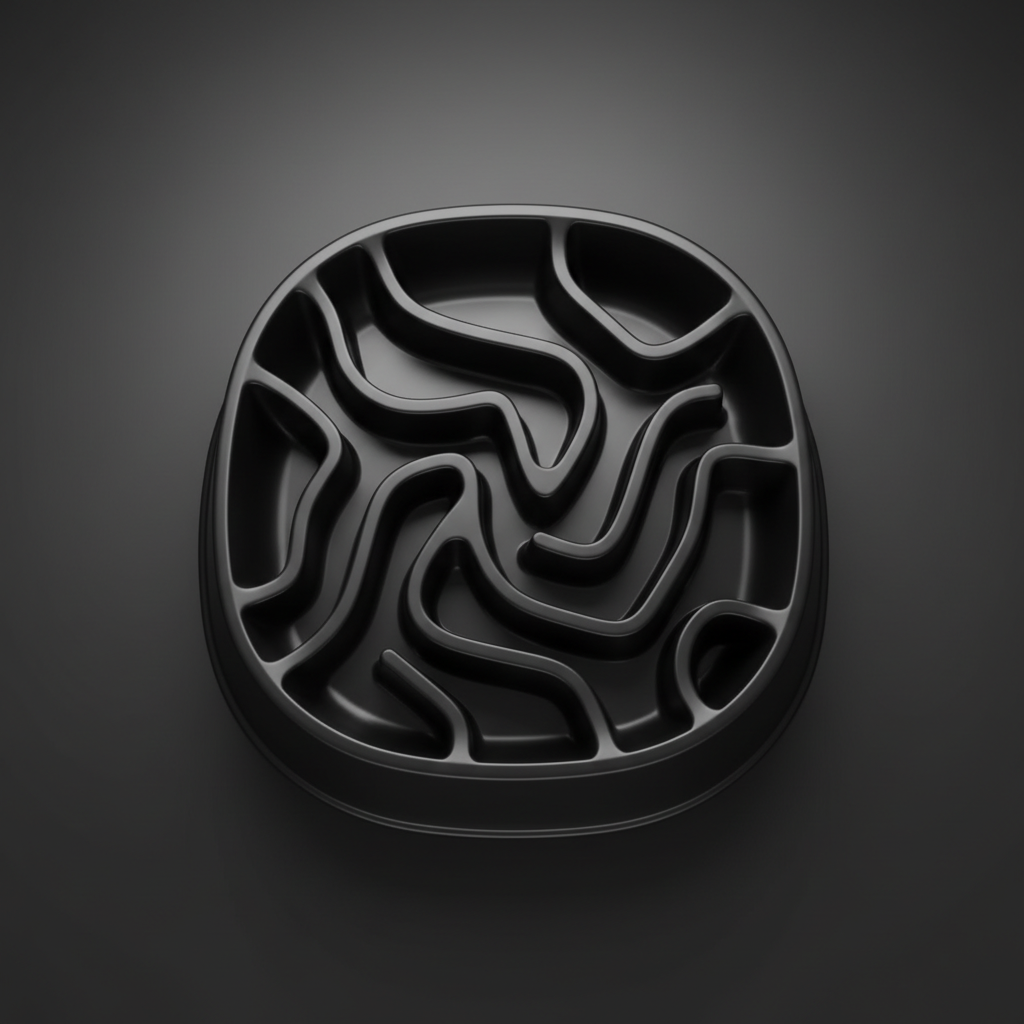
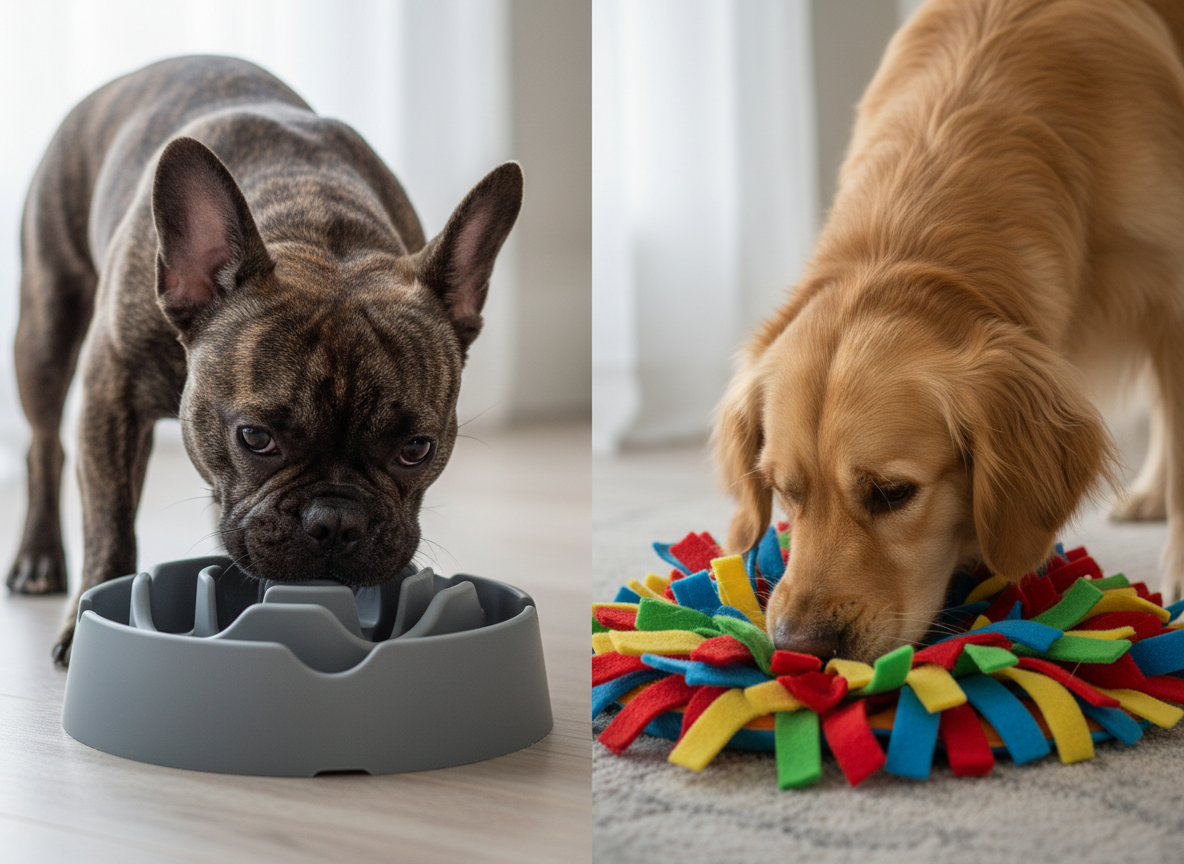
The slow feeder bowl is a marvel of simple engineering. It’s a food bowl designed with integrated obstacles—mazes, spirals, ridges, and valleys—that force a dog to navigate around them to get to their food. This design directly obstructs their ability to take large, gulping mouthfuls.
The Engineering Advantage: Pros
- Unmatched Speed Reduction: For the primary goal of slowing down eating, the slow feeder is the undisputed champion. The physical barriers are non-negotiable. A meal that took 30 seconds can easily be extended to 5-10 minutes.
- Durability: High-quality slow feeders are available in robust materials like heavy-duty BPA-free plastic, ceramic, and even stainless steel. This makes them an excellent choice for powerful or destructive dogs.
- Variety of Designs: The market is flooded with options, allowing you to choose a difficulty level and pattern that best suits your dog’s snout shape and problem-solving ability.
The Hidden Flaws: Cons
- Potential for Frustration: A maze that is too complex or deep for a dog, especially flat-faced (brachycephalic) breeds like Pugs or Bulldogs, can lead to extreme frustration. This can manifest as barking at the bowl, flipping it over, or giving up on the meal entirely.
- Risk of Dental Damage: Dogs can become so frantic to get the food that they scrape their teeth and gums on hard plastic or ceramic ridges. This is a particular concern with overly aggressive eaters.
- The Cleaning Nightmare: The very nooks and crannies that slow a dog down are perfect breeding grounds for bacteria and biofilm if not cleaned meticulously. Many are not dishwasher-safe, requiring special brushes to properly sanitize.
Hacker Tip: Match the bowl to the dog. For a long-snouted Shepherd, a deep, complex maze works. For a short-snouted Boxer, a shallower, wider-patterned bowl is essential to prevent frustration and breathing difficulty. Start with an easier design and level up if needed.
Forensic Analysis: The Snuffle Mat
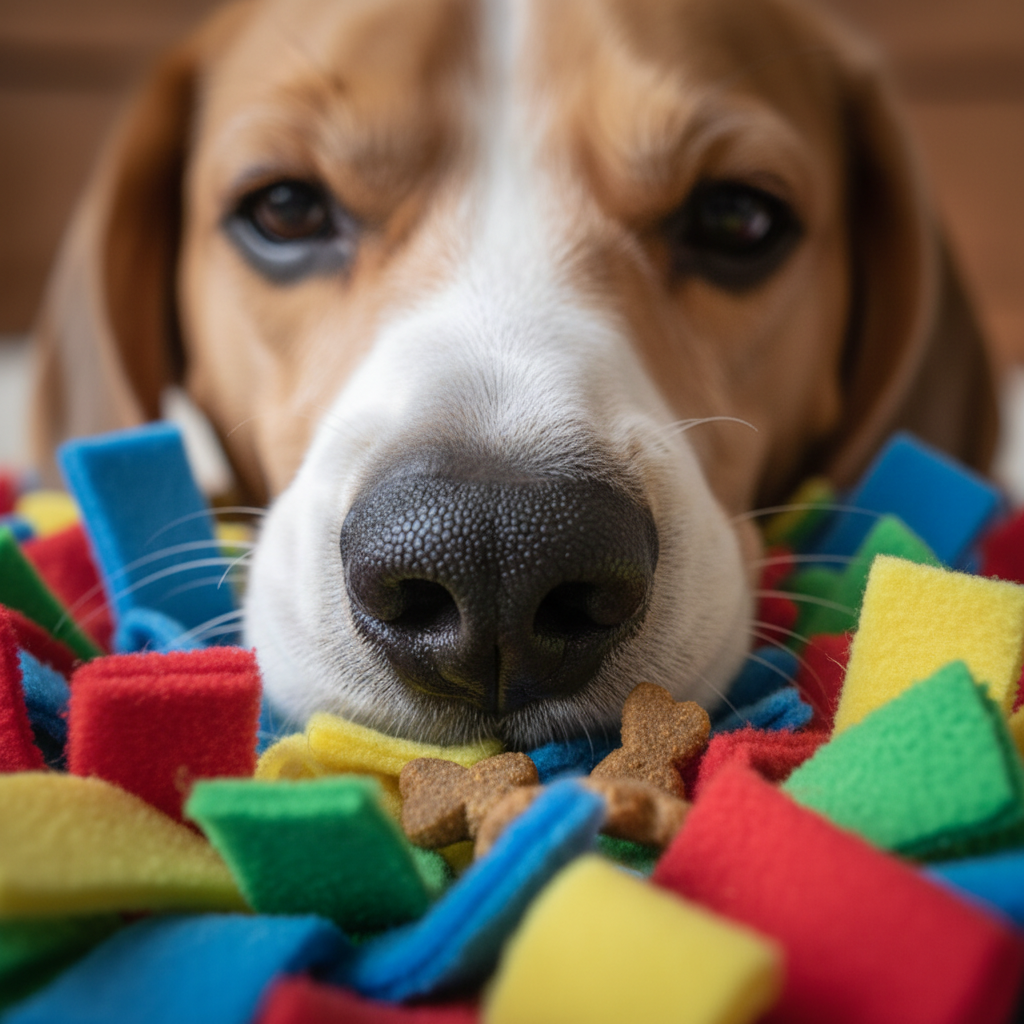
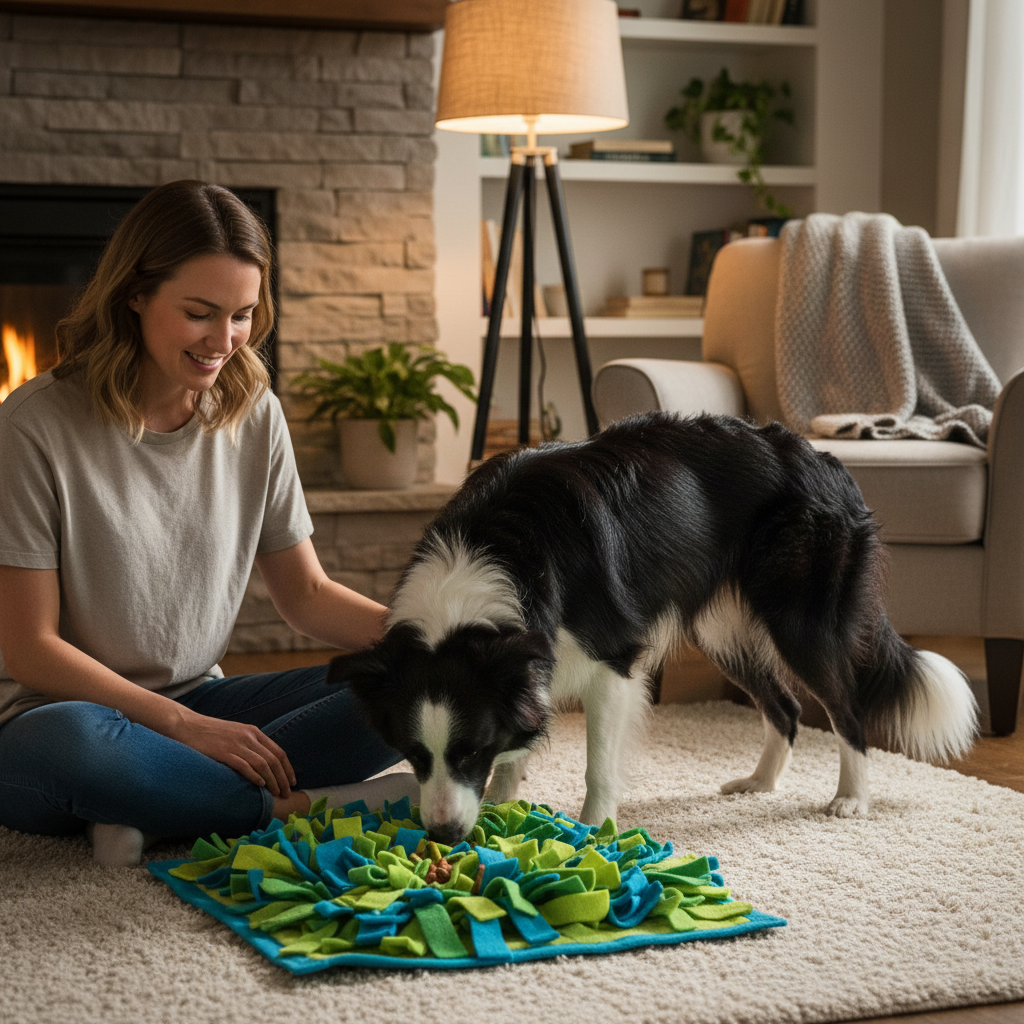
The snuffle mat takes a completely different, more organic approach. Instead of a rigid barrier, it uses a dog’s most powerful sense—smell—to solve the problem. It’s a mat, typically with a fabric or rubber base, covered in strips of fleece or other soft materials where kibble can be hidden.
The Enrichment Engine: Pros
- Taps into Natural Instincts: Sniffing and foraging are innate, rewarding behaviors for dogs. A snuffle mat turns mealtime from a race into a satisfying hunt, fulfilling a core behavioral need.
- Powerful Mental Stimulation: The act of searching for each piece of kibble is mentally taxing. A 10-minute session with a snuffle mat can be as tiring for a dog as a 30-minute walk. This is a huge benefit for high-energy dogs or those on restricted exercise.
- Calming Effect: Scientific studies have shown that sniffing lowers a dog’s heart rate and has a demonstrable calming effect. Using a snuffle mat can reduce anxiety and stress around mealtime.
- Gentle on Teeth and Gums: The soft fleece material poses no risk to a dog’s dental health.
The Practical Realities: Cons
- Variable Speed Reduction: While it does slow eating, a highly food-motivated or clever dog might learn to simply shake or flip the mat to get the food faster, negating much of the benefit. It is generally less effective than a slow feeder for pure speed reduction.
- Durability Concerns: A snuffle mat is not a chew toy. A determined chewer can easily shred the fleece strips, creating a serious risk of ingestion and intestinal blockage. Strict supervision is non-negotiable.
- Cleaning and Hygiene: These mats can get dirty and smelly quickly. They must be machine washed and, crucially, thoroughly dried to prevent mildew and bacterial growth.
Insider Secret: Increase the difficulty and engagement by not just sprinkling the food on top, but taking the time to tuck kibble deep into the base of the fleece strips. This forces more intensive sniffing and slows the process significantly.
Head-to-Head: The Ultimate Showdown
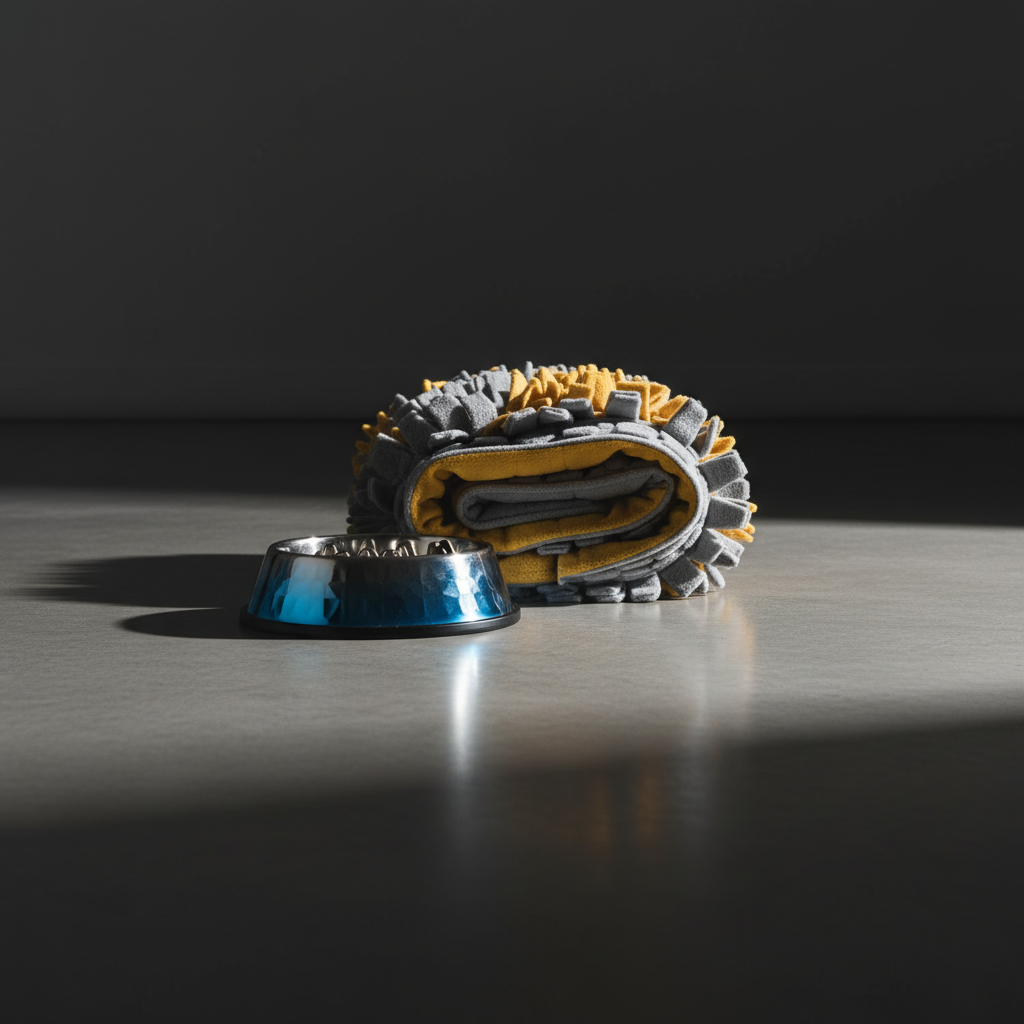
With the individual analyses complete, it’s time to put them side-by-side. This table breaks down the critical performance metrics for each tool, providing a clear verdict for the discerning owner.
| Feature | Slow Feeder Bowl | Snuffle Mat | The Hacker’s Verdict |
|---|---|---|---|
| Speed Reduction | Excellent. The most effective tool for mechanically slowing down eating. | Good. Effective, but can be ‘cheated’ by clever or determined dogs. | Winner: Slow Feeder Bowl. For the primary goal of stopping bolting, nothing beats a physical barrier. |
| Mental Stimulation | Low to Moderate. The puzzle is static and once solved, offers little variety. | Excellent. Engages the powerful canine sense of smell and foraging instincts. | Winner: Snuffle Mat. It provides a far more enriching and instinctually satisfying mental workout. |
| Durability | Good to Excellent. Stainless steel and heavy-duty plastic models can withstand heavy use. | Poor to Fair. Fabric is inherently vulnerable to chewing and destruction. | Winner: Slow Feeder Bowl. A much safer and longer-lasting option for unsupervised use or for power chewers. |
| Ease of Cleaning | Poor to Fair. Complex designs require special brushes and meticulous attention to prevent bacteria. | Good. Most are machine washable, but require thorough drying time. | Winner: Snuffle Mat. The ability to toss it in the washing machine gives it a slight edge over hand-scrubbing crevices. |
| Safety Profile | Risk of dental/gum damage on hard materials; frustration for flat-faced breeds. | Risk of fabric ingestion if chewed; requires constant supervision. | Draw. Both tools have significant, but very different, safety considerations that depend on the dog. |
| Best For… | Extreme food bolters, powerful chewers, and achieving maximum eating time. | Anxious eaters, high-energy dogs needing a ‘brain game,’ and bored dogs. | The right tool is entirely dependent on the primary problem you are trying to solve. |
The data is clear: this isn’t a battle with one universal winner. The Slow Feeder is a specialized tool for a mechanical problem. The Snuffle Mat is an enrichment tool that has the secondary benefit of slowing down eating. Your choice depends on your dog’s specific profile and your primary goal.
The Final Verdict: Matching the Tool to the Dog
An expert doesn’t just have one tool; they have the right tool for the job. Your job is to correctly diagnose your dog’s needs and apply the correct solution. Here are the common profiles:
For the ‘Vacuum Cleaner’ Dog
This is the dog that inhales its food in under 60 seconds, no matter what. Their issue is purely mechanical speed.
The Verdict: A durable, complex Slow Feeder Bowl. Prioritize a design made of stainless steel or a heavy-duty co-polymer that can’t be easily chewed or tipped over. The goal is maximum deceleration.
For the ‘Anxious & Bored’ Dog
This dog eats fast as a coping mechanism for stress or because mealtime is the only exciting event in its day. They need more than just a barrier; they need an outlet.
The Verdict: The Snuffle Mat. This transforms feeding from a stress-fueled race into a calming, mentally engaging foraging session. It addresses the root psychological cause, not just the symptom.
For the ‘Brachycephalic’ (Flat-Faced) Dog
Breeds like Pugs, French Bulldogs, and Boxers have a unique challenge. Deep bowls can obstruct their breathing and cause immense frustration.
The Verdict: A very shallow, spiral-patterned slow feeder or a snuffle mat. For these breeds, the Snuffle Mat is often the safer and more comfortable option, as it doesn’t require them to force their face into tight corners.
For the ‘Power Chewer’ Dog
This dog views everything as a potential chew toy, and fabric is their favorite victim.
The Verdict: A stainless steel slow feeder bowl is the only truly safe option. A snuffle mat, even under supervision, presents an unacceptable risk of ingestion and life-threatening blockage for a dedicated destroyer.
The Ultimate Hack: Don’t choose—use both. Employ a slow feeder for the morning meal to ensure a safe, slow intake of calories, and use a snuffle mat for the evening meal as a way to decompress and burn mental energy before bed. This hybrid approach provides both mechanical safety and crucial daily enrichment.
Conclusion
The battle between the slow feeder and the snuffle mat concludes not with a knockout, but with a strategic decision. There is no single ‘best’ tool, only the tool that is best for your dog. By moving beyond the marketing and analyzing the core function of each device, you can make an informed choice. The slow feeder is your tactical solution for the dangerous mechanics of speed eating. The snuffle mat is your strategic solution for the underlying needs of a canine mind. Observe your dog, identify the primary issue—be it speed, boredom, or anxiety—and deploy the appropriate hardware. By doing so, you’re not just buying a product; you’re investing directly in your dog’s long-term health, safety, and mental well-being.