
DIY Muffin Tin Puzzle Game: Brain Training on a Budget
The pet product industry has successfully convinced millions of well-meaning owners that a mentally stimulated dog requires a shelf full of expensive, brightly colored plastic puzzles. They market ‘cognitive enhancement’ for $30 a pop, and we buy it, hoping to alleviate our dog’s boredom. But I’m here to tell you that’s a narrative designed to drain your wallet. The most effective, engaging, and scalable brain game for your dog is likely already sitting in your kitchen cabinet. It’s a simple muffin tin.
Mental exercise is not a luxury; it’s a core requirement for a well-behaved, balanced canine. A bored dog is a destructive dog, an anxious dog, and an unhappy dog. This boredom manifests as chewed furniture, nuisance barking, and separation anxiety—problems that cost you far more than a simple puzzle. This guide will give you the blueprint to hack your dog’s enrichment routine, saving you money and strengthening your bond through purposeful play. We’re not just building a toy; we’re building a sharper, more fulfilled companion.
The Canine Cognition Crisis: Why Your Dog is Bored (And How It’s Costing You)

We obsess over our dogs’ physical health—the right food, the perfect amount of exercise, the annual vet visits. But a critical component is often dangerously neglected: their cognitive health. Dogs, especially intelligent working breeds, were bred for tasks. They were bred to think, problem-solve, and engage their minds. In our modern homes, they are often relegated to the role of furry couch potato, a job for which their brains are woefully overqualified.
This cognitive under-stimulation is the root cause of countless behavioral issues that owners mistakenly attribute to a ‘bad dog.’ That shoe that was shredded while you were at work? That wasn’t malice; it was a desperate attempt to self-soothe and find something, anything, to do. The incessant barking at every passing leaf? That’s a dog trying to create its own stimulation in a void of engagement.
Insider Secret: Canine boredom is a multi-billion dollar industry. It fuels the market for ‘indestructible’ chew toys, calming supplements, and expensive behavioral training. By addressing the root cause—lack of mental work—you can often solve the costly symptoms.
Think of your dog’s brain like a muscle. If you don’t use it, it atrophies. But more than that, an unused brain seeks its own work, and you probably won’t like the ‘job’ it creates for itself. Providing structured problem-solving activities like puzzle games satisfies their innate desire to work. It tires them out more effectively than a walk around the block, reduces anxiety by giving them a productive focus, and builds confidence as they successfully solve the puzzle. A 15-minute puzzle session can be as exhausting and satisfying to a dog as a 30-minute run. It’s the ultimate hack for a calm, contented dog, and it starts with understanding that their mind needs a job.
The Blueprint: Assembling Your High-IQ Muffin Tin Puzzle
A Critical Safety Disclaimer
Before we assemble your puzzle, we must establish the ground rules. I am a canine nutrition and enrichment analyst, not a veterinarian. You are responsible for your dog’s safety. Always supervise your dog during play with the muffin tin game, especially the first few times. Ensure the toys you use to cover the cups (like tennis balls) are large enough that your dog cannot swallow them. If your dog is a powerful chewer who tries to destroy and ingest the tin or balls, this may not be the right game for them. Safety is non-negotiable.
Required Materials:
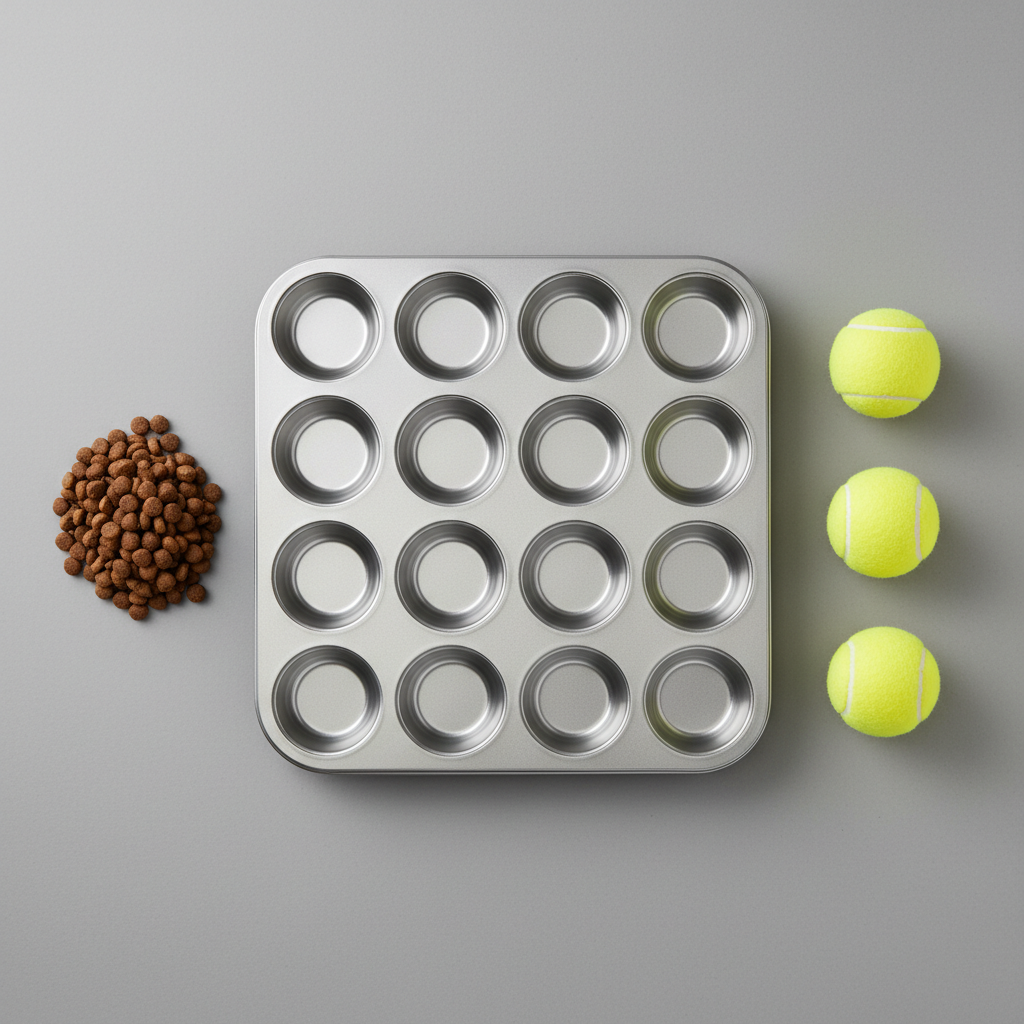
- One Muffin Tin: A standard 6 or 12-cup metal or silicone tin works perfectly. Heavier is better to prevent flipping.
- Treats/Kibble: Use a portion of your dog’s daily meal or high-value, healthy treats.
- Obstacles: Tennis balls, or other dog-safe toys that are large enough not to be a choking hazard and fit over the muffin cups.
Step-by-Step Assembly & Difficulty Scaling:
- Level 1: The Beginner: Start simple to build confidence. Place a single piece of kibble or a small treat in each muffin cup. Place the tin on the floor and let your dog figure out how to get the rewards. Most dogs will grasp this immediately.
- Level 2: The Apprentice: Once your dog masters Level 1, it’s time to introduce an obstacle. Place treats in only half of the cups. Cover those cups with tennis balls or other toys. Leave the other cups empty. This teaches your dog to use their nose and to manipulate objects to get their reward.
- Level 3: The Journeyman: Now, cover all the muffin cups with balls, but only place treats in a random selection of cups. This forces your dog to rely entirely on their sense of smell, rather than just visual cues. They have to work harder, sniffing each cup before deciding to remove the ball.
- Level 4: The Master: For the true canine Einsteins, you can introduce more complex challenges. Use different types of objects to cover the cups (a balled-up sock, a KONG Wobbler, a silicone toy) or even place the entire muffin tin under a blanket or towel, forcing them to solve a two-part puzzle.
Hacker Tip: The size of your equipment matters. For a large dog like a Great Dane, a standard muffin tin might be too small and frustrating. Consider a jumbo muffin tin. For a tiny dog like a Chihuahua, a mini-muffin tin is ideal. Match the puzzle to the player.
Fueling the Genius: High-Value, Low-Cost Treat Analysis
The treats you use in this game are not just rewards; they are the fuel for your dog’s brain. Using low-quality, sugary ‘training treats’ is like preparing for a marathon by eating candy bars. It defeats the purpose. As a nutrition hacker, I demand you analyze what you put into your dog. The ‘First 5 Ingredients’ rule is non-negotiable.
Store-Bought Treat Analysis: The Red Flags
Let’s look at the first five ingredients from a popular, cheap training treat you might find at a supermarket: Wheat Flour, Glycerin, Wheat Gluten, Sugar, Corn Syrup. This is, to be blunt, garbage. You are rewarding your dog’s brainpower with inflammatory fillers and sugar, which can lead to weight gain and poor health. Warning: If you see sugar, corn syrup, or vague terms like ‘meat by-product’ in the first five ingredients, put the bag back on the shelf.
The DIY Advantage: Real Food for Real Brains
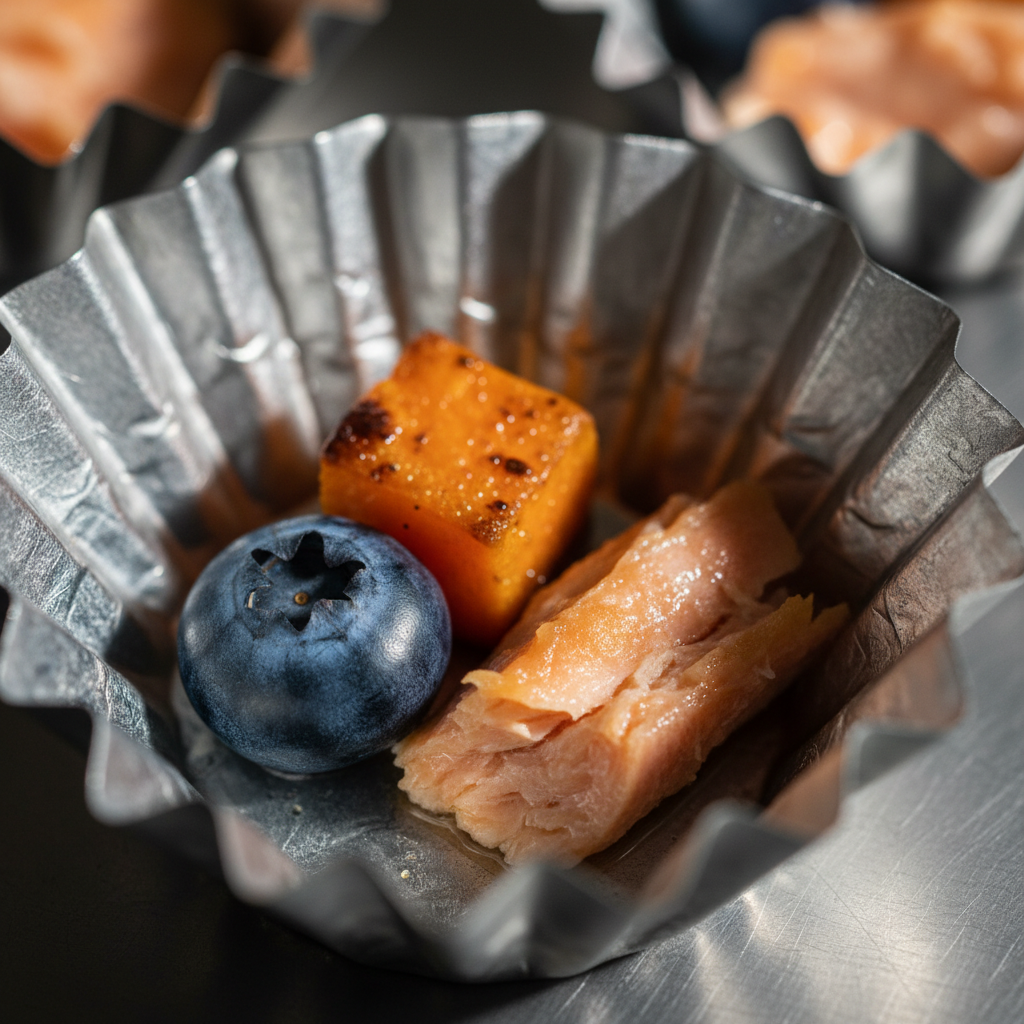
The most cost-effective and nutritious option is to use real food. This gives you 100% control over the ingredients and saves you a significant amount of money. Your high-value rewards can be:
- Your Dog’s Own Kibble: The simplest option. You’re not adding extra calories, just making them work for their dinner.
- Single-Ingredient Proteins: Small, unseasoned pieces of boiled chicken, freeze-dried salmon, or beef liver.
- Fruits & Veggies: Blueberries, small pieces of apple (no seeds), chopped carrots, or green beans are excellent, low-calorie options.
Cost Breakdown: DIY vs. Premium Store-Bought
Let’s analyze the cost of providing 100 treat rewards. This exposes the true value of the DIY approach.
| Treat Type | Primary Ingredients | Approx. Cost per 100 Treats | Nutritional Verdict |
|---|---|---|---|
| Premium ‘Brain Health’ Treats | Chicken, Chickpea Flour, Fish Oil, Cane Molasses | $9.50 | Good, but expensive. Contains unnecessary sweeteners like molasses. |
| DIY Boiled Chicken | Chicken Breast | $2.20 | Excellent. Pure, single-ingredient protein. No fillers. Maximum value. |
| DIY Carrots & Apples | Carrots, Apples | $1.50 | Excellent. Low-calorie, high-fiber, and packed with vitamins. The ultimate budget hack. |
Advanced Gameplay & Troubleshooting Common Issues
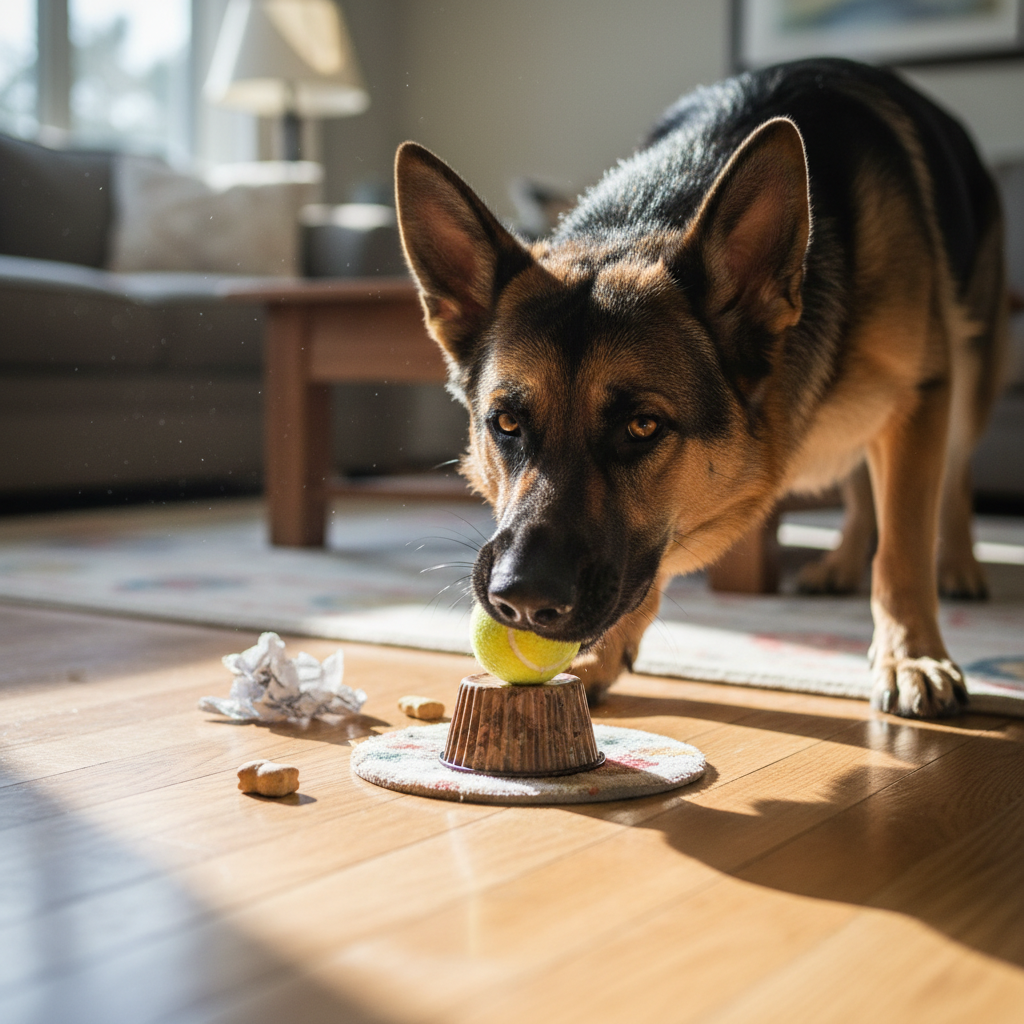
Your dog will eventually master the basic game. To ensure the cognitive benefits continue, you must evolve the challenge. A static puzzle becomes a boring routine. A dynamic puzzle remains a stimulating workout.
Advanced Techniques for Canine Einsteins
- Scent Work Escalation: Rub a tiny amount of a very high-value scent (like peanut butter or fish oil) on the inside of one cup, but place the treat in another. This teaches them to trust their nose over visual confirmation and track scents.
- The Shell Game: Use three opaque, identical plastic cups on the floor. Let your dog watch you place a treat under one. Shuffle the cups. Let them indicate which one holds the prize. This is a pure memory and observation game.
- Location, Location, Location: Don’t always play in the same room. Moving the game to the backyard or a different part of the house forces them to focus and generalize their skills in a new environment.
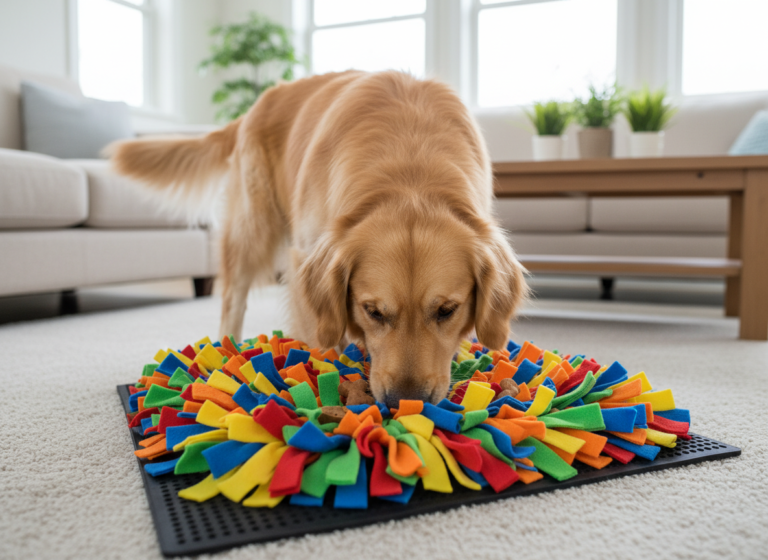
Insider Secret: The most powerful tool for enrichment is novelty. Don’t let your dog play the muffin tin game every single day. Rotate it with other activities like a snuffle mat, a ‘find it’ game, or a simple training session. Keeping their brain guessing is the key to sustained engagement.
Troubleshooting Guide
What happens when things go wrong? Here’s how to debug the game:
- The Flipper: Some dogs, particularly food-motivated labs, will simply try to flip the entire tin over. If this happens, start by holding the tin firmly with your hands. You can also place it inside a larger cardboard box to prevent it from being tipped. Using a heavier, thicker metal tin also helps.
- The Frustrated Quitter: If your dog gives up, whines, or walks away, you have made the game too difficult too quickly. This is a critical signal. Immediately regress to the previous, easier level where they were successful. End the session on a positive, successful note to build their confidence for next time. Never push a frustrated dog.
- The Destroyer: If your dog ignores the puzzle and begins aggressively chewing the tennis balls or the tin itself, calmly end the session. This indicates they are over-aroused or don’t understand the rules. For these dogs, focus on puzzles made from hard rubber (like a KONG) that are designed to withstand chewing.
Conclusion
You now have the complete blueprint to unlock your dog’s cognitive potential without spending a dime on unnecessary products. This DIY Muffin Tin Puzzle is more than a game; it’s a communication tool, a boredom buster, and a powerful way to meet your dog’s fundamental needs. It proves that providing top-tier enrichment isn’t about how much you spend, but how intelligently you use the resources you already have.
By investing just ten minutes a day, you can reduce problem behaviors, build your dog’s confidence, and strengthen your bond in a way that passive petting never could. Stop letting the pet industry dictate your dog’s well-being. Take control, build this puzzle, and become the savvy, resourceful owner your brilliant dog deserves. You have the power to hack their happiness, and it starts in your kitchen.