Dehydrated Pork Heart Jerky: An Inexpensive High-Value Training Treat
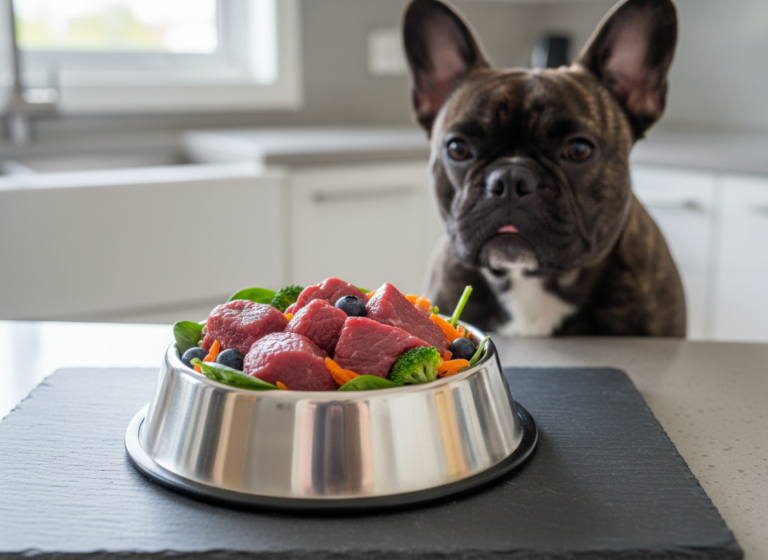
Walk down any pet store aisle and you’re bombarded with slick marketing for ‘premium,’ ‘gourmet,’ and ‘all-natural’ training treats. The price tags are staggering, and when you flip the bag over to read the ingredients, you often find a list of fillers, preservatives, and low-quality proteins. You’re paying a premium for marketing, not nutrition. This ends now.
I’m the Canine Nutrition Hacker, and my mission is to empower you to see through the industry noise. We’re going to bypass the expensive, over-processed options and create the ultimate training tool: single-ingredient, dehydrated pork heart jerky. This isn’t just a treat; it’s a nutritional powerhouse that will have your dog’s undivided attention. It’s the definition of a high-value reward, and the secret is, it costs pennies on the dollar to make yourself. In this guide, I’ll provide a forensic cost analysis, a step-by-step blueprint for making it safely, and insider tips for storage and use. It’s time to take control of what goes into your dog’s body and save a significant amount of money in the process.
Critical Safety Disclaimer: Read Before You Cook
Critical Safety Disclaimer: Read Before You Cook
Before we proceed, let’s establish the ground rules. I am a canine nutrition analyst and advocate, not a veterinarian. The information provided here is for educational purposes and is the result of extensive research and hands-on experience. It is not a substitute for professional veterinary advice. Treats, even healthy homemade ones, should make up no more than 10% of your dog’s daily caloric intake. A balanced, species-appropriate diet is the foundation of health.
Furthermore, we are handling raw meat. You must adhere to strict food safety protocols to prevent cross-contamination and the spread of pathogens like Salmonella, Listeria, and E. coli, which can harm both you and your pet. This includes:
- Washing your hands thoroughly before and after handling raw meat.
- Using a dedicated cutting board and utensils for raw meat. Do not let raw meat or its juices touch any other food or surfaces.
- Thoroughly cleaning and sanitizing all surfaces, utensils, and equipment after use.
- Sourcing your meat from a reputable supplier.
If your dog has any pre-existing health conditions, such as pancreatitis, kidney disease, or specific food allergies, consult with your veterinarian or a board-certified veterinary nutritionist before introducing any new food, including this one. Your dog’s health is the top priority, and professional guidance is non-negotiable.
The Real Cost Breakdown: Why Your Wallet Will Thank You

The Real Cost Breakdown: Why Your Wallet Will Thank You
The marketing for commercial single-ingredient treats is brilliant. They sell you a small, 4-ounce bag for $15 and call it a ‘premium’ product. The reality? You’re paying an exorbitant amount for convenience. Let’s run the numbers and expose the truth. The average price for pork heart at a local butcher or grocery store is significantly lower than you’d expect for such a nutrient-dense organ.
Here is a direct, no-nonsense comparison. We’ll analyze the cost per ounce of homemade jerky versus a leading ‘premium’ store-bought brand. Keep in mind that raw meat loses about 60-70% of its weight during dehydration, so we’ll factor that into our calculation. Let’s assume 1 pound (16 oz) of raw pork heart yields approximately 5 ounces of finished jerky.
| Item/Metric | DIY Pork Heart Jerky | Premium Store-Bought Jerky |
|---|---|---|
| Source | Local Butcher / Grocery Store | Pet Store / Online Retailer |
| Starting Price | ~$3.00 per pound (16 oz) | ~$15.00 per 4 oz bag |
| Finished Weight (DIY) | Approx. 5 oz from 1 lb raw | N/A |
| Cost Per Finished Ounce | ~$0.60 per ounce ($3.00 / 5 oz) | $3.75 per ounce ($15.00 / 4 oz) |
| The Hacker’s Verdict | Over 6 times cheaper. An undeniable financial win with superior quality control. | Convenient but extremely overpriced. You’re paying for packaging and marketing. |
Insider Secret: By making this one simple switch, a dog owner who uses 4 ounces of high-value treats per month for training could save over $150 per year, while providing a fresher, preservative-free product. The savings multiply for multi-dog households or those in intensive training programs.
The Blueprint: Dehydrating Pork Heart Jerky Step-by-Step
The Blueprint: Dehydrating Pork Heart Jerky Step-by-Step
This is where the magic happens. This process is simple, requiring patience more than skill. The result is a pure, potent treat that your dog will find irresistible.
Ingredient Analysis: The Power of One
Pork heart is not a filler; it’s a superfood. It’s a concentrated source of vital nutrients that support your dog’s entire body. Key nutrients include:
- Taurine: An essential amino acid critical for cardiac function, eye health, and immune response.
- Coenzyme Q10 (CoQ10): A powerful antioxidant that supports cardiovascular health and energy production at a cellular level.
- High-Quality Protein: The building block for strong muscles and tissue repair.
- Iron and Zinc: Essential minerals for oxygen transport and immune system function.
By using only this one ingredient, you eliminate all potential for hidden allergens, artificial preservatives, colors, and flavors common in commercial treats.
Essential Equipment
- A sharp, non-serrated knife
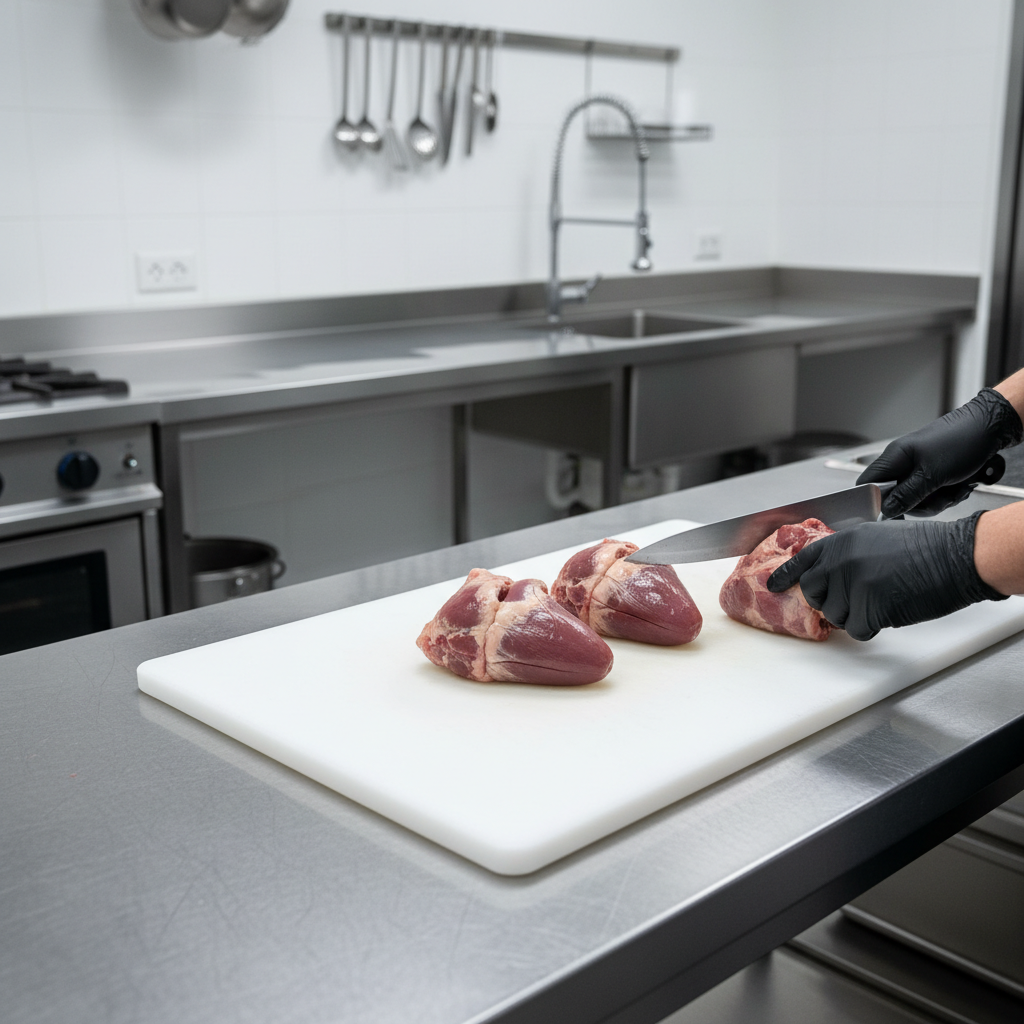
- A large, dedicated cutting board for raw meat
- A food dehydrator (recommended) OR a conventional oven
- Baking sheets and wire racks (for oven method)
- Airtight storage containers or vacuum sealer bags
The Preparation Protocol
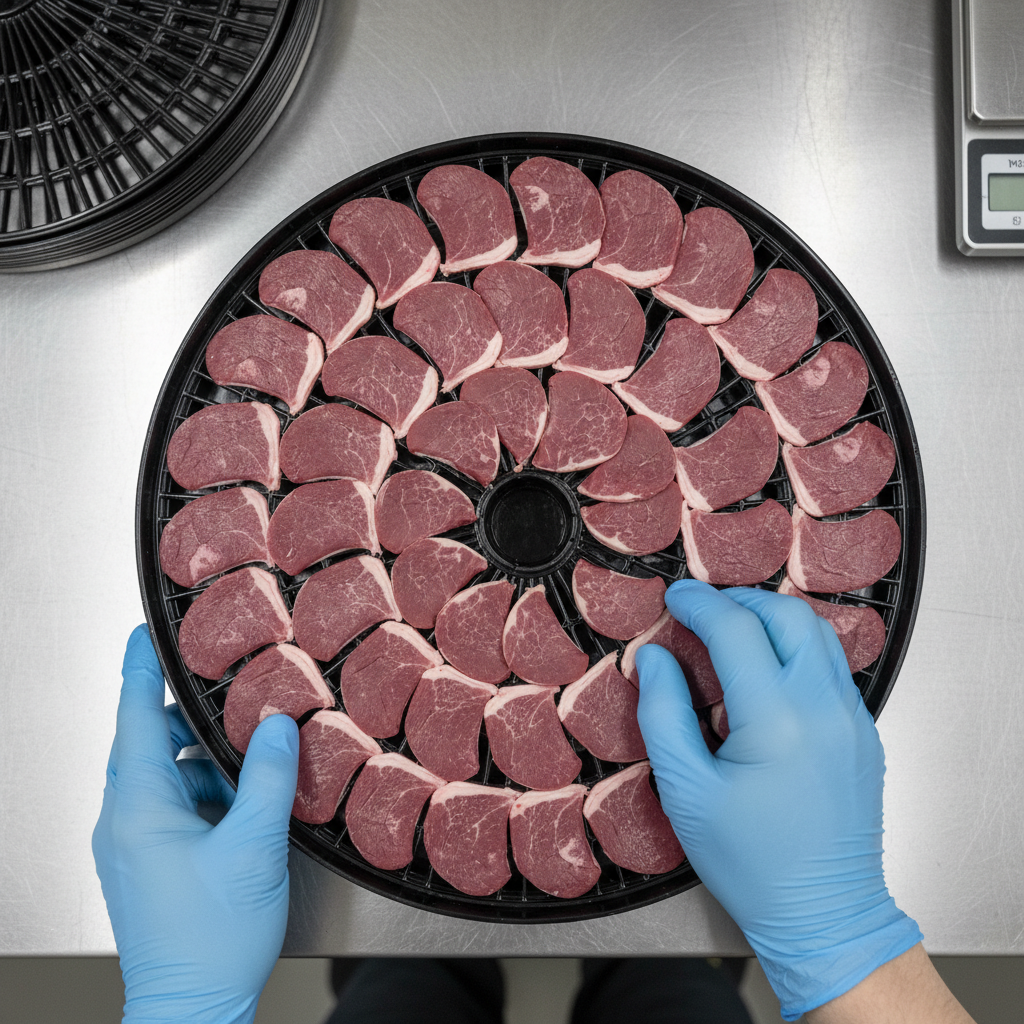
- Partial Freezing: Place the pork hearts in the freezer for 60-90 minutes. This firms up the meat significantly, making it much easier to slice thinly and uniformly. This is a non-negotiable step for getting perfect, even slices.
- Trimming: Once firm, place the heart on your dedicated cutting board. Carefully trim away any excessive fat, silver skin, or vascular tissue from the exterior. A cleaner cut yields a better final product.
- Slicing: This is the most critical step. Slice the heart against the grain into uniform strips, no thicker than 1/4 inch (about 6mm). The thinner and more consistent your slices, the more evenly and quickly they will dehydrate.
Dehydration Instructions
You have two primary methods for dehydration. The goal is a low-and-slow process to remove moisture without cooking the meat.
Method 1: Food Dehydrator (Preferred)
- Arrange the sliced pork heart on the dehydrator trays in a single layer, ensuring no pieces are touching. This allows for optimal air circulation.
- Set your dehydrator to its meat setting, typically around 160°F (71°C). This initial high temperature is crucial for killing any surface bacteria.
- After the first hour, you can reduce the temperature to around 145°F (63°C) for the remainder of the process.
- Dehydration time will vary based on your machine and the thickness of your slices, but expect it to take 6 to 10 hours.
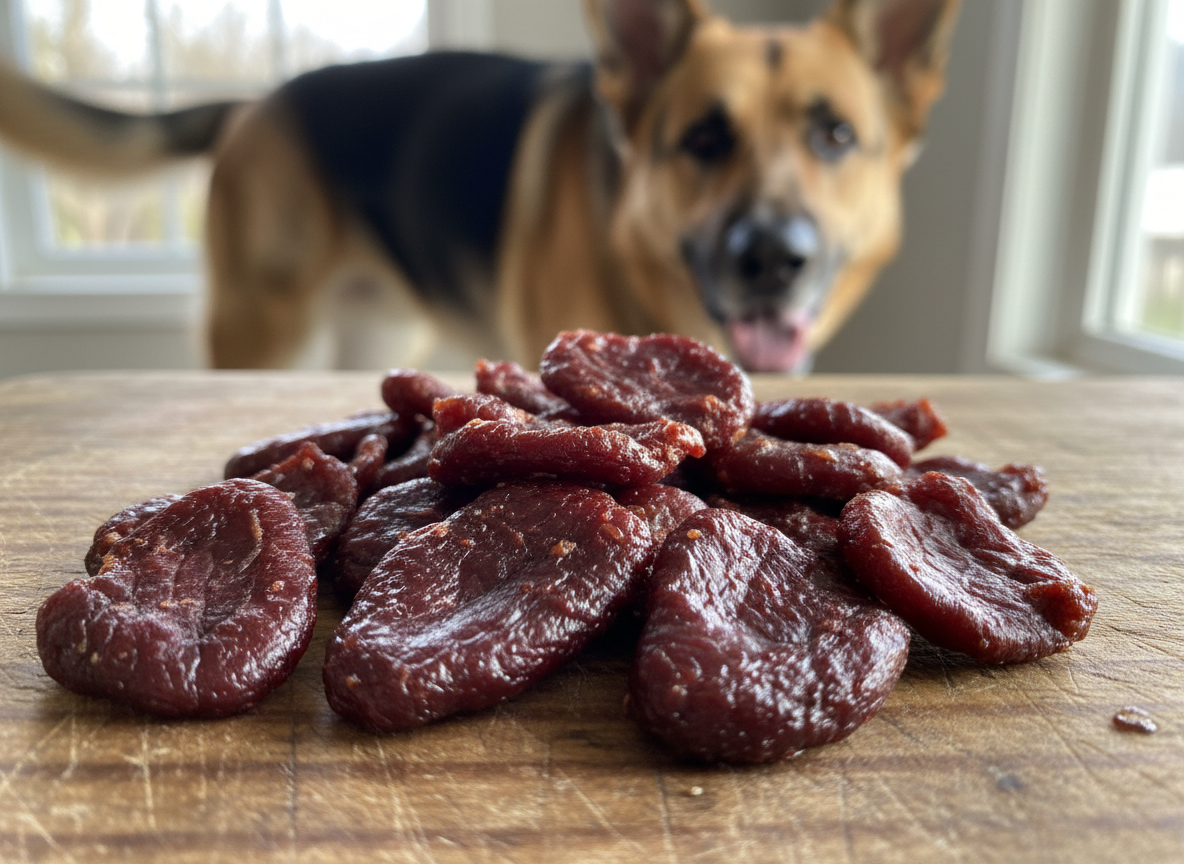
- The jerky is done when it is hard and brittle. It should snap when you try to bend it. If it’s chewy or pliable, it needs more time.
Method 2: Conventional Oven
- Preheat your oven to its lowest possible temperature, ideally 170°F (77°C). If your oven doesn’t go this low, prop the door open slightly with the handle of a wooden spoon to allow moisture to escape and prevent the meat from cooking.
- Place wire cooling racks onto baking sheets. Arrange the pork heart slices in a single, non-touching layer on the wire racks. The racks are essential for air circulation.
- Place the baking sheets in the oven.
- Drying time in an oven is typically shorter, around 4 to 8 hours. Check for doneness every hour after the 4-hour mark.
- Again, the final product should be hard and snap easily. Any moisture left behind is a breeding ground for mold.
The Long Game: Proper Storage and Strategic Use
The Long Game: Proper Storage and Strategic Use
You’ve invested the time to create a superior product; now let’s ensure it stays fresh and potent. Proper storage is not just about longevity—it’s about safety. Any remaining moisture can lead to mold and spoilage.
Airtight Lockdown: Short-Term Storage
Once the jerky is completely cool to room temperature (this is critical, as any warmth will create condensation), you can store it for short-term use.
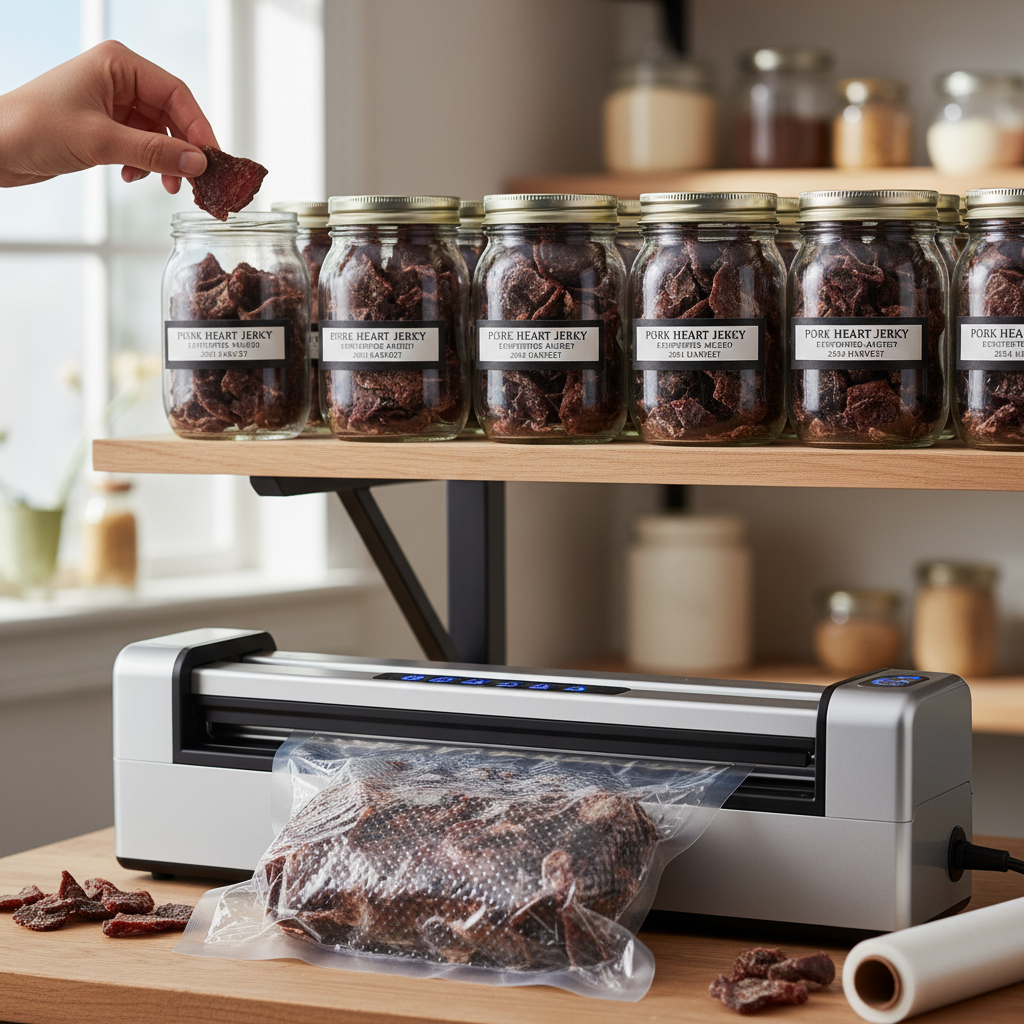
- Place the finished jerky into airtight glass jars or BPA-free plastic containers.
- Store the containers in a cool, dark place like a pantry or cupboard.
- Properly dried jerky will last for 2 to 4 weeks this way.
Hacker Tip: For added protection against moisture, toss a food-safe desiccant packet (the kind found in vitamin bottles or seaweed snacks) into your storage jar. This will absorb any trace humidity and extend shelf life.
Cryo-Preservation: Long-Term Freezing
For large batches, freezing is the ultimate preservation method. This locks in freshness and allows you to store your jerky for months.
- The best method is to use a vacuum sealer. This removes all oxygen, preventing freezer burn and preserving the jerky’s quality for 6 to 12 months.
- If you don’t have a vacuum sealer, use heavy-duty freezer bags. Place the jerky inside and remove as much air as possible before sealing. This method will keep the jerky well for up to 3 months.
- Label every bag or container with the contents and the date it was made.
Training with High-Value Currency
Dehydrated pork heart isn’t just another treat; it’s a powerful training tool. Its potent aroma and rich taste make it a ‘high-value’ reward, meaning most dogs will work harder and focus more intently to earn it. Use it strategically:
- For Difficult Commands: Use it when teaching a challenging new skill, like a reliable recall or an emergency stop.
- In High-Distraction Environments: When you’re at the park or in a group class, a low-value kibble might not be enough to keep your dog’s attention. Pork heart jerky will cut through the noise.
- Keep It Special: Don’t use it for everyday commands your dog already knows well. Reserve it for situations where you need maximum focus and motivation. Break the pieces into small, pea-sized bits. The value is in the taste and smell, not the size.
Conclusion
You now possess the knowledge to bypass the commercial treat industry’s inflated prices and questionable ingredients. You’ve seen the forensic cost analysis, you have the step-by-step blueprint, and you understand the strategies for storage and use. Making your own dehydrated pork heart jerky is more than just a DIY project; it’s a fundamental shift in how you approach your dog’s nutrition and your own finances.
This is the core philosophy of the Canine Nutrition Hacker: empower yourself with knowledge, analyze the data, and take direct action to provide the absolute best for your dog without being exploited by marketing hype. You now have a tool in your arsenal that is healthier, more effective for training, and dramatically more affordable. Stop overpaying for mystery ingredients. It’s time to hack your dog’s treat jar and reward them with the pure, nutrient-dense food they deserve.