Ahiflower Oil vs Salmon Oil: The Ultimate Omega 3 Guide for Dogs
Walk down any pet supplement aisle, and you’ll be bombarded with a wall of Omega-3 oils, each screaming promises of a shinier coat, healthier joints, and a sharper mind for your dog. For years, salmon oil has been the undisputed king, the go-to source for the powerful fatty acids our dogs need. But a new contender has entered the ring: Ahiflower oil, a plant-based challenger claiming superior benefits and a cleaner profile. So, which one is marketing fluff, and which one is a nutritional powerhouse? Forget the glossy labels and paid testimonials. As the Canine Nutrition Hacker, my job is to arm you with the data to see past the hype. We’re about to put these two oils under the microscope to analyze their molecular structure, bioavailability, purity, and true cost-effectiveness. This isn’t just about choosing an oil; it’s about making a strategic investment in your dog’s long-term health. Let’s get started.
Deconstructing Omega-3s: What Your Dog Actually Needs
Before we can declare a winner, you need to understand the game. Not all Omega-3s are created equal, and the way a dog’s body processes them is fundamentally different from a human’s. The marketing labels love to throw around acronyms, but only a few truly matter for delivering anti-inflammatory results.
The Power Players: EPA & DHA
The only reason you should be spending money on an Omega-3 supplement for your dog is to deliver two specific, long-chain fatty acids: eicosapentaenoic acid (EPA) and docosahexaenoic acid (DHA). These are the biological workhorses. EPA is a potent anti-inflammatory agent, crucial for managing conditions like arthritis, skin allergies, and other inflammatory diseases. DHA is the primary structural fat in the brain and retina, making it essential for cognitive function, puppy development, and senior cognitive support. Any supplement that doesn’t efficiently deliver these two molecules is wasting your money.
The Plant-Based Problem: The ALA Conversion Trap
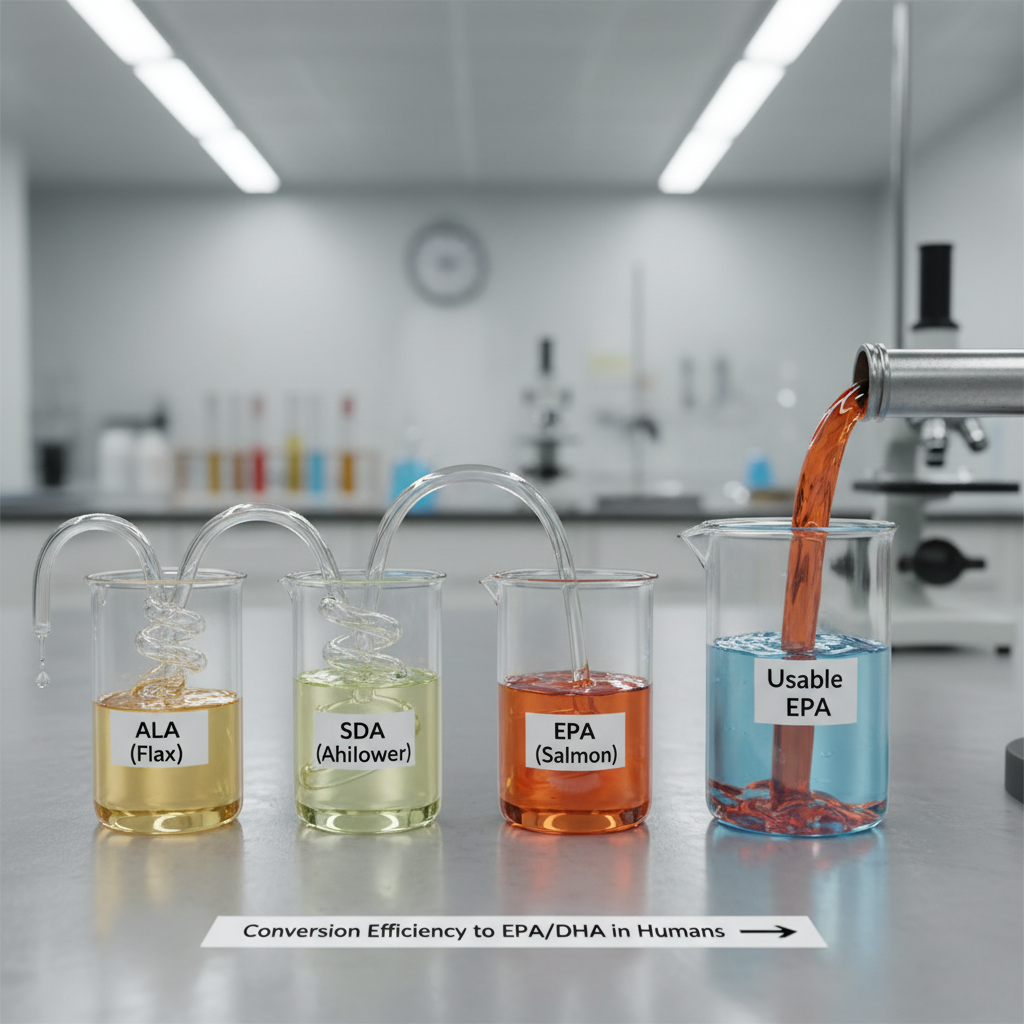
Many plant-based Omega-3s, like flaxseed or chia seed oil, are rich in alpha-linolenic acid (ALA). On paper, this looks great. The problem? Dogs are notoriously terrible at converting ALA into the usable forms of EPA and DHA. Their metabolic pathways for this process are highly inefficient. Think of ALA as raw material that your dog’s body has to refine in a very inefficient factory. The actual yield of EPA and DHA from ALA is often less than 5%, and sometimes functionally zero. This is the dirty little secret of many ‘multi-omega’ supplements.
Hacker Tip: If you see flaxseed as the primary Omega-3 source in a dog food or supplement, understand you are paying for a source that provides minimal anti-inflammatory benefit. It’s often used by manufacturers because it’s cheap, not because it’s effective for dogs.
The Ahiflower Anomaly: Enter SDA
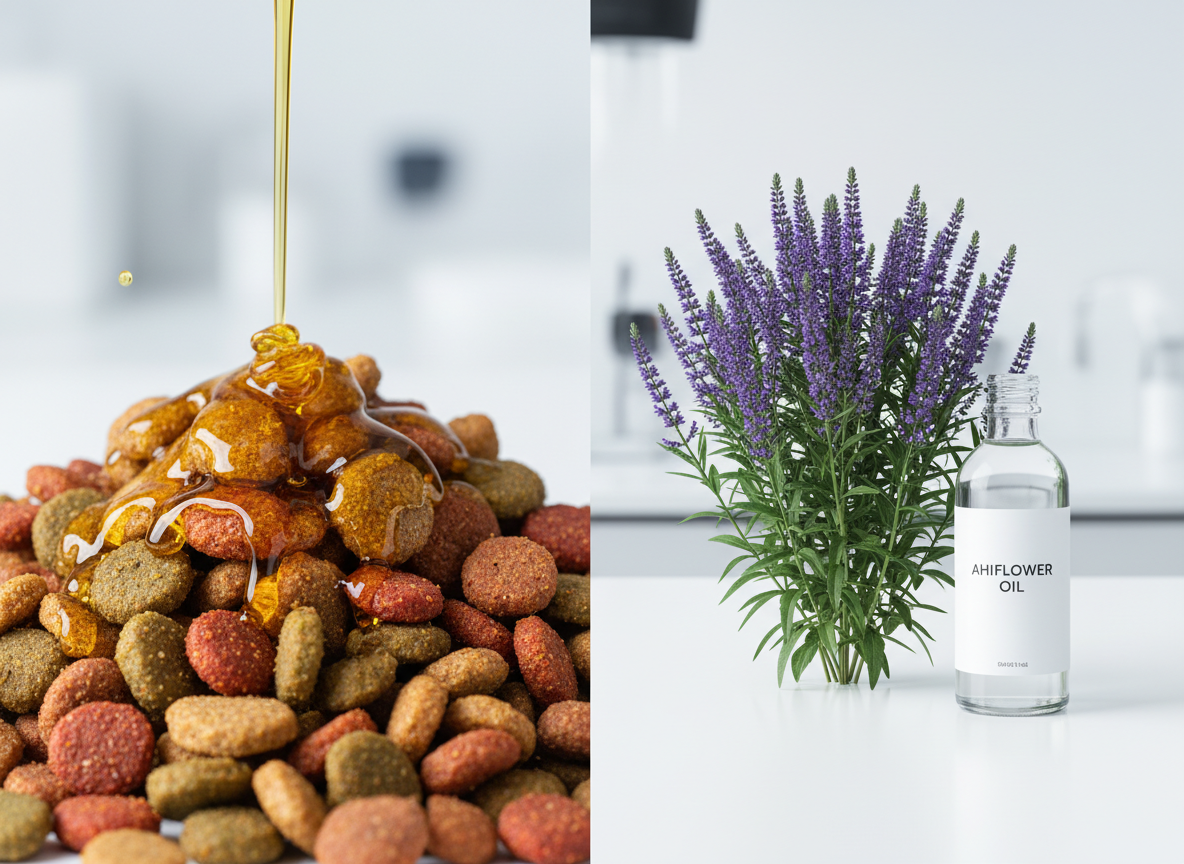
This is where Ahiflower oil changes the conversation. It is also a plant oil, rich in ALA. However, it contains something most other plant oils don’t: stearidonic acid (SDA). SDA is a step further down the metabolic chain, bypassing the most inefficient conversion step that plagues ALA. Because of this, a dog’s body can convert SDA into EPA up to four times more efficiently than it can with ALA. This makes Ahiflower a unique and far more potent plant-based option than its predecessors. It also contains gamma-linolenic acid (GLA), a beneficial Omega-6 fatty acid with its own anti-inflammatory properties, something fish oil lacks entirely.
The Contenders: A Forensic Ingredient Breakdown

Now that we understand the science, let’s put the two oils on the slab and analyze them source by source. Where they come from and what they contain are the most critical factors in their effectiveness and safety.
Salmon Oil: The Marine Powerhouse
- Source: Harvested from the fatty tissues of salmon. The quality varies dramatically between wild-caught (e.g., Alaskan sockeye) and farmed salmon. Wild-caught is generally preferred due to a better fatty acid profile and lower contaminant risk, but it comes at a higher price and with greater sustainability concerns.
- Key Nutrients: Its primary advantage is that it is a direct, pre-formed source of EPA and DHA. There is no conversion required. What you see on the label is what your dog’s body gets to use immediately. This makes it incredibly potent for targeted therapeutic use.
- The Inherent Risks: As an ocean product, salmon oil is susceptible to contamination with industrial and environmental pollutants. These include heavy metals (mercury, lead, arsenic), polychlorinated biphenyls (PCBs), and dioxins. Furthermore, fish oil is highly unstable and prone to oxidation (becoming rancid), which destroys its beneficial properties and can even create harmful free radicals.
Ahiflower Oil: The Plant-Based Purist
- Source: Extracted from the seeds of the Buglossoides arvensis plant, a non-GMO crop grown in the UK and Prince Edward Island. This land-based cultivation makes it a highly controlled, traceable, and sustainable resource.
- Key Nutrients: It delivers the most potent combination of fatty acids from a single plant: ALA, the game-changing SDA, and the beneficial Omega-6 GLA. It offers a multi-pronged approach to fatty acid supplementation.
- The Inherent Strengths: As a plant-based oil from a controlled crop, it is naturally free from the marine contaminants that plague fish oil. There is no risk of mercury or PCBs. It’s also more stable than fish oil, reducing the risk of rancidity. Its vegan nature also makes it an excellent choice for dogs with fish allergies. The primary limitation is that it contains no pre-formed DHA; the dog’s body must synthesize it from the provided precursors.
The Bioavailability Battle: A Head-to-Head Comparison
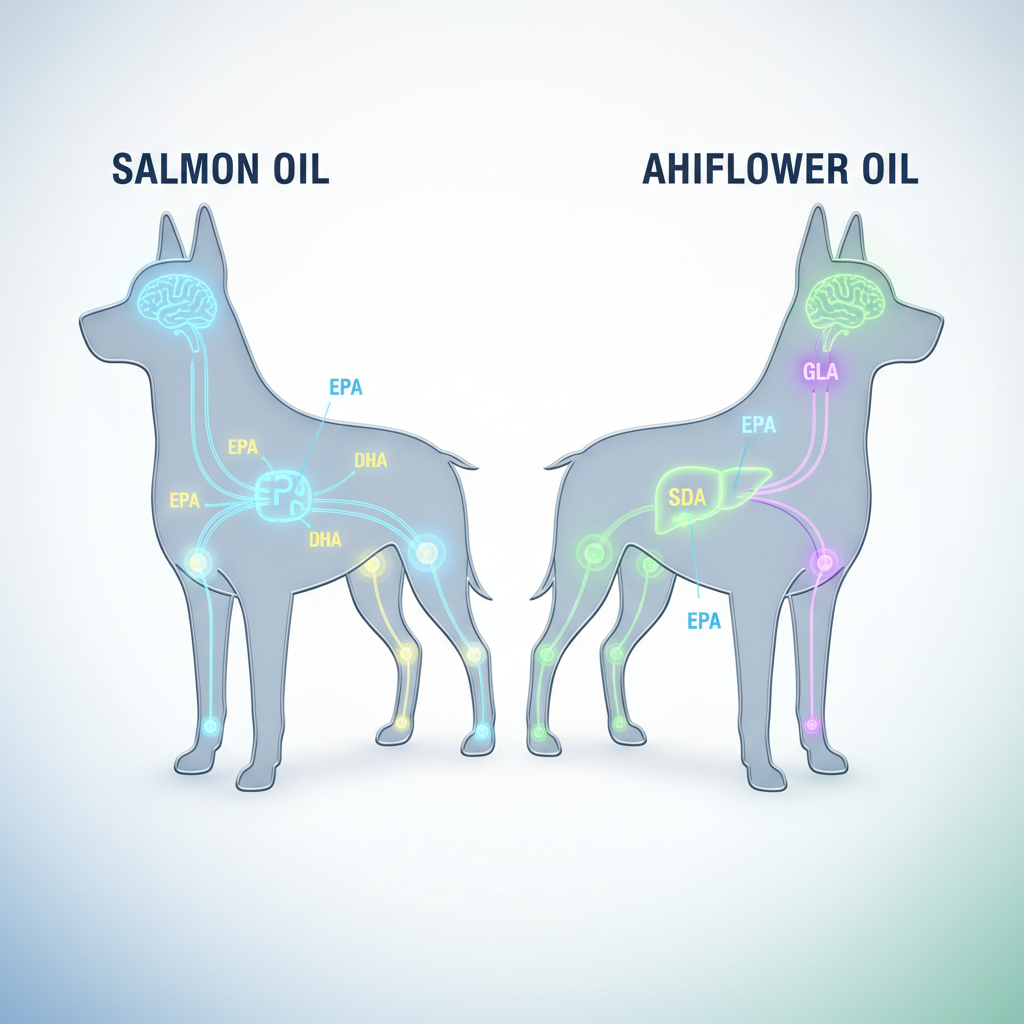
Effectiveness boils down to one thing: bioavailability. How much of the beneficial compound actually gets absorbed and used by your dog’s body? This is where the molecular differences between salmon and Ahiflower oil become critically important.
Salmon oil’s bioavailability is straightforward. Since it provides EPA and DHA directly, its effectiveness is nearly 100% (assuming the oil is high quality and not rancid). It’s a direct deposit into your dog’s ‘anti-inflammatory bank account.’ This makes it the undisputed champion for acute conditions or when a high therapeutic dose of DHA is medically necessary.
Ahiflower oil’s bioavailability is more nuanced. It relies on the conversion of SDA to EPA. While this conversion is leaps and bounds better than that of ALA, it is not 1:1. Studies show that Ahiflower oil significantly raises circulating EPA levels in the body, proving its efficacy. The presence of GLA adds another dimension, offering a different pathway for reducing inflammation that salmon oil can’t provide. The biggest question mark remains with DHA. While the body can elongate EPA to form DHA, the efficiency of this final step can vary. Therefore, for conditions specifically requiring high doses of DHA, Ahiflower is theoretically less direct.
| Feature | Salmon Oil | Ahiflower Oil |
|---|---|---|
| Direct EPA Source? | Yes | No (via efficient SDA conversion) |
| Direct DHA Source? | Yes | No (relies on conversion from EPA) |
| Contains GLA? | No | Yes |
| Conversion Required? | No | Yes (SDA to EPA) |
| Bioavailability Verdict | Highest for direct EPA/DHA delivery. The gold standard for immediate therapeutic impact. | Very high for raising EPA levels. Less direct for DHA. Excellent for general wellness. |
Purity & Sustainability: The Hidden Costs of Omega-3s

What’s not on the nutrition label is just as important as what is. The environmental impact and potential for contamination are critical factors that savvy owners must consider before making a purchase.
Contaminant Check: The Dirty Secret of Fish Oil
The world’s oceans are polluted. This is an unfortunate fact. Predators at the top of the food chain, like salmon, accumulate toxins from the smaller fish they eat. This process, called biomagnification, concentrates heavy metals and PCBs in their fatty tissues—the very tissues from which oil is extracted. A cheap, unrefined fish oil can potentially deliver a dose of toxins along with the Omega-3s.
To mitigate this, you MUST choose a salmon oil that is third-party tested for purity. Look for certifications from organizations like the International Fish Oil Standards (IFOS) program. These tests verify that the product is free from harmful levels of contaminants and that it meets the label claims for EPA and DHA. This is non-negotiable.
Insider Secret: Don’t trust a brand’s website alone. Demand to see a Certificate of Analysis (COA) for the specific batch you are buying. Reputable companies will provide this. If they won’t, you can’t trust what’s in the bottle.
The Ahiflower Advantage: Clean, Green, and Traceable
This is where Ahiflower oil truly shines. As a crop grown on land, it is completely insulated from marine pollution. There is zero risk of contamination from mercury, PCBs, or microplastics. The entire process, from seed to bottle, is managed by the growers (Natures Crops International) under their proprietary Crop Assured 365® system, ensuring full traceability and quality control. From a sustainability perspective, it’s a clear winner. It doesn’t put pressure on fragile fish stocks and provides a fully renewable source of valuable fatty acids. For the eco-conscious or safety-focused owner, this is a massive advantage.
The Verdict: A Practical Guide for Savvy Owners

There is no single ‘best’ oil. The superior choice depends entirely on your dog’s individual needs, your priorities as an owner, and your tolerance for risk. Let’s break down the decision-making process into a clear, actionable framework.
Choose High-Purity Salmon Oil If…
- Your dog has a severe, acute inflammatory condition like a major arthritis flare-up or intense allergies, and you need the most potent, direct anti-inflammatory impact from EPA.
- You have a puppy. The high levels of pre-formed DHA are critical for proper brain and retinal development.
- You have a senior dog showing signs of cognitive decline. Direct DHA is essential for supporting brain health and slowing cognitive dysfunction.
- CRITICAL CAVEAT: You are willing to do the research and pay a premium for a brand that is molecularly distilled and provides a third-party IFOS certification or a recent COA to guarantee purity.
Choose Ahiflower Oil If…
- You are looking for a daily wellness supplement to provide general anti-inflammatory support and promote a healthy coat.
- Sustainability and environmental impact are top priorities for you.
- You want to be 100% certain there are no marine contaminants like heavy metals or PCBs in your dog’s supplement.
- Your dog has known allergies or sensitivities to fish.
- You are interested in the combined benefits of Omega-3 (from SDA) and anti-inflammatory Omega-6 (from GLA).
The Hacker’s Hybrid Approach
For optimal, well-rounded support, particularly in a healthy adult dog, consider rotating between the two. Use Ahiflower oil as a daily, clean, sustainable base supplement. Then, during times of higher need—such as after a strenuous weekend hike, during allergy season, or as they enter their senior years—supplement with a high-purity salmon oil for a direct boost of EPA and DHA. This strategy gives you the best of both worlds: the clean, green profile of Ahiflower and the potent, targeted power of salmon oil when it’s needed most.
| Factor | Salmon Oil | Ahiflower Oil |
|---|---|---|
| Primary Use Case | Targeted therapeutic intervention (severe arthritis, cognition) | Daily wellness, general inflammation, fish allergies |
| Key Benefit | Direct, potent source of EPA & DHA | Unmatched purity, sustainability, and combined SDA/GLA |
| Main Drawback | Potential for contaminants and rancidity; sustainability issues | No pre-formed DHA; relies on conversion |
| Purity Concern | High. Requires stringent third-party testing. | Virtually None. Land-based and traceable. |
| Final Verdict | The Specialist’s Scalpel | The Everyday Shield |
Conclusion
The battle between Ahiflower oil and salmon oil isn’t about one being ‘good’ and the other ‘bad.’ It’s about understanding that they are different tools for different jobs. Salmon oil is a powerful, specialized tool for delivering the highest concentrations of ready-to-use EPA and DHA, but it comes with critical homework regarding purity and sourcing. Ahiflower oil is a modern, versatile, and incredibly safe tool for providing daily, sustainable anti-inflammatory support with the added benefit of GLA. You are now equipped with the forensic data to look past the marketing claims on the bottle. Analyze your dog’s specific needs, weigh your personal priorities on sustainability and purity, and make an informed, strategic decision. Stop guessing and start hacking your dog’s nutrition. Their long-term health is worth the analysis.