
Air Dried vs. Freeze Dried Dog Food: Is it Worth the Extra Cost?
Walk down any pet food aisle and you’re bombarded with choices. But venture into the top-shelf, refrigerated, or specialty sections, and you’ll encounter two categories that command astronomical prices: air-dried and freeze-dried dog food. The bags are smaller, the ingredients sound pristine, and the cost can be triple or quadruple that of premium kibble. The immediate question for any savvy pet owner is simple: Is it a gimmick, or is it genuinely worth the extra cost?
Forget the glossy packaging and the pictures of happy dogs running through fields. I’m The Canine Nutrition Hacker. My job is to ignore the marketing hype and analyze what’s actually in the bag, how it got there, and what it costs you per meal. We’re going to put these two ultra-premium food types under the microscope. This is a forensic breakdown of the science, nutrition, and brutal economics behind air-dried and freeze-dried dog food. Let’s determine if this is a necessary nutritional upgrade or an expensive luxury.
Decoding the Process: How Air-Drying and Freeze-Drying Actually Work
The Manufacturing Process: Dehydration vs. Sublimation
Before we can judge the final product, we must understand the journey from raw ingredient to dog bowl. The fundamental difference between these two food types lies in how moisture is removed to create a shelf-stable product. Both aim to preserve nutrients far better than the high-heat extrusion process used for conventional kibble, but they take radically different paths to get there.
Air-Drying: The Artisanal Jerky Method
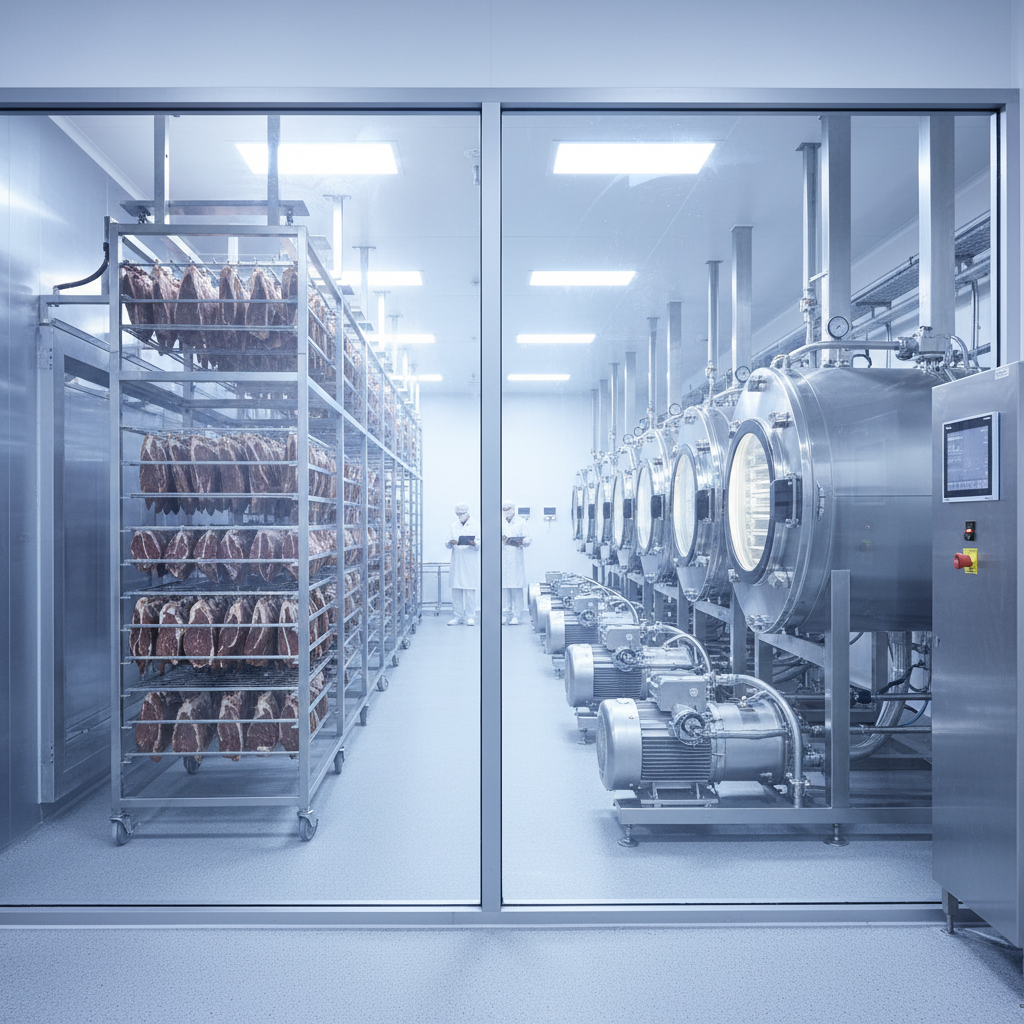
Think of air-drying as a highly sophisticated, controlled version of making jerky. Raw ingredients, primarily meat, organs, and ground bone, are mixed and then gently heated at low temperatures (typically between 140-180°F or 60-82°C) for an extended period. Large fans circulate air to slowly evaporate the water content from the food. This process is gentle enough to kill harmful pathogens like Salmonella and E. coli while preserving a significant portion of the nutrients found in the raw ingredients. The final product is dense, chewy, and intensely flavorful.
Freeze-Drying: The Space-Age Science
Freeze-drying, or lyophilization, is a far more complex and energy-intensive process. First, the raw food is flash-frozen at extremely low temperatures. Then, it’s placed in a powerful vacuum chamber. This is where the magic happens: the pressure is dropped so low that the ice crystals in the food bypass the liquid stage entirely and turn directly into water vapor—a process called sublimation. Because it uses cold instead of heat, freeze-drying is unparalleled in its ability to preserve the original cellular structure, enzymes, and heat-sensitive vitamins of the raw food. The resulting product is incredibly lightweight, porous, and rehydrates almost instantly.
Insider Secret: The core difference is heat vs. cold. While the low heat of air-drying is a massive step up from kibble’s destructive high-heat process, it can still degrade some delicate vitamins and enzymes. Freeze-drying’s cold process is the closest you can get to feeding raw food in terms of nutritional integrity, without the handling risks of raw meat.
The Nutritional Showdown: Which Method Preserves More Value?

Nutritional Integrity: The Great Preservation Debate
The entire sales pitch for these foods hinges on superior nutrition. They often start with stellar ingredients, but the preservation method determines what percentage of that nutrition actually makes it to your dog’s bowl. Let’s analyze the impact.
The “First 5 Ingredients” Truth in Dried Foods
Unlike many kibbles that lead with cheap fillers, both air-dried and freeze-dried foods typically boast impressive ingredient panels. You’ll almost always see whole-food sources at the top. For example:
- Typical Premium Air-Dried/Freeze-Dried First 5: Beef, Beef Heart, Beef Liver, Beef Kidney, Ground Beef Bone.
- Typical Mid-Tier Kibble First 5: Chicken, Corn Gluten Meal, Whole Grain Wheat, Brewers Rice, Animal Fat.
The starting quality is high in both cases. The real question is preservation. Freeze-drying retains up to 98% of the nutrients from the raw state. It’s the gold standard. Air-drying is still excellent, likely retaining 80-90% of the original nutritional value, but the gentle heat application does cause some minor degradation of B vitamins and certain enzymes. For the vast majority of dogs, this difference is negligible. For dogs with compromised immune systems or specific digestive needs, the near-perfect preservation of freeze-drying can be a significant advantage.
What truly matters is that both methods avoid the nutritional devastation of extrusion cooking used for kibble, which involves extreme heat and pressure that can denature proteins and destroy essential nutrients, forcing manufacturers to spray on a synthetic vitamin/mineral coating afterward.
The Wallet Impact: A Brutal Cost-Per-Day Breakdown
The Bottom Line: A Forensic Cost Analysis
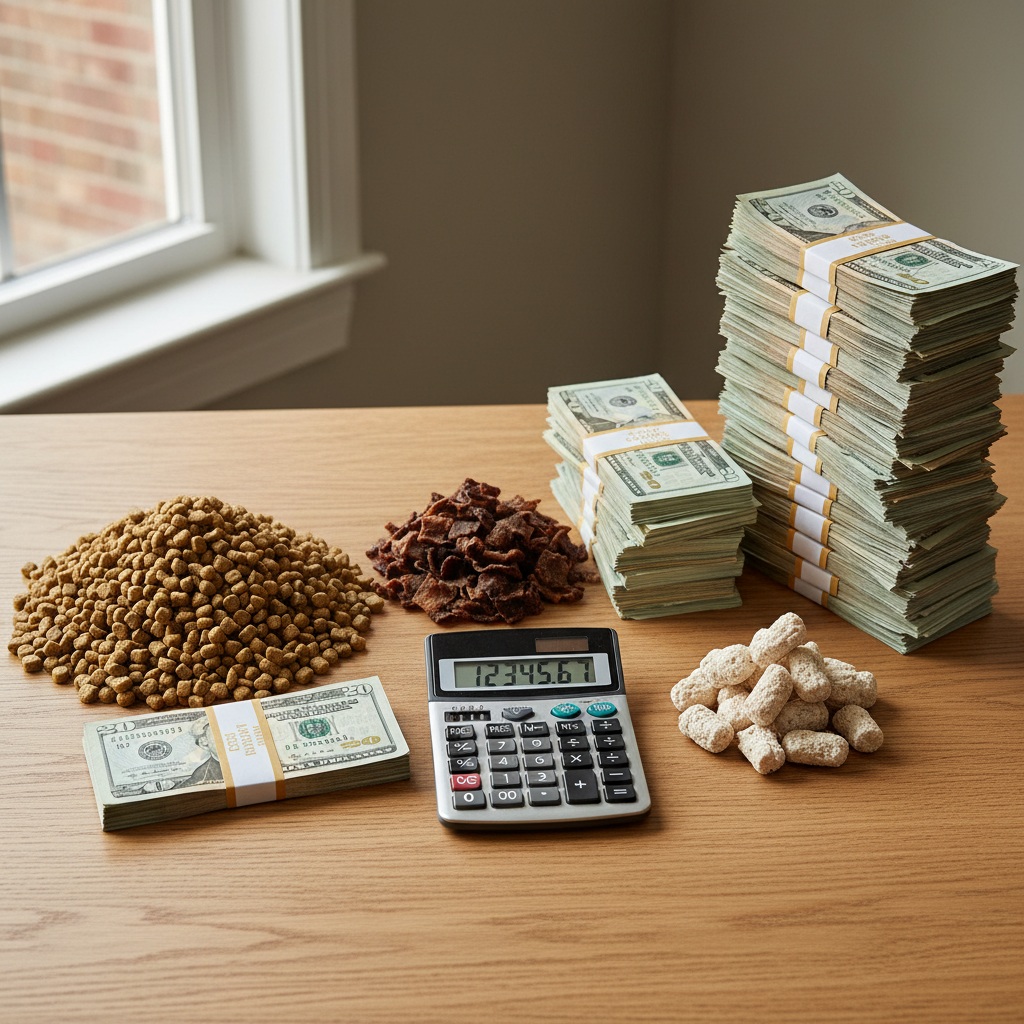
This is where the rubber meets the road. The nutritional benefits are clear, but can the average owner afford them? The high cost is driven by three factors: expensive raw ingredients (human-grade muscle meat and organs), the sheer amount of water removed (it takes about 4 pounds of raw meat to make 1 pound of dried food), and the energy-intensive manufacturing processes.
Let’s break down the approximate daily and monthly costs for a moderately active 50-pound dog.
| Food Type | Average Bag Size & Cost | Approx. Daily Feeding Amount | Cost Per Day | Monthly Cost |
|---|---|---|---|---|
| Standard Kibble | 30 lbs / $55 | ~3 cups (~12 oz) | $1.38 | $41.40 |
| Premium Kibble | 25 lbs / $75 | ~2.5 cups (~10 oz) | $2.34 | $70.20 |
| Air-Dried Food | 2 lbs / $40 | ~1.5 cups (~7 oz) | $8.75 | $262.50 |
| Freeze-Dried Food | 14 oz / $35 | ~2 cups reconstituted (~3 oz dry) | $10.50 | $315.00 |
*Costs are estimates based on market averages and will vary by brand and location. Daily amounts are approximate.
The numbers don’t lie. Feeding a 50lb dog an exclusive diet of air-dried or freeze-dried food can cost upwards of $250-$300 per month, compared to $70 for a premium kibble. This is a massive financial commitment that is simply not feasible for most households.
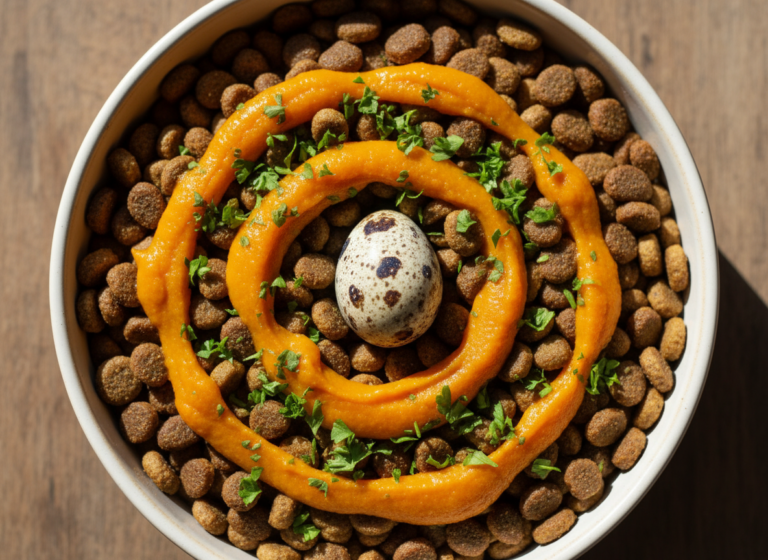
Hacker Tip: Don’t think in all-or-nothing terms. The most powerful way to use these foods is as a nutritional topper or mixer. Replace 25% of your dog’s kibble with a small amount of air-dried or freeze-dried food. You introduce high-quality protein and nutrients, dramatically increase palatability for picky eaters, and get many of the benefits for a fraction of the cost. A $35 bag of freeze-dried food used as a topper could last an entire month, adding only about $1 per day to your budget.
The Final Verdict: Air-Dried vs. Freeze-Dried Comparison Matrix
Head-to-Head Comparison: The Hacker’s Matrix
For the busy owner who needs a quick reference, this matrix breaks down the key differences to help you make an informed decision.
| Feature | Air-Dried Dog Food | Freeze-Dried Dog Food | The Hacker’s Verdict |
|---|---|---|---|
| Processing Method | Slow dehydration with low heat and circulating air. | Flash-freezing followed by vacuum sublimation (no heat). | Freeze-dried is technologically superior for preservation. |
| Nutrient Retention | Very good. Minimal loss of nutrients compared to kibble. | Excellent. The gold standard, retaining nearly all raw nutrients and enzymes. | Freeze-dried wins on pure nutritional integrity. |
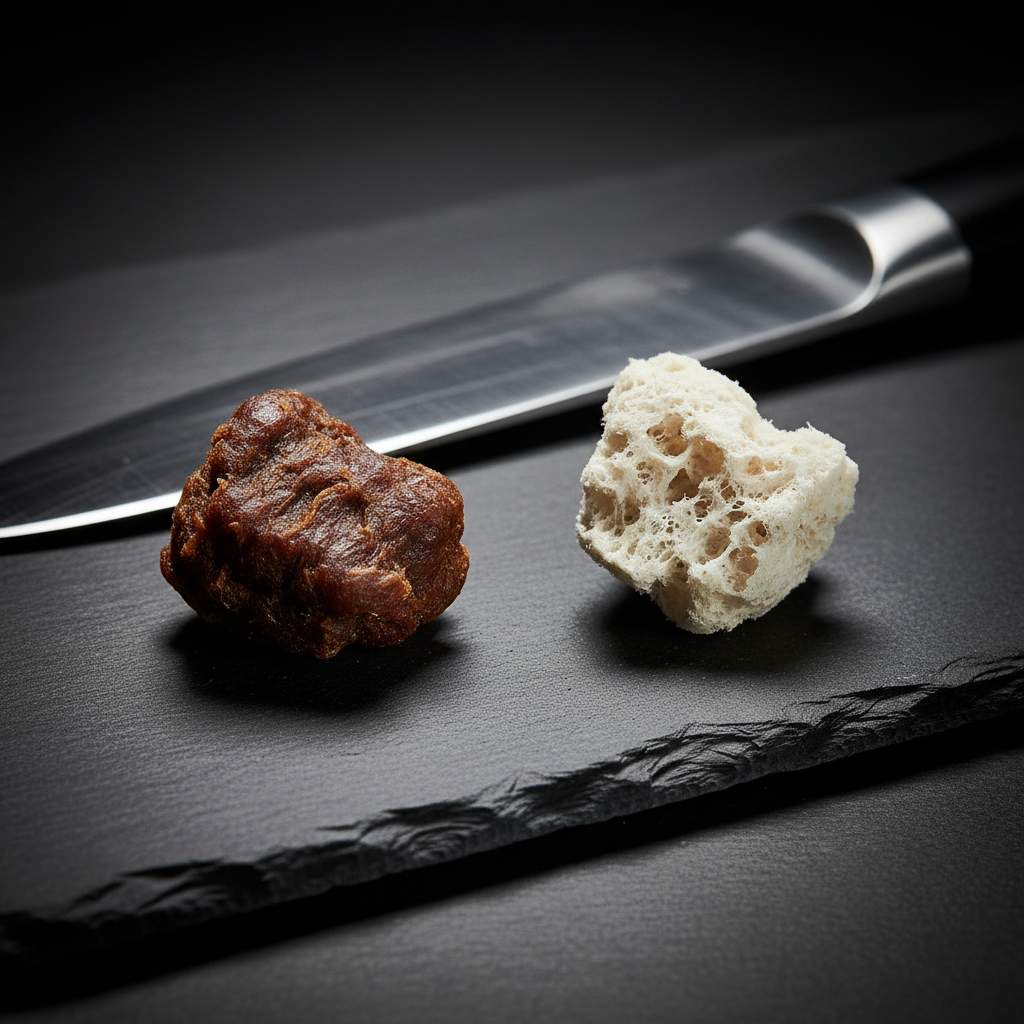
| Texture & Palatability | Dense, chewy, jerky-like. Highly palatable for most dogs. | Light, porous, and crumbly. Rehydrates to a soft texture. | Depends on the dog. Air-dried is often preferred by dogs who like to chew. |
| Convenience | Ready to serve, no rehydration needed. Less messy. | Often requires rehydration with water or broth before serving. Can be dusty. | Air-dried is the clear winner for grab-and-go convenience. |
| Cost Tier | Extremely High | Highest of the High | Air-dried is marginally more affordable, but both are luxury items. |
| Best Use Case | Kibble alternative, training treat, high-value topper for picky eaters. | Ultimate nutrition for sensitive dogs, performance athletes, or transitioning to raw. | Choose based on your specific goal: convenience and texture (Air-Dried) or maximum nutrition (Freeze-Dried). |
Beyond the Hype: Who Actually Needs This Food?

Practical Application: Matching the Food to the Dog
So, who should actually consider shelling out for these foods? It’s not about spoiling your dog; it’s about strategic nutritional intervention.
When to Choose Freeze-Dried:
- Severe Allergies or IBD: The purity of freeze-dried, especially single-protein formulas, makes it an ideal elimination diet food. The high bioavailability is also gentle on compromised digestive systems.
- Performance & Working Dogs: For canine athletes, nutrient density is everything. Freeze-dried food offers the most calories and nutrition by weight, perfect for fueling high-energy demands without a lot of bulk.
- The Transition to Raw: For owners interested in a raw diet but concerned about pathogens or preparation, freeze-dried raw is the safest and most convenient entry point.
When to Choose Air-Dried:
- The Kibble Upgrade: If you want to move away from extruded kibble to a less processed food but find freeze-dried too expensive or fussy, air-dried is the perfect middle ground.
- Picky Eaters: The intense, meaty aroma and jerky-like texture of air-dried food can entice even the most finicky dogs to eat.
- High-Value Training Treats: It’s easy to break into smaller pieces, isn’t greasy, and is far healthier than most commercial dog treats.
Important Warning: Both of these food types have extremely low moisture content. It is absolutely critical that your dog has constant access to fresh, clean water to prevent dehydration. If feeding freeze-dried, it is highly recommended to rehydrate it as directed to help with your dog’s overall water intake.
Conclusion
Is It Worth the Extra Cost? The Final Analysis
After a forensic review, the conclusion is clear: for most healthy dogs and their owners, feeding a 100% air-dried or freeze-dried diet is not a financially sustainable or necessary choice. The cost is simply too prohibitive. However, that does not mean these foods don’t have immense value.
Freeze-dried food is the undisputed champion of nutritional preservation, offering a convenient and safe way to deliver the benefits of a raw diet. Air-dried food provides a fantastic, less-processed, and highly palatable alternative to kibble at a slightly more accessible (though still very high) price point.
The smartest approach is the hacker’s approach: strategic application. Use these nutritional powerhouses as a meal topper, a mixer, or a high-value treat. By supplementing a high-quality traditional diet with a small amount of air-dried or freeze-dried food, you can significantly boost your dog’s nutrition and enjoyment without breaking the bank. Stop trusting the marketing on the front of the bag. Turn it around, understand the process, analyze the cost, and make the choice that’s right for your dog and your budget. That’s how you truly hack your dog’s nutrition.