
Grain-Free vs. Grain-Inclusive: The Truth About Canine Heart Health
For over a decade, the term ‘grain-free’ has been the gold standard in premium dog food marketing. Pet owners were sold a compelling narrative: grains are cheap ‘fillers,’ unnatural for our dogs who, we were told, are basically domesticated wolves. The pet food industry capitalized on this, flooding shelves with formulas featuring exotic proteins and, crucially, replacing traditional grains with legumes like peas, lentils, and chickpeas. It seemed like a nutritional upgrade. Then, in July 2018, the bubble burst.
The U.S. Food and Drug Administration (FDA) issued a startling alert, announcing an investigation into a potential link between certain diets—many of them labeled ‘grain-free’—and a life-threatening canine heart condition called dilated cardiomyopathy (DCM). Panic and confusion rippled through the pet owner community. The very food you were paying a premium for, believing it was the best, could potentially be harming your dog. This isn’t just another blog post rehashing headlines. This is a forensic analysis. We’re going to cut through the marketing noise, dissect the ingredient labels, and expose the scientific realities behind the grain-free debate. My goal is to arm you, the pet owner, with the data you need to stop guessing and start making calculated, informed decisions about what goes into your dog’s bowl.
MEDICAL DISCLAIMER: I am The Canine Nutrition Hacker, not a veterinarian. The information in this article is the result of extensive research into publicly available data and scientific studies. It is not a substitute for professional veterinary advice. Always consult with your veterinarian or a board-certified veterinary nutritionist before making any changes to your dog’s diet, especially if you have concerns about their health.
Deconstructing the Grain-Free Myth: How Marketing Trumped Science

The grain-free movement was a masterclass in marketing. It preyed on our desire to give our pets the very best, using emotionally charged words like ‘ancestral,’ ‘biologically appropriate,’ and ‘natural.’ The core argument was simple: wolves don’t eat corn, so your dog shouldn’t either. This conveniently ignores tens of thousands of years of evolution. Scientific studies, such as a 2013 paper published in Nature, have shown that domestic dogs have key genetic differences from wolves, including an increased ability to digest starches and grains. Grains are not evil; they provide energy, fiber, and essential nutrients like B vitamins and minerals.
The FDA Bombshell: What is DCM?
Dilated Cardiomyopathy (DCM) is a disease of the heart muscle that results in an enlarged heart. As the heart and its chambers become dilated, it becomes harder for it to pump, which can lead to congestive heart failure. While DCM has a known genetic link in certain breeds like Doberman Pinschers and Great Danes, the FDA began noticing a disturbing trend: an uptick in cases in breeds not typically predisposed to the disease, such as Golden Retrievers, Labradors, and various mixed breeds. The common thread? Their diet.
The FDA’s investigation identified a strong correlation. Over 90% of the reported DCM cases involved dogs eating grain-free diets. More specifically, the data pointed to diets where ingredients like peas, lentils, other legume seeds (pulses), and/or potatoes were listed as main ingredients, high up on the label. This led to the coining of a new term in the nutritional world: ‘BEG’ diets.
- Boutique: Manufactured by smaller companies that may not have the extensive nutritional research and development resources of larger, established brands.
- Exotic: Featuring non-traditional protein sources like kangaroo, duck, or bison, which have less established nutritional data compared to chicken or beef.
- Grain-Free: The central characteristic, where grains are replaced by the pulse ingredients and potatoes mentioned above.
The problem wasn’t just the absence of grain; it was the massive inclusion of these specific non-grain ingredients that seemed to be at the heart of the issue.
The Real Culprits: Unmasking the Problem with Pulse Ingredients
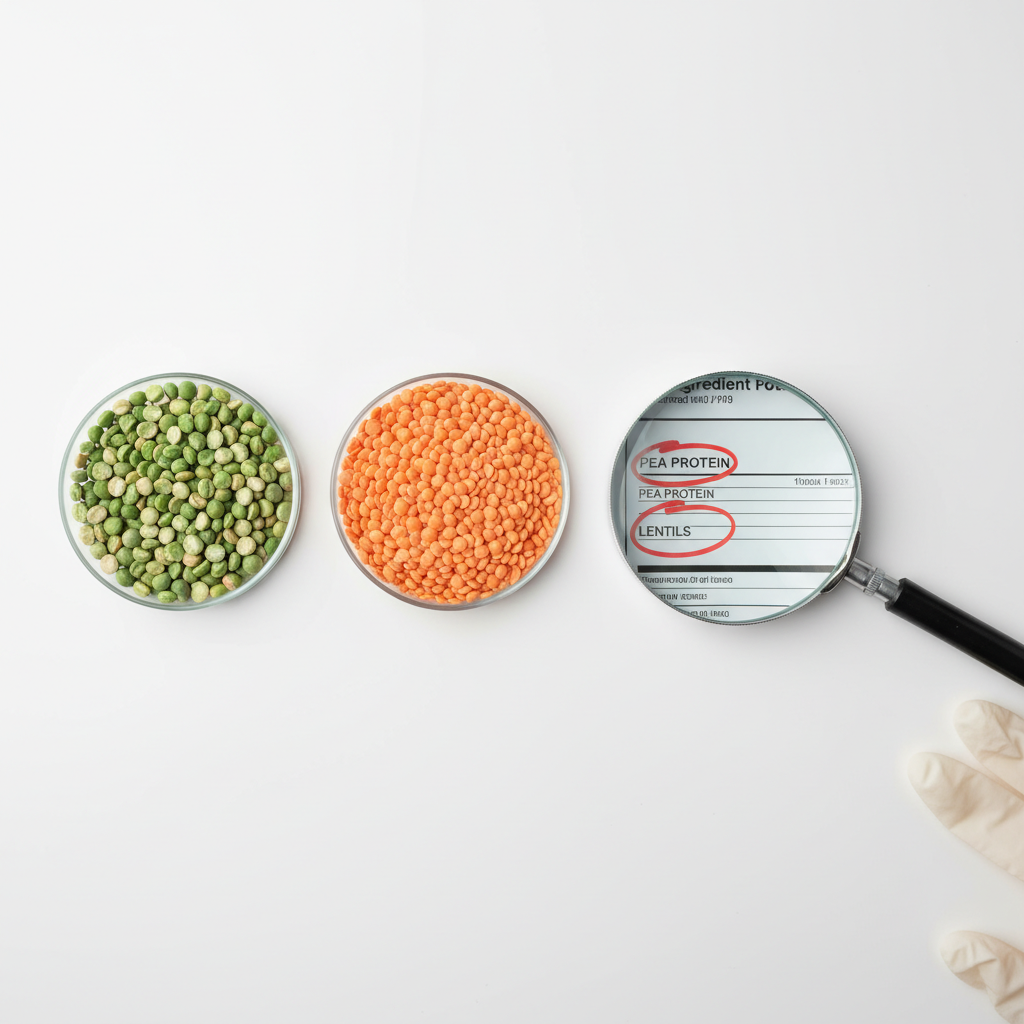
As a nutrition hacker, my first rule is to ignore the front of the bag and go straight to the ingredient panel. This is where the truth lies. In the case of DCM, the ‘enemy ingredients’ aren’t a single toxic substance, but rather a complex nutritional puzzle created by the high concentration of pulse ingredients that replaced grains.
Why Are Peas and Lentils a Problem?
It’s important to state that peas and lentils are not inherently toxic to dogs in small amounts. The issue arises when they are used as a primary source of protein and carbohydrates to replace both meat and grains. Here are the leading theories veterinary nutritionists are investigating:
- Taurine Interference: Taurine is a critical amino acid for heart health. While dogs can synthesize their own (unlike cats), certain ingredients might interfere with this process. The high fiber content and specific protein structures in legumes may bind with bile acids, increasing the loss of taurine from the body. Even in diets supplemented with taurine, something about the formulation may be blocking its absorption or utilization.
- Anti-Nutrients: Legumes contain compounds like phytates and lectins. These ‘anti-nutrients’ can bind to essential minerals and other nutrients in the digestive tract, preventing them from being absorbed by the dog’s body. This could lead to secondary deficiencies that impact overall health, including cardiac function.
- Ingredient Splitting and Protein Quality: Many BEG brands use a technique called ‘ingredient splitting’ to make their formulas appear meat-rich. A label might list ‘Lamb’ first, but then be followed by ‘Pea Protein,’ ‘Peas,’ and ‘Pea Fiber.’ When you add all the pea ingredients together, they often outweigh the lamb, making a plant protein the true primary ingredient. Plant proteins have a different amino acid profile than animal proteins and may be less bioavailable for dogs.
Hacker Tip: Always read the first 5-7 ingredients. If you see multiple ingredients derived from peas, lentils, or potatoes in that top section, it’s a major red flag. This indicates the diet relies heavily on these components for its core nutritional structure, a hallmark of the diets implicated in the FDA’s investigation.
The Hero Ingredients: Building a Heart-Healthy Bowl

So, if we’re avoiding diets heavy in legumes, what should we be looking for? The answer isn’t to demonize all modern foods, but to return to the principles of sound, evidence-based nutrition. This means prioritizing diets formulated by companies that invest heavily in science and research.
The Case for Wholesome Grains
The ‘hero ingredients’ in this story are often the very things the grain-free trend taught us to fear. When properly selected and processed, grains are a safe and nutritious part of a canine diet.
- Brown Rice: An excellent source of digestible carbohydrates for energy, rich in fiber for digestive health, and packed with minerals like manganese and selenium.
- Oats: High in soluble fiber, which can help regulate blood glucose levels. They are also gentle on the digestive system and provide a good source of iron and B vitamins.
- Barley: A low-glycemic carbohydrate that provides sustained energy and is rich in fiber and essential minerals.
- Sorghum: A gluten-free ancient grain that is rich in antioxidants and helps promote digestive health.
Beyond Grains: The Importance of Formulation
A heart-healthy diet is about more than just one or two ingredients; it’s about the entire formulation. Look for diets that prioritize high-quality, named animal proteins (e.g., ‘Chicken,’ ‘Lamb Meal,’ not ‘Meat and Bone Meal’). These provide the essential amino acid building blocks, including taurine precursors like methionine and cysteine, that are critical for cardiac health.
Insider Secret: Look for a brand’s stance on WSAVA (World Small Animal Veterinary Association) guidelines. These guidelines recommend that pet food manufacturers employ full-time qualified nutritionists, conduct rigorous quality control, and, most importantly, perform AAFCO feeding trials. A feeding trial is the gold standard, proving that dogs can thrive on the food long-term, which is a far higher bar than simply meeting a calculated nutritional profile on paper.
Case Study: BEG Diet vs. Science-Backed Diet
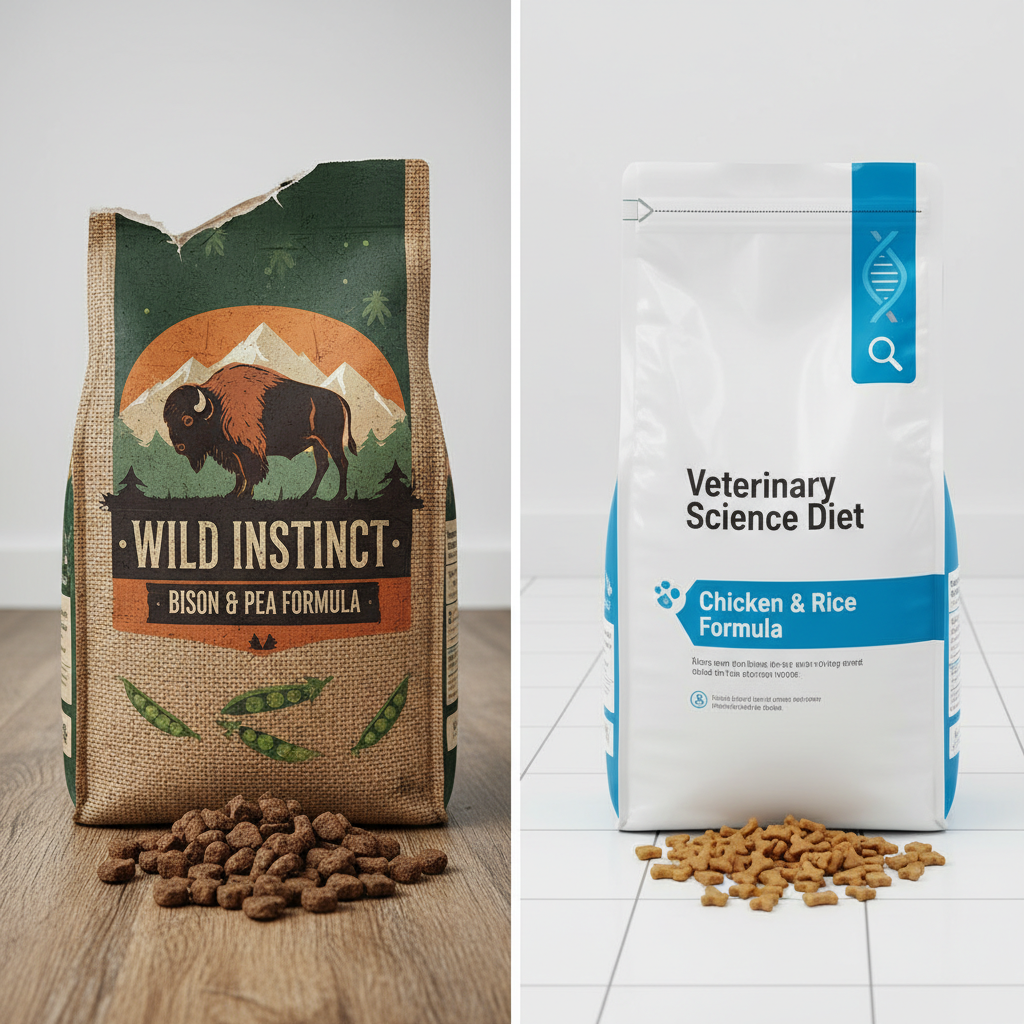
Let’s put on our lab coats and do a side-by-side forensic analysis. Here, we’ll compare the ingredient profile of a typical ‘BEG’ diet against a diet from a major brand that follows WSAVA guidelines and invests in scientific research. The difference is stark.
The ‘First 5 Ingredients’ Truth
Typical BEG Diet Label: Bison, Ocean Fish Meal, Peas, Pea Protein, Sweet Potatoes…
Analysis: While ‘Bison’ sounds impressive, the next three ingredients are all pulse-based. The ‘Peas’ and ‘Pea Protein’ combined likely make up a larger percentage of the formula than the bison. This is a plant-based formula masquerading as a meat-rich, ancestral diet.
Science-Backed Grain-Inclusive Label: Chicken, Brewers Rice, Whole Grain Corn, Chicken By-Product Meal, Whole Grain Wheat…
Analysis: The first ingredient is a quality animal protein. The grains (rice, corn, wheat) have decades of research backing their safety and nutritional value in dogs. The ‘Chicken By-Product Meal’ is a nutrient-dense concentrate of protein and minerals. This formula prioritizes proven ingredients over marketing trends.
Here’s how they stack up in a head-to-head comparison:
| Feature | Typical BEG Diet | Science-Backed Diet |
|---|---|---|
| Primary Protein Source | Exotic meat + High concentration of plant protein (peas) | Named animal protein (e.g., Chicken) and animal protein meal |
| Primary Carbohydrate Source | Legumes (Peas, Lentils) and Potatoes | Researched Grains (Rice, Corn, Barley, Oats) |
| DCM Risk Profile (per FDA) | High. This formulation is characteristic of diets named in the FDA investigation. | Low. This type of formulation has not been associated with diet-related DCM. |
| Company Research Standard | Often formulated to ‘meet’ AAFCO profiles; may lack feeding trials or veterinary nutritionists on staff. | Formulated by veterinary nutritionists; often validated with extensive AAFCO feeding trials. |
| The Hacker’s Verdict | Avoid. The reliance on high levels of pulse ingredients poses an unnecessary and scientifically documented risk. | Recommended. Prioritizes proven nutritional science and safety over marketing fads. |
Conclusion
The truth about canine heart health is that marketing is a poor substitute for nutritional science. The grain-free trend, born from clever branding rather than clinical evidence, led to a generation of diets whose long-term effects were unknown—with potentially devastating consequences. The key takeaway is not that ‘grains are good’ and ‘peas are bad.’ The takeaway is that formulation is everything. Diets high in pulse ingredients like peas, lentils, and potatoes have been scientifically correlated with an increased risk of DCM, a risk that is simply not worth taking.
As a Canine Nutrition Hacker, I urge you to be a skeptic. Read past the beautiful packaging and the ancestral promises. Scrutinize the first ten ingredients. Favor brands that employ full-time veterinary nutritionists and can prove the safety of their diets with long-term feeding trials. Your veterinarian is your most valuable ally in this process. Discuss your dog’s specific needs with them. Your dog’s health is worth more than the latest trend. Be an advocate, a researcher, and a hacker for their health—not a victim of hype.