
5 Best Dog Foods for Frenchies With Gas (Stop the Farts!)
Let’s be honest. You love your French Bulldog’s quirky personality, their adorable snorts, and their bat-like ears. But the constant, room-clearing gas? Not so much. It’s a signature trait of the breed, but it’s not something you just have to live with. I’m The Canine Nutrition Hacker, and I don’t buy into marketing hype. I analyze ingredient labels like a forensic scientist to find what works, what doesn’t, and what’s a flat-out ripoff. The foul smell wafting from your Frenchie isn’t a personality quirk; it’s a distress signal from their gut. It’s a direct result of food that their sensitive, compact digestive system simply can’t handle.
In this no-nonsense guide, we’re going to bypass the cute packaging and brand promises. We’ll dive deep into the science of Frenchie flatulence, expose the common ‘enemy ingredients’ that trigger it, and arm you with an arsenal of ‘hero ingredients’ to look for. Then, we’ll put five of the top-performing foods under the microscope to see which ones truly make the cut for your gassy companion.
MEDICAL DISCLAIMER: I am a canine nutrition analyst, not a veterinarian. The information in this article is based on extensive research and analysis. However, you should always consult with your veterinarian before making any significant changes to your dog’s diet, especially if they have underlying health conditions.
The Anatomy of a Frenchie Fart: Why Your Bulldog is a Gas Machine
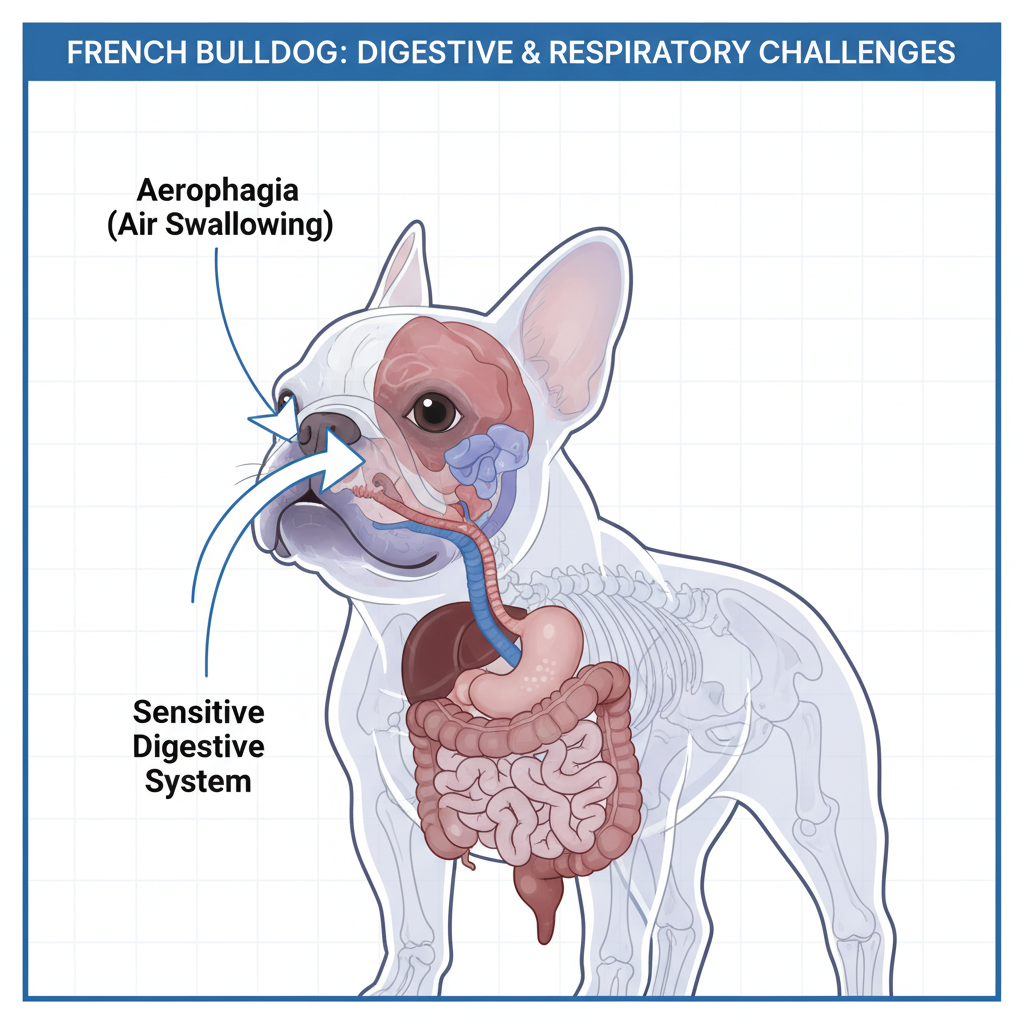
Before we can fix the problem, we need to understand the source. A Frenchie’s gas problem is a perfect storm of anatomy and physiology. It’s not their fault; they were literally built for it. Understanding these two core reasons is the first step to becoming a more effective nutrition hacker.
1. Brachycephalic Air Gulping (Aerophagia)
Your Frenchie’s adorable flat face, technically known as a ‘brachycephalic’ skull structure, is a primary culprit. When they eat and drink, they swallow a significant amount of air along with their food. This isn’t just a minor issue; it’s a constant influx of air into the digestive system. This air has to go somewhere, and it often exits as flatulence. While you can’t change their facial structure, you can change how they eat, which we’ll cover later. But the food itself plays a massive role in whether this swallowed air combines with digestive gases to become particularly foul.
2. A Uniquely Sensitive Digestive Tract
French Bulldogs are notorious for having sensitive stomachs and a predisposition to food allergies and intolerances. Their compact bodies house a digestive system that can be easily overwhelmed by ingredients that other dogs might handle just fine. When you feed them a food filled with hard-to-digest proteins, inflammatory fillers, or artificial junk, their gut flora rebels. This leads to fermentation in the colon, a process that produces hydrogen sulfide gas—the rotten-egg smell that has you opening windows in the middle of winter. The key is to provide a food that is so easily digestible and non-inflammatory that it gives their system a break, minimizing fermentation and, therefore, gas.
Enemy Ingredients: The Top Gas-Inducing Culprits on the Label
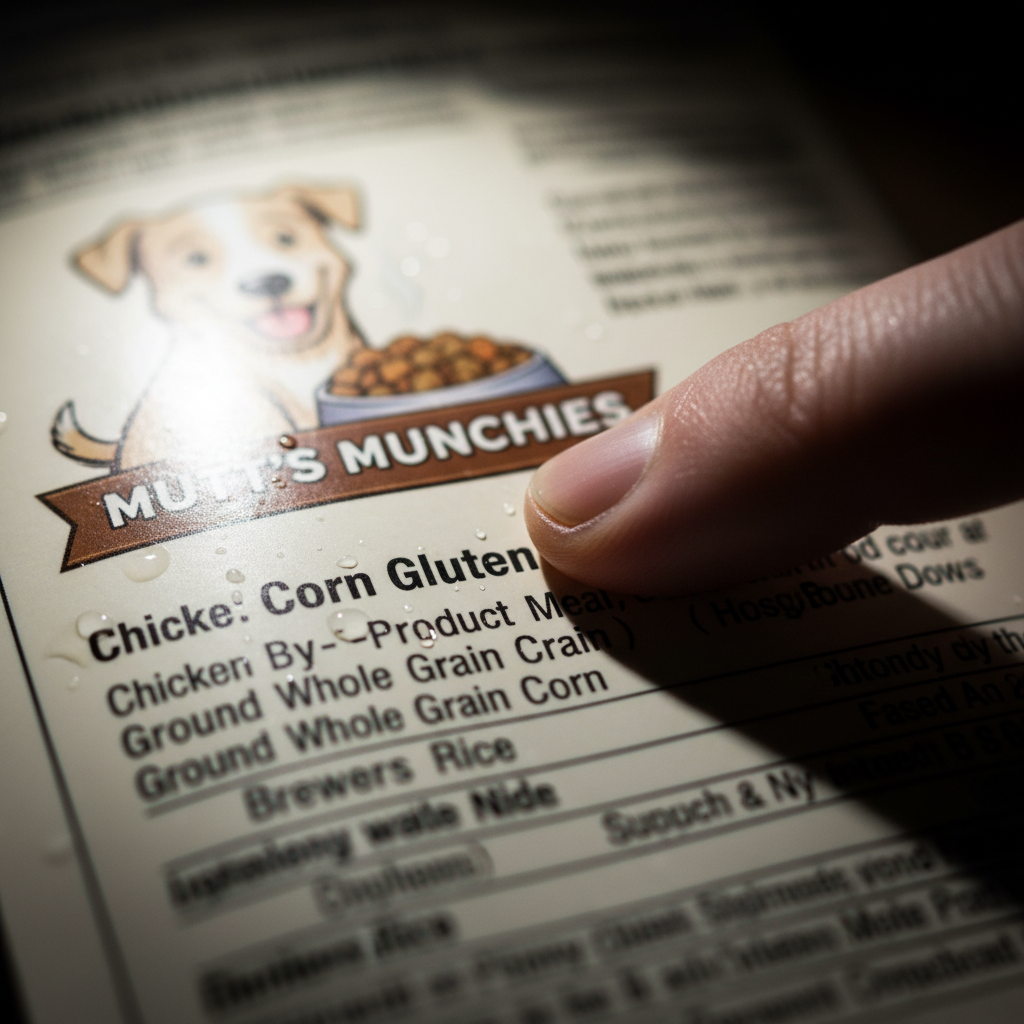
Reading a dog food label is your most powerful tool. Brands use clever marketing, but the ingredients list doesn’t lie. Here are the top offenders that are likely turning your Frenchie into a little stink machine. If you see these high up on the list, put the bag down.
Low-Quality Fillers (Corn, Wheat, & Soy)
These are the cheapest ingredients for manufacturers, and they are notoriously difficult for many dogs, especially Frenchies, to digest. Corn gluten meal, wheat gluten, and soy protein concentrate are common culprits. They offer minimal nutritional value and are major triggers for inflammation and fermentation in the gut. Your dog’s system has to work overtime to break them down, and the byproduct is excessive, smelly gas.
Unspecified ‘Meat’ By-Products or Meals
Vague terms like ‘meat by-product meal’ or ‘animal digest’ are massive red flags. Quality foods will specify the source, such as ‘chicken meal’ or ‘lamb meal’. Unspecified sources can mean a rendered mix of anything, from any animal, with inconsistent quality and digestibility. This mystery meat can easily upset a sensitive Frenchie stomach.
Excessive Fat & Greasy Foods
While dogs need fat for energy, foods with excessively high fat content can be hard on the pancreas and slow down digestion. This prolonged time in the gut gives more opportunity for fermentation and gas production. Look for foods with a moderate fat level (typically 12-18%) from high-quality, named sources like ‘chicken fat’ or ‘sunflower oil’.
Certain Legumes in High Quantities
Ingredients like peas, lentils, and chickpeas have become popular in grain-free formulas. While they can be fine in moderation, foods that use them as a primary protein and carb source (a practice called ‘ingredient splitting’) can cause significant gas. They are high in fiber and certain starches that can be tough for some dogs to break down.
Hacker Tip: ‘Ingredient Splitting’ is a trick where a manufacturer lists multiple forms of the same low-quality ingredient (e.g., ‘peas,’ ‘pea protein,’ ‘pea flour’) to push them down the ingredients list, making it seem like meat is the primary component when, in aggregate, it’s not.
Hero Ingredients: Your Arsenal for a Gas-Free Frenchie
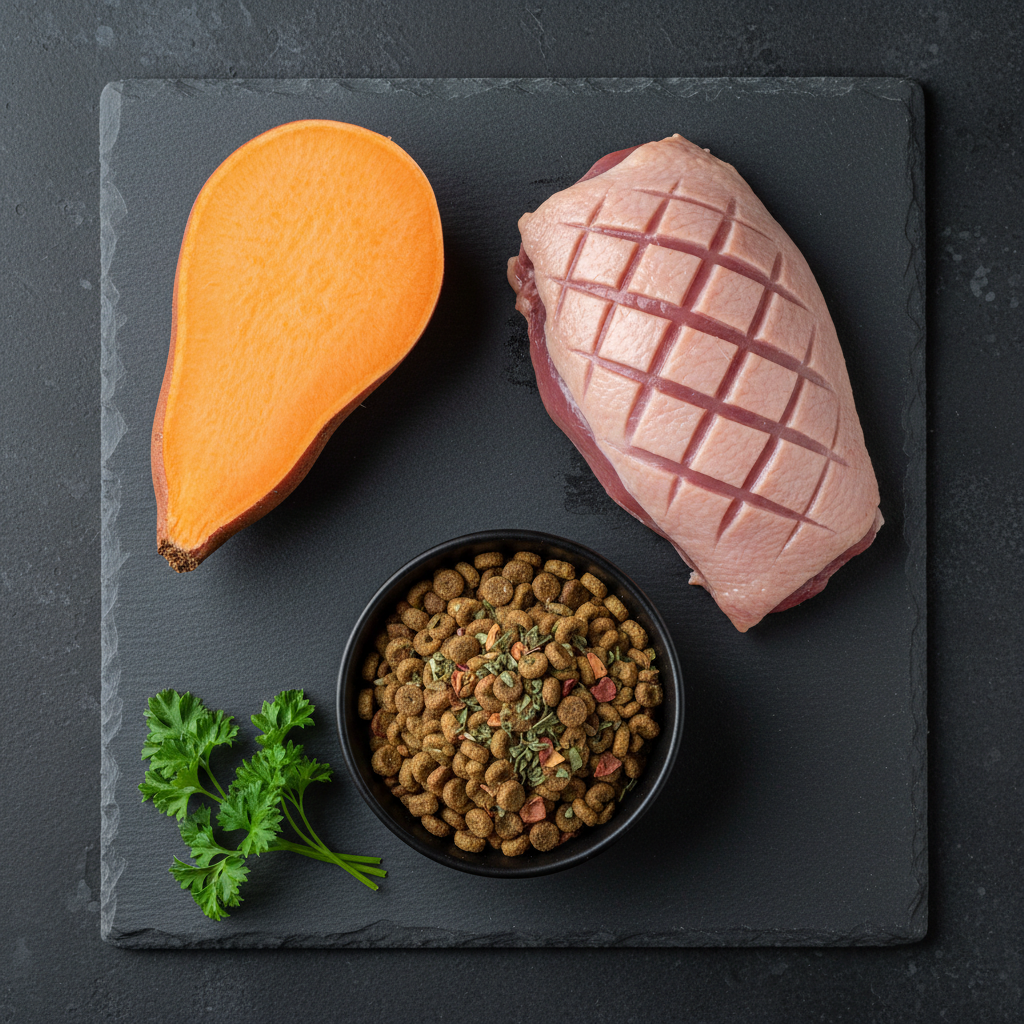
Now for the good stuff. When you’re scanning that label, these are the ingredients you want to see. These ‘hero’ ingredients are highly digestible, anti-inflammatory, and specifically chosen to support a sensitive gut, effectively disarming your Frenchie’s gas production at the source.
Novel & Easily Digestible Proteins
Many food sensitivities are developed to common proteins like chicken and beef. Switching to a ‘novel’ protein—one your dog has likely never had before—can work wonders. Look for foods with a single, high-quality protein source listed first. Excellent choices include duck, lamb, salmon, turkey, or rabbit. These are not only less likely to cause an allergic reaction but are also highly digestible.
Gut-Soothing Carbohydrates
Forget the cheap fillers. Your Frenchie needs carbohydrates for energy, but they must be gentle on the stomach. Sweet potatoes and pumpkin are fantastic choices. They provide steady energy and are rich in vitamins and soluble fiber, which helps regulate digestion. Brown rice and oatmeal are also good, digestible options if your dog is not sensitive to grains.
Probiotics & Prebiotics
This is non-negotiable for a gassy Frenchie. A healthy gut is all about balanced bacteria. Probiotics (listed as ‘dried fermentation product’ of species like Lactobacillus acidophilus) introduce beneficial bacteria. Prebiotics (listed as FOS, chicory root, or inulin) are the food that helps those good bacteria thrive. Together, they create a gut environment that digests food efficiently, leaving little behind to ferment and cause gas.
Functional Fibers
Fiber is crucial, but the source matters. A small amount of fiber adds bulk to stool and aids regularity. Besides pumpkin and sweet potato, a small amount of beet pulp can be beneficial. It’s a moderately fermentable fiber that can promote a healthy colon. The key is balance; too much of any fiber can also cause gas, so it shouldn’t be one of the top ingredients.
The Forensic Review: Top 5 Dog Foods for Gassy Frenchies
Now we put the theory into practice. I’ve analyzed dozens of formulas, and these five consistently rise to the top for their high-quality, gas-reducing ingredients. We’ll break down the first five ingredients, explain why it works, and give you a real-world cost analysis.
1. Royal Canin French Bulldog Adult Dry Dog Food
- First 5 Ingredients Truth: Brewers rice, wheat, chicken fat, wheat gluten, natural flavors.
- Why It Works for Gas: This one is controversial for nutrition purists due to the grains, but it’s undeniable that it works for a huge number of Frenchies. Royal Canin’s entire model is breed-specific science. They use highly digestible proteins and a specific fiber blend (including beet pulp) designed to reduce stool odor and gas. The kibble shape is even custom-designed for the brachycephalic jaw to reduce air gulping. While wheat gluten isn’t a ‘hero’ ingredient on its own, its inclusion here is based on digestibility research.
- Cost Per Day (25lb Frenchie): Approximately $2.10/day.
- Recall Check: Royal Canin has had recalls, but maintains a strong safety record relative to its massive production volume.
2. Natural Balance Limited Ingredient Diets (L.I.D.) – Lamb & Brown Rice
- First 5 Ingredients Truth: Lamb, Brown Rice, Lamb Meal, Brewers Rice, Rice Bran.
- Why It Works for Gas: This is a classic choice for sensitivities. The ‘Limited Ingredient’ philosophy is perfect for Frenchies. It uses a single novel protein source (lamb) and simple, digestible carbohydrates. By minimizing the number of ingredients, you drastically reduce the chances of triggering an intolerance. It’s a clean, straightforward formula that’s easy on the gut.
- Cost Per Day (25lb Frenchie): Approximately $1.95/day.
- Recall Check: Has had recalls in the past, often linked to the larger Diamond Pet Foods manufacturing, but has maintained a good record in recent years.
3. Purina Pro Plan Sensitive Skin & Stomach – Salmon & Rice Formula
- First 5 Ingredients Truth: Salmon, Barley, Rice, Oat Meal, Canola Meal.
- Why It Works for Gas: This is a veterinary and owner favorite for a reason. Salmon is an excellent, easily digestible protein rich in anti-inflammatory Omega-3s. The use of oatmeal and rice provides soothing, soluble fiber. Most importantly, this formula is fortified with live probiotics and natural prebiotic fiber from chicory root to actively support digestive health.
- Cost Per Day (25lb Frenchie): Approximately $1.80/day.
- Recall Check: Purina is a massive company and has had recalls, but the Pro Plan line is manufactured with extremely high quality control standards.
4. Hill’s Science Diet Adult Sensitive Stomach & Skin – Chicken Recipe
- First 5 Ingredients Truth: Chicken, Brewers Rice, Chicken Meal, Yellow Peas, Cracked Pearled Barley.
- Why It Works for Gas: Like Royal Canin, Hill’s is a science-first brand. This formula is clinically proven to support digestive health. It features a proprietary blend of prebiotics (FOS) to fuel beneficial gut bacteria, making the entire digestive process more efficient. The protein is high-quality chicken, and the carbs are easily digestible. It also includes Vitamin E and Omega-6s for skin health, a common co-issue with Frenchie allergies.
- Cost Per Day (25lb Frenchie): Approximately $2.00/day.
- Recall Check: Hill’s has an excellent safety record with infrequent recalls.
5. Wellness Simple Limited Ingredient Diet – Turkey and Potato
- First 5 Ingredients Truth: Deboned Turkey, Turkey Meal, Potatoes, Peas, Dried Ground Potatoes.
- Why It Works for Gas: Another excellent L.I.D. option, this one being grain-free. It uses high-quality deboned turkey as a single protein source. The carbohydrates from potatoes are easily digestible for most dogs. Wellness focuses on natural ingredients and adds probiotics and chicory root extract for prebiotic support, directly targeting the gut health needed to combat gas.
- Cost Per Day (25lb Frenchie): Approximately $2.25/day.
- Recall Check: Wellness has had a few recalls, but generally maintains a strong reputation for quality sourcing and safety.
| Brand | Primary Protein | Grain Status | Key ‘Hero’ Feature | Price Tier |
|---|---|---|---|---|
| Royal Canin French Bulldog | Chicken/Wheat Gluten | Grain-Inclusive | Breed-Specific Formula & Kibble | $$$$ |
| Natural Balance L.I.D. | Lamb | Grain-Inclusive | True Limited Ingredient List | $$$ |
| Purina Pro Plan Sensitive | Salmon | Grain-Inclusive | Fortified with Live Probiotics | $$ |
| Hill’s Science Diet Sensitive | Chicken | Grain-Inclusive | Clinically Proven Prebiotic Blend | $$$ |
| Wellness Simple L.I.D. | Turkey | Grain-Free | High-Quality Novel Protein | $$$$ |
Beyond the Bowl: Lifestyle Hacks to Reduce Frenchie Gas
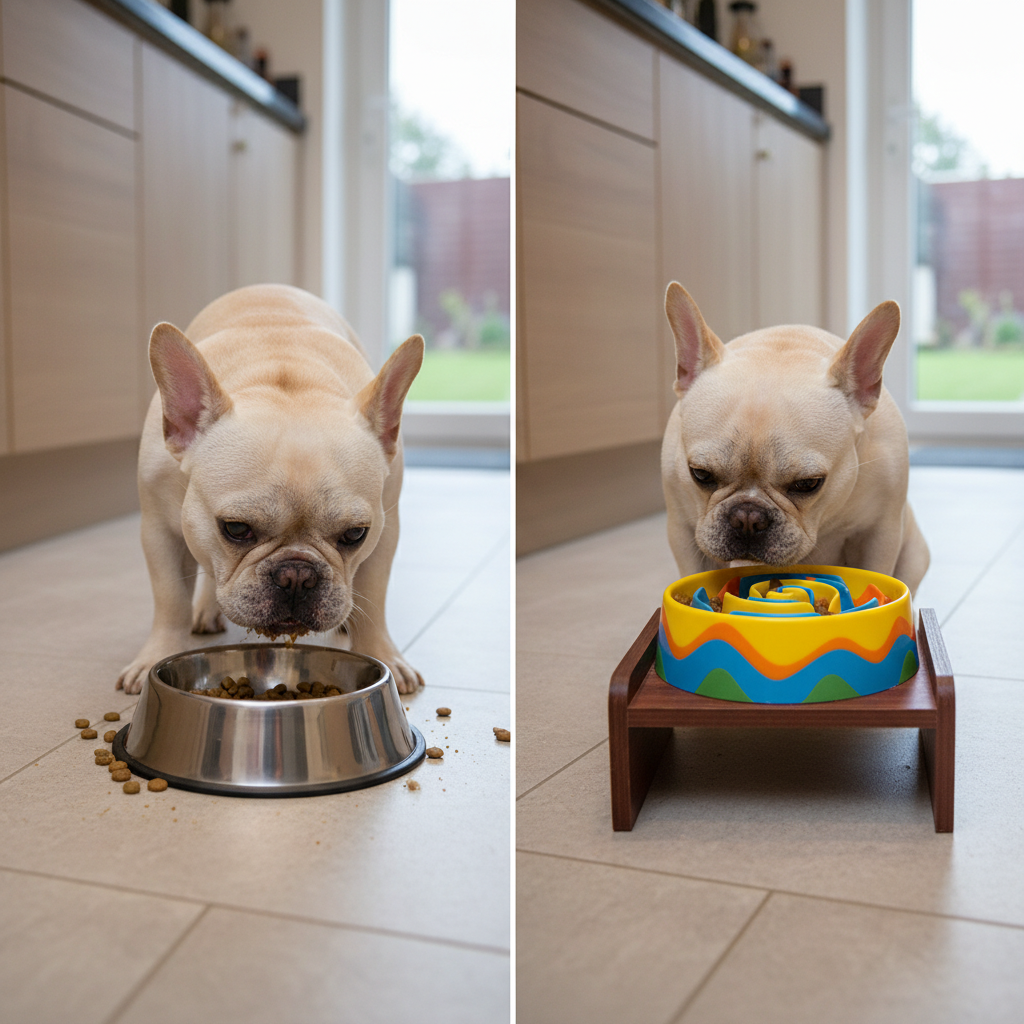
Switching food is the most important step, but you can amplify the results with a few simple lifestyle adjustments. These hacks target the behavioral and physical aspects of digestion, giving your new high-quality food the best chance to succeed.
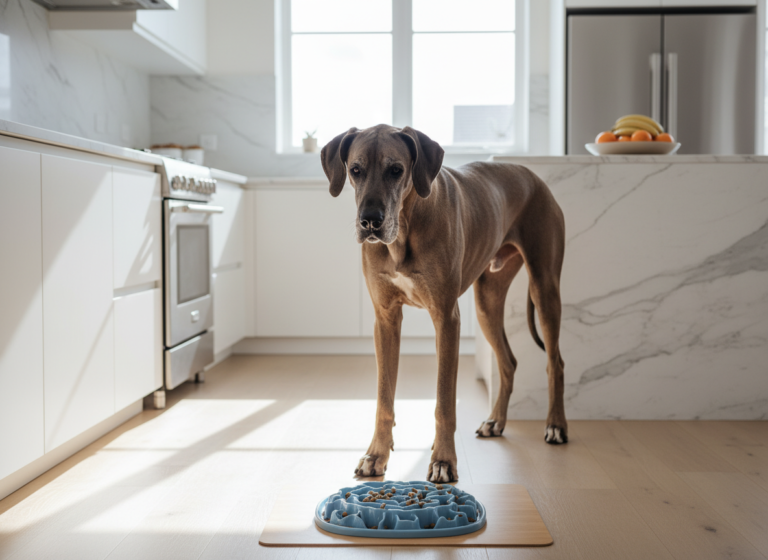
- Invest in a Slow-Feeder Bowl: This is the single most effective tool to combat aerophagia (air gulping). The maze-like structure forces your Frenchie to slow down, take smaller bites, and swallow significantly less air.
- Elevate the Food Bowl: Raising the bowl slightly can improve posture during eating, which can aid digestion and reduce the amount of air swallowed. Ensure the height is comfortable and doesn’t strain their neck.
- Maintain a Strict Feeding Schedule: Feeding your dog at the same times each day helps their digestive system get into a rhythm, anticipating meals and producing the necessary enzymes more efficiently. Avoid leaving food out all day.
- Moderate, Consistent Exercise: Regular walks don’t just burn calories; they stimulate the digestive tract, helping to move gas through the system regularly in small amounts, rather than in large, odorous bursts.
- No Table Scraps. Period. Human food, especially fatty or processed items, is a recipe for digestive disaster in a Frenchie. A small piece of cheese or a fatty scrap of meat can undo all the hard work of their specialized diet.
Hacker Tip: A teaspoon of 100% pure canned pumpkin (NOT pumpkin pie filling) mixed into their food once a day can be a game-changer. It’s a cheap, natural source of soluble fiber that regulates the gut and firms up stool, leading to less gas.
Conclusion
Tackling your French Bulldog’s gas problem isn’t about finding a magical cure; it’s about becoming a nutritional detective. By understanding their unique anatomy and learning to decode the ingredients list, you move from a frustrated owner to an empowered advocate for your dog’s health. The power to stop the farts lies in choosing a food that is simple, digestible, and full of high-quality, gut-supporting ingredients. Whether you opt for a science-backed formula or a limited-ingredient diet, the principle remains the same: it’s the ingredients, not the marketing, that matter. Use this guide to make an informed choice, implement a few lifestyle hacks, and enjoy the sweet sound of silence—and the much fresher air—in your home. Always remember to transition to any new food slowly over 7-10 days and consult your vet with any concerns.