Hassle-Free Dog Food Storage Hacks for Camping Trips
The vision is perfect: you, your loyal dog, and the great outdoors. The reality? A ripped bag of kibble spilling across your tent, attracting every ant and raccoon within a five-mile radius. The romance of camping with your dog quickly fades when faced with the logistical nightmare of food storage. I’m not a lifestyle blogger here to show you cute bandanas for your trail dog. I’m The Canine Nutrition Hacker, and my job is to dissect problems and engineer solutions. The problem is that standard dog food packaging is fundamentally incompatible with the demands of the outdoors. It’s bulky, susceptible to moisture, and an open invitation to pests.
This guide is your new field manual. We will dismantle the common points of failure in camp food storage and replace them with systematic, professional-grade protocols. Whether you feed standard kibble, raw patties, or lightweight dehydrated meals, you will learn to pack, store, and serve your dog’s food with maximum efficiency and safety. Forget the hassle; it’s time to implement a strategy that protects your dog’s nutrition, your gear, and the local wildlife. Let’s get to work.
The Pre-Trip Audit: Your First Line of Defense Against Hassle
The Pre-Trip Audit: Your First Line of Defense Against Hassle
Success in the field begins at home. Walking out the door with a half-full, 30-pound bag of kibble for a weekend trip is an amateur move. It’s the equivalent of packing for a business trip by emptying your entire closet into a suitcase. It’s inefficient, heavy, and creates opportunities for failure. A professional approach requires a pre-trip audit.
Step 1: Calculate Exact Caloric Needs
Don’t guess. Calculate your dog’s precise daily food requirement based on their weight, age, and, critically, their activity level. A day of hiking and swimming requires significantly more energy than a day on the couch. A good rule of thumb is to increase their normal portion by 25-50% for strenuous activity days. Consult your vet or use a reputable online calculator if you’re unsure.
Step 2: The Emergency Buffer Protocol
Always pack more food than you think you need. My standard protocol is the N+2 method, where ‘N’ is the number of days of your trip. For a 3-day weekend, you pack 5 days’ worth of food. This buffer accounts for unforeseen delays, accidental spills, or increased caloric needs. Running out of food in the backcountry is not an option.
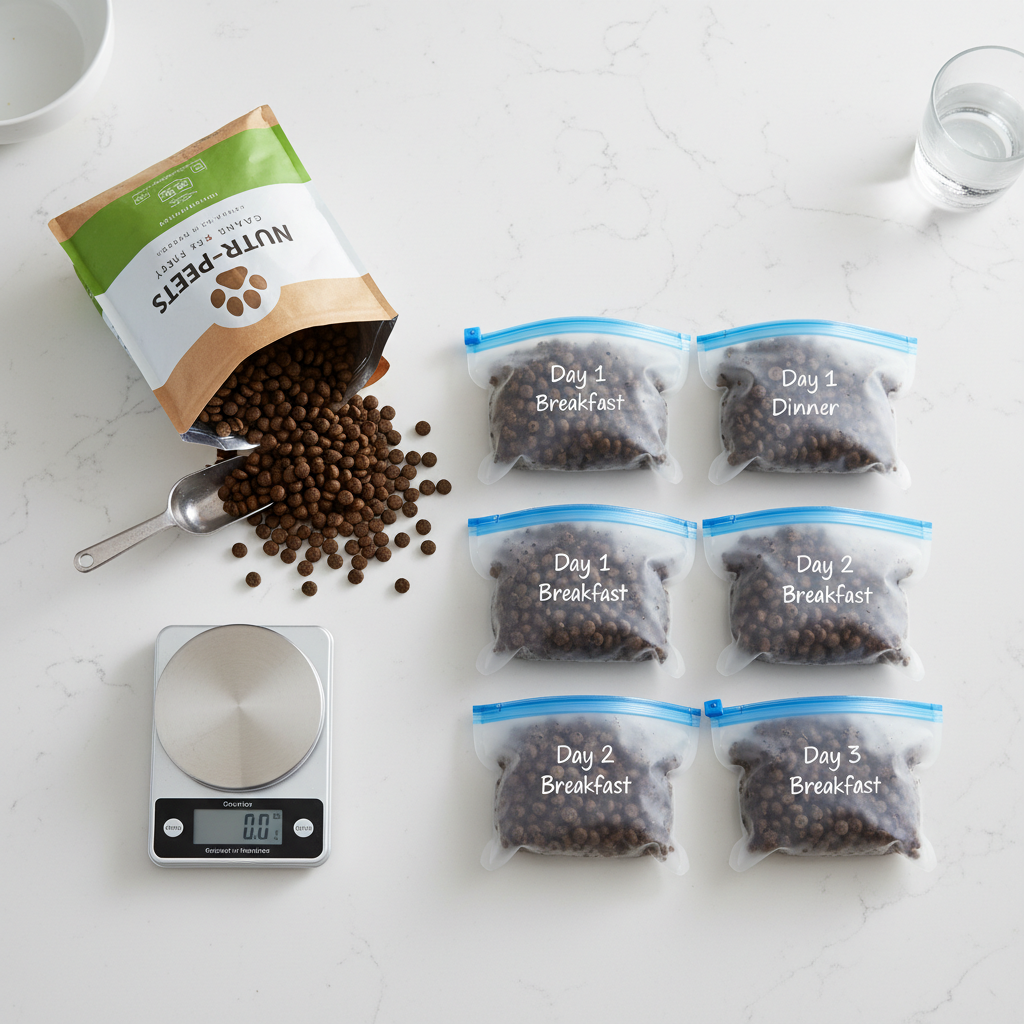
Step 3: Pre-Portion Every Single Meal
This is the single most effective hack for eliminating hassle. Once you know the exact amount of food needed per meal, portion it out before you leave.
- Use durable, reusable silicone pouches or high-quality zip-top bags.
- Label each bag clearly (e.g., ‘Friday Dinner,’ ‘Saturday Breakfast’).
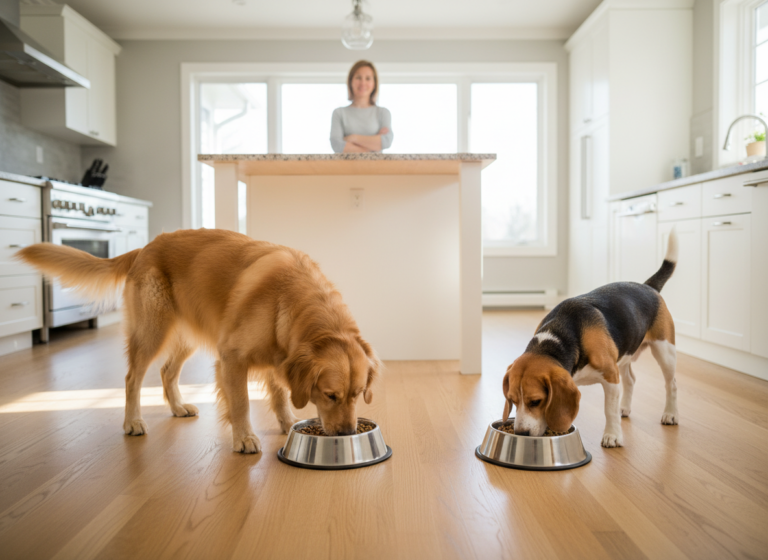
- For multi-dog households, use different colored bags or clear labels for each dog.
This system offers immense benefits: it makes feeding time instantaneous, prevents accidental over or under-feeding, allows you to track consumption, and transforms a bulky food bag into a modular, packable system.
Hacker Tip: Use a digital kitchen scale for this process. Weighing each meal to the gram removes all guesswork and ensures your dog’s dietary regimen remains consistent, which is crucial for preventing digestive upset during travel. It also guarantees you are not carrying a single ounce of unnecessary weight.
Kibble Containment: Securing the Dry Goods
Kibble Containment: Securing the Dry Goods
The original bag your kibble comes in is designed for shipping and shelf storage, not for the rugged demands of a campsite. It offers zero protection from moisture, pests, or physical damage. Relying on it is a critical error. Your choice of container will dictate the success of your kibble storage strategy.
The Hierarchy of Kibble Containers
Not all storage solutions are created equal. We can classify them into a clear hierarchy of effectiveness:
- Basic Tier – Hard-Sided Plastic Bins: Think ‘Vittles Vault’ or similar screw-top containers. They are excellent at home but often too bulky and inefficient for packing in a car or backpack. While they are 100% pest-proof and crush-proof, their rigid shape creates dead space in your pack.
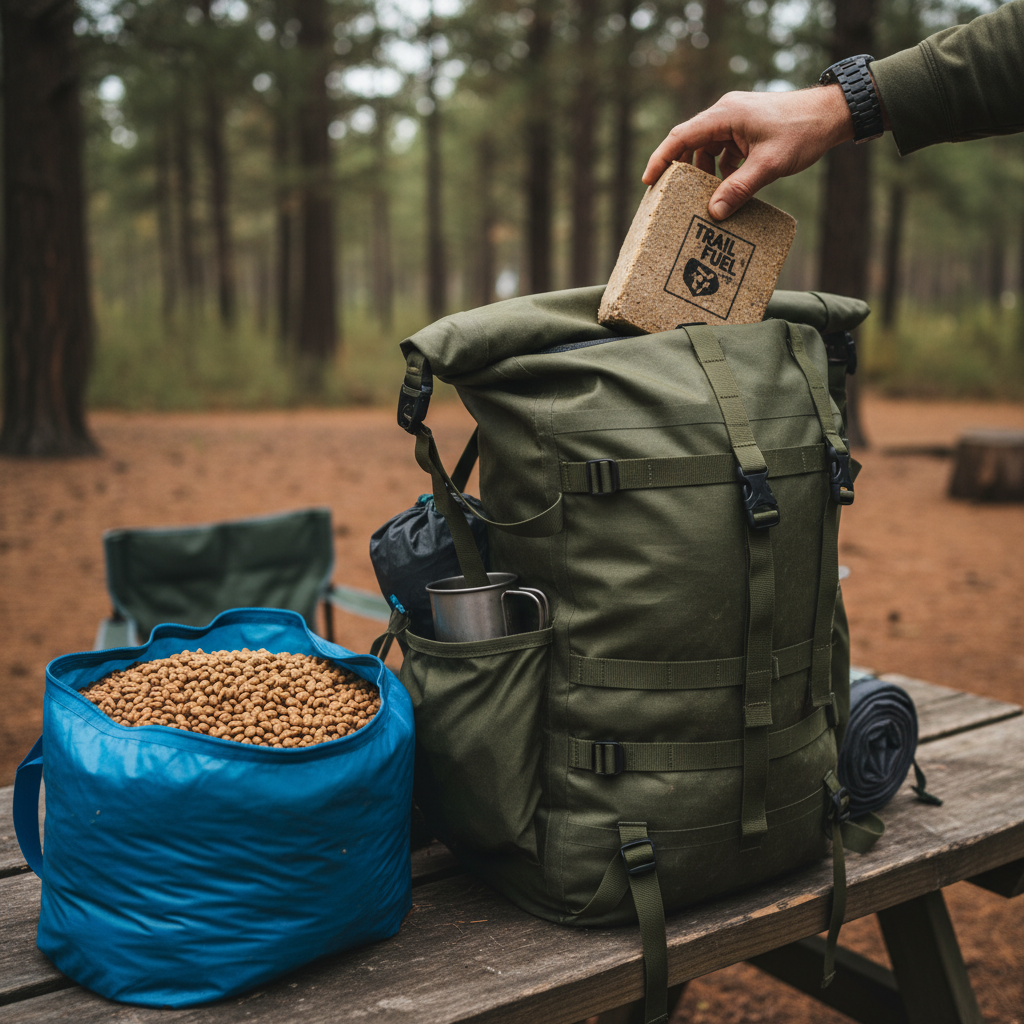
- Advanced Tier – Soft-Sided, Roll-Top Bags: Brands like Ruffwear have perfected this category. These are essentially durable, food-grade dry bags for kibble. Their key advantage is that they collapse as the food is consumed, saving valuable space on the return trip. The downside is they offer no protection from being crushed.
- Expert Tier – Vacuum Sealing: For the serious backpacker or space-conscious packer, this is the ultimate solution. By vacuum sealing your pre-portioned meals, you remove all air, which not only makes the package incredibly compact but also keeps the kibble fresher for longer. The resulting ‘kibble bricks’ are dense, waterproof, and easy to pack around other gear. The initial investment in a vacuum sealer pays dividends in convenience and space.
| Container Type | Pros | Cons | Hacker Verdict |
|---|---|---|---|
| Hard-Sided Plastic Bin | Pest-proof, crush-proof, waterproof. | Extremely bulky, heavy, inefficient shape. | Acceptable for car camping only. Poor choice for backpacking. |
| Soft-Sided Roll-Top Bag | Space-efficient (collapses), lightweight, durable. | Not crush-proof, can be difficult to clean. | The gold standard for most camping trips. Excellent balance of features. |
| Vacuum-Sealed Portions | Maximum space and weight efficiency, ultimate freshness. | Requires a vacuum sealer, creates single-use plastic waste (unless using reusable bags). | The elite choice for multi-day backpacking or when every cubic inch matters. |
Managing the Cold Chain: Wet, Fresh, and Raw Food Protocols
Managing the Cold Chain: Wet, Fresh, and Raw Food Protocols
Storing perishable foods in the wild introduces a significant level of complexity. The enemy here is temperature fluctuation and bacterial growth. Failure to maintain the cold chain can result in spoiled food and a sick dog. This requires a near-clinical level of preparation and the right equipment.
For Canned & Wet Food
While shelf-stable before opening, canned food becomes highly perishable once the seal is broken. Never store a partially used, open can in your cooler. The sharp metal edge is a hazard, and it’s not an airtight solution. Instead, immediately transfer any leftovers to a small, screw-top, leak-proof container. Better yet, opt for single-serving pouches or Tetra Paks, which are lighter, safer, and produce less cumbersome trash.
For Fresh & Raw Food
WARNING: This is an advanced technique for experienced raw feeders only. The risk of cross-contamination and spoilage is high. You must have a complete understanding of safe food handling practices. Do not attempt this on your first camping trip.
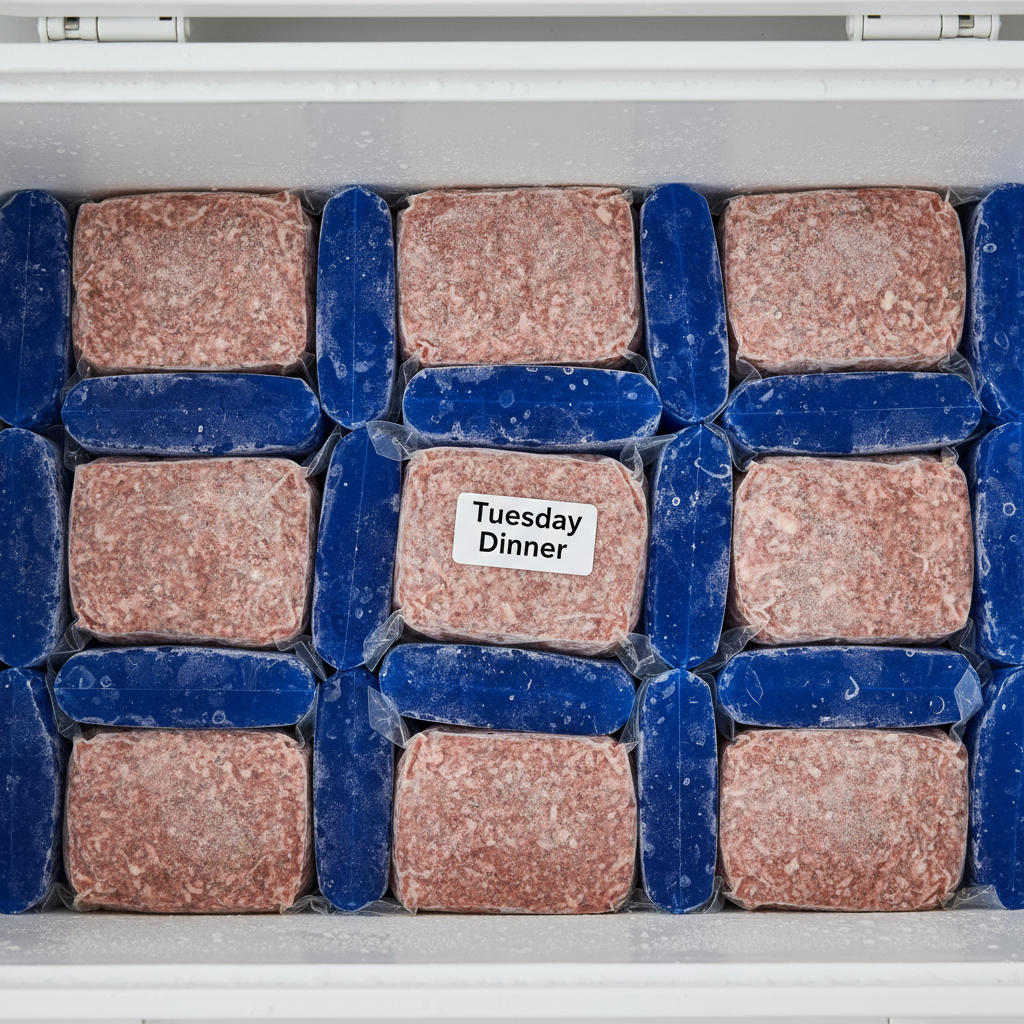
The only acceptable method is the Freeze-Solid Protocol. Here’s how it works:
- Portion each meal into a freezer-safe, leak-proof container or vacuum-seal bag.
- Freeze each portion until it is a solid block of ice. This should be done at your freezer’s coldest setting for at least 48 hours.
- These frozen blocks now serve a dual purpose: they are your dog’s future meals and they act as additional ice packs within your cooler, extending its efficiency.
Your cooler is the most critical piece of equipment. A cheap styrofoam cooler is unacceptable. You need a high-performance, roto-molded cooler (e.g., Yeti, RTIC, Orca) and you must use high-quality freezer packs (like ‘Arctic Ice’), not just cubed ice, which melts and compromises the cold, dry environment.
Insider Secret: Pack your cooler with military precision. The last meal you will use goes on the very bottom. The first meal goes on top. This chronological packing strategy prevents you from rummaging through the cooler, which introduces warm air and accelerates thawing. Every time you open the cooler, you are degrading its performance. Be fast and deliberate.
The Lightweight Champion: Dehydrated & Freeze-Dried Options
The Lightweight Champion: Dehydrated & Freeze-Dried Options
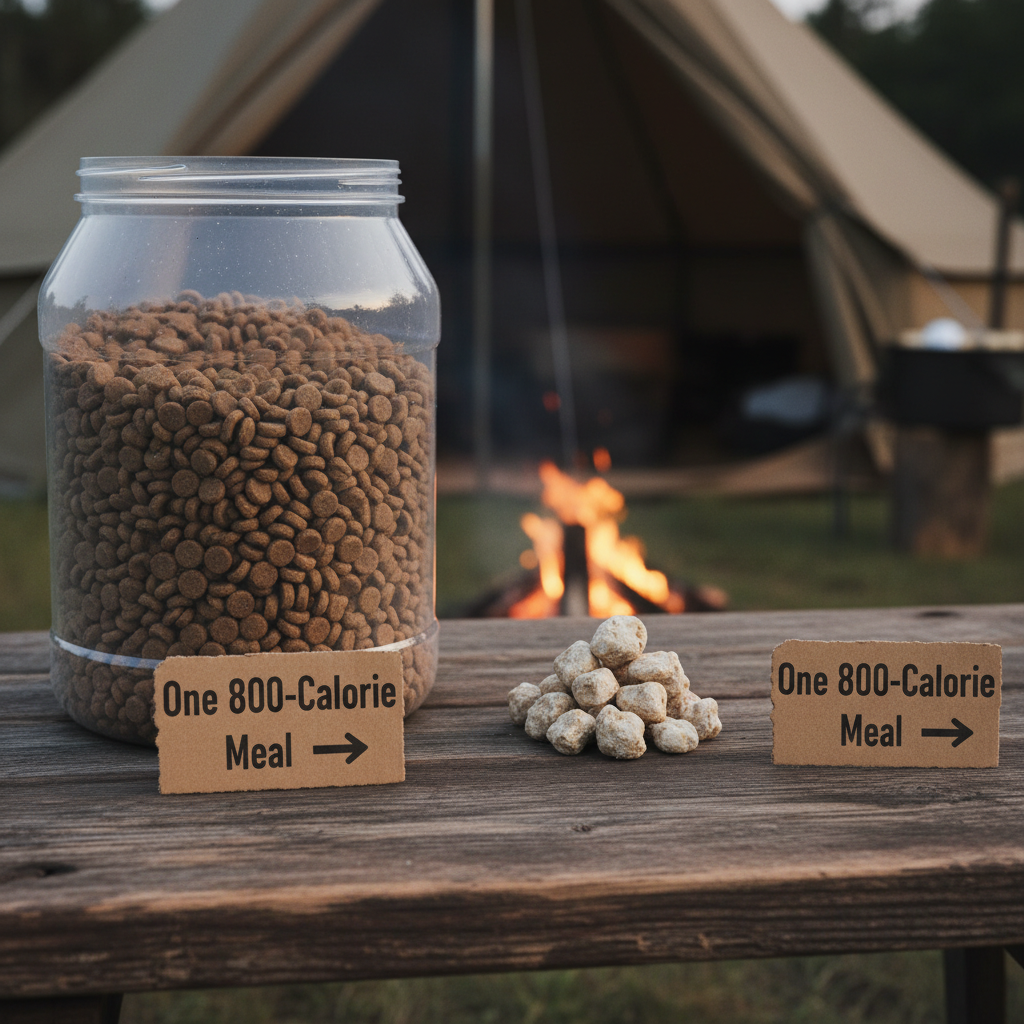
For the owner focused on minimizing weight and bulk, dehydrated and freeze-dried foods are the undisputed champions. They offer the nutritional density of raw or fresh food with the shelf-stability of kibble, all at a fraction of the weight and volume. Understanding the difference is key to choosing the right option for your budget and needs.
- Dehydrated Food: Uses low heat over a long period to slowly remove moisture. This process is less expensive but can degrade some heat-sensitive nutrients.
- Freeze-Dried Food: The food is flash-frozen and then placed in a strong vacuum, which causes the ice to vaporize directly (sublimation). This process preserves the maximum amount of nutrients and cellular structure but is more expensive.
Rehydration and Storage on the Trail
The process is simple: measure the food, add a specified amount of water, wait a few minutes, and serve. Always use potable water that is safe for you to drink. Do not use untreated water from streams or lakes, as it can contain parasites like Giardia. While the original packaging is often excellent and resealable, for multi-day trips, you can consolidate the required amount into a single, larger waterproof bag to save space and reduce packaging waste. This makes these foods the most efficient option by far.
| Food Type | Approx. Weight (3-Day Supply) | Approx. Volume | Cost Tier | Convenience Rating |
|---|---|---|---|---|
| Dry Kibble | 6-8 lbs | ~10 Liters | $$ | High |
| Canned Wet Food | 9-12 lbs | ~8 Liters | $$$ | Low |
| Frozen Raw Food | 6-8 lbs (plus cooler/ice) | ~25+ Liters (with cooler) | $$$$ | Very Low |
| Freeze-Dried Food | 1-2 lbs | ~3 Liters | $$$$$ | Very High |
As the data clearly shows, the weight and volume savings of freeze-dried food are dramatic, making it the superior technical choice for backpacking, though it comes at a premium price point.
Campsite Security: Pest-Proofing Your Dog’s Food Supply
Campsite Security: Pest-Proofing Your Dog’s Food Supply
Proper food storage isn’t just about freshness; it’s a critical component of campsite safety and responsible wilderness etiquette. The scent of dog food is an incredibly powerful attractant for a wide range of wildlife, from small rodents to large predators like bears. A lazy approach to food security endangers you, your pet, and the animals whose home you are visiting.
The Cardinal Rules of Scent Discipline
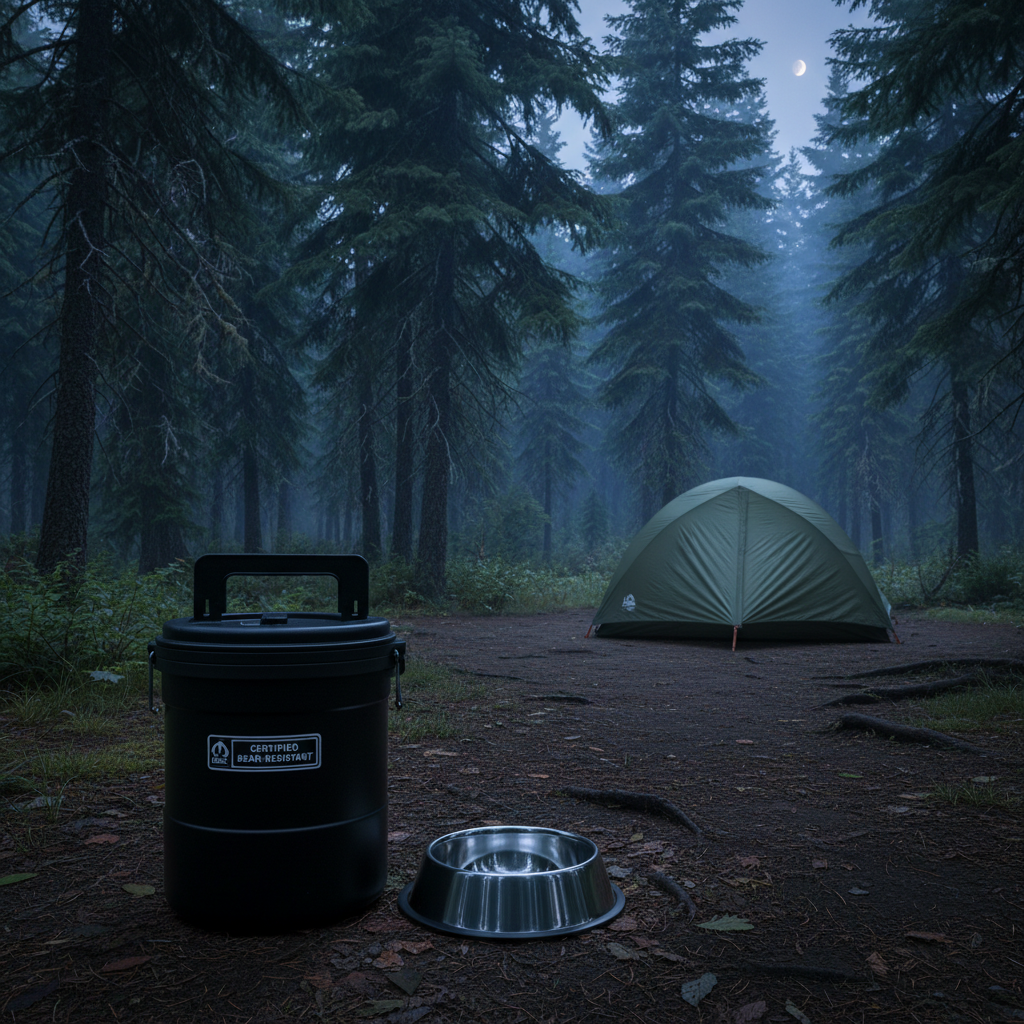
- Never Store Food In Your Tent. Ever. This is the most dangerous mistake a camper can make. You are inviting wildlife directly into your sleeping space. There are no exceptions to this rule.
- Utilize Your Vehicle: A locked car or truck with the windows rolled up is an excellent, hard-sided container for your food and any other scented items (cookware, toiletries).
- Employ Bear-Resistant Storage: In designated bear country, using a certified bear canister or a properly executed bear bag hang is not optional—it is mandatory. Check local regulations before your trip. A bear that gets a ‘food reward’ from a campsite often becomes a problem bear that must be relocated or euthanized.
Campsite Cleanliness Protocol
Your security measures extend beyond just storing the main food supply. You must manage all food-related scents.
- Bowl Cleaning: Wash your dog’s food and water bowls immediately after every meal, away from your direct campsite.
- Pack It In, Pack It Out: All food packaging, wrappers, and leftover food must be packed out with you. Do not burn it in the fire pit, as this can still attract animals.
- Personal Grooming: After a messy meal, wipe your dog’s face and chest with an unscented wipe to remove food residue and smells.
Important Warning: Intentionally or unintentionally feeding wildlife is dangerous and illegal in many parks and forests. By securing your dog’s food with professional diligence, you are practicing responsible stewardship of the outdoors and ensuring a safe experience for everyone.
Conclusion
You are now equipped with the strategy and tactics to eliminate food storage as a point of stress on your camping trips. The core principle is simple: preparation is everything. By conducting a pre-trip audit, selecting the right containment system for your dog’s specific food, and adhering to strict scent-discipline protocols, you transform a potential liability into a streamlined, efficient process. This isn’t just about convenience; it’s about responsibility—to your dog’s health, your own safety, and the integrity of the wilderness. You no longer have to choose between feeding your dog well and traveling light. You can do both. Pack smart, stay safe, and enjoy the unparalleled experience of exploring the wild with your canine partner.