

Best Dog Food For Boxers With Heart Issues (Cardiomyopathy)
Receiving a diagnosis of heart disease for your Boxer is a devastating blow. Whether it’s Arrhythmogenic Right Ventricular Cardiomyopathy (ARVC) or Dilated Cardiomyopathy (DCM), the path forward can feel uncertain. As The Canine Nutrition Hacker, I’m here to tell you that while you can’t hack the genetics, you absolutely can hack the nutrition. Food is not just sustenance; it’s a powerful tool in your arsenal to support your Boxer’s cardiac function, improve their quality of life, and partner effectively with your veterinarian’s medical plan.
This isn’t another generic blog post rehashing marketing claims. We are going to dissect dog food labels with the precision of a forensic scientist. We’ll expose the nutritional landmines that could be detrimental to a compromised heart and spotlight the hero ingredients that form the foundation of a robust cardiac support diet. Forget the hype; we’re focusing on the science and data that can make a real difference for your beloved companion.
The Science: Deconstructing Cardiomyopathy and Diet

The Science: Deconstructing Cardiomyopathy and Diet
Before we can optimize the fuel, we need to understand the engine. Boxers are genetically predisposed to heart conditions, but the nutritional landscape has become a critical, and often confusing, part of the conversation.
Understanding Boxer Cardiomyopathy
While Boxers are famous for ‘Boxer Cardiomyopathy’ (ARVC), a disease of the heart muscle’s electrical conduction, they are also susceptible to Dilated Cardiomyopathy (DCM). DCM is a condition where the heart muscle becomes thin and weak, leading to an enlarged heart that can’t pump blood effectively. It’s this form, DCM, that has been most closely scrutinized in relation to diet in recent years.
The Grain-Free Debate and the FDA Investigation
You’ve likely heard about the FDA’s investigation into a potential link between certain diets and cases of non-hereditary DCM. The focus fell on what are often called ‘BEG’ diets (Boutique companies, Exotic ingredients, Grain-free). The primary concern revolves around diets that list peas, lentils, other legume seeds, or potatoes as main ingredients. The theory is not that these ingredients are toxic, but that they may interfere with the bioavailability or synthesis of crucial amino acids like taurine, or that their formulation in high quantities displaces more nutritionally complete ingredients. The science is ongoing, but for a breed already at risk, it’s a variable we must control.
MEDICAL DISCLAIMER: I am a nutrition analyst, not a veterinarian. The information in this article is for educational purposes only and is not a substitute for professional veterinary advice. A Boxer with a diagnosed heart condition must be under the care of a veterinarian, and ideally, a board-certified veterinary cardiologist. All diet and supplement changes should be made in direct consultation with your veterinary team.
Enemy Ingredients: Nutritional Landmines for a Cardiac-Compromised Boxer
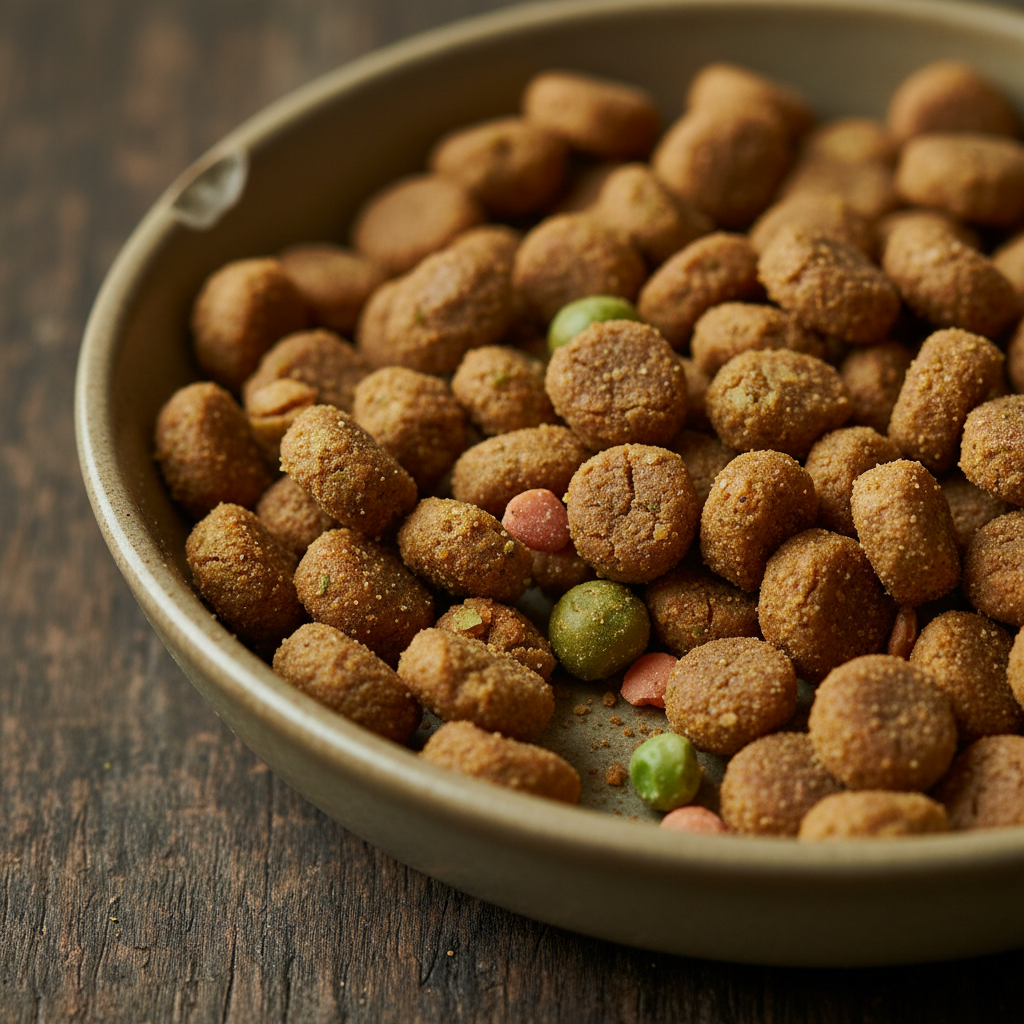
Enemy Ingredients: Nutritional Landmines for a Cardiac-Compromised Boxer
When managing a sensitive condition like cardiomyopathy, what you avoid is just as important as what you include. Reading an ingredient label is your first line of defense. Here are the red flags to watch for.
High-Legume Formulations (Peas, Lentils, Chickpeas)
As mentioned, these are the primary ingredients of concern in the DCM investigation. If you see ‘pea protein,’ ‘lentils,’ or ‘chickpeas’ listed within the first five ingredients, it’s a major warning sign. These are often used to boost the protein percentage on the label cheaply, but they do not provide the same complete amino acid profile as high-quality animal meat. For a Boxer’s heart, this is a risk not worth taking.
Exotic Meat Proteins
Kangaroo, alligator, bison—they sound impressive, but these novel proteins lack the decades of nutritional research that stand behind chicken, beef, and lamb. We don’t have sufficient data on their long-term effects or their specific amino acid profiles in relation to canine cardiac health. Stick with well-researched proteins from reputable sources.
Excessive Sodium
This is a critical one. Just as in humans, excess sodium causes the body to retain water, increasing blood volume and forcing the heart to work harder. Many commercial dog foods use salt as a cheap flavor enhancer. Look for foods with controlled sodium levels. Your veterinarian can give you a specific sodium restriction target (often measured in mg/100 kcal) for your dog’s stage of heart disease.
Unnamed or Low-Quality Protein Sources
Vague terms like ‘meat by-products’ or ‘animal meal’ are unacceptable. You want to see named sources, such as ‘chicken meal’ or ‘deboned lamb.’ Quality animal protein is the most bioavailable source of the amino acids that build and maintain heart muscle. Don’t let your dog’s most important nutrient come from an anonymous, low-grade source.
Hero Ingredients: Building Your Boxer’s Nutritional Arsenal

Hero Ingredients: Building Your Boxer’s Nutritional Arsenal
Now, let’s focus on the powerhouse ingredients that will form the foundation of a robust cardiac support diet. These are the nutritional building blocks that actively support heart muscle function and overall well-being.
High-Quality, Animal-Based Proteins
The foundation of any heart-healthy diet is superior protein. Sources like chicken, turkey, lamb, fish (like salmon and menhaden), and beef provide the essential amino acids cysteine and methionine, which are precursors for the body to synthesize taurine. A named animal protein should always be the first ingredient on the label.
Taurine & L-Carnitine
Think of these as the spark plugs for the heart muscle cells. Taurine is a critical amino acid for cardiac function, and while most dogs produce their own, a dietary deficiency or metabolic issue can be catastrophic. L-Carnitine is vital for transporting fatty acids into the mitochondria to be used for energy. The heart is a muscle that never rests; it needs a constant, efficient energy supply. A good cardiac diet will be rich in the building blocks for these, and many are fortified with them directly.
Omega-3 Fatty Acids (EPA & DHA)
Derived primarily from fish oil, these fatty acids are potent anti-inflammatories. They can help reduce inflammation in the body, support stable heart rhythms, and may even help counteract cardiac cachexia (the muscle wasting that can occur with advanced heart disease). Look for fish oil or salmon oil high on the ingredient list.
Heart-Healthy, Inclusive Grains
Forget the grain-free marketing hype. For a Boxer with cardiac concerns, easily digestible, whole grains are your allies. Brown rice, oatmeal, and barley provide essential nutrients, fiber, and selenium. They offer steady energy without the potential risks associated with high-legume, grain-free formulas. We are looking for ‘grain-inclusive’ diets from reputable manufacturers.
Forensic Review: Vetted Commercial Diets for Cardiac Support
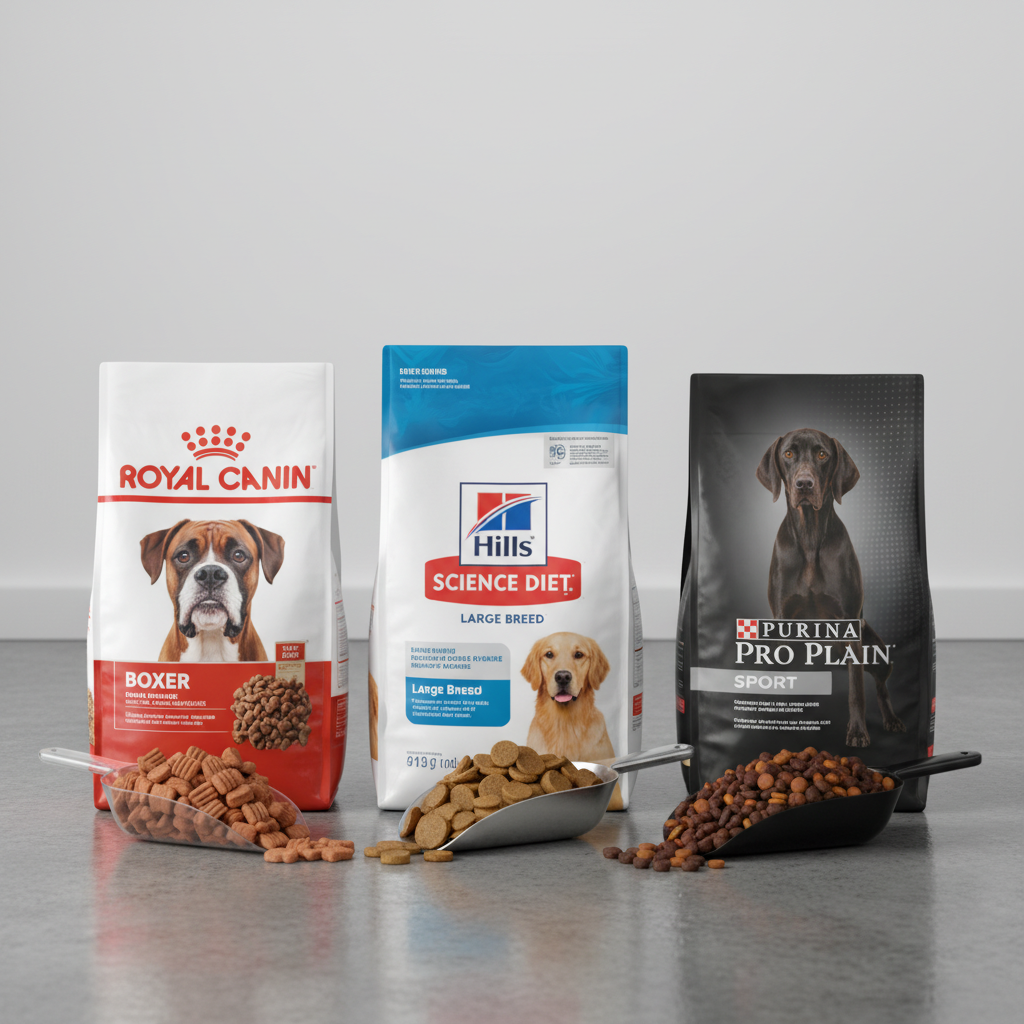
Forensic Review: Vetted Commercial Diets for Cardiac Support
Navigating the pet food aisle is overwhelming. Here’s a breakdown of three well-researched, grain-inclusive diets from manufacturers with veterinary nutritionists on staff and rigorous quality control. These are examples that fit our ‘hero ingredient’ criteria. Always consult your vet before switching foods.
1. Royal Canin Boxer Adult Dry Dog Food
- The ‘First 5’ Truth: Brown Rice, Brewers Rice, Chicken By-Product Meal, Chicken Fat, Oat Groats. While ‘by-product meal’ can be a concern in generic brands, Royal Canin uses a high-quality, consistent source. The grain-inclusive base is strong.
- Cardiac Focus: This formula is specifically designed for the breed. It contains precise protein levels and is fortified with L-carnitine and taurine to support heart muscle function. It also includes EPA and DHA from fish oil.
- Cost Per Day (50lb Boxer): Approximately $2.25/day.
- Recall Check: Royal Canin has a long history with very few recalls, demonstrating strong quality control.
2. Hill’s Science Diet Adult Large Breed Chicken & Barley Recipe
- The ‘First 5’ Truth: Chicken, Cracked Pearled Barley, Whole Grain Wheat, Whole Grain Corn, Whole Grain Sorghum. A strong, named protein source leads the list, followed by a blend of healthy, whole grains.
- Cardiac Focus: Hill’s focuses on a synergistic blend of antioxidants (Vitamins C + E) to support a healthy immune system, which is crucial for a dog with a chronic condition. It contains natural sources of glucosamine for joints (another common Boxer issue) and Omega-6s and Vitamin E for skin and coat. It meets the criteria for a high-quality, grain-inclusive diet.
- Cost Per Day (50lb Boxer): Approximately $1.70/day.
- Recall Check: Hill’s has had recalls in the past, most notably in 2019, but maintains extensive testing protocols (over 100 tests per batch).
3. Purina Pro Plan Sport Performance 30/20 Chicken & Rice Formula
- The ‘First 5’ Truth: Chicken, Rice, Corn Gluten Meal, Whole Grain Corn, Poultry By-Product Meal. This is a performance diet, meaning it’s nutrient-dense. The primary protein is chicken. While it contains corn gluten meal, Purina has conducted extensive research demonstrating its digestibility and value.
- Cardiac Focus: The high protein content (30%) and fat (20%) provides a concentrated source of amino acids and energy, which can be beneficial for preventing muscle wasting. It’s rich in antioxidants and naturally sourced glucosamine, and importantly, it’s a diet that has been fed to millions of dogs over many years with excellent results, forming a massive safety database.
- Cost Per Day (50lb Boxer): Approximately $1.65/day.
| Brand | Primary Protein | Grain Status | Key Cardiac Nutrients | Verdict |
|---|---|---|---|---|
| Royal Canin Boxer | Chicken By-Product Meal | Grain-Inclusive | Fortified with Taurine & L-Carnitine, EPA/DHA | Excellent, breed-specific formulation but at a premium price point. |
| Hill’s Science Diet Large Breed | Chicken | Grain-Inclusive | High-quality protein, clinically proven antioxidants | A reliable, science-backed choice that avoids controversial ingredients. |
| Purina Pro Plan Sport | Chicken | Grain-Inclusive | High protein (30%) for muscle maintenance, nutrient-dense | A top choice for active dogs, providing ample amino acids for cardiac support. |
The Supplement Strategy: A Non-Negotiable Component
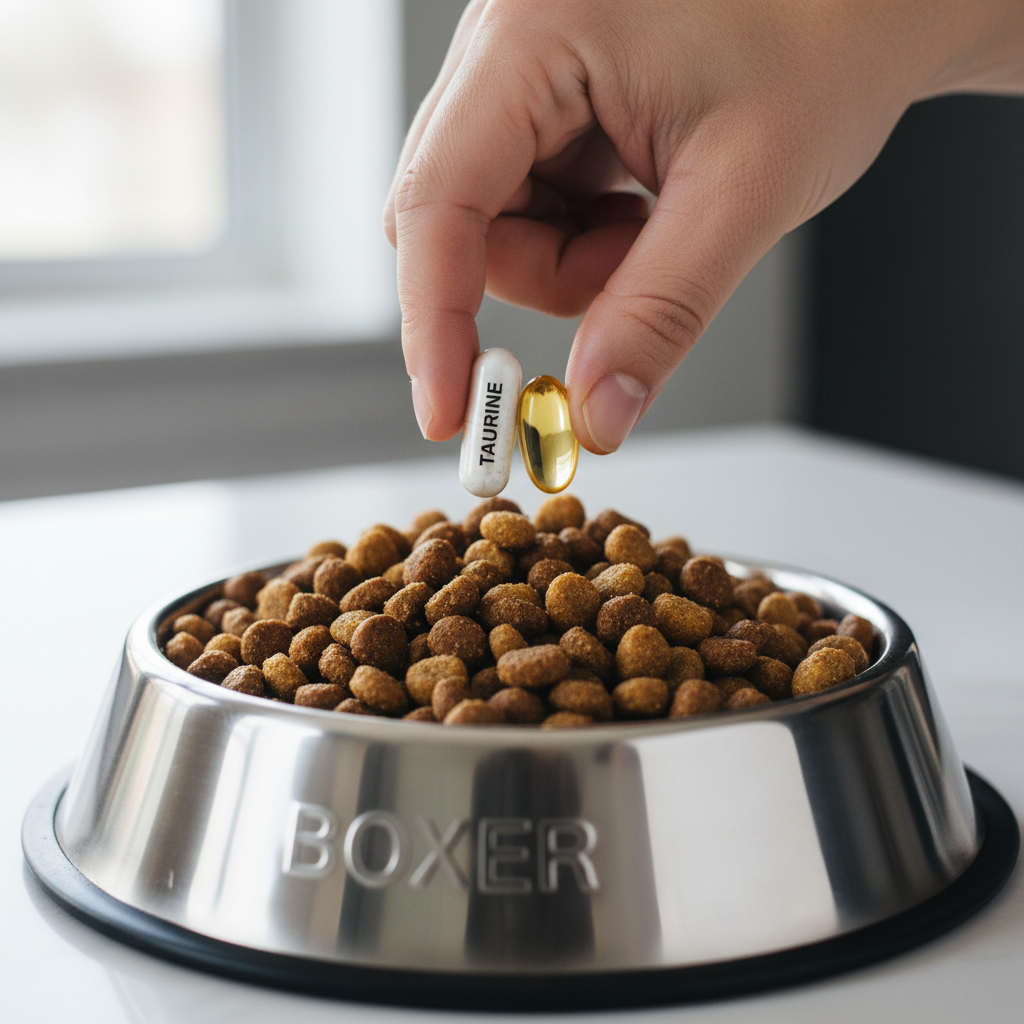
The Supplement Strategy: A Non-Negotiable Component
For a Boxer with diagnosed cardiomyopathy, diet is the foundation, but therapeutic supplementation is often the critical next step. This is where you move from general support to targeted intervention under your vet’s guidance.
Why Diet Alone Is Often Not Enough
Commercial dog foods are formulated for healthy, average dogs. A dog with a failing heart has extraordinary nutritional needs. The levels of taurine and L-carnitine in food, while sufficient for maintenance, are rarely high enough to provide a therapeutic effect. Supplementation allows your vet to prescribe the exact dosage needed to support your dog’s specific condition.
Taurine & L-Carnitine Dosing
This is one area where you never DIY. Dosing is based on your dog’s weight and the severity of their condition. Your veterinarian or veterinary cardiologist will prescribe a specific milligram dosage, typically given twice a day. They can also monitor the effectiveness of the supplementation by testing the taurine levels in your dog’s blood plasma and whole blood.
Hacker Tip: Ask your vet for a prescription or a recommended brand for supplements. Human-grade supplements are often used, but quality can vary wildly between manufacturers. Using a brand your vet trusts ensures purity and accurate dosing. Do not guess with your dog’s heart.
Other Key Supplements
Your vet may also recommend other supplements:
- Fish Oil: Specifically, the EPA and DHA components. Your vet will recommend a dose to provide a therapeutic anti-inflammatory effect.
- Coenzyme Q10 (CoQ10): An antioxidant that plays a role in energy production within cells. The heart muscle has a very high concentration of mitochondria and may benefit from CoQ10 supplementation.
Conclusion
Managing your Boxer’s heart condition is a journey, and you are their most important advocate. By becoming a nutritional hacker, you transform their daily meals from simple sustenance into a powerful part of their medical therapy. The strategy is clear: avoid the potential risks of high-legume, BEG diets and build a robust nutritional foundation with high-quality, animal-based proteins and heart-healthy, inclusive grains. Choose foods from reputable companies that invest in science and research.
Most importantly, this nutritional strategy must be part of a comprehensive plan developed in partnership with your veterinarian and veterinary cardiologist. Combine their medical expertise with your newfound nutritional knowledge. Through diligent monitoring, appropriate medication, and a precisely targeted diet, you can provide the best possible support for your Boxer’s heart, ensuring they have the best quality of life for the longest time possible.