
Fresh & Crunchy Dog Friendly Spring Rolls Recipe
Let’s have a frank discussion about what’s in your dog’s treat bag. Turn it over. Read the ingredients. You’ll likely find a laundry list of unpronounceable chemicals, vague ‘meat by-products’, and cheap fillers like corn and wheat gluten designed to do one thing: maximize profit for massive corporations. They bet on you not looking too closely. As the Canine Nutrition Hacker, my mission is to arm you with the knowledge to see past the slick marketing and take back control of your dog’s bowl—and their treat jar.
We’re going to bypass the commercial treat aisle entirely with a recipe that’s fresh, hydrating, and packed with nutrients you can actually identify. These Fresh & Crunchy Dog-Friendly Spring Rolls are more than just a treat; they’re a statement. A statement that you refuse to settle for subpar ingredients and that your dog deserves the best, real food. This recipe is your entry point into becoming a more informed, empowered pet owner.
CRITICAL SAFETY DISCLAIMER: I am a canine nutrition analyst, not a veterinarian. This recipe is intended as a treat or snack and should not be used as a meal replacement. It is not nutritionally complete for a daily diet. Always consult with your veterinarian or a board-certified veterinary nutritionist before making significant changes to your dog’s diet, especially if they have underlying health conditions, allergies, or dietary sensitivities. Introduce any new food slowly and in moderation.
Why Your Dog’s ‘Gourmet’ Treats Are a Scam
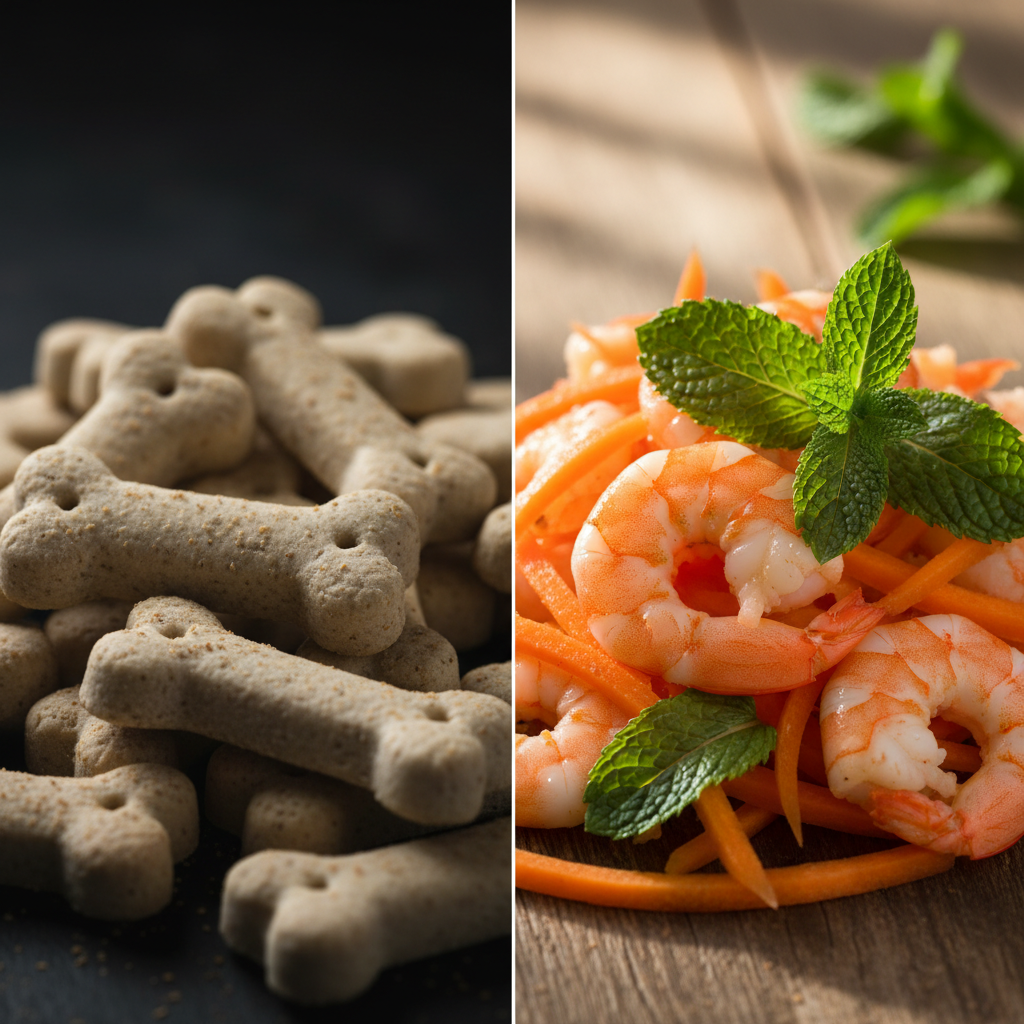
The pet food industry is a multi-billion dollar machine built on convenience and clever marketing. They sell you images of happy dogs frolicking through fields, while the ingredient list tells a much darker story. Let’s perform a forensic analysis on a typical ‘gourmet’ dog biscuit.
The First 5 Ingredients: A Red Flag Analysis
The first five ingredients make up the bulk of any product. In many popular treats, you’ll find a combination of these red flags:
- Wheat Flour/Corn Gluten Meal: Cheap fillers that offer minimal nutritional value and are common allergens for many dogs. They are used to bind the treat together, nothing more.
- Glycerin: A sweetener and humectant (it keeps treats soft). While generally considered safe, it’s often sourced from biodiesel production and adds unnecessary sugar to your dog’s diet.
- ‘Meat and Bone Meal’: An intentionally vague term. This rendered product can come from a mix of sources, including animals that were diseased or disabled. There is zero quality control or transparency.
- Propylene Glycol: A controversial additive used to maintain moisture. It’s a cousin to antifreeze (ethylene glycol) and while approved for dogs, it’s banned in cat food for its link to blood cell abnormalities. Why risk it?
- Artificial Colors (e.g., Red 40, Yellow 5): Your dog doesn’t care if their treat is bright red. These dyes are purely for the human consumer and have been linked to hyperactivity and other health issues in some studies.
Insider Secret: Words like ‘premium,’ ‘gourmet,’ and ‘natural’ on a dog treat bag are often meaningless marketing terms with no legal definition. The real truth is always in the legally-required Guaranteed Analysis and ingredient list on the back of the package. Learn to read it like a pro.
By making your own treats, you eliminate every single one of these questionable ingredients. You control the quality, the freshness, and the nutritional content. You become the gatekeeper of your dog’s health, and that’s the ultimate power.
The Nutritional Blueprint of Our Dog-Friendly Spring Rolls

Each ingredient in this recipe is chosen for a specific nutritional purpose. There are no fillers, no artificial binders, and no mystery meals. This is clean eating for your canine companion.
Protein Powerhouse: The Core Component
Lean protein is essential for muscle maintenance and overall health. For this recipe, you have options:
- Cooked Shrimp: An excellent source of lean protein, low in fat, and packed with phosphorus, vitamin B12, and anti-inflammatory antioxidants. Ensure shrimp is fully cooked and shells are removed.
- Boiled Chicken Breast: A classic, easily digestible protein. Shred it finely to incorporate easily into the rolls.
- Firm Tofu: A great plant-based option for dogs with poultry sensitivities. Ensure it’s plain and unseasoned.
Vegetable Crunch Factor: Vitamins & Hydration
Veggies add essential vitamins, fiber, and a satisfying crunch that dogs love.
- Carrots: Rich in Beta-Carotene, which converts to Vitamin A, supporting vision, immune function, and skin health.
- Cucumber: Composed of 95% water, it’s an incredibly hydrating, low-calorie addition, perfect for a refreshing treat.
- Bell Peppers (Red or Yellow): These offer a fantastic source of Vitamin C and antioxidants. Avoid green bell peppers as they can sometimes cause indigestion in sensitive dogs.
The Wrapper: A Safe, Simple Carb
We use standard rice paper wrappers, the same kind used for human spring rolls. They are made from rice flour, tapioca starch, and water. In the small quantity used for a treat, they provide a simple, gluten-free carbohydrate that holds everything together. Warning: Never use fried egg roll or wonton wrappers, and absolutely no human dipping sauces like peanut sauce or hoisin, which are loaded with sugar, salt, and unsafe ingredients like xylitol or garlic.
The Canine Nutrition Hacker’s Spring Roll Protocol (The Recipe)
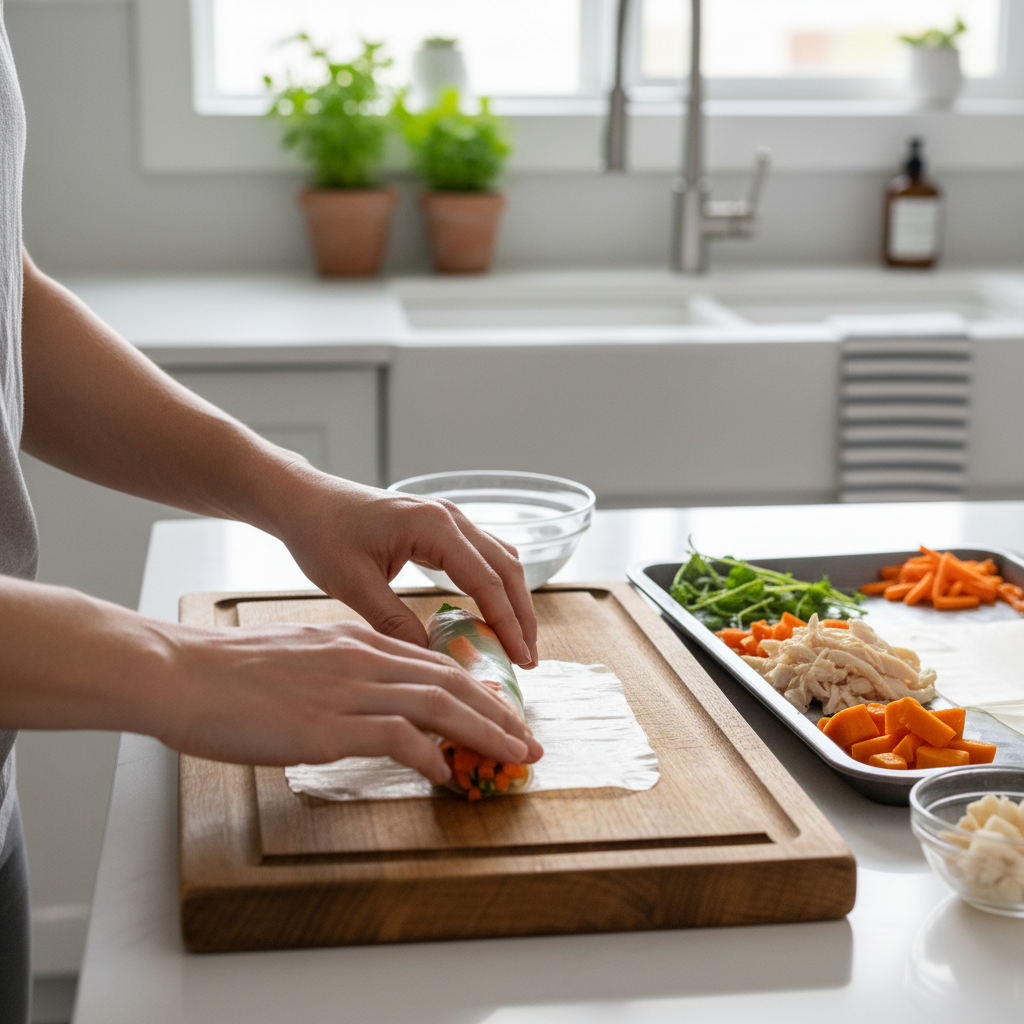
This is less of a recipe and more of a protocol. It’s a clean, efficient system for producing high-value nutritional treats. Follow the steps precisely for optimal results.
Required Equipment:
- Cutting board
- Sharp knife or mandoline slicer for julienning
- Large shallow dish or pie plate (for water)
- Mixing bowl
Ingredient Ratios (Yields approx. 8-10 rolls):
- 8-10 round rice paper wrappers
- 1 cup finely julienned carrots
- 1 cup finely julienned cucumber (seeds removed)
- 1/2 cup finely julienned red or yellow bell pepper
- 1/2 cup cooked, chopped protein (shrimp, boiled chicken, or firm tofu)
- Optional: 1 tablespoon chopped fresh mint or parsley (for fresh breath)
Step-by-Step Instructions:
- Prep Your Filling: In a mixing bowl, combine all your julienned vegetables, your chosen cooked protein, and the optional fresh herbs. Toss gently to distribute everything evenly. This is your filling station.
- Hydrate the Wrapper: Fill your shallow dish with about an inch of warm water. Take one rice paper wrapper and submerge it completely for about 15-20 seconds. It should become soft and pliable, but not mushy.
- Build the Roll: Carefully remove the softened wrapper from the water, letting excess water drip off. Lay it flat on your cutting board or a clean, damp surface. It will be sticky.
- Place the Filling: Place a small amount (about 2-3 tablespoons) of the filling mixture in a line across the lower third of the wrapper. Don’t overfill, or it will be difficult to roll.
- The First Fold: Lift the bottom edge of the wrapper up and over the filling, tucking it in snugly.
- Fold the Sides: Fold in the left and right sides of the wrapper towards the center, like you’re making a burrito.
- Roll It Tight: Continue rolling from the bottom up, keeping the roll tight and compact to seal in the filling. The sticky rice paper will adhere to itself.
- Serve or Store: Your first spring roll is complete. Repeat the process with the remaining wrappers and filling. You can serve them immediately or store them for later.
Portion Control is Non-Negotiable: Remember, these are treats. For a small dog (under 20 lbs), half a roll is sufficient. For a medium dog (20-50 lbs), one full roll is a good serving size. For large dogs (over 50 lbs), one to two rolls can be given. Always monitor your dog when feeding any new treat.
Cost Analysis: Hacking Your Treat Budget
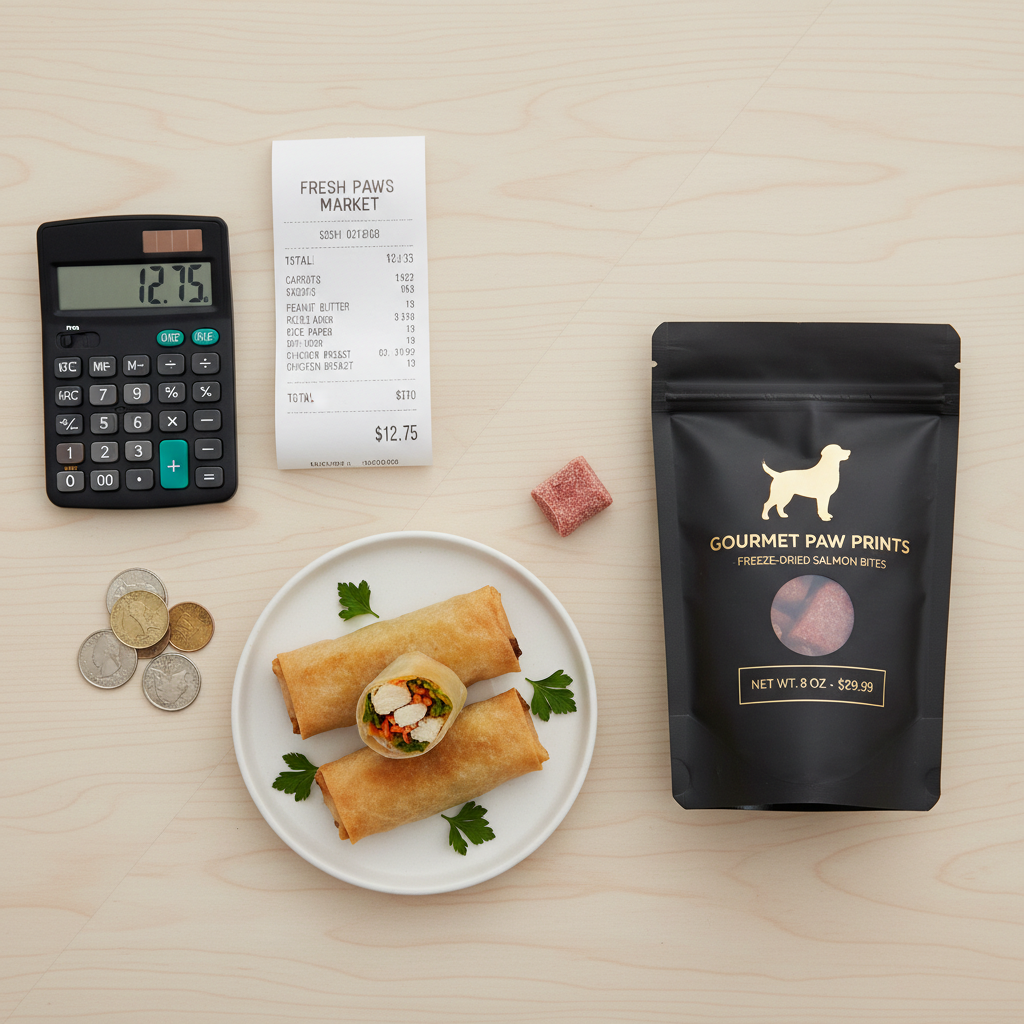
The ‘premium’ label on commercial dog treats comes with a premium price tag, but the value is rarely there. Let’s break down the real numbers. Here is a direct comparison between our DIY spring rolls and a popular brand of ‘gourmet’ dental chews.
| Metric | Premium ‘Gourmet’ Dental Chews | DIY Canine Spring Rolls |
|---|---|---|
| Average Cost Per Treat | $1.25 – $2.00 | Approx. $0.45 |
| Primary Ingredients | Wheat flour, glycerin, gelatin, powdered cellulose, natural poultry flavor, various vitamin/mineral powders. | Rice paper, carrot, cucumber, cooked shrimp/chicken. Real, whole foods. |
| Source of Nutrition | Fortified with synthetic vitamins. Protein source is often vague ‘flavor’. | Directly from fresh, unprocessed vegetables and lean protein. |
| Transparency & Control | Zero. You trust the manufacturer. | 100%. You sourced and prepared every single ingredient. |
| The Hacker’s Verdict | Poor value. You’re paying for marketing, fillers, and convenience, not high-quality nutrition. | Exceptional value. For less than half the price, you provide a nutritionally superior, fresh, whole-food treat with no questionable additives. |
Let’s calculate the cost for a batch of 10 spring rolls. Prices are approximate and will vary by location: Carrots ($0.50), Cucumber ($0.75), Bell Pepper ($1.00), Rice Paper ($1.00 for 10 sheets), 1/4 lb Cooked Shrimp ($1.25). Total cost for a batch of 10 is roughly $4.50, or $0.45 per roll. Compared to a box of 10 premium chews costing $15.00, you are saving over $10.00 per batch while simultaneously providing a VASTLY superior product. This is the essence of hacking your dog’s nutrition: better results for less money.
The Meal Prep Protocol: Batching and Storage
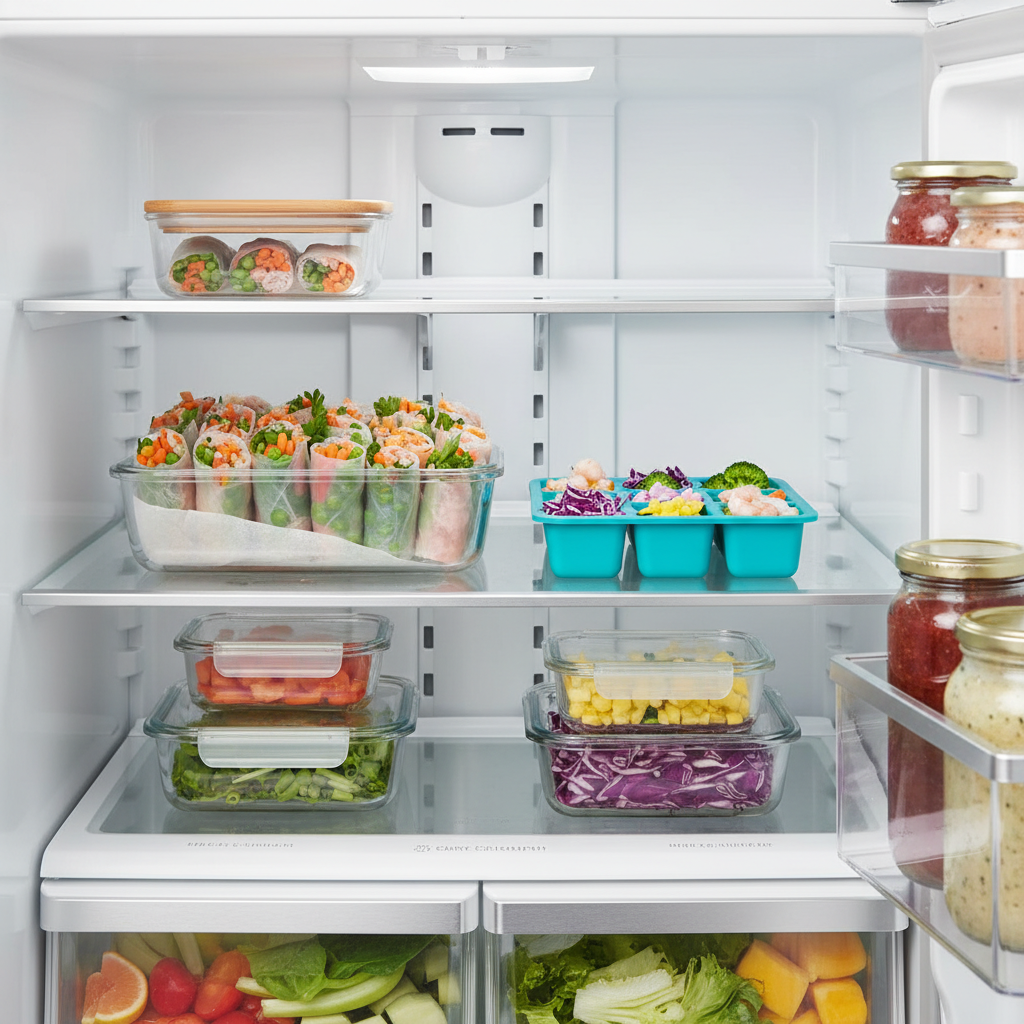
Your time is valuable. The most efficient way to implement this protocol is to prepare in batches. A 30-minute session on a Sunday can provide your dog with fresh treats for the entire week.
Short-Term Storage (Refrigeration)
Freshly made spring rolls can be stored in the refrigerator for up to 3-4 days. The key is to prevent them from sticking together. Place them in a single layer in an airtight container. If you need to stack them, place a small piece of parchment paper between each layer to prevent them from turning into a single, giant spring roll blob.
Long-Term Storage (Freezing)
While you can freeze the finished rolls, the rice paper can become a bit tough and chewy upon thawing. For the best results, I recommend freezing the components.
Hacker Tip: Prepare a large batch of the vegetable and protein filling. Portion it out into a silicone ice cube tray and freeze. Each cube will be the perfect amount of filling for one spring roll. When you want to make a fresh treat, simply pop out a cube, let it thaw for 15-20 minutes, and roll it in a freshly hydrated rice paper wrapper. This gives you a fresh-on-demand treat with minimal daily effort.
You can also turn these into a summer ‘pupsicle’. Simply place a finished spring roll in the freezer for a few hours. The result is a crunchy, frozen treat that’s perfect for a hot day and provides a great source of mental enrichment as your dog works to eat it.
Conclusion
You have now been armed with the knowledge and the protocol to completely bypass the commercial treat industry’s overpriced and underperforming products. These dog-friendly spring rolls are more than a recipe; they are a prime example of the Canine Nutrition Hacker philosophy. By investing a small amount of time, you save significant money, provide vastly superior nutrition, and eliminate all the harmful fillers, artificial additives, and mystery ingredients found in commercial treats. You gain total control.
This is the first step. Start questioning everything. Read every label. Understand that real food is always the best option. Empower yourself to make these intelligent, cost-effective decisions, and you will be rewarded with a healthier, happier dog. Stop being a passive consumer and start being an active, informed advocate for your pet’s health.