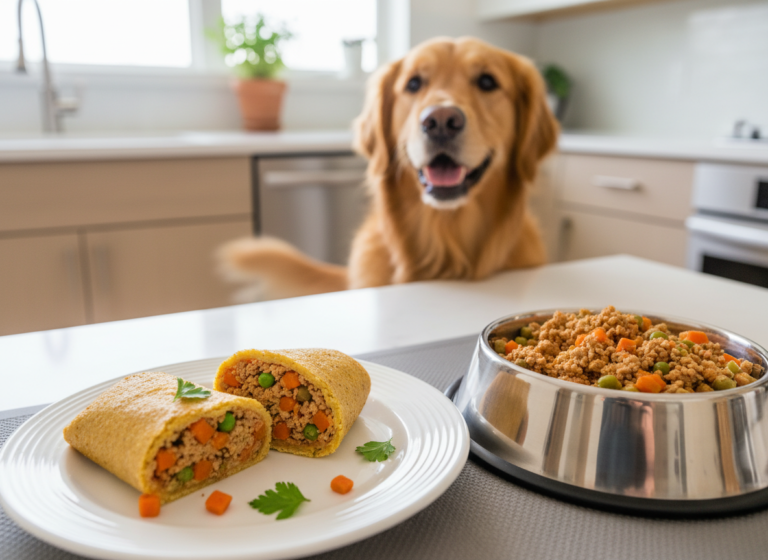

The Ultimate Tuna Fudge Recipe: High-Value Training Rewards
In the world of professional dog training, a high-value reward is the ultimate currency. It’s the tool that forges focus, accelerates learning, and makes you more interesting than any squirrel in the park. But the commercial pet treat industry has a dirty secret: they charge a premium for products often packed with cheap fillers, artificial preservatives, and ingredients of questionable origin. You’re paying top dollar for marketing, not nutrition or performance.
As the Canine Nutrition Hacker, I dissect labels and expose the truth. The path to effective training and superior nutrition doesn’t lie in a brightly colored bag from a big-box store. It lies in your own kitchen. This guide will give you the blueprint for creating the most potent, cost-effective, and nutritionally superior training treat known to savvy dog owners: Tuna Fudge. Forget the name; this isn’t a dessert. It’s a powerful tool. Prepare to take control of your dog’s treat jar and unlock a new level of training engagement.
A Canine Nutrition Hacker’s Mandatory Disclaimer

A Canine Nutrition Hacker’s Mandatory Disclaimer
Before we proceed, let’s establish the ground rules. My mission is to empower you with information to make smarter nutritional choices for your canine companion. However, I am not a veterinarian or a certified animal nutritionist. The recipe and advice provided here are for supplemental feeding only. This Tuna Fudge is a treat, not a complete and balanced meal. Treats should not constitute more than 10% of your dog’s daily caloric intake.
Every dog is an individual with unique dietary needs, potential allergies, and health conditions. Ingredients that are safe for most dogs may not be suitable for yours. Always consult with your trusted veterinarian before introducing any new foods into your dog’s diet, especially if your dog has known health issues like pancreatitis, kidney disease, or food sensitivities. You are the ultimate guardian of your dog’s health; proceed with informed diligence.
Forensic Analysis: The High Cost of Mediocre Store-Bought Treats
Forensic Analysis: The High Cost of Mediocre Store-Bought Treats
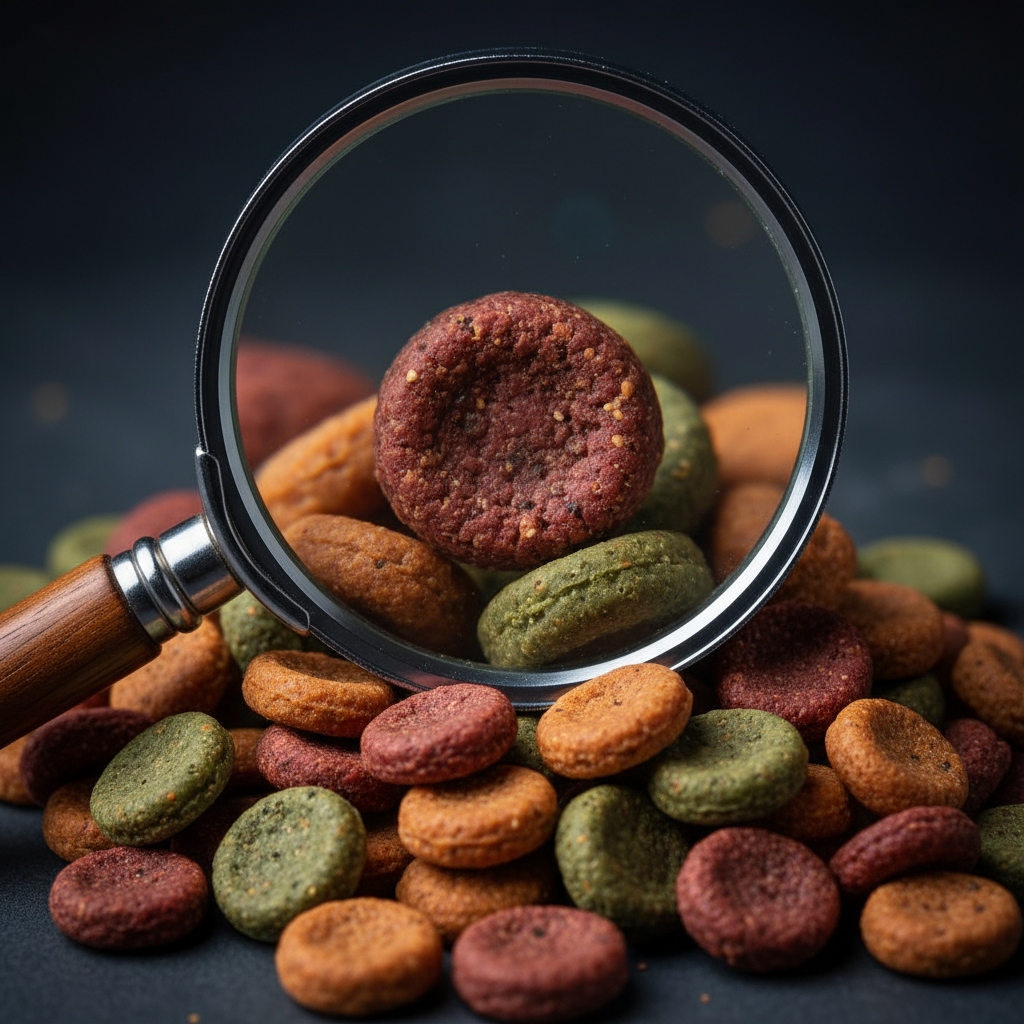
Let’s conduct a typical analysis. Pick up any popular bag of ‘training bites’ and turn it over. The front of the bag screams ‘Real Meat!’ and ‘Grain-Free!’. The back, however, tells the real story. Here’s a typical ingredient panel for a premium-priced treat:
Chicken, Pea Flour, Potato Starch, Vegetable Glycerin, Dried Brewers Yeast…
Let’s break this down from a hacker’s perspective:
- Chicken: A good start, but what’s the quality? And how much is actually in there after processing?
- Pea Flour & Potato Starch: These are cheap binders. They add structure to the treat but offer minimal nutritional value for a carnivore. They are often used to boost the protein percentage on the label without using more expensive meat. This is a classic industry trick.
- Vegetable Glycerin: A humectant used to keep treats soft and chewy. It’s a sugar alcohol that adds sweetness and moisture, but it’s essentially a processed filler.
- Dried Brewers Yeast: A common supplement, but also a known allergen for some dogs.
The cost for a 6-ounce bag of these treats can easily be $8-$12. That breaks down to as much as $2.00 per ounce for a product that is primarily cheap starch and sweetener. You’re paying for marketing and convenience, not for optimal canine nutrition. We can do better. Much better.
The Real Cost Breakdown: DIY Tuna Fudge vs. Premium Retail
The Real Cost Breakdown: DIY Tuna Fudge vs. Premium Retail
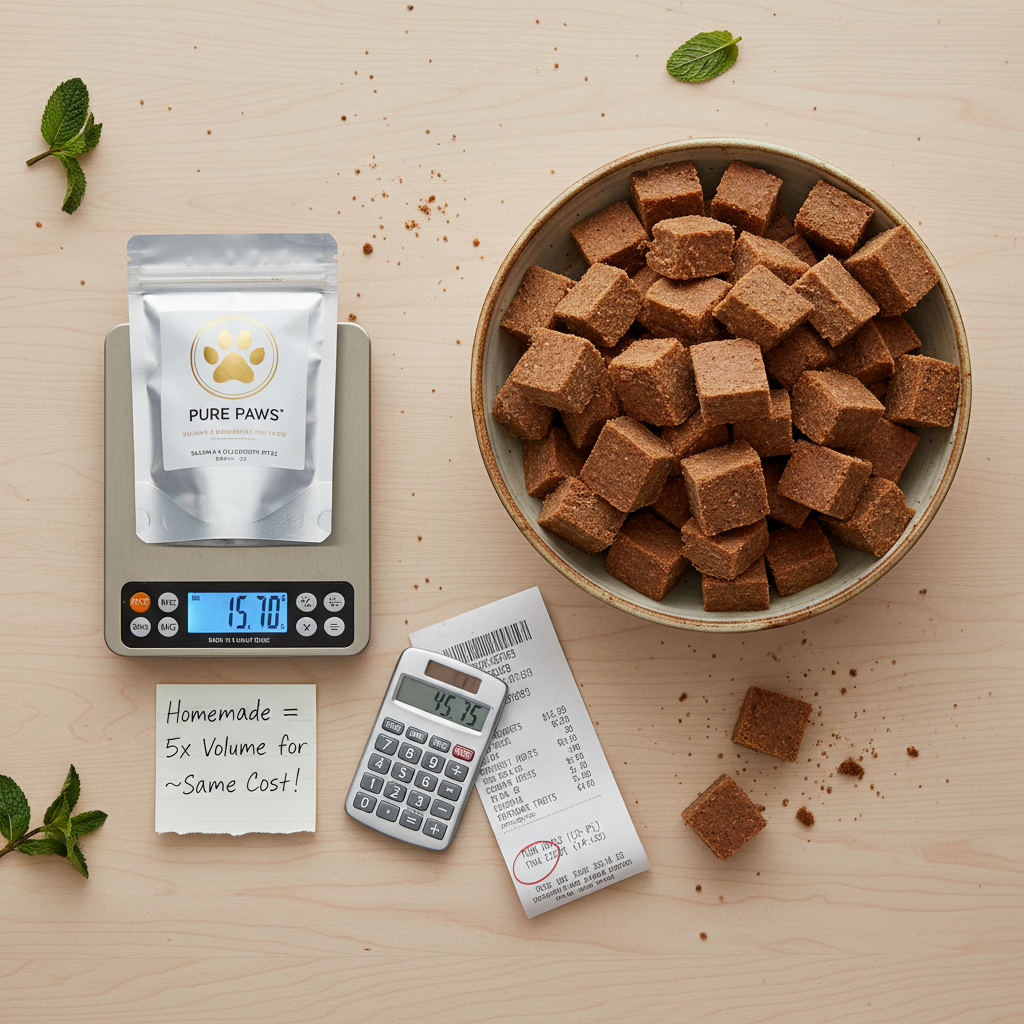
Numbers don’t lie. The single most compelling argument for making your own high-value treats is the staggering cost savings without compromising on quality. In fact, you’re dramatically increasing the quality. Let’s analyze the cost to produce a batch of Tuna Fudge that yields approximately 16 ounces of finished product.
Here is a direct comparison based on average US grocery prices:
| Component | DIY Tuna Fudge (per 16oz batch) | Premium Store-Bought Treats (per 16oz) |
|---|---|---|
| Primary Protein Source | Canned Tuna in Water (Omega-3s) | Often ‘Chicken Meal’ or unspecified protein |
| Binder/Flour | Whole Wheat or Oat Flour | Pea Flour, Potato Starch, Tapioca |
| Estimated Ingredient Cost | ~$4.50 (2 cans tuna, 2 eggs, flour) | N/A |
| Final Cost Per Ounce | ~$0.28 / ounce | ~$1.75 – $2.50 / ounce |
| Verdict | Nutrient-dense, whole food ingredients at a fraction of the price. You control 100% of the inputs. | Vastly overpriced for a product composed largely of cheap fillers and processed ingredients. |
Insider Secret: By making your own treats, you are not just saving money—you’re reinvesting it directly into your dog’s health. The nearly 85-90% savings can be allocated to higher-quality primary food, veterinary care, or better enrichment toys. This is the essence of being a Canine Nutrition Hacker: optimizing resources for maximum benefit.
The Ultimate Tuna Fudge Recipe: A Blueprint for Irresistible Rewards

The Ultimate Tuna Fudge Recipe: A Blueprint for Irresistible Rewards
This recipe is designed for potency and simplicity. The strong aroma of tuna is nearly universal in its appeal to dogs, making it an ideal ‘jackpot’ reward for recall training, overcoming distractions, or any high-stakes learning scenario.
Required Equipment:
- Blender or food processor
- 8×8 inch baking pan or a similar-sized silicone mat
- Spatula
- Measuring cups and spoons
Core Ingredients:
- 2 (5-ounce) cans of chunk light tuna packed in water, do not drain. The water is crucial for moisture.
- 2 large eggs
- 1.5 cups of whole wheat flour (see variations section for alternatives)
- 1 tablespoon of dried parsley (optional, for breath)
- A small amount of coconut oil or non-stick spray for greasing the pan
Step-by-Step Instructions:
- Preheat and Prepare: Preheat your oven to 350°F (175°C). Lightly grease your baking pan or silicone mat.
- Combine Wet Ingredients: In your blender or food processor, combine the two entire cans of tuna (with water) and the two large eggs.
- Blend to a Puree: Blend the tuna and egg mixture until it forms a smooth, consistent, and frankly unappetizing-looking puree. This step is critical for the final ‘fudge’ texture.
- Incorporate Dry Ingredients: Add the flour and optional parsley to the blender. Pulse the mixture until the flour is just combined. Do not overmix. The batter will be thick, similar to a dense brownie batter.
- Spread the Batter: Scrape the batter into your prepared pan. Use a spatula to spread it evenly into all corners. The layer should be relatively thin, about 1/4 to 1/2 inch thick.
- Bake to Perfection: Bake for 20-25 minutes. The fudge is done when the edges are slightly browned and a toothpick inserted into the center comes out clean. It will feel firm and springy to the touch.
- Cool and Cut: Let the fudge cool completely in the pan. Once cool, turn it out onto a cutting board. Using a sharp knife or a pizza cutter, slice the fudge into small, training-sized squares. For a 50lb dog, squares should be no larger than your thumbnail.
Hacker-Level Storage: Batch Cooking and Preservation
Hacker-Level Storage: Batch Cooking and Preservation
A single batch of this recipe yields a significant number of treats. Proper storage is key to preserving their potency and preventing spoilage. You’ve invested the time; now protect that investment.
Refrigerator Storage:
For immediate use, store the cut tuna fudge squares in an airtight container in the refrigerator. They will remain fresh and potent for 5-7 days. This is your ‘working supply’ for daily training sessions.
Freezer Storage (The Pro Move):
The freezer is your best friend for long-term storage. Freezing locks in the aroma and freshness for months.
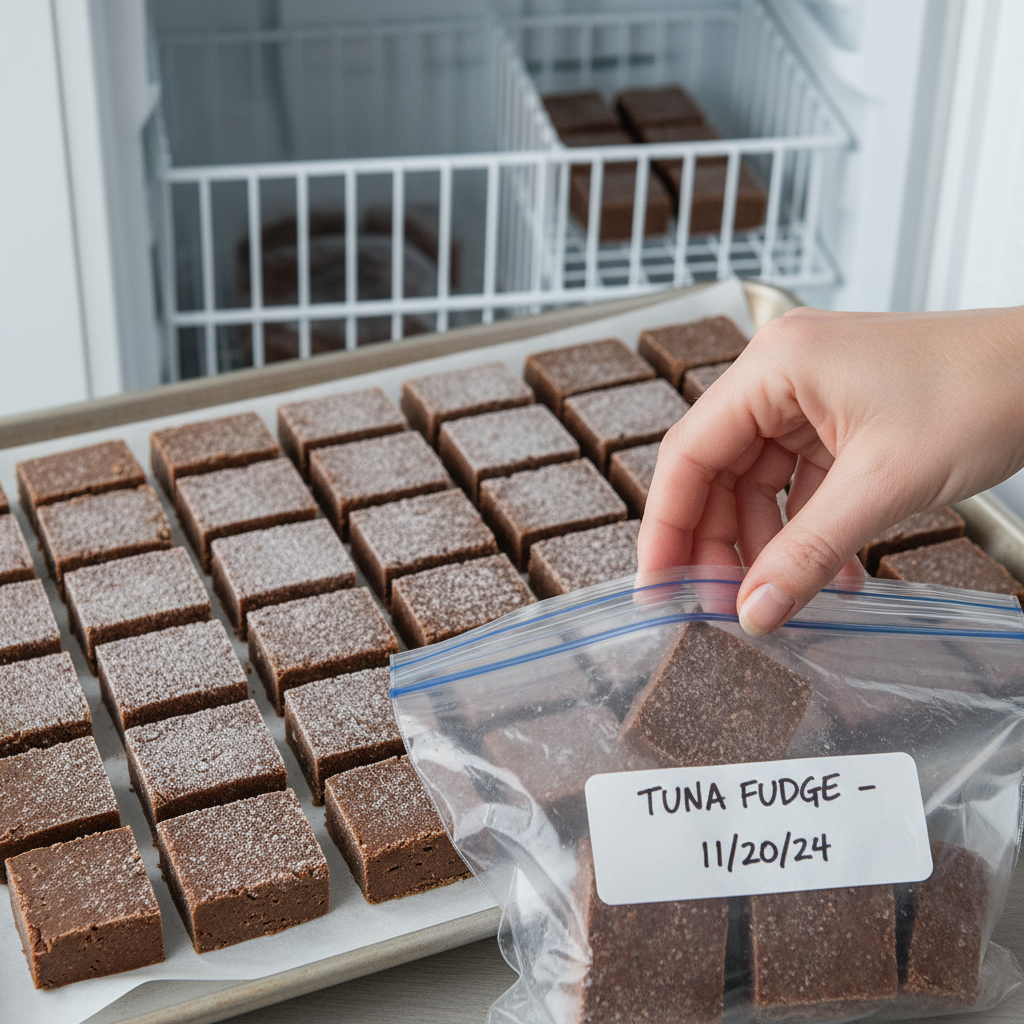
- Pre-Freeze in a Single Layer: After cutting the fudge into squares, spread them out on a baking sheet lined with parchment paper. Make sure they are not touching.
- Flash Freeze: Place the baking sheet in the freezer for 1-2 hours, or until the squares are frozen solid. This crucial step prevents them from clumping together into a giant, unusable brick.
- Bag and Store: Once frozen, transfer the individual squares into a labeled freezer-safe bag or container. They will last for up to 3 months in the freezer.
Hacker Tip: Use the freezer to your strategic advantage. Create an ‘aroma cycle’ by rotating different high-value treats. Use tuna fudge for a week, then switch to a batch of homemade liver treats from the freezer for the next week. This prevents the dog from becoming desensitized to a single reward and keeps their engagement level exceptionally high.
Customization and Upgrades: For Allergies and Picky Eaters
Customization and Upgrades: For Allergies and Picky Eaters
The base recipe is a powerful tool, but it can be easily adapted for dogs with specific needs. Think of the core recipe as a platform to be modified.
Protein Swaps:
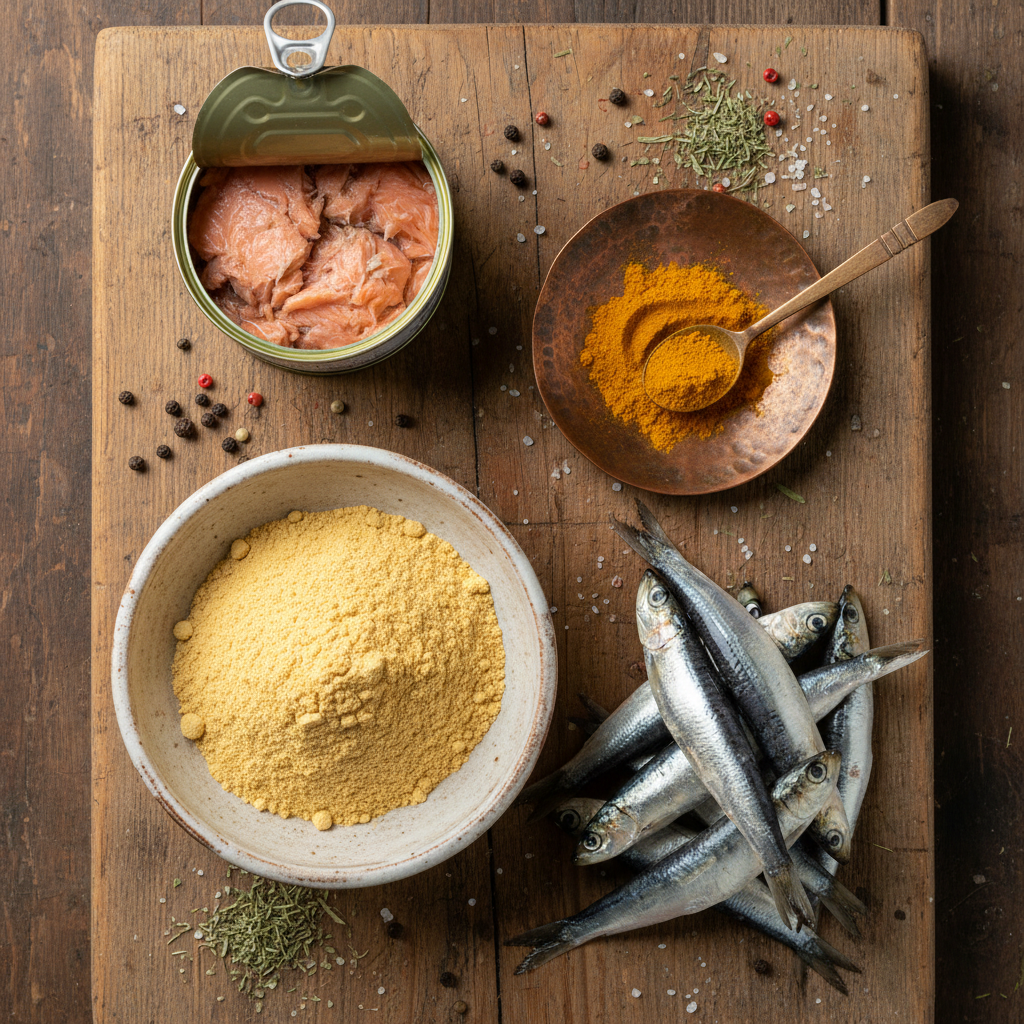
If your dog isn’t a fan of tuna or has a fish sensitivity, you can substitute other canned proteins. Always choose varieties packed in water with no salt added.
- Canned Salmon: An excellent source of Omega-3 fatty acids, great for skin and coat health.
- Canned Sardines: A powerful, nutrient-dense option. Be prepared for an even stronger aroma.
- Canned Chicken or Turkey: A good option for dogs who prefer poultry flavors. Ensure it is plain, with no broths, spices, or onions.
Flour Alternatives for Grain Sensitivities:
If your dog is sensitive to wheat, several other flours work well. Note that you may need to slightly adjust the amount to achieve the correct batter consistency.
- Oat Flour: Easily made by grinding rolled oats in a blender. It’s a gentle, whole-grain alternative.
- Chickpea (Garbanzo Bean) Flour: A high-protein, grain-free option that creates a dense, firm fudge.
- Coconut Flour: Highly absorbent, so you will need to use less (start with 3/4 cup) and may need to add a bit of extra water or another egg to get the right consistency.
Nutritional Boosters:
You can add small amounts of other ingredients for added health benefits, but do so sparingly.
- Nutritional Yeast: Adds a ‘cheesy’ flavor dogs love and is packed with B vitamins. Add 1-2 tablespoons.
- Turmeric: Known for its anti-inflammatory properties. A small pinch (1/4 teaspoon) is sufficient.
Conclusion
You now possess the knowledge to break free from the commercial treat cycle. By investing a small amount of time, you’ve created a superior training tool that is healthier for your dog and significantly better for your wallet. This is the core philosophy of the Canine Nutrition Hacker: leveraging insider knowledge to achieve elite results without the elite price tag. You’ve done more than just bake a treat; you’ve taken a definitive step toward becoming a more informed, empowered, and effective dog owner. Now go arm yourself with your new high-value rewards and witness the transformative impact on your next training session.