
Ultimate Guide to Kong Stuffing: Recipes to Beat Boredom
SAFETY DISCLAIMER: Before we begin, let’s be clear. I am not a veterinarian. The recipes and advice in this guide are for supplemental feeding and enrichment, not to replace your dog’s balanced daily diet. Always consult with your veterinarian before introducing new foods, especially if your dog has allergies, sensitivities, or underlying health conditions. Your dog’s health is the number one priority.
Now, let’s get down to business. That rubber Kong toy sitting in your dog’s toy basket is more than just a chew toy; it’s a high-performance enrichment tool. Used correctly, it’s one of the most powerful weapons in your arsenal against canine boredom, separation anxiety, and destructive behavior. But if you’re still buying those pressurized cans of ‘cheese-flavored’ paste, you’re not just wasting money—you’re likely feeding your dog a cocktail of artificial flavors, preservatives, and sugar. As The Canine Nutrition Hacker, my mission is to empower you to do better. This guide will expose the truth about commercial stuffers and provide you with a vault of simple, healthy, and cost-effective recipes to turn that simple toy into a boredom-busting, brain-working masterpiece.
The Kong Philosophy: Why This Toy is a Non-Negotiable Tool

Most pet owners see a Kong and think ‘pacifier.’ They toss it to their dog when they leave the house, hoping it keeps them occupied. This is a surface-level understanding of a profoundly effective tool. To truly hack the Kong, you must understand the psychology it taps into.
Dogs, by nature, are foragers and problem-solvers. In the wild, their ancestors spent a significant portion of their day working for their food. This act of seeking, sniffing, and extracting is deeply ingrained in their DNA. Modern domestic life, with its twice-a-day bowl feeding, has stripped them of this essential mental work. This leads to what I call ‘Cognitive Unemployment’—a state of chronic boredom that manifests as destructive chewing, excessive barking, and anxiety.
The Kong directly combats this by reintroducing the concept of ‘working for food.’ It forces your dog to use their brain, their tongue, their paws, and their powerful sense of smell to solve a puzzle. This isn’t just a distraction; it’s a job. And a dog with a job is a happy, fulfilled dog.
The Benefits are More Than Just a Quiet House:
- Mental Stimulation: A 15-minute session with a well-stuffed Kong can be as mentally tiring as a 30-minute walk. It’s a workout for the brain, preventing cognitive decline and keeping your dog sharp.
- Anxiety Reduction: The act of licking is inherently calming for dogs, releasing endorphins that soothe and reduce stress. This makes the Kong an invaluable tool for managing separation anxiety and other stress-related behaviors.
- Crate Training Ally: A frozen, high-value Kong can create an incredibly positive association with the crate, transforming it from a place of confinement into a ‘den’ where amazing things happen.
- Slowing Down Fast Eaters: For dogs that inhale their food in seconds, feeding a portion of their meal from a Kong forces them to slow down, aiding digestion and preventing dangerous bloat.
Stop viewing the Kong as a simple toy. Start seeing it as an essential piece of cognitive enrichment equipment. It’s the canine equivalent of a crossword puzzle, a meditation session, and a gourmet meal all rolled into one.
The Cost-Hack Analysis: DIY Stuffing vs. Store-Bought Paste
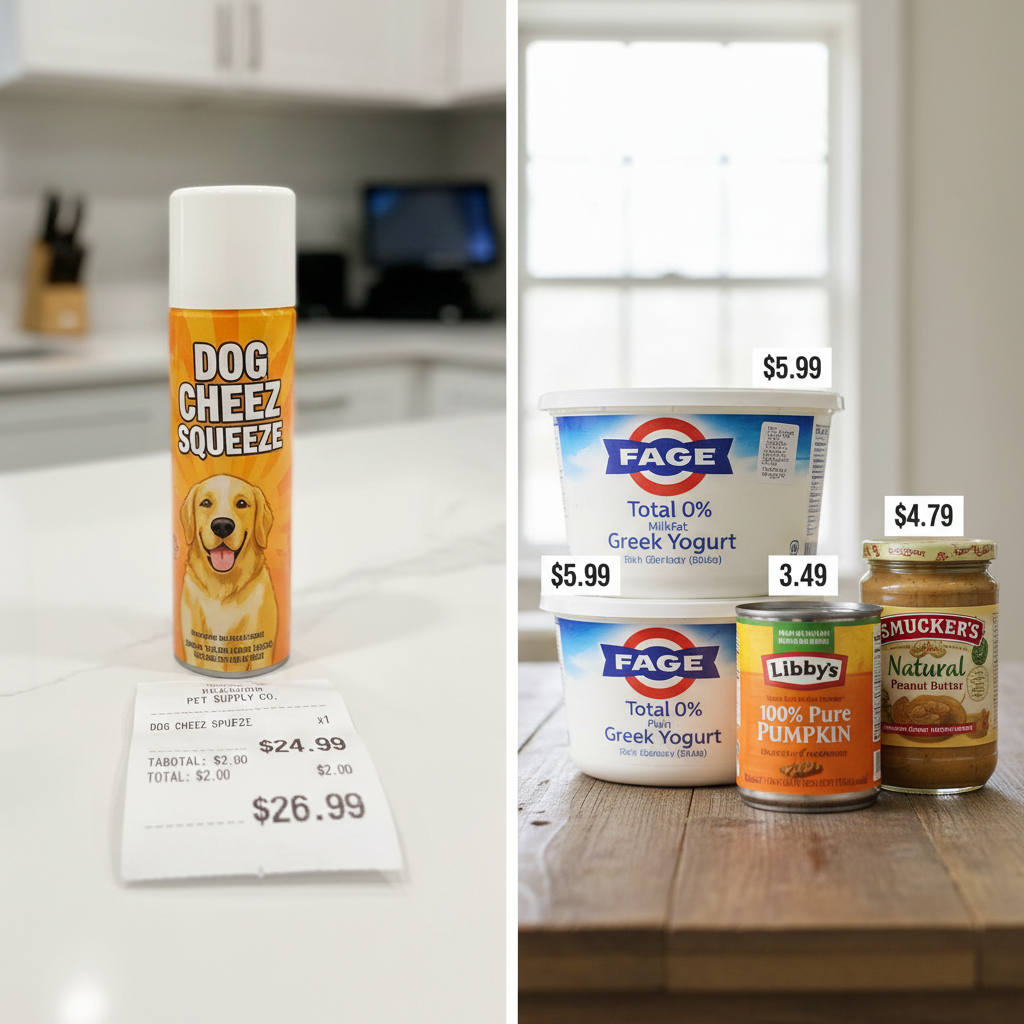
Let’s talk numbers. The convenience of a commercial ‘easy stuff’ spray is tempting, but it comes at a steep price, both to your wallet and your dog’s health. These products are often formulated with cheap fillers, sugars, artificial preservatives, and minimal nutritional value. You’re paying a premium for propellant gas and marketing.
A typical 8 oz. can of a leading brand cheese-flavored filler costs around $8.00. That breaks down to $1.00 per ounce. Now, let’s analyze what you get for that dollar. The first few ingredients are often Whey, Water, Soybean Oil, and Maltodextrin (a sugar). The ‘cheese’ is a flavor, not a primary ingredient.
Compare that to the cost and nutritional value of whole-food, DIY alternatives. The difference is staggering.
Hacker Tip: The single greatest ‘hack’ for your pet budget is learning to read the ingredients list, not the marketing on the front of the package. If you can’t pronounce it, or if sugar (under any of its sneaky names like maltodextrin or corn syrup) is in the top 5, put it back on the shelf.
Here is a direct, no-nonsense comparison:
| Stuffing Option | Typical Cost | Cost Per Ounce | Key Ingredients | Verdict |
|---|---|---|---|---|
| Commercial Cheese Spray | $8.00 / 8 oz. can | $1.00 | Whey, Water, Soybean Oil, Maltodextrin, Modified Corn Starch | Expensive, low nutritional value, contains sugar and artificial additives. A convenience trap. |
| Plain Greek Yogurt | $4.50 / 32 oz. tub | $0.14 | Cultured Pasteurized Grade A Nonfat Milk | Excellent source of probiotics and protein. Incredibly cost-effective and healthy. |
| Canned Pumpkin Puree | $2.50 / 15 oz. can | $0.17 | Pumpkin | Fantastic for digestive health (fiber), low in calories. A nutritional powerhouse. |
| Natural Peanut Butter | $4.00 / 16 oz. jar | $0.25 | Peanuts, Salt | High in protein and healthy fats. High value for dogs, but must be XYLITOL-FREE. |
The conclusion is undeniable. By investing five minutes in your kitchen, you can stuff your dog’s Kong for a fraction of the price while providing superior nutrition. You save money, you control the ingredients, and you eliminate the junk. This is the essence of being a Canine Nutrition Hacker.
The Canine Nutrition Hacker’s Recipe Vault
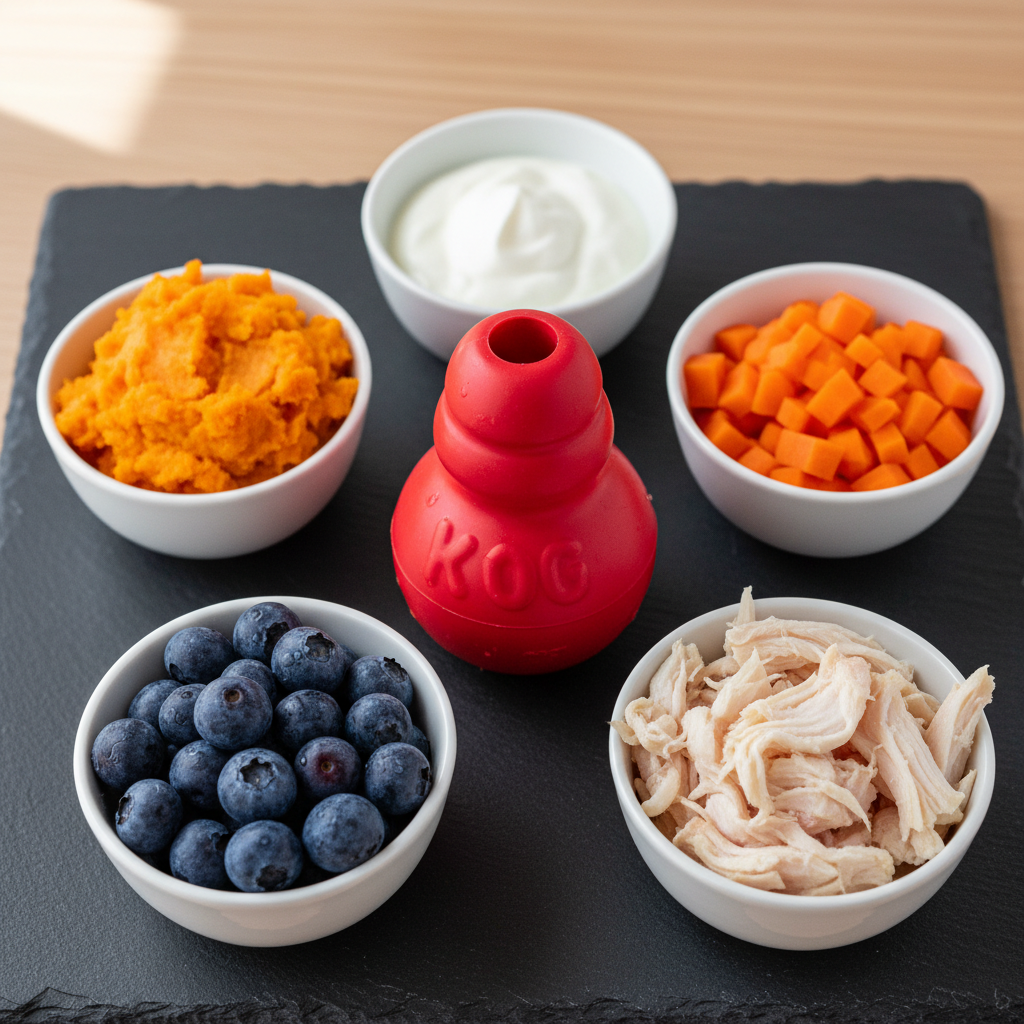
This is where theory becomes action. Forget boring, single-ingredient stuffing. The key to keeping your dog engaged is variety in taste and texture. Below are my tested and approved recipes, categorized by difficulty and purpose. Always use a base ‘sealant’ like a spoonful of peanut butter or cream cheese at the small hole to prevent leaks before filling.
The Beginner’s Base: Simple & Safe Starters
These recipes are perfect for dogs new to Kongs or for a quick, everyday treat.
- The Kibble Mash:
- Ingredients: 1/4 cup of your dog’s regular kibble, warm water or sodium-free bone broth.
- Instructions: Place kibble in a bowl. Add just enough warm liquid to cover it. Let it sit for 5-10 minutes until the kibble becomes soft and mashable. Mash with a fork, stuff into the Kong, and serve.
- The Pumpkin Pie:
- Ingredients: 2 tablespoons of 100% pure pumpkin puree, 1 tablespoon of plain Greek yogurt, a dash of cinnamon.
- Instructions: Mix all ingredients in a small bowl until well combined. The yogurt adds probiotics and the pumpkin aids digestion. Spoon into the Kong.
The Savory Meal-Mixer: Dinner, Upgraded
Use these to make mealtime more engaging or to supplement a regular meal.
- The Thanksgiving Dinner:
- Ingredients: 2 tablespoons of plain, shredded cooked chicken or turkey, 1 tablespoon of mashed sweet potato, 1 teaspoon of cooked peas or green beans.
- Instructions: Layer the ingredients inside the Kong. Start with the chicken, add the sweet potato, and then plug the top with the peas or green beans. This teaches your dog to work through different textures.
- The Sardine Surprise:
- Ingredients: 1-2 sardines packed in water (no salt added), 2 tablespoons of cooked brown rice or quinoa.
- Instructions: Mash the sardines and rice together to form a thick, fragrant paste. The Omega-3s in the sardines are fantastic for coat and joint health. Stuff tightly. Warning: This one is potent, so it’s best served outdoors!
The Frozen Pup-sicle: Long-Lasting Coolers
Freezing a Kong dramatically increases the challenge and the time it takes to empty. Perfect for hot days or for dogs who need a long-lasting distraction.
- The PB & Banana Smoothie:
- Ingredients: 1 tablespoon of xylitol-free peanut butter, 1/2 mashed ripe banana, 2 tablespoons of plain Greek yogurt.
- Instructions: Blend all ingredients until smooth. Pour into the Kong (plug the bottom hole with a bit of peanut butter first). Place upright in a cup in the freezer and freeze solid for at least 4 hours.
- The Broth Block:
- Ingredients: Sodium-free beef or chicken broth, a handful of finely diced carrots or blueberries.
- Instructions: Plug the small hole. Place the Kong upright in a mug. Drop in the diced carrots or berries. Slowly pour the broth over them until the Kong is full. Freeze solid. This creates a savory, hydrating ice block that your dog has to lick away to get to the treasures inside.
Advanced Kong Hacking: Layering, Freezing, and Challenge Levels

Once your dog has mastered the basic stuffed Kong, it’s time to increase the difficulty. A bored genius of a dog can empty a simply-packed Kong in minutes. The goal of advanced hacking is to extend the experience, forcing them to use their brain more strategically.
The Art of Layering
The secret to a long-lasting Kong is not just what you put in it, but how you put it in. Think like a geologist creating layers of sediment. Each layer should offer a different textural experience.
- Layer 1 (The Tip): Start with the most high-value, delicious morsel right at the small hole. A piece of dried liver or a small chunk of cheese. This immediately rewards your dog for starting the process.
- Layer 2 (The Core): This is the main filling. Use one of the recipes from the vault, like the Kibble Mash or Thanksgiving Dinner mix.
- Layer 3 (The Blocker): About halfway up, wedge in something solid that blocks easy access. A large, dry dog biscuit, a dental chew, or a large piece of dried sweet potato can work well. Your dog has to work to dislodge it.
- Layer 4 (The Seal): Pack the large opening with a sticky, paste-like substance. This is where your xylitol-free peanut butter, cream cheese, or mashed banana comes in. It acts as a ‘cork,’ holding everything else inside.
Mastering the Deep Freeze
Freezing is the ultimate difficulty multiplier. A frozen Kong can last 2-3 times longer than a fresh one. However, there’s a technique to it.
- Plug the Hole: Always plug the small bottom hole with a dab of peanut butter or cream cheese to prevent the contents from leaking out before they freeze.
- Use a Stand: Place the Kong, large opening up, in a mug or cup to keep it stable in the freezer.
- Freeze Solid: Don’t rush it. Allow at least 4-6 hours for the Kong to freeze completely solid. For giant Kongs, freeze overnight.
- Batch Prep: Don’t just make one. Prepare 3-4 Kongs at once and keep them in a freezer bag. This way, you always have a brain game ready to deploy at a moment’s notice.
Hacker Tip: For the ultimate challenge, use the layering technique and then freeze it solid. A layered, frozen Kong can keep even the most powerful chewer and problem-solver occupied for 30-45 minutes or more. This is the master level of Kong stuffing.
Adjusting Difficulty Levels
Not every dog is a master puzzle-solver. Adjust the difficulty to your dog’s level to prevent frustration.
- Easy: Loose-packed kibble or treats that fall out easily.
- Medium: Soft, mashed ingredients, packed fresh (not frozen).
- Hard: Tightly packed, layered ingredients.
- Expert: Tightly packed, layered ingredients, frozen solid.
Always start easy and work your way up. The goal is engagement, not frustration. A dog that gives up is not being enriched.
The ‘Do Not Stuff’ List: A Critical Safety Warning
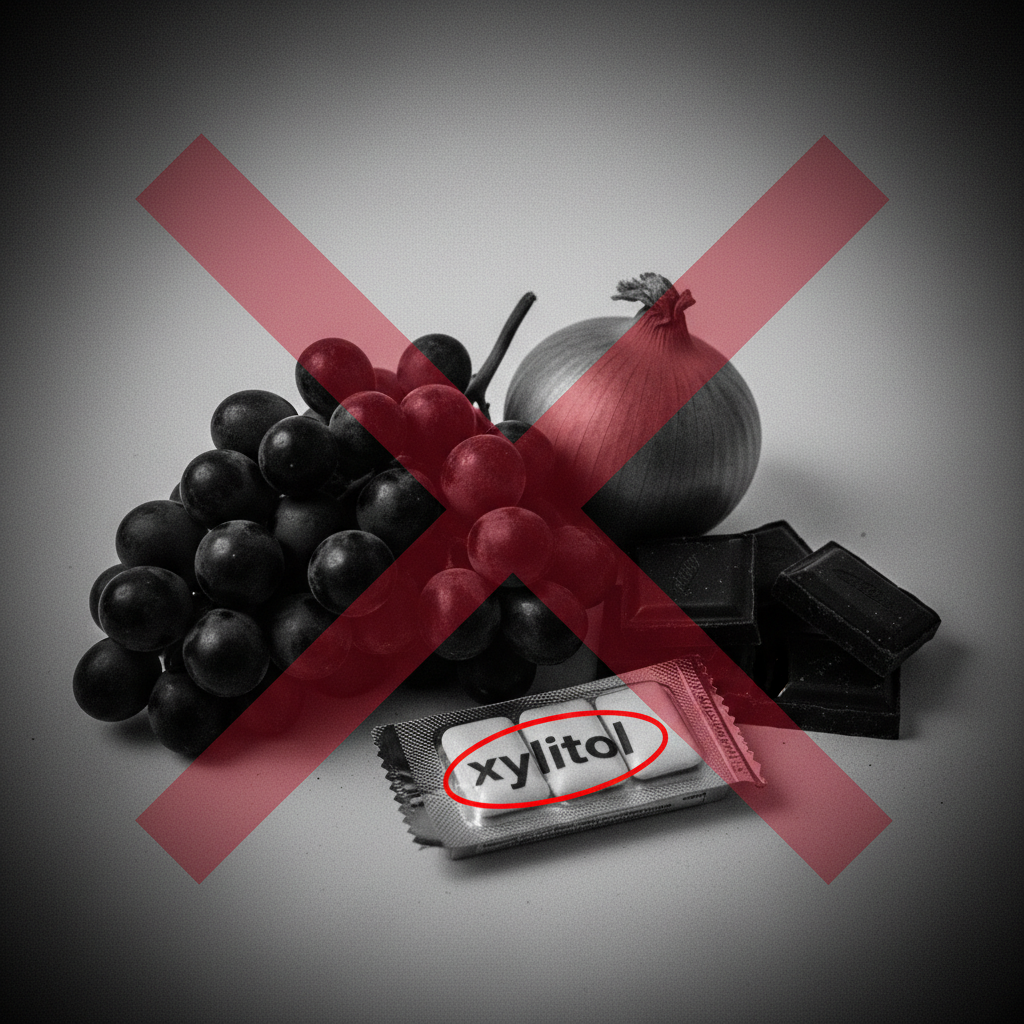
Being a Canine Nutrition Hacker is about providing the best for your dog, and that means knowing what to avoid. Many common human foods are toxic to dogs. Stuffing these into a Kong can lead to serious illness or even be fatal. Commit this list to memory. When in doubt, leave it out.
Absolute No-Go Ingredients:
- Xylitol: This is a sugar substitute found in many sugar-free products, including some peanut butters, yogurts, and baked goods. It is EXTREMELY TOXIC to dogs and can cause a rapid, fatal drop in blood sugar and liver failure. Read every label.
- Onions, Garlic, Chives: These members of the allium family can cause damage to a dog’s red blood cells, leading to anemia. The toxicity is dose-dependent, but it’s best to avoid them entirely.
- Grapes & Raisins: These are known to cause acute kidney failure in dogs. The exact toxic substance is unknown, so even a small amount is a major risk.
- Chocolate & Caffeine: Contains methylxanthines, which are toxic to dogs. They can cause vomiting, diarrhea, hyperactivity, seizures, and death. The darker the chocolate, the more dangerous it is.
- Macadamia Nuts: Can cause weakness, vomiting, tremors, and hyperthermia in dogs.
- Alcohol: Dogs are far more sensitive to alcohol than humans. It can cause intoxication, respiratory failure, and death. Never use any ingredient that contains alcohol.
- Cooked Bones: Cooked bones become brittle and can splinter, causing choking or severe internal damage to the digestive tract. Never use cooked bones of any kind.
- High-Fat Foods: Excessively fatty foods like bacon grease, fatty meat trimmings, or fried foods can trigger pancreatitis, a painful and serious inflammation of the pancreas.
Your kitchen is full of safe, healthy options for your dog. There is no reason to ever risk using a potentially harmful ingredient. Always double-check that what you’re using is 100% dog-safe.
Conclusion
You now possess the knowledge to transform your dog’s Kong from a simple chew toy into a powerful tool for their well-being. You’ve seen the hard data on how much money you’ll save by ditching commercial pastes, and you have a vault of healthy, hacker-approved recipes to get started. Remember the core principles: prioritize safety, embrace variety, and adjust the difficulty to keep your dog successfully engaged.
By taking a few extra minutes to prepare a layered, frozen, or simply mashed Kong, you are investing directly in your dog’s mental health and happiness. You are providing an outlet for their natural instincts, building their confidence, and strengthening your bond. Welcome to the world of Canine Nutrition Hacking. Go forth and stuff.