10 Aesthetic Hidden Dog Food Storage Hacks for Small Apartments
That giant, crinkled bag of premium dog food sitting in the corner of your otherwise immaculate apartment is an eyesore. It screams ‘pet clutter’ and single-handedly undermines your carefully curated decor. For too long, pet owners in small spaces have been told to accept this compromise. I’m here to tell you that’s nonsense. You don’t have to choose between your home’s aesthetic and your dog’s nutrition.
As the Canine Nutrition Hacker, I analyze everything that impacts your dog’s food, from the first ingredient to the final scoop. And that includes storage. Poor storage doesn’t just look bad; it degrades nutrients, invites pests, and can make your dog sick. We’re not just going to hide the bag. We’re going to implement intelligent, dual-purpose storage solutions that protect the investment you’ve made in your dog’s health while reclaiming your floor space and your style. These aren’t just tips; they are strategic hacks for the discerning pet owner. Let’s get started.
Hack #1: The Ottoman Empire – Dual-Purpose Deception
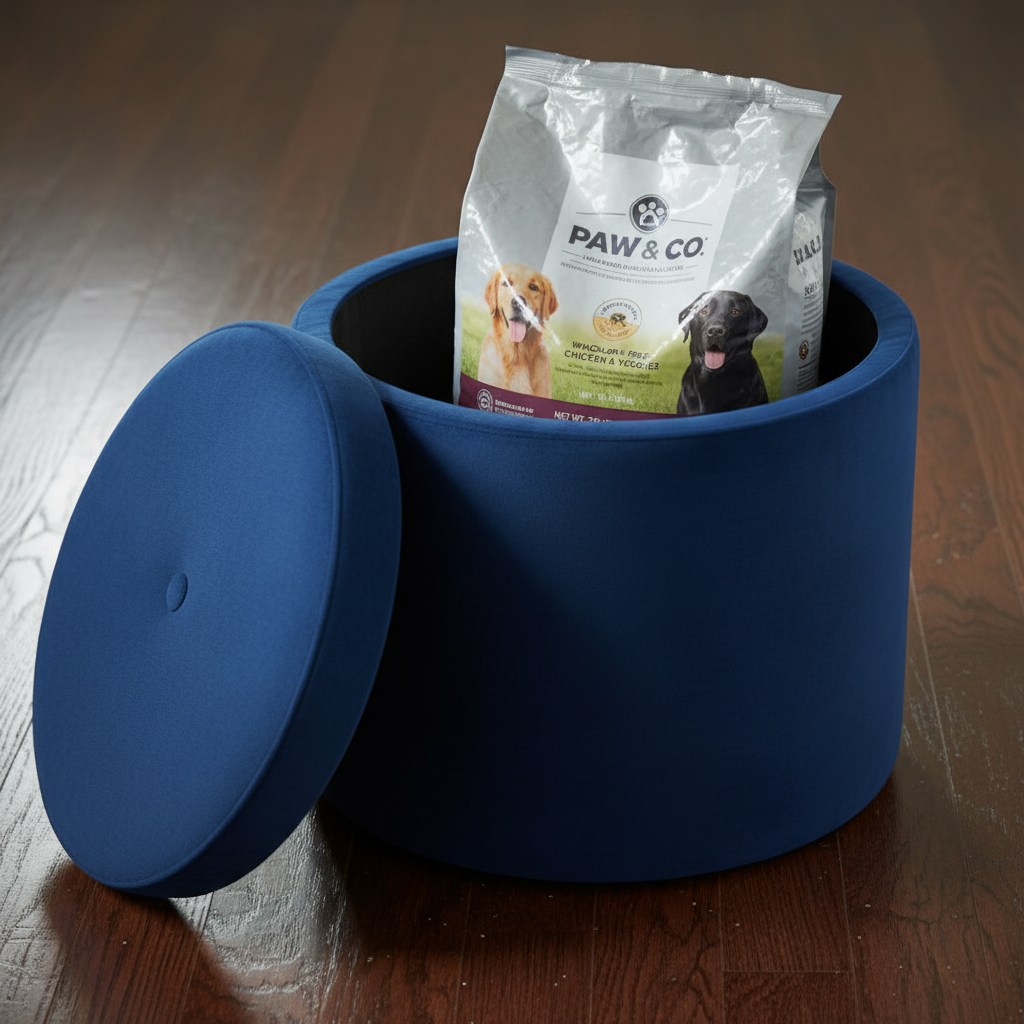
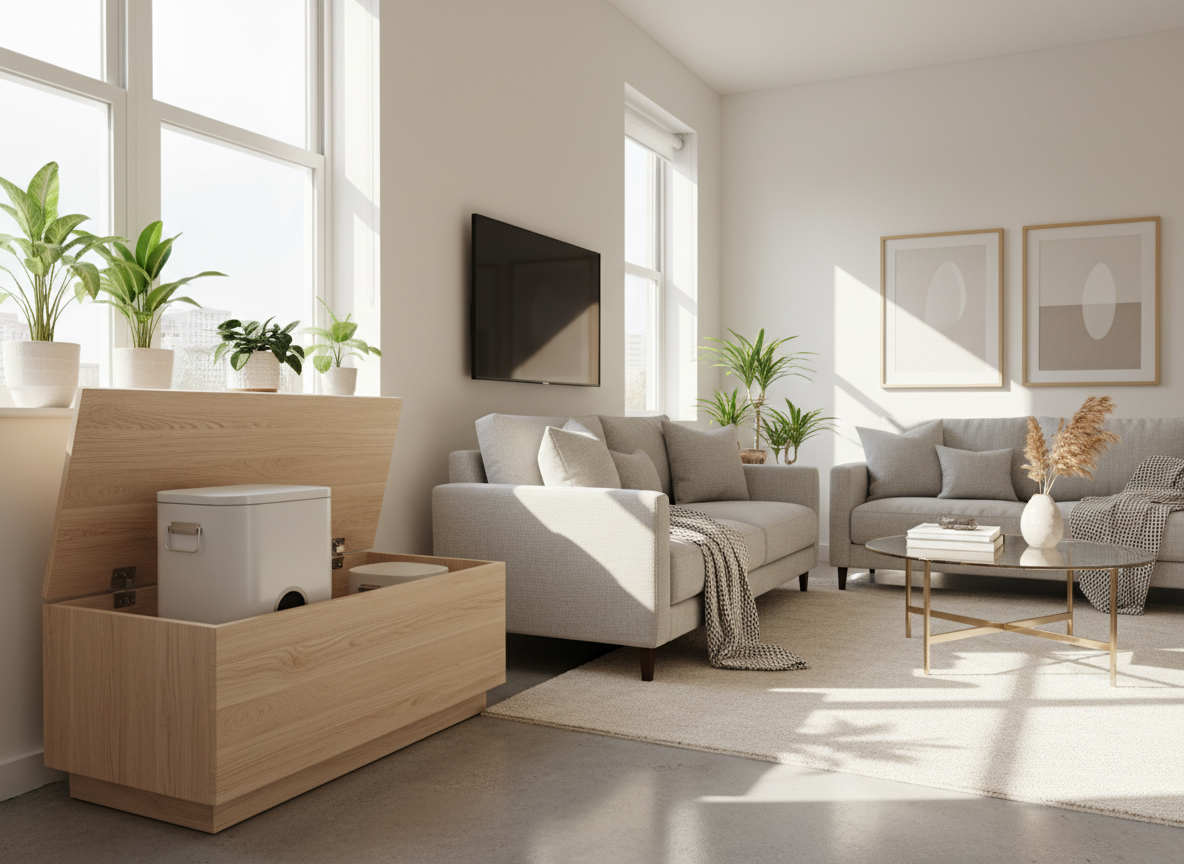
The most effective hacks are the ones hiding in plain sight. A storage ottoman is the ultimate double agent in your living room. To the outside world, it’s a stylish footrest, extra seating, or a makeshift coffee table. On the inside, it’s the perfect clandestine headquarters for a 30-pound bag of kibble.
Execution Protocol:
- Select the Right Asset: Opt for an ottoman with a fully removable lid or a hinged top for easy access. Measure the interior dimensions against your typical dog food bag to ensure a proper fit.
- Maintain Food Integrity: This is non-negotiable. Never dump kibble directly into an unlined ottoman. The wood, fabric, and glues are not food-safe. Keep the kibble in its original bag (which has a specialized fat barrier) and place the entire bag inside. For added protection, place the bag inside a food-grade, airtight container like a Vittles Vault, and then place the container inside the ottoman.
- Aesthetic Integration: Choose an ottoman that genuinely complements your existing furniture. Whether it’s boucle, leather, or a simple linen fabric, it should look like a deliberate design choice, not a desperate hiding spot.
Hacker Tip: Look for ottomans with a cedar lining. While not a replacement for an airtight container, the cedar can help deter pests like pantry moths, adding an extra layer of defense.
Hack #2: The Cabinet Infiltrator – Exploiting Existing Space
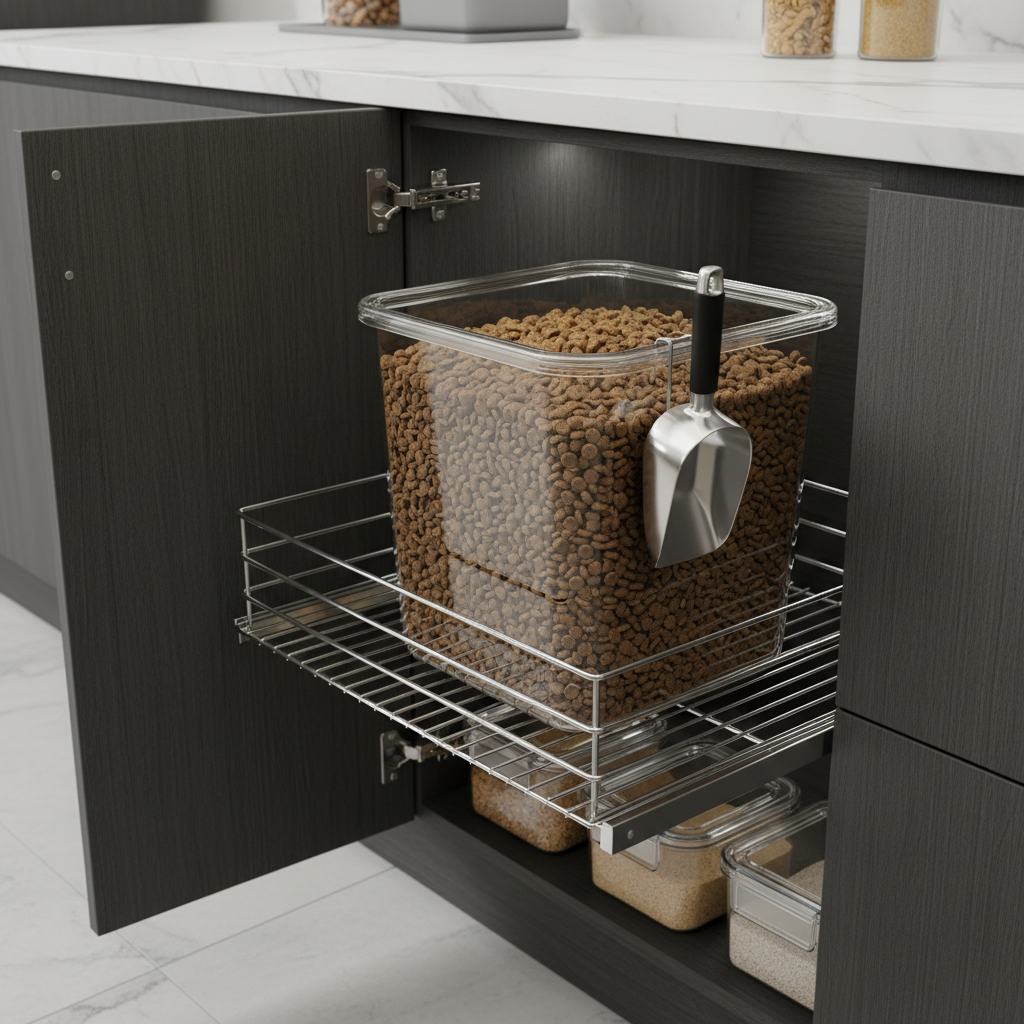
Your kitchen or pantry cabinets are prime real estate being wasted. That deep, awkward corner cabinet or the space under the sink can be transformed from a cluttered mess into a streamlined dog food station. The key is making it accessible.
Execution Protocol:
- Install Pull-Out Organizers: The number one rule of hacking a cabinet is defeating its depth. A heavy-duty, pull-out cabinet drawer or wire basket on sliders brings the food to you. This eliminates the need to dig around in the back of a dark cabinet, and it saves your back.
- Container is Key: A tall, slim, airtight container with wheels is your best weapon here. Brands like Simplehuman or OXO make excellent options that fit into narrow cabinet spaces. You can roll it out, scoop, and roll it back in seconds.
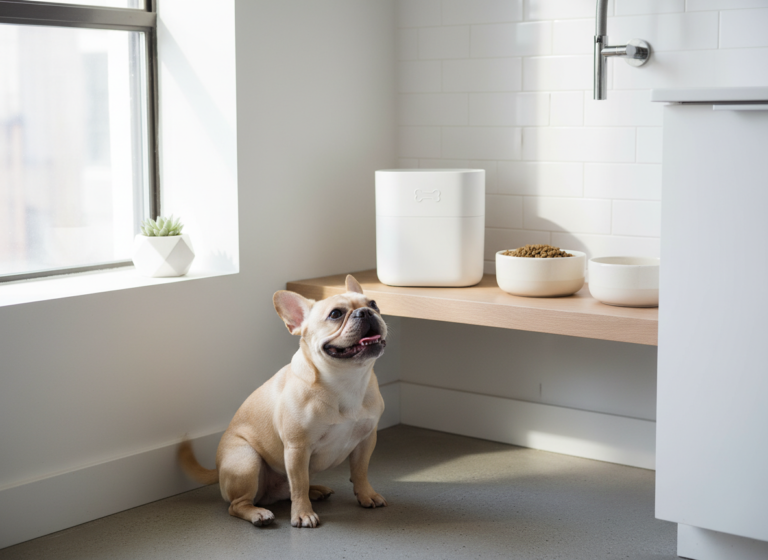
- Designate the Zone: Dedicate one specific cabinet to all pet-related feeding supplies. Store the food container, bowls, scoops, and any supplements in one consolidated location. This creates an efficient, invisible system that streamlines your feeding routine.
By leveraging vertical space within a cabinet, you’re not just hiding the food; you’re creating a highly functional, organized system that takes up zero additional floor space.
Hack #3: The Tilt-Out Trickster – The Ultimate Camouflage
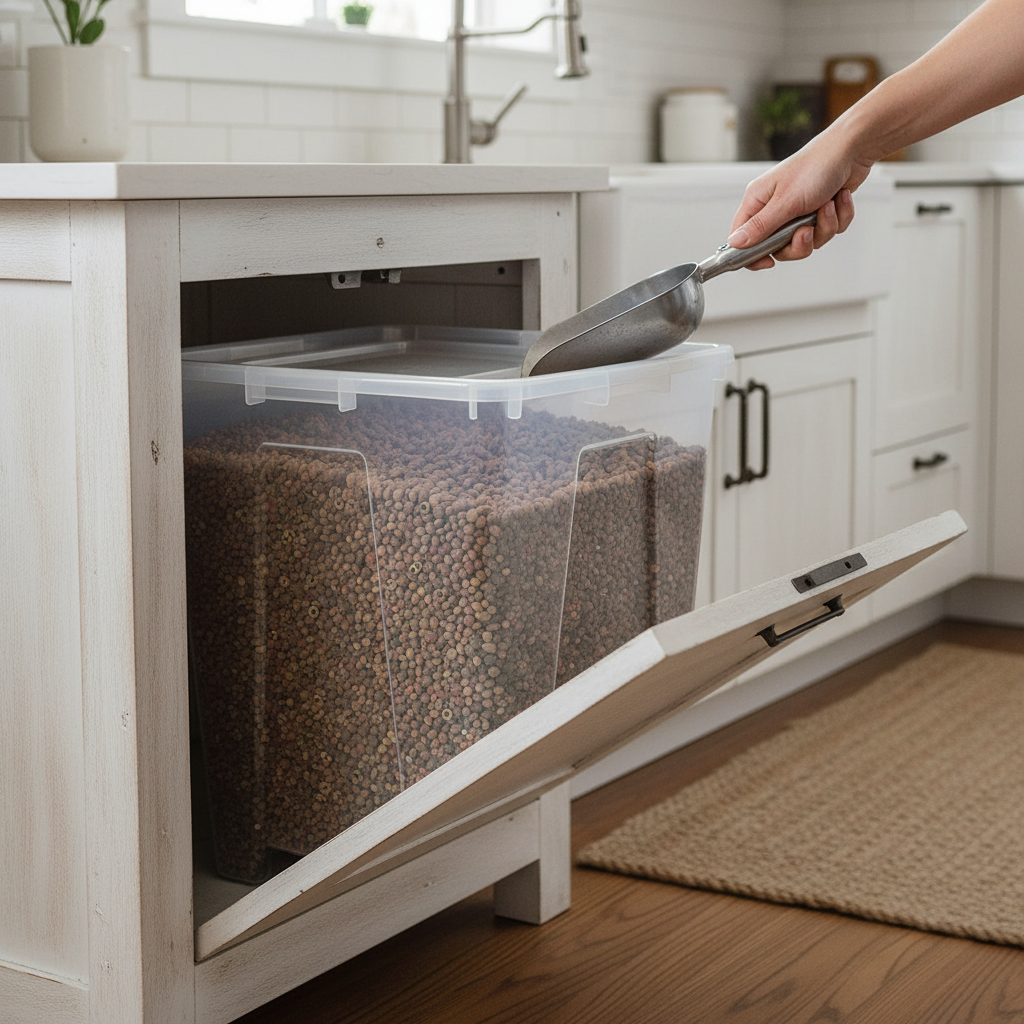
This is one of my favorite hacks because of its sheer ingenuity. The modern tilt-out trash cabinet, designed to hide your garbage can inside a beautiful piece of furniture, is the perfect vessel for a large dog food container. It’s designed for easy, frequent access and complete concealment.
Execution Protocol:
- Source Your Cabinet: You can find these online as ’tilt-out trash cabinets’ or ‘laundry hampers.’ They often look like stylish side tables, entryway consoles, or small kitchen islands.
- The Perfect Fit: The secret is to find a large, rectangular, food-grade plastic bin that fits perfectly inside the tilt-out portion. You may need to remove the ring designed to hold a trash bag. Measure carefully before you buy.
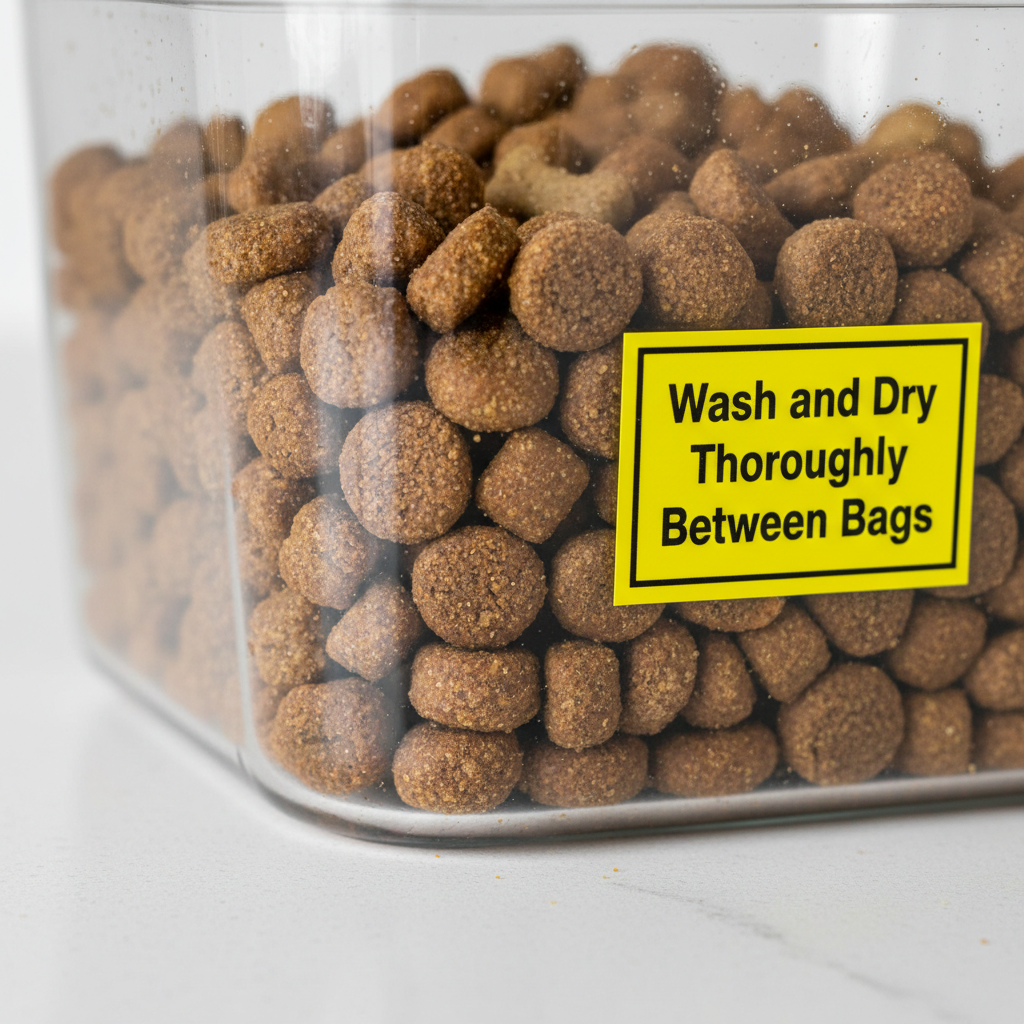
- Hygiene and Safety: Even with a food-grade bin, it’s crucial to clean it regularly. Wash the bin with soap and water and dry it completely between bags of food to prevent the buildup of rancid oils and bacteria. This method is one of the few where I approve of taking food out of the original bag, but only if you use a dedicated, food-safe, and regularly cleaned liner bin.
Hacker Tip: Add a stick-on motion-activated LED light to the inside of the cabinet. When you tilt it open in the early morning or late at night, it will illuminate the food, making scooping clean and easy.
Hack #4: The Bench Press – Entryway & Mudroom Solutions
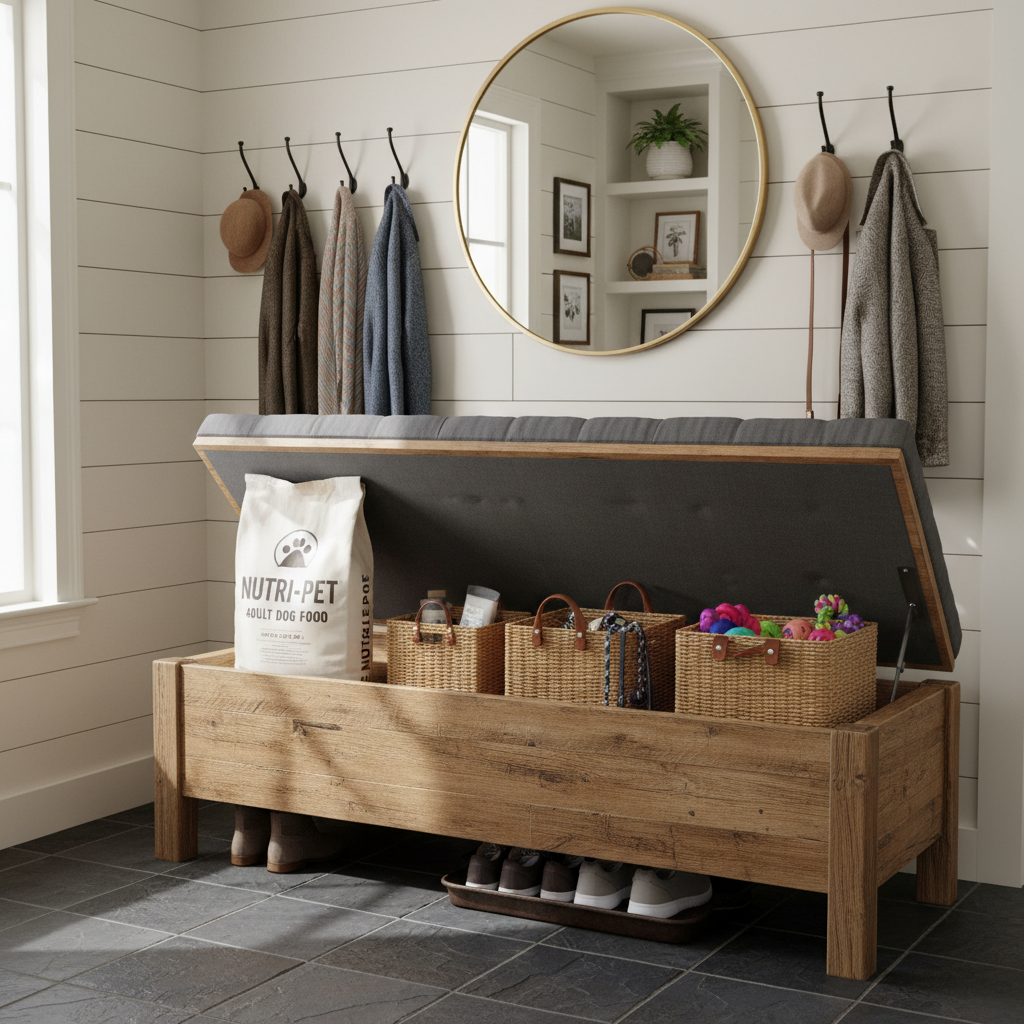
The entryway is a common dumping ground for clutter. A storage bench flips that script, turning a high-traffic area into a functional and discreet storage hub. It provides a place to sit and remove shoes while secretly housing your dog’s food supply.
Execution Protocol:
- Choose a Sturdy Model: A flimsy bench won’t cut it. Look for a well-built bench with a solid, hinged lid. It needs to withstand the weight of a person sitting on it and the weight of the food inside.
- Optimize the Interior: Many benches are just large, open boxes. Use dividers to create separate compartments. One side can hold the main food container, while the other can be used for leashes, toys, and waste bags. This creates a complete ‘doggy go-station’ right by the door.
- Ventilation is a Consideration: If the bench is completely sealed wood, be mindful of moisture. Ensure your food container is 100% airtight to prevent any mustiness from affecting the kibble. Keeping the food in its original bag inside the container provides the best protection.
This hack is about maximizing the utility of every single piece of furniture in your small space. Your bench is no longer just a bench; it’s an active part of your pet organization system.
Hack #5: The Decoy Decor – Vases, Urns, and Planters
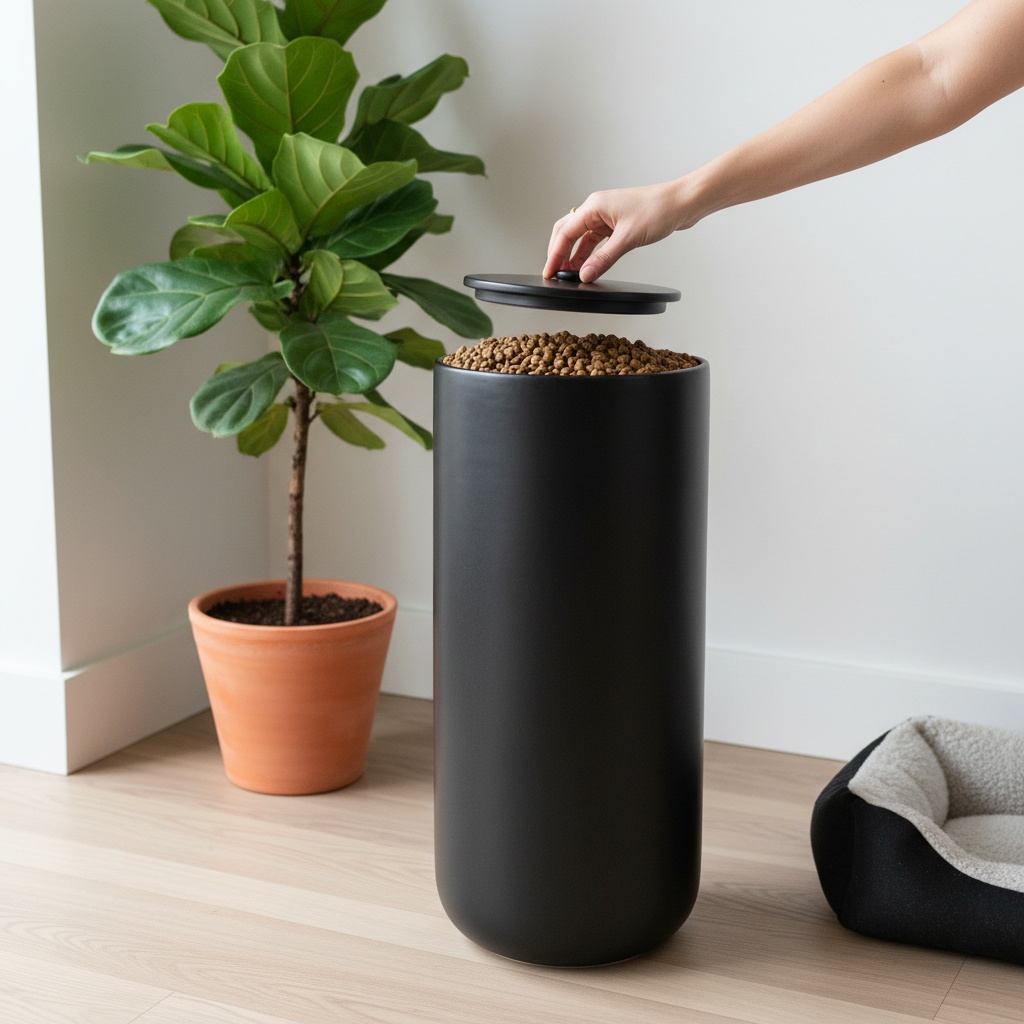
For those with a keen eye for design, this hack allows you to integrate your dog’s food storage directly into your decor. A large, stylish ceramic urn, a modern minimalist floor vase, or even a high-end planter can serve as a beautiful and completely unsuspected food cache.
Execution Protocol:
- Prioritize Food Safety Above All: This is a CRITICAL point. Decorative items are often glazed with materials not safe for food contact. You MUST use a food-safe liner. A tall, cylindrical food storage container can be slipped inside the decorative piece, or you can use a food-grade plastic bag liner. Never let kibble touch the inside of a decorative vase directly.
- Select for Size and Stability: Choose a piece with a wide, heavy base to prevent it from being knocked over, especially if you have a boisterous dog. The opening should be wide enough for you to comfortably fit a scoop inside.
- Aesthetic Cohesion: The goal is for the item to look like a deliberate piece of art or decor. Choose a color, texture, and style that blends seamlessly with the room’s aesthetic, whether it’s a rustic terracotta urn for a bohemian space or a sleek metallic vase for an industrial loft.
This method is the pinnacle of hidden storage, turning a necessity into a design feature that enhances your space.
Hack #6: The Wicker Subterfuge – Boho & Coastal Charm
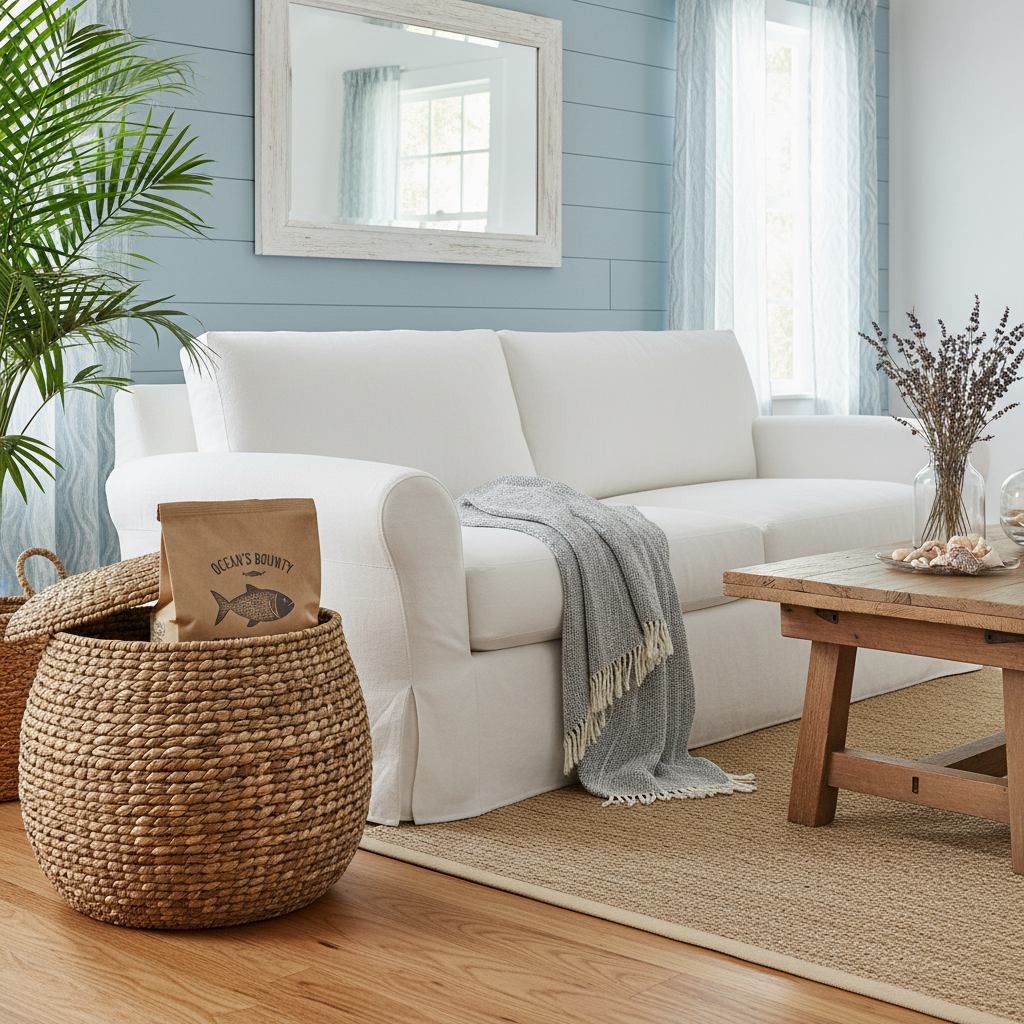
Wicker or rattan baskets bring texture and warmth to a room, and a large lidded one is a perfect disguise for a bag of dog food. This hack works particularly well for bohemian, coastal, or farmhouse aesthetics.
Execution Protocol:
- Structure is Everything: Flimsy, collapsible baskets won’t work. You need a sturdy, structured wicker or hyacinth basket with a well-fitting lid. This ensures it holds its shape and keeps the contents hidden.
- Liner is Mandatory: Wicker is porous and impossible to clean properly. It will absorb the fats and oils from the kibble, turning rancid and attracting pests. Keep the food in its original packaging, or better yet, place a solid, airtight container inside the wicker basket.
- Placement Matters: Place the basket in a corner of the living room to hold extra blankets (with the food hidden underneath), or next to a sofa as a rustic side table. It blends in as a decorative storage element, not a pet supply container.
Hacker Tip: Place a few cedar blocks or a non-toxic silica gel packet (the kind used for food products) at the very bottom of the basket, underneath your airtight container, to absorb any ambient moisture and deter pests.
Hack #7: The Vertical Takeover – Wall-Mounted Dispensers
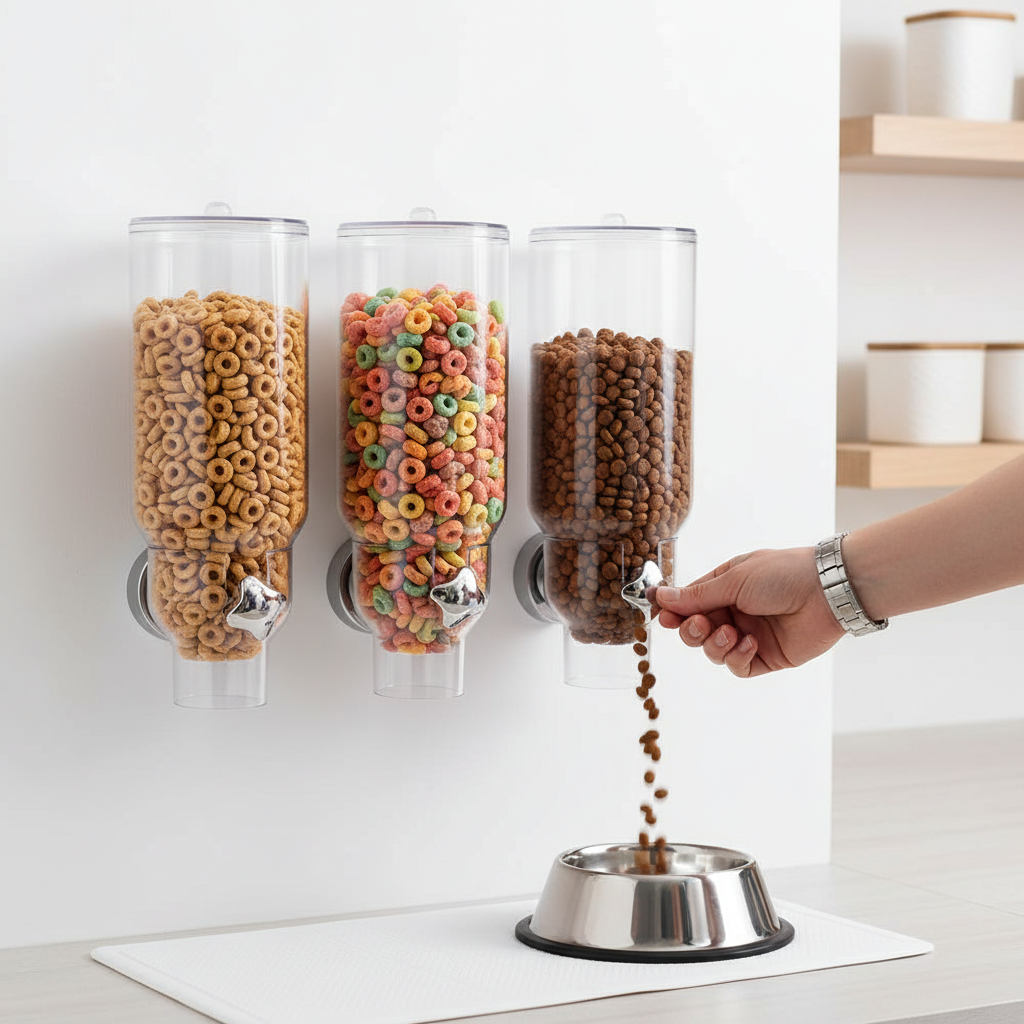
When floor space is non-existent, the only way to go is up. Wall-mounted cereal dispensers, typically found in commercial kitchens or zero-waste pantries, can be repurposed for small-breed dog kibble or treats. This is a high-tech, space-age solution for the ultra-organized.
Execution Protocol:
- Kibble Size is a Constraint: This hack works best for small, uniformly shaped kibble. Large or irregularly shaped kibble for giant breeds will jam the dispenser mechanism. Test before you commit.
- Installation and Location: Securely mount the dispenser to wall studs. Do not rely on drywall anchors alone, as a full dispenser can be heavy. Install it in a convenient location like a pantry, a laundry room, or a discreet kitchen wall.
- Airtightness and Cleaning: Look for models that advertise an airtight seal to maintain freshness. The plastic containers should be easy to remove and clean. Regular cleaning is essential to prevent oil buildup. This system provides excellent portion control with a simple turn of a knob.
This is the ultimate hack for small-dog owners who value precision, efficiency, and a clutter-free floor.
Hack #8: The Undercover Agent – Reclaiming Dead Space
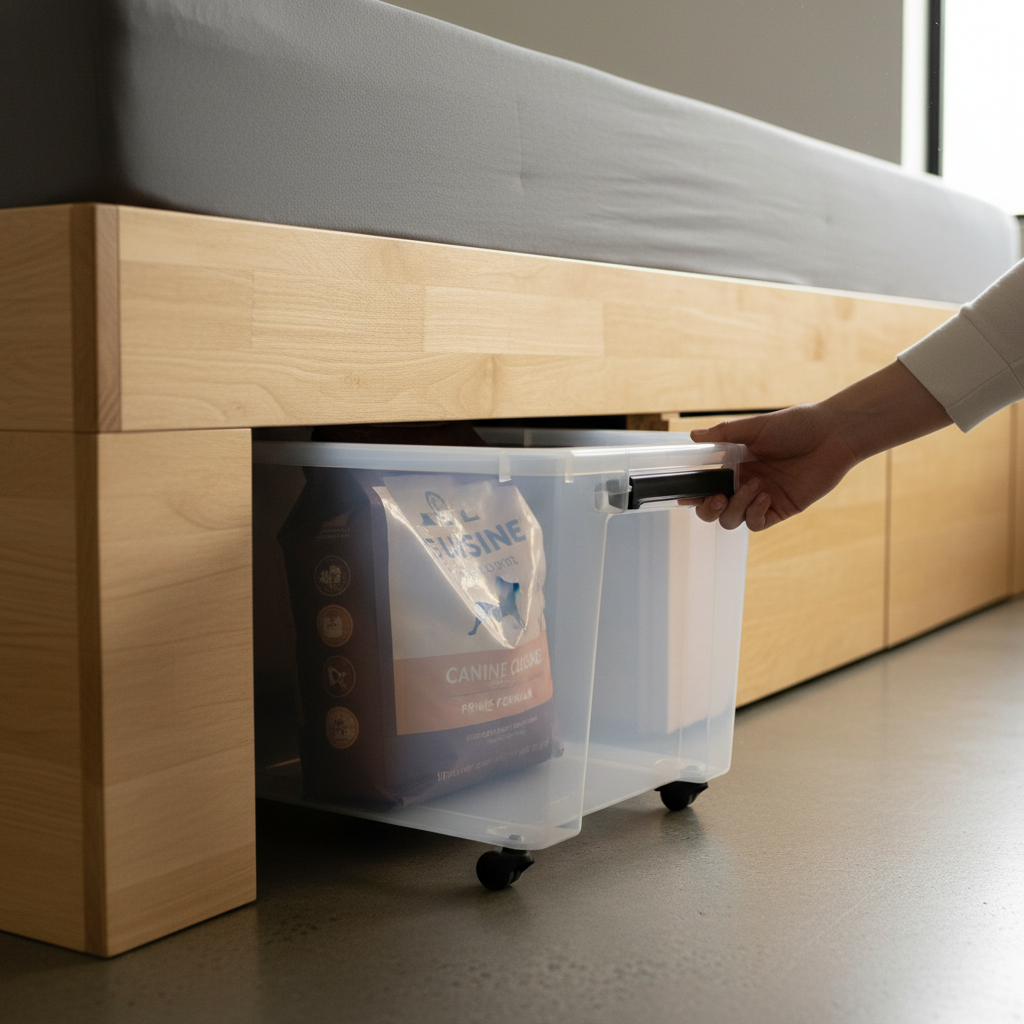
The space under your bed is one of the most underutilized areas in a small apartment. With the right container, it can become the perfect hidden depot for your dog’s food supply, completely out of sight and out of mind.
Execution Protocol:
- Choose a Low-Profile Container: Measure the clearance under your bed frame. Look for long, shallow under-bed storage containers specifically designed for this purpose. Models with wheels are a huge advantage, allowing you to slide the container out with ease.
- Airtight Seal is Paramount: Since it’s on the floor, the container is more susceptible to dust, pests, and moisture. An airtight seal is not just a feature; it’s a requirement. Look for containers with strong latching lids and a silicone or rubber gasket.
- Original Bag Protocol: As always, it’s best to place the entire original bag of food inside the container. This preserves the fat barrier and makes cleanup a breeze. Simply lift the old bag out and put the new one in. No scrubbing required.
This hack reclaims a significant amount of ‘dead space’ and is ideal for those who prefer their pet supplies to be 100% invisible.
Hack #9: The Repurposed Filing Cabinet – Industrial Chic
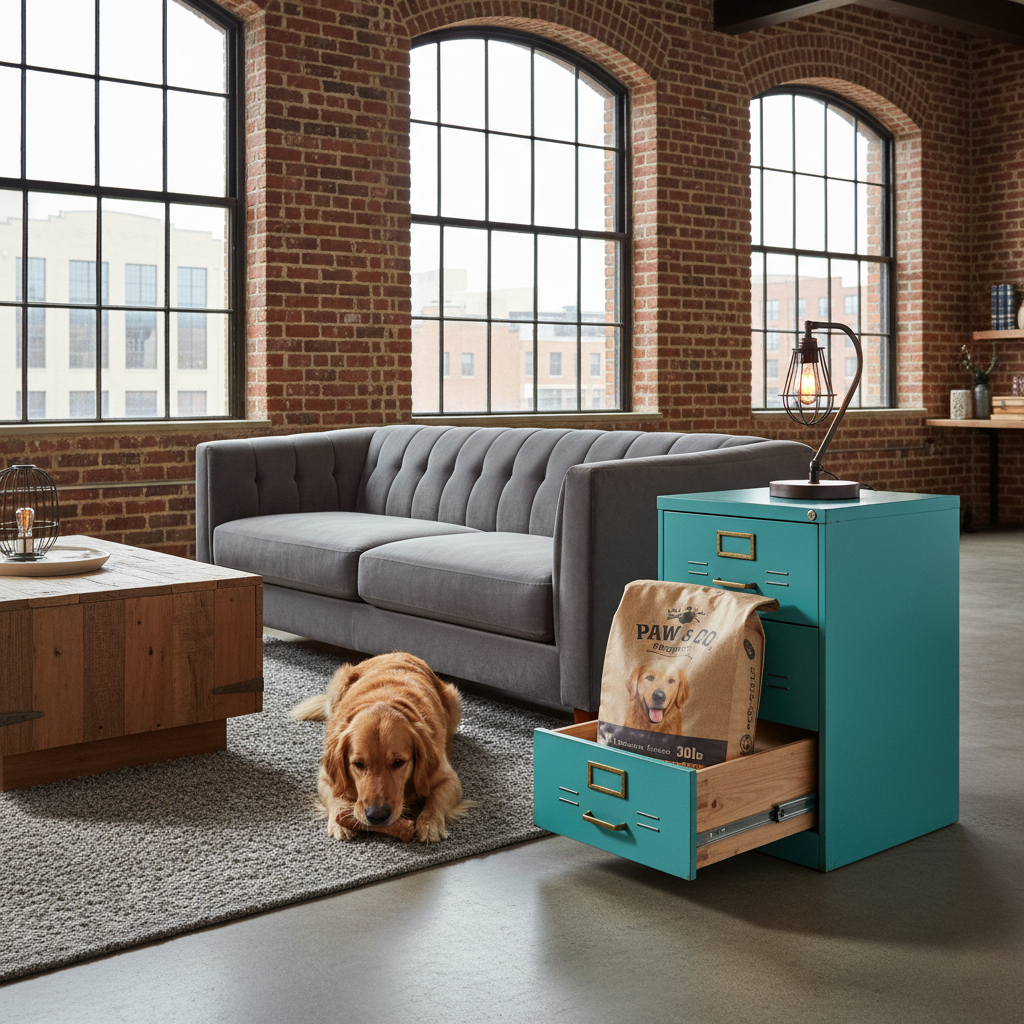
For an industrial, retro, or eclectic apartment, a vintage metal filing cabinet can be a surprisingly effective and stylish dog food storage solution. It’s sturdy, opaque, and offers a unique aesthetic.
Execution Protocol:
- Deep Drawers are Key: A standard two-drawer filing cabinet is perfect. The deep drawers are often the ideal size to lay a large bag of dog food down on its side.
- Clean and De-Rust: If you’re using a vintage piece, clean it thoroughly. Check for any rust spots and treat them with a rust converter and a coat of food-safe paint on the interior to ensure no flakes contaminate the food bag.
- Weight Distribution: Always use the bottom drawer for the heavy food bag. This keeps the cabinet’s center of gravity low and prevents it from tipping over when you open the drawer. The top drawer can be used for lighter supplies like treats, toys, and grooming tools.
This is a creative-reuse hack that adds character to your space while solving a practical problem.
Hack #10: The Custom Niche – The Integrated Solution
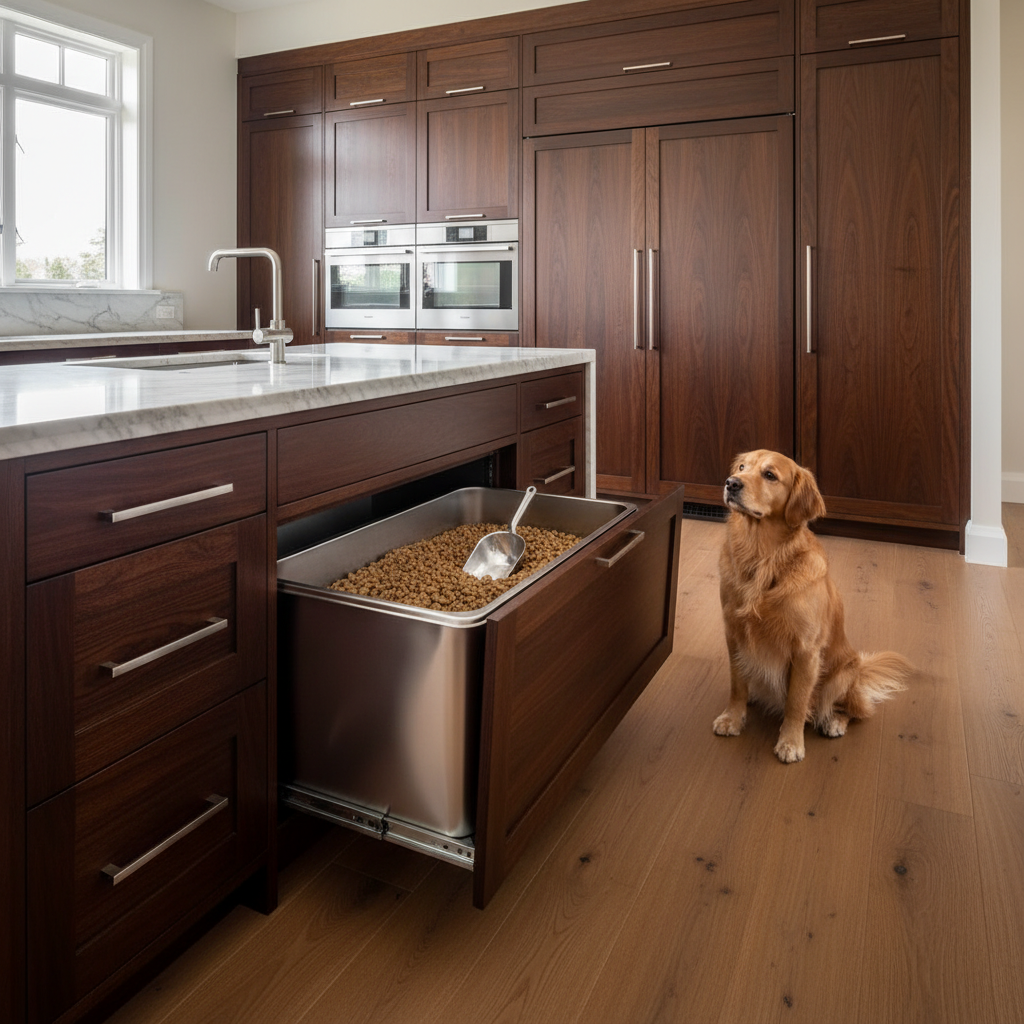
For the truly dedicated owner or those undergoing a renovation, this is the ultimate hack: building the storage directly into your home’s architecture. A custom cabinet or built-in niche creates a seamless, permanent solution.
Execution Protocol:
- Identify the Opportunity: Look for unused spaces. Can you build a cabinet into the space under a staircase? Can you add a deep pull-out drawer to the toe-kick area under your kitchen cabinets? Can you build a custom pantry cabinet with a designated food bin?
- Design for Functionality: Work with a cabinet maker or use your own DIY skills to design a solution. A pull-out bin on heavy-duty sliders is often the most user-friendly design. Ensure the materials used on the interior are food-safe or designed to hold a specific food-grade container.
- Plan for the Future: Design the space to accommodate the largest bag of food you might ever buy, even if you currently buy smaller bags. This future-proofs your investment and ensures your custom solution remains useful for years to come.
While the most intensive, this hack offers the most integrated and polished result, making your pet’s needs a true part of your home’s design.
The Storage Integrity Protocol: Beyond Aesthetics
Hiding your dog’s food is only half the battle. As the Canine Nutrition Hacker, my primary concern is preserving the nutritional value and safety of that food. An aesthetic solution is useless if it makes your dog sick. Here are the non-negotiable rules of food storage integrity.
The Dangers of ‘Kibble Dumping’
The number one mistake owners make is buying a beautiful container and immediately dumping the kibble into it. This is a critical error. The original bag is a piece of food-preservation technology. It has a specialized liner designed to act as a fat and oxygen barrier, protecting the kibble from going rancid. Most plastic or metal containers do not have this. Furthermore, dumping the kibble means you lose the bag with the lot number and expiration date, which is vital information in the event of a food recall.
Insider Secret: The fats and oils in kibble oxidize when exposed to air and light, which degrades vitamins and can cause gastrointestinal upset. Keeping it in the original, well-sealed bag inside another container is the gold standard for preservation.
Container Material Analysis
Not all containers are created equal. Your choice has direct health implications for your pet.
| Material | Pros | Cons | Hacker Verdict |
|---|---|---|---|
| Food-Grade Plastic (BPA-Free) | Lightweight, affordable, often airtight. | Can get scratched, creating micro-crevices where bacteria can hide. Can absorb odors over time. | Approved. The workhorse of storage. Opt for #2 HDPE or #5 PP plastics. Must be washed thoroughly between bags. |
| Stainless Steel | Durable, non-porous, easy to clean, doesn’t absorb odors. | Can be expensive, heavy, and few options are truly airtight. | Highly Recommended. The safest and most hygienic option if you can find a model with a truly airtight gasket seal. |
| Glass | Non-porous, won’t leach chemicals, easy to clean. | Heavy, fragile, and not practical for large quantities of food. Light can degrade nutrients. | Acceptable for Treats. Not practical or safe for storing large bags of kibble due to weight and breakage risk. |
| Ceramic (Decorative) | Aesthetically pleasing. | Often not food-safe (lead in glaze), porous, easily chipped, rarely airtight. | Not Recommended for Direct Contact. Only to be used as a decorative shell around a proper, food-safe container. |
The ‘First In, First Out’ (FIFO) Rule
Never top off an old container of kibble with a new bag. The crumbs and oils at the bottom are the oldest and most likely to be rancid. Always finish the old bag completely, wash and dry the container, and then add the new bag. This simple step is crucial for preventing digestive issues.
Conclusion
You no longer need to accept a compromise between a stylish home and a well-fed dog. By adopting a hacker’s mindset, you can transform a functional necessity into a seamless part of your apartment’s decor. The ten hacks we’ve covered move beyond simple plastic bins, offering solutions that are as clever and sophisticated as they are practical.
Remember, however, that effective storage is about more than just aesthetics. It is a crucial component of your dog’s health and safety. Protecting the nutritional integrity of the food is the ultimate goal. Always prioritize food-safe materials, airtight seals, and proper cleaning protocols. Choose the hack that best fits your space and your style, implement it with precision, and reclaim your home without sacrificing an ounce of your dog’s well-being.