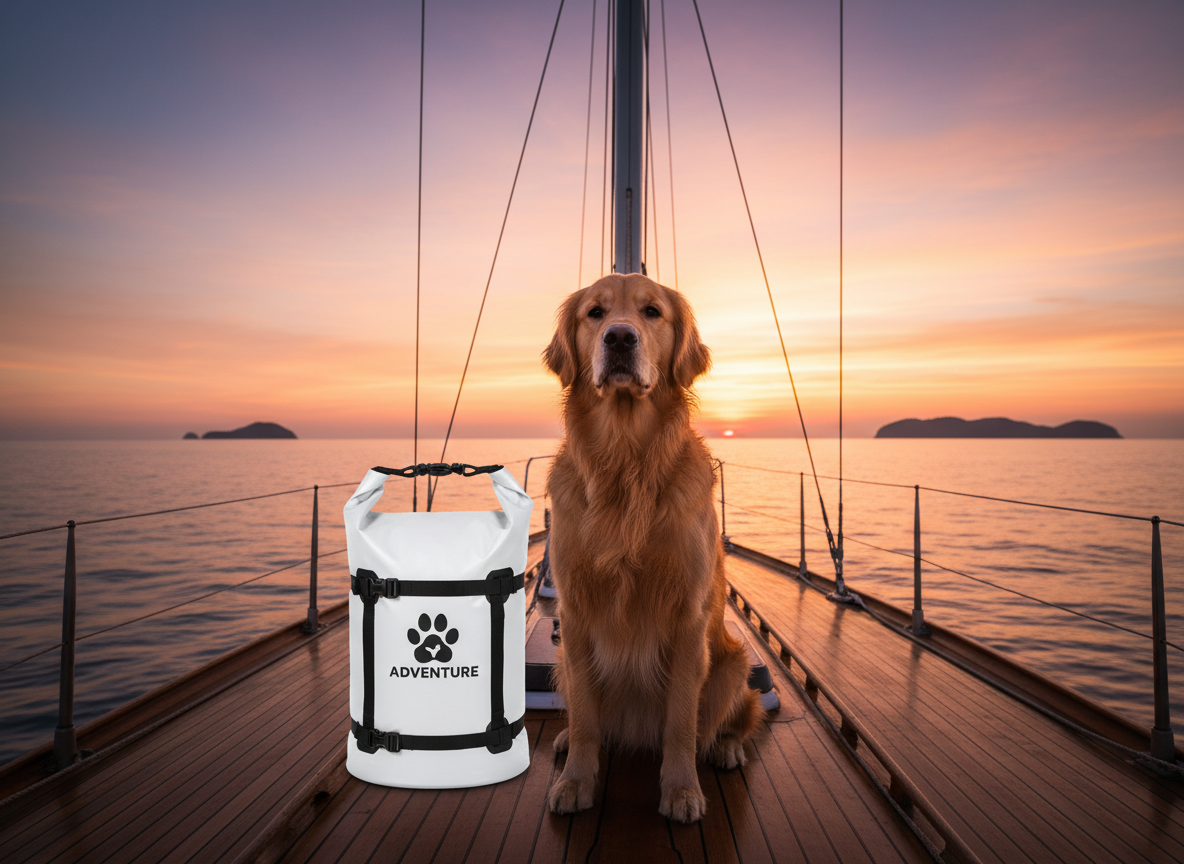
7 Genius Dog Food Storage Hacks for Living on a Boat
Living on a boat with your canine first mate is the pinnacle of freedom for many pet owners. The open water, the endless horizon, the shared adventure—it’s an unparalleled lifestyle. But the marine environment, for all its beauty, is a relentless adversary to one of the most critical aspects of your dog’s health: their food. Humidity, pests, limited space, and constant motion conspire to turn that expensive, nutrient-rich kibble into a moldy, stale, or infested health hazard.
I’m The Canine Nutrition Hacker. I don’t just glance at labels; I dissect them. And I don’t just offer generic advice. I provide strategic, no-nonsense solutions for real-world problems. Storing dog food on a boat isn’t a trivial matter of convenience; it’s a critical act of protecting your financial investment and, more importantly, your dog’s well-being. Forget flimsy plastic bins and leaving the bag open. We’re going to implement a professional-grade system. These seven hacks are not suggestions; they are non-negotiable protocols for any serious dog owner living the boat life.
Hack #1: The Airtight Imperative – Ditch the Original Bag Immediately
Hack #1: The Airtight Imperative – Ditch the Original Bag Immediately
Let’s get one thing straight: the bag your dog’s food comes in is a transport vessel, not a permanent storage solution. On land, it’s a minor offense. On a boat, it’s a catastrophic failure waiting to happen. Those paper or woven plastic bags are porous. They practically invite moisture from the humid marine air, which is the number one enemy of kibble. Moisture breeds mold and mycotoxins, invisible poisons that can cause severe illness. Furthermore, the bag’s flimsy closure does nothing to contain the food’s aroma, turning your vessel into a beacon for rodents and insects.
Your first and most critical action is to transfer the food into a genuinely airtight and waterproof container the moment you bring it aboard. This is not the place to cut corners.
Your Arsenal of Airtight Containers:
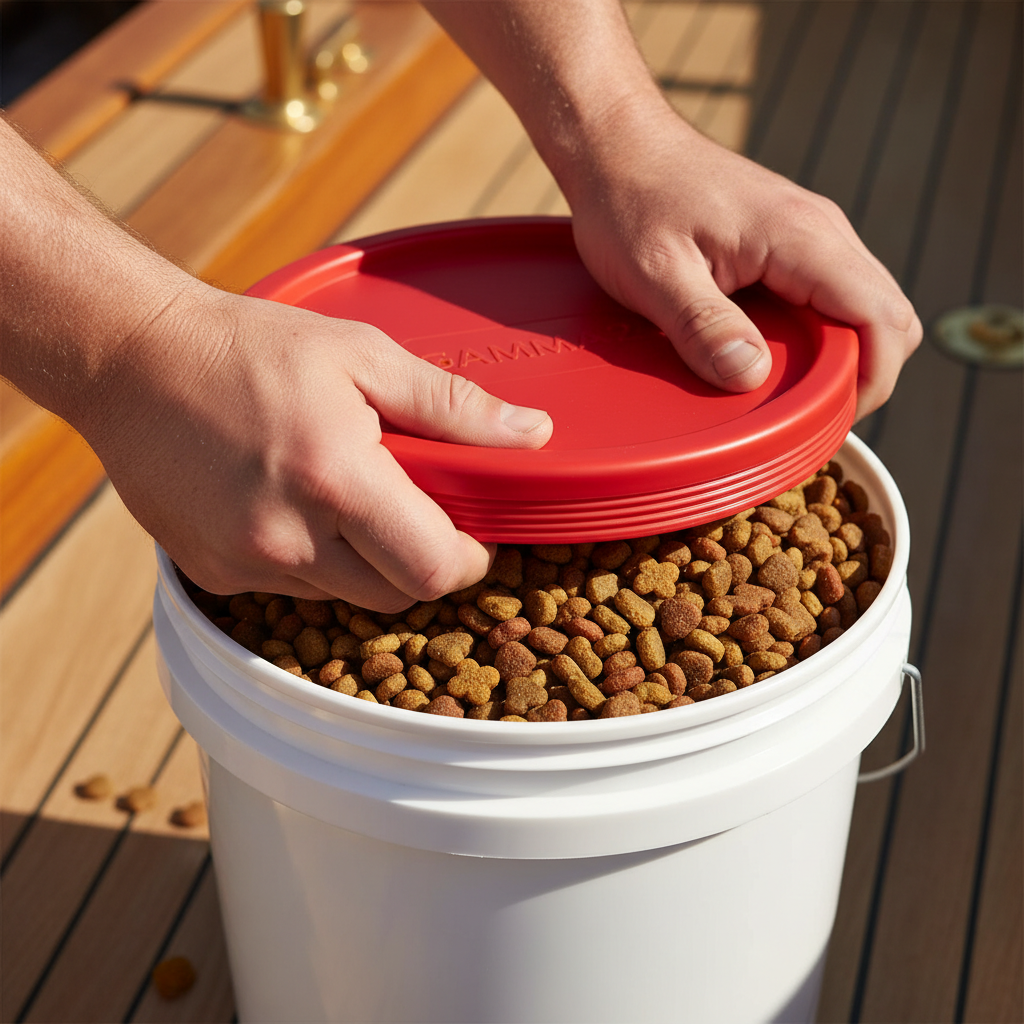
- Gamma Seal Lids on 5-Gallon Buckets: This is the gold standard for budget-conscious hackers. A standard, food-grade 5-gallon bucket is cheap and durable. The magic is the Gamma Seal Lid, a two-piece system that creates a threaded, gasket-sealed, airtight closure. It’s waterproof, easy to open and close, and keeps odors locked in.
- Waterproof Deck Bags: Originally designed for kayaking and rafting, these heavy-duty vinyl or PVC bags offer excellent protection against water. A 20-liter or 30-liter roll-top dry bag can hold a significant amount of kibble and can be squeezed into irregular-shaped lockers where a rigid bucket won’t fit.
- Vittles Vault Stackable Containers: These are purpose-built for pet food. Made from heavy-duty, food-grade BPA-free plastic, their threaded, double-gasketed lids provide a truly airtight seal that locks in freshness and locks out pests and moisture. Their stackable, space-efficient design is a massive bonus for boat life.
The bottom line: The original bag is your enemy. Neutralize the threat immediately upon boarding by transferring its contents to a container that can withstand the harsh realities of a marine environment.
Hack #2: The ‘Divide and Conquer’ Method for Bulk Buyers
Hack #2: The ‘Divide and Conquer’ Method for Bulk Buyers
Buying the largest bag of high-quality dog food is the most economical choice. However, on a boat, a giant 40-pound bag presents a logistical nightmare. More importantly, every time you open your main container, you expose the entire supply to a fresh infusion of humid air, accelerating its degradation. The ‘Divide and Conquer’ strategy solves this problem by minimizing exposure and maximizing storage flexibility.
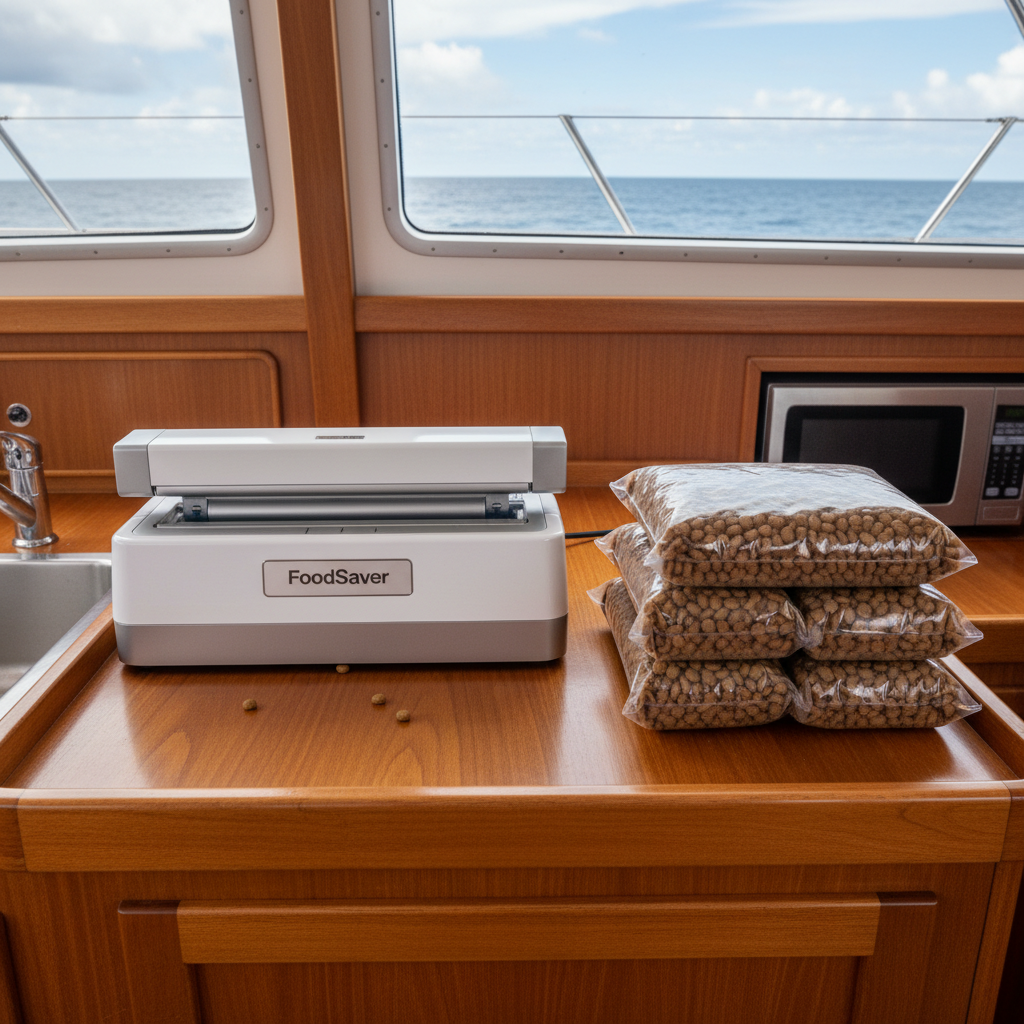
The tool for this hack is a vacuum sealer. This device is a game-changer for boat galleys, not just for human food but for canine nutrition. When you provision, immediately divide the large bag of kibble into smaller, weekly, or bi-weekly portions in vacuum-seal bags. For a 50lb dog eating roughly 3-4 cups a day, a weekly portion is about 21-28 cups.
The Strategic Advantages:
- Preservation of Nutrients: By removing the oxygen, you halt the process of oxidation, which degrades the fragile fats (like Omega-3s) and fat-soluble vitamins (A, D, E, K) in the food. The last serving of food will be nearly as fresh as the first.
- Ultimate Moisture & Pest Barrier: A properly sealed vacuum bag is 100% waterproof and airtight. You could store a pouch in the bilge (though not recommended for other reasons) and it would remain perfectly dry. Pests cannot penetrate it.
- Flexible Storage: These sealed pouches are not rigid. They can be tucked into lockers, under settees, and in other irregular spaces where a large, bulky container simply cannot go. This allows you to distribute the weight of the food around the boat, which can be a consideration for trim on smaller vessels.
Hacker Tip: Double-seal both ends of the bag for an extra layer of security, especially for long-term storage or if the pouches will be stored in a potentially damp locker. Label each bag with the date it was sealed.
Hack #3: Think Vertically – Your Secret Weapon Against Space Constraints
Hack #3: Think Vertically – Your Secret Weapon Against Space Constraints
On any boat, floor space—or ‘sole’ in nautical terms—is the most valuable real estate. Wasting it with a wide, squat food container is a rookie mistake. The professional approach is to think vertically. You need to find storage solutions that utilize the vertical cubic footage within a locker or a narrow corner of the galley, leaving the sole clear for movement and other essentials.
This is where container selection becomes a strategic choice beyond just being airtight. Look for containers with a small footprint but significant height.
Your Vertical Storage Toolkit:
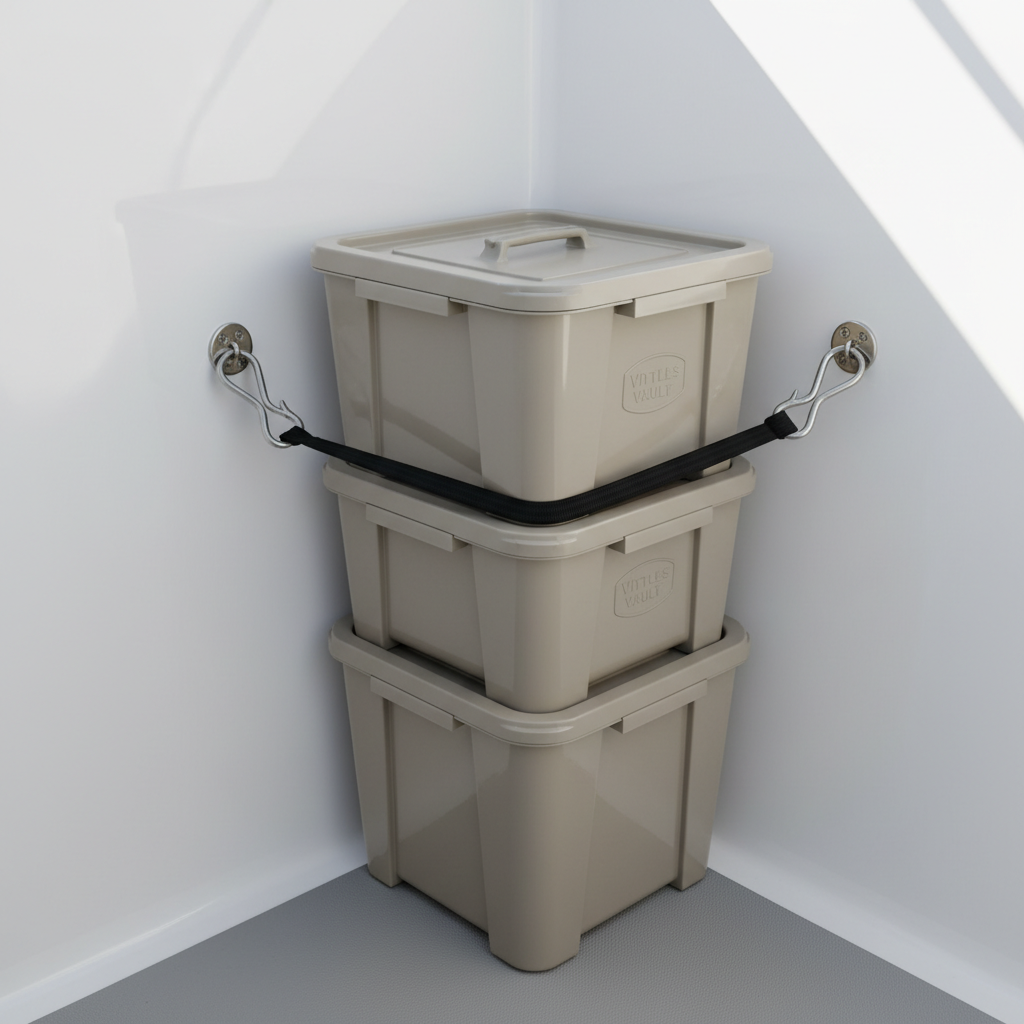
- Stackable Containers: The aforementioned Vittles Vaults are masters of this. Their square, interlocking design allows them to be stacked securely, turning a single footprint into double or triple the storage capacity. This is ideal for storing different types of food (e.g., adult and puppy formulas) or simply a massive supply.
- Tall, Slender Designs: Look for containers designed for storing bulk human foods like flour or cereal. A tall, cylindrical or rectangular container can often slide into a narrow locker next to cleaning supplies or spare parts, a space a round bucket could never occupy.
- Custom Solutions: For the truly committed hacker, building a custom plywood storage bin into an unused vertical space is the ultimate solution. It can be perfectly sized for your needs and integrated seamlessly into the boat’s interior.
Insider Secret: Once you’ve stacked your containers, you must secure them for rough seas. A simple, well-placed bungee cord hooked to eye straps on the bulkhead is good. A custom-fit wooden ‘fiddle’—a small wooden rail—in front of the containers is even better. Never assume things will stay put when the boat is heeling or punching through chop. Unsecured containers become dangerous projectiles.
Hack #4: The Desiccant Defense – Winning the War Against Moisture
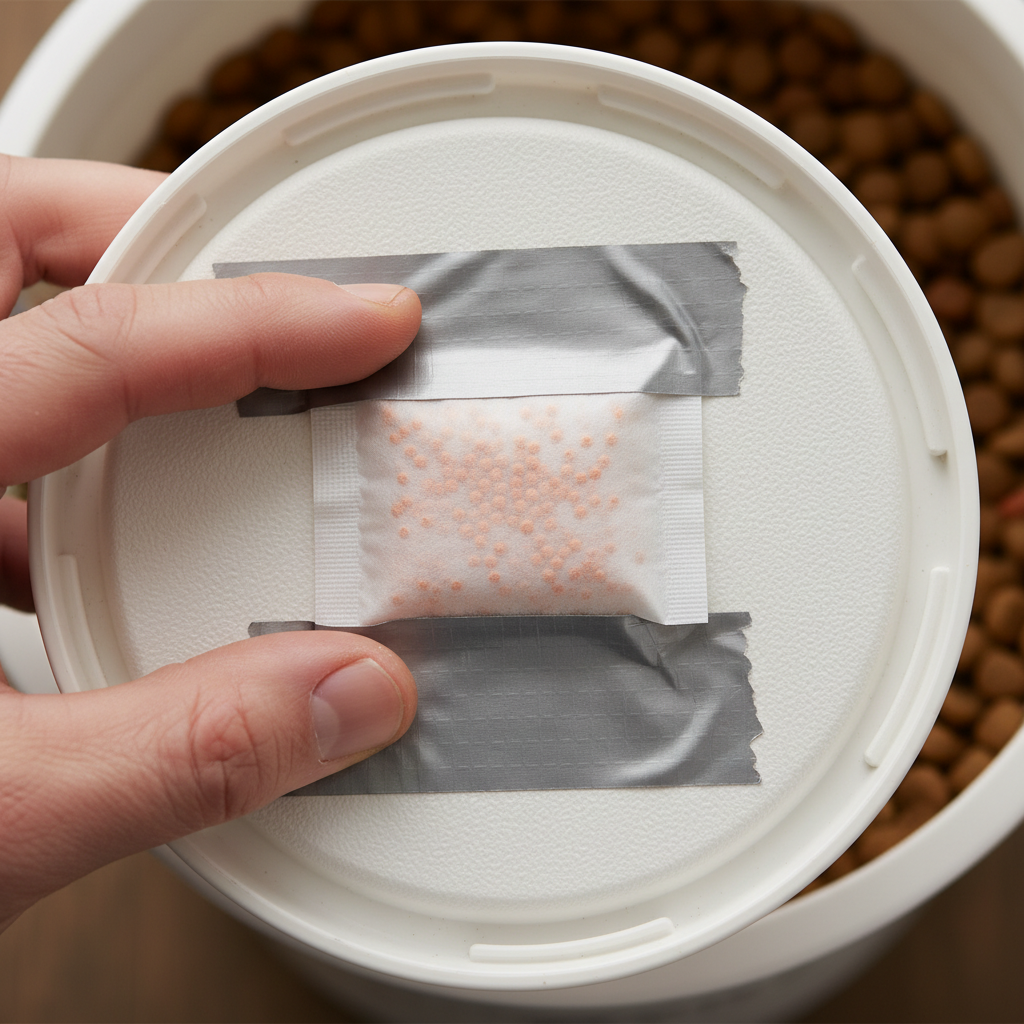
Hack #4: The Desiccant Defense – Winning the War Against Moisture
Even with an airtight container, a small amount of humid air gets trapped inside every time you open it. Over weeks and months, this repeated exposure can still be enough to soften kibble and promote spoilage. To achieve the next level of food security, we must actively combat the moisture that gets trapped inside the container. The weapon of choice: desiccants.
A desiccant is a substance that absorbs moisture from the air. You’ve seen them in little packets labeled ‘Do Not Eat’ in new shoes or electronics. We can leverage this same technology to protect our dog’s food, but we must do it safely.
Implementing the Desiccant Defense:
- Use Only Food-Grade Desiccants: This is non-negotiable. You must use silica gel packets that are specifically designated as food-grade or FDA-approved. These are made from non-toxic materials, though they are still a choking hazard and should never be ingested.
- Isolate the Packet: Never, ever toss a desiccant packet directly into the kibble. A dog could easily swallow it. The proper method is to secure the packet to the underside of the container’s lid. Use strong, high-quality tape (like Gorilla Tape) to affix it firmly. This keeps it away from the food while allowing it to absorb the air’s moisture.
- Recharge or Replace: Many silica gel packets are rechargeable. They often have indicator beads that change color (e.g., from orange to green) when they are saturated. You can ‘recharge’ them by baking them in an oven at a low temperature according to the manufacturer’s instructions. This makes them a sustainable, long-term solution.
This simple, inexpensive hack adds a powerful layer of active defense against humidity, ensuring the last scoop of kibble from a container is as crisp and fresh as the first. It’s a small detail that makes a huge professional difference in food preservation.
Hack #5: The ‘Galley-Ready’ Go-Container for Daily Use
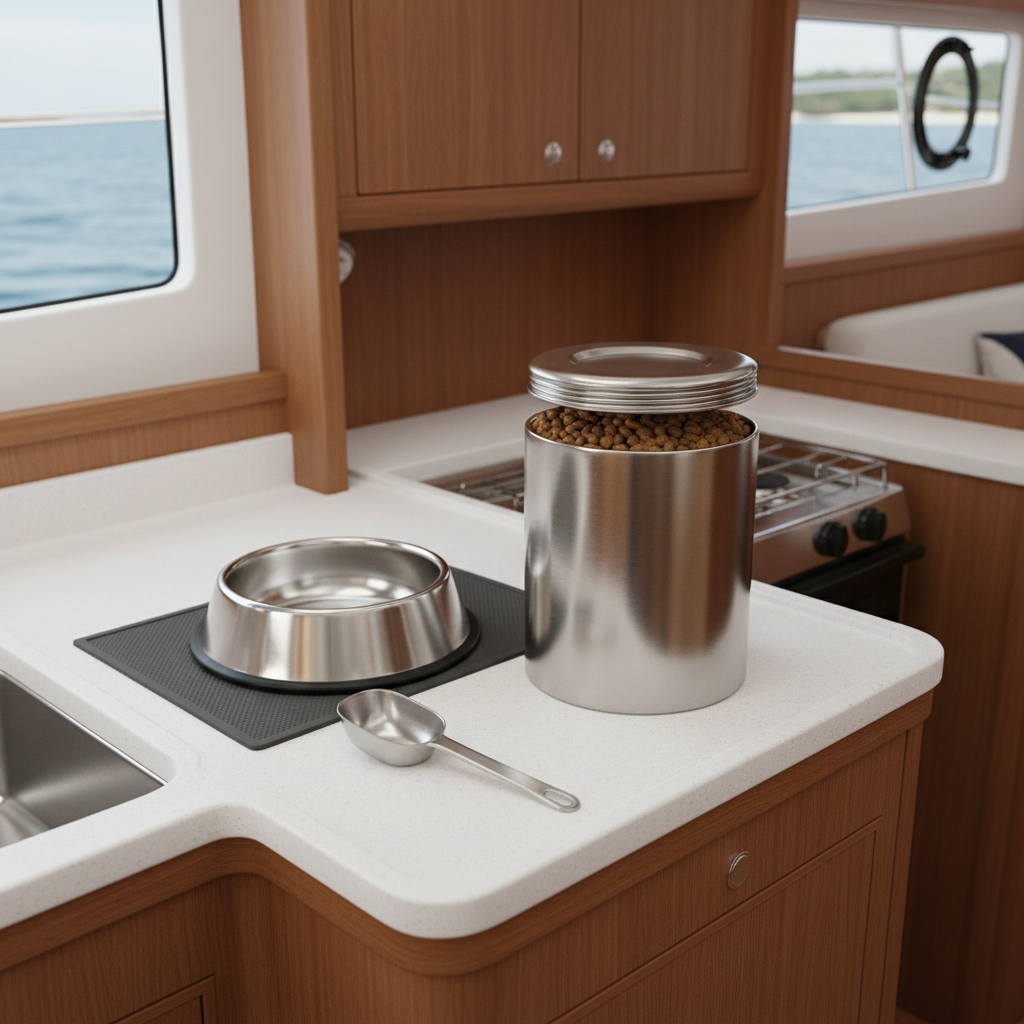
Hack #5: The ‘Galley-Ready’ Go-Container for Daily Use
Your bulk food supply should be stored in the most secure, stable, and out-of-the-way location on the boat. This might be a deep locker, under a bunk, or in the lazarette. Accessing this main stash two or three times a day is not only inconvenient but also violates our core principle of minimizing the main supply’s exposure to air. The solution is a two-stage system: bulk storage and a daily-use container.
The ‘Galley-Ready’ Go-Container is a small, convenient vessel that holds a 1-to-3-day supply of food. You keep this container in the galley for easy access during meal times. Once every few days, you’ll do a single refill from your main, secure storage, then lock it back down. This drastically reduces the number of times the main container is opened, preserving the freshness of the bulk supply for its entire lifespan.
Choosing Your Go-Container:
- Capacity: It should be small. A container that holds 6-12 cups of food is perfect for most dogs for a couple of days. The goal is to refill it often from your main supply.
- Material: Stainless steel is an excellent choice. It’s non-porous, easy to clean, durable, and won’t absorb odors. A high-quality, BPA-free plastic container with a screw-top lid is also a good option.
- Secure Lid: Even this small container needs a secure lid. A simple pop-off lid can be knocked off in rough seas, leading to a mess. A screw-top or latching lid is essential.
This system creates an efficient workflow, protects your main food supply, and makes daily feeding a quick, simple task. It’s a classic efficiency hack adapted for the unique confines of a boat’s galley.
Hack #6: Establishing a Pest-Proof Perimeter
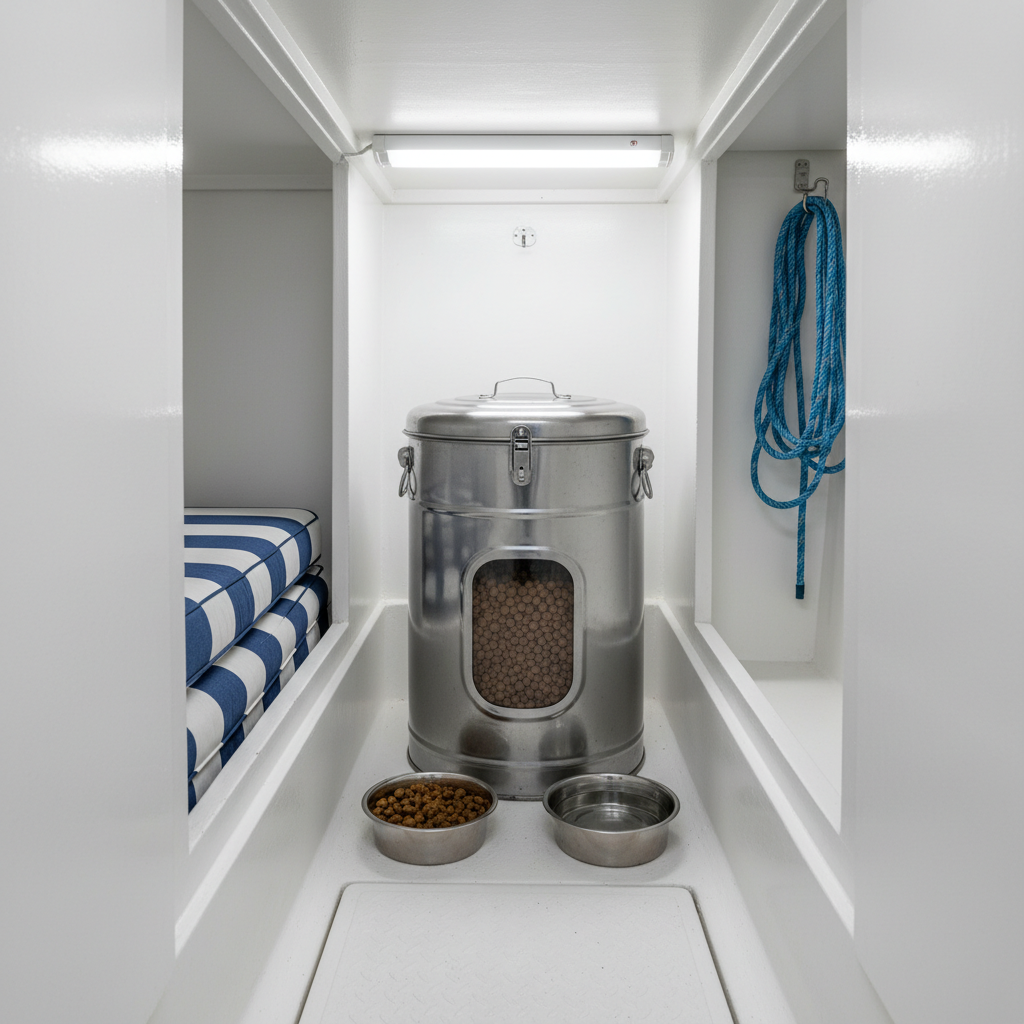
Hack #6: Establishing a Pest-Proof Perimeter
A boat is a constant battleground against pests. Cockroaches, ants, and—most destructively—rodents are always looking for a way aboard. Dog food is a powerful attractant. While our airtight primary container is the first and most important line of defense, a true hacker establishes multiple layers of security.
First, consider the material of your container. While high-quality plastics like those used in Vittles Vaults are very tough, a determined rat can chew through plastic. If you frequent marinas with known rodent problems or have had issues in the past, your best defense is a metal container. A galvanized steel trash can with a tight-fitting, locking lid is an inexpensive and completely rodent-proof solution for your main food supply.
Second, practice extreme sanitation around the feeding area. Leaving stray kibble on the floor is like sending a written invitation to every pest in the anchorage. Clean your dog’s bowls immediately after they eat. Wipe up any crumbs or water spills. A clean galley is a pest-free galley.
Insider Secret: Many boaters swear by the power of bay leaves as a natural insect repellent, particularly for roaches and weevils. Tape a few dried bay leaves to the inside walls of the locker where you store your food container (do NOT put them inside the food itself). It’s a simple, non-toxic deterrent that adds another layer to your pest-proof perimeter.
Your strategy is twofold: make the food impossible to get into with a physically robust container, and make the area around it completely uninteresting by eliminating any stray food particles. This comprehensive defense will keep your dog’s food safe and your boat free of unwanted guests.
Hack #7: Strategic Location Scouting for Temperature Control
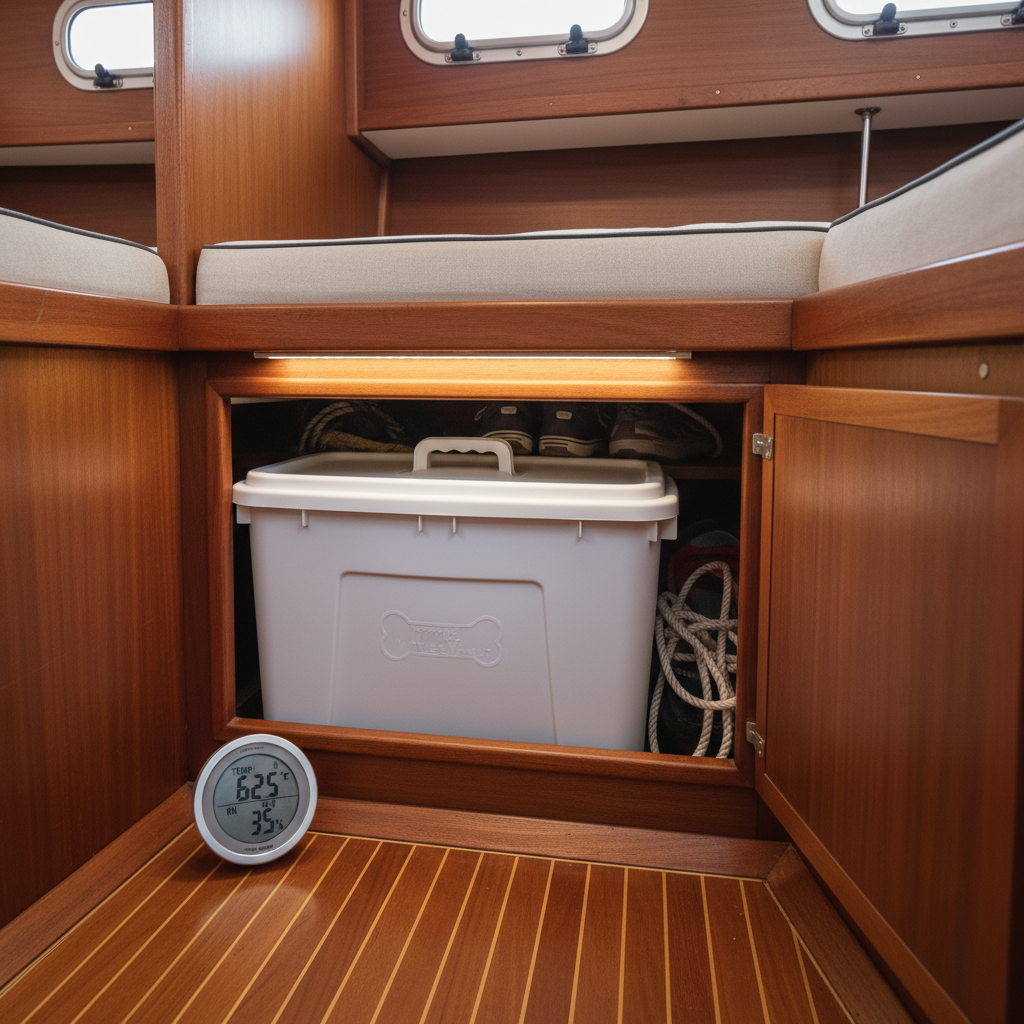
Hack #7: Strategic Location Scouting for Temperature Control
The final enemy of your dog’s food is heat. High temperatures accelerate the degradation of nutrients, especially the fragile fats and oils. When these fats go bad, the food becomes rancid. Rancid food not only tastes terrible but can also cause digestive upset, and it lacks its original nutritional value. On a boat, which can get extremely hot under the sun, choosing your storage location is a critical final step.
You must conduct a ‘site survey’ of your vessel to identify the coolest, driest, and most temperature-stable locations. The engine room, or any locker sharing a bulkhead with it, is absolutely off-limits. Lockers on the sunny side of the boat or those directly under dark-colored decks will also heat up like ovens. The ideal spot is typically low in the hull, near the centerline, and away from any heat-producing machinery. The bilge can be cool, but it must be a completely dry bilge to even consider it.
Here is a breakdown of potential storage locations:
| Storage Location | Pros | Cons | Verdict |
|---|---|---|---|
| Under a Forward V-Berth | Cool, dark, low in the boat. | Can be damp, may require moving cushions. | Good, if dry and well-ventilated. |
| Locker Under Settee | Centrally located, stable temperature. | Often used for other high-priority items. | Excellent, if space is available. |
| Engine Room/Compartment | None. | Extreme heat, risk of fumes/contamination. | NEVER. |
| Cockpit Lazarette | Often spacious. | Can get very hot from sun exposure, may get wet. | Poor, unless well-insulated and protected. |
| Dry Bilge | Coolest and most stable temperature. | High risk of moisture damage if not 100% dry. | Expert-level: Only for vacuum-sealed bags in a 100% dry bilge. |
By taking the time to scout the perfect location, you are providing the final layer of protection for your dog’s food, ensuring that the expensive nutrition you paid for is the nutrition your dog actually receives at every meal.
Conclusion
Protecting your dog’s food aboard a boat is not a passive activity; it requires a strategic, multi-layered system. By implementing these seven hacks, you move beyond the realm of the average pet owner and become a true Canine Nutrition Hacker. You are creating a fortress for your dog’s nutrition, defending it against moisture, pests, heat, and physical space constraints.
Your commitment to proper storage ensures that every dollar you invest in high-quality food pays dividends in your dog’s health, energy, and longevity. It’s the ultimate peace of mind, allowing you to focus on what truly matters: casting off the lines and sharing the incredible adventure of the boating life with your healthy and happy canine companion.