Don’t Be Fooled: How to Read Dog Food Labels Like a Pro
The pet food aisle is a battleground. You’re bombarded with images of happy dogs, pristine cuts of meat, and vibrant vegetables. Brands scream buzzwords like ‘natural,’ ‘holistic,’ and ‘ancestral diet.’ It’s a calculated assault on your desire to do the best for your companion. But here’s the insider secret: the front of the bag is marketing; the truth is on the back.
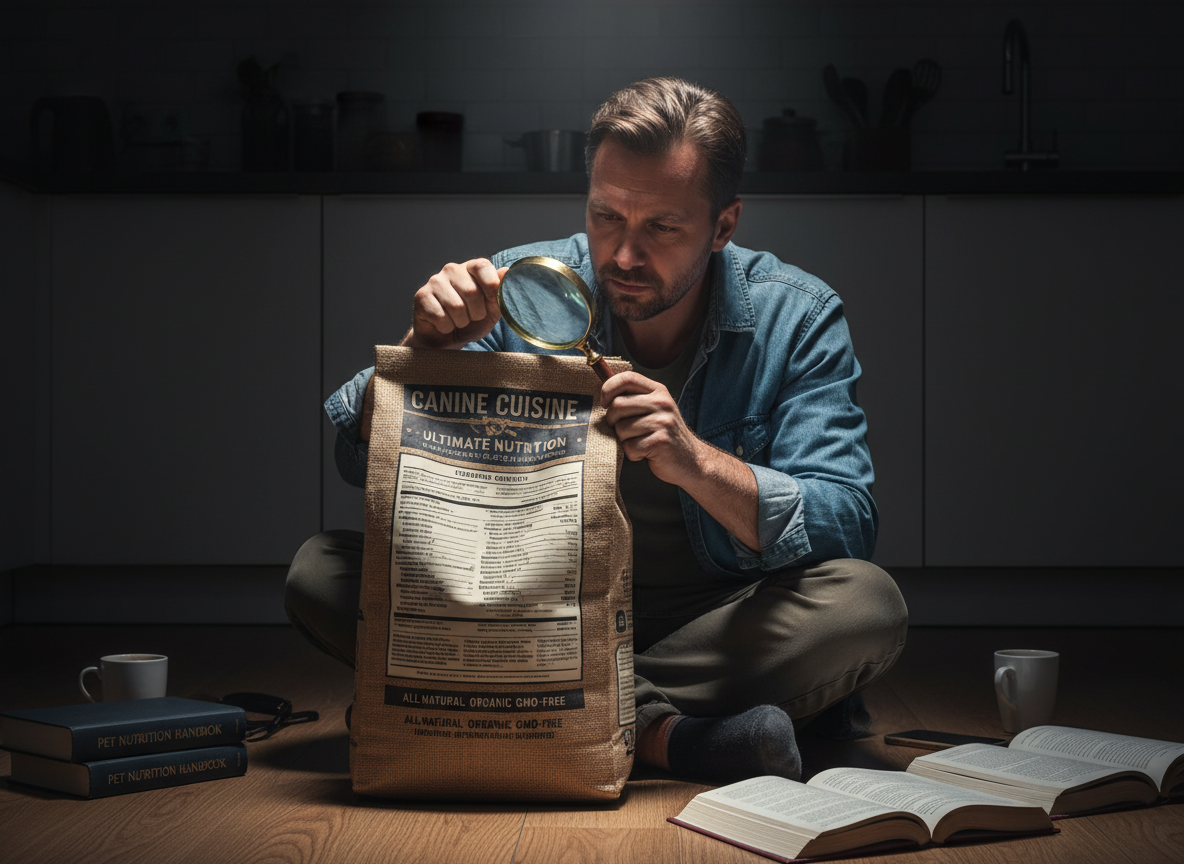
I’m The Canine Nutrition Hacker. I don’t work for a pet food company. I’m a dog owner who treats ingredient panels like a crime scene. I’m here to give you the tools to see past the marketing fog and analyze what you’re *actually* putting in your dog’s bowl. Forget the hype. We’re going to talk about ingredient weight, protein quality, and the subtle tricks manufacturers use to make cheap ingredients look premium. By the time you’re done with this guide, you’ll be able to walk down that aisle with the confidence of a forensic nutritionist, ready to make the absolute best choice for your dog and your budget.
The ‘First Five’ Rule: Decoding the Most Critical Ingredients
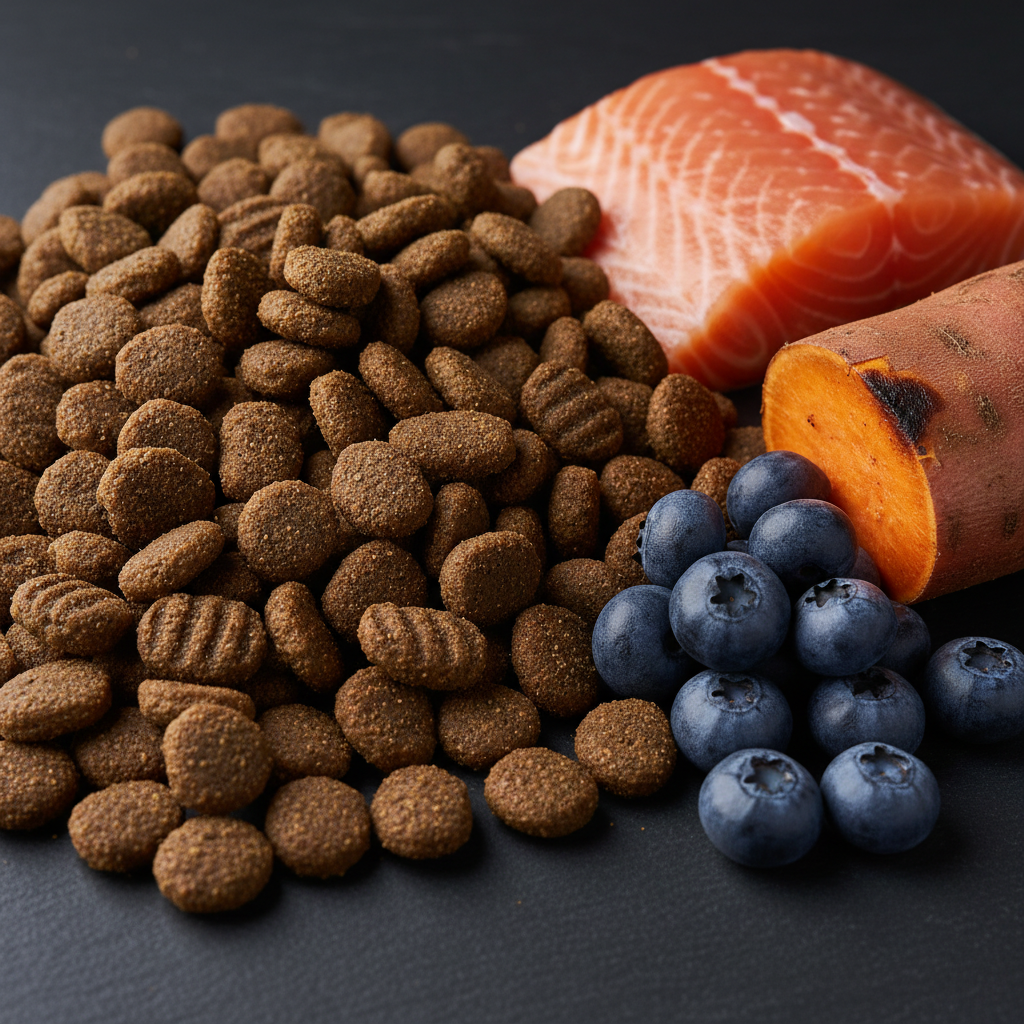
The first five ingredients listed on a dog food label represent the vast majority of what’s in the bag by weight. This is the most important real estate on the entire package, and it’s where you’ll find the first clues about a food’s quality. By law, ingredients must be listed in descending order by their pre-cooking weight.
The Water Weight Trick
This is the first trap many well-intentioned owners fall into. An ingredient like ‘Deboned Chicken’ sounds fantastic, and it is. However, whole chicken is about 75% water. After cooking and extrusion (the process that makes kibble), most of that water is gone. An ingredient like ‘Chicken Meal,’ on the other hand, is a rendered concentrate where the water and fat have been removed. This means chicken meal contains nearly 300% more protein than the same weight of fresh chicken. Seeing a ‘meal’ from a named source (like chicken meal, lamb meal, or salmon meal) as the first or second ingredient is often a sign of a high-quality, protein-dense food.
Your ‘First Five’ Hit List vs. Red Flag List
When you scan those first five ingredients, here’s what you’re looking for versus what should set off alarm bells:
- GREEN FLAGS (What you want to see):
- Named Animal Protein Sources: Deboned Chicken, Lamb, Beef, Salmon.
- Named Animal Protein Meals: Chicken Meal, Turkey Meal, Herring Meal. These are potent protein sources.
- Nutrient-Rich Carbohydrates: Sweet Potatoes, Brown Rice, Barley, Oats.
- Healthy Fats: Chicken Fat, Salmon Oil (excellent for Omega fatty acids).
- RED FLAGS (What to avoid):
- Vague ‘Meat’ Ingredients: ‘Meat Meal’ or ‘Animal By-Product Meal.’ What animal? What part? This lack of specificity is a major red flag for low-quality, inconsistent sourcing.
- Cheap Fillers as #1 or #2: Corn (in all its forms), Wheat Gluten, Soy. These provide cheap protein but are less digestible and common allergens for many dogs.
- Ingredient Splitting: More on this trick later, but seeing multiple forms of the same cheap grain (e.g., ground yellow corn, corn gluten meal) in the top ingredients is a bad sign.
Hacker Tip: Never buy a food where you can’t identify the primary animal source in the first three ingredients. If the label says ‘Meat & Bone Meal,’ put the bag down and walk away.
Beyond the Basics: Understanding the Guaranteed Analysis

Every dog food label has a box called the ‘Guaranteed Analysis’ (GA). This tells you the minimum percentages of crude protein and crude fat, and the maximum percentages of crude fiber and moisture. While it’s a required starting point, ‘crude’ is the operative word. The GA doesn’t tell you anything about the quality, digestibility, or bioavailability of the nutrients.
The Dry Matter Basis (DMB) Calculation: The Pro’s Comparison Tool
Comparing a can of wet food (78% moisture) to a bag of kibble (10% moisture) using the GA is like comparing apples and oranges. To get a true comparison, you need to calculate the nutrient levels on a Dry Matter Basis (DMB). This removes the water from the equation.
Here’s the formula:
- Find the moisture percentage on the label.
- Subtract the moisture percentage from 100 to get the percent of dry matter. (e.g., 100% – 10% moisture = 90% dry matter)
- Find the protein percentage on the label.
- Divide the protein percentage by the percent of dry matter and multiply by 100. (e.g., 26% protein / 90% dry matter * 100 = 28.9% protein on a DMB)
Using this formula allows you to accurately compare any two dog foods, regardless of their format. This is a non-negotiable skill for any serious pet owner.
Not All Protein is Created Equal
A bag of food can boast a 30% protein level, but if that protein comes from corn gluten meal and pea protein, your dog won’t be able to utilize it as effectively as protein from chicken meal or lamb. Animal-based proteins contain a more complete essential amino acid profile that carnivorous-leaning animals like dogs are designed to digest. The GA won’t tell you this; only the ingredient list will.
Red Flags and Marketing Ploys: How Manufacturers Obscure the Truth

The pet food industry is masterful at using language to make products seem better than they are. Once you learn to spot these tricks, they become glaringly obvious.
The Deception of ‘Ingredient Splitting’
This is one of the most common and deceptive tricks in the book. A manufacturer wants to use a cheap filler like corn but doesn’t want ‘Corn’ to be the first ingredient. So, they list it as multiple, separate ingredients: ‘Ground Yellow Corn,’ ‘Corn Gluten Meal,’ and ‘Corn Bran.’ When listed separately, each one falls lower on the list. But if you were to add them all together, ‘Corn’ would likely be the true number one ingredient, ahead of the ‘Real Chicken’ they’re advertising on the front.
Decoding Misleading Buzzwords
Many terms on the front of the bag are legally meaningless or have very loose definitions.
- ‘Natural’: This simply means the ingredients are derived from plant, animal, or mined sources. It says nothing about the quality of those sources.
- ‘Premium’ or ‘Gourmet’: These have absolutely no legal definition. They are 100% pure marketing fluff.
- ‘Human-Grade’: This is one of the few regulated terms. To use it, every ingredient in the food must be stored, handled, processed, and transported in ways that are legally compliant for human food. This is a high standard, but it comes with a high price tag.
Good Label vs. Bad Label: A Forensic Comparison
Let’s put our skills to the test. Here’s a side-by-side breakdown illustrating the difference between a high-quality label and a low-quality one filled with red flags.
| Feature | High-Quality Label Example | Low-Quality Label Example |
|---|---|---|
| First Ingredient | Deboned Chicken | Ground Yellow Corn |
| Other Proteins | Chicken Meal, Turkey Meal | Meat and Bone Meal, Corn Gluten Meal |
| Carbohydrates | Sweet Potatoes, Brown Rice | Wheat Middlings, Soybean Hulls |
| Fat Source | Chicken Fat (Preserved with Tocopherols) | Animal Fat (Source Unknown) |
| Red Flags | None obvious | Ingredient Splitting (Corn), Vague Sourcing (Meat/Animal) |
The Fine Print: AAFCO Statements and Calculating True Cost

At the bottom of the ingredient panel, in tiny print, you’ll find one of the most important statements on the bag: the AAFCO statement of nutritional adequacy. This is your proof that the food is truly complete and balanced.
‘Formulated’ vs. ‘Feeding Trials’: The Gold Standard
You will see one of two key phrases here:
- “(Product Name) is formulated to meet the nutritional levels established by the AAFCO Dog Food Nutrient Profiles…” This means the manufacturer created the recipe on a computer to meet the minimum standards. It’s the equivalent of an open-book test. It doesn’t mean they’ve ever actually fed it to a real dog to see how they perform on it.
- “Animal feeding trials using AAFCO procedures substantiate that (Product Name) provides complete and balanced nutrition…” This is the gold standard. It means the food was fed to a population of dogs for an extended period (typically 26 weeks) under strict scientific protocols, and the dogs thrived. This is real-world proof that the food performs as it should. Always choose a food that has undergone feeding trials if you can.
Calculating the True Cost: Cost-Per-Calorie
A cheap bag of food isn’t cheap if you have to feed twice as much of it to meet your dog’s needs. Higher quality, nutrient-dense foods have more calories per cup. This means a $60 bag might last you 40 days, while a ‘cheaper’ $40 bag only lasts 20 days. Which one is really cheaper?
Insider Secret: Don’t look at the price per pound; look at the price per day. Here’s how:
1. Find the kcal/cup on the bag (e.g., 400 kcal/cup).
2. Determine how many cups your dog needs per day (e.g., 2 cups). This means your dog needs 800 kcal/day.
3. Find the total weight of the bag (e.g., 30 lbs) and the approximate cups per bag (usually on the side, e.g., ~120 cups).
4. Calculate how many days the bag will last (120 cups / 2 cups per day = 60 days).
5. Divide the price of the bag by the days it will last ($60 / 60 days = $1.00 per day). Now you have a true cost you can use to compare any food on the market.
Conclusion
You are now armed with the knowledge that most pet owners lack. You can see beyond the beautiful packaging and recognize the tactics used to sell you low-quality food at a premium price. The power has shifted back to you, the consumer and the advocate for your dog’s health.
The next time you’re in the pet food aisle, take a deep breath and turn the bag around. Start with the first five ingredients. Calculate the cost per day. Look for that AAFCO feeding trial statement. You are no longer a passive consumer; you are a nutrition hacker. Making this small change in how you shop is one of the most significant long-term investments you can make in your dog’s health and longevity. Your dog trusts you to make the right choice—now you have the skills to do it.