Best Kibble Shapes for Pugs & Bulldogs (Prevent Choking)
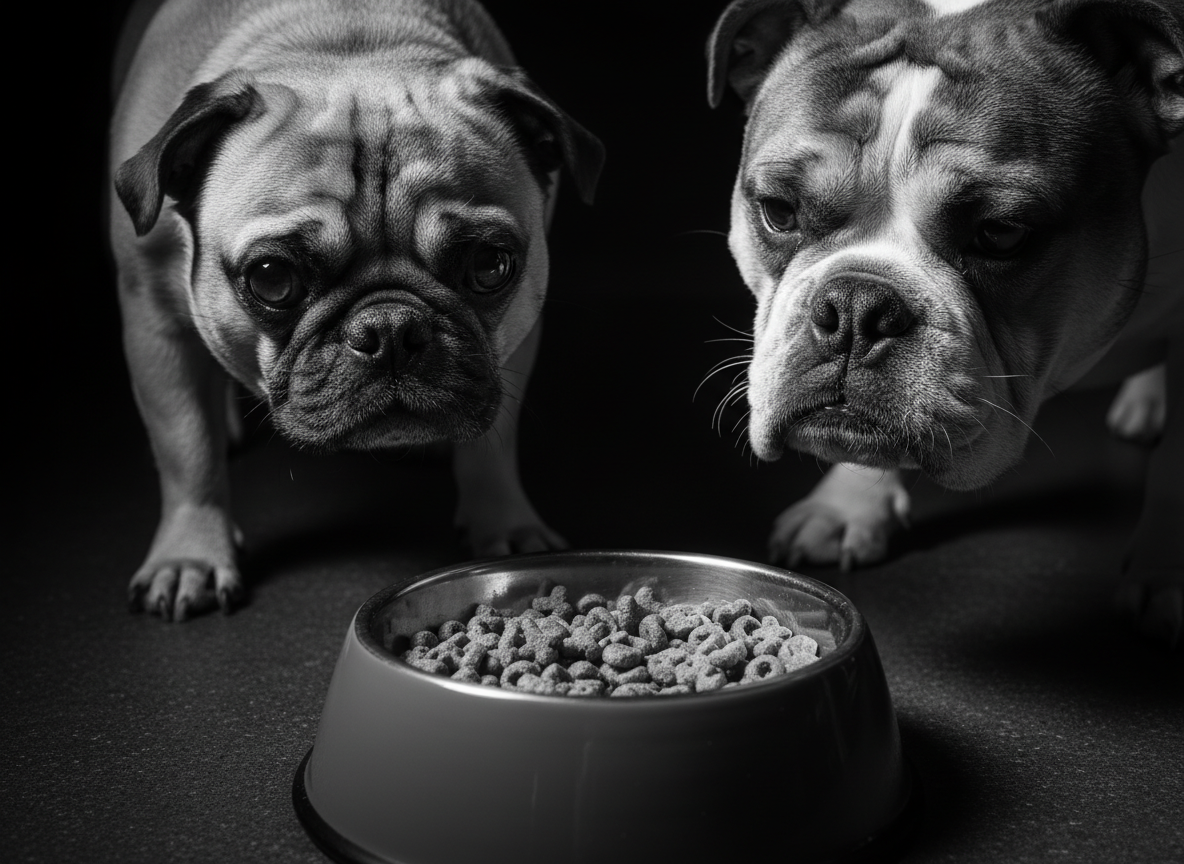
Let’s cut to the chase. The adorable, smushed-in face of your Pug or Bulldog is a marvel of selective breeding. It’s also an anatomical minefield. That short snout, compressed airway, and unique jaw structure mean that every meal can be a potential choking hazard. While other dog owners casually scoop any round pellet into a bowl, you don’t have that luxury. For you, the shape of your dog’s kibble isn’t a marketing gimmick—it’s a critical safety feature.
I’m The Canine Nutrition Hacker. I don’t get paid by big pet food brands to push their latest grain-free, ancestral-diet-of-the-arctic-wolf formula. My job is to dissect the data, analyze the engineering, and give you the unvarnished truth so you can protect your dog. Standard, cheap, round kibble is one of the biggest threats to your brachycephalic companion. In this guide, we will dismantle the science behind kibble design, expose the shapes that pose the greatest risk, and identify the specific, engineered kibble that can drastically reduce the risk of choking and improve your dog’s quality of life. It’s time to move beyond the ingredient list and start analyzing the architecture of the food itself.
The Brachycephalic Dilemma: Why Standard Kibble is a Dangerous Mismatch
The Brachycephalic Dilemma: Why Standard Kibble is a Dangerous Mismatch
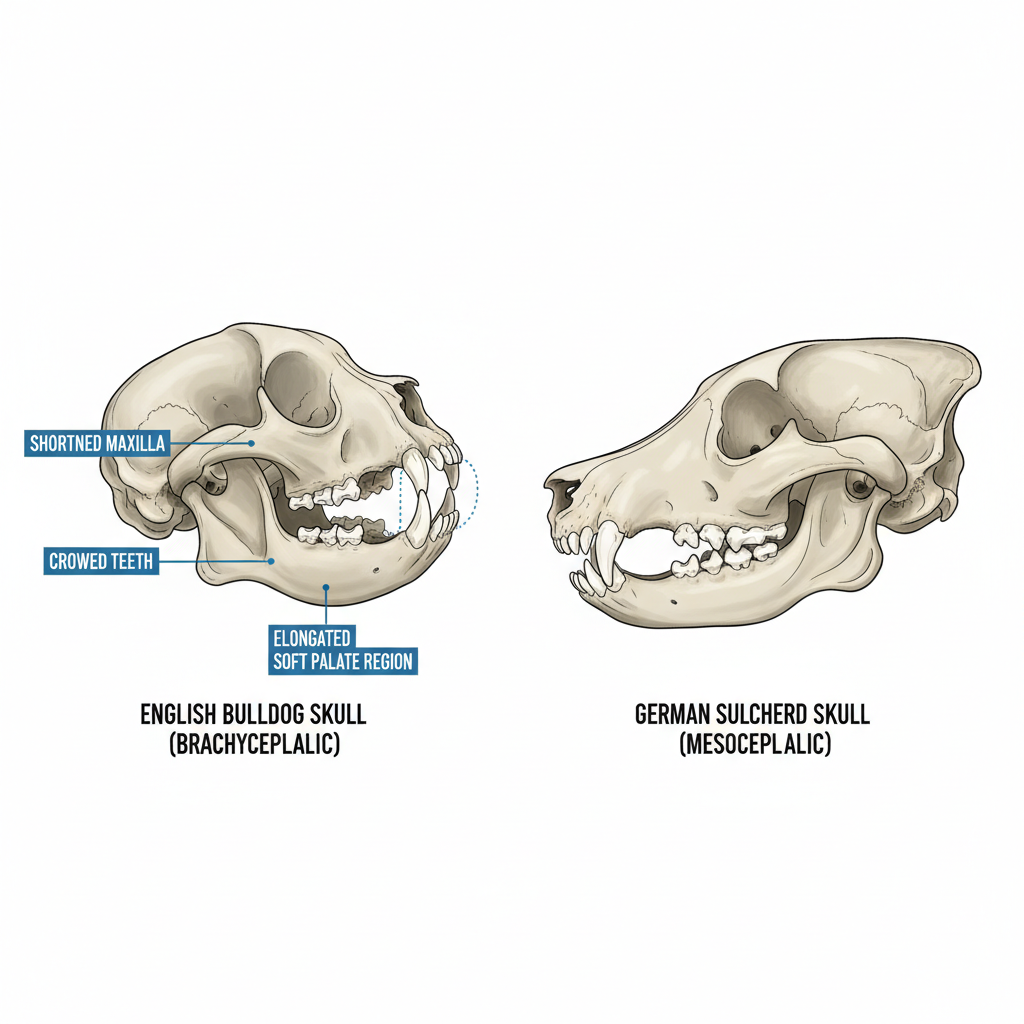
Before you can choose the right tool for the job, you have to understand the mechanics of the problem. The term ‘brachycephalic’ literally means ‘short-headed,’ and this anatomical distinction is the root cause of the issue. It’s not just about a cute, flat face; it’s a complete restructuring of the skull that has profound implications for breathing, eating, and safety.
The Anatomy of a Choke Risk
Let’s break down the specific structural challenges your Pug or Bulldog faces at mealtime:
- Brachygnathism (Shortened Jaw): Their lower jaw is proportionally shorter than their upper jaw. This, combined with a wide mouth, makes it difficult to grasp and manipulate small food pieces. Instead of precise chewing, they often resort to scooping or shoveling food with their lower jaw.
- Crowded Dentition: All 42 adult teeth are crammed into a much smaller space. This can lead to misaligned teeth that don’t shear and grind food effectively. Small, hard kibble can easily slip through the gaps unchewed.
- Elongated Soft Palate: This is a classic brachycephalic issue where the soft palate tissue at the back of the roof of the mouth is too long for the head, partially obstructing the airway. A piece of food inhaled during frantic eating can easily become lodged, causing a life-threatening obstruction.
The ‘Enemy’ Shape: The Small, Round Pellet
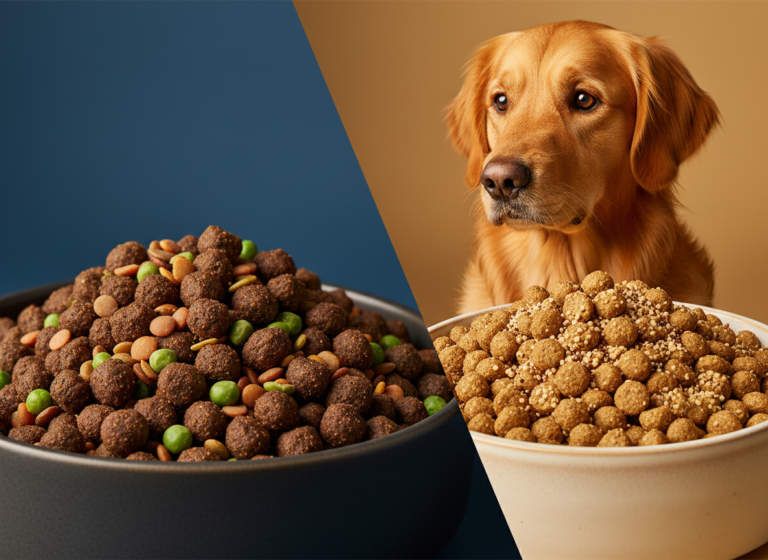
Now, consider the design of the vast majority of dog kibble on the market: the small, round, or slightly oval pellet. For a brachycephalic dog, this is the worst possible design. Here’s why it’s the enemy:
- It encourages gulping, not chewing. Its uniform, smooth shape allows it to be swallowed whole with minimal effort. Your dog’s instinct to eat quickly bypasses any attempt to chew.
- It’s the perfect size and shape to be inhaled. During the ‘shoveling’ motion of eating, these small pellets can be accidentally vacuumed into the airway.
- It creates a perfect seal in the esophagus. If a round pellet does get stuck, its shape can form a complete plug, cutting off air more effectively and immediately than an irregularly shaped object.
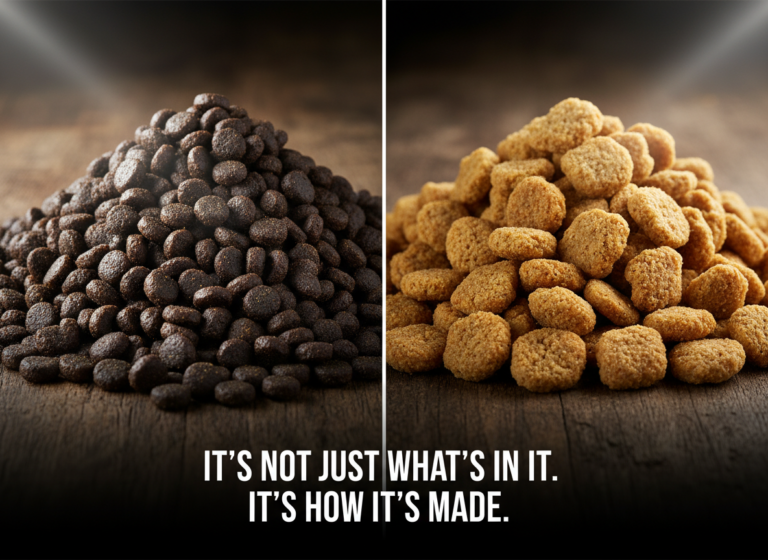
Insider Secret: Why is this dangerous shape so common? It’s cheap and easy to manufacture. Extrusion machines can pump out uniform, round pellets with maximum efficiency and minimal waste. The design prioritizes production cost, not the anatomical needs of specialized breeds. Your dog’s safety is an afterthought in this mass-market equation.
Hero Shapes: The Engineering of a Safer Kibble
Hero Shapes: The Engineering of a Safer Kibble
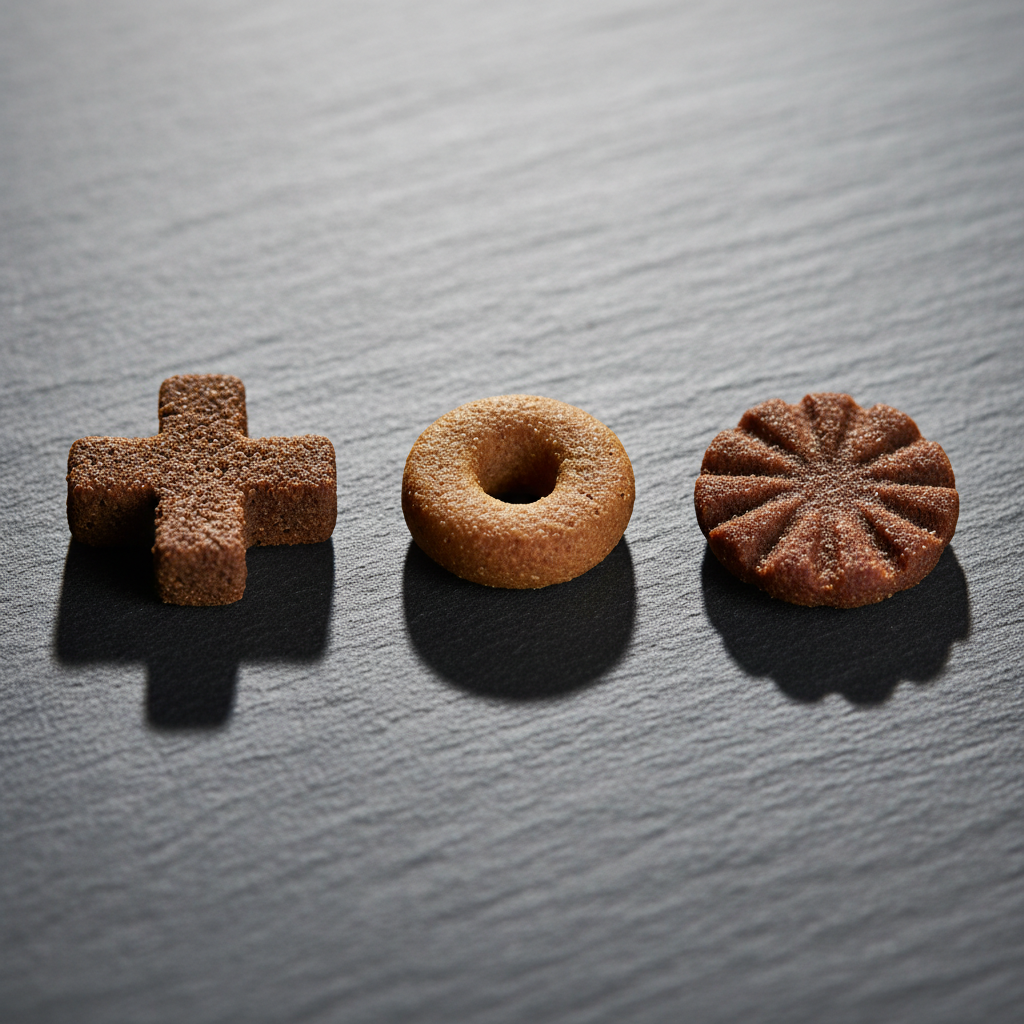
If the round pellet is the enemy, then what is the solution? The answer lies in thoughtful engineering. Certain kibble shapes are specifically designed to counteract the anatomical challenges of brachycephalic breeds. These aren’t random, pretty shapes; they are functional designs intended to force a different, safer eating behavior. These are the ‘Hero Shapes’ you should be looking for.
Cross or ‘X’ Shaped Kibble
This is one of the most effective designs. The four distinct arms of the ‘X’ make it almost impossible to swallow whole. The dog is forced to bite down, and the pressure points created by the shape cause the kibble to fracture and break apart. Furthermore, the irregular shape is easier for their shortened jaw to grasp and hold onto, reducing the ‘shoveling’ effect.
Doughnut or Ring-Shaped Kibble
The genius of the ring shape is its built-in safety feature. The hole in the middle provides a potential airway, even if the piece becomes temporarily lodged in the throat. This can provide critical seconds for the dog to dislodge the piece on its own or for you to intervene. It’s a simple design change that dramatically reduces the risk of a complete obstruction. It also encourages chewing to break the ring structure.
Large, Wavy, or Flat Disc-Shaped Kibble
The core principle here is size. A large, flat, or wavy disc is simply too big to be swallowed whole by a Pug or small Bulldog. It forces them to slow down and crunch the piece into smaller, manageable fragments. The wavy texture can also help with dental cleaning by providing more surface area to scrape against the teeth. This design is excellent for slowing down voracious eaters.
Hacker Tip: Don’t just look at the shape; feel the texture. A good brachycephalic-friendly kibble should have a slightly porous or airy texture. This allows it to break apart more easily when chewed and dissolve faster if it does get stuck, compared to a dense, rock-hard pellet. Break a piece in half with your fingers; it should snap with moderate pressure, not feel like a piece of gravel.
Forensic Review: Top Kibbles Engineered for Pugs & Bulldogs
Forensic Review: Top Kibbles Engineered for Pugs & Bulldogs
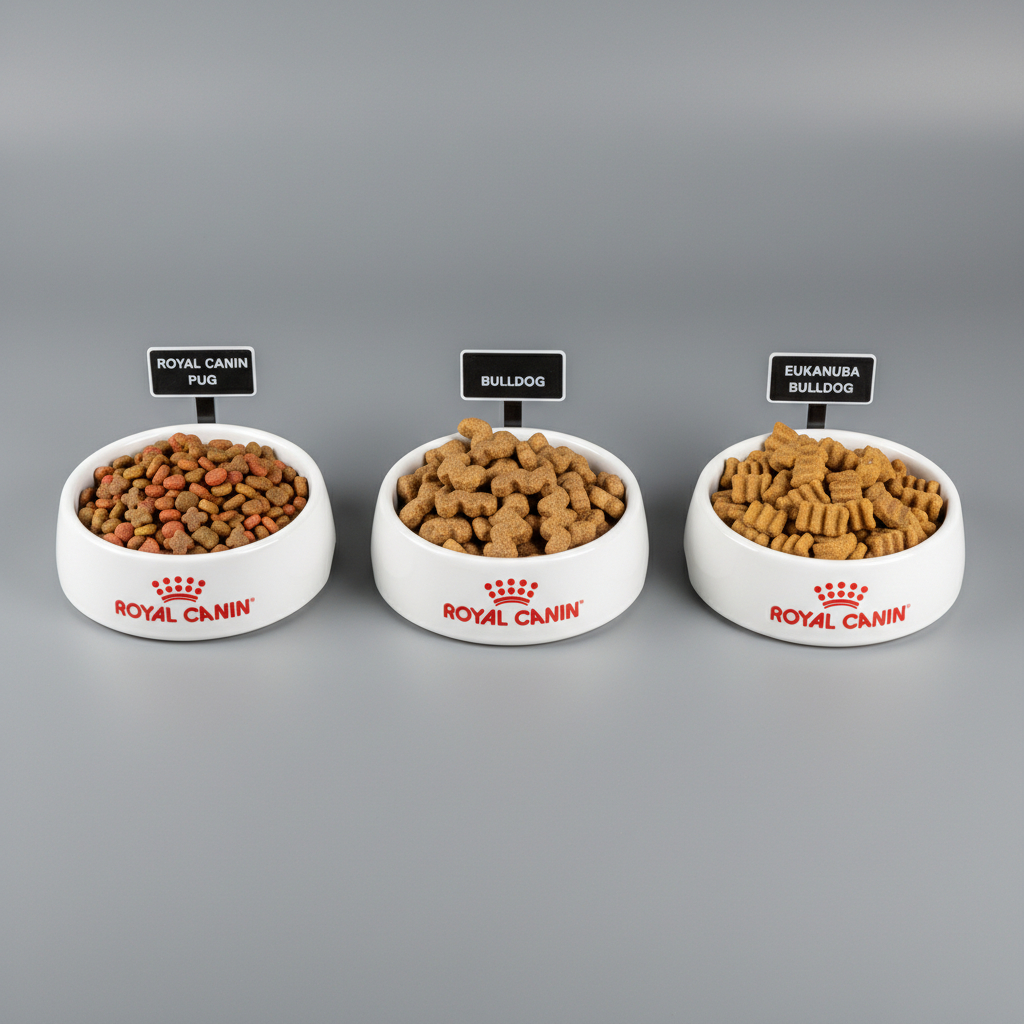
Knowing the right shapes is half the battle. Now, let’s put this knowledge to work by analyzing specific brands that have invested the R&D into creating breed-specific or functionally-shaped kibble. Remember, you are the nutrition hacker; you must look past the flashy packaging and analyze the data. Disclaimer: Always consult your veterinarian before changing your dog’s diet. This analysis is for informational purposes and is not a substitute for professional veterinary advice.
Royal Canin Breed Health Nutrition Pug Adult Dry Dog Food
- Kibble Shape Analysis: A custom cloverleaf shape. This is a brilliant design that is easy for a Pug’s short, wide muzzle to pick up. The three ‘lobes’ encourage cracking and chewing, similar to the ‘X’ shape, preventing them from gulping it whole.
- The ‘First 5 Ingredients’ Truth: Brewers rice, chicken by-product meal, corn, corn gluten meal, chicken fat. The presence of brewers rice, corn, and corn gluten meal in the top 5 is a red flag for a premium-priced food. These are high-glycemic fillers. While the shape is excellent, the nutritional profile could be stronger.
- Cost Per Day (20lb Pug): Approximately $1.10/day.
- Recall Check: Royal Canin has had recalls in the past, most notably in 2007 related to melamine contamination, but has maintained a relatively clean record since.
Royal Canin Breed Health Nutrition Bulldog Adult Dry Dog Food
- Kibble Shape Analysis: A unique ‘S’ or wave shape. This is a large, elongated kibble designed specifically for the Bulldog’s undershot jaw. The shape forces them to slow down and chew thoroughly. It’s difficult to scoop and swallow, effectively mitigating the choke risk.
- The ‘First 5 Ingredients’ Truth: Brewers rice, oat groats, chicken by-product meal, brown rice, wheat gluten. Again, we see brewers rice as the first ingredient. While oat groats and brown rice are decent whole grains, the overall ingredient panel relies heavily on grains and by-products for a food at this price point.
- Cost Per Day (50lb Bulldog): Approximately $2.25/day.
- Recall Check: Same history as noted above.
Eukanuba Breed Specific Bulldog Adult Dry Dog Food
- Kibble Shape Analysis: A unique zig-zag or ‘Z’ shape. Similar to the Royal Canin Bulldog formula, this large, irregular shape is designed to be difficult to swallow whole and encourages mastication. It’s a solid, functional design.
- The ‘First 5 Ingredients’ Truth: Chicken, corn, chicken by-product meal, wheat, ground grain sorghum. Chicken is the first ingredient, which is a strong positive. However, the presence of corn, wheat, and by-product meal in the top 5 is a typical cost-saving measure seen in many large-scale brands.
- Cost Per Day (50lb Bulldog): Approximately $1.90/day.
- Recall Check: Eukanuba, owned by Mars Petcare, has had recalls, including a significant one in 2013 for potential salmonella contamination.
| Brand & Formula | Kibble Shape | Primary Protein Source | Grain Status | Verdict |
|---|---|---|---|---|
| Royal Canin Pug Adult | Custom Cloverleaf | Chicken By-Product Meal | Grain-Inclusive (Corn/Rice fillers) | Excellent shape for safety, but the nutritional ingredients are subpar for the price. You are paying for the engineering, not the food quality. |
| Royal Canin Bulldog Adult | Custom ‘S’ Wave | Chicken By-Product Meal | Grain-Inclusive (Rice/Oat fillers) | Superb shape for Bulldogs. Like the Pug formula, the ingredient quality doesn’t match the premium price tag. The design is the main selling point. |
| Eukanuba Bulldog Adult | Custom ‘Z’ Shape | Chicken | Grain-Inclusive (Corn/Wheat fillers) | Good functional shape with real chicken as the first ingredient. A slightly better nutritional start than competitors, but still heavy on filler grains. |
Beyond the Bag: Feeding Strategies to Maximize Safety
Beyond the Bag: Feeding Strategies to Maximize Safety
Choosing an engineered kibble is the most important step, but it’s not the only one. How you feed your dog is just as critical as what you feed them. Implementing smart feeding strategies creates multiple layers of safety, turning mealtime from a high-risk event into a safe and enriching experience. Don’t just pour the food in the bowl and walk away; hack the entire process for maximum security.
Slow-Feeder Bowls: The Non-Negotiable Tool
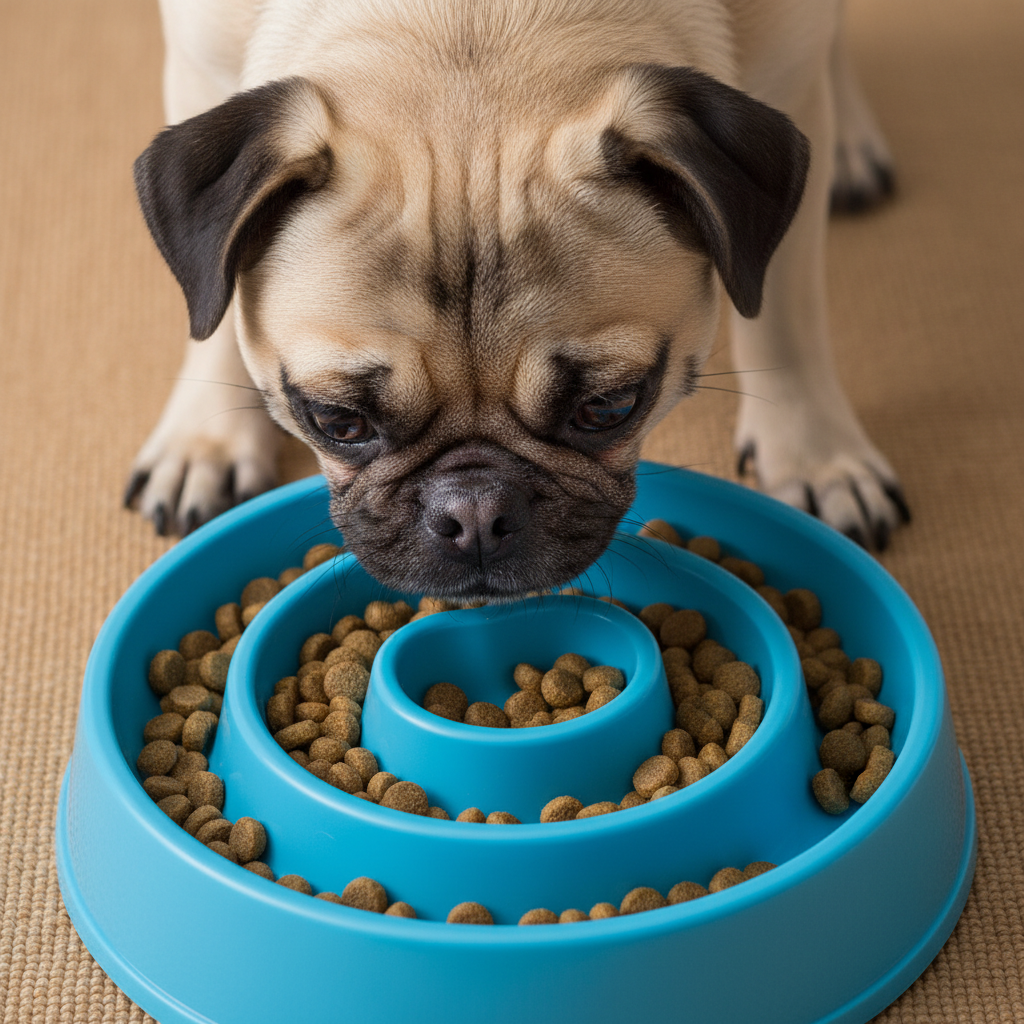
If you own a brachycephalic breed and you are not using a slow-feeder bowl, you are making a serious mistake. These bowls are designed with mazes, ridges, and obstacles that prevent your dog from taking huge, gulping mouthfuls. This is not an optional accessory; it’s a mandatory piece of safety equipment.
- It forces single-kibble eating: The dog has to use their tongue and muzzle to maneuver individual pieces of kibble out of the maze, making it nearly impossible to ‘shovel’ food.
- It extends mealtime: What was once a 30-second inhaling session can become a 5-10 minute activity, which drastically reduces the risk of choking and also aids in proper digestion.
- It provides mental stimulation: The act of ‘working’ for their food can help reduce anxiety and boredom.
Portion Control and Meal Frequency
A single, massive meal a day is a recipe for disaster. A ravenous dog is a careless dog. By splitting their daily food allowance into two or even three smaller meals, you reduce the hunger-fueled frenzy that leads to gulping. A smaller amount of food in the bowl at any given time is inherently safer. Measure every meal precisely with a measuring cup—don’t just ‘eyeball’ it.
The Strategic Use of Water
Adding a small amount of warm water or bone broth to the kibble can be a useful hack, but it must be done correctly. The goal is to slightly soften the exterior of the kibble to make it less abrasive, not to turn it into a mushy soup. A mushy consistency can actually be more difficult for some flat-faced breeds to pick up. Just add a tablespoon or two of liquid and let it sit for a minute before serving. This can also help ensure your dog stays well-hydrated.
Hacker Tip: Turn mealtime into a training game. Instead of a bowl, use a puzzle toy or a snuffle mat. These tools force the dog to eat one piece of kibble at a time, making it the safest feeding method possible. It also expends significant mental energy, leading to a calmer, more satisfied dog post-meal. This is the ultimate combination of safety, enrichment, and nutrition.
Conclusion
You now possess the critical intelligence that most pet owners lack. The safety of your Pug or Bulldog doesn’t just depend on avoiding toxic foods; it depends on understanding the fundamental physics of how they eat. You’ve seen how standard, round kibble is an enemy to their anatomy and how engineered, ‘hero’ shapes are a powerful tool for preventing a choking tragedy. We’ve dissected the specific brand formulas, exposing that while their kibble engineering is often superb, their ingredient panels can be loaded with fillers—a crucial trade-off you must now weigh.
Your action plan is clear. First, examine your current dog food. Look at the shape. If it’s a small, round pellet, you know it’s a liability. Second, use our forensic review as a starting point to research a safer, engineered alternative that fits your budget and nutritional standards. Third, immediately implement safer feeding strategies by investing in a slow-feeder bowl and controlling meal frequency. You are no longer a passive consumer; you are an informed advocate for your dog’s health. By hacking the system and looking beyond the marketing, you can make every meal a safe one.
Final Medical Disclaimer: The information provided in this article is based on independent research and analysis. It is not intended to be a substitute for professional veterinary advice, diagnosis, or treatment. Always seek the advice of your veterinarian with any questions you may have regarding your pet’s medical condition or dietary needs.