
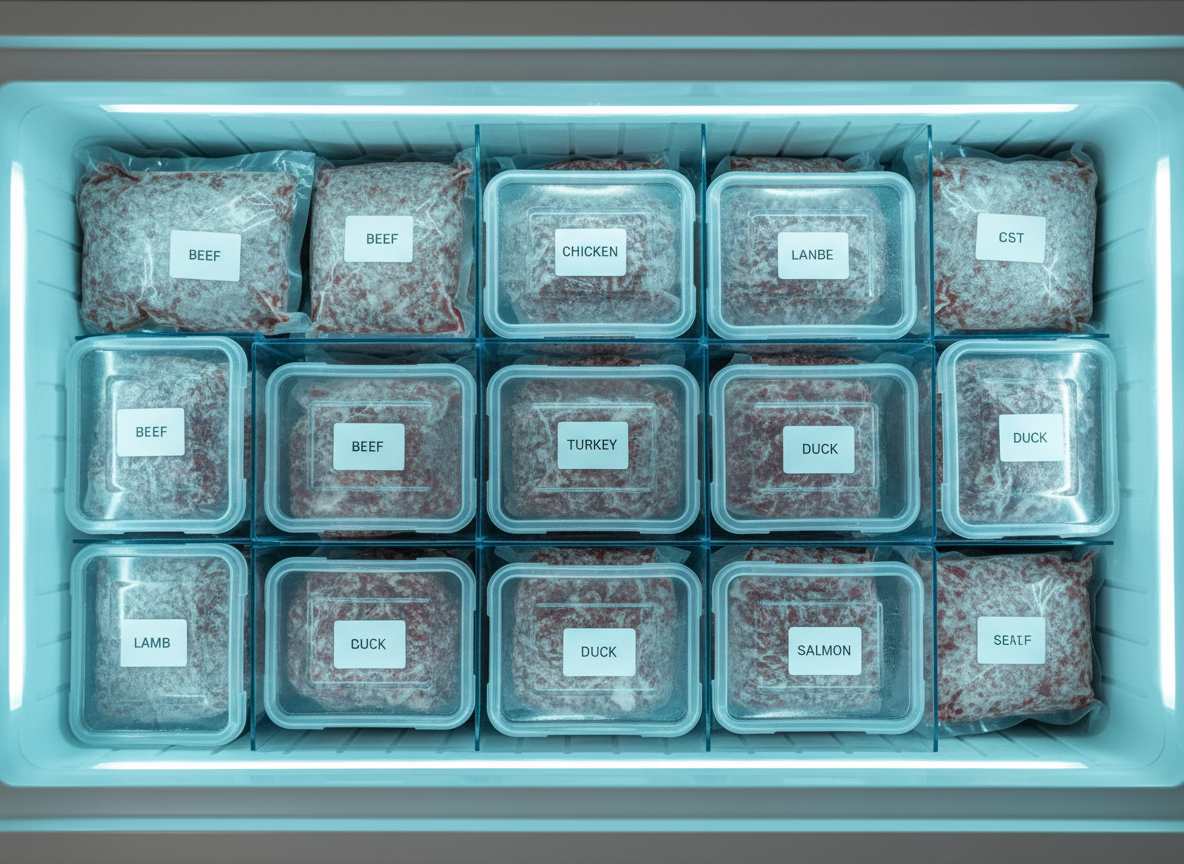
Aesthetic Chest Freezer Organization for Raw Dog Food
That cavernous white chest freezer, once a symbol of your commitment to providing the best raw nutrition for your dog, has become a source of dread. It’s an icy abyss where forgotten packs of ground turkey go to die from freezer burn and finding the right protein feels like a frantic archaeological dig. Let’s be clear: this chaos is costing you. It costs you money in wasted food, time in frustrating meal prep, and potentially compromises the safety and quality of the very diet you’ve invested in. As the Canine Nutrition Hacker, I’m here to tell you that organization isn’t a luxury—it’s a cornerstone of a successful raw feeding strategy. An aesthetically pleasing and functional freezer system is your ultimate tool for financial efficiency, food safety, and streamlined daily routines. Forget the pretty but impractical ideas you’ve seen on social media. We’re building a robust, no-fail system that puts you in complete control of your dog’s nutritional inventory.
The Foundation: Prepping Your Freezer for Peak Performance
Before you buy a single container, you must establish a proper foundation. Throwing organization tools into a dysfunctional freezer is like putting a new engine in a car with flat tires. The performance of your storage system begins with the appliance itself and the principles you enforce.
Step 1: The Deep Clean and Defrost
First, empty the freezer completely. This is non-negotiable. Any existing food should be temporarily stored in coolers with ice packs. Give the interior a thorough defrosting if needed, followed by a deep clean using a food-safe solution (a simple mixture of vinegar and water works well). Dry it completely. Starting with a pristine, odor-free environment prevents cross-contamination and ensures your new system isn’t built on old grime. This is also the perfect time to inspect the freezer’s seals for any cracks or wear that could be compromising its efficiency.
Step 2: Temperature Supremacy
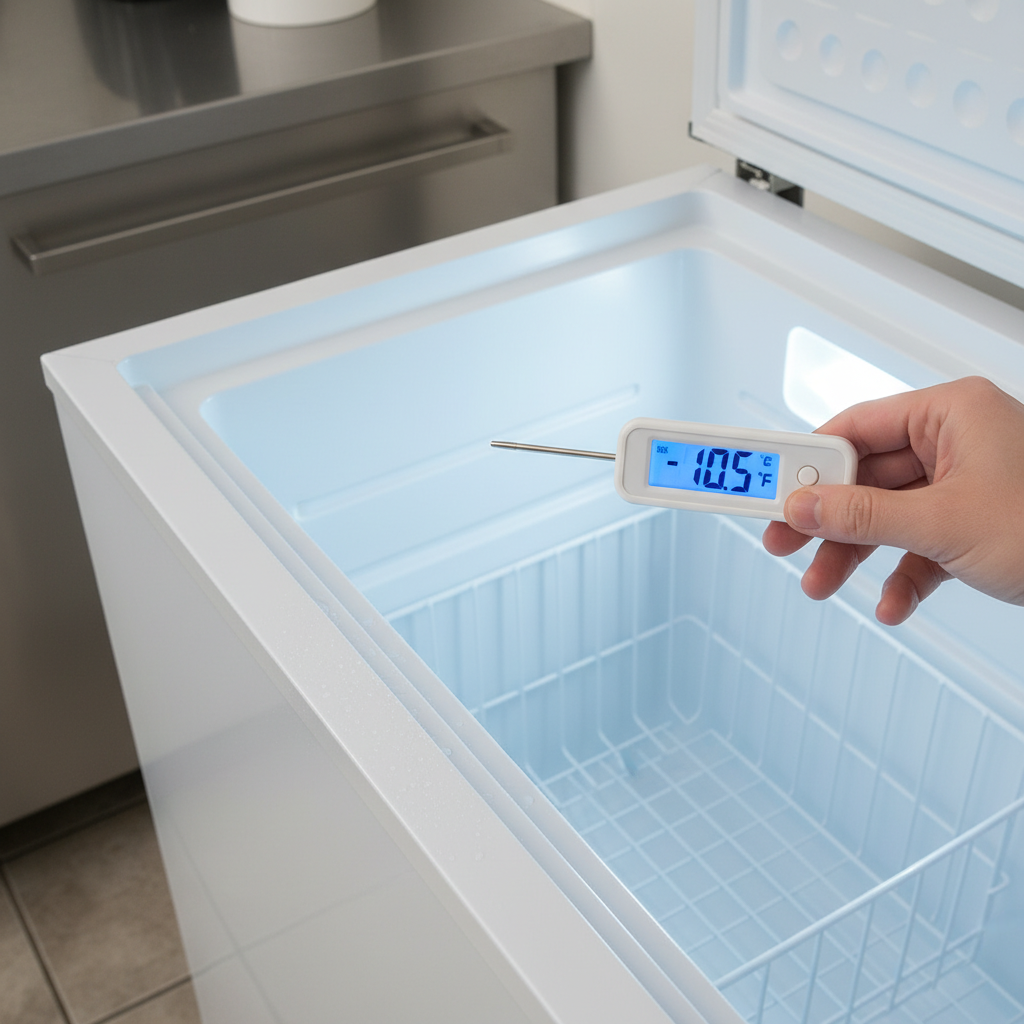
Your freezer’s job is to preserve, and that requires a consistent, correct temperature. The FDA recommends keeping your freezer at 0° F (-18° C) or below. Don’t rely on the built-in dial, which can be inaccurate. Invest a few dollars in a reliable, independent freezer thermometer. Place it inside and check it regularly. A stable, low temperature is your number one defense against bacterial growth and the cellular degradation that causes freezer burn. Fluctuating temperatures are the enemy of nutrient preservation.
Step 3: Mastering FIFO (First-In, First-Out)
This is the cardinal rule of inventory management, and it’s critical for raw food. The concept is simple: the oldest food gets used first. A disorganized freezer makes this impossible, leading to forgotten packages that expire in the icy depths. Every organizational decision you make from this point forward must support the FIFO principle. When you add new food, it must go to the back or bottom, forcing the older food to the front or top where it will be grabbed first. This single habit will drastically reduce waste and ensure your dog is always eating food at its peak quality.
The Arsenal: Essential Tools for a Hyper-Organized System
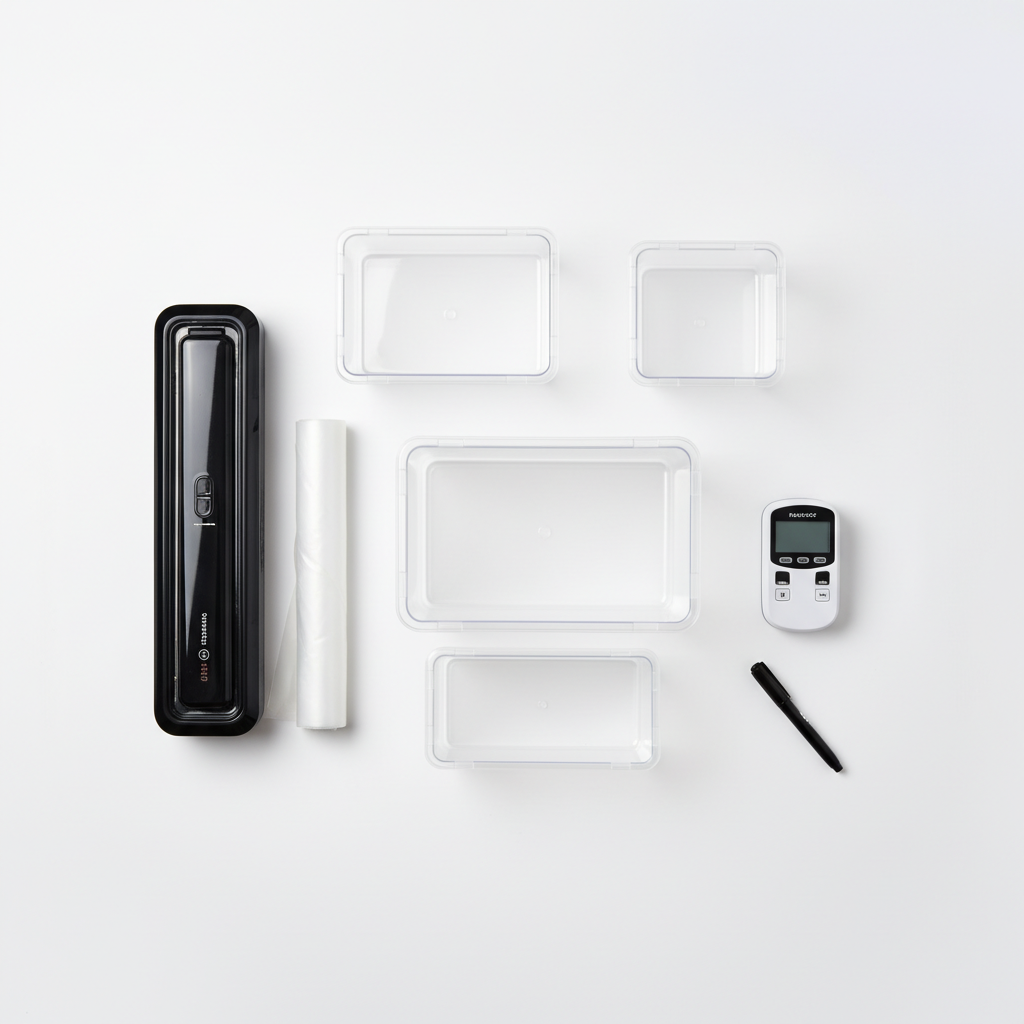
The right tools are an investment, not an expense. They are the hardware that runs your organizational software. Skimping here will only lead to cracked bins and frustration. Here is the insider’s toolkit for building a bulletproof system:
- Clear, Stackable Freezer-Grade Bins: ‘Freezer-grade’ is key. Regular plastic becomes brittle and will crack at low temperatures. ‘Clear’ is non-negotiable for at-a-glance inventory checks. Choose rectangular or square bins with straight sides to maximize space—avoid tapered designs. Measure your freezer’s interior dimensions before you buy.
- A Quality Vacuum Sealer: This is the single best investment for a raw feeder. A vacuum sealer removes air, the primary culprit of freezer burn. It dramatically extends the shelf life and preserves the nutritional integrity of the food. It also allows you to flatten ground meat into space-saving ‘bricks,’ making them easy to stack and file.
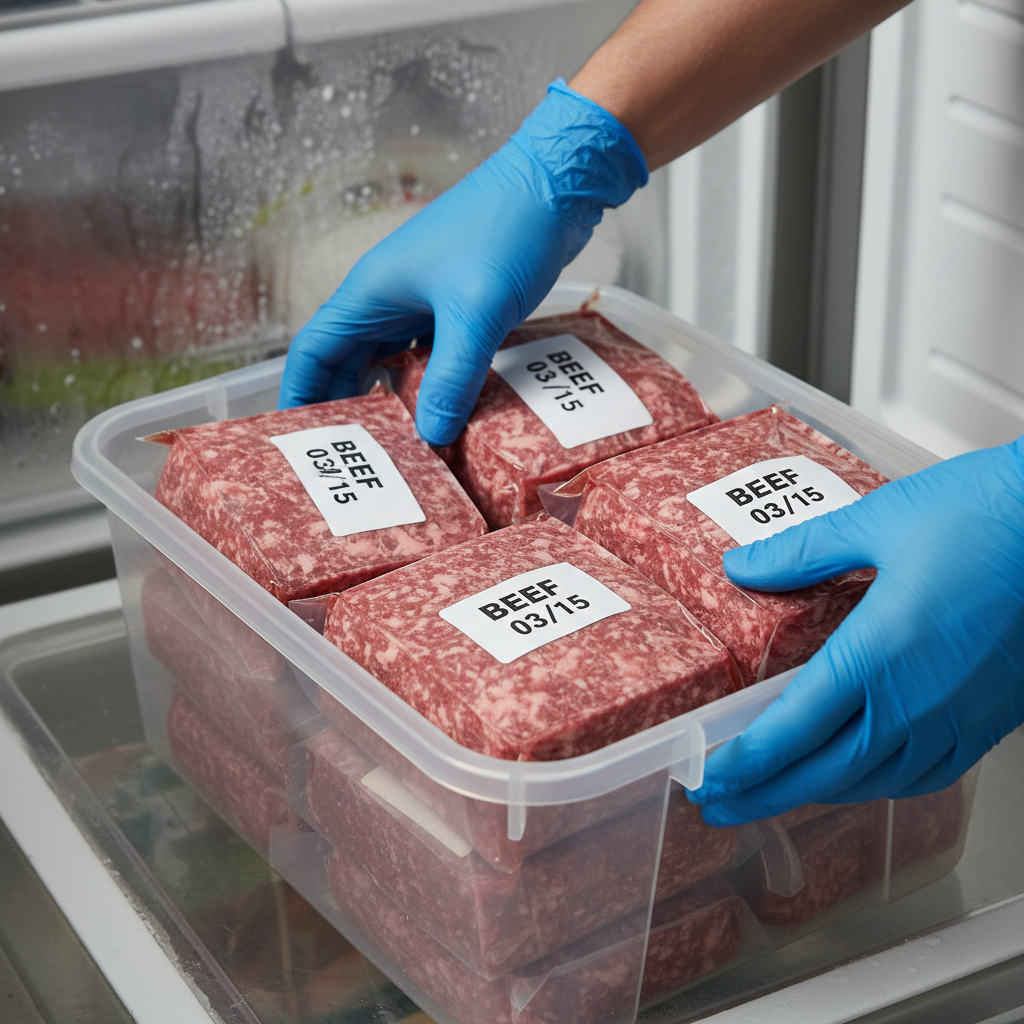
- Waterproof Labels & Permanent Markers: Your labeling system must be able to withstand moisture and frost. Standard paper labels will fall off or become illegible. Invest in a roll of waterproof freezer labels or a handheld label maker with durable tape. Every single package that enters the freezer must be labeled with two key pieces of information: the protein type and the date it was frozen.
- Reusable Silicone Bags: For smaller items like organ meats, poultry necks, or pre-portioned meals, high-quality, reusable silicone bags are excellent. They are durable, easy to clean, and reduce plastic waste. Ensure they are specifically designed for freezer use to prevent cracking.
Hacker Tip: Before you buy a single bin, create a paper template of your freezer’s floor. Use this to map out different bin configurations to find the most space-efficient layout. You’ll be surprised how much wasted space you can eliminate with proper planning.
The Blueprint: Strategic Systems for Raw Food Storage
With a clean freezer and the right tools, it’s time to implement a system. The ‘best’ system depends on your purchasing habits and meal prep style. The key is to choose one and stick to it. Consistency is what separates a temporarily tidy freezer from a permanently organized one.
Method 1: The Bulk ‘By Protein’ System
This method is ideal for those who buy in bulk from co-ops or local farms. The freezer is zoned by animal protein. All beef is in one large bin, all chicken in another, and so on. This makes it incredibly easy to see when you’re running low on a specific protein and need to reorder. It’s a macro-level organization system that simplifies inventory management. Within each protein bin, you still must practice FIFO, placing new packages at the bottom.
Method 2: The ‘Ready-to-Feed’ System
This system is for the owner who prioritizes daily convenience. You dedicate a meal prep session (e.g., Sunday afternoon) to portioning out meals for the week or even the month. Each portion—containing the correct ratio of muscle meat, bone, and organ—is packed into a container or bag. These ready-made meals are then organized by date. You can have a ‘This Week’ bin for easy access and a ‘Future Weeks’ section for longer-term storage. This method requires more upfront work but makes daily feeding as simple as grab-and-thaw.
Which system is right for you? Let’s break it down.
| Feature | ‘By Protein’ System | ‘Ready-to-Feed’ System |
|---|---|---|
| Best For | Bulk buyers, multiple dogs | Busy owners, single dogs, precise portion control |
| Upfront Time | Low (just label and file) | High (requires dedicated prep sessions) |
| Daily Time | Higher (must assemble meals daily) | Very Low (just grab and thaw) |
| Space Efficiency | Excellent for uniform bulk packages | Can be less efficient with odd-sized containers |
| Verdict | Maximum bulk storage efficiency. | Maximum daily convenience. |
Insider Secret: Use color-coding to supercharge your system. Assign a color to each protein (e.g., red labels for beef, yellow for chicken, blue for fish). A quick glance is all you need to identify contents, even if a bin is frosted over. You can use colored tape, labels, or even colored bin lids.
The Economic Edge: How Organization Slashes Your Raw Feeding Costs
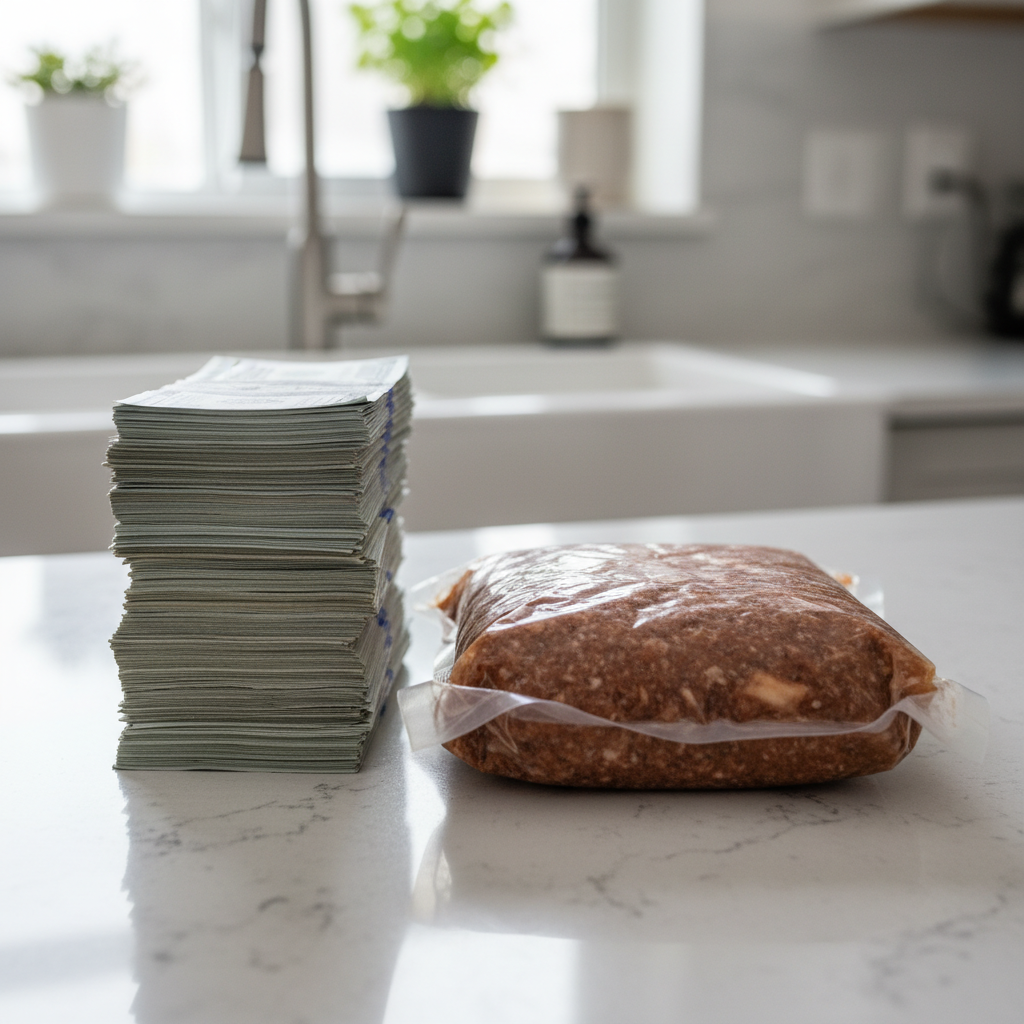
A meticulously organized freezer is a financial tool. The initial investment in bins and a vacuum sealer pays for itself by eliminating the two biggest budget-killers for raw feeders: food waste and missed opportunities for bulk purchasing.
Eliminating ‘Freezer Burn’ Waste
Freezer burn occurs when moisture sublimates from the food’s surface, leaving it dry, tough, and nutrient-depleted. It’s caused by improper packaging and temperature fluctuations. A vacuum sealer and a stable freezer temperature virtually eliminate this problem. When you find a forgotten, frost-covered package of meat at the bottom of a chaotic freezer, you’re throwing money directly into the trash. Preventing even a small amount of waste adds up significantly over a year.
Unlocking Bulk Buying Power
The single most effective way to lower your raw feeding cost is to buy in bulk. But you can’t capitalize on a 40lb case of chicken quarters if you have no space to store it. An organized system, especially one using vacuum-sealed flat packs, maximizes every square inch of your freezer. This gives you the capacity and confidence to take advantage of sales, co-op deals, and end-of-day butcher markdowns without fear of waste.
Let’s analyze the potential savings for a 50lb dog.
| Metric | Disorganized Freezer | Organized Freezer System |
|---|---|---|
| Purchase Strategy | Small, frequent retail purchases | Strategic bulk purchases during sales |
| Avg. Cost/lb (Ground Beef) | $5.50 | $3.75 (bulk price) |
| Estimated Food Waste | 15% (due to freezer burn/forgotten items) | <2% (due to FIFO and vacuum sealing) |
| Effective Cost/lb | ~$6.33 | ~$3.82 |
| Approx. Monthly Cost | $190 | $115 |
| Annual Savings | – | Up to $900 |
The numbers don’t lie. The discipline of organization directly translates into hundreds, or even thousands, of dollars in annual savings. It transforms raw feeding from an expensive endeavor into a financially sustainable one.
Maintaining the Matrix: Long-Term Upkeep and Inventory Management
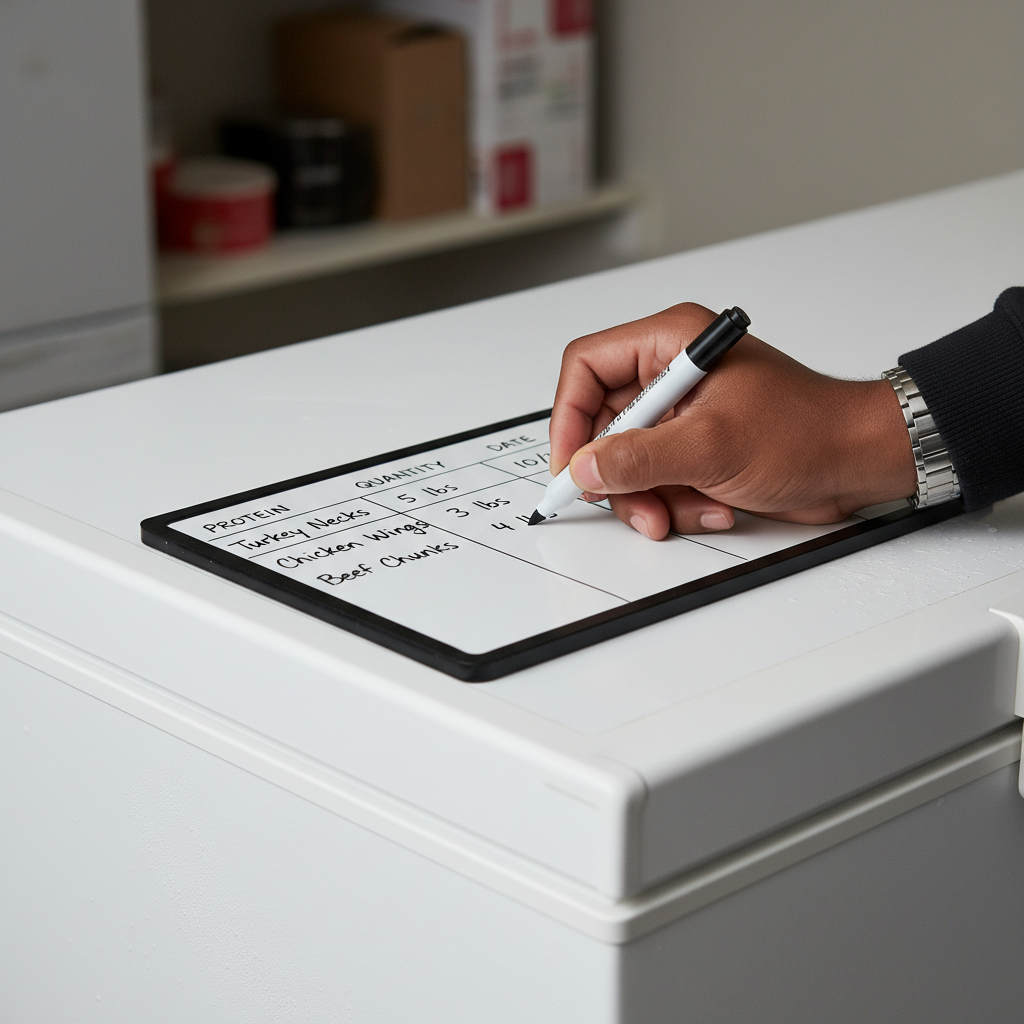
Your perfect system will degrade into chaos without a simple maintenance routine. An organized freezer is not a ‘set it and forget it’ project. It requires a small, consistent effort to maintain its efficiency and aesthetic appeal.
The Inventory Whiteboard
The most effective tool for long-term management is an inventory list kept outside the freezer. A simple magnetic whiteboard on the freezer lid is perfect. Create columns for ‘Protein,’ ‘Cuts/Type,’ ‘Quantity (lbs),’ and ‘Date Frozen.’ When you add food, you add a line. When you take food out to thaw, you update or erase a line. This ten-second habit provides a real-time overview of your stock, preventing you from buying things you already have and ensuring you know exactly what’s on hand for meal planning.
The Quarterly Audit
Once per quarter, perform a quick audit. This doesn’t have to be a full empty-and-clean session. Simply take 15 minutes to pull out each bin, check the dates on the packages at the bottom, and ensure your physical inventory matches your whiteboard list. This is your chance to catch any items that may have been missed in the rotation and move them to the top for immediate use. It’s a simple check-up that prevents small organizational drifts from becoming major avalanches of chaos.
Hacker Tip: Use your phone’s camera. Before a big shopping trip, snap a quick photo of your inventory whiteboard. Now you have your entire freezer’s contents in your pocket at the grocery store or butcher, allowing you to make smart, informed purchasing decisions on the fly.
This ongoing process of tracking and auditing is what separates the amateurs from the pros. It’s the final piece of the puzzle that ensures your freezer remains a high-performance asset, not a chaotic liability.
Conclusion
Transforming your chest freezer from a chaotic ice pit into an aesthetic and functional masterpiece is more than a satisfying project—it’s a strategic imperative for any serious raw feeder. This is not about superficial beauty; it is the physical manifestation of an efficient, cost-effective, and safe nutritional program for your canine companion. By implementing these foundational principles, utilizing the right tools, and committing to a system of maintenance, you seize complete control. You eliminate waste, you slash your budget, and you guarantee that the food you serve is always of the highest quality. You are no longer just a dog owner; you are the savvy, empowered manager of your dog’s health—the ultimate Canine Nutrition Hacker.