
Elk vs. Deer Antlers: Which Chew is Safer for Dogs?
Walk down any pet supply aisle, and you’re bombarded with options. Among the sea of plastic toys and processed treats, antlers stand out as a primal, natural solution for a dog’s innate need to chew. They’re long-lasting, odor-free, and touted as the perfect dental chew. But this is where most pet owners make a critical mistake. They assume all antlers are created equal. They are not.
The choice between elk and deer antlers isn’t a matter of preference; it’s a crucial decision impacting your dog’s dental safety. One carries a significantly higher risk of causing catastrophic, painful, and expensive tooth fractures. As the Canine Nutrition Hacker, my job is to look past the marketing and analyze the raw data. We’re going to put these two popular chews under the microscope to expose the hidden dangers and empower you to make the safest choice for your companion.
MEDICAL DISCLAIMER: I am a canine nutrition analyst, not a veterinarian. The information in this article is for educational purposes only and is based on extensive research into the physical properties of these chews. Every dog is an individual with unique dental health and chewing habits. Always consult with your veterinarian before introducing any new hard chew, especially antlers, to your dog’s routine.
The Antler Anatomy Showdown: A Lesson in Biomechanics
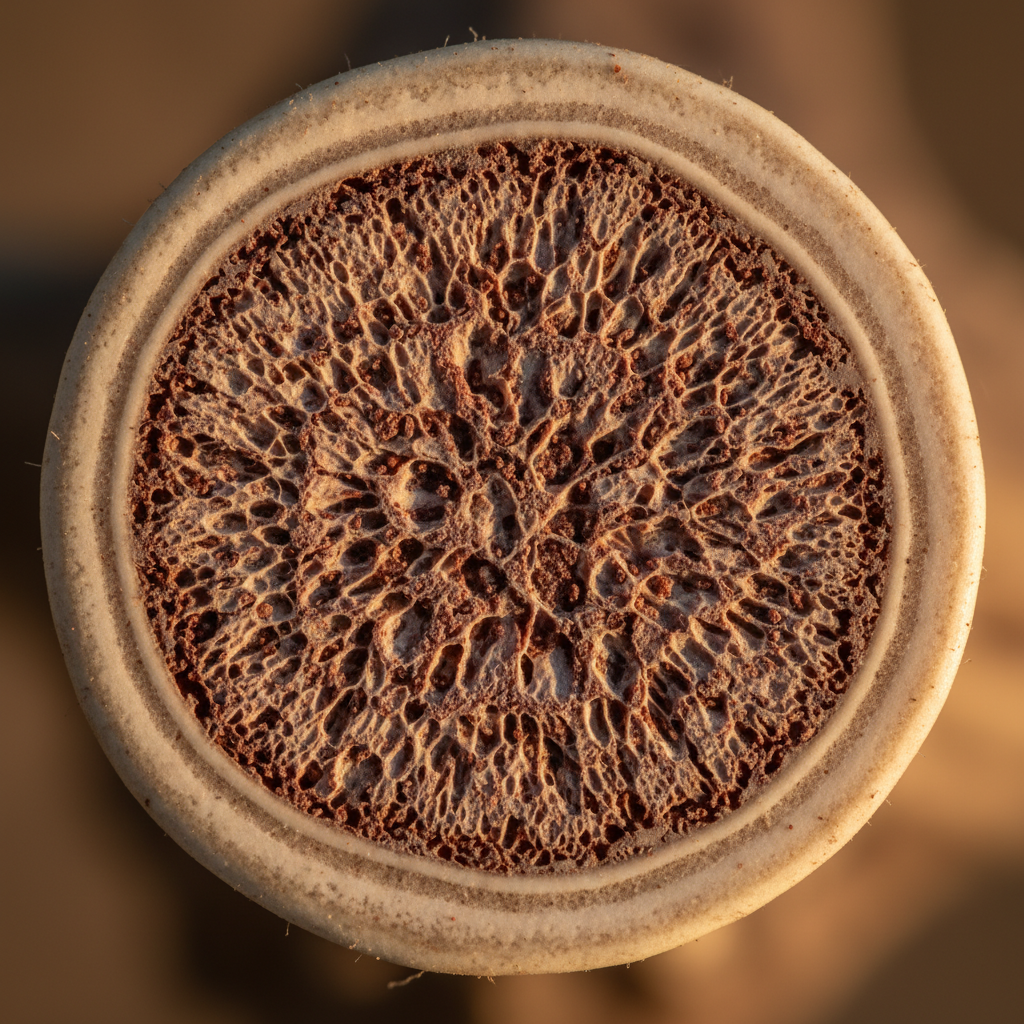
To understand the risk, you first need to understand the structure. An antler isn’t just a solid piece of bone. It’s a complex, composite material designed by nature for combat and display, not for chewing. It consists of two primary parts:
- The Calcified Exterior: This is the outer layer. It’s an incredibly dense, compact bone structure. Think of it as a hard, protective shell. This is the part that poses the greatest risk to your dog’s teeth.
- The Spongy Marrow Core: The interior of the antler is a porous, honeycomb-like structure rich in minerals and nutrients. This is the ‘prize’ your dog is trying to access. It’s softer, more palatable, and the primary reason dogs find antlers so appealing.
The entire safety debate between elk and deer antlers hinges on the ratio and density of these two components. A safe chewing experience involves the dog gradually grinding down the hard exterior to access the rewarding marrow inside. A dangerous one involves a dog applying too much force against an unyielding exterior, resulting in the tooth breaking before the antler does. It’s a simple battle of physics, and your dog’s tooth enamel is often the loser.
The Forensic Analysis: Deer Antlers
The Hard-Hitting Contender
Deer antlers, typically from whitetail or mule deer, are the most common type found in pet stores. They are visually appealing—often stark white or grey—and feel incredibly solid. This solidity is precisely the problem.
Density and Hardness
Deer antlers are, on average, significantly denser and harder than elk antlers. Their outer bone layer is thicker, and the marrow core is comparatively smaller. This density means they yield very little under pressure. When a powerful chewer clamps down on a solid deer antler, there is no ‘give’. The force is transferred directly back into the tooth.
The Unacceptable Risk of Tooth Fractures
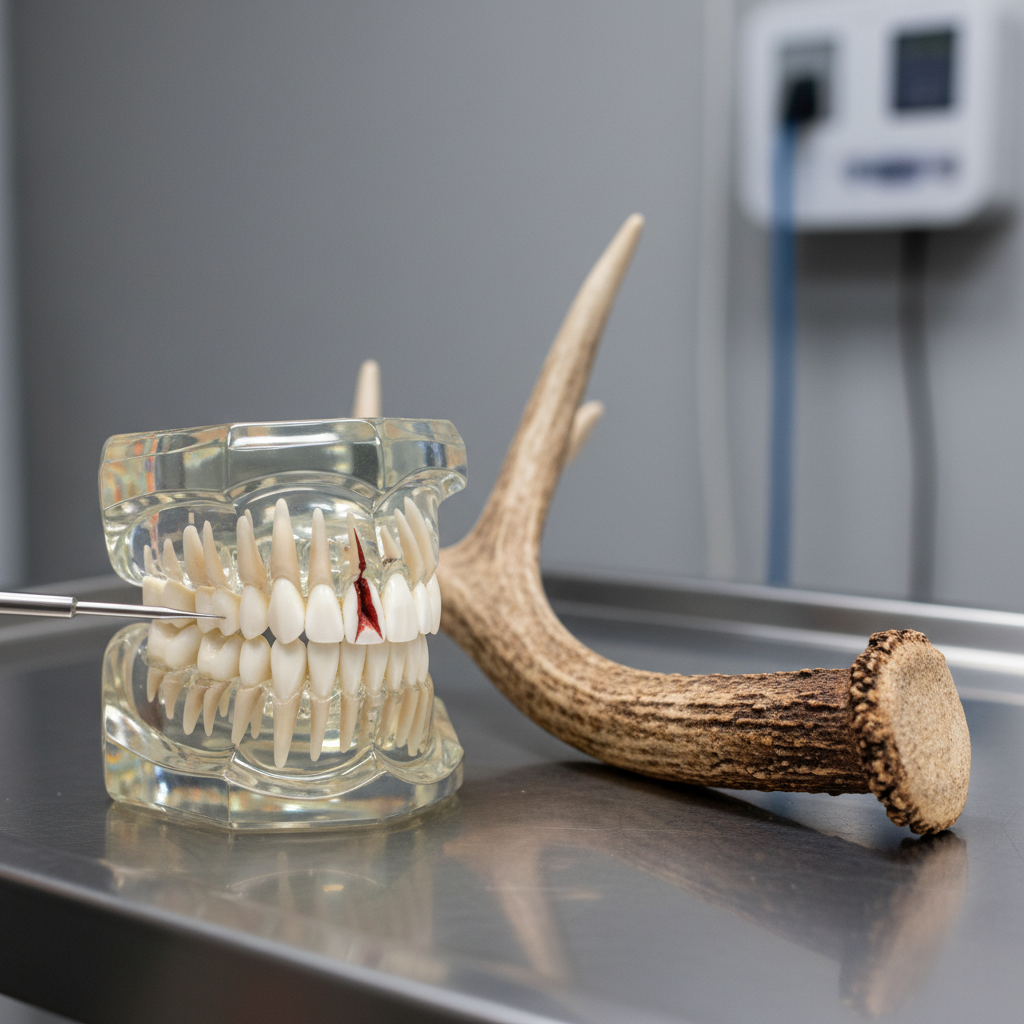
Veterinary dentists consistently warn against chews that are too hard, and deer antlers are a primary offender. The most common injury is a painful slab fracture of the upper fourth premolar (the large chewing tooth on the side). This happens when the sharp cusp of the tooth comes down on the hard antler surface, and a piece of the tooth shears off, often exposing the sensitive pulp. This is not a minor chip; it’s a serious injury requiring veterinary intervention, often extraction or a root canal, costing hundreds or even thousands of dollars.
Insider Secret: Many vets use a simple rule called the ‘thumbnail test.’ If you cannot make an indentation in a chew with your thumbnail, it is too hard for your dog’s teeth. A deer antler will fail this test 100% of the time.
Splintering and Choking Hazards
Because of their brittle nature, deer antlers don’t just wear down; they can crack and splinter, creating sharp shards that can damage a dog’s mouth, throat, or digestive tract. While less common than tooth fractures, it remains a significant risk.
The Forensic Analysis: Elk Antlers
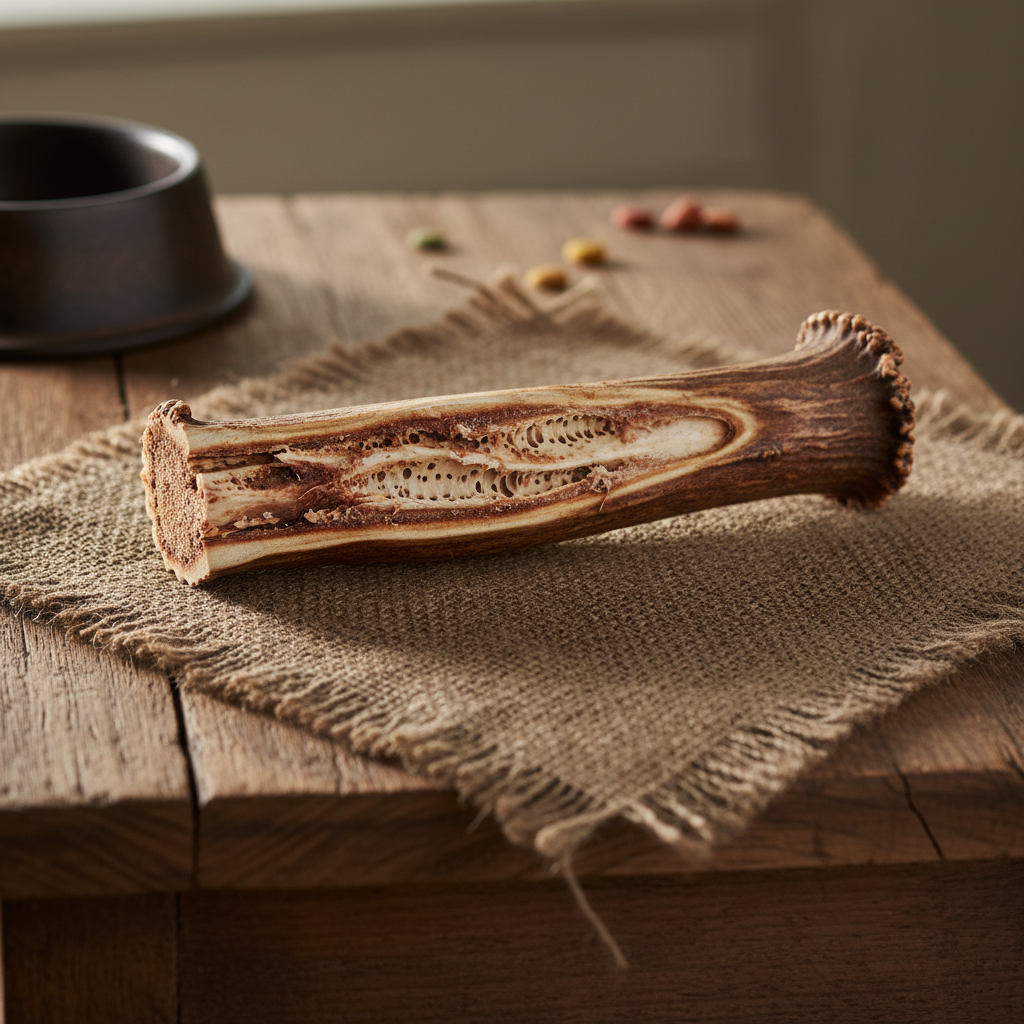
The Safer, Softer Alternative
Elk are much larger animals than most deer, and their antlers reflect this. They are larger, more robust, and, critically, have a different internal structure. This structural difference is the key to their superior safety profile.
A Softer Core and a Better Ratio
Elk antlers have a significantly higher ratio of soft, porous marrow to hard outer bone. While the exterior is still hard, it is generally less dense and more brittle in a way that allows it to be worn down rather than acting as an anvil against your dog’s teeth. This composition makes the entire chew slightly more forgiving under pressure, reducing the direct force applied to the teeth.
The ‘Split’ Advantage: A Game-Changing Secret
The single most important factor making elk antlers safer is the availability of ‘split’ antlers. A split antler has been cut lengthwise, immediately exposing the desirable marrow core. This is a crucial modification that changes how a dog interacts with the chew.
- It removes the initial challenge: The dog doesn’t need to apply extreme force to crack through the hardest outer layer.
- It encourages licking and scraping: With the marrow exposed, dogs are more likely to spend time licking, scraping, and gently gnawing at the prize, rather than trying to break the chew in half with a powerful bite.
- It’s a better entry point: For dogs new to antlers or for moderate chewers, a split elk antler provides all the long-lasting benefits without the high-impact dental risk.
Hacker Tip: Always choose a split elk antler over a whole one, especially for a dog you’d classify as an ‘aggressive’ or ‘power’ chewer. You are essentially giving them a ‘cheat code’ to the best part of the chew, which in turn protects their teeth.
The Canine Hacker’s Antler Safety Protocol
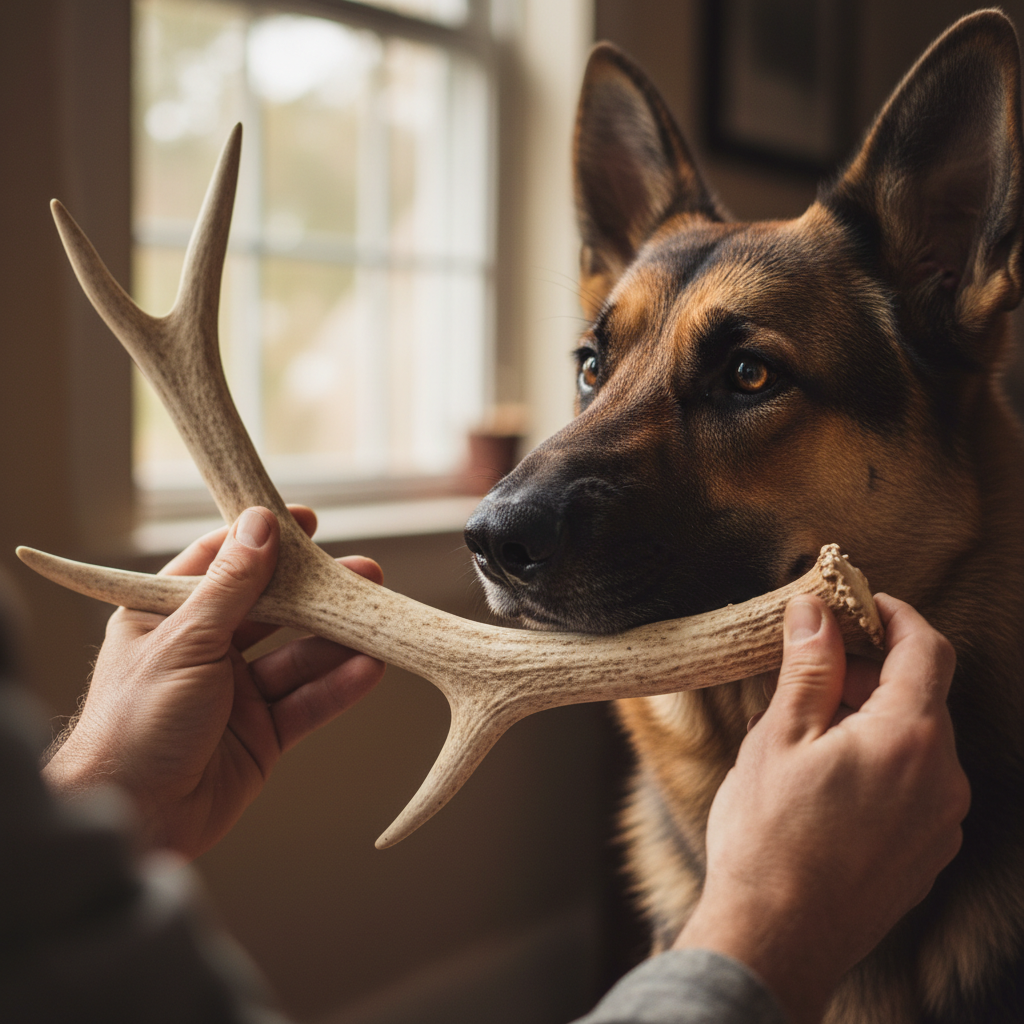
Choosing elk over deer is the first step, but it’s not the last. No natural chew is without risk. Adhering to a strict safety protocol is non-negotiable to prevent choking, blockages, and dental damage. These are my hard-and-fast rules.
Rule #1: Sizing is Everything
The most common mistake is buying an antler that is too small for the dog. The antler must be large enough that it cannot possibly fit entirely inside your dog’s mouth or be swallowed. A good rule of thumb is to choose an antler that is longer than your dog’s muzzle. When in doubt, always size up. A small antler is a serious choking hazard.
Rule #2: Supervise Every Chew Session
Antlers are not ‘babysitter’ chews. Never leave your dog unattended with an antler. You need to be present to observe their chewing style. Are they calmly gnawing and scraping, or are they trying to crack it with a full-force bite? If you see aggressive, high-force chewing, remove the antler immediately. Your presence allows you to intervene before an injury occurs.
Rule #3: Know When to Throw It Away
An antler must be discarded when it has been worn down to a size that could be swallowed. This ‘nub’ is a prime candidate for causing an intestinal blockage, which is a life-threatening emergency. Once the antler is small enough to be a choking or blockage risk, its job is done. Throw it out.
Rule #4: Check Your Dog’s Teeth
After a chew session, take a moment to look inside your dog’s mouth. Check their teeth and gums for any signs of bleeding or damage. Early detection of a small chip can prevent it from becoming a major fracture later on.
Head-to-Head: The Final Verdict

When all the evidence is laid out, the conclusion is clear. While individual dogs and chewing styles vary, one type of antler presents a statistically lower risk profile. This table breaks down the final analysis.
| Feature | Deer Antler | Elk Antler | The Hacker’s Verdict |
|---|---|---|---|
| Hardness / Density | Extremely High | Moderately High | Elk antlers have a slightly more forgiving density, reducing direct impact force on teeth. |
| Dental Fracture Risk | Very High | Moderate (Significantly lower with split antlers) | The high density of deer antlers makes them a leading cause of slab fractures. Split elk antlers are the clear winner for safety. |
| Marrow-to-Bone Ratio | Low | High | Elk antlers offer a better ‘reward’ of nutrient-rich marrow, encouraging less aggressive chewing. |
| Best For Chewer Type | Moderate, gentle gnawers ONLY. Not for power chewers. | Suitable for a wider range of chewers, especially when split. | Elk antlers, particularly split ones, are a more versatile and safer option for most dogs. |
| Overall Safety Score | 2 / 10 | 7 / 10 (8/10 for Split) | Elk antlers are the demonstrably safer choice. The risk associated with deer antlers is too high to recommend for the vast majority of dogs. |
Conclusion
The natural chew market is a minefield of clever marketing and hidden dangers. While antlers can be a fantastic, long-lasting chew, the choice between deer and elk is not one to be taken lightly. The evidence is overwhelming: the extreme hardness and density of deer antlers pose an unacceptable risk of severe dental trauma for most dogs. The potential for a multi-thousand-dollar vet bill and significant pain for your dog simply isn’t worth it.
Elk antlers, especially those sold split, offer a much safer alternative. Their higher marrow ratio and more forgiving structure encourage a healthier chewing style, reducing the risk of fracture. By combining this superior product choice with the mandatory rules of the Canine Hacker’s Antler Safety Protocol—correct sizing, constant supervision, and knowing when to discard the chew—you can provide your dog with the satisfying experience they crave without gambling with their health.
Your responsibility as a pet owner is to be your dog’s advocate. Analyze, question, and always prioritize safety over convenience. And remember, the final and most important consultation should always be with your veterinarian.