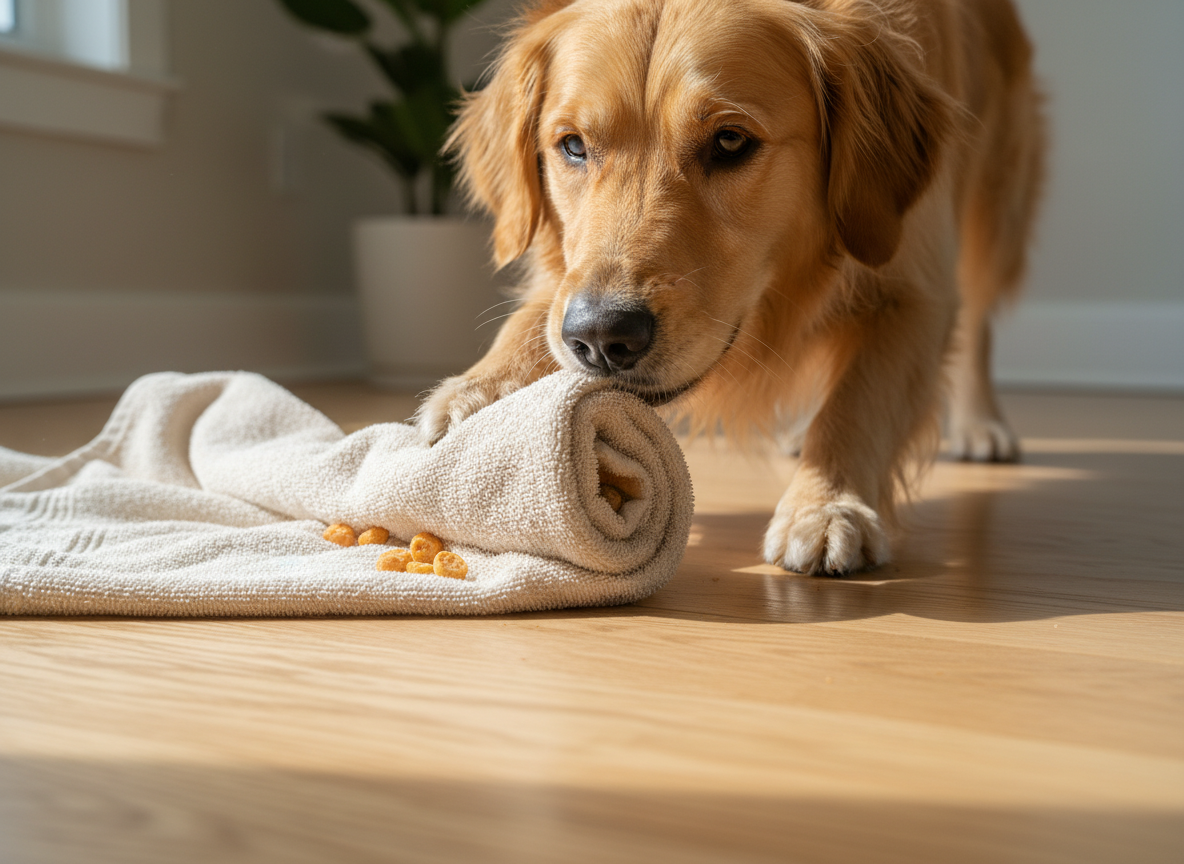
DIY Towel Roll Puzzle: The Easiest Brain Game for Bored Dogs
You see the signs: the chewed-up shoe, the incessant barking, the frantic energy when you walk in the door. You’ve been told a tired dog is a good dog, so you walk them, you run them, you throw the ball until your arm aches. Yet, the destructive behavior continues. Why? Because you’re overlooking your dog’s most powerful and neglected asset: its brain.
I’m The Canine Nutrition Hacker. I’m known for dissecting ingredient labels and exposing the multi-billion dollar pet food industry’s secrets. But hacking your dog’s well-being goes beyond the food bowl. It’s about a total-system approach to health, and that includes their mental state. A bored dog is an unhappy dog, and an unhappy dog is a destructive one. The industry’s solution? Expensive, plastic puzzle toys that often end up collecting dust.
My solution? A 60-second, zero-cost brain game using an item you already own. Forget the retail markups and the flimsy gadgets. This is the ultimate hack for canine boredom. It’s time to stop just exercising your dog’s body and start engaging their mind. This guide will show you how.
The Hidden Cost of Canine Boredom
Why Your Dog’s Brain is Your Most Overlooked Asset
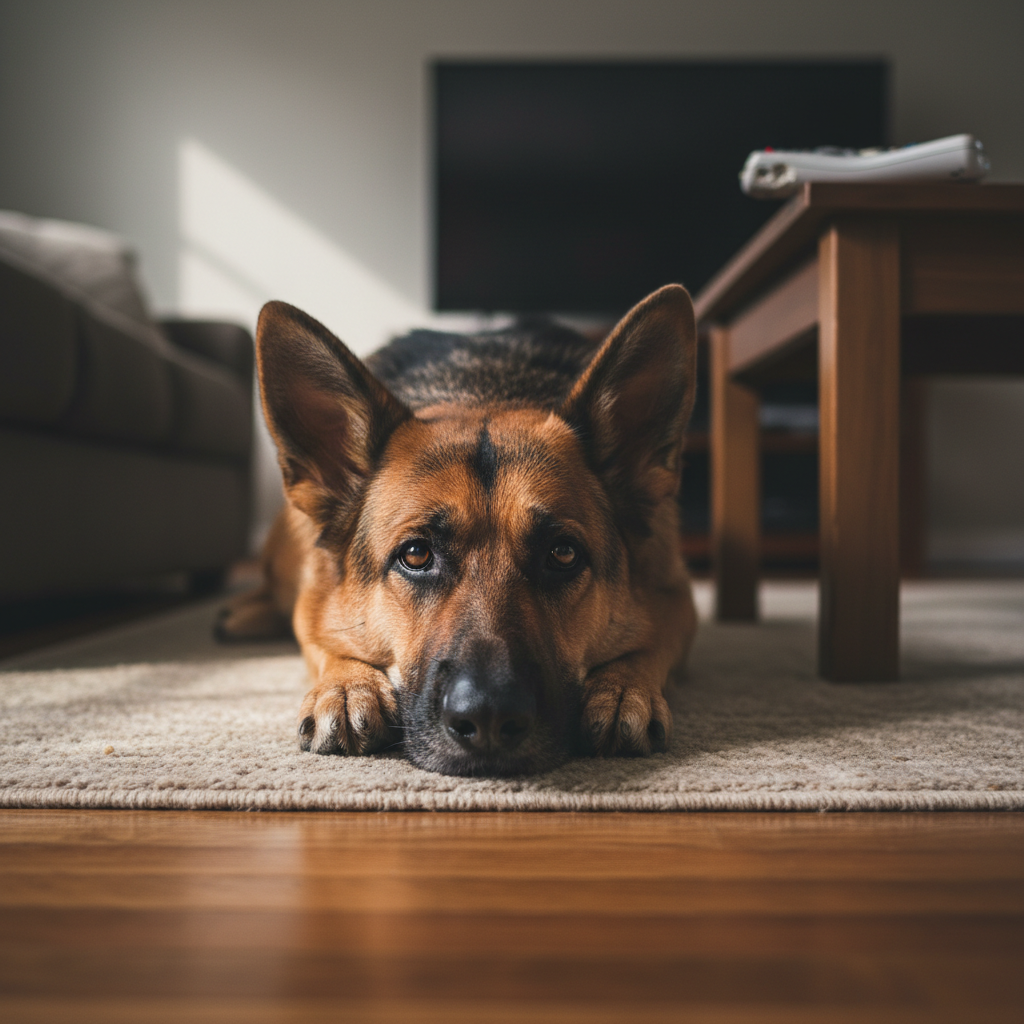
Let’s get one thing straight: your dog is not a furry robot that just needs food, water, and walks. They are highly intelligent creatures, descended from cunning predators whose survival depended on problem-solving. We’ve bred them to live in our homes, but we haven’t bred out their innate need to think. When that cognitive drive has no outlet, it manifests in ways we label as ‘bad behavior’.
Canine boredom isn’t just a state of inactivity; it’s a state of chronic under-stimulation that can lead to serious issues:
- Destructive Behavior: Chewing furniture, digging in carpets, and shredding mail are often not acts of malice, but desperate attempts to create stimulation.
- Anxiety and Stress: A mind with nothing to do can become anxious. This can lead to separation anxiety, compulsive behaviors like tail-chasing or flank-sucking, and a general state of unease.
- Nuisance Barking: Often, a dog barks at every leaf falling outside simply because it’s the most exciting thing happening. They are creating their own ‘job’.
- Depression: Yes, dogs can experience a state of lethargy and depression. Lack of engagement is a primary contributor.
Insider Secret: Many owners mistake a high-energy dog for a ‘problem dog’. In reality, you likely have a highly intelligent dog that is ‘problem-bored’. The energy you see is often frustrated cognitive potential. Channel it, don’t just try to exhaust it.
Mental exercise, often called enrichment, is as critical as physical exercise. Activities that allow your dog to sniff, problem-solve, and use their brain actually tire them out more effectively than a monotonous walk around the block. Sniffing for 15 minutes can be more exhausting for a dog than a 30-minute run. Why? Because it engages their most powerful sense and forces their brain to process complex information. The towel roll puzzle is a direct hack into this system.
The 60-Second Fix: Step-by-Step Instructions
The ‘Zero-Cost’ Brain Game Blueprint
Before we begin, a critical disclaimer: This is an enrichment activity, not a chew toy. You must supervise your dog at all times. The goal is for them to unroll the towel to get the food, not to shred and ingest the fabric. If your dog is a known fabric-eater, this may not be the game for them. Your first responsibility is always safety.
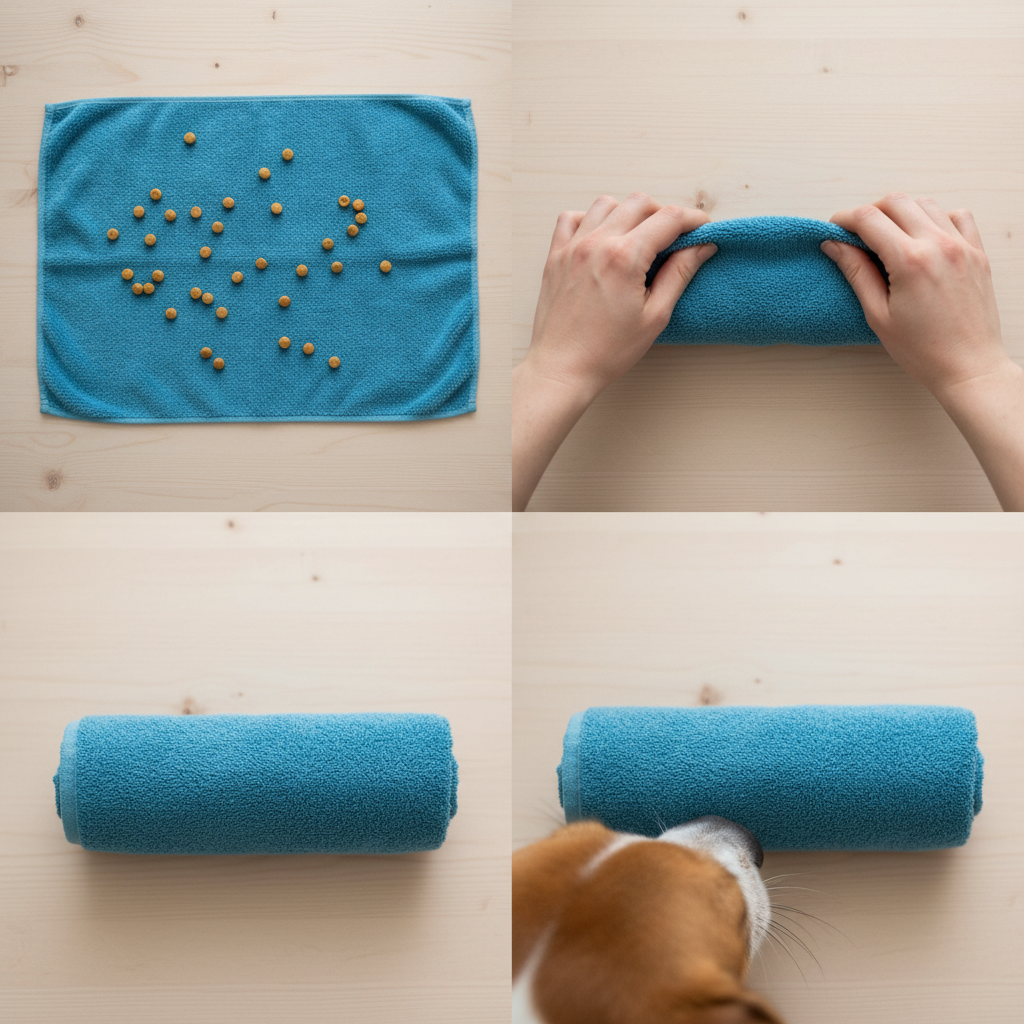
The Assembly:
- Select Your Towel: Grab a standard bath or hand towel. For your first attempt, avoid thick, plush towels which can be more difficult to manipulate. An older, thinner towel is perfect.
- Lay It Flat: Spread the towel out completely on the floor.
- Bait the Puzzle: Take a handful of your dog’s favorite treats. They should be small and highly aromatic for maximum engagement. Kibble can work, but something smellier like freeze-dried liver or small pieces of cheese is better. Sprinkle the treats evenly across the entire surface of the towel.
- The Roll-Up: Starting from one of the short ends, roll the towel up as tightly as you can. The tighter the roll, the more difficult the puzzle. For a first-timer, a slightly looser roll is advisable.
- Present the Puzzle: Place the rolled towel on the floor and give your dog a release cue like “Okay!” or “Find it!”. Let them investigate and figure it out on their own. Resist the urge to help them immediately.
Hacker Tip: The value of the reward dictates the level of motivation. Don’t use boring, everyday kibble if your dog isn’t food-motivated. Use ‘jackpot’ treats—the kind they rarely get. This elevates the game from a casual activity to a high-stakes mission in their mind.
Cost Analysis: DIY Genius vs. Retail Markups
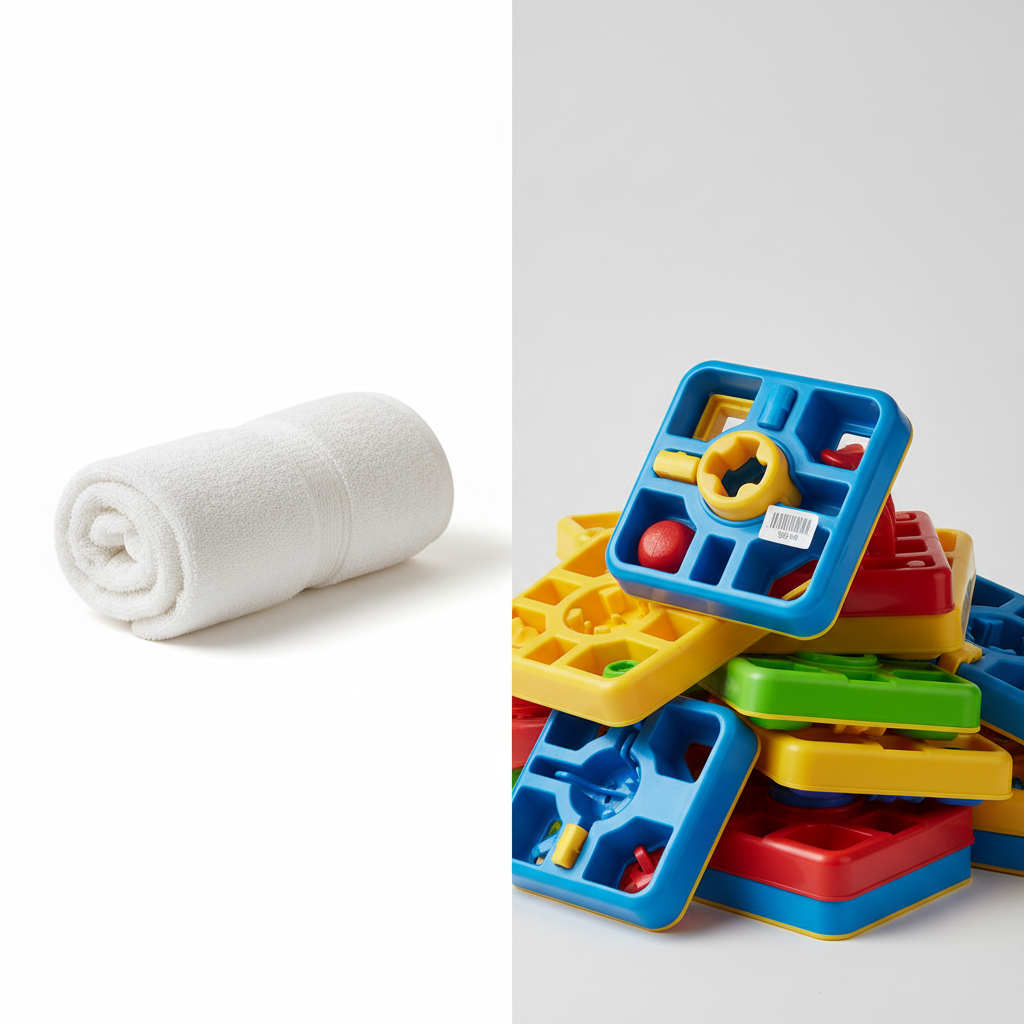
The Real Cost Breakdown: Your Wallet vs. The Pet Store
The pet product industry thrives on convincing you that you need specialized, expensive equipment for every aspect of your dog’s life. Enrichment is a booming market, with plastic puzzles and electronic gadgets fetching premium prices. But are they truly superior? Let’s break down the real-world costs and benefits.
| Puzzle Type | Average Cost | Material | Durability | Hacker Verdict |
|---|---|---|---|---|
| DIY Towel Roll | $0.00 | Cotton Towel | High (if supervised) | The ultimate no-cost entry point. Excellent for teaching the concept of ‘work-to-eat’ without any financial risk. Infinitely scalable in difficulty. |
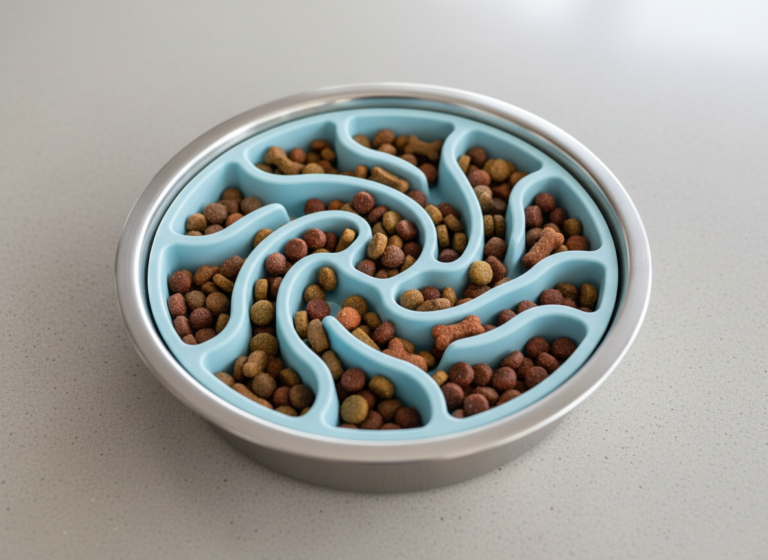
| Level 1 Plastic Puzzle (Slider) | $15 – $25 | Hard Plastic | Moderate (can be chewed/broken) | A good next step, but many dogs solve it once and then lose interest. The single solution can become boring quickly. Prone to being flipped over and brute-forced. |
| Level 3 Plastic Puzzle (Complex) | $25 – $40 | Hard Plastic/Composite | Moderate to Low | Often overly complicated for the dog (and the owner to set up). Small plastic parts can be chewed off and become a choking hazard. High price for a toy that may cause more frustration than fun. |
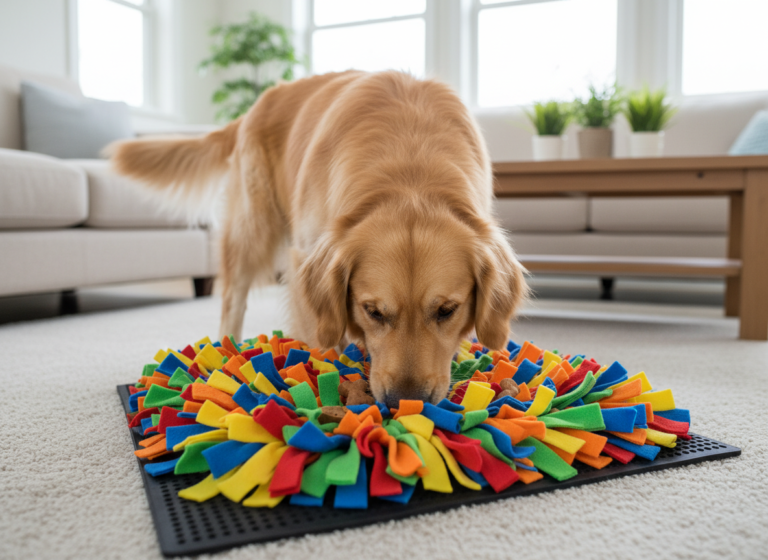
| Snuffle Mat | $20 – $50 | Fleece/Fabric | Low (easily shredded) | Excellent for promoting sniffing, but essentially a one-trick pony. Offers less problem-solving than a puzzle. Can be difficult to clean and may be destroyed by aggressive foragers. |
The analysis is clear. While store-bought puzzles have their place, they are not a prerequisite for providing quality enrichment. The DIY Towel Roll Puzzle provides the core cognitive challenge—problem-solving to access a resource—for literally zero cost. You can test your dog’s interest and aptitude without spending a dime. Mastering this simple game builds confidence and focus, creating a much better foundation for when, or if, you decide to invest in a more complex toy. Don’t pay for the plastic; invest in the principle.
Leveling Up: From Novice Nuzzler to Puzzle Pro
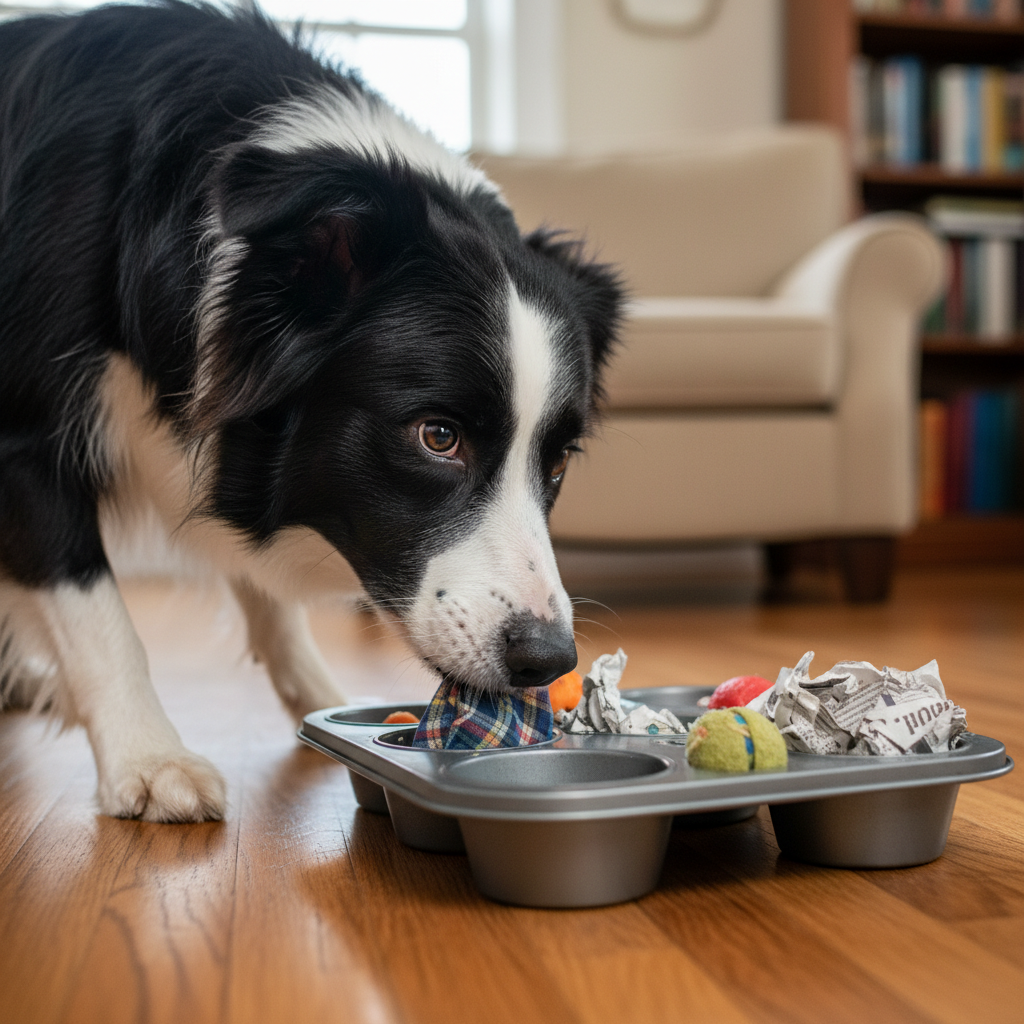
Advanced Modifications for Your Canine Einstein
Once your dog has mastered the basic roll, don’t let them get complacent. The key to effective enrichment is novelty and escalating challenge. Here is the progression plan to turn your dog from a puzzle novice into a seasoned pro.
Level 2: The Knot Challenge
Instead of just rolling the towel, tie it into a single, loose overhand knot in the middle. Don’t pull it tight. This requires the dog to not only unroll but also to manipulate the knot with their nose and paws to loosen it. It’s a significant step up in dexterity and problem-solving.
Level 3: The Muffin Tin Mashup
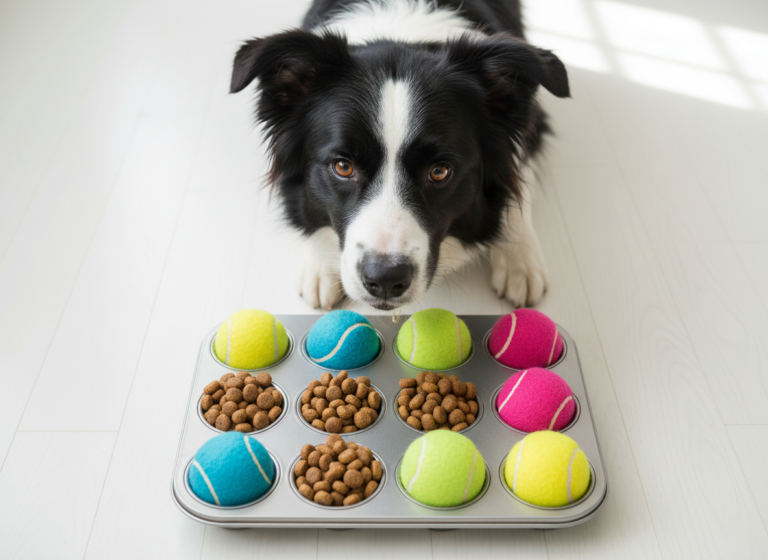
This introduces scent work in a more complex way. Cut a hand towel into smaller strips. Roll a single high-value treat into each strip, then stuff one strip into each cup of a muffin tin. Fill the empty cups with kibble or other low-value items. Your dog must now use their nose to identify the high-value cups and figure out how to pull the fabric plugs out to get the reward.
Level 4: The Box Fortress
This is the ultimate test of confidence and commitment. Prepare a standard knotted towel roll. Place it inside a small cardboard box (like a shoebox). Close the lid, but don’t seal it. Then, place that box inside a larger box, and fill the larger box with dog-safe packing material like crumpled paper or even other toys. Your dog now has to solve a multi-layered puzzle: open the big box, navigate the ‘clutter,’ open the small box, and finally, solve the towel puzzle itself.
Insider Secret: This progression isn’t just about making it harder. It’s about building ‘frustration tolerance’. In a controlled setting, allowing your dog to struggle slightly and then succeed builds resilience and confidence that translates to better behavior in everyday life.
Safety Protocols: What Every Owner MUST Know
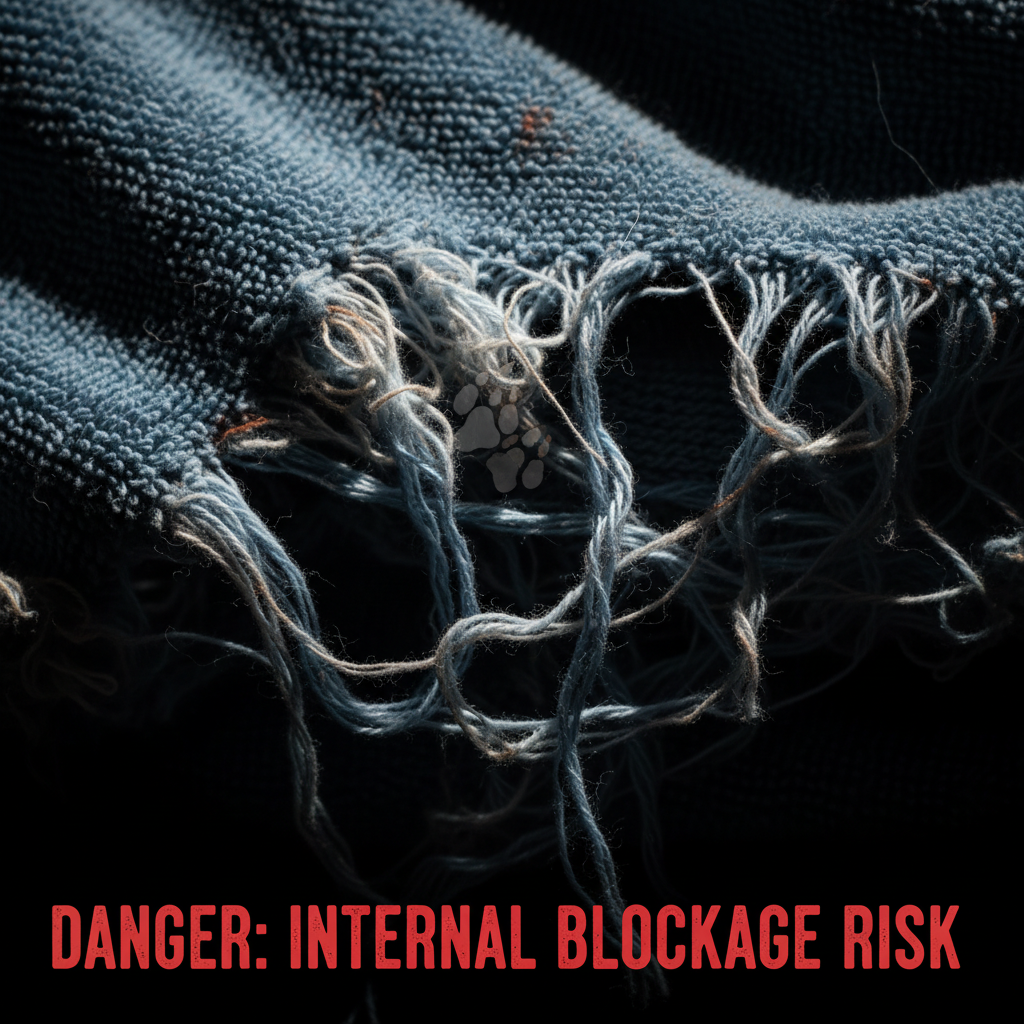
Red Flags and Critical Safety Rules
A smart owner is a safe owner. While enrichment is fantastic, it’s not without risks if you become complacent. Your primary job is to be the lifeguard, not just the game provider. Memorize these rules.
- Supervision is Non-Negotiable: This bears repeating. NEVER leave your dog unsupervised with a towel puzzle. Ingestion of cloth can lead to a fatal intestinal blockage requiring emergency surgery. When the treats are gone, the game is over. Put the towel away immediately.
- Watch for Frustration: A low growl, frantic barking, or aggressively trying to rip the towel instead of unrolling it are signs of over-stimulation and frustration. If you see this, the puzzle is too hard. Intervene calmly, help them access a treat to end on a positive note, and make it much easier next time.
- Monitor for Resource Guarding: Some dogs can become possessive over high-value items. If your dog stiffens, growls, or snaps when you approach while they are playing, you have a resource guarding issue. Do not continue this game. Contact a certified professional dog trainer or behaviorist immediately.
- Know Your Dog’s Chew Style: If you have a ‘super chewer’ that destroys every toy, a fabric puzzle might not be the right choice. You are responsible for choosing activities that are safe for your individual dog’s temperament and habits.
The goal of enrichment is to reduce stress, not create it. By following these safety protocols, you ensure that brain games remain a fun, positive, and beneficial part of your dog’s life.
Conclusion
You now possess a powerful tool that costs nothing but delivers immense value to your dog’s life. The DIY Towel Roll Puzzle is more than just a cute trick; it’s a direct line to your dog’s cognitive needs. It’s a boredom-buster, a confidence-builder, and a relationship-strengthener. It proves that providing a fulfilling life for your dog isn’t about buying the most expensive products, but about understanding their fundamental nature and finding smart, effective ways to meet their needs.
This is the core philosophy of The Canine Nutrition Hacker: empower owners with insider knowledge to cut through the marketing noise and deliver what truly matters. You’ve now hacked canine boredom. What will you hack next? Stop letting your dog’s potential lie dormant on the living room floor. Grab a towel, find some treats, and give your dog the mental challenge they’ve been craving. You can start tonight.