
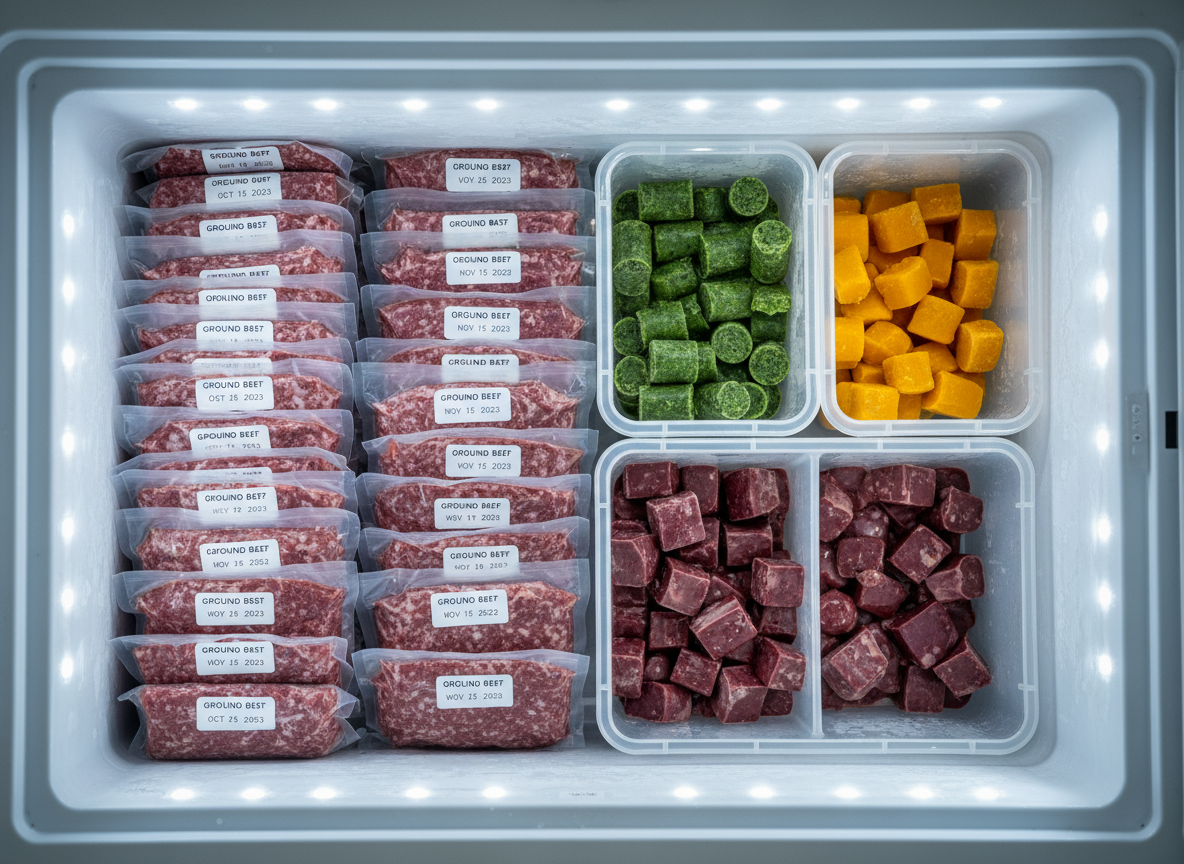
Raw Feeding Hacks: Freezer Organization for Dog Food
That overflowing, chaotic freezer is a source of stress for almost every raw feeder. It’s a jumble of mystery meats, buried containers, and the constant fear of freezer burn ruining a costly investment. You’re trying to do the best for your dog, but the disorganization is costing you time, money, and sanity. It’s time to stop guessing and start hacking the system.
I’m The Canine Nutrition Hacker, and I treat my dog’s diet with the same precision as a forensic scientist. For me, a disorganized freezer isn’t just an inconvenience; it’s a critical failure in the nutritional supply chain. It leads to waste, potential safety issues, and unnecessary expense. This guide will transform your frozen chaos into a streamlined, ruthlessly efficient system that saves you money and guarantees your dog gets the freshest, safest meal every single time.
SAFETY DISCLAIMER: I am not a veterinarian or a certified canine nutritionist. The information provided here is for educational purposes, based on extensive research and hands-on experience. Raw feeding carries inherent risks if not properly executed. Always consult with a qualified veterinary professional to ensure your dog’s diet is complete, balanced, and appropriate for their specific health needs.
The Foundation: Choosing Your Weapon in the War on Chaos
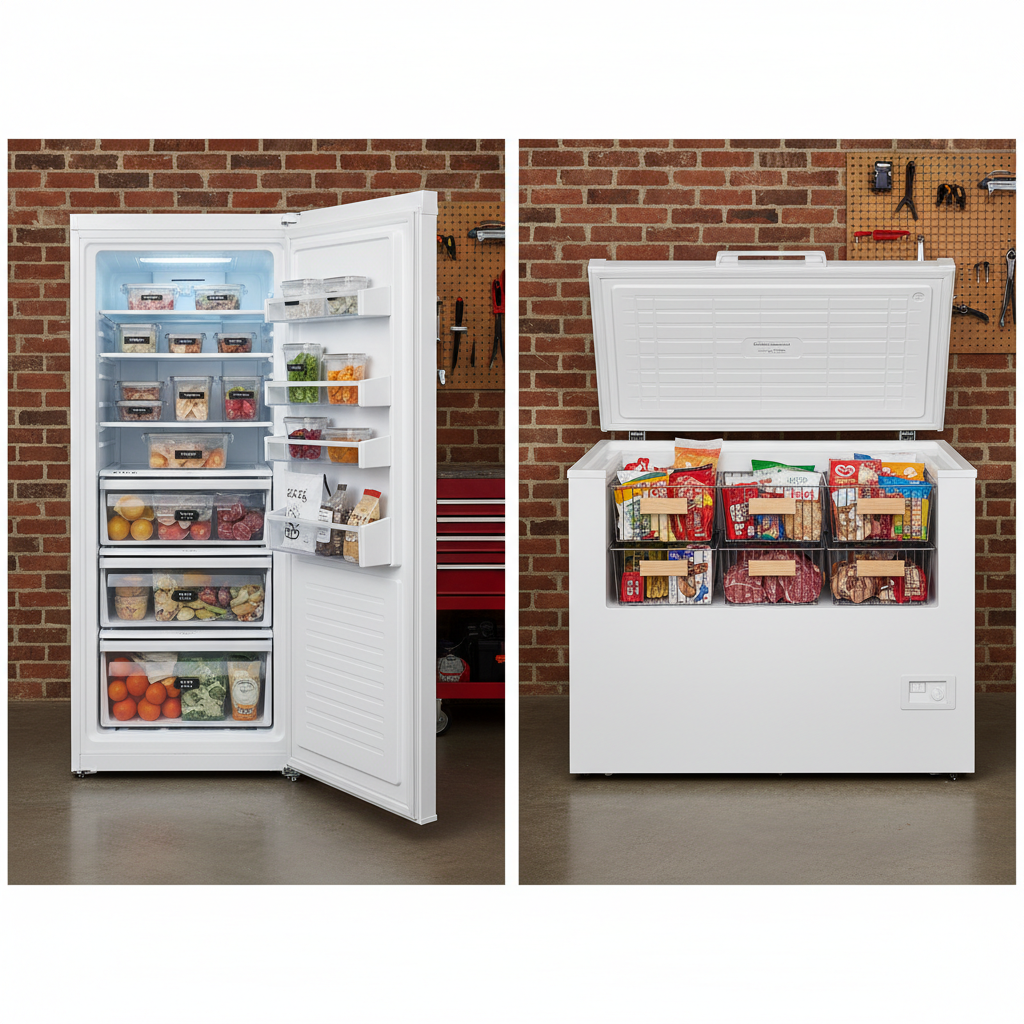
Your freezer isn’t just an appliance; it’s the command center for your dog’s entire diet. Choosing the right one is the single most important decision you’ll make in this process. The battle is typically between two contenders: the chest freezer and the upright freezer. Each has distinct strategic advantages.
The Chest Freezer: The Bulk Workhorse
This is the go-to for serious raw feeders. Its main advantage is raw, uninterrupted space. You can stack bulk purchases, accommodate awkwardly shaped items like poultry frames, and generally store more food per cubic foot. They are also more energy-efficient, as cold air doesn’t spill out every time you open the lid. The major drawback? Gravity. Without a system, items at the bottom enter a cryogenic abyss, only to be rediscovered months later, caked in freezer burn.
The Upright Freezer: The Organizer’s Dream
An upright freezer offers shelves and door storage, making it incredibly easy to see your inventory at a glance. Organization is intuitive. You can dedicate shelves to specific proteins, making meal assembly fast and simple. However, they typically have less usable storage space due to the shelving and compressor components. They can also be less energy-efficient, as the cold air rushes out when the door is opened, forcing the unit to work harder.
Hacker’s Tip: For the ultimate system, use both. A large chest freezer acts as your ‘deep storage’ for bulk buys and long-term stock. A smaller upright freezer, or even your kitchen freezer, holds the ‘active inventory’ for the next 1-2 weeks. You ‘shop’ from your deep storage once a week, keeping the daily-use freezer perfectly organized and minimizing energy loss.
When selecting a size, think long-term. A 5-7 cubic foot model might suffice for one small dog, but if you have a large breed or multiple dogs, investing in a 15+ cubic foot freezer will allow you to take advantage of bulk sales, saving you significant money over time.
The System: Ditch the Tubs, Master the Flat Pack
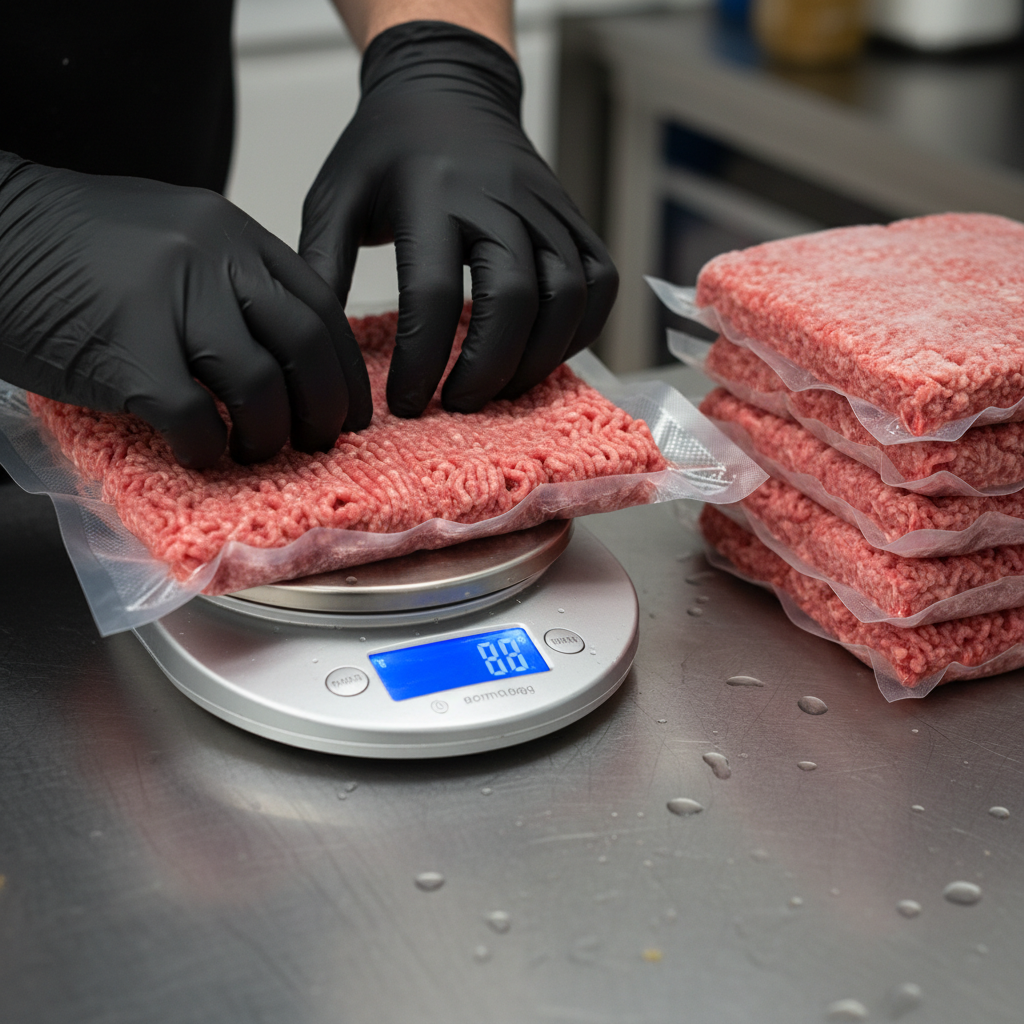
The packaging your raw food arrives in is designed for shipping, not for efficient storage. Bulky plastic tubs and loose chubs are space vampires. To win the freezer war, you must repackage everything for maximum density. The undisputed champion of this technique is the flat pack method, powered by a vacuum sealer.
By removing all the air and sealing your ground meats, organs, and mixes into thin, rectangular ‘bricks’, you achieve several critical goals:
- Space Optimization: Flat packs can be filed vertically like books or stacked horizontally with zero wasted space. You can easily double or triple the amount of food stored compared to using round containers.
- Elimination of Freezer Burn: Freezer burn is caused by air exposure. A vacuum seal removes the air, preserving the quality, taste, and nutritional integrity of the meat for much longer. This directly translates to less waste and saved money.
- Rapid, Even Thawing: A thin, flat pack thaws significantly faster and more evenly than a thick, frozen block from a tub. This means you can pull a meal from the freezer in the morning and have it ready by evening, reducing the risk of bacterial growth from prolonged thawing.
The ‘Ingredient Block’ Method for Customization
For ultimate control, don’t just freeze complete meals. Freeze your components separately. This allows you to easily adjust ratios or rotate proteins without having to thaw a massive batch of pre-mixed food.
Insider Secret: Use large, 2-inch cube silicone molds. Dedicate specific colors to specific ingredients. For example, red molds for pureed beef liver, green for your vegetable mix, and white for bone broth. Freeze the blocks, pop them out, and store them in large, labeled freezer bags. To assemble a meal, you grab one meat flat pack, one liver cube, and one veggie cube. It’s a modular system that is incredibly fast and efficient.
While a vacuum sealer is the gold standard, high-quality, thick freezer bags can work if you diligently remove as much air as possible (the water displacement method is effective here). However, the long-term investment in a vacuum sealer pays for itself quickly in prevented food waste.
The Blueprint: Zone Defense for Your Freezer
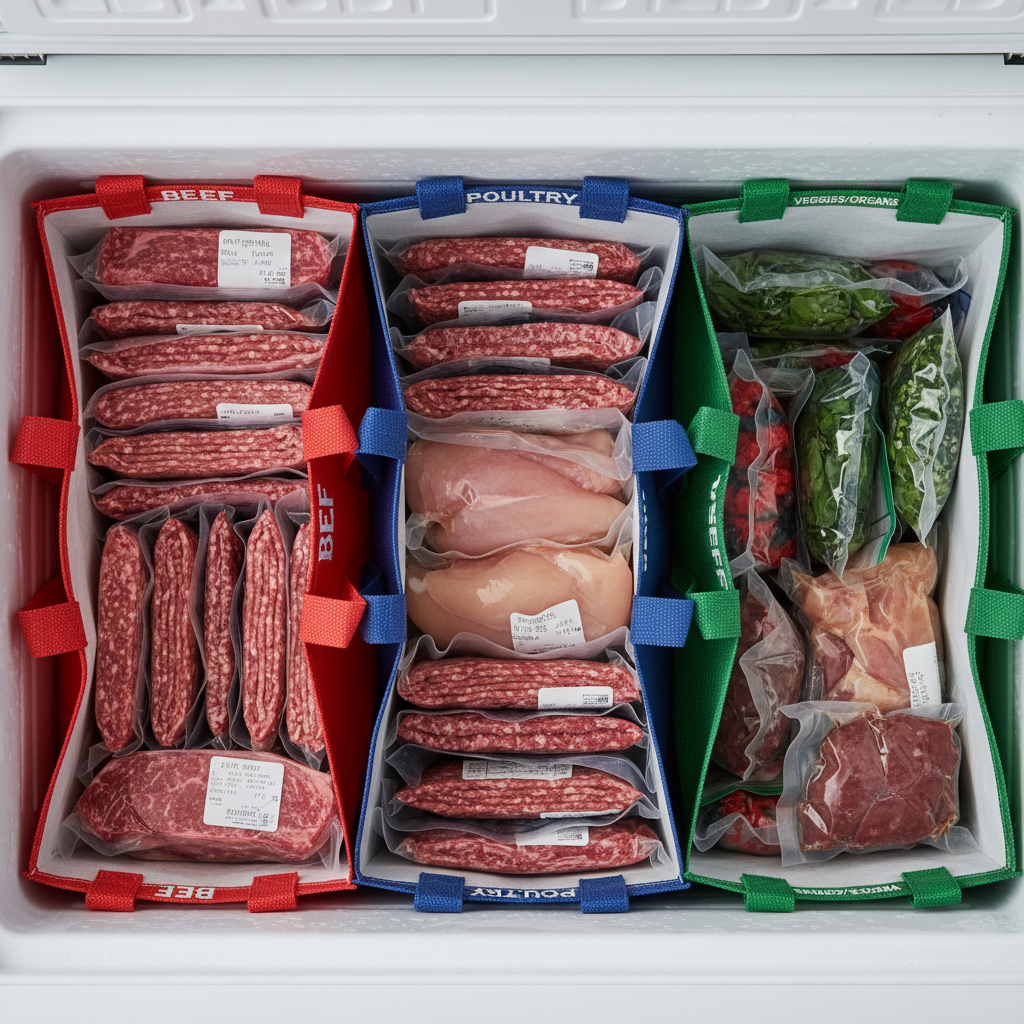
A large, open freezer space is an invitation for chaos. The solution is to impose a rigid structure through ‘zoning’. By creating designated areas for specific items, you’ll always know where everything is, what you have, and what you need. This system is the key to implementing a ‘First In, First Out’ (FIFO) rotation, ensuring older food is always used before newer stock.
Chest Freezer Zoning Strategy
The depth of a chest freezer is its biggest challenge. Conquer it with physical dividers. Milk crates, stackable wire freezer baskets, and even reusable fabric shopping bags work wonders. Create a map:
- Zone 1 (Front Left): Beef – Ground, chunks, and bones.
- Zone 2 (Front Right): Poultry – Chicken, turkey, duck flat packs.
- Zone 3 (Back Left): Organs & Supplements – Bags of frozen organ cubes, fish oil, etc.
- Zone 4 (Back Right): Novel Proteins & Fish – Pork, lamb, rabbit, salmon.
- ‘On-Deck’ Basket (Top): A single basket resting on top holds the next 3-4 days of meals, ready to be moved to the fridge for thawing.
When you add new food, it goes to the bottom of its respective zone’s stack. You always pull from the top. This is FIFO in its purest form.
Upright Freezer Zoning Strategy
Upright freezers make zoning even easier:
- Top Shelf: Fish & Quick-Use Items. Fish can have a stronger odor, so keeping it high helps contain it.
- Middle Shelves: High-Rotation Proteins. Dedicate one shelf to poultry and another to beef, your most-used items.
- Bottom Shelf/Drawer: Bulk & Heavy Items. This is for heavy bones, and new stock before it’s filed into the upper shelves.
- Door Storage: Supplements. Small bottles, bags of frozen supplement cubes, and other small items fit perfectly here.
Whichever freezer you use, the principle is the same: a designated home for everything, and a clear rotation system to eliminate waste.
The Arsenal: Essential Tools for Freezer Dominance
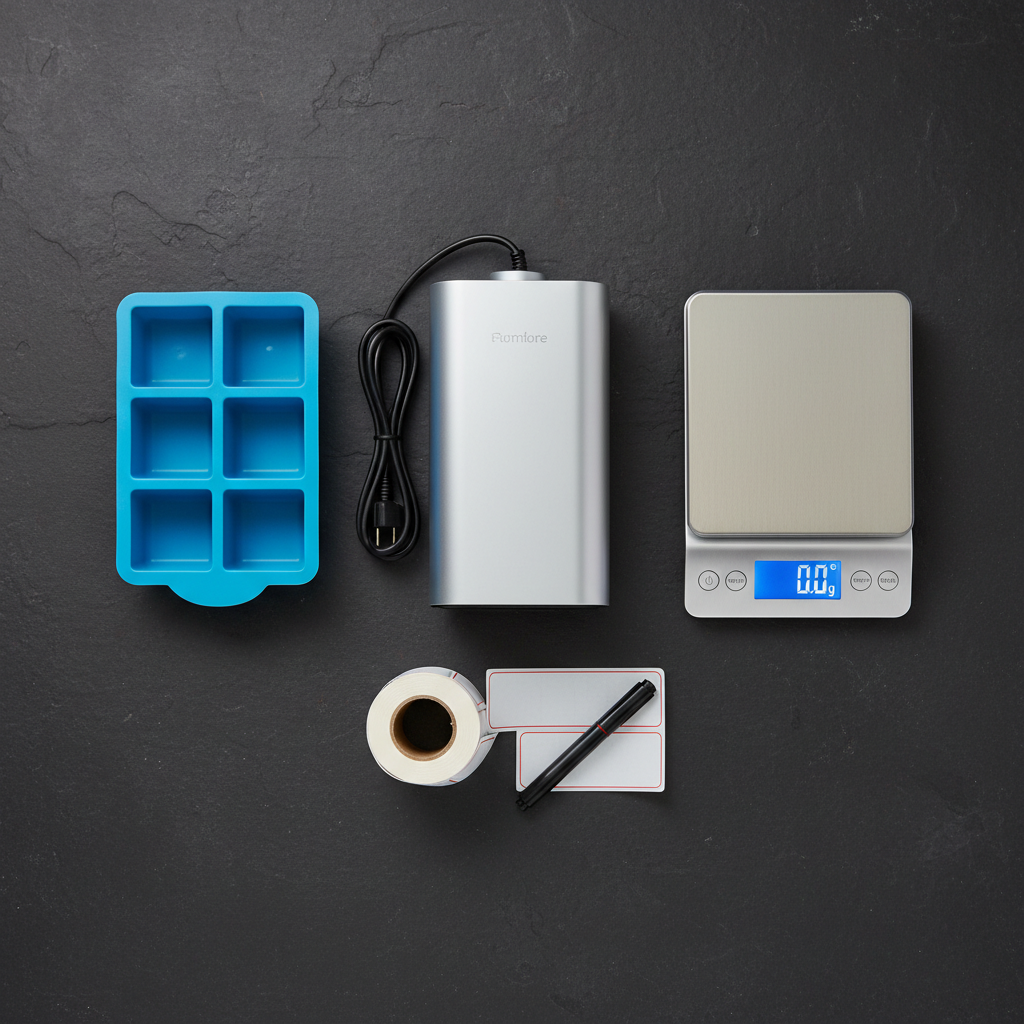
Having the right equipment is not a luxury; it’s a force multiplier. Investing in a few key tools will dramatically reduce your prep time, improve your storage efficiency, and ultimately save you money. This is your essential arsenal for achieving freezer dominance.
- A Reliable Vacuum Sealer: This is the non-negotiable cornerstone of the system. It extends the life of your food, prevents waste from freezer burn, and is the key to the space-saving flat pack method.
- A Digital Kitchen Scale: Precision is paramount. Guessing portion sizes leads to nutritional imbalances and inconsistent feeding. A scale ensures every meal is accurate to the gram. Weigh everything.
- Silicone Molds: Far superior to plastic ice cube trays, which can crack and retain odors. Large, flexible silicone molds are perfect for portioning organ meats, vegetable purees, and bone broth into standardized blocks.
- Durable Bins and Baskets: These are the skeleton of your zoning system, especially in a chest freezer. Choose sturdy, freezer-safe options that can handle the weight and cold.
- An Industrial-Grade Permanent Marker & Labels: An unlabeled package in the freezer is a liability. Every single pack, bag, and container must be clearly labeled with three pieces of information: 1. Protein/Contents, 2. Weight, and 3. Date Frozen. No exceptions.
While you can start with budget options, upgrading your tools will pay dividends in time and frustration saved. Here’s how to think about it:
| Tool Category | Budget-Friendly Option | Hacker’s Choice (Investment) |
|---|---|---|
| Sealing Method | Heavy-duty Ziploc freezer bags (water displacement method) | A quality countertop vacuum sealer (e.g., Nesco, FoodSaver) |
| Portioning Molds | Standard plastic ice cube trays | Food-grade silicone molds (2-inch cubes or large bars) |
| Zoning Containers | Reusable shopping bags or cardboard boxes | Stackable, coated wire freezer baskets |
| Labeling System | Permanent marker written directly on the bag | Water-resistant freezer labels with pre-printed fields |
The Inventory System: Your Command and Control Center
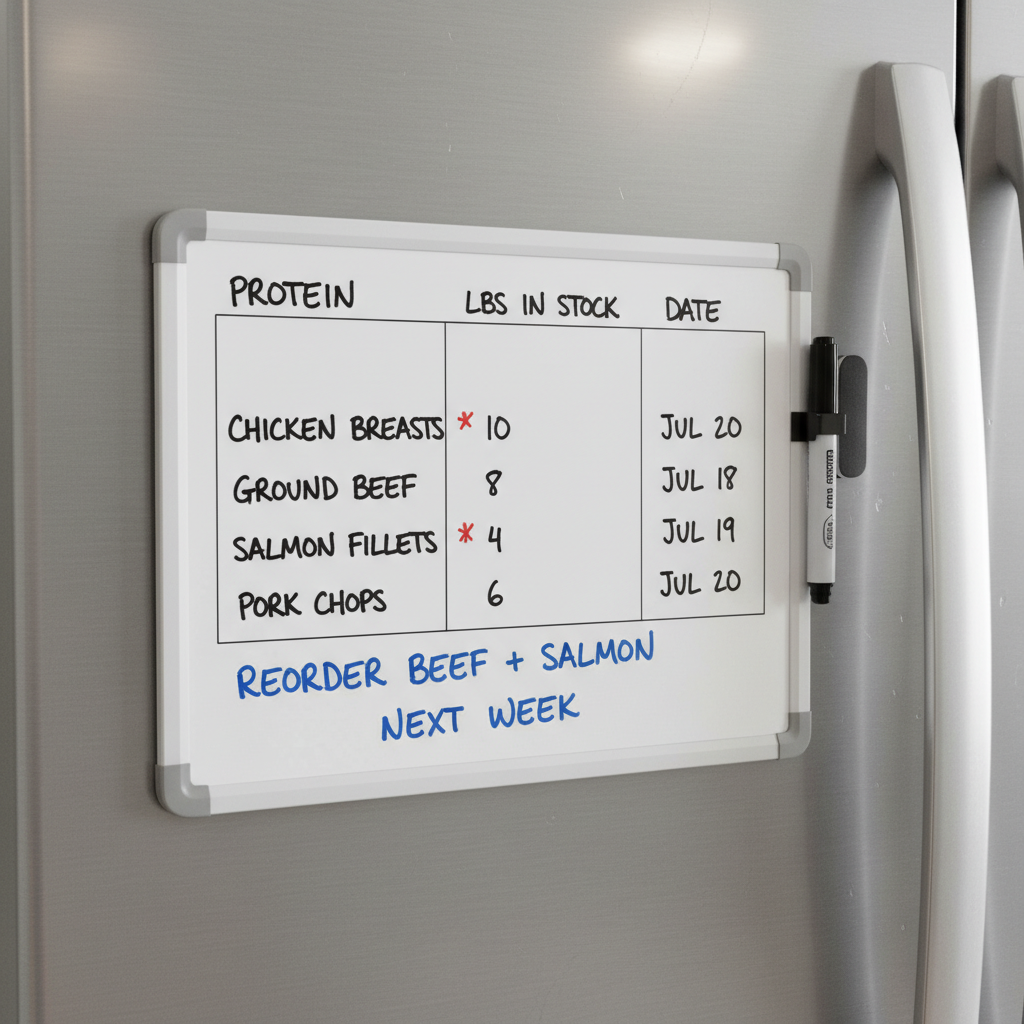
The final piece of the puzzle is tracking. An organized freezer is only half the battle; you need an inventory system to manage the flow of food. Without it, you’re flying blind. You’ll buy chicken when you already have 30 pounds, or run out of beef hearts on a holiday weekend. A simple tracking system puts you in complete control of your supply chain and budget.
The Low-Tech Whiteboard Method
This is the simplest and often most effective method. Place a magnetic whiteboard on the lid or door of your freezer. Create columns: Protein, Packs (or Lbs), and Date Added. When you add a new batch of food, you add a new line. When you take a pack out to thaw, you update the ‘Packs’ number. It’s a real-time, at-a-glance view of your entire stock.
The High-Tech Spreadsheet Method
For the data-driven hacker, a simple Google Sheet or Excel spreadsheet offers more power. You can track cost per pound, calculate monthly spending, and forecast when you’ll need to reorder. Your columns might include: Date Purchased, Supplier, Protein/Item, Weight (lbs), Cost per Pound, Total Cost, and a ‘Stock Level’ column that you manually update. This data can reveal valuable insights, like which suppliers offer the best value or how much you’re truly spending on your dog’s food per year.
Hacker’s Tip: Before you go shopping or place an online order, take a quick photo of your whiteboard or open your spreadsheet on your phone. This eliminates impulse buys and ensures you only purchase what you actually need. You’ll be shocked at how much money this single habit saves you by preventing you from overbuying ‘on-sale’ items you’re already fully stocked on.
An inventory system does more than save money. It allows you to meticulously track food consumption, which is invaluable if you ever need to troubleshoot an allergy or intolerance. You’ll have a perfect record of exactly what your dog has eaten and when.
Conclusion
You now possess the blueprint for total freezer domination. By combining the right freezer, a meticulous flat-packing system, strategic zoning, and a clear inventory method, you can eliminate waste, save significant money, and reduce your daily meal prep time to mere minutes. This isn’t just about organization; it’s about taking ultimate control over your dog’s nutrition and your budget.
A chaotic freezer is a symptom of a reactive approach. A systemized freezer is the mark of a proactive owner who understands the value of every ingredient and every dollar. Stop letting your freezer dictate your routine. Implement these hacks, and you’ll transform from a standard pet owner into a true Canine Nutrition Hacker, armed with the efficiency and precision your dog deserves.