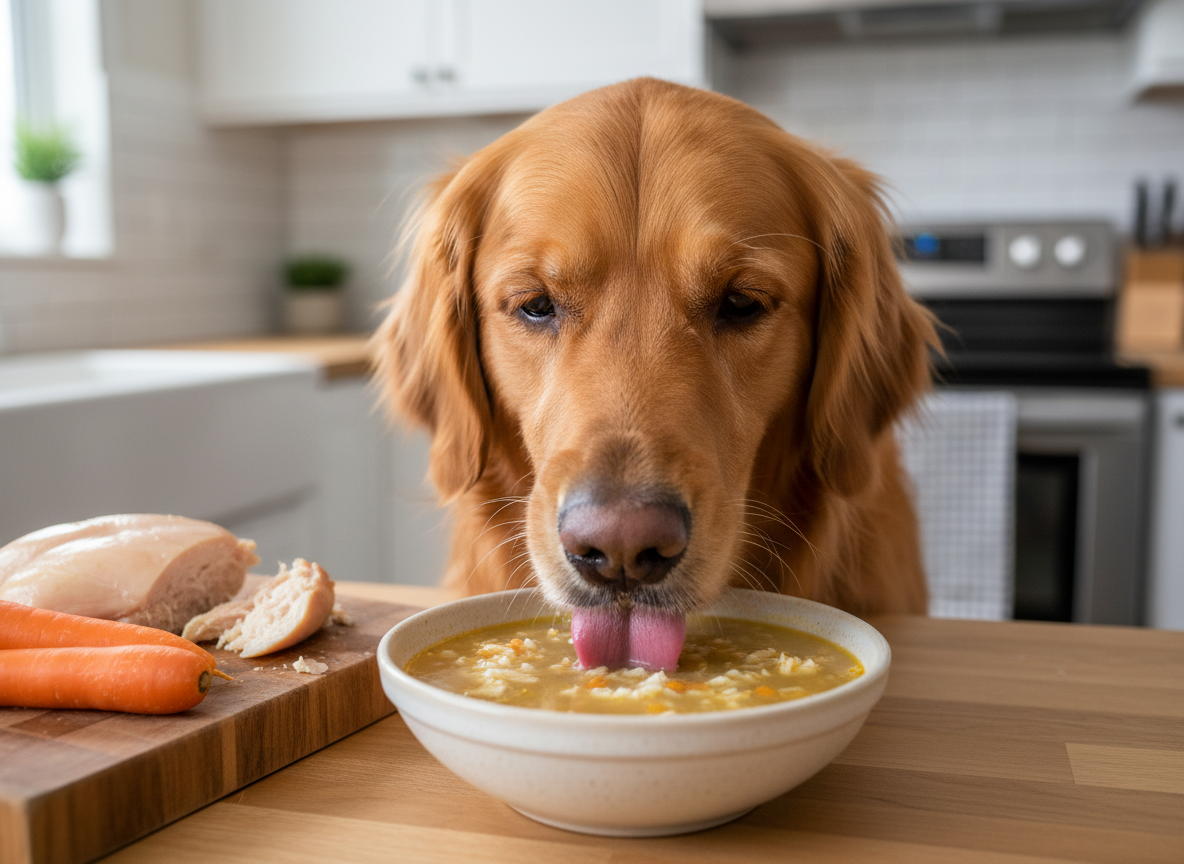
Comforting Chicken Recovery Soup for Sick Pups
When your dog is sick, the world stops. The sight of them listless, with no appetite, is heartbreaking. Your first instinct is to rush to the vet—and that is always the correct first step. But after the diagnosis, when the vet recommends a ‘bland diet,’ you’re often faced with a choice: buy overpriced, canned mush, or take control. I’m here to show you how to take control.
This isn’t just a recipe; it’s a tool for empowerment. It’s about providing clean, simple, and effective nutrition when your dog’s system is too compromised for their regular kibble. We’re cutting out the marketing fluff, the unnecessary additives, and the high price tags of prescription diets to create the ultimate Comforting Chicken Recovery Soup.
IMPORTANT SAFETY DISCLAIMER
I am a canine nutrition analyst, not a veterinarian. This recipe is intended as a temporary dietary aid for dogs experiencing minor digestive upset, as typically recommended by a veterinarian. It is NOT a complete and balanced meal for long-term feeding. Always consult your vet before making any changes to your dog’s diet, especially when they are ill. Your vet’s diagnosis is critical to ensure there isn’t a more serious underlying condition that requires medical intervention.
The Science of Simplicity: Why This Soup Works
When a dog’s gastrointestinal (GI) tract is inflamed, the last thing it needs is a complex meal. Commercial dog foods, even high-quality ones, contain a long list of ingredients that require a healthy digestive system to process. During illness, this complexity can exacerbate the problem.
The power of this recovery soup lies in its radical simplicity. We are stripping nutrition down to its most basic, digestible components:
- Hydration: Dehydration is a major risk for sick dogs, especially those with vomiting or diarrhea. The broth is the most critical component, providing essential fluids and electrolytes in a palatable form that most dogs will readily accept, even when they refuse plain water.
- Easily Digestible Protein: Boiling boneless, skinless chicken breast makes the protein incredibly easy for a compromised gut to break down and absorb. This provides essential amino acids for tissue repair without overworking the digestive system. We avoid dark meat or skin, which has a higher fat content that can be difficult to process.
- Gentle Carbohydrates: Plain white rice is the go-to carbohydrate for a bland diet. Unlike brown rice, the husk has been removed, making it very low in fiber and exceptionally easy to digest. It provides a quick source of energy for the recovering pup.
- Minimalism is Key: Notice what’s NOT in this soup. There are no spices, no oils, no complex vegetables, and no preservatives. Every single ingredient is chosen for its gentleness and nutritional benefit in a recovery context. This is the nutritional equivalent of a ‘factory reset’ for your dog’s gut.
The Blueprint: Your Step-by-Step Recovery Soup Recipe
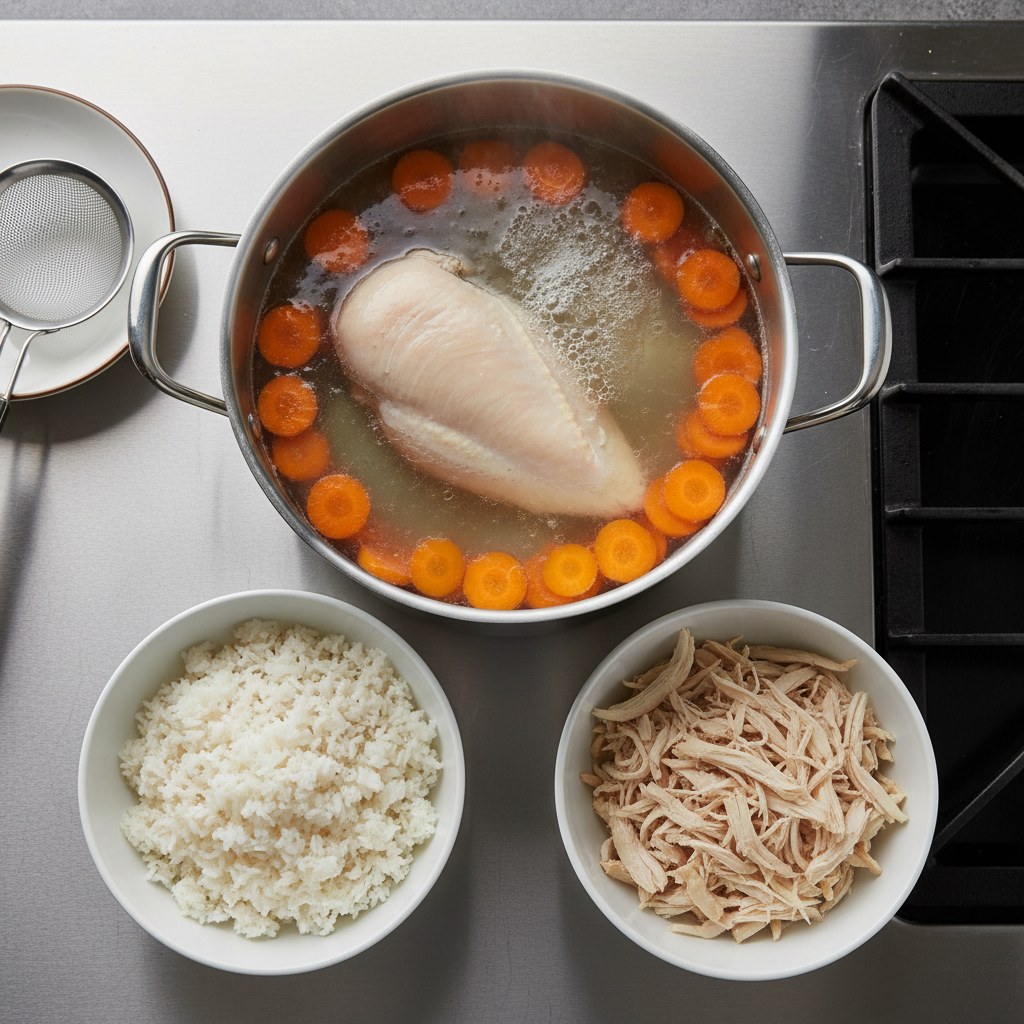
Forget complicated instructions. This is a straightforward process designed for a stressed-out pet owner. The goal is a clean, simple, and effective meal.
Ingredients & Ratios
The core ratio is simple: 1 part protein to 2 parts carbohydrate, with vegetables as a small bonus. This recipe makes approximately 4-5 cups of soup.
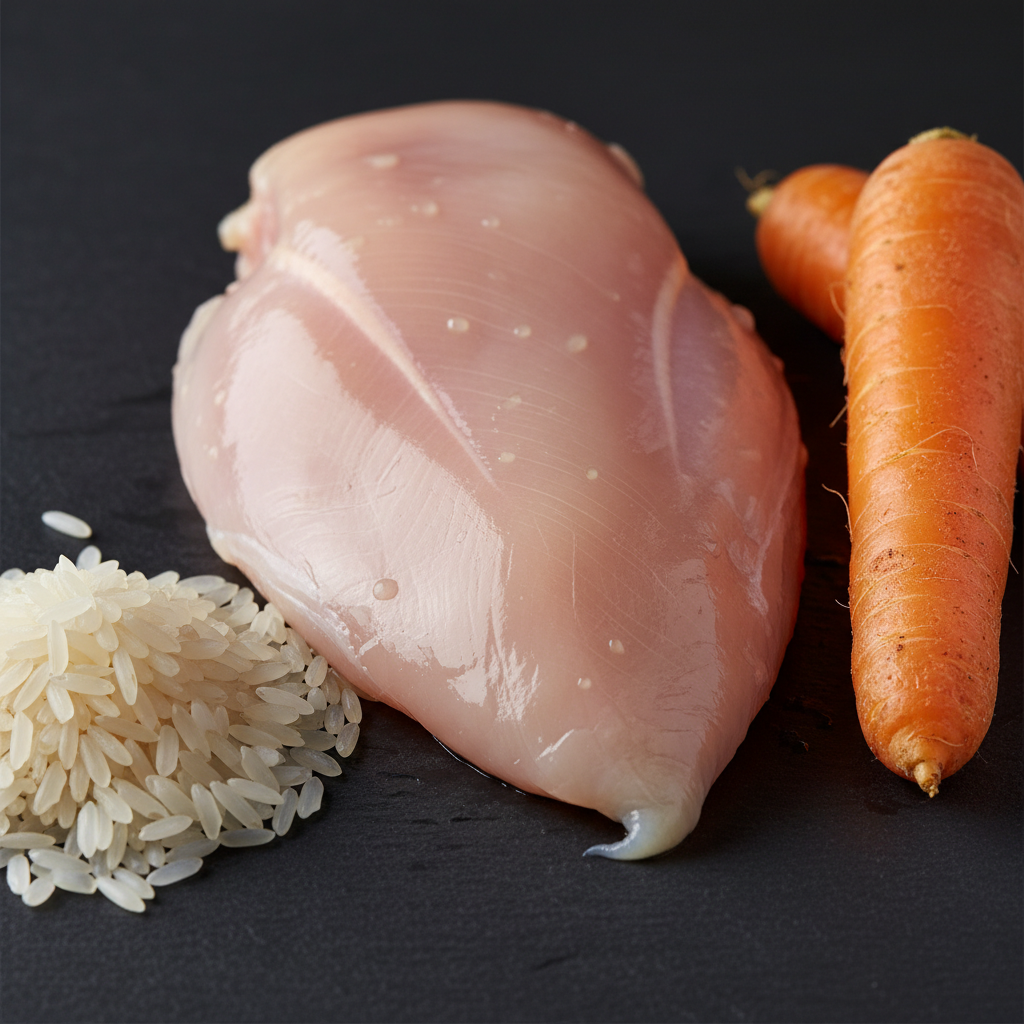
- 1 large (approx. 1 lb) boneless, skinless chicken breast
- 1 cup uncooked plain white rice (NOT instant or flavored rice)
- 2 medium carrots, peeled and roughly chopped
- 8-10 cups of water
The Method: Step-by-Step Instructions
- Combine Ingredients: Place the chicken breast, chopped carrots, and water into a large stockpot or Dutch oven. Do not add any salt, oil, or seasonings of any kind.
- Boil and Simmer: Bring the water to a rolling boil, then immediately reduce the heat to a gentle simmer. Cover the pot and let it simmer for 45-60 minutes, or until the chicken is cooked through and tender.
- Cook the Rice: While the chicken is simmering, cook the 1 cup of white rice in a separate pot according to package directions, using plain water. Set aside.
- Shred the Chicken: Once cooked, carefully remove the chicken breast from the broth and place it on a cutting board. Let it cool slightly. Using two forks, shred the chicken into small, bite-sized pieces. Discard any fat or gristle you may find.
- Strain the Broth: For the cleanest possible soup, strain the broth through a fine-mesh sieve to remove the carrot chunks and any foam or impurities. The carrots have already infused their nutrients into the broth; removing the solids makes the final soup even more digestible.
- Assemble the Soup: In a large bowl, combine the shredded chicken and the cooked white rice. Pour the warm, strained broth over the chicken and rice mixture. Stir gently to combine.
Serving Instructions
Let the soup cool to room temperature before serving. Never serve hot food to a dog. Start with small, frequent meals. Instead of two large meals, offer 4-6 small portions throughout the day to avoid overwhelming their stomach. A general guideline for a 50lb dog would be about 1/2 to 3/4 cup per serving.
The Financial Forensics: DIY Soup vs. Prescription Diets
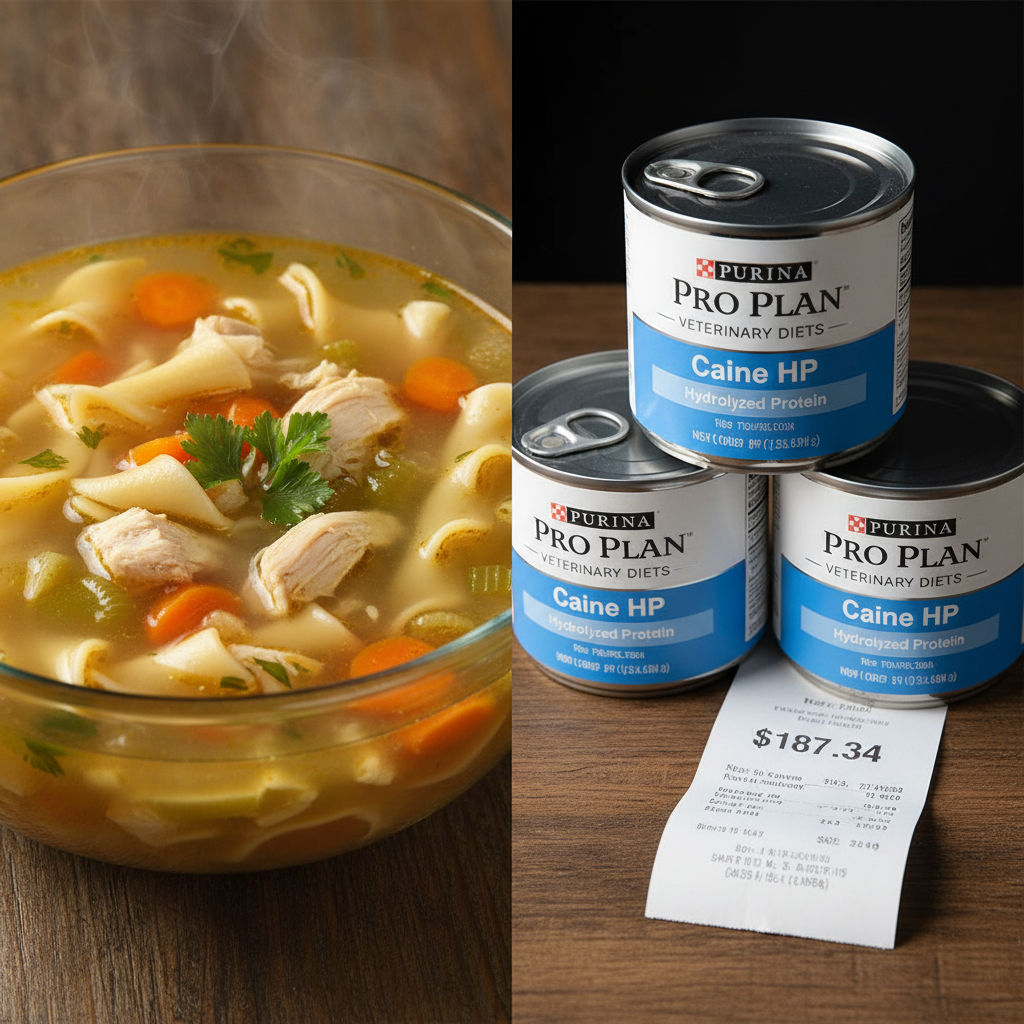
When your vet hands you a can of prescription ‘gastrointestinal’ or ‘recovery’ food, you’re not just paying for ingredients; you’re paying for branding, marketing, and the prescription gatekeeper model. Let’s break down the real cost and see how much you can save by taking 90 minutes to cook this soup yourself.
A single 13 oz can of a leading veterinary recovery diet can cost anywhere from $4.50 to $6.00. A 50lb dog might need 2-3 cans per day. The cost adds up immediately. Now, let’s analyze the cost of our homemade batch, which yields roughly 6-8 servings for that same 50lb dog.
| Component | DIY Cost (Approximate) | Prescription Diet Equivalent | The Hacker’s Verdict |
|---|---|---|---|
| 1 lb Chicken Breast | $4.00 – $6.00 | Included in can price | Control over quality (e.g., organic, antibiotic-free). |
| 1 cup White Rice | $0.50 | Included in can price | Minimal cost for a primary ingredient. |
| 2 Carrots | $0.75 | Included in can price | Fresh, whole food nutrients. |
| Total Batch Cost | $5.25 – $7.25 | $13.50 – $18.00 (for 3 cans) | DIY is over 50% cheaper for a greater quantity. |
| Cost Per Serving | ~$0.90 | ~$4.50+ | The savings are undeniable. |
The numbers don’t lie. For the price of a single day’s worth of canned prescription food, you can make a large batch of fresh, preservative-free recovery soup that will last for several days. You control every ingredient that goes into your dog’s bowl, and you save a significant amount of money in the process. This is the essence of being a Canine Nutrition Hacker: achieving superior results for less cost.
Hacker Tips: Batch Cooking, Freezing, and Safe Add-ins

A sick dog is stressful enough. Your future self will thank you for preparing in advance. This soup is perfect for batch cooking and freezing, creating an ’emergency kit’ for the next time your dog has an upset stomach.
The Freezer is Your Ally
Once the soup is fully cooled, you can portion it for freezing. The best method is to use silicone molds.
- For small dogs: Use standard ice cube trays. One or two cubes can be a perfect meal-sized portion.
- For medium/large dogs: Use silicone muffin tins. Each ‘puck’ is a ready-to-thaw serving.
Once the portions are frozen solid, pop them out and store them in a labeled freezer bag. They will keep for up to 3 months. To serve, simply thaw a portion in the refrigerator or gently warm it on the stovetop (and let it cool completely!).
Insider Secret: Don’t throw away any leftover broth! Freeze the pure, strained broth in ice cube trays. On hot days or when your dog is still reluctant to drink, adding a ‘broth cube’ to their water bowl is an almost irresistible way to encourage hydration.
Safe Customizations & Add-Ins (With Caution)
While simplicity is key, one or two additions can be beneficial if you know your dog tolerates them well. Introduce only one new ingredient at a time and watch for any negative reaction.
- Plain Pumpkin Purée: A tablespoon of 100% pure pumpkin purée (not pie filling) can help with both constipation and diarrhea due to its soluble fiber content. Stir it into the soup just before serving.
- Boiled Sweet Potato: For dogs who can’t have rice, a small amount of boiled and mashed sweet potato can be a substitute, offering digestible carbohydrates and vitamins.
Avoid broccoli, onions, garlic, and other complex vegetables. Stick to the basics. The goal is to soothe, not to challenge, the digestive system.
Conclusion
Providing this Comforting Chicken Recovery Soup is one of the most direct and loving ways you can care for your sick pup. It’s a testament to the fact that the best solutions are often the simplest. You’ve bypassed the marketing hype and high costs to deliver clean, gentle, and effective nutrition right when your dog needs it most.
Remember the core principles: hydration, digestible protein, and simple carbohydrates. This recipe delivers all three without any of the fillers, preservatives, or questionable ingredients found in some commercial options.
However, I must end with the most critical piece of advice: this soup is a temporary measure, not a permanent solution. It is a bridge to get your dog from sick back to healthy. Once their stomach has settled and your veterinarian gives the okay, it is crucial to transition them back to their complete and balanced regular diet. Your role as a Canine Nutrition Hacker is to use your knowledge to support your dog’s health intelligently, always in partnership with trusted veterinary care.