A Beginner’s Guide to Monthly Dog Food Meal Prep
Are you tired of staring at dog food bags plastered with pictures of happy dogs roaming through fields, only to flip it over and read an ingredient list that requires a chemistry degree to decipher? You see terms like ‘meat by-product meal,’ ‘corn gluten meal,’ and a dozen synthetic preservatives. You’re paying a premium for marketing, fillers, and convenience, not optimal nutrition. I’m The Canine Nutrition Hacker, and I’m here to show you how to take back control of your dog’s bowl and your wallet.
Monthly meal prep isn’t just for fitness enthusiasts; it’s the single most powerful strategy for ensuring your dog gets high-quality, whole-food nutrition without the mystery ingredients or the exorbitant cost of boutique brands. It’s about transforming a few hours of work once a month into a freezer full of perfectly portioned, health-boosting meals.
IMPORTANT SAFETY DISCLAIMER
Before we dive in, let’s establish the ground rules. I am not a veterinarian or a certified canine nutritionist. This guide is for informational purposes, based on extensive research and personal experience. Homemade diets can be incredibly beneficial, but they can also be dangerous if not properly balanced. An unbalanced diet can lead to serious health issues over time. It is absolutely critical that you consult with your veterinarian or a board-certified veterinary nutritionist before making any significant changes to your dog’s diet. They can help you tailor a recipe to your dog’s specific needs, accounting for age, breed, activity level, and any health conditions. Furthermore, the recipes provided here require a specific vitamin and mineral supplement to be complete and balanced. Do not skip this step.
The Financial Audit: DIY Meal Prep vs. Premium Brands

The pet food industry is a multi-billion dollar machine built on the idea that you can’t possibly provide the ‘scientifically formulated’ nutrition they can. The truth? You’re paying for their marketing, their supply chains, and their profits. Let’s run a real-world cost analysis for a moderately active 50-pound dog.
We’ll compare a popular ‘premium’ grain-free kibble that costs around $80 for a 24lb bag with our DIY base recipe. A 50lb dog eats roughly 3 cups (or 12 oz) of this kibble per day. That 24lb (384 oz) bag will last about 32 days.
| Expense Category | Premium Kibble (Approx. Monthly Cost) | DIY Batch (Approx. Monthly Cost) |
|---|---|---|
| Protein Source | Included (Chicken Meal, etc.) | $45.00 (15 lbs ground turkey @ $3.00/lb) |
| Carbohydrate Source | Included (Peas, Lentils) | $6.00 (5 lbs brown rice @ $1.20/lb) |
| Vegetables & Fruits | Included (Powders, Fractions) | $15.00 (Mixed frozen/fresh veggies) |
| Essential Supplements | Included (Synthetic Vitamin Pack) | $12.00 (Veterinary balancing supplement) |
| Total Monthly Cost | $75.00 | $78.00 |
| Cost Per Day | $2.34 | $2.44 |
Wait, the costs are nearly identical? Yes, but look closer at what you’re buying. For the same price, you are upgrading from processed meals and mystery meat to whole, fresh, human-grade ingredients. You control the quality of the meat, the freshness of the vegetables, and you eliminate the fillers and preservatives. The value proposition isn’t just about saving pennies; it’s about a massive leap in ingredient quality for the same budget.
Insider Secret: Your local warehouse club or a friendly butcher is your best ally. Buying ground meat, rice, and oats in bulk will dramatically slash your costs, often making the DIY option significantly cheaper than even mid-tier kibble. Look for sales and stock up your freezer.
The Canine Nutrition Hacker’s Foundational Recipe
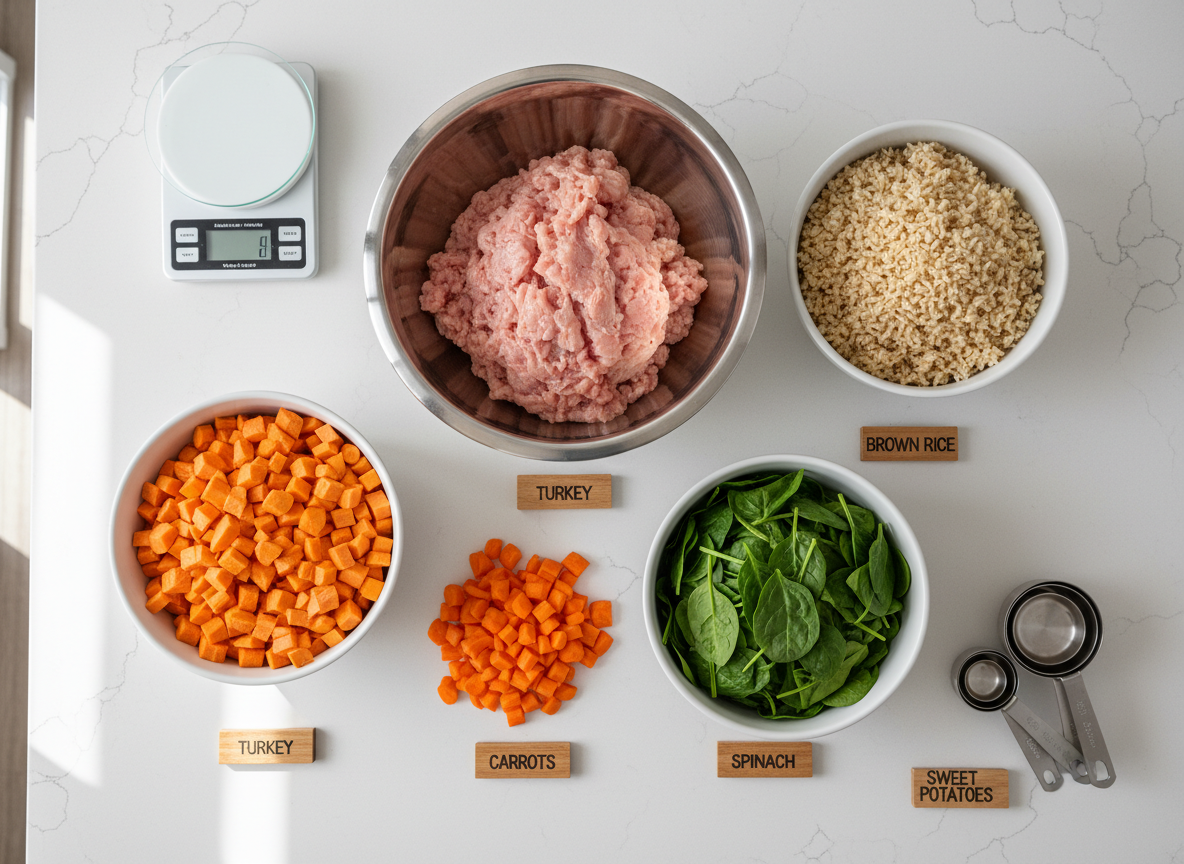
This is your blueprint. It’s a balanced, scalable base that you can build upon. The following recipe makes approximately 14 pounds of food, which will last a 50-pound dog about one week (feeding roughly 2 pounds, or 4 cups, per day). You will need to multiply this by four for a full month’s supply.
Ingredients (for a 1-week batch):
- 10 lbs Lean Ground Meat: Turkey or chicken (93/7) is a great start. Beef (90/10) is good too.
- 2 lbs Cooked Brown Rice: A fantastic source of digestible carbohydrates and fiber.
- 1.5 lbs Fresh Vegetables: Use a mix. My go-to is a combination of spinach, carrots, and sweet potatoes, finely chopped or grated.
- 0.5 lbs Canine-Safe ‘Extras’: This can be blueberries (antioxidants), pumpkin puree (digestion), or chopped parsley (breath).
- Water: Enough to prevent sticking while cooking.
- CRITICAL: A veterinary-formulated nutritional supplement. Brands like Balance IT or Just Food For Dogs DIY Nutrient Blend are designed to fill the vitamin and mineral gaps in homemade food. Follow the dosage on the packaging precisely.
Instructions:
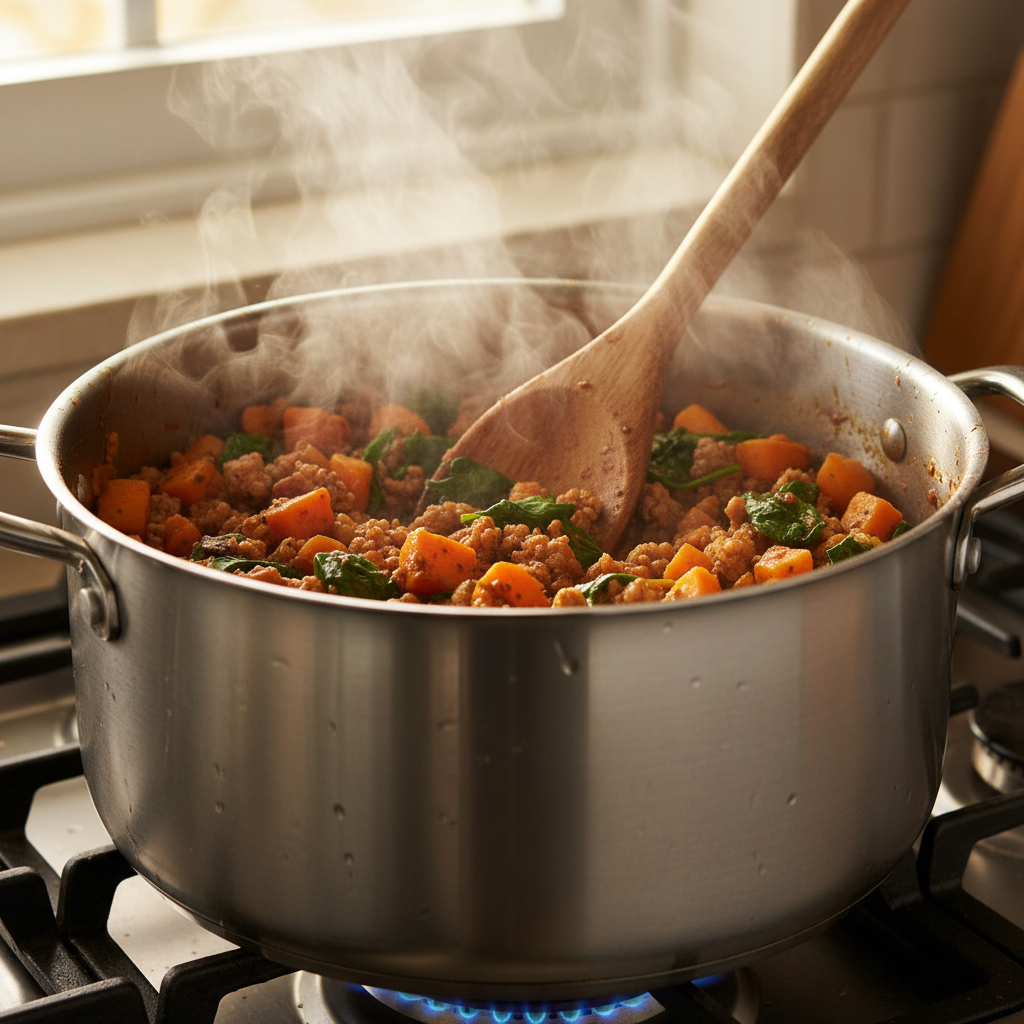
- Cook the Meat: In a large stockpot, cook the ground meat over medium heat until browned. Break it up into small pieces. Do not drain the fat unless you used a higher-fat meat; healthy fats are crucial for energy and coat health.
- Add Carbs & Veggies: Add the cooked brown rice and all your chopped vegetables to the pot with the meat. Add about a cup of water to create some steam and prevent burning.
- Simmer: Stir everything together, cover the pot, and let it simmer on low heat for about 15-20 minutes, or until the vegetables are tender.
- Cool Completely: This is a non-negotiable step. Turn off the heat and let the food cool down to room temperature. Hot food can degrade vitamins and poses a safety risk for storage.
- Mix in Supplements: Once the food is completely cool, add your nutritional supplement and any extras like fish oil. Mix thoroughly to ensure it’s evenly distributed throughout the entire batch. Never cook the supplements, as heat can destroy their nutritional value.
The System: Mastering Monthly Batch Cooking & Storage
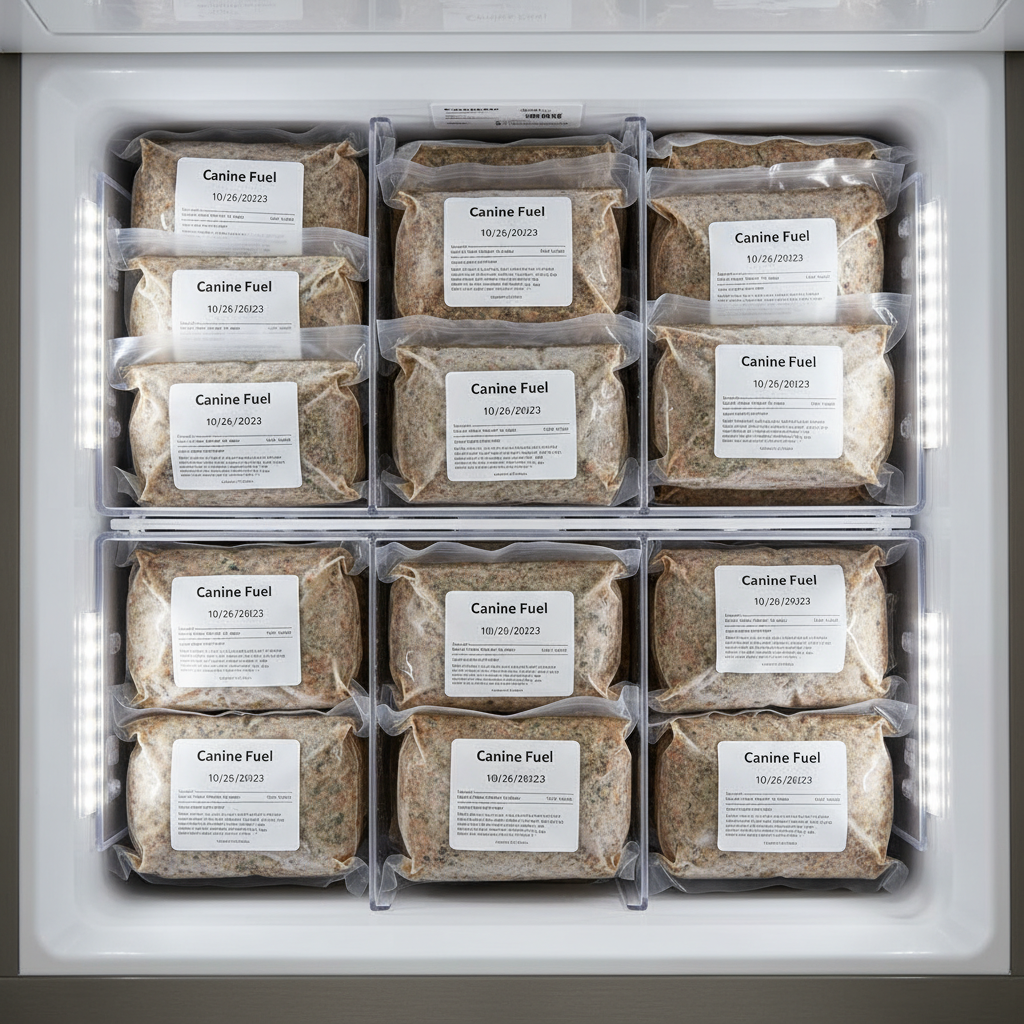
The secret to sustainable meal prep is an efficient system. Your goal is to make a month’s worth of food in one afternoon. This requires planning and the right tools. For a 50-pound dog, you’ll be making about 56 pounds of food for the month (14 lbs/week x 4 weeks).
Essential Equipment:
- A Large Stockpot: At least 16-quarts. A canning pot works perfectly.
- A Kitchen Scale: For accurately portioning meals. Guessing is not an option.
- Storage Containers: Freezer-safe deli containers, silicone pouches, or a vacuum sealer.
- Permanent Marker: For labeling and dating everything.
The Monthly Workflow:
- Shop Smart: Buy all your ingredients for the 4x batch in one trip. This is where bulk buying pays off.
- Prep Station: Set up an assembly line. Wash and chop all your vegetables first. Get your rice cooking. Have your supplements and scale ready.
- Cook in Batches: Unless you have a commercial-sized pot, you’ll likely need to cook the recipe in two large batches.
- Cooling Zone: Spread the cooked food out on large baking sheets to cool faster. This is the most time-consuming part, so be patient.
- Portion and Pack: Once cool, use your kitchen scale to weigh out each meal into your chosen containers. For a 50lb dog eating 2lbs a day, you can make 1lb packs and feed two per day, or create 2lb packs for daily convenience.
- Label and Freeze: Label every container with the date. Store 2-3 days’ worth of food in the refrigerator and freeze the rest.
Hacker Tip: A vacuum sealer is a game-changer. It removes all the air, preventing freezer burn and keeping the food fresh for months. It also allows you to freeze portions flat, creating stackable ‘bricks’ of food that save an incredible amount of freezer space.
Nutritional Upgrades & Critical Warnings
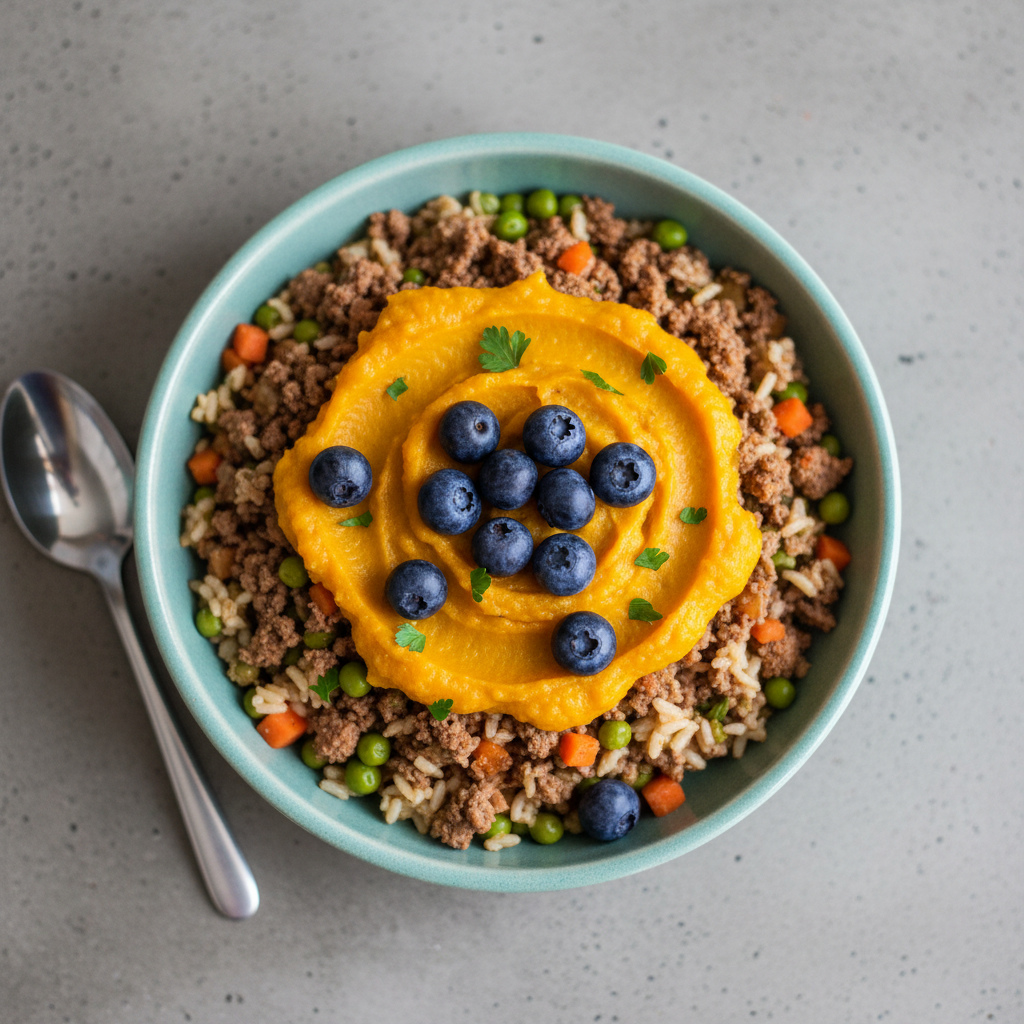
Your base recipe is a fantastic foundation, but you can add small amounts of other ‘hero’ ingredients to target specific needs. Think of these as nutritional boosts, not replacements for a balanced diet. Introduce any new ingredient slowly to monitor for digestive upset.
Approved Upgrades (Add in small quantities):
- Fish Oil: A pump of high-quality fish oil (salmon, sardine) added to the bowl at feeding time provides essential Omega-3 fatty acids for skin, coat, and joint health.
- Plain Pumpkin Puree: A tablespoon can aid in digestion and help firm up stool.
- Blueberries: A handful of fresh or frozen blueberries adds a powerful antioxidant punch.
- Organ Meats: Swapping 10-15% of the muscle meat with beef liver or chicken hearts provides a dense source of vitamins and minerals. Do not overdo it, as organ meat is very rich.
DANGER: The Never-Feed List
While you’re embracing the role of canine chef, you must also be a vigilant gatekeeper. Many human foods are toxic to dogs. This list is not exhaustive, but these are some of the most common offenders. Never include these in your dog’s food:
- Onions, Garlic, Chives
- Grapes and Raisins
- Chocolate
- Macadamia Nuts
- Avocado
- Anything containing the artificial sweetener Xylitol
- Cooked Bones (they can splinter)
Conclusion
You’ve made it. You now have the knowledge and the framework to completely overhaul your dog’s diet. By moving away from mass-produced, processed kibble, you are taking direct, authoritative control over your dog’s health and well-being. You are no longer a passive consumer; you are an informed provider. You are a Canine Nutrition Hacker.
Remember the core principles: consult a professional, prioritize balance with proper supplementation, build an efficient system, and always use high-quality, whole-food ingredients. The initial effort will be a change of pace, but the rewards—a healthier dog, peace of mind, and long-term savings—are immeasurable. Welcome to the inside.