Insect Protein: Are Buffalo Worms Good for Dogs?
Forget what you think you know about dog food. For decades, the industry has pushed a narrow narrative dominated by chicken, beef, and lamb. But for a growing number of dogs plagued by incessant itching, digestive upset, and chronic inflammation, these traditional proteins are the enemy. As a Canine Nutrition Hacker, my job is to look past the slick marketing and analyze the data. The data is leading us to a powerful, efficient, and radically sustainable solution: insect protein. Specifically, we’re going deep on the nutritional powerhouse known as the Buffalo Worm (Alphitobius diaperinus). This isn’t a gimmick; it’s a calculated nutritional strategy. In this forensic breakdown, we will dissect why buffalo worms aren’t just ‘good’ for dogs—they represent a superior nutritional choice for the modern canine, especially those failed by conventional diets.
The Protein Problem: Why Traditional Meats Are Failing Our Dogs

The foundation of most commercial dog foods is built on a surprisingly fragile premise: that the same few proteins are suitable for every dog. This is demonstrably false. The constant, widespread exposure to proteins like chicken and beef in everything from kibble to treats has led to a surge in food sensitivities and allergies. The immune system, over-exposed to the same protein structures day after day, can begin to misidentify them as hostile invaders, triggering an inflammatory cascade that manifests as skin problems, ear infections, and gastrointestinal distress.
The Common Culprits
When a dog presents with allergy symptoms, the vet’s first suspects are almost always the same:
- Chicken: The most ubiquitous protein in pet food, its overuse has made it a leading cause of allergic reactions.
- Beef: Another common trigger, often found in lower-quality foods and treats.
- Dairy & Egg: While not meat, these animal-based proteins are also frequent offenders.
- Soy & Wheat: Often used as cheap protein fillers, these plant-based ingredients are notorious for causing digestive and skin issues.
This isn’t just about discomfort; it’s about a compromised quality of life. The solution isn’t to simply switch from a chicken formula to a beef formula. That’s a lateral move, not a strategic one. The true solution lies in utilizing a novel protein—one the dog’s immune system has never encountered before. This is where the game changes.
Hacker Tip: An ‘elimination diet’ is the gold standard for identifying a food allergy. This involves feeding a single novel protein and carbohydrate for 6-8 weeks. Insect protein is an ideal candidate for this diagnostic process due to its truly novel nature for most dogs.
Beyond the biological cost to our dogs, there’s an environmental cost to the planet. The land, water, and energy required to produce 1kg of beef are staggering compared to alternative proteins. As responsible owners, we must analyze the entire supply chain. The reliance on traditional livestock is not a sustainable model for feeding a growing global pet population. The search for a better protein is a matter of both health and ethics.
Forensic Analysis: Deconstructing the Buffalo Worm

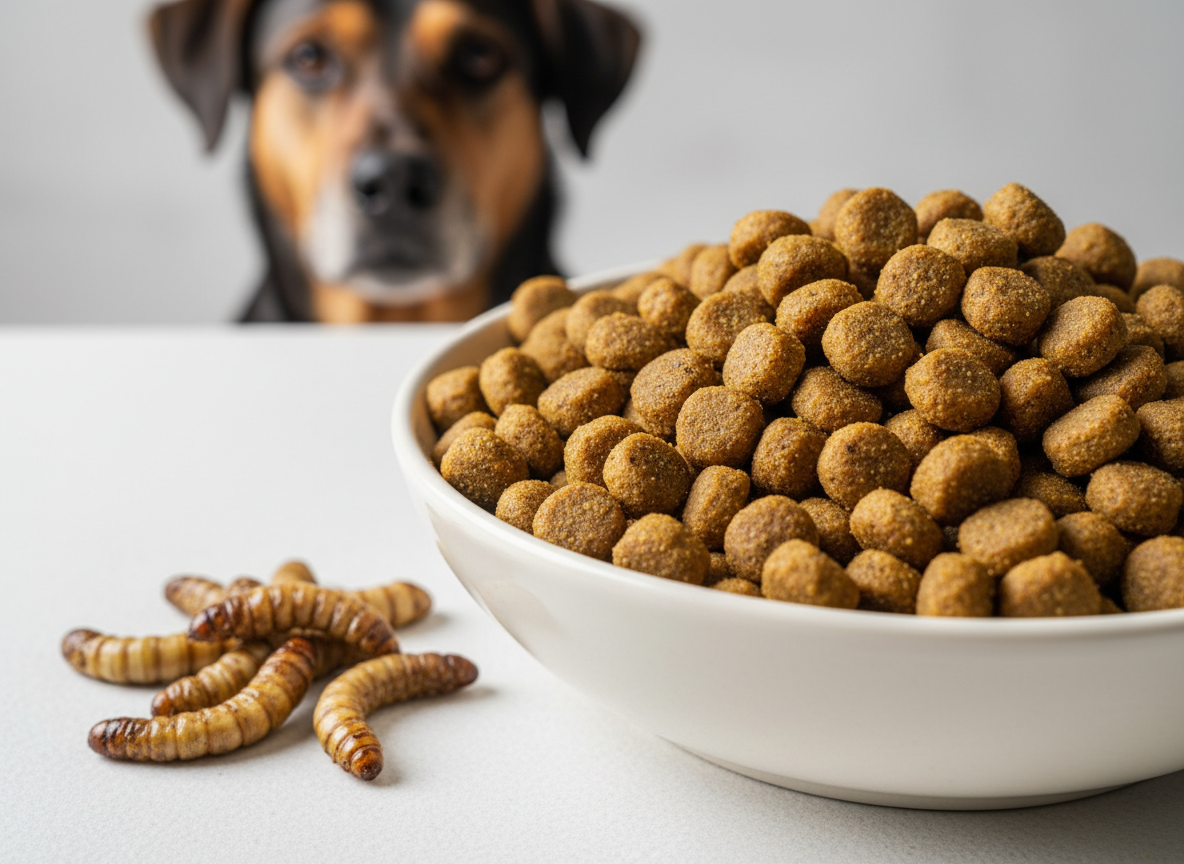
Let’s move beyond theory and get into the hard data. The Buffalo Worm is the larva of the Lesser Mealworm beetle. To the untrained eye, it’s just a bug. To a nutrition hacker, it’s a perfectly engineered package of high-quality, bioavailable nutrients. When dried and ground into a protein meal, its nutritional profile not only competes with but in some key areas, surpasses traditional meats.
Nutritional Head-to-Head
The numbers don’t lie. A direct comparison reveals the efficiency and quality of this novel protein source. Let’s analyze the raw data, comparing buffalo worm meal to the common staples of chicken meal and beef meal on a dry matter basis.
| Nutrient Profile | Buffalo Worm Meal | Chicken Meal | Beef Meal |
|---|---|---|---|
| Protein Content | ~55-60% | ~65% | ~50-55% |
| Fat Content | ~25-30% (Rich in Lauric Acid) | ~12% | ~35% |
| Essential Amino Acids | Complete Profile (High in Taurine & Methionine) | Complete Profile | Complete Profile |
| Key Minerals | High in Iron, Zinc, Magnesium | Good source of Phosphorus, Selenium | Good source of Iron, Zinc |
| Hypoallergenic Potential | Excellent (Novel Protein) | Poor (Common Allergen) | Poor (Common Allergen) |
| Verdict | Superior for sensitive dogs; highly digestible and nutrient-dense. | A quality protein, but a major allergen for many. | High in fat, lower quality protein, common allergen. |
The Amino Acid Advantage
Protein quality isn’t just about a percentage on a bag; it’s about the building blocks—the amino acids. Buffalo worms provide all ten essential amino acids a dog needs, making it a ‘complete’ protein. Critically, they are rich in Taurine, an amino acid vital for heart health, especially important in light of recent FDA investigations into grain-free diets potentially lacking this key nutrient. They also contain high levels of lauric acid, a medium-chain fatty acid known for its antimicrobial properties and ability to support skin health.
Insider Secret: When you see ‘meal’ (e.g., ‘chicken meal’ or ‘insect meal’) on a label, it’s a concentrated protein source where the water and some fat have been removed. It is a more potent source of protein by weight than ‘whole chicken’, which contains a high percentage of water.
The Hypoallergenic Edge: A Weapon Against Itching & Scratching

The single most powerful attribute of buffalo worm protein is its novelty. An allergic reaction is the immune system overreacting to a familiar substance it has flagged as a threat. Since virtually no dogs have been exposed to buffalo worm protein before, their immune systems have no pre-existing programming to attack it. This provides a ‘clean slate’ for the digestive and immune systems.
How a Novel Protein Halts the Allergic Cascade
- Bypassing Recognition: The dog’s immune cells, which patrol the gut lining, do not recognize the protein structures from buffalo worms. There is no ‘allergy memory’ associated with it.
- Reducing Inflammation: Without an immune trigger, the inflammatory response (the root cause of itching, hot spots, and redness) is not initiated. The body remains in a state of calm.
- Promoting Gut Healing: Constant allergic reactions can damage the gut lining. Removing the offending allergen and providing a clean, easily digestible protein source like buffalo worm allows the gut to heal, improving nutrient absorption and overall health.
For dogs suffering from conditions like Atopic Dermatitis, where environmental allergies are complicated by food sensitivities, switching to an insect-based diet can be transformative. By eliminating the dietary inflammation, the dog’s ‘allergic threshold’ is lowered, making them better able to cope with environmental triggers like pollen or dust mites. It’s a strategic move that addresses the problem at its core, rather than just masking symptoms with medications.
Beyond the Bowl: The Sustainability Superpower

A true Canine Nutrition Hacker considers the entire ecosystem of their dog’s food, and that includes its environmental impact. The resource-intensive nature of traditional livestock farming is unsustainable. Insect farming, or ‘micro-livestock’, offers a staggering improvement in efficiency.
The Environmental Footprint: A Stark Contrast
Let’s quantify the difference. To produce 10kg of protein, consider the resources required:
- Land Use: Cattle require roughly 2000 square meters of land. Buffalo worms require just 15 square meters, as they are farmed vertically in stacked trays.
- Water Consumption: Beef production consumes over 100,000 liters of water. Buffalo worm production uses a tiny fraction, often less than 50 liters, as they derive most of their moisture from their food source (clean vegetable surplus).
- Greenhouse Gas Emissions: Livestock, particularly cattle, are a major source of methane. Insect farming produces nearly 100 times less greenhouse gas per kilogram of protein.
Choosing a dog food based on buffalo worm protein is not just a health decision for your pet; it’s a conscious vote for a more sustainable food system. It’s a way to directly reduce your carbon ‘paw-print’ without compromising on nutritional quality. In fact, you’re upgrading it.
Implementation & Critical Warnings: A Safe Transition

Switching to a new food, especially one with such a unique protein source, must be done methodically to avoid digestive upset. The goal is a seamless transition that allows your dog’s gut microbiome to adapt.
The 10-Day Transition Protocol
Do not switch foods cold-turkey. Follow this gradual introduction schedule:
- Days 1-3: 75% old food, 25% new insect protein food.
- Days 4-6: 50% old food, 50% new food.
- Days 7-9: 25% old food, 75% new food.
- Day 10: 100% new food.
Monitor your dog’s stool quality throughout this period. A well-formed, consistent stool is the sign of a successful transition. If you notice any loose stool, revert to the previous ratio for an extra day or two before proceeding.
CRITICAL WARNING: Shellfish Allergy Cross-Reactivity
Insects, like shrimp and other crustaceans, have an exoskeleton made of chitin. While rare, a dog with a known, severe shellfish allergy could potentially have a cross-reaction to insect protein. If your dog has a history of reacting to shrimp, crab, or lobster, you must consult your veterinarian before introducing any insect-based food. This is a non-negotiable safety precaution.
Medical Disclaimer: I am a canine nutrition analyst, not a veterinarian. The information in this article is for educational purposes only and is not a substitute for professional veterinary advice. Always consult with your veterinarian before making any significant changes to your dog’s diet, especially if your dog has a pre-existing health condition.
Conclusion
The verdict is in. Buffalo worm protein is not a future-fad; it is a nutritionally superior, hypoallergenic, and ethically sound solution available today. For the dog owner battling chronic allergies, it offers a powerful tool to break the cycle of inflammation. For the environmentally conscious owner, it provides a path to drastically reduce their pet’s impact on the planet. As a Canine Nutrition Hacker, I advocate for solutions based on evidence, not tradition. The evidence overwhelmingly supports insect protein as a premier choice for dogs. It’s time to stop treating the symptoms of poor nutrition and attack the root cause. Look beyond the conventional, analyze the label, and consider making the switch. Your dog’s health and the planet’s future may depend on it.