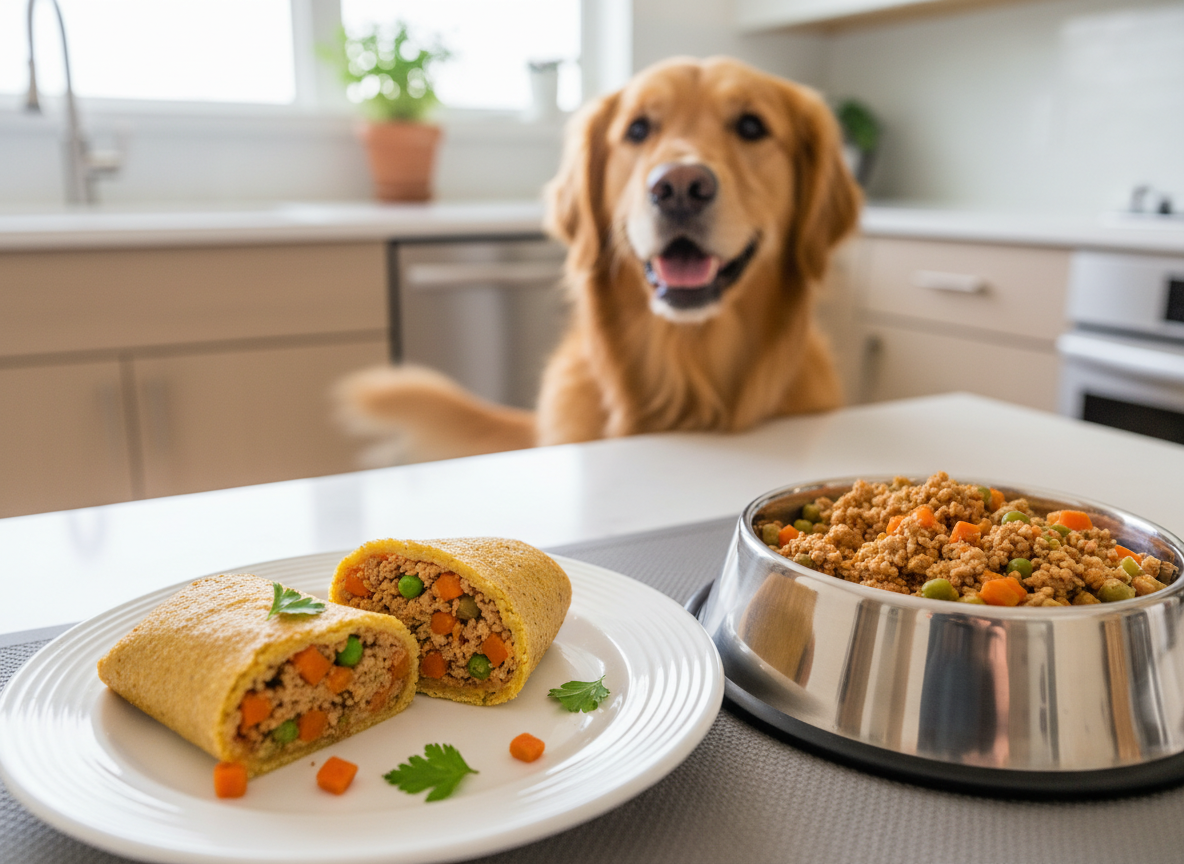
Bark-Mex Feast: Safe Dog Friendly Tamales Recipe
Before we dive into the culinary science of crafting the perfect canine tamale, let’s establish a critical protocol. DISCLAIMER: I am not a veterinarian. I am a dedicated canine nutrition analyst who reverse-engineers recipes for optimal health. This recipe is intended as a special treat and should not replace your dog’s regular, balanced diet without professional consultation. Always consult with your veterinarian or a board-certified veterinary nutritionist to ensure any homemade food meets your dog’s specific health needs, especially if they have pre-existing conditions. Complete and balanced nutrition is a science, and long-term homemade diets often require precise supplementation.
Now, let’s get to work. The pet food industry often sells us convenience packaged with compromise. We see festive human foods and wish we could share the experience with our dogs, but the risks are significant. Traditional tamales are a minefield of canine toxins: lard, onions, garlic, spicy chiles, and excessive salt. But what if we could hack the recipe? What if we could strip it down to its core components and rebuild it from the ground up, using only beneficial, dog-safe ingredients? That’s exactly what we’re going to do. This isn’t just about making a cute treat; it’s about taking ultimate control over your dog’s nutrition, one delicious, savory bite at a time.
Deconstructing the Tamale: A Canine Nutritionist’s Blueprint
To build a safe tamale, we must first understand the dangers of the original. A forensic analysis of a traditional tamale reveals multiple ingredients that are harmful to dogs. Our mission is to identify these ‘enemy ingredients’ and systematically replace them with ‘hero ingredients’ that support canine health.
The ‘Masa’ (Dough): From Corn Filler to Nutrient-Dense Binder
Traditional masa is made from corn treated with an alkali solution. While not toxic, corn is a common allergen and offers limited nutritional value compared to other options. It’s often used as a cheap filler in commercial dog foods. We can do better.
- Enemy Ingredient: Corn Masa, Lard.
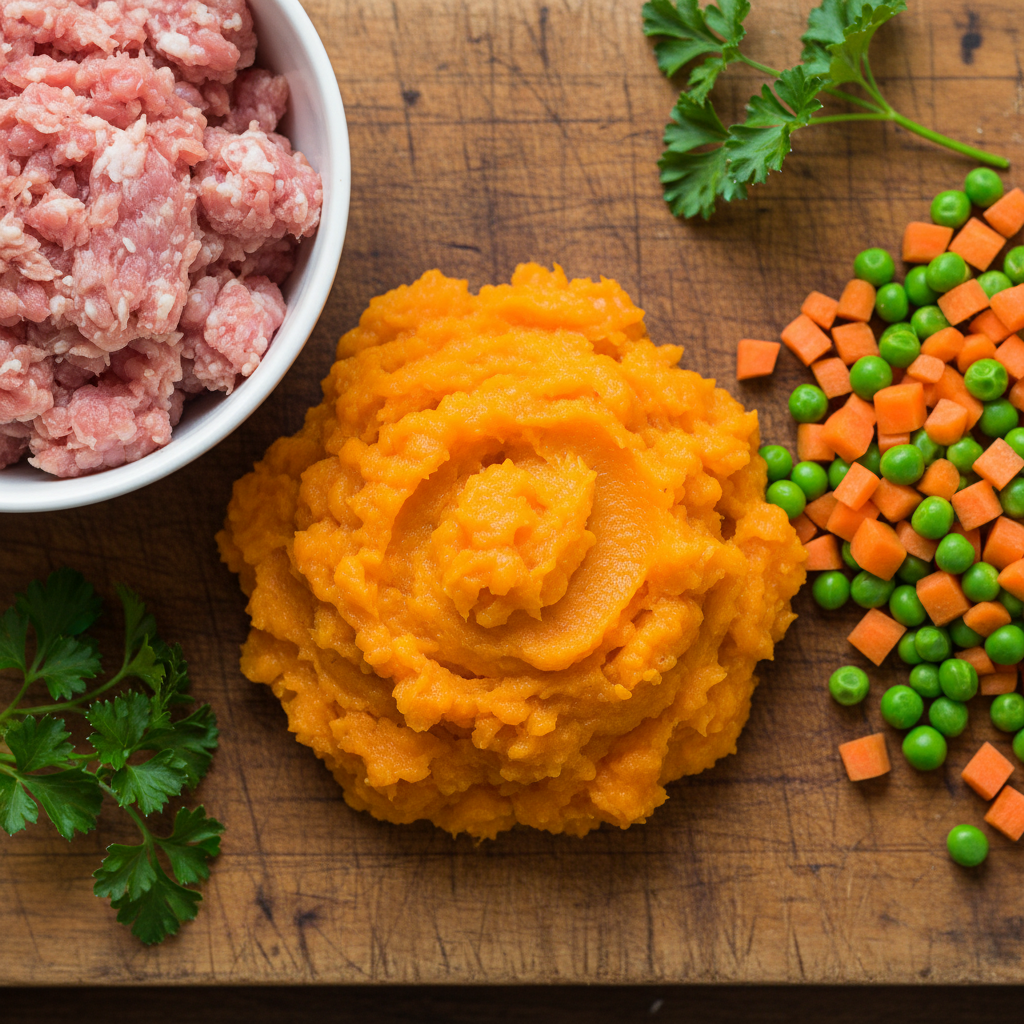
- Hero Ingredient Swap: 100% pure pumpkin puree or mashed sweet potato. These are nutritional powerhouses, rich in fiber for digestive health (prebiotics), Vitamin A for vision and immune function, and antioxidants. For a more dough-like consistency, a small amount of oat flour (ground from plain, rolled oats) can be mixed in. This provides soluble fiber and is gentle on most canine stomachs. Crucially, we replace the lard—a source of unhealthy fats—with the natural moisture of the pumpkin or sweet potato.
The Filling: Optimizing Protein and Micronutrients
The filling is where human tamales pack in the most dangerous ingredients. Onions and garlic, part of the allium family, are toxic to dogs and can cause damage to their red blood cells. Spices like chili powder and cumin can cause severe gastrointestinal upset.
- Enemy Ingredients: Onions, garlic, chili powder, cumin, high-sodium broths, fatty cuts of pork or beef.
- Hero Ingredient Swap: Lean, single-source protein is our foundation. Think 93% lean ground turkey, ground chicken breast, or 95% lean ground beef. These are easily digestible and excellent for muscle maintenance. We supplement this with finely diced, dog-safe vegetables that add vitamins and texture, such as:
- Carrots: Excellent source of beta-carotene.
- Peas: Provide potassium and fiber.
- Green Beans: A good source of Vitamin K and C.
- Zucchini: Low-calorie and high in moisture.
The Wrapper: A Tool, Not a Treat
The corn husk is essential for the steaming process, but it poses a significant risk if ingested.
- WARNING: Corn husks are not digestible. If a dog eats one, it can cause a serious and potentially fatal intestinal blockage. The husk’s only purpose is to be a steaming vessel. It MUST be removed before serving the tamale to your dog. This is a non-negotiable safety protocol.
Forensic Cost Analysis: DIY Tamales vs. Premium Store-Bought
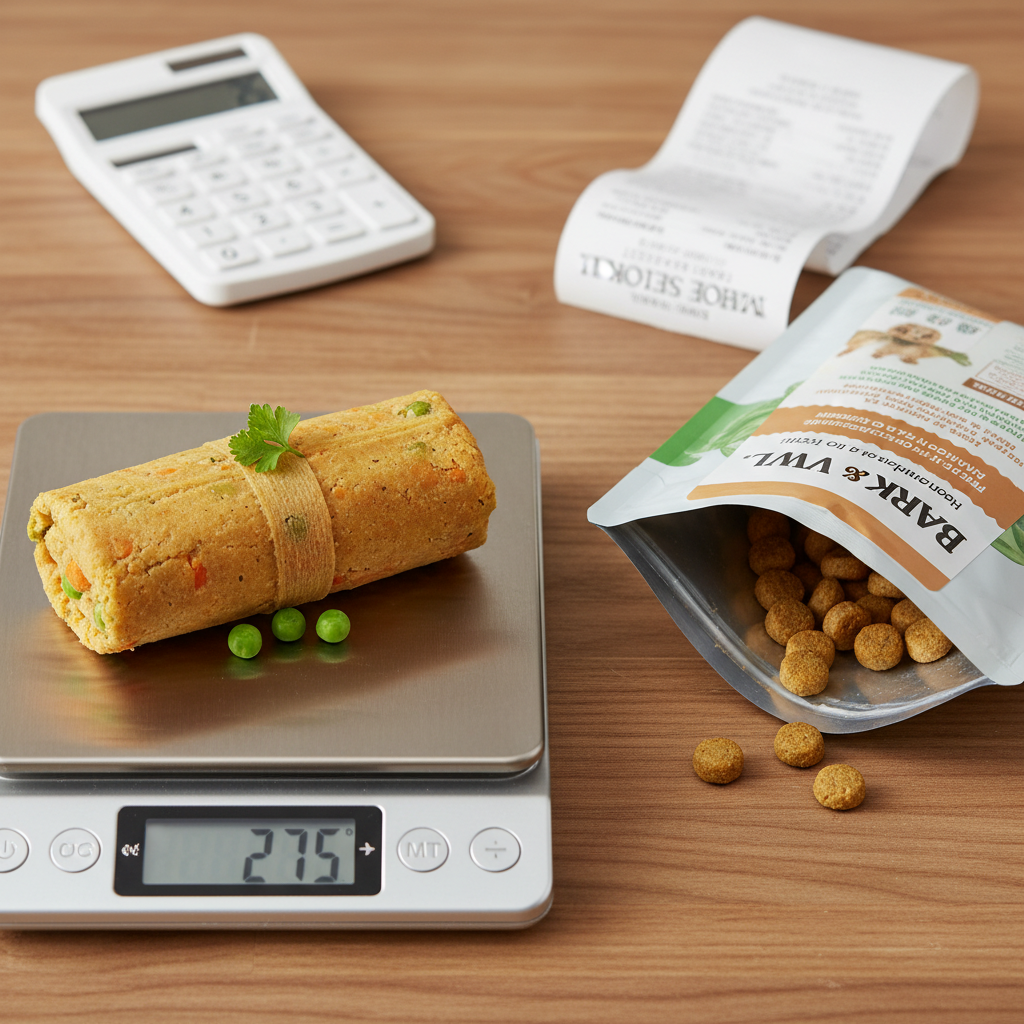
One of the core tenets of being a Canine Nutrition Hacker is understanding the economics of pet food. High-quality, human-grade commercial dog food is expensive because it uses whole ingredients. By sourcing these ingredients yourself, you can often provide superior or equivalent quality at a fraction of the cost. Let’s break down the numbers for a typical batch of our Bark-Mex tamales versus a leading fresh food subscription service.
This analysis assumes mid-range grocery store prices in the US and a leading subscription service’s price for a moderately active 50lb dog.
| Component | DIY Bark-Mex Tamales (Cost per lb) | Premium Fresh Food Service (Cost per lb) | Notes |
|---|---|---|---|
| Protein (Ground Turkey) | ~$4.50 | N/A (Included in final price) | You control the quality and leanness. |
| Vegetables (Carrots, Peas) | ~$1.50 (for a mixed bag) | N/A (Included in final price) | Buying fresh or frozen offers flexibility. |
| Binder (Pumpkin Puree) | ~$2.00 (per can) | N/A (Included in final price) | Extremely cost-effective and nutrient-dense. |
| Total Cost per Pound (Approx.) | ~$3.25 – $4.00 | ~$7.00 – $9.00 | Significant savings with DIY. |
| Verdict | Higher initial effort, but over 50% cost savings for equivalent or better ingredient quality. | Maximum convenience at a premium price point. | The hacker approach saves significant money. |
Hacker Tip: Buy your lean ground meat in bulk when it’s on sale and freeze it in one-pound portions. This is the single biggest way to slash the cost of homemade dog food. A chest freezer is a nutrition hacker’s best friend.
The Bark-Mex Feast Recipe: The Complete Protocol
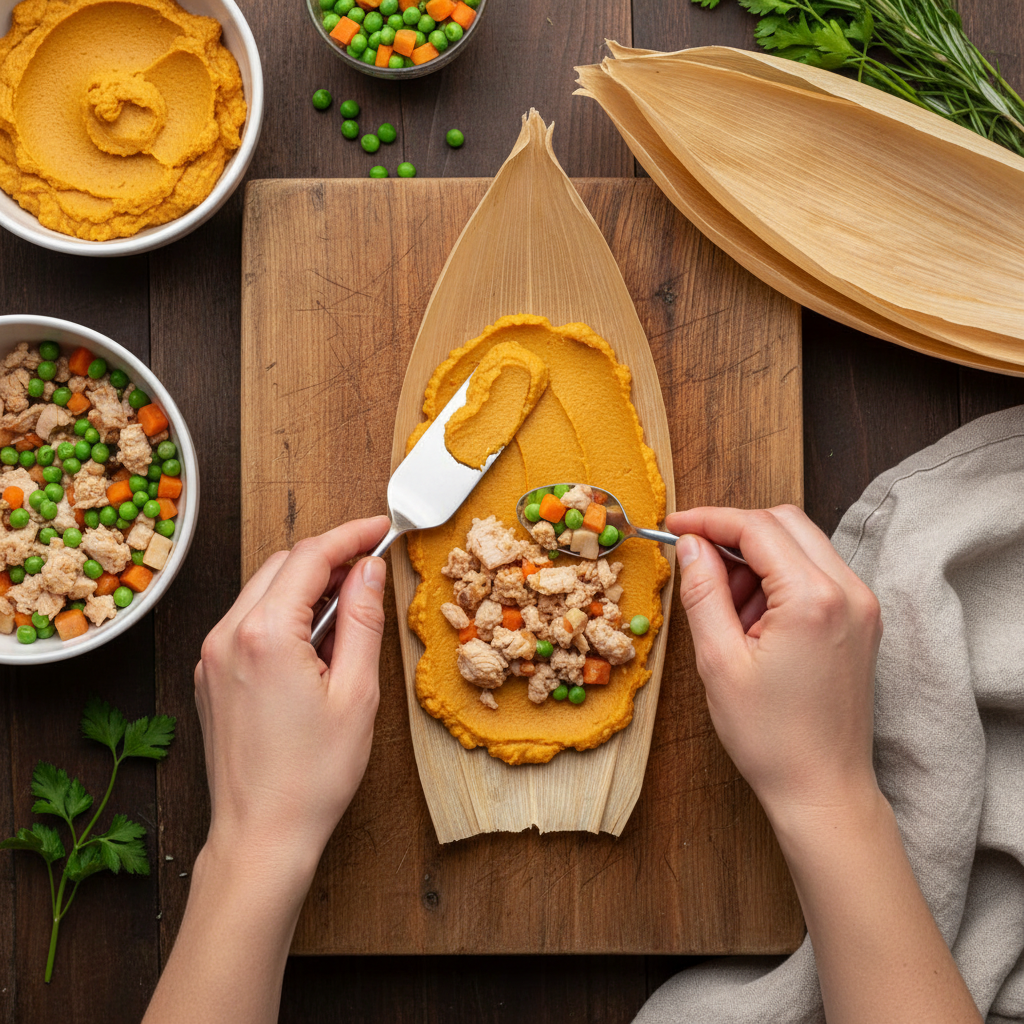
This recipe is formulated for safety and nutritional benefit. Follow these steps precisely for consistent, delicious results. This batch yields approximately 12-15 tamales, suitable as treats or a meal topper.
Ingredients List
- 1 lb 93% lean ground turkey or chicken
- 1 cup 100% pure pumpkin puree (ensure it’s not pie filling)
- 1/2 cup finely diced carrots
- 1/2 cup green peas (fresh or frozen)
- 1/4 cup oat flour (simply blend plain, rolled oats in a blender until fine)
- 1/4 cup water or low-sodium chicken broth (check ingredients for no onions or garlic)
- 1 tablespoon fresh, chopped parsley
- Approx. 15 dried corn husks
Equipment Needed
- Large bowl for soaking husks
- Large skillet
- Mixing bowl
- Steamer pot or a large pot with a steamer basket
Step-by-Step Instructions
- Prepare the Husks: Place the dried corn husks in a large bowl or baking dish. Cover them completely with very hot water. Place a heavy plate on top to keep them submerged. Let them soak for at least 30-45 minutes, or until they are soft and pliable.
- Cook the Filling: While the husks soak, cook the ground turkey in a large skillet over medium heat until browned, breaking it up with a spoon. Drain off any excess fat completely.
- Combine Filling Ingredients: Add the diced carrots, peas, and parsley to the skillet with the cooked turkey. Stir for 2-3 minutes until the vegetables are slightly tender. Remove from heat and let it cool down.
- Create the ‘Masa’: In a separate mixing bowl, combine the pumpkin puree, oat flour, and water/broth. Stir until it forms a thick, spreadable paste. This is your dog-safe ‘masa’.
- Assemble the Tamales: Take one pliable corn husk and pat it dry. Lay it flat with the pointed end facing away from you. Spread about 2 tablespoons of the pumpkin ‘masa’ onto the center of the wider half of the husk, creating a small rectangle.
- Add the Filling: Spoon about 1-2 tablespoons of the turkey and vegetable mixture down the center of the pumpkin ‘masa’.
- Fold the Tamale: Fold one long side of the husk over the filling, then fold the other side over it, creating a sealed tube. Fold the empty, pointed end of the husk up. You can use a thin strip of another husk to tie it closed if you wish, but it’s not necessary if placed seam-side down in the steamer. Repeat with the remaining ingredients.
- Steam to Perfection: Arrange the tamales upright in your steamer basket, open-end up. Don’t pack them too tightly. Add enough water to the pot so it’s below the basket level. Bring the water to a boil, then reduce to a simmer, cover the pot, and steam for 45-60 minutes. Check the water level periodically and add more hot water if needed. The tamales are done when the ‘masa’ is firm and pulls away easily from the husk.
The Batch Cooking Playbook: Storage and Serving Protocol
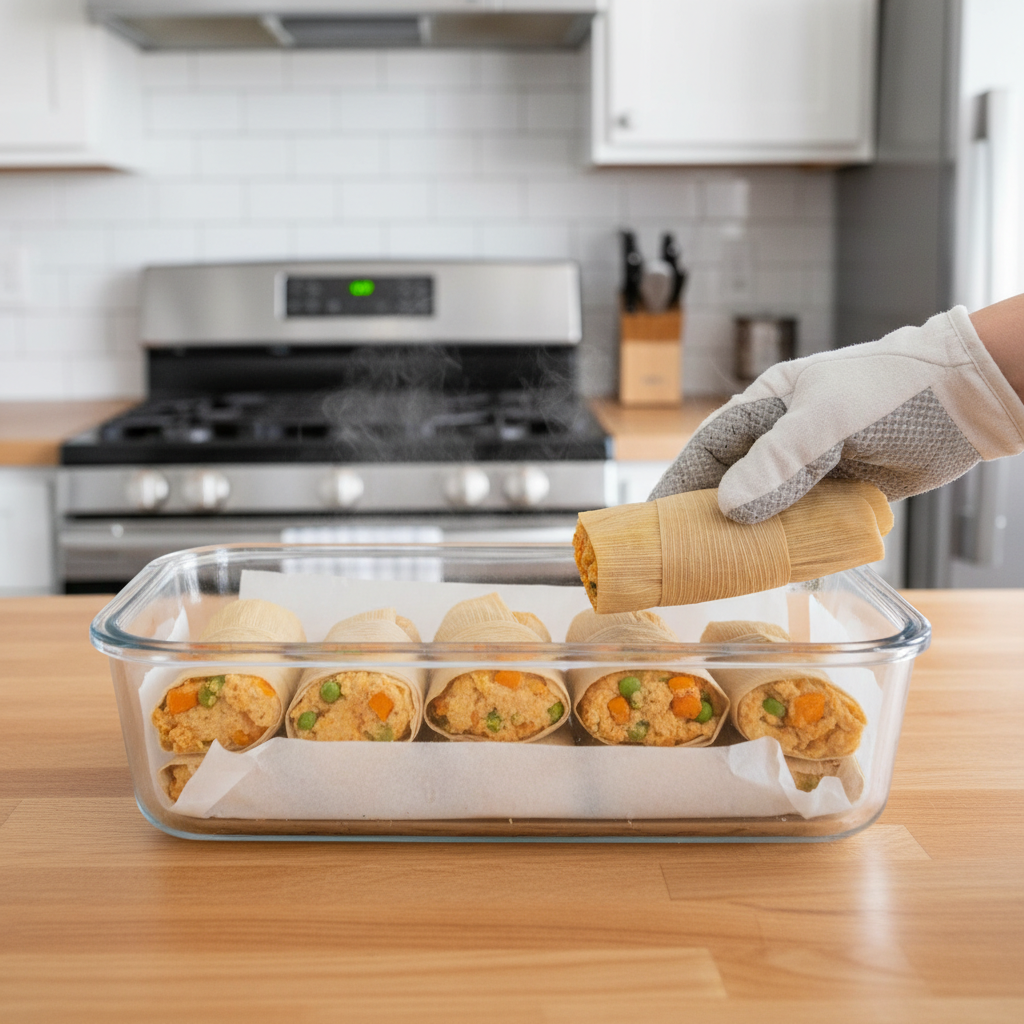
Proper storage is critical for both safety and convenience. Once cooked, these tamales can be a quick and healthy meal addition for days or weeks to come.
Cooling and Refrigeration
After steaming, remove the tamales from the pot and let them cool on a wire rack for at least 30 minutes. Once they are no longer hot to the touch, they can be stored in an airtight container in the refrigerator. They will remain fresh for up to 4 days.
Freezing for Long-Term Storage
For batch cooking, freezing is the ultimate hack. Follow this protocol to prevent freezer burn and maintain quality:
- Cool Completely: Ensure tamales are at room temperature. Freezing warm food creates excess ice crystals.
- Wrap Individually: For best results, wrap each tamale (still in its husk) tightly in plastic wrap or beeswax wrap. This provides the first barrier against freezer air.
- Batch Store: Place the individually wrapped tamales into a larger, freezer-safe zip-top bag or an airtight container. Squeeze out as much air as possible before sealing.
- Label and Date: Always label the container with the contents (“Dog Tamales”) and the date they were made. They can be stored in the freezer for up to 3 months.
Serving Instructions
NEVER SERVE THE HUSK. This is the most important rule. Before serving, always unwrap the tamale and discard the corn husk wrapper.
- Serving Size: A single tamale can be a special treat for a medium-to-large dog or a meal-topper to add excitement to their regular kibble. For a small dog, half a tamale is plenty. Adjust based on your dog’s size, activity level, and overall caloric needs.
- Reheating: To serve from frozen, you can thaw it in the refrigerator overnight. To serve warm (which enhances the aroma), you can steam it for a few minutes or microwave it for 30-45 seconds until just warm, not hot. Always test the temperature before giving it to your dog.
Conclusion
You’ve now successfully hacked a complex human dish, transforming it into a safe, nutritious, and cost-effective feast for your dog. By applying a forensic approach to ingredients and prioritizing canine biology over tradition, you’ve moved beyond being a simple pet owner and become a proactive guardian of your dog’s health. This recipe is more than a treat; it’s a testament to your commitment to providing the absolute best. Remember to always introduce new foods slowly, monitor for any digestive upset, and use these tamales as a joyful supplement to a balanced diet. Keep analyzing those labels, questioning the fillers, and reclaiming control of your dog’s bowl.