Easy Homemade Fish Stock for Dogs (Bone Broth Alternative)
The canine wellness world is saturated with trends, but few have had the staying power of bone broth. It’s touted as a miracle elixir for everything from joint pain to digestive woes. But here’s the insider secret they don’t tell you: traditional bone broth is time-consuming, expensive, and not always the most potent option. It’s time to expose the truth and introduce a superior alternative: homemade fish stock.
Forget simmering bones for 24 hours. A high-quality fish stock can be made in under an hour, delivering a more concentrated blast of anti-inflammatory Omega-3s, thyroid-supporting iodine, and joint-lubricating collagen. For dogs with sensitivities to common proteins like chicken or beef, fish stock is a game-changing, hypoallergenic powerhouse. This guide is your no-nonsense blueprint to ditching the overpriced commercial products and taking direct control of your dog’s nutrition. We will break down the science, the safety protocols, the exact recipe, and a forensic cost analysis that will change the way you think about meal toppers forever.
Why Fish Stock is the Ultimate Canine Superfood

The Insider’s Case: Why Fish Stock Trumps Bone Broth
Before you spend another dollar on a carton of so-called ‘pet-safe’ bone broth, it’s critical to analyze what you’re actually paying for. Traditional bone broths from land animals like beef or chicken require a low-and-slow cooking process, often up to 24 hours, to break down dense bones and connective tissues to release collagen and minerals. While beneficial, the nutritional profile pales in comparison to what can be extracted from fish frames in a fraction of the time.
The Nutritional Supremacy of Fish Stock
- Potent Omega-3 Fatty Acids: This is the number one reason fish stock dominates. Fish bones and heads are rich in EPA and DHA, powerful anti-inflammatory agents that are crucial for canine brain health, reducing joint inflammation, and promoting a lustrous skin and coat. Land animals simply do not offer this benefit.
- Rich in Iodine and Trace Minerals: Fish heads, in particular, contain thyroid tissue, which is a natural source of iodine and selenium. These are essential for regulating your dog’s metabolism and overall endocrine health.
- Rapid Collagen Extraction: Fish bones are smaller and less dense than beef marrow bones. This means beneficial gelatin and collagen, vital for gut health and joint cushioning, are extracted much more quickly, saving you time and energy.
- Hypoallergenic Advantage: Food allergies and sensitivities in dogs are rampant, with chicken and beef being two of the most common culprits. A stock made from a novel white fish is an excellent alternative for dogs with itchy skin or upset stomachs triggered by other proteins.
Hacker Tip: Don’t get caught up in the ‘long simmer’ myth. When it comes to fish, a shorter cooking time is actually better. Over-boiling for hours can destroy the delicate Omega-3s and can sometimes lead to a bitter taste. The sweet spot is 45-60 minutes.
Concerns about heavy metals like mercury are valid, but easily mitigated through intelligent sourcing. The key is to avoid large, predatory, long-living fish. By sticking to smaller, non-oily white fish, you get all the benefits with negligible risk—a protocol we will detail next.
Sourcing & Safety: Your Non-Negotiable Checklist
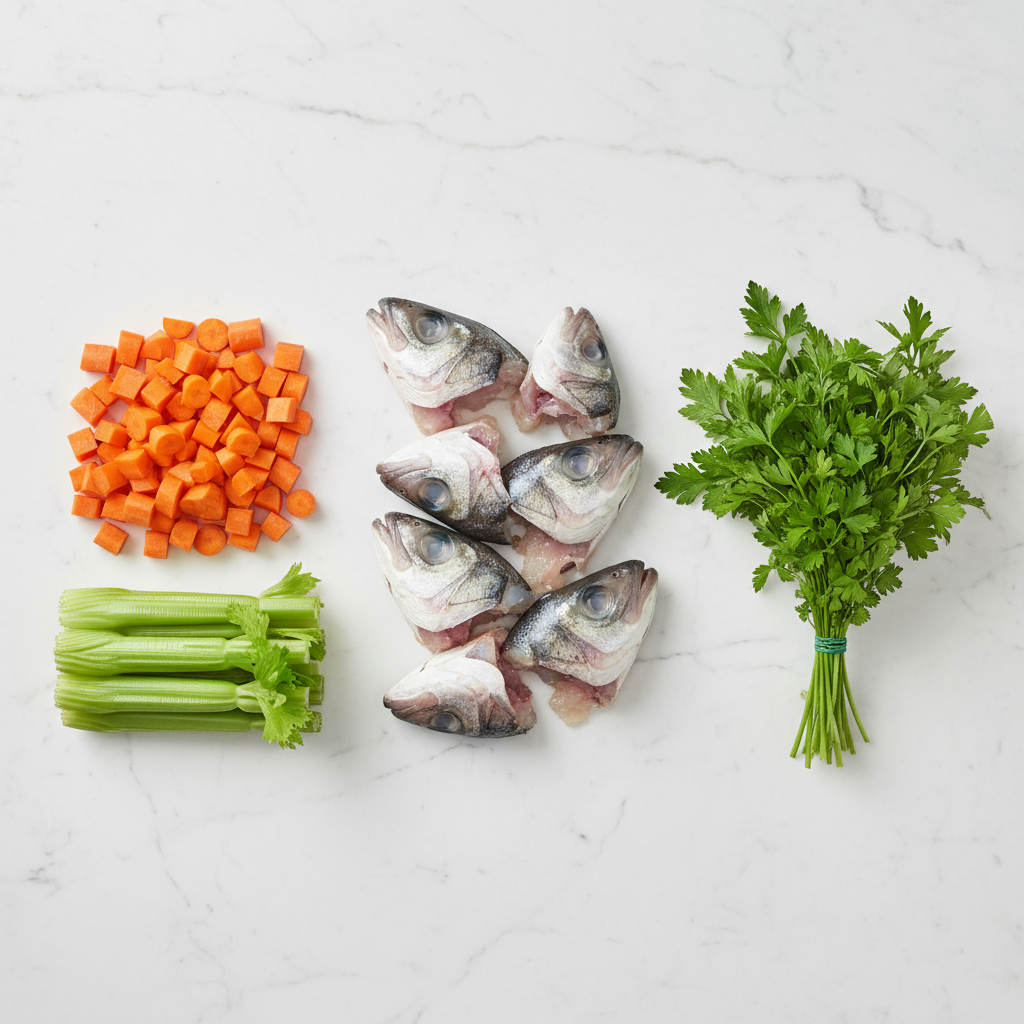
The Safe Chef’s Blueprint: Sourcing and Safety Protocols
MEDICAL DISCLAIMER: I am a canine nutrition analyst, not a veterinarian. This information is for educational purposes. Always consult with your veterinarian before making any changes to your dog’s diet, especially if they have underlying health conditions. This stock is a supplement, not a complete meal.
Crafting a safe and effective fish stock begins long before you turn on the stove. Your sourcing strategy is the most critical factor in creating a clean, nutrient-dense final product. Cutting corners here is not an option.
Choosing Your Fish: The Hacker’s Guide
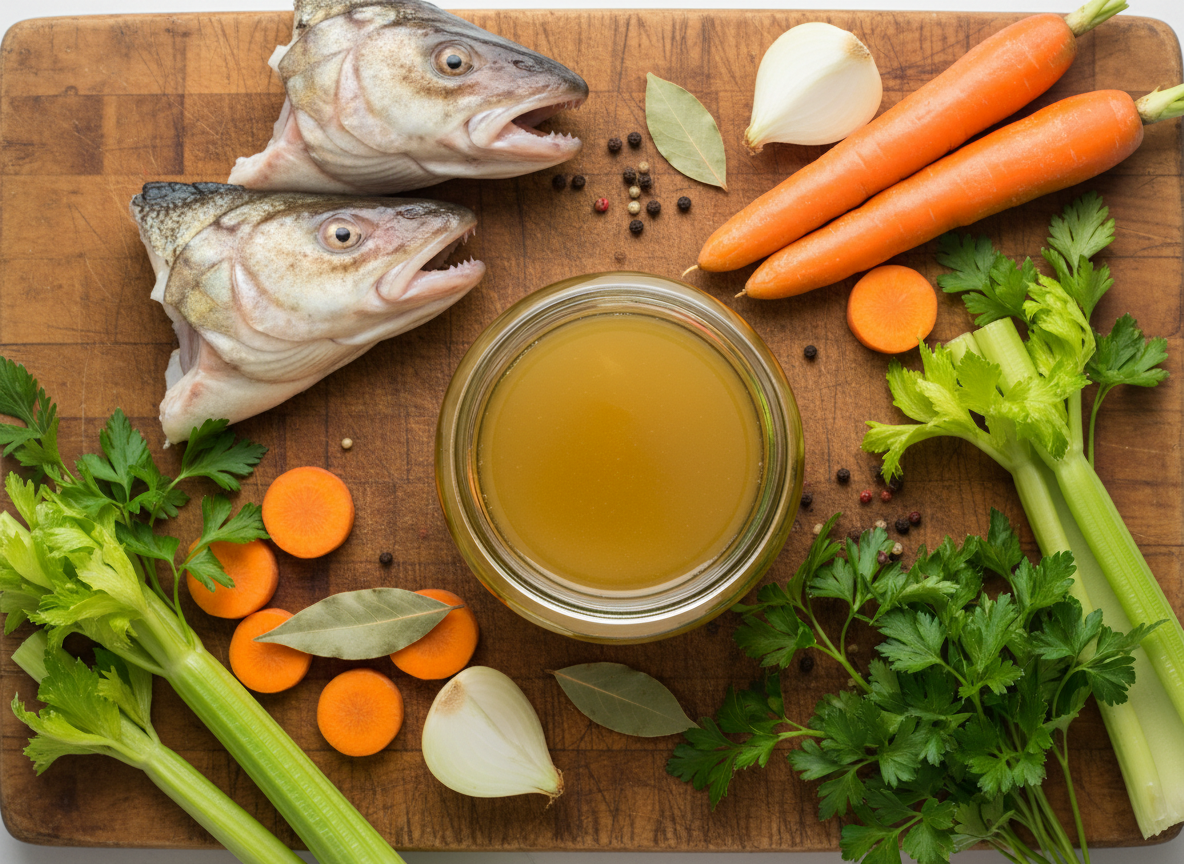
Your goal is to acquire the ‘frames’—the head, spine, and tail—after the fillets have been removed. This is where the highest concentration of collagen, calcium, and minerals resides.
- BEST Choices (Low-Mercury, Non-Oily): Focus on wild-caught fish whenever possible. Excellent options include Cod, Haddock, Flounder, Sole, Tilapia, Whiting, or any local, non-oily white fish.
- AVOID These Fish: Absolutely no large, predatory fish due to high mercury levels. This includes Tuna, Swordfish, Shark, King Mackerel, and Tilefish. Also, avoid using oily fish like salmon or sardines for the initial stock base, as the rendered fat can be too rich for some dogs and can go rancid quickly. You can always add a squirt of high-quality fish oil to the finished stock later.
Insider Secret: Your local fishmonger or the seafood counter at a high-end grocery store is your best asset. They often discard fish frames or will sell them to you for pennies on the dollar. Ask for ‘fish heads and racks for stock.’ You’ll be surprised how cheaply you can get premium ingredients.
Essential Safety Protocols
- NO Human Seasonings: This is a hard and fast rule. Do not add salt, onions, onion powder, garlic, or garlic powder. These are toxic to dogs. The only additions should be dog-safe vegetables and a splash of vinegar.
- Meticulous Straining is MANDATORY: Fish bones are small, brittle, and can become a serious choking hazard or cause internal perforation. You MUST strain the cooled broth at least twice. First through a colander to remove the large parts, and a second time through a fine-mesh sieve lined with cheesecloth to catch every last minuscule bone fragment. Do not skip this step.
- Introduce Slowly: Any new food can cause digestive upset. Start by adding just a teaspoon of the stock to your dog’s meal. Gradually increase the amount over a week to the recommended serving size for their weight.
The Bottom Line: Cost Breakdown vs. Commercial Broths

The Forensic Cost Analysis: DIY vs. Store-Bought
The pet food industry thrives on convenience and clever marketing. Commercial ‘bone broths’ and ‘meal toppers’ are a prime example, often sold in small cartons at a significant markup. Let’s break down the real numbers to expose the savings you’re missing.
We’ll analyze the cost to make a 64oz batch of homemade fish stock versus buying the equivalent amount of a popular premium pet broth.
| Metric | DIY Homemade Fish Stock | Premium Commercial Pet Broth |
|---|---|---|
| Primary Ingredient Cost | ~2 lbs Fish Frames (Often $0.00 – $4.00) | Proprietary Broth (High Water Content) |
| Additional Ingredients | ~ $2.00 (Carrots, Celery, Vinegar) | Often includes ‘Natural Flavors’, Yeast Extract, Salt |
| Total Cost for 64oz | $2.00 – $6.00 | $28.00 – $40.00 (based on average $7-10 per 16oz carton) |
| Cost Per Ounce | $0.03 – $0.09 | $0.43 – $0.62 |
| Quality Control | 100% Control. You choose the fish and organic veggies. | Unknown. Vague ingredient sourcing. |
| The Verdict | Massive cost savings for a vastly superior, fresher product. | Paying a premium for marketing, packaging, and often inferior ingredients. |
The financial argument is undeniable. You can produce a higher quality, more nutrient-dense product for, in some cases, less than 10% of the retail cost. You are paying brands for water, salt, marketing, and packaging. By investing one hour a month, you reclaim control over the quality and divert those savings into other areas of your dog’s care. This isn’t just about being frugal; it’s about being a savvy consumer who refuses to pay for hype.
The Master Recipe: Potent Fish Stock in Under an Hour
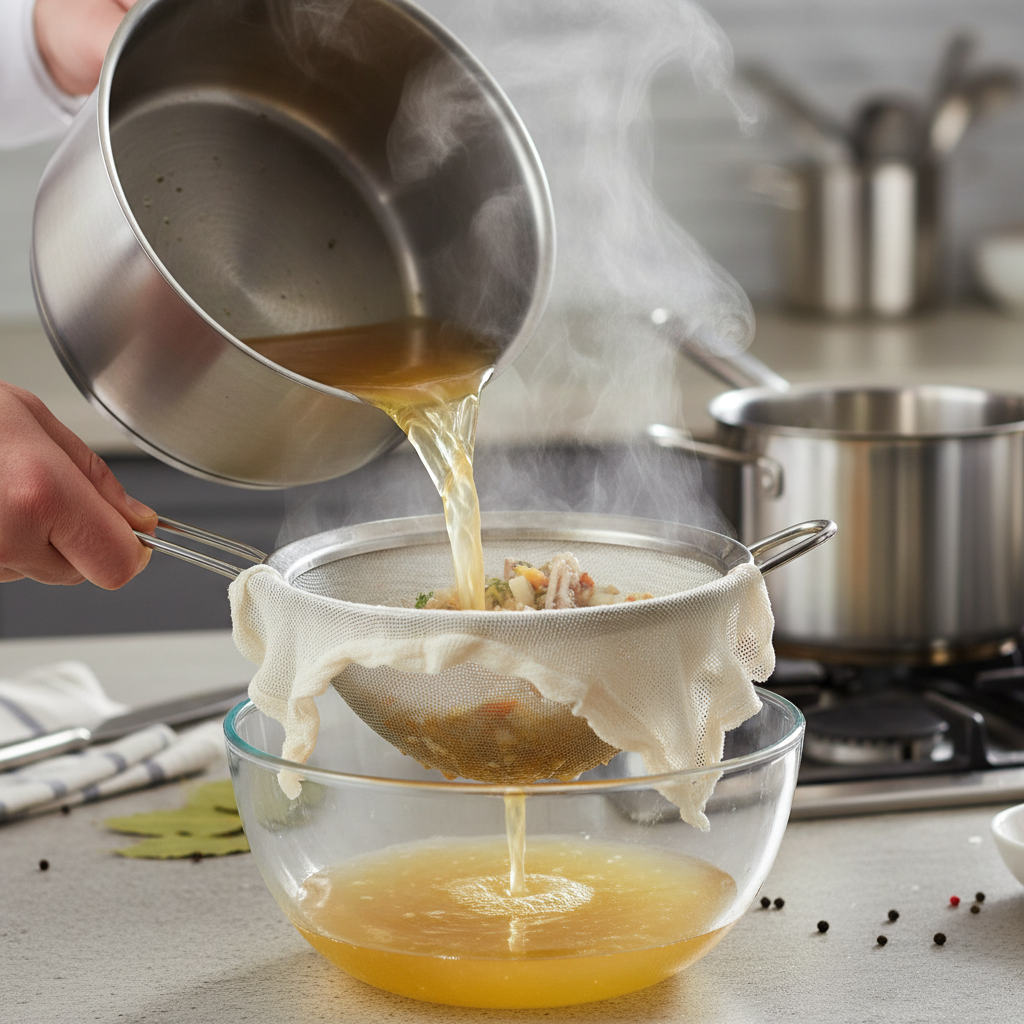
The Recipe: High-Potency Fish Stock in Under 60 Minutes
This is the master blueprint. It is simple, fast, and efficient. Follow these steps precisely for a perfect, gelatinous, nutrient-rich stock every time.
Ingredients & Equipment
- Equipment: Large stockpot, colander, fine-mesh sieve, cheesecloth, storage containers (glass jars or silicone trays).
- Ingredients:
- ~2 pounds of fish heads, frames, and collars from non-oily, white fish.
- 1-2 organic carrots, roughly chopped.
- 1 organic celery stalk, roughly chopped.
- A small handful of fresh parsley.
- 2 tablespoons of raw, unfiltered Apple Cider Vinegar (this helps pull minerals from the bones).
- Filtered water to cover.
Step-by-Step Instructions
- Rinse the Fish: Thoroughly rinse the fish parts under cold water to remove any remaining blood or impurities. Place them in your large stockpot.
- Add Vegetables & Vinegar: Add the chopped carrots, celery, parsley, and apple cider vinegar to the pot.
- Cover with Water: Add enough cold, filtered water to cover the ingredients by about two inches. Do not overfill.
- Bring to a SIMMER: Place the pot on the stove over medium-high heat. Watch it closely and bring it to a gentle simmer. Do NOT let it come to a rolling boil, as this can make the stock cloudy and break down delicate nutrients.
- Skim the Scum: As the stock heats up, a layer of foam or ‘scum’ will form on the surface. Use a large spoon to skim this off and discard it. This results in a cleaner, clearer final product.
- Simmer Gently: Reduce the heat to low, cover partially, and let the stock simmer gently for 45 to 60 minutes. The house will smell of the sea, which is a good sign!
- Cool Completely: Turn off the heat and let the stock cool down on the stove for at least an hour. This makes it safer to handle and helps the flavors meld.
- STRAIN, STRAIN, STRAIN: This is the most critical safety step. Place a colander over a large bowl and pour the stock through it to remove all the large bones and vegetables. Discard the solids. Then, line a fine-mesh sieve with a layer of cheesecloth and strain the liquid again into a clean bowl or jar. This second pass is non-negotiable and catches the tiny, dangerous bones.
The Gel Test: The Sign of a Quality Stock
After refrigerating for a few hours, your fish stock should set into a firm, Jell-O-like consistency. This ‘gel’ is the prized collagen and gelatin you worked to extract. If your stock is watery, it likely means your ratio of water to fish bones was too high. It’s still nutritious, but aim for the gel next time by using less water.
Batching & Dosing: The Smart Feeder’s Strategy
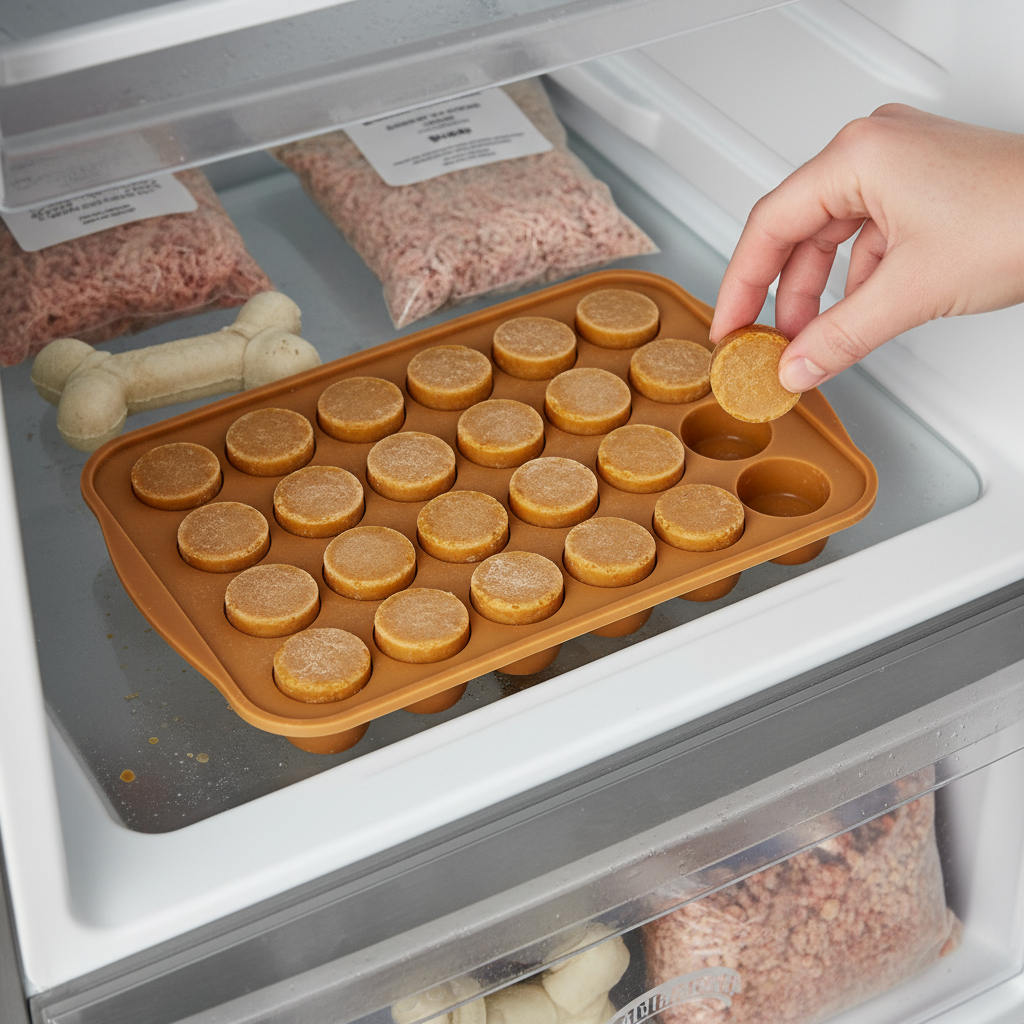
Storage and Application: Maximizing Every Drop
A single batch of this recipe will yield a significant amount of stock. Proper storage is key to preserving its freshness and nutritional integrity, allowing you to have a convenient supply on hand for weeks or even months.
Long-Term Storage: The Freezer Hack
While the stock will last for about 4-5 days in a sealed container in the refrigerator, freezing is the best method for long-term storage.
Hacker Tip: Forget trying to chip away at a large frozen block. The most efficient method is to use silicone molds. Pour the cooled stock into large ice cube trays, silicone muffin tins, or other flexible molds. Once frozen solid, you can pop out the individual ‘stock pucks’ and store them in a freezer bag. This allows you to grab a perfect, pre-portioned serving size without needing to thaw an entire container.
Serving Suggestions & Dosage
Fish stock is a versatile supplement that can enhance any meal. Remember to start small and observe your dog for any digestive changes.
- General Dosing Guide:
- Small Dogs (under 25 lbs): 1-2 tablespoons per day.
- Medium Dogs (25-60 lbs): 2-4 tablespoons (1/8 to 1/4 cup) per day.
- Large Dogs (over 60 lbs): 1/4 to 1/2 cup per day.
- Application Methods:
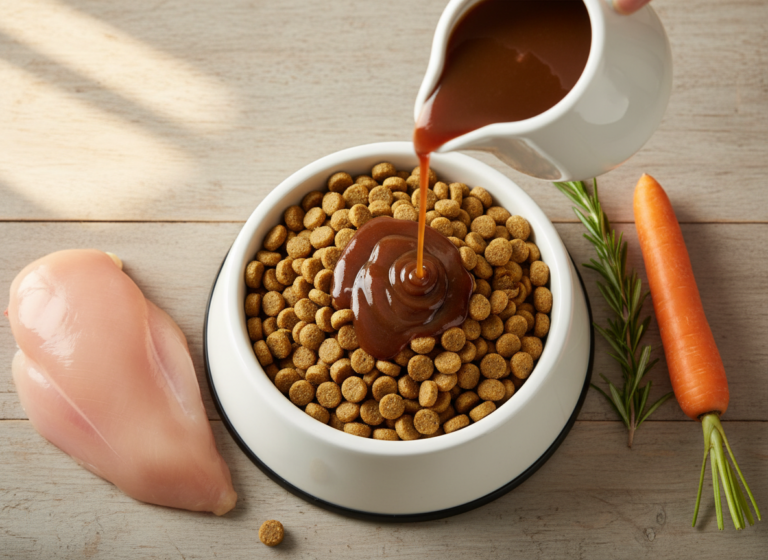
- Kibble Hydrator: This is the most popular use. Pour the liquid (or melted) stock over your dog’s dry kibble. This not only adds immense flavor and nutrition but also much-needed moisture to their diet, which is critical for urinary tract and kidney health.
- Rehydrate Freeze-Dried/Dehydrated Food: Use it as a supercharged replacement for water when preparing these types of foods.
- Frozen ‘Pupsicles’: On a hot day, serve one of the frozen stock pucks as a healthy, hydrating, and entertaining treat.
- Homemade Food Base: Use it as a nutritious liquid base when cooking homemade meals for your dog.
Conclusion
You now possess the knowledge to bypass the pet food industry’s marketing machine and create a superior nutritional supplement for a fraction of the cost. Homemade fish stock isn’t just a recipe; it’s a strategic upgrade to your dog’s diet. It’s a faster, more affordable, and often more nutritionally potent alternative to traditional bone broth, delivering a powerful dose of anti-inflammatory Omega-3s, joint-supporting collagen, and essential minerals.
By taking one hour to follow this blueprint, you are making a direct investment in your dog’s long-term health, from their skin and coat to their joints and cognitive function. Stop paying for clever packaging and start leveraging the power of real, whole-food nutrition. Your dog’s health—and your wallet—will thank you.