Feeding Great Danes: Critical Diet Tips To Prevent Bloat
Let’s be brutally honest. Owning a Great Dane means living with the constant, looming threat of Gastric Dilatation-Volvulus (GDV), commonly known as bloat. This isn’t a simple case of indigestion; it’s a catastrophic, fast-moving emergency where the stomach fills with gas and twists on itself, cutting off blood flow. For Great Danes, the risk isn’t just a possibility; it’s a statistical probability, with some studies suggesting up to 42% will experience it in their lifetime. As The Canine Nutrition Hacker, I’m not here to sell you a brand or offer fluffy advice. I’m here to arm you with the forensic knowledge to dismantle the risk factors, one bowl of kibble at a time. We’re going to analyze ingredients like a crime scene, expose the corporate shortcuts that endanger your dog, and build a bloat-prevention protocol that puts you in complete control. Your veterinarian handles the emergencies; our job is to ensure you never have to make that panicked, late-night call.
The Enemy Profile: What is Bloat and Why is Your Great Dane a Prime Target?
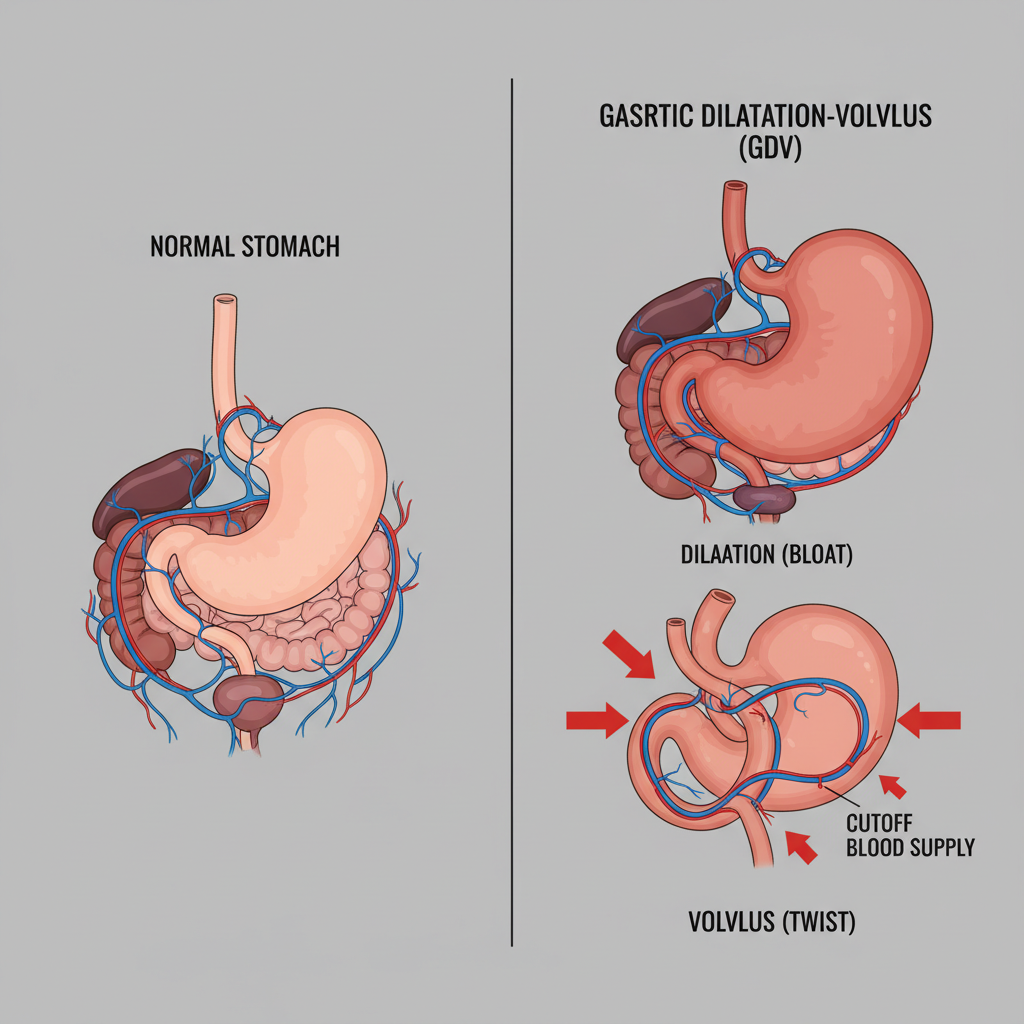
Before you can fight an enemy, you must understand it. GDV is a two-part catastrophe. First comes the ‘bloat’ or dilatation: the stomach rapidly fills with gas, fluid, or food, stretching like a balloon. The second, more lethal stage is the ‘volvulus’: the bloated stomach twists on its axis, sealing off both the entrance and exit. This traps the gas, cuts off blood supply to the stomach and spleen, and sends the dog into shock. Without immediate surgical intervention, it is fatal.
So, why the Great Dane? Their magnificent physique is, tragically, their biggest liability. The combination of a deep, narrow chest creates a pendulum-like effect, giving the stomach more room to swing and twist compared to a dog with a broader, more compact build. Add in their large size, and you have a perfect storm of anatomical risk factors. Genetics play a role, but the factors you can directly influence—diet and feeding habits—are your most powerful weapons. Ignoring them is not an option; it’s a gamble with your dog’s life.
Forensic Ingredient Analysis: High-Risk Foods to Eliminate Immediately
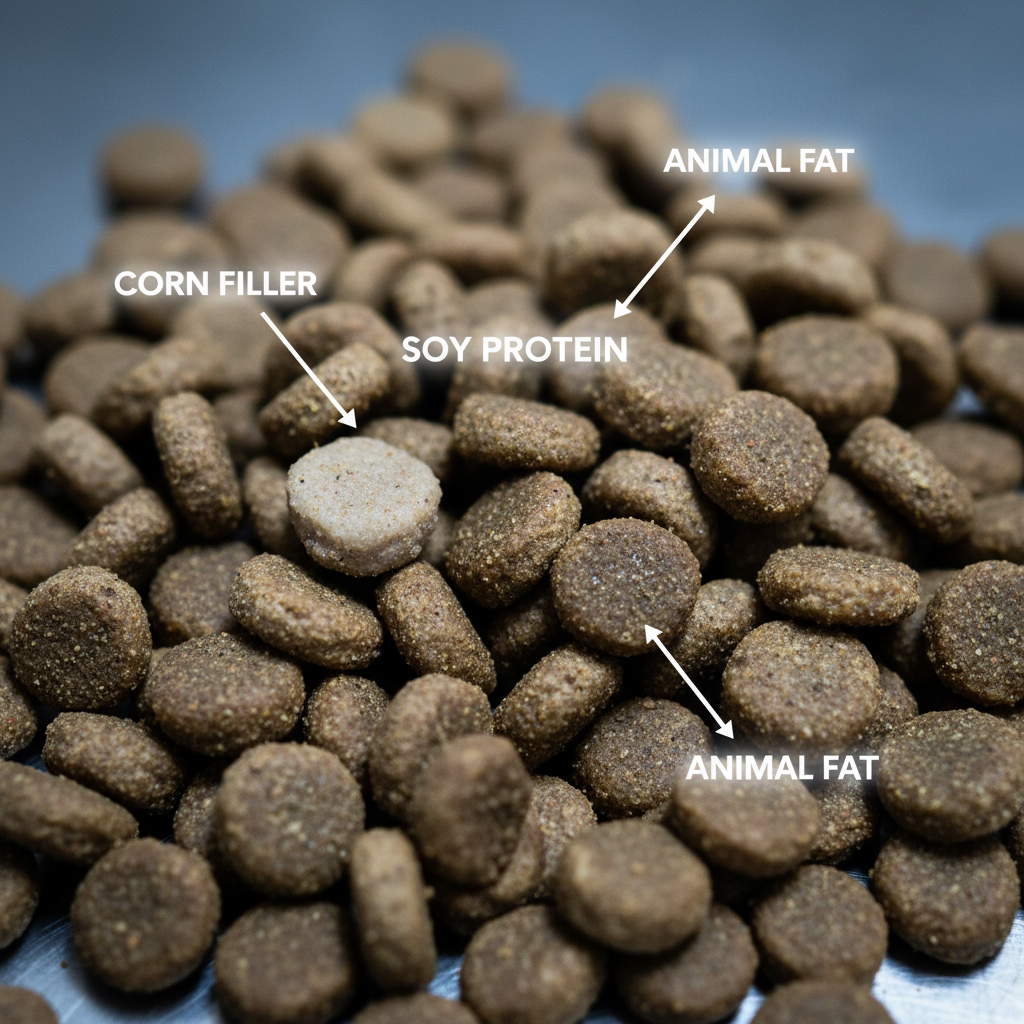
The pet food industry is a master of disguise, hiding cheap, problematic ingredients behind wholesome-sounding names. When it comes to bloat, certain ingredients are accelerants. Your first mission is to scan the ingredient panel of your dog’s food and identify these enemies.
Enemy #1: High Fat Content
Foods high in fat, particularly those listing a generic ‘animal fat’ or other high-fat source within the first four ingredients, are a major red flag. High-fat diets can significantly delay stomach emptying. The longer food sits in the stomach, the more time it has to ferment and produce gas, creating the perfect environment for dilatation. Look for large-breed formulas with a moderate fat content, typically between 12% and 18% on the guaranteed analysis.
Enemy #2: Fermentable Fillers
This is where big brands make their money and where your dog pays the price. Cheap, fermentable carbohydrates are used to bulk up foods while keeping costs down. These are the primary culprits for excessive gas production. Scrutinize the label for:
- Soybean Meal, Soy Hulls, or Soy Flour: Soy is a known gas-producer in many dogs.
- Corn Gluten Meal & Ground Corn: These are low-cost fillers that are harder for a canine digestive system to process efficiently.
- Wheat Middlings & Brewers Rice: Often leftover fragments from processing for human foods, offering minimal nutritional value and high potential for fermentation.
Enemy #3: Citric Acid as a Preservative
This is a controversial but critical point. Some studies have suggested a potential link between dry foods containing citric acid as a preservative and an increased risk of GDV, particularly if the food is moistened before feeding. While not conclusive for all dogs, for a high-risk breed like a Great Dane, it is a variable worth eliminating. Opt for foods preserved with mixed tocopherols (a source of Vitamin E) instead.
Hacker Tip: The ‘First 5 Ingredients’ rule is your gospel. These make up the bulk of the food. If you see more than one starchy filler (corn, soy, wheat) in that top 5, put the bag down. The manufacturer is prioritizing profit over your dog’s health. A high-quality, meat-based protein should always be the first ingredient. Period.
The Bloat-Proof Blueprint: Hero Ingredients & Optimal Formulation
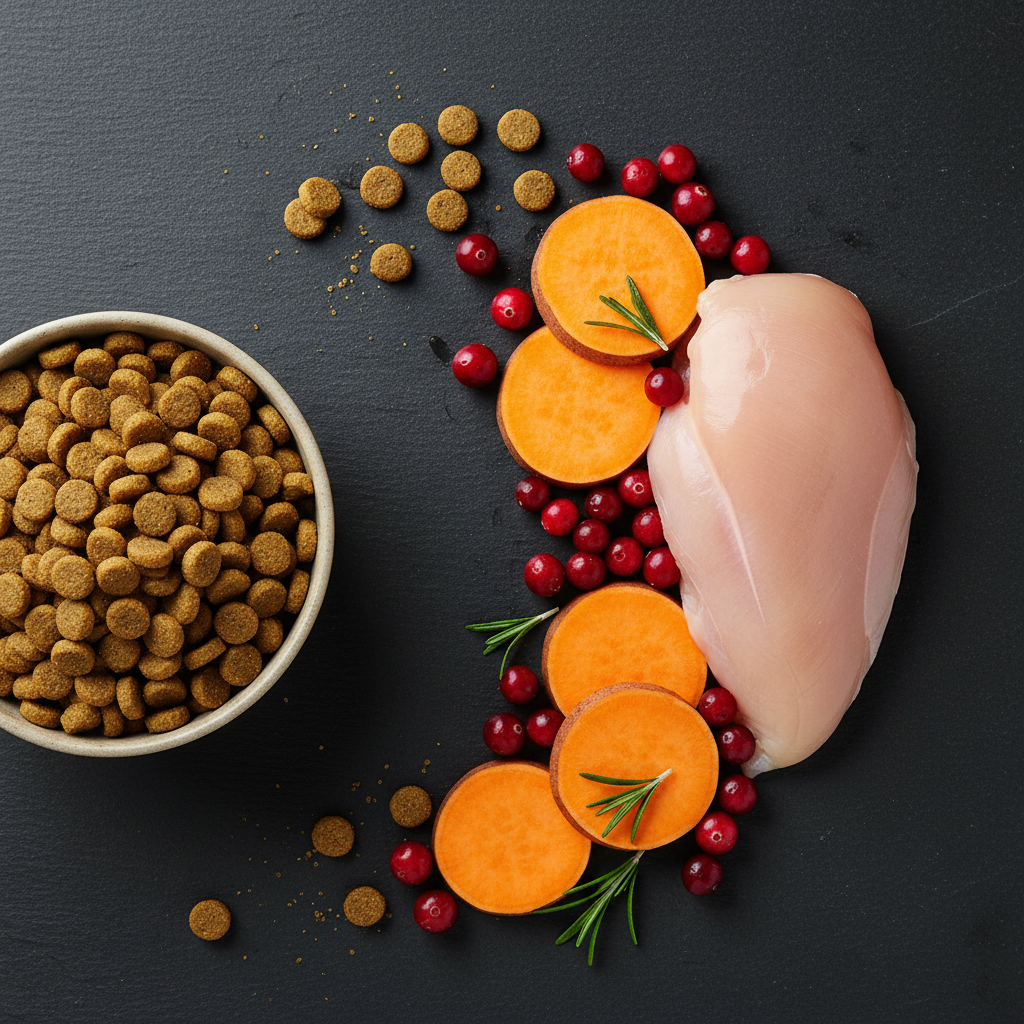
Now that we’ve blacklisted the enemies, let’s build our defense. A bloat-conscious diet for a Great Dane is about nutrient density, digestibility, and encouraging proper eating habits. It’s not about boutique brands; it’s about a superior formulation, regardless of price point.
Hero #1: High-Quality, Named Animal Protein
The foundation of a safe diet is a protein source that is easily digested. Look for ‘Deboned Chicken,’ ‘Lamb Meal,’ ‘Beef Meal,’ or ‘Fish Meal’ as the number one ingredient. ‘Meal’ is not a bad word; it’s a concentrated protein source where the water has been removed. Avoid vague terms like ‘Meat and Bone Meal’ or ‘Animal By-Product Meal,’ which can be of questionable quality.
Hero #2: Digestible Carbohydrates
Dogs do need carbs for energy, but the source matters. Swap the fermentable fillers for complex carbohydrates that are gentler on the digestive system. Top-tier choices include:
- Sweet Potatoes
- Pumpkin
- Peas
- Barley or Oatmeal (in moderation)
These provide sustained energy without the gassy side effects of corn and soy.
Hero #3: Larger Kibble Size
This is a physical defense mechanism. Some large and giant breed formulas are designed with larger-than-average kibble pieces. This simple design feature forces a dog to slow down and actually chew their food, rather than inhaling it. Chewing initiates the digestive process and reduces the amount of air swallowed, a key contributor to bloat.
Brand Comparison: High-Risk vs. Low-Risk Formulation
Let’s put this into practice. Here is a forensic breakdown of a typical low-quality food versus a well-formulated, bloat-conscious option. The brand names are irrelevant; the ingredient panel tells the whole story.
| Nutritional Feature | High-Risk Example Ingredient List | Low-Risk Example Ingredient List | The Hacker’s Verdict |
|---|---|---|---|
| First Ingredient | Ground Yellow Corn | Deboned Chicken | WINNER: Low-Risk. A meat-first formula is non-negotiable for a giant breed. Corn is a cheap, inflammatory filler. |
| Primary Carb Source | Soybean Meal | Sweet Potato & Peas | WINNER: Low-Risk. Sweet potato provides slow-release energy and fiber, while soybean meal is a known gas-producer. |
| Fat Source | Animal Fat (preserved with BHA) | Chicken Fat (preserved with Mixed Tocopherols) | WINNER: Low-Risk. A named fat source is always superior. Mixed tocopherols are a natural preservative, avoiding chemical alternatives. |
| Protein Percentage | 18% | 26% | WINNER: Low-Risk. Giant breeds need ample protein to maintain lean muscle mass, which supports their massive frame. 18% is inadequate. |
The Hacker’s Protocol: It’s How You Feed, Not Just What You Feed
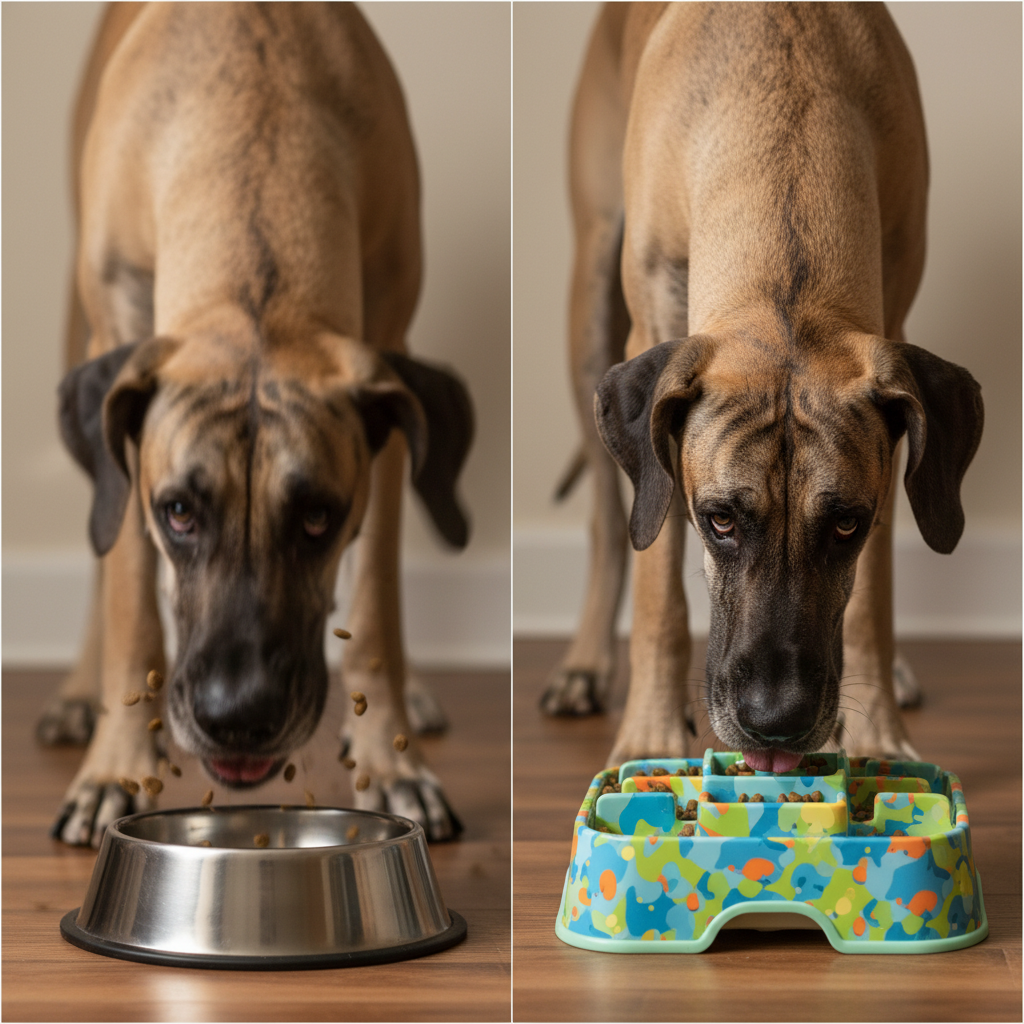
An elite-quality food can still lead to bloat if your feeding management is flawed. Gulping food and swallowing air are mechanical triggers for GDV. The following protocol is mandatory for any Great Dane owner.
- Divide and Conquer: Feed Multiple Small Meals. A non-negotiable rule. One large meal a day distends the stomach, stretching the ligaments that hold it in place and increasing the risk of a twist. Feed your adult Great Dane a minimum of two, preferably three, smaller meals spaced throughout the day.
- Destroy the Raised Feeder. This will be controversial for some, but we must follow the science. For years, raised bowls were thought to prevent bloat. However, a major study from Purdue University found that they may actually double the risk of GDV in large and giant breed dogs. Feed your dog from a bowl placed directly on the floor.
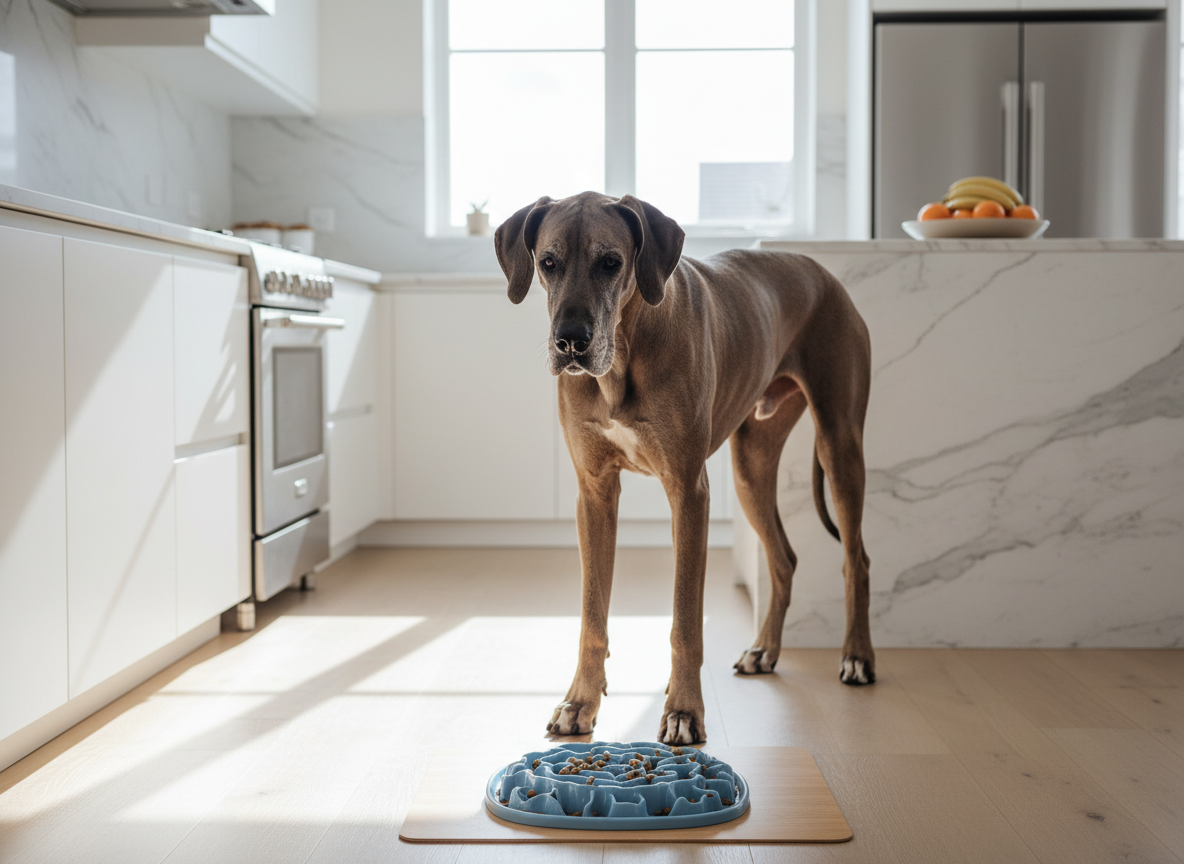
- Invest in a Slow-Feeder Bowl. This is the single most important tool in your arsenal. These bowls are designed with mazes and obstacles that force your dog to eat slowly and work for their food. This dramatically reduces air intake and can turn a 30-second meal into a 5-minute one. It provides mental stimulation and is a powerful anti-bloat device.
- Enforce the ‘No Work’ Zone Around Meals. The hour before and the two hours following a meal should be a period of calm. Strenuous activity, running, or even stressful events on a full stomach can initiate the torsion that leads to GDV. A calm walk is fine, but save the zoomies and dog park visits for another time.
- Control Water Consumption. A dog that has just finished a dry kibble meal will often try to gulp down an entire bowl of water. This can cause the kibble to expand rapidly in the stomach. While you should never restrict access to fresh water, pick up the water bowl for about 30 minutes immediately after a meal to encourage smaller, more sensible drinking.
Insider Secret: Many owners use puzzle toys or ‘snuffle mats’ for one of the daily meals. Spreading the kibble out and making the dog use their nose to find it is the ultimate slow-feeding method. It turns mealtime into a calming, mentally enriching activity instead of a frantic race.
The Ultimate Insurance Policy: Prophylactic Gastropexy
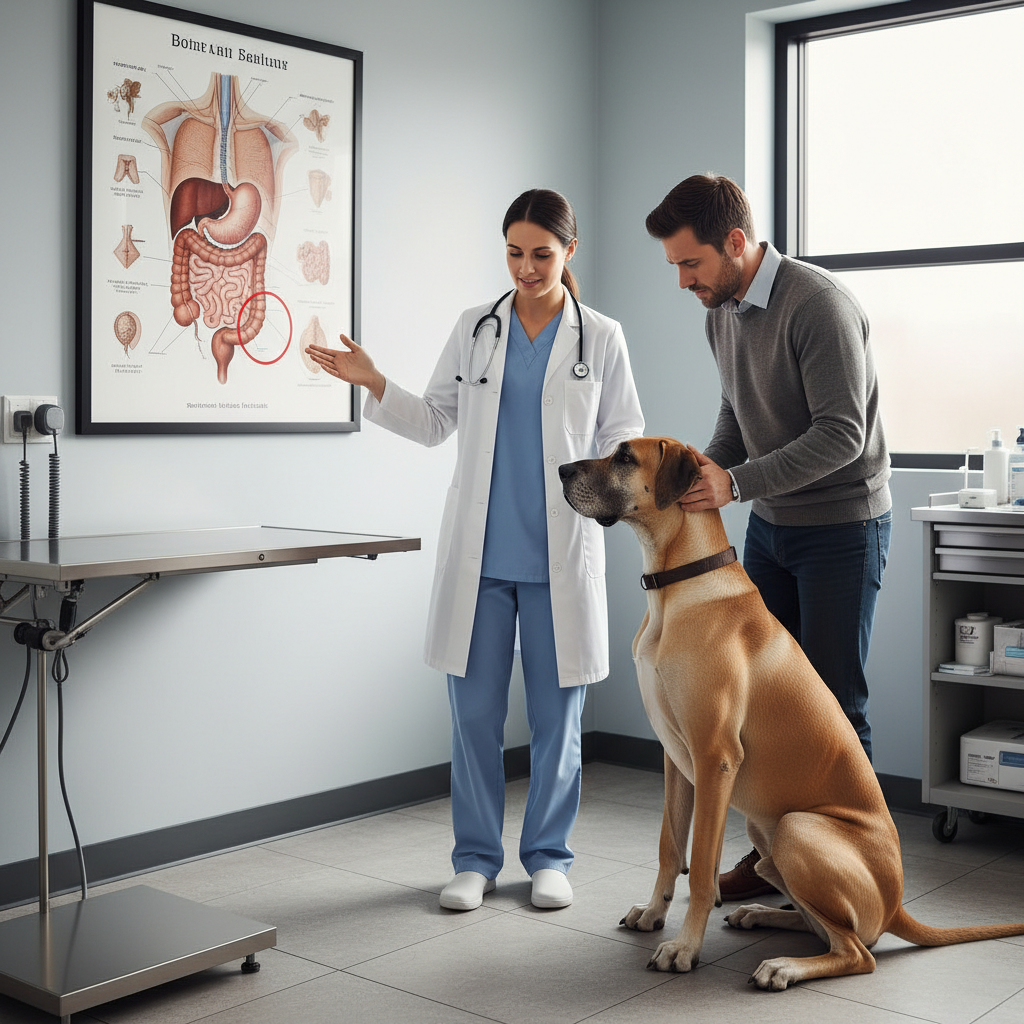
While diet and feeding protocols are your daily defense, there is a surgical procedure that acts as a powerful insurance policy: the prophylactic gastropexy. During this procedure, a veterinarian surgically attaches or ‘tacks’ the stomach wall to the abdominal wall. This does not prevent the stomach from dilating (the ‘bloat’ part), but it physically prevents the deadly torsion or ‘volvulus’. The stomach simply cannot twist.
This preventative surgery is often performed at the same time as a spay or neuter procedure, minimizing the need for separate anesthesia. For a breed as high-risk as a Great Dane, many veterinarians and breed experts consider it a standard of care. It is a one-time investment that can eliminate the most life-threatening aspect of GDV.
Medical Disclaimer
I am a canine nutrition analyst, not a veterinarian. The information in this article is for educational purposes only and is based on extensive research and analysis of nutritional science. The decision to perform a prophylactic gastropexy is a serious medical one. You must have a detailed conversation with your trusted veterinarian to assess your specific dog’s risk factors, health status, and the pros and cons of the surgery. This content is not a substitute for professional veterinary advice, diagnosis, or treatment.
Conclusion
Protecting your Great Dane from bloat is an active, daily commitment. It requires you to become a nutritional gatekeeper, a label detective, and a master of routine. There is no single magic kibble that will solve the problem. The power lies in a combined strategy: a meticulously chosen, low-risk food, served in multiple small portions from a slow-feeder on the floor, in a calm environment. You must reject marketing hype and focus solely on the ingredient panel. You must manage their exercise and water intake with vigilance. By implementing this hacker’s protocol, you are not just feeding your dog; you are actively defending them against their biggest inherent threat. You have the knowledge. Now, take control and give your gentle giant the long, healthy life they deserve.