
Megaesophagus Diet: How to Blend the Perfect Slurry Consistency
MEDICAL DISCLAIMER: The information in this article is for educational purposes only and is NOT a substitute for professional veterinary advice, diagnosis, or treatment. Always seek the advice of your veterinarian with any questions you may have regarding your dog’s medical condition. Never disregard professional veterinary advice or delay in seeking it because of something you have read here.
When your dog is diagnosed with megaesophagus, the world of feeding changes instantly. The standard ‘scoop and serve’ method is off the table, replaced by a critical, life-sustaining process. The single most important factor in managing this condition is the consistency of your dog’s food. Get it right, and you provide safe, effective nutrition. Get it wrong, and you risk regurgitation, weight loss, and the ever-present danger of aspiration pneumonia.
Forget generic advice. We’re going to break down the physics of a perfect slurry, deconstruct the nutritional requirements, and reveal the tools and techniques you need to become a master of your dog’s diet. This isn’t just about feeding; it’s about engineering a meal that uses gravity to its advantage, ensuring every calorie makes it to the stomach where it belongs. Let’s get to work.
The Physics of the Perfect Slurry: Why Consistency is King
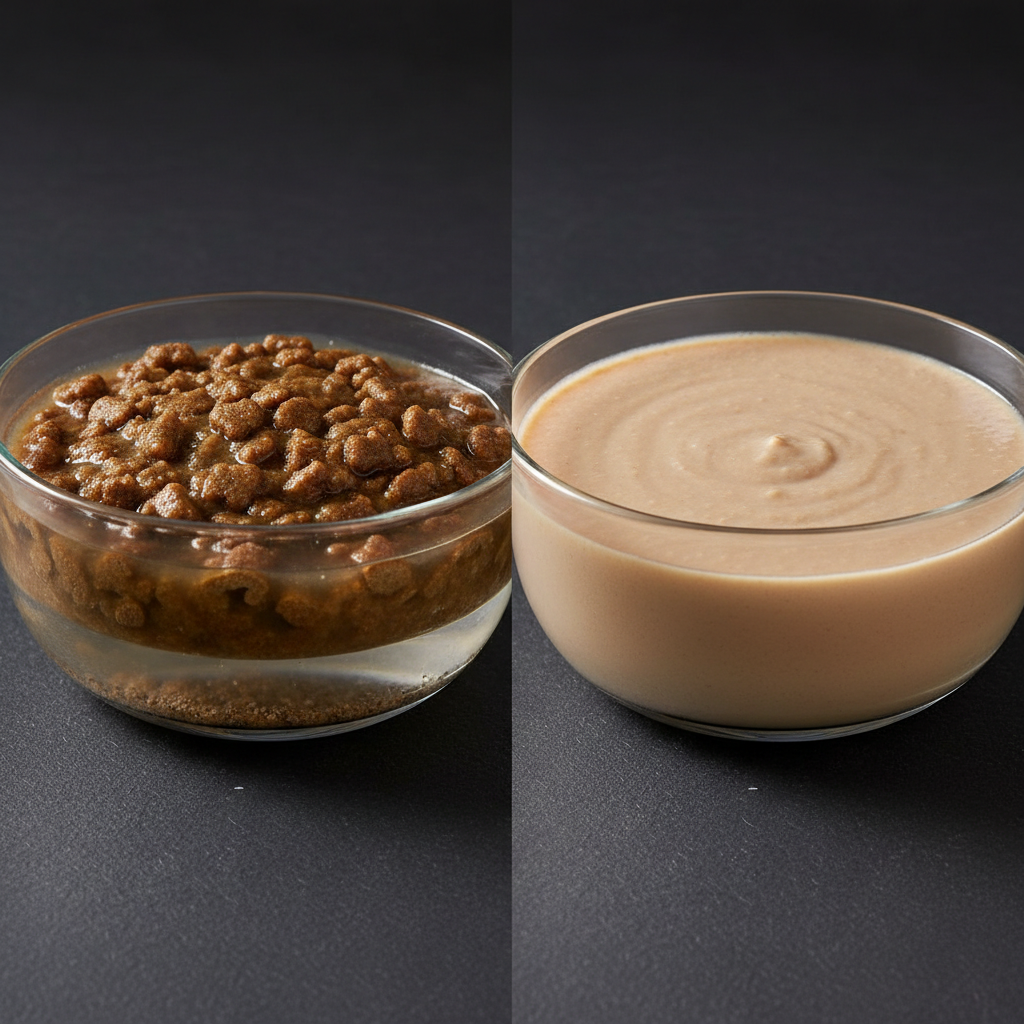
To effectively manage megaesophagus, you must first understand the mechanics of the problem. A healthy esophagus uses muscular contractions (peristalsis) to push food down to the stomach. In a dog with megaesophagus, the esophagus is enlarged and lacks this motility. It’s essentially a passive tube. The only force moving food is gravity. This is why consistency isn’t just a preference—it’s a physical requirement.
Your goal is to create a food slurry that is in the ‘Goldilocks Zone’:
- Not too thin: A watery or liquid consistency can easily be splashed around and aspirated into the lungs, leading to aspiration pneumonia, a life-threatening complication. Think of pouring water down a loose tube; it can go anywhere.
- Not too thick: A paste that is too dense or sticky can get stuck in the esophagus, leading to discomfort, regurgitation, and a failure to get nutrients into the stomach. Think of trying to push peanut butter through a straw.
The ideal consistency is a thick, smooth, cohesive milkshake or a soft-pudding texture. It must be a homogenous mixture with absolutely no chunks. A single piece of un-blended kibble or vegetable can cause a major setback. The slurry needs to hold together as a single mass as it travels down the esophagus, minimizing the risk of separation and aspiration.
Insider Secret: The ‘inverted spoon test’ is your best friend. Take a spoonful of the slurry and turn the spoon upside down. The slurry should hold its shape for a second or two before slowly sliding off in a single ‘plop’. If it runs off immediately, it’s too thin. If it doesn’t move at all, it’s too thick.
The enemy isn’t a specific ingredient, but a specific texture. Grittiness, chunks, and the separation of liquids and solids are the primary characteristics you must eliminate from every single meal.
Deconstructing the Diet: Core Components and Caloric Density
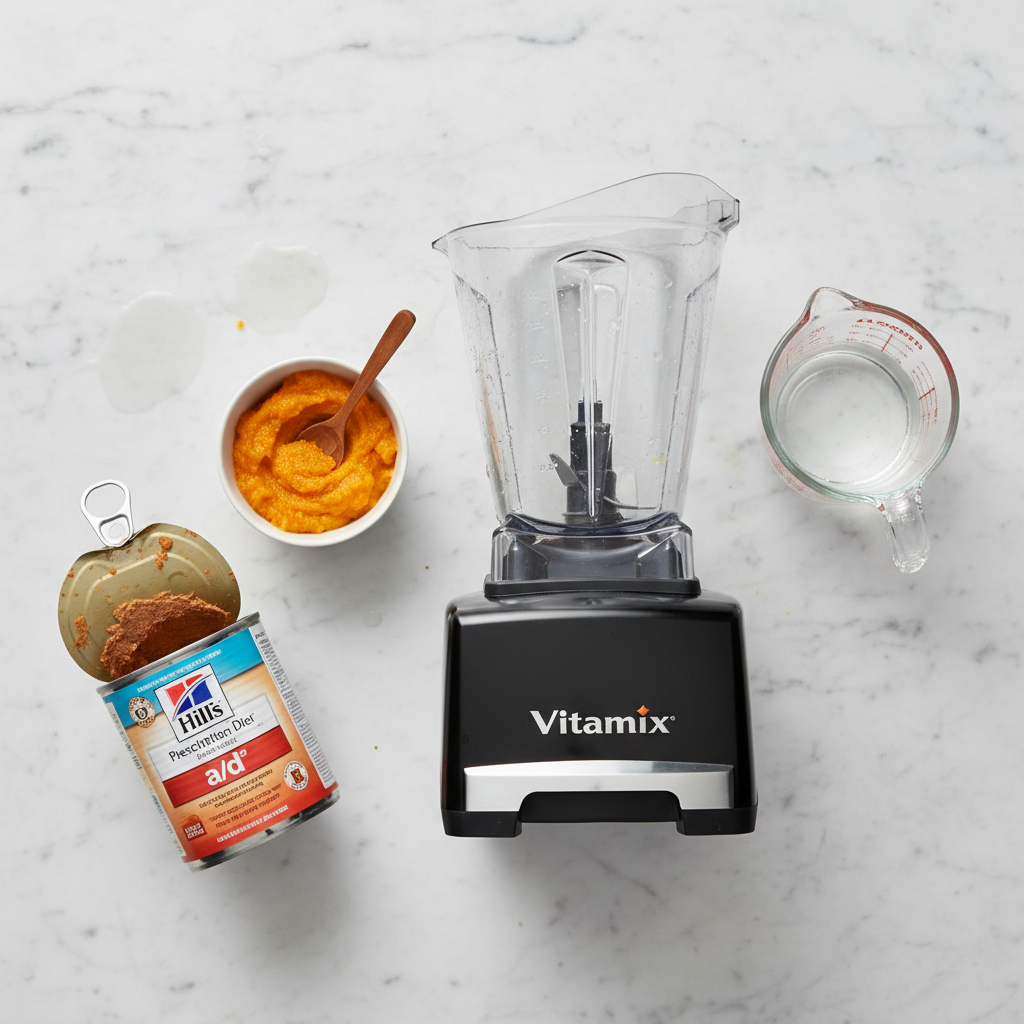
With megaesophagus, every spoonful counts. These dogs often struggle to maintain a healthy weight, so caloric density is a non-negotiable priority. You need the most nutritional bang for your buck in every blended meal. This is not the time for low-calorie or ‘diet’ foods.
The Foundation: High-Calorie Base Food
The safest and most efficient starting point is often a prescription high-calorie canned food recommended by your veterinarian. These formulas are specifically designed for recovery and critical care, meaning they are packed with easily digestible energy.
- Examples: Hill’s Prescription Diet a/d Urgent Care, Royal Canin Veterinary Diet Recovery RS, or similar therapeutic foods.
- Why they work: They are formulated to be extremely nutrient-dense, so a smaller volume provides more calories. They also tend to have a soft, uniform texture (pâté-style) that is ideal for blending into a smooth slurry.
While home-cooking is an option, it requires meticulous planning and supplementation to ensure it’s nutritionally complete. For most owners, starting with a proven veterinary diet provides a reliable, balanced foundation.
Hero Ingredients for Hacking Nutrition
Once you have your base, you can incorporate specific ‘hero ingredients’ to boost calories and improve consistency, always with your vet’s approval:
- Pureed Pumpkin (100% pure): A fantastic source of fiber that can help with consistency. It adds substance to the slurry without a huge number of calories. Ensure it’s not pumpkin pie filling.
- High-Calorie Supplements: Products like Dyne or similar high-calorie liquid supplements can add a significant energy boost with just a small volume. Use as directed by your vet, as they are extremely concentrated.
- Healthy Fats: A small amount of coconut oil or fish oil can add calories, but must be used cautiously. They must be fully emulsified into the slurry to prevent them from separating and posing an aspiration risk.
Hacker Tip: Forget the ‘grain-free’ marketing fads for this specific condition. For a megaesophagus dog, a high-quality, calorie-dense prescription diet is often the safest and most effective foundation. We are hacking for survival and optimal nutrition, not following trends. The goal is a safe, digestible, high-energy food that blends perfectly.
The Blender Masterclass: Tools and Techniques for a Flawless Blend
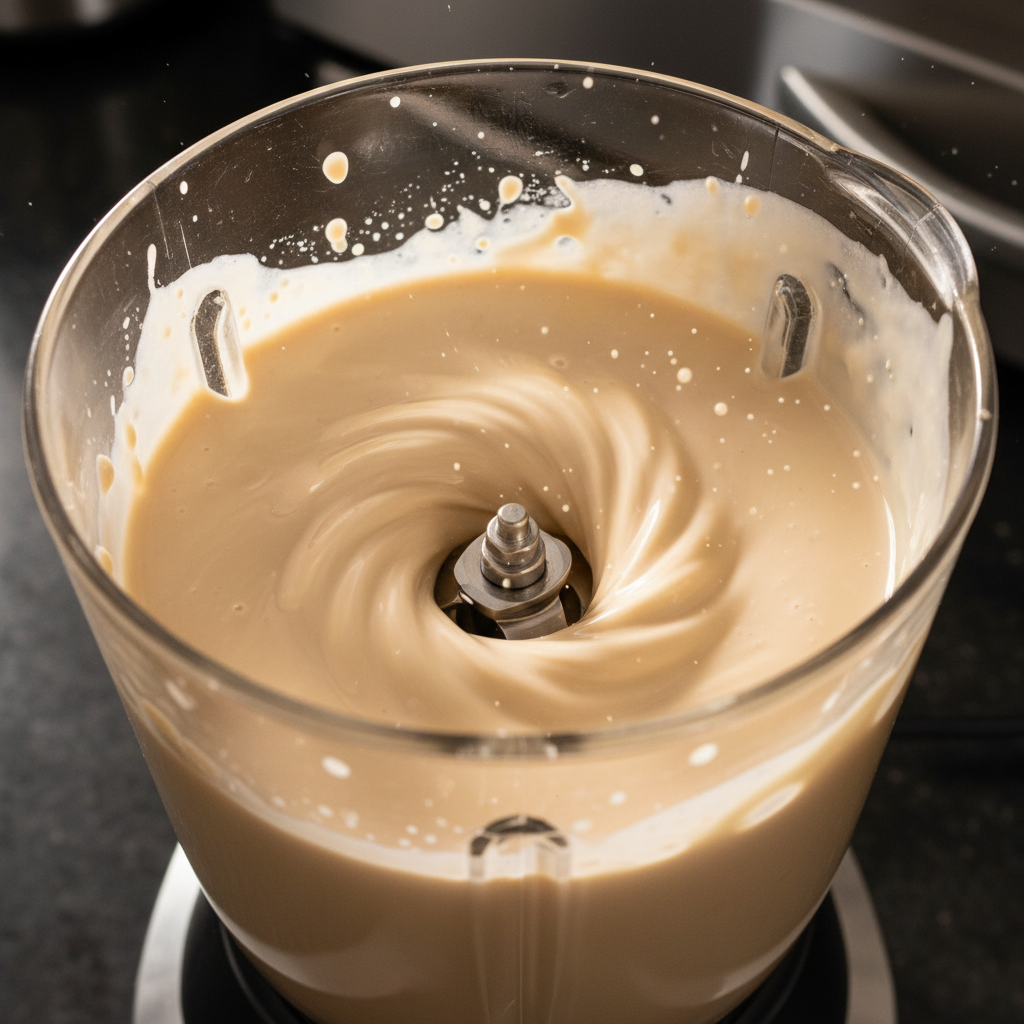
For the owner of a megaesophagus dog, a blender is not a kitchen gadget; it’s a piece of essential medical equipment. A standard, low-wattage blender will not suffice. It will leave behind small chunks and can overheat from the strain of creating a truly smooth slurry day after day. Investing in a high-powered blender (e.g., Vitamix, Blendtec) is one of the most important steps you can take.
The Step-by-Step Blending Protocol
Follow this procedure for a perfect, repeatable result every time:
- Liquids First: Always add your liquid (water or a vet-approved broth) to the blender first. This helps the blade move freely and prevents the thicker ingredients from getting stuck at the bottom.
- Add Soft Foods: Next, add your canned food base, pumpkin, or any other soft ingredients.
- Add Supplements: Add any powdered or liquid supplements, including thickeners (which we’ll cover next).
- The Blending Process: Secure the lid. Start the blender on its lowest setting to begin incorporating the ingredients. Gradually increase the speed to high. Let it blend for a full 60 to 90 seconds. This may seem like a long time, but it’s crucial for breaking down every last particle and creating a truly homogenous mixture.
- Perform the Consistency Check: After blending, let the slurry sit for a minute, then perform the ‘inverted spoon test’. If it needs adjustment, now is the time to do it.
Always serve the food at room temperature or slightly warmed. Cold food can decrease esophageal motility even further. You can warm the slurry by placing its container in a bowl of warm water; never microwave it, as this can create dangerous hot spots.
Hacker Tip for Sanity: Batch processing is a game-changer. Prepare 2-3 days’ worth of slurry at once. Portion the meals into airtight containers and refrigerate. This not only saves you immense time but also ensures consistency from one meal to the next. For longer-term storage, pour the slurry into large silicone ice cube trays, freeze, and then store the frozen blocks in a freezer bag.
Hacking Consistency: Thickeners, Binders, and Troubleshooting
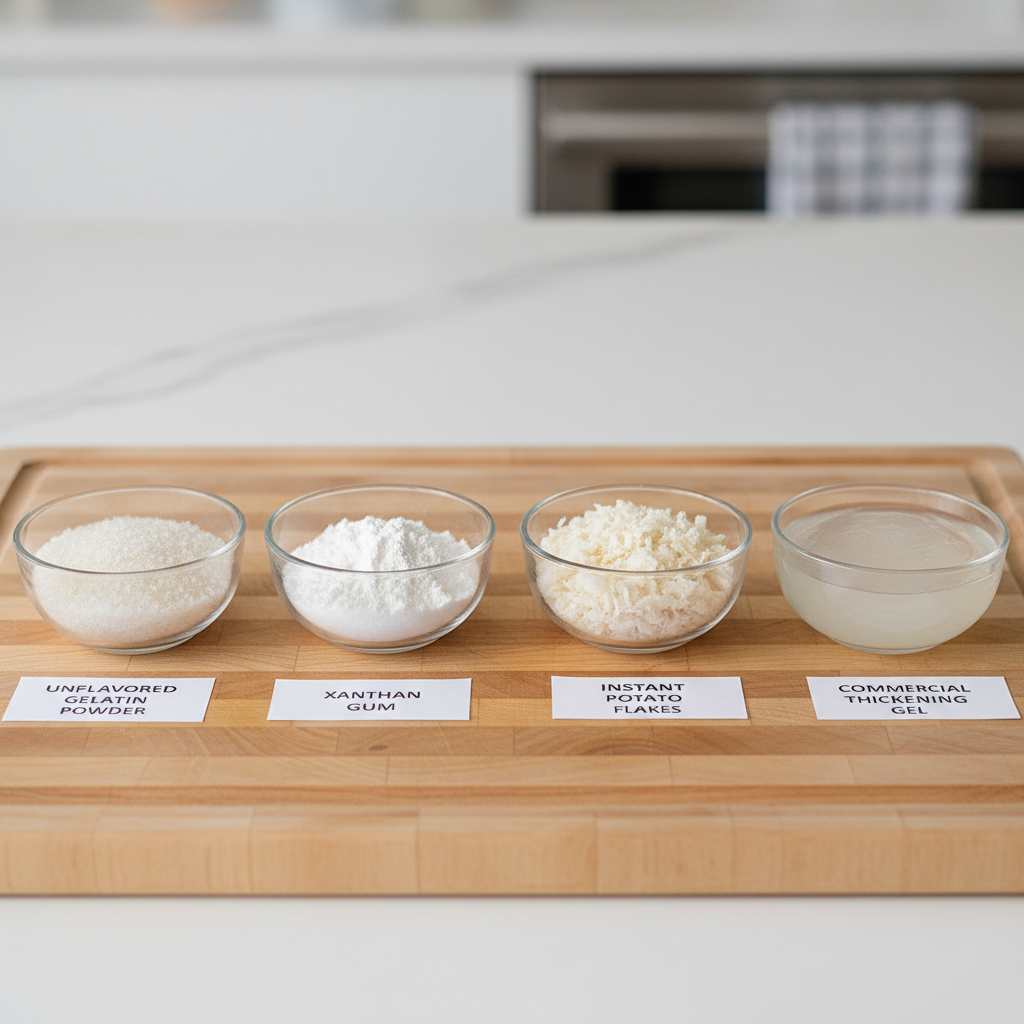
Even with the best blender and base ingredients, you may need to fine-tune the slurry’s consistency. This is where thickeners and binders become your secret weapons. These agents help you achieve that perfect ‘Goldilocks’ texture and ensure it remains stable. Always discuss the use of any new additive with your veterinarian.
Thickener Comparison
Here is a breakdown of common options used to adjust slurry consistency:
| Thickener | Pros | Cons | Best For |
|---|---|---|---|
| Unflavored Gelatin | Easy to find, inexpensive, adds a small amount of protein. | Must be ‘bloomed’ in cool water before adding to the blend. Can become too rubbery if overused. | Adding a cohesive, Jell-O like quality to the slurry, helping it hold together. |
| Xanthan Gum | Extremely powerful; a tiny amount goes a long way. Creates a very stable, non-separating slurry. | Easy to overdo, resulting in a slimy texture. Can cause GI upset in some sensitive dogs. Use sparingly. | Preventing water from separating out of the slurry after it sits. |
| Instant Potato Flakes | Readily available, adds carbohydrates and calories. Works very quickly. | Can significantly alter the guaranteed analysis of the meal. Not ideal for dogs with specific dietary needs (e.g., low-carb). | Quickly thickening a blend that was made with too much water. |
| Commercial Thickeners (e.g., Thick-It, SimplyThick) | Designed for human dysphagia, providing consistent, reliable results. Often tasteless and odorless. | Can be expensive. The specific ingredients should be cleared by your veterinarian. | Medically fragile dogs or situations where precise, repeatable consistency is paramount. |
Troubleshooting Common Slurry Problems
Problem: My slurry is too thin and watery.
Solution: This is the most common issue. Add a small amount of your chosen thickener and re-blend for 30 seconds. For potato flakes, add one teaspoon at a time. For xanthan gum, add no more than 1/8 of a teaspoon for a large batch. It’s always easier to add more than to correct an over-thickened blend.
Problem: The slurry separates into solids and liquid after sitting in the fridge.
Solution: This indicates a lack of binding. A tiny pinch of xanthan gum before blending can act as an emulsifier to hold it together. Alternatively, a quick re-blend right before serving will solve the problem.
Problem: My dog is still regurgitating or coughing after meals.
Solution: Contact your veterinarian immediately. This is a critical warning sign. The consistency may need further adjustment, but it could also indicate an issue with your feeding technique (e.g., the angle of their upright position in a Bailey chair) or a developing case of aspiration pneumonia. Do not delay in seeking professional medical advice.
Conclusion
Managing a dog with megaesophagus is a significant commitment, transforming you from a simple pet owner into a dedicated canine nutritionist and caregiver. The learning curve can be steep, but it is not insurmountable. By understanding the fundamental principles of slurry physics, prioritizing caloric density, investing in the right tools, and mastering the art of consistency, you can provide a safe and highly nutritious diet for your beloved companion.
Remember the key takeaways: start with a high-calorie, vet-approved base. Acknowledge that the perfect ‘thick milkshake’ consistency is non-negotiable. Utilize a high-powered blender and don’t be afraid to use thickeners as a tool to achieve perfection. You are your dog’s most important advocate. By taking control of their diet with this level of precision, you are giving them the absolute best chance at a long, happy, and well-fed life.