Raw Feeding: Are Pheasant Bones Safe for Dogs to Eat?
Let’s address the question directly: Are pheasant bones safe for dogs? The answer is a conditional, and very specific, yes. In the world of canine nutrition, blanket ‘yes’ or ‘no’ answers are for amateurs. We, as savvy owners, operate in the realm of specifics, risk analysis, and biological appropriateness. The internet is littered with conflicting advice, fear-mongering, and dangerous old wives’ tales. My purpose is to arm you with the data and protocols to make an informed, safe decision for your canine companion.
Forget what you’ve heard about ‘all bones are bad.’ That’s a myth perpetuated by a lack of understanding. The real danger lies in one critical factor: temperature. The difference between a raw pheasant bone and a cooked one is the difference between a nutrient-dense dental tool and a potentially lethal weapon to your dog’s digestive tract.
SAFETY DISCLAIMER: I am The Canine Nutrition Hacker, an expert in nutritional analysis, not a veterinarian. The information provided here is for educational purposes based on extensive research and experience. Always consult with a qualified veterinarian or a certified canine nutritionist before making significant changes to your dog’s diet, especially if your dog has pre-existing health conditions. You are solely responsible for your dog’s health and safety.
This guide will deconstruct the pheasant, analyze the structural integrity of its bones, and provide you with a hacker’s protocol for safe sourcing, preparation, and feeding. We will treat this not as a casual treat, but as a calculated nutritional supplement that demands respect and proper procedure.
The Raw vs. Cooked Bone Doctrine: A Non-Negotiable Rule
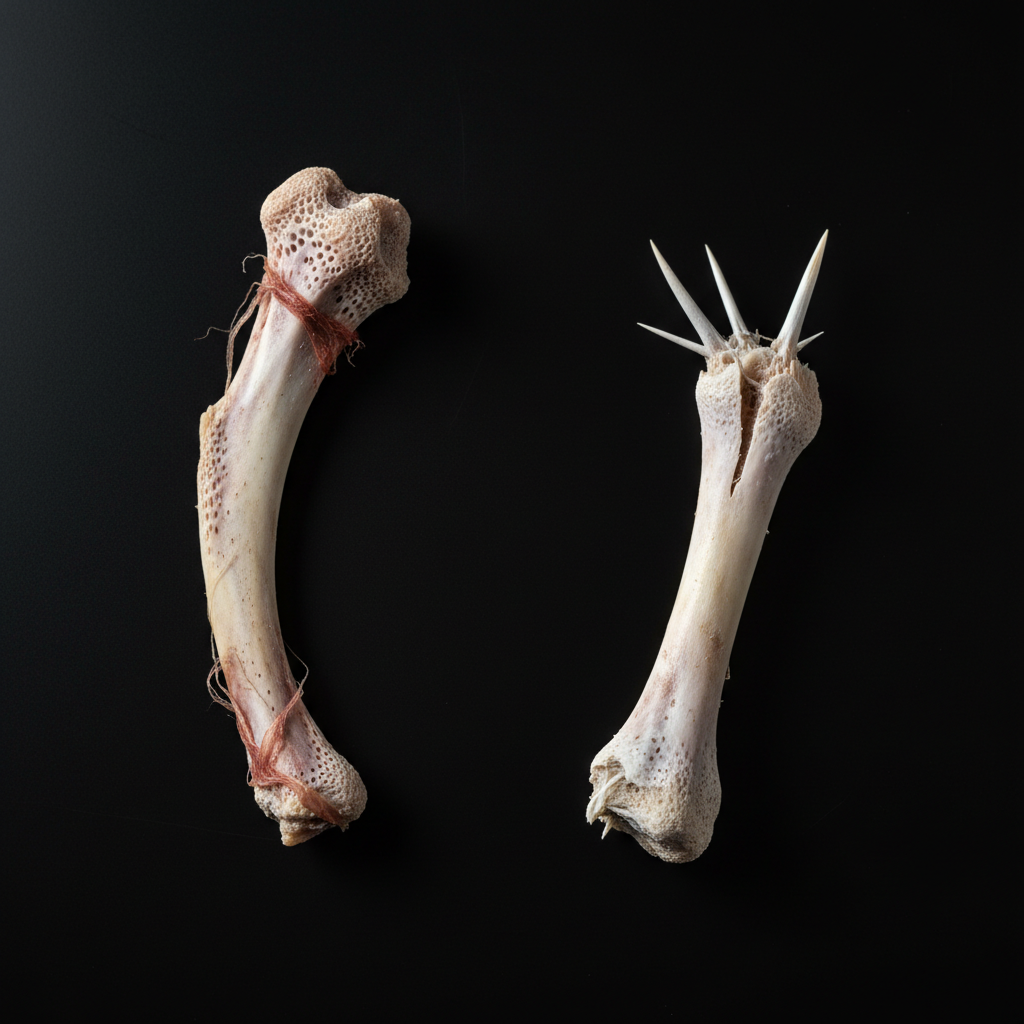
Before we even discuss the type of animal or the specific bone, we must establish the foundational principle of raw feeding: Cooked bones are never, under any circumstances, safe for dogs. This is not a guideline; it is an immutable law of canine safety. When a bone is cooked—whether baked, boiled, fried, or grilled—its molecular structure changes dramatically. The cooking process leaches out moisture and collagen, transforming the bone from a pliable, relatively soft material into a brittle, glass-like substance.
When a dog chews on a cooked bone, it doesn’t grind down; it splinters. These splinters become sharp, dagger-like shards that can cause a horrifying list of medical emergencies:
- Oral Lacerations: Sharp fragments can cut the tongue, gums, and inside of the mouth, leading to pain and infection.
- Choking Hazard: A piece can easily lodge in the throat, obstructing the airway.
- Esophageal or Intestinal Perforation: This is the most catastrophic risk. A sharp splinter can puncture the wall of the esophagus, stomach, or intestines, leading to internal bleeding, sepsis (a massive internal infection), and is often fatal without immediate, emergency surgery.
- Intestinal Blockages: Larger, undigested pieces can cause a complete obstruction, requiring complex and expensive surgical removal.
Raw bones, conversely, are what a canine’s digestive system evolved to handle. They are soft enough to be chewed and crushed by a dog’s powerful jaw. The stomach acid of a healthy dog is highly acidic (with a pH of 2 or less), which is more than capable of breaking down raw bone, cartilage, and connective tissue, allowing the dog to absorb the rich nutrients within.
Hacker’s Insider Secret:
Think of it like this: a raw carrot will bend and then snap, but a dehydrated, old carrot will shatter into sharp pieces. Cooking does the same thing to the collagen matrix within bones. It removes the flexibility, leaving only the brittle calcium phosphate structure behind. A raw feeder doesn’t just give their dog a bone; they provide a bio-available, moisture-rich package of minerals that the dog’s body is specifically designed to process.
Understanding this fundamental difference is the price of admission to feeding any bone, pheasant or otherwise. If you are not prepared to handle raw meat and bone, do not proceed. The risks of improper handling or ‘cheating’ by cooking the bone are far too severe.
Deconstructing the Pheasant: A Guide to Safe Cuts
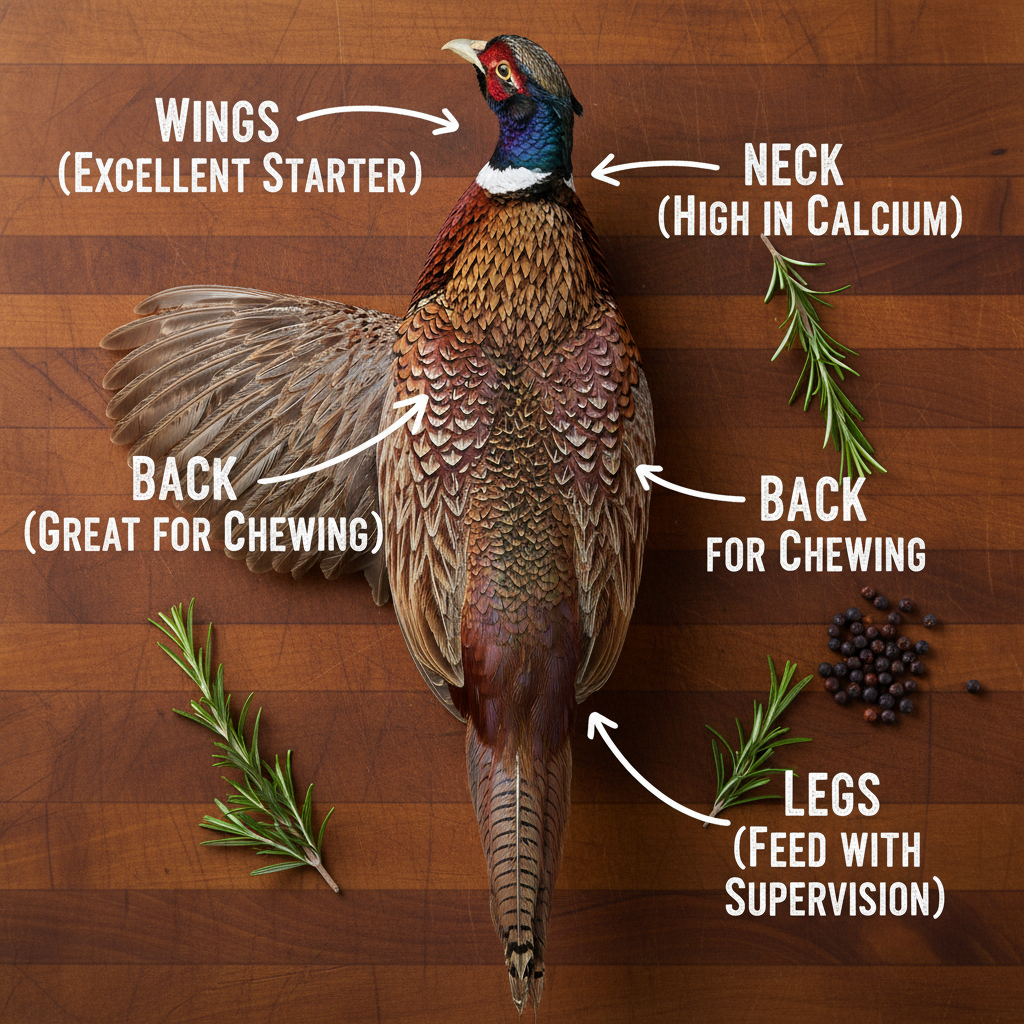
Not all parts of a pheasant are created equal in terms of safety. As a nutrition hacker, you must learn to assess the anatomy and choose parts that align with your dog’s size and chewing style. Pheasant bones are generally softer and more hollow than those of a chicken, making many parts suitable. We classify raw bones into two categories: ‘Raw Meaty Bones’ (RMBs) which can be consumed entirely, and ‘Recreational Bones’ which are for chewing and dental health, not consumption.
For a bird the size of a pheasant, most parts fall under the RMB category. Here is a breakdown of the pheasant, from safest to most cautionary:
The ‘Green Light’ Cuts (Ideal for most dogs)
- Wings: Pheasant wings are an excellent starting point. They have a perfect ratio of meat, cartilage, and soft bone, making them easy for most dogs to handle and digest completely.
- Necks: The neck is composed of many small, soft vertebrae surrounded by muscle. It’s pliable and breaks apart easily, providing a fantastic source of calcium and a great dental workout.
- Backs/Carcass: After the breast meat and legs have been removed, the carcass is a superb RMB. The ribs and spine are soft, encased in meat and connective tissue, and encourage a thorough chewing experience.
The ‘Yellow Light’ Cuts (Use with caution and knowledge)
- Legs (Thighs & Drumettes): The leg bones of a pheasant are harder and denser than the rest of the skeleton. While still safe when raw, they pose a slightly higher risk for two types of dogs: small dogs who may struggle to crush them, and ‘gulpers’ who might try to swallow them whole. If you feed leg parts, ensure they are appropriately sized. For a large dog, a whole leg is fine. For a medium dog, you might offer just the thigh where the bone is more protected by meat.
The Golden Rule of Sizing:
The cardinal rule for feeding any RMB is that it must be larger than your dog’s swallow-reflex. A dog should have to work at it, chew it, and crush it, not gulp it down in one go. A piece of pheasant wing that is perfect for a Jack Russell Terrier could be a serious choking hazard for a Golden Retriever. Always assess the size of the bone relative to the size of your dog’s head and mouth.
Never, ever cut bones into smaller, coin-sized pieces. This encourages gulping and increases the risk of choking. Feed whole parts appropriate to your dog’s size.
The Hacker’s Protocol for Sourcing and Safe Feeding

Successfully incorporating pheasant bones into your dog’s diet is about rigorous protocol. Carelessness has no place here. Follow these steps methodically to ensure a safe and beneficial experience.
- Source with Scrutiny: Where you get your pheasant matters. If sourcing from a hunter, you must inquire about the ammunition used. Lead shot is a major concern. If a bird was taken with lead shot, there is a risk of lead poisoning if your dog ingests a pellet. X-raying the meat is the only way to be 100% sure, but a thorough physical inspection while processing the bird is crucial. Ideally, source pheasant that was taken with non-toxic steel or bismuth shot. Alternatively, purchase from a reputable game supplier or butcher who can verify the sourcing.
- The Supervision Mandate: This is non-negotiable. Never leave your dog unattended with any bone, raw or otherwise. You must be present to intervene if your dog gets into trouble, tries to swallow too large a piece, or breaks off a problematic chunk. Feed in a crate or on an easily cleaned surface where you can observe them closely.
- Know Your Dog’s Chewing Style: Are you raising a delicate nibbler or a power-chewing ‘gulper’? A gulper will try to swallow things whole with minimal chewing. For these dogs, you must provide much larger pieces (like a whole pheasant carcass) that physically cannot be swallowed whole, forcing them to chew. A more delicate chewer can be trusted with smaller parts like wings.
- The Gradual Introduction: Do not suddenly dump a pile of pheasant bones on a dog new to raw feeding. Their digestive system needs time to adapt. Start with one pheasant wing. See how they handle it. Monitor their stool for the next 24-48 hours. If stools are normal (not overly hard or chalky, which indicates too much bone), you can try again in a few days.
- Safe Handling is Paramount: Treat raw pheasant exactly as you would raw chicken for human consumption. It can carry bacteria like Salmonella or Campylobacter. Maintain strict hygiene:
- Store raw pheasant frozen and thaw in the refrigerator.
- Use a dedicated cutting board and utensils for raw meat.
- After feeding, immediately clean the feeding area, your dog’s bowl, and wash your hands thoroughly.
- Do not let your dog carry the bone around the house and leave it on carpets or furniture.
- Batching and Storage: To make this practical, buy or source pheasant in bulk. Process the bird into appropriate serving sizes for your dog (e.g., individual wings, neck portions, sectioned carcasses). Place these portions into freezer bags or vacuum-seal them. They can be stored in a deep freezer for up to a year. This allows you to simply pull out and thaw a safe, pre-portioned meal as needed.
Nutritional Payoff vs. Inherent Risk: A Cost-Benefit Analysis

As a nutrition hacker, every dietary addition must be justified with a clear cost-benefit analysis. With raw pheasant bones, the ‘cost’ is not monetary, but the investment of time, knowledge, and the potential risk of vet bills if protocols are ignored. The ‘benefit’ is a suite of powerful nutritional and physiological advantages that commercial foods struggle to replicate.
Here is a forensic breakdown of the trade-offs:
| Nutritional Benefit or Advantage | Associated Risk if Protocol is Ignored | Hacker’s Mitigation Strategy |
|---|---|---|
| Superior Dental Health The scraping action of chewing raw bone and cartilage naturally removes plaque and tartar, preventing periodontal disease and promoting healthy gums. |
Tooth Fractures Can occur if a dog bites down improperly on a very hard bone, or if the dog has pre-existing dental issues. Pheasant leg bones pose a higher risk. |
Strictly avoid weight-bearing bones from large animals. Stick to softer, meatier pheasant parts like backs and wings. Supervise chewing and provide regular vet dental check-ups. |
| Bio-available Calcium & Phosphorus Raw bones provide these essential minerals in their most natural, absorbable form, crucial for skeletal health. |
Constipation or Impaction Feeding too much bone relative to meat can lead to hard, chalky stools and, in severe cases, a blockage. |
Follow the raw feeding guideline of approximately 10% edible bone in the total diet. Monitor stool quality and adjust bone content as needed. Ensure access to fresh water. |
| Mental Stimulation & Enrichment The act of chewing and working to eat a meal provides a significant mental workout, reducing boredom and anxiety. It’s a natural canine behavior. |
Choking & Blockages The primary risk from feeding improperly sized pieces or from a dog ‘gulping’ their food. |
Constant and vigilant supervision is mandatory. Always feed bone-in meals that are significantly larger than the dog’s mouth/throat to force chewing. |
| Rich Source of Marrow & Cartilage Marrow provides healthy fats and nutrients, while cartilage is a natural source of glucosamine and chondroitin for joint health. |
Digestive Upset or Pancreatitis The high fat content of marrow can be too rich for some dogs, especially those prone to pancreatitis. |
Introduce bone-in meals slowly. For sensitive dogs, you can scoop out some of the marrow from larger bones or stick to leaner parts like necks. |
The verdict is clear: the nutritional benefits are immense, but they are directly tied to the owner’s diligence. The risks are not inherent to the bone itself, but to the improper application of feeding protocols. By following the mitigation strategies, you effectively neutralize the majority of the risks.
Conclusion
So, we return to the core question: are pheasant bones safe? For the informed, diligent, and protocol-driven dog owner, the answer is a resounding yes. They are not just ‘safe’; they are a nutritionally superior, mentally stimulating, and dentally beneficial addition to a raw diet. However, for the casual or careless owner, they represent a significant and unacceptable risk.
Your success hinges on internalizing the Canine Nutrition Hacker’s three core mandates for feeding raw bones:
- RAW ONLY: The line between a nutritional tool and a dangerous object is temperature. Never compromise on this.
- SIZE APPROPRIATELY: The bone must be large enough to necessitate chewing, not swallowing. Know your dog.
- SUPERVISE ALWAYS: Your presence is the ultimate safety net. Never leave a dog unattended with a bone.
By embracing these rules, you move from a position of fear to one of empowerment. You are not just feeding your dog; you are actively participating in their health, providing them with the kind of primal nutrition that processed foods in a bag can only imitate. Be smart, be safe, and unlock the powerful benefits of raw pheasant for your canine companion.