Turkey Necks vs. Chicken Necks: Which Raw Bone is Safer?
SAFETY DISCLAIMER: Before you introduce any raw meaty bone into your dog’s diet, a consultation with a board-certified veterinary nutritionist or a veterinarian experienced in raw feeding is non-negotiable. I am The Canine Nutrition Hacker, not a veterinarian. This guide is for informational purposes, designed to empower you to ask the right questions and make informed decisions under professional guidance. Raw feeding carries inherent risks, including bacterial contamination and choking, which must be managed with meticulous care.
Now, let’s get down to business. You’ve heard the gospel of raw meaty bones (RMBs) for pristine dental health and primal enrichment. You’re tired of overpriced, ineffective dental chews packed with questionable binders. You’re ready to give your dog something their anatomy was designed to handle. The two most accessible and popular starting points are turkey necks and chicken necks. But the internet is a minefield of conflicting opinions. One forum claims chicken necks are beginner-friendly; another screams they’re a choking hazard. One guru praises the heft of turkey necks; another warns of fractured teeth. It’s time to cut through the noise with a forensic, no-nonsense analysis. We’re putting these two RMBs under the microscope to determine which is truly the safer and more effective option for your specific dog.
The Anatomy of a Raw Meaty Bone: Beyond the Chew
First, let’s establish a baseline. What are we actually trying to accomplish with a raw meaty bone? This isn’t just a treat; it’s a functional tool. A well-chosen RMB serves three critical purposes:
- Dental Abrasion: The act of tearing meat, crunching through cartilage, and scraping bone against teeth is nature’s toothbrush. It mechanically removes plaque and tartar buildup, especially on the back molars, which are often neglected by standard brushing and chews.
- Nutritional Contribution: RMBs are a powerhouse of bioavailable calcium, phosphorus, glucosamine, and chondroitin. The marrow and cartilage provide essential fats and joint-supporting compounds that you simply can’t replicate with a synthetic supplement.
- Mental & Physical Enrichment: The act of working on a bone is a primal, instinctual behavior. It provides incredible mental stimulation, alleviates boredom, and strengthens the dog’s neck, jaw, and shoulder muscles. It’s a productive outlet for chewing instincts.
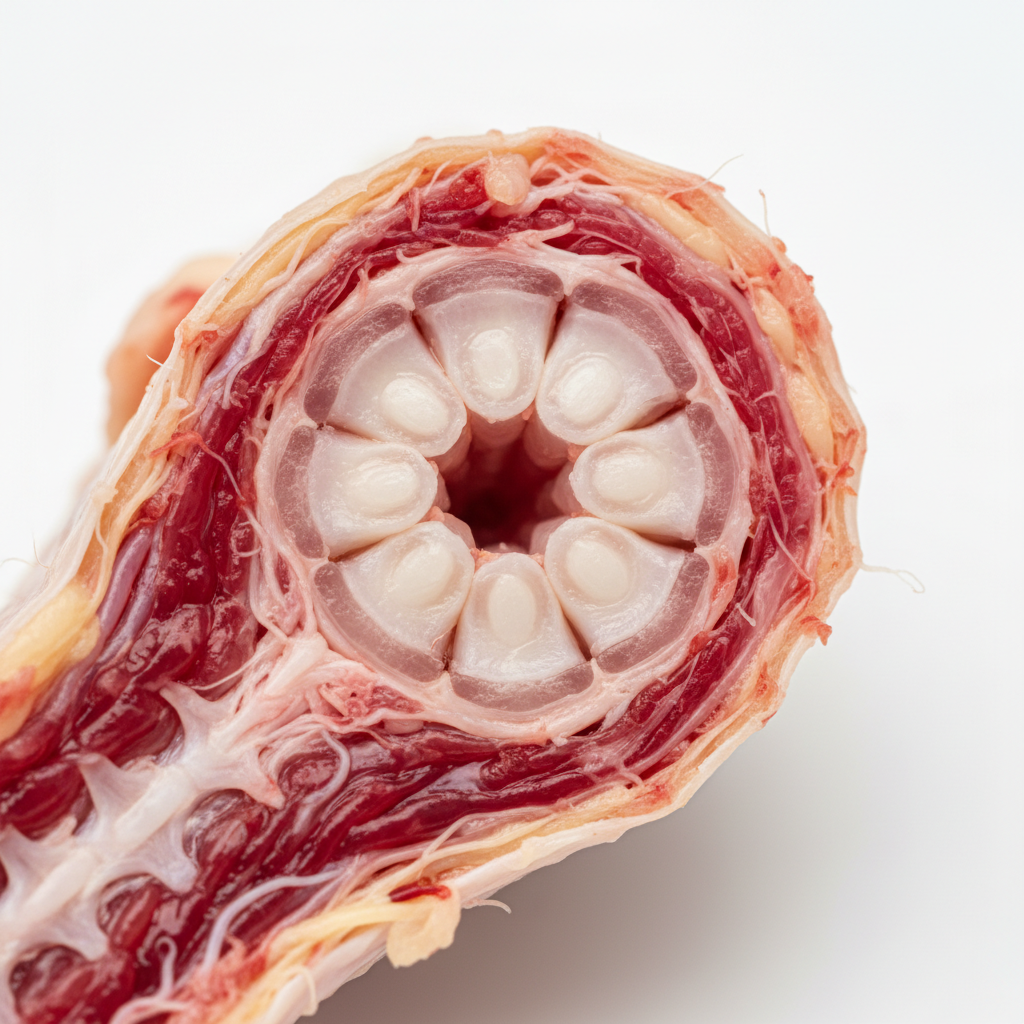
Necks, in particular, are considered an ideal RMB because they consist of many small, individual vertebrae connected by cartilage and surrounded by muscle meat. This structure encourages a full, satisfying crunching and tearing action rather than a dangerous attempt to gulp or snap off a large, weight-bearing piece. Unlike weight-bearing bones from large mammals (like femurs, often sold as ‘marrow bones’), the bones in poultry necks are softer, more pliable, and fully digestible when fed raw. Never, under any circumstances, feed a cooked bone. Cooking denatures the bone, making it brittle, sharp, and prone to splintering, which can cause catastrophic internal damage.
Hacker Tip: The goal of an RMB is for the dog to consume it entirely. If you’re giving your dog a bone they can only scrape but not ingest (like a large beef femur), it’s a recreational bone, not a nutritional RMB. Recreational bones carry a higher risk of tooth fracture.
Forensic Breakdown: Turkey Necks Under the Microscope
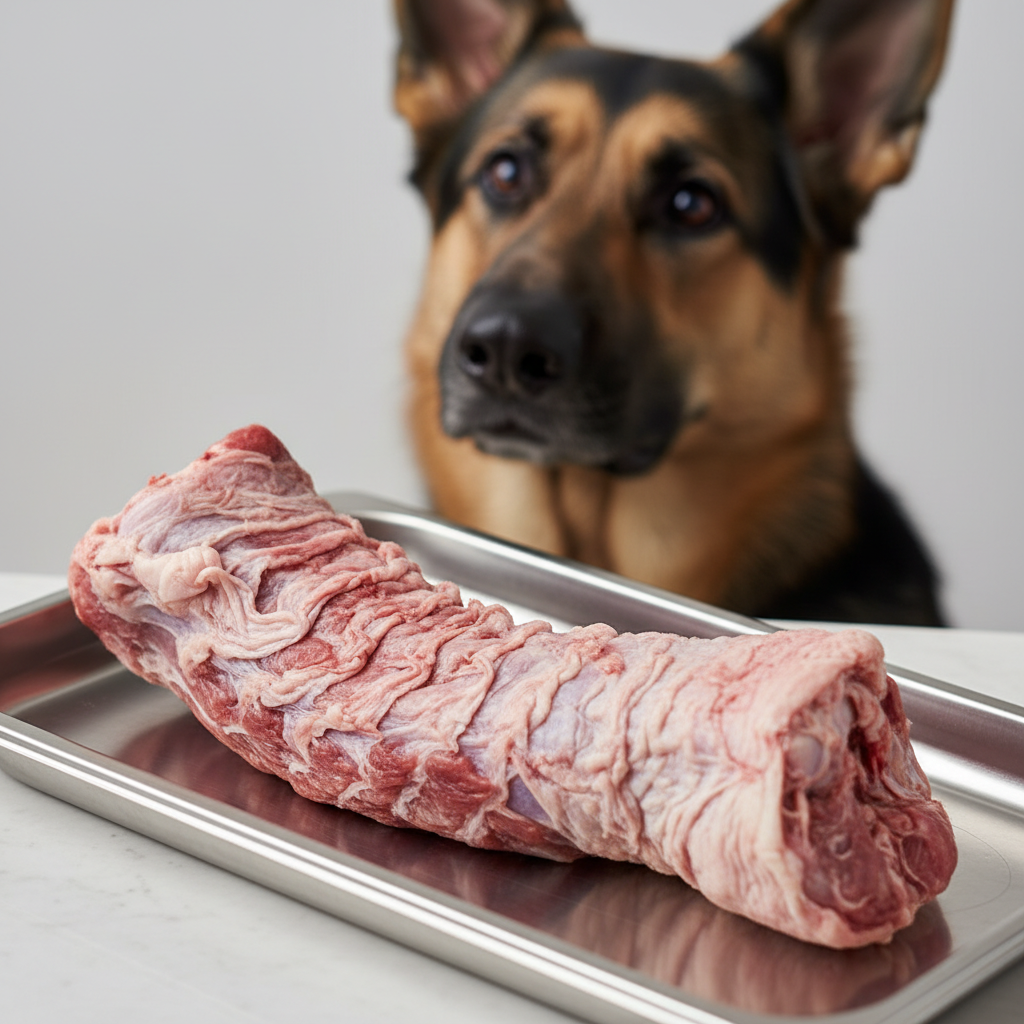
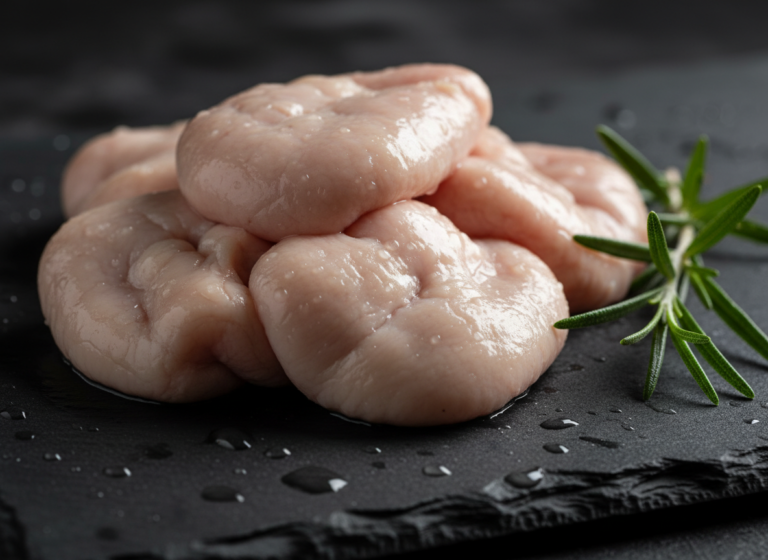
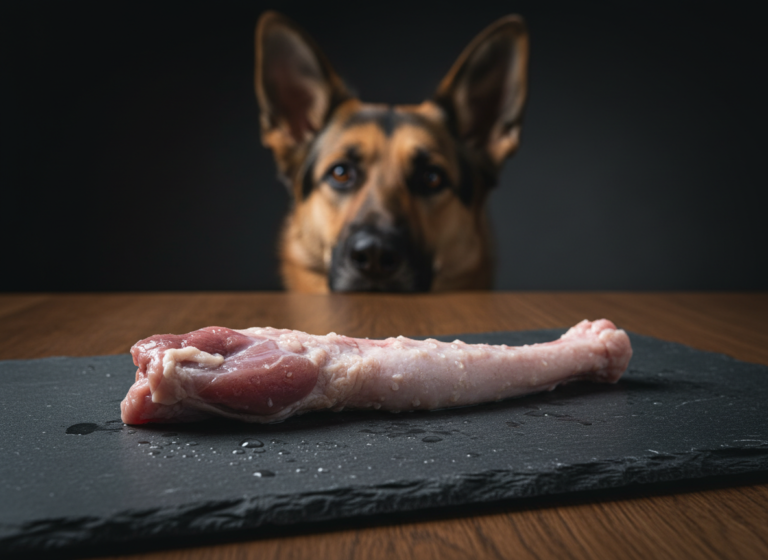
The turkey neck is the heavyweight contender. It’s significantly larger, denser, and meatier than its chicken counterpart. This isn’t a quick snack; for most dogs, it’s a full meal replacement.
Size and Density
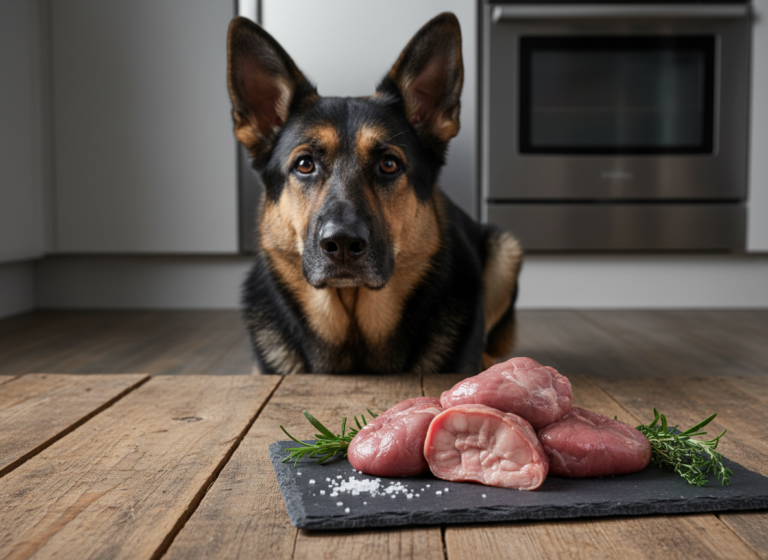
A typical turkey neck can range from 8 to 12 inches long and weigh over a pound. The individual vertebrae are larger and more robust. This size is its greatest strength and its most significant risk factor. For large and giant breed dogs (think German Shepherds, Great Danes, Mastiffs), the size is a built-in safety feature. It’s virtually impossible for them to swallow it whole, forcing them to chew methodically from one end to the other.
Nutritional Profile
Turkey necks offer a substantial caloric and nutritional payload. They are rich in protein and fat, and because of their size, they provide a significant dose of calcium and phosphorus. They are also an excellent source of natural glucosamine and chondroitin, making them a fantastic choice for supporting the joints of large, heavy-boned dogs.
Ideal Candidate
The ideal candidate for a turkey neck is a large or giant breed dog (over 50-60 lbs) that is an experienced, thoughtful chewer. A dog that tends to gulp food is a poor candidate, even if they are large. You must know your dog’s chewing style. A turkey neck can be an excellent choice for a Labrador that chews carefully but a terrible choice for a different Labrador of the same size that inhales its food.
Potential Risks
The primary risk with turkey necks is their density. While the bones are still soft and digestible, a dog with a particularly powerful, aggressive bite (like a Pit Bull or Rottweiler) could potentially fracture a tooth if they try to snap the neck in half instead of crunching it. Furthermore, for a medium-sized dog, a turkey neck can be too much of a good thing, providing an excessive amount of bone and calcium in one sitting, which can lead to constipation.
Forensic Breakdown: Chicken Necks Deconstructed
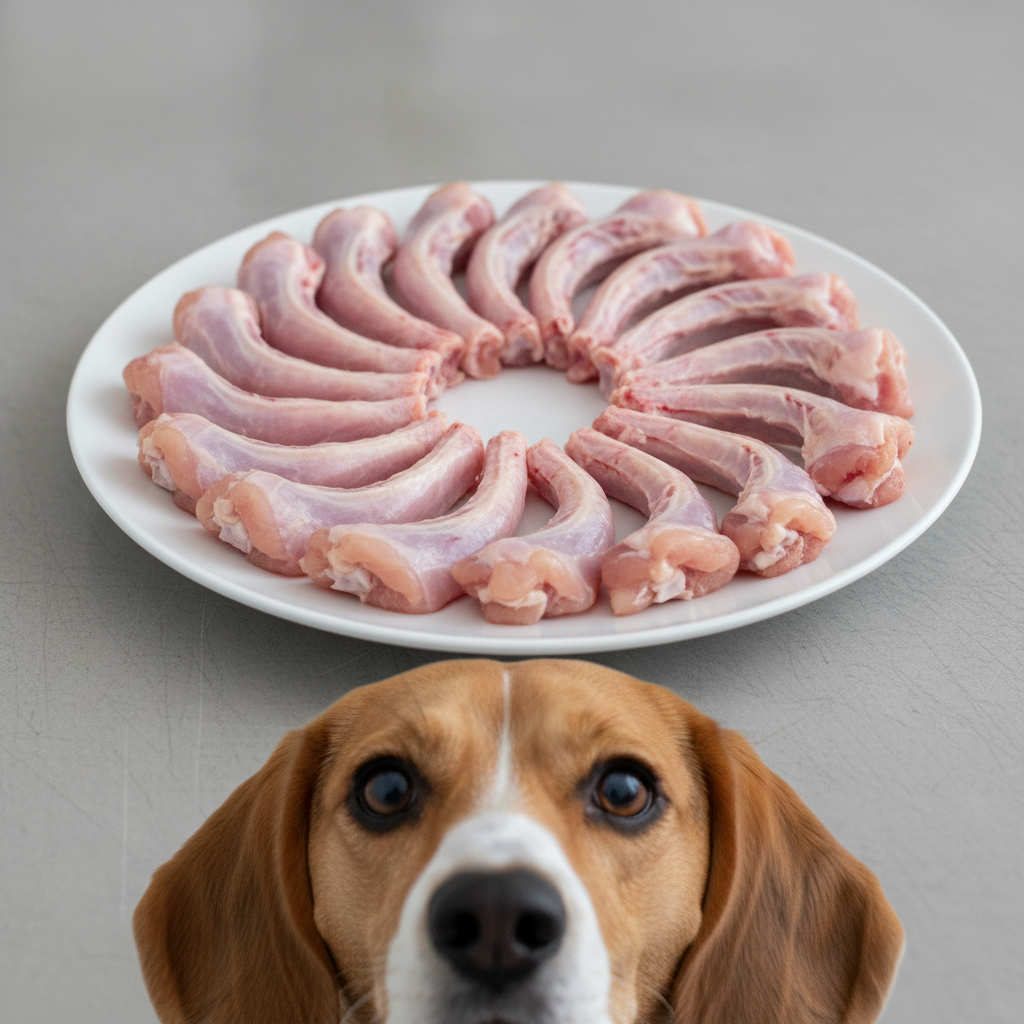
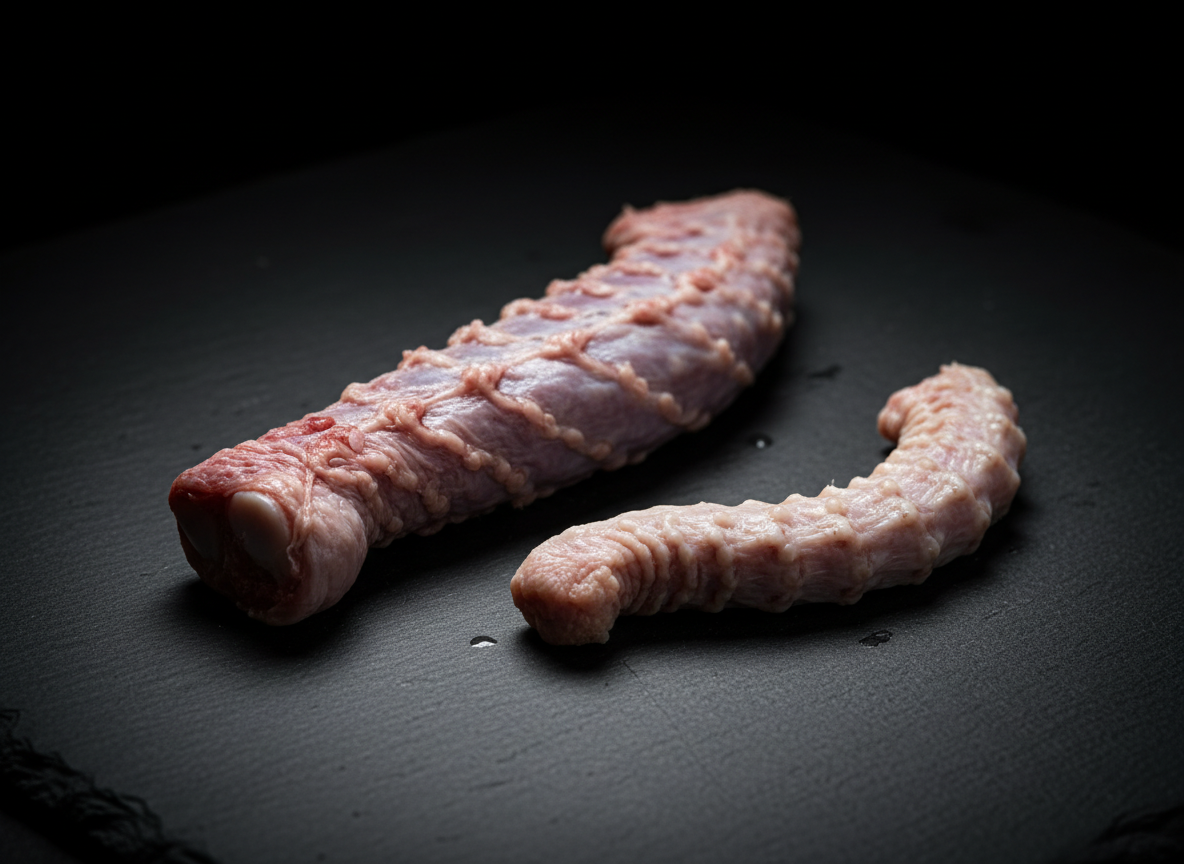
Chicken necks are the agile, versatile option. They are smaller, lighter, and far more adaptable for a wider range of dogs, from small breeds to medium-large dogs who are new to raw bones.
Size and Density
Chicken necks are typically 4-6 inches long and weigh only a few ounces. The vertebrae are small, delicate, and easily crunched. Their size makes them a perfect introduction to RMBs. They provide the dental cleaning benefits and enrichment without the intimidation or high caloric load of a larger bone. They can be fed as part of a meal or as a standalone snack.
Nutritional Profile
While smaller, chicken necks are still nutritionally dense. They offer a good balance of protein, fat, and essential minerals like calcium. They are a fantastic source of joint-supporting compounds in a smaller, more manageable package. Because of their lower fat content compared to turkey necks, they can be a better option for dogs needing to watch their weight.
Ideal Candidate
Chicken necks are incredibly versatile. They are the gold standard for small and medium-sized dogs (under 50 lbs). They are also the perfect starting point for large breed puppies (under veterinary guidance) and adult dogs of any size who are new to raw bones and need to learn the proper ‘crunch and chew’ technique. Even giant breeds can enjoy them as a quick, crunchy snack, though they won’t provide the same duration of chew time or dental workout as a turkey neck.
Potential Risks
The primary risk associated with chicken necks is choking, specifically in medium-to-large dogs who are gulpers. A 60-pound Golden Retriever might see a small chicken neck as something to be swallowed whole, which can lead to a dangerous esophageal obstruction. This is why knowing your dog’s eating style is paramount. For this reason, many owners of larger dogs will feed chicken necks frozen to encourage chewing, or they will hold one end of the neck while the dog chews the other.
Insider Secret: For small dogs or beginners, you can increase safety by using kitchen shears to snip a chicken neck into 2-3 smaller pieces. This allows them to get the benefits without the risk of trying to swallow a longer piece.
The Safety Showdown: A Head-to-Head Comparison
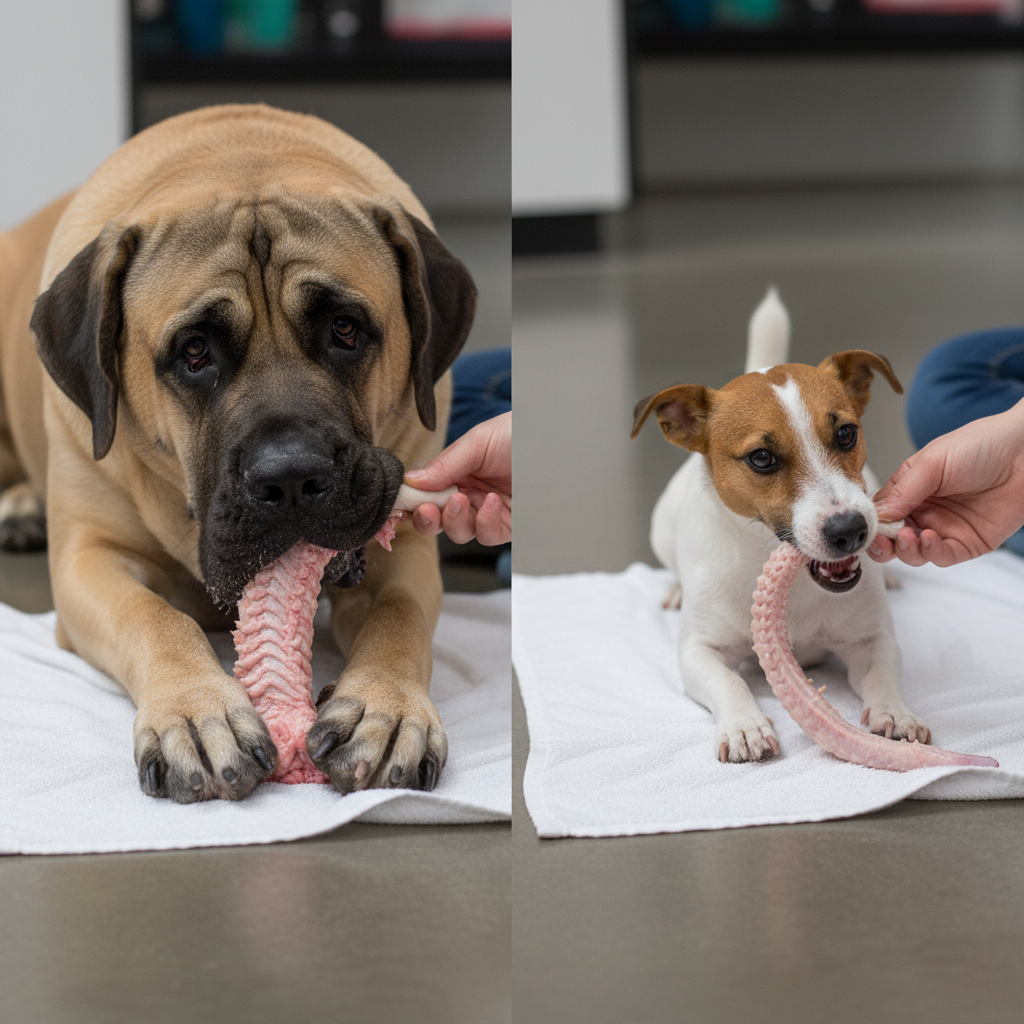
Let’s put them side-by-side and analyze the critical safety and suitability factors. The ‘safer’ bone is not a universal answer; it is relative to the dog consuming it. This table is your cheat sheet for making a responsible decision.
| Safety Factor | Turkey Necks | Chicken Necks |
|---|---|---|
| Choking Hazard | Low for large/giant breeds. High for medium breeds who might try to swallow a large piece. Impossible for small breeds. | Low for small/toy breeds. High for medium-to-large breeds with a history of gulping food. The size can be deceptively easy to swallow whole. |
| Tooth Fracture Risk | Moderate. The bones are denser. A powerful, aggressive chewer trying to snap it in half is at higher risk. Not recommended for dogs with pre-existing dental issues. | Very Low. The bones are small, soft, and designed to be crunched easily. An excellent option for maintaining dental health without high impact. |
| Suitability by Dog Size | Best for dogs over 50 lbs. Can be a meal replacement. Overwhelming and potentially constipating for smaller dogs. | Excellent for dogs under 50 lbs. Can be used as a snack or meal component for larger dogs, with supervision. |
| Beginner Friendliness | Poor. This is an ‘intermediate’ to ‘advanced’ RMB due to its size and density. Not a good starting point. | Excellent. This is the ideal introductory raw meaty bone for dogs of almost any size to learn how to properly eat RMBs. |
| Bacterial Load Concerns | Equal risk. All raw meat carries pathogens like Salmonella and Campylobacter. Safe handling practices are mandatory for both. | Equal risk. Sourcing from a reputable supplier and maintaining strict kitchen hygiene is non-negotiable for any raw product. |
| Verdict | Safer for large, experienced chewers. A higher-risk choice for gulpers or dogs with dental compromises. | Safer for small dogs and beginners of all sizes. A higher-risk choice for medium-to-large dogs that gulp. |
The Canine Nutrition Hacker’s Protocol for Safe Feeding
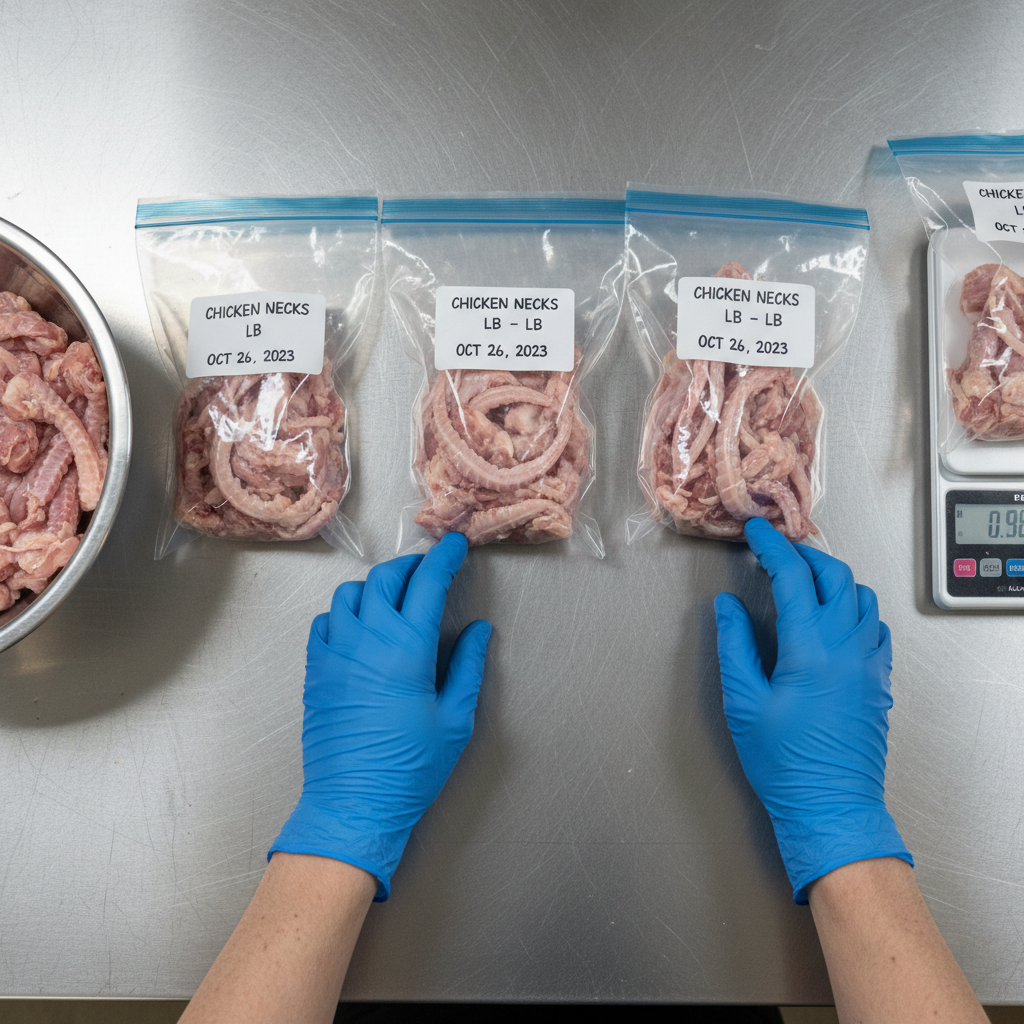
Choosing the right bone is only half the battle. Your feeding protocol determines the ultimate safety of the experience. Follow these rules without exception.
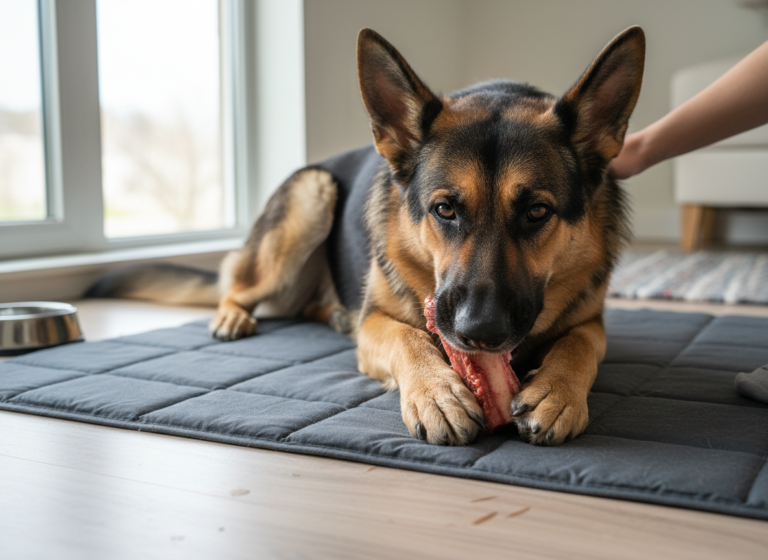
- Supervision is Mandatory: Never give a dog a raw bone and leave the room. You must be present to intervene if they get into trouble. Feed in a crate, on a towel, or outdoors to contain the mess and allow for easy observation.
- Feed Raw and Only Raw: As stated before but worth repeating: NEVER feed cooked bones. They are dangerous and can cause fatal internal damage.
- Separate Pets: Even the best of friends can become possessive over a high-value item like a raw bone. To prevent resource guarding and potential fights, separate your dogs during bone time.
- Know Your Source: Purchase your necks from a butcher or raw food supplier you trust. Human-grade is best. Look for signs of freshness and proper handling.
- Practice Safe Handling: Treat raw necks like you would any raw meat in your kitchen. Thaw in the refrigerator. Use a dedicated cutting board. Wash your hands, surfaces, and your dog’s bowl thoroughly with hot, soapy water after feeding.
- Hold, Don’t Just Hand Over (For Beginners): For a dog new to RMBs, or for a larger dog eating a smaller bone like a chicken neck, hold one end firmly while they chew the other. This physically prevents them from gulping and teaches them to slow down and use their back molars.
Hacker Tip on Storage: Buy in bulk when prices are low. Portion out the necks into individual servings in freezer bags or containers. They will last for months in the freezer. Thaw one portion at a time in the fridge for 12-24 hours before feeding. Feeding partially frozen can also help slow down aggressive eaters.
The Real Cost Analysis: Your Wallet vs. Your Vet Bills
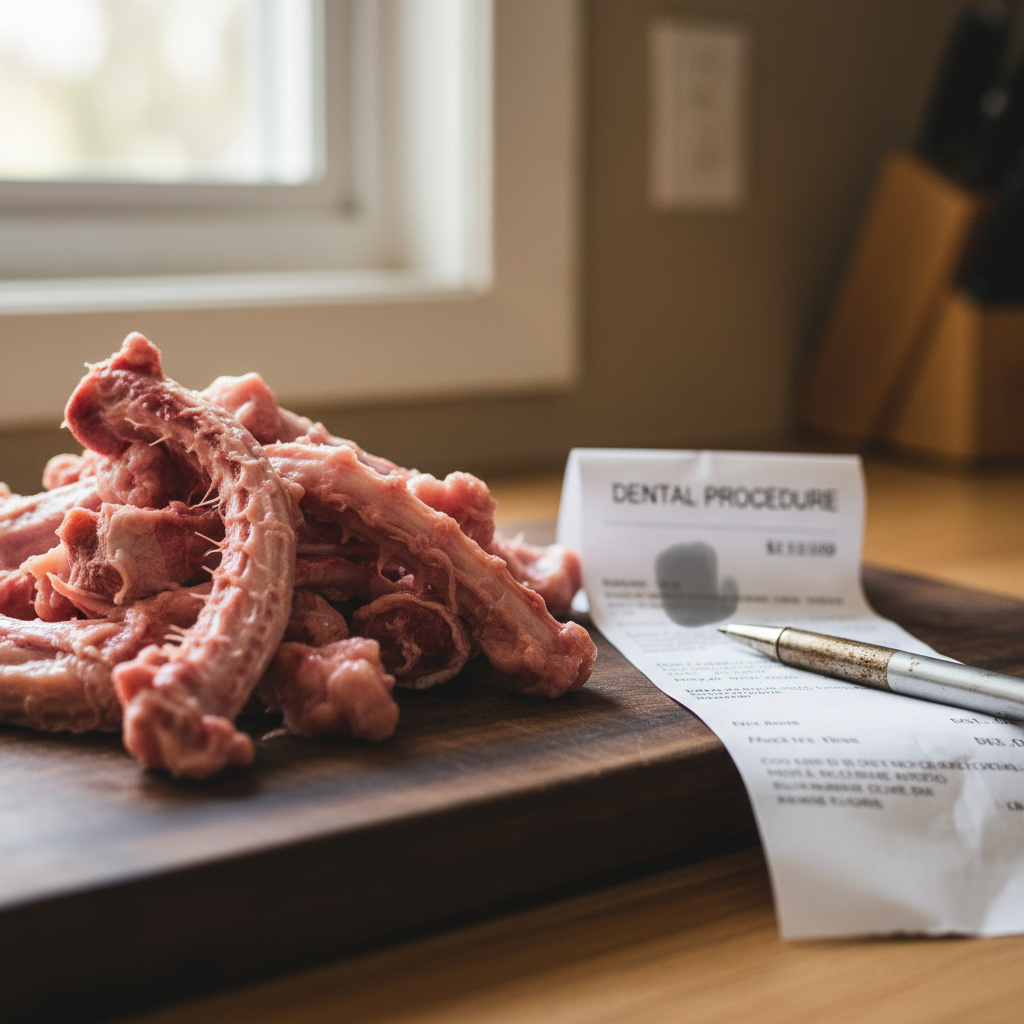
Many owners experience sticker shock when looking at premium dental chews, which can often cost several dollars for a single, short-lived treat. Let’s break down the real cost of using raw necks as a functional, nutritional tool for dental health. Prices will vary by location and supplier, but this provides a realistic framework.
| Item | Average Cost (per lb) | Approximate Servings per lb | Cost per Serving/Chew | Notes |
|---|---|---|---|---|
| Raw Chicken Necks | $2.00 – $4.00 | 8-12 necks | $0.17 – $0.50 | Extremely cost-effective. Serving size could be 1-3 necks depending on dog size. |
| Raw Turkey Necks | $3.00 – $5.00 | 1-2 necks | $1.50 – $5.00 | Higher cost per unit, but each neck is a substantial meal/chew for a large dog. |
| Premium ‘Dental’ Chews | N/A | Varies by box size | $1.00 – $4.00+ | Often contains fillers, sugars, and provides minimal actual cleaning time. |
| Veterinary Dental Cleaning | N/A | 1 procedure | $500 – $1200+ | Includes anesthesia, scaling, and potential extractions. This is what you are trying to prevent. |
The conclusion is clear. Incorporating raw meaty bones is a financial investment in preventative care. A weekly turkey neck for a large dog might cost around $10-15 a month. A few chicken necks a week for a small dog might cost less than $5 a month. Compare that to the cost of a single dental chew bag or, more significantly, the immense cost of a full dental cleaning under anesthesia. By providing a species-appropriate tool for dental hygiene, you are not just saving money on chews; you are actively working to save thousands on future veterinary bills and protecting your dog from the pain and health risks of periodontal disease.
Conclusion
So, which is safer: turkey necks or chicken necks? The Canine Nutrition Hacker’s final verdict is this: the safest bone is the one that is appropriately sized for your specific dog’s head, size, and chewing style.
For the small dog, the medium-sized dog, or the raw-feeding novice of any size, the chicken neck is the unequivocally safer starting point. Its small, pliable bones present a very low risk of dental fracture and teach the essential skill of crunching.
For the experienced, thoughtful large or giant breed dog, the turkey neck is a safer and more effective choice because its immense size mitigates the primary risk of choking that a smaller chicken neck could present. It offers a longer-lasting chew and a more substantial dental workout.
Your job as the owner is to perform a brutally honest assessment. Do you have a gulper or a nibbler? A power-chewer or a gentle gnawer? Start with the most conservative option (chicken necks, possibly hand-held), observe meticulously, and only ‘level up’ if your dog demonstrates the skill and patience to do so safely. By removing brand marketing and focusing on the raw anatomical facts, you can hack your dog’s dental health, provide incredible enrichment, and make the safest possible choice for your canine companion.