10 Genius Dog Food Storage Hacks for Tiny Apartments
That giant, half-empty bag of premium dog food slumped in the corner of your kitchen isn’t just an eyesore—it’s a nutritional crime scene. Every time you unroll that top, you’re exposing expensive, carefully formulated kibble to its four mortal enemies: air, moisture, heat, and pests. The fats go rancid, the vitamins degrade, and the risk of contamination skyrockets. For those of us in tiny apartments, the battle between buying in bulk to save money and having literally nowhere to store it is a constant struggle.
Forget flimsy bag clips and wishful thinking. I’m The Canine Nutrition Hacker, and my job is to analyze every angle of canine nutrition, from the ingredient label to the final scoop in the bowl. Proper storage isn’t a minor detail; it’s the final, critical step in ensuring the money you spend on high-quality food isn’t wasted on stale, nutrient-depleted kibble. These aren’t your average tips. These are 10 genius-level hacks designed for maximum freshness and minimal footprint, turning your small space into a fortress of nutritional integrity.
Hack #1: The Vertical Advantage – Go Up, Not Out
Stop thinking horizontally. In a small apartment, floor space is gold. The single most effective strategy is to utilize vertical space.
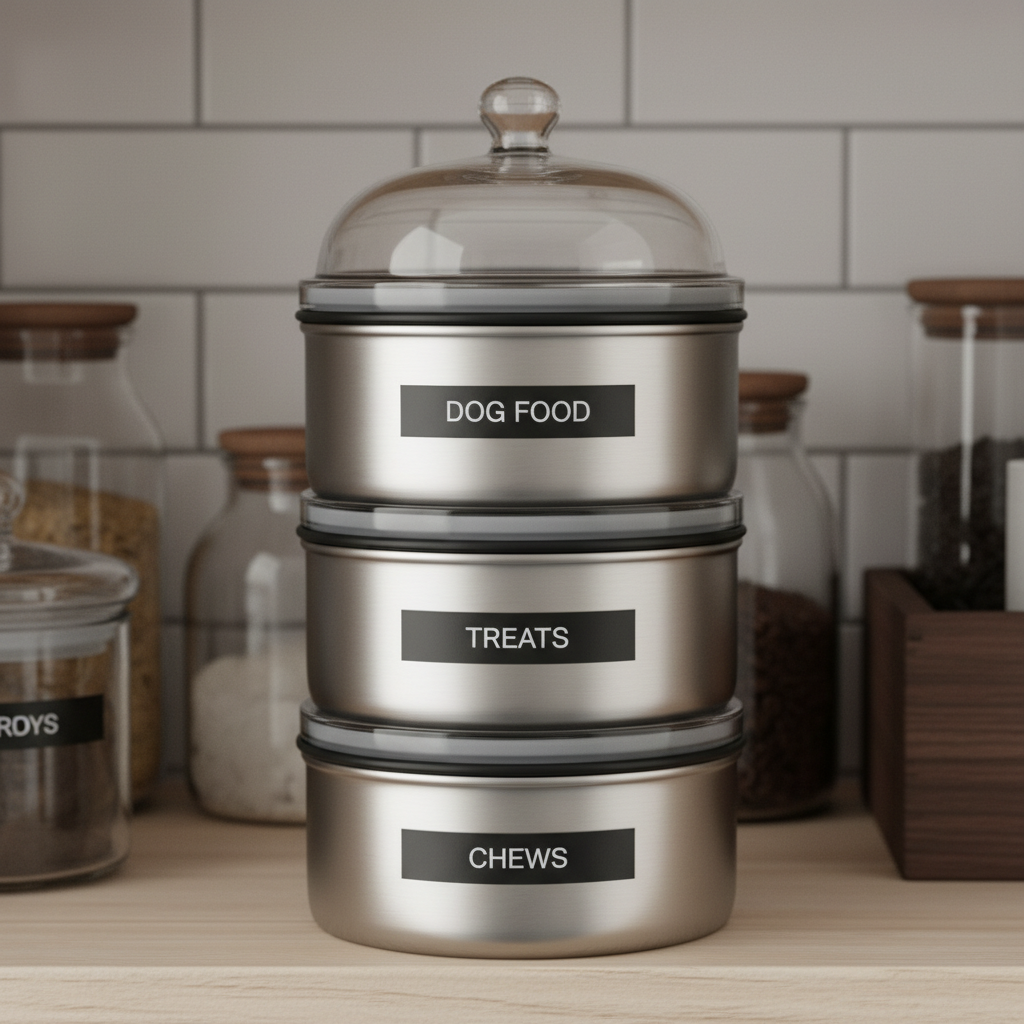
Instead of a wide, bulky bin that eats up a whole corner, invest in a set of stackable, airtight containers. This allows you to store a large amount of food, treats, and supplements in the same footprint as a single small container. Look for modular systems that lock together securely to prevent tipping.
Material Matters: Choosing Your Container
Not all containers are created equal. The material you choose has a direct impact on the freshness and safety of your dog’s food. Avoid cheap, flimsy plastic that can leach chemicals and absorb odors.
| Material | Pros | Cons | Hacker Verdict |
|---|---|---|---|
| BPA-Free Plastic | Lightweight, affordable, often transparent. | Can scratch, may absorb oils and odors over time. | A solid, budget-friendly choice. Must be washed thoroughly between bags. |
| Stainless Steel | Durable, non-porous, easy to clean, blocks light. | More expensive, can be heavy, not transparent. | The gold standard. A lifetime investment in food safety. |
| Glass | Non-porous, won’t absorb smells. | Heavy, fragile, and can be dangerous if broken. | Best for small quantities of treats, not bulk kibble storage. |
The key is an airtight seal. Look for silicone gaskets and strong locking mechanisms. This is non-negotiable. An airtight seal is your primary defense against oxidation, which makes the fats in kibble turn rancid and taste foul.
Hack #2: The Decoy Method – Your Daily Dispenser
Every time you open your main food container, you’re letting fresh air in and nutrient integrity out. The solution is to minimize that exposure.
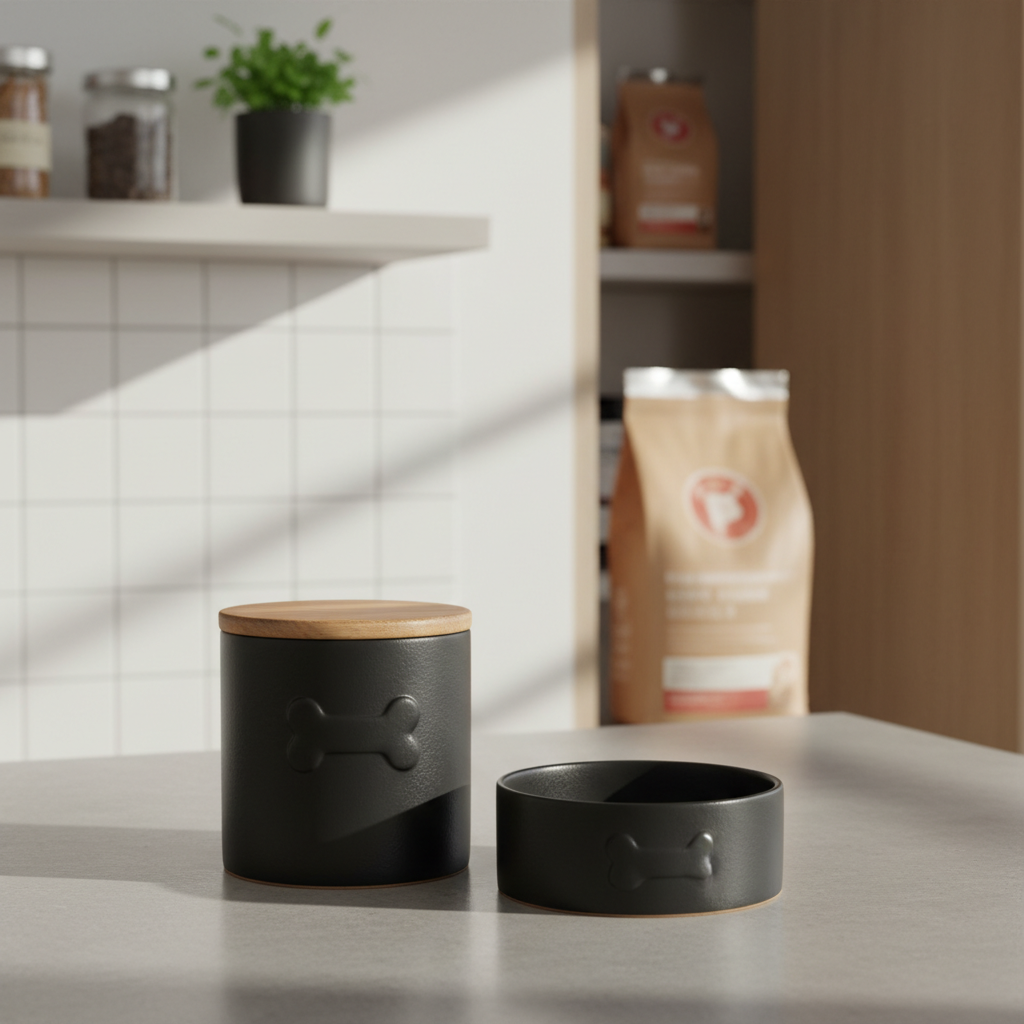
This is a simple but powerful professional trick: use a two-container system. Your bulk supply of food stays in its large, perfectly sealed container, hidden away in a cool, dark place (more on that later). For daily feedings, you use a much smaller ‘decoy’ container that holds just enough food for 3-4 days. This countertop container can be stylish and small, fitting in with your kitchen decor.
By refilling the small dispenser only once or twice a week, you’re protecting the vast majority of your kibble from daily air exposure. This dramatically extends its freshness and preserves the fragile vitamins and fats. Think of it as a vault for the main supply and a small cash drawer for daily transactions.
Hacker Tip: Choose a daily dispenser that is opaque. While clear containers are nice for seeing how much food is left, direct light (especially sunlight) can accelerate the degradation of certain vitamins. A ceramic or stainless steel canister is ideal.
Hack #3: Repurpose and Reclaim – Furniture as Disguise

Your dog food storage doesn’t have to look like dog food storage. The best solutions hide in plain sight.
This hack is about selecting dual-purpose furniture that secretly houses your pet supplies. This is the ultimate space-saving maneuver for a tiny apartment where every item must justify its existence.
- Storage Ottomans: A comfortable footrest or extra seat in your living room can easily hide a 30lb bag of dog food. Just make sure the food is in a sealed bag or container inside the ottoman.
- End Tables with Cabinets: Look for stylish end tables or nightstands with doors. They provide a perfect, hidden spot right next to the couch.
- Entryway Benches: A bench with a lift-up seat is a brilliant place to store the main food supply, leashes, and other gear, keeping your entryway clutter-free.
The goal is to integrate storage into your home’s aesthetic. No one will ever know your chic new ottoman is also your dog’s pantry. This strategy keeps your space looking like an adult’s home, not a pet supply store.
Hack #4: The Vacuum-Seal Power Play

For the serious bulk buyer, this is the final word in freshness. Nothing beats removing the air entirely.
If you have the space to buy the largest bags of food to maximize savings, a vacuum sealer is your most powerful ally. While it’s an initial investment, the money you save by preventing food spoilage pays for the device over time. The process is simple: when you get a new bag of food, portion it out into smaller, weekly or bi-weekly allotments and vacuum seal them.
This method offers several key advantages:
- Oxygen Removal: It physically removes the primary cause of staleness and rancidity.
- Portion Control: It’s easy to grab a pre-portioned bag, ensuring you don’t overfeed.
- Space Efficiency: The sealed bags are compact, flat, and easy to stack in a pantry, closet, or even the freezer.
This is the same technology used for human food preservation, and it’s a game-changer for keeping kibble at peak potency from the first bowl to the last.
Hack #5: The Original Bag is Your Best Friend (Inside a Bin)
That fancy bag your dog’s food comes in is a piece of technology. Use it.
Most high-quality dog food bags are specifically designed with a grease-resistant liner to protect the kibble’s delicate fat content. Tossing the bag and pouring the food directly into a plastic bin is a rookie mistake. Here’s why:
- Oil Transfer: As you empty a bin, a residue of oils and crumbs is left behind. If you don’t scrub it with soap and hot water between every single bag, these oils can become rancid and contaminate your fresh new food.
- Information Loss: The bag contains critical information: the brand, formula, lot number, and expiration date. You absolutely need this information in the event of a product recall.
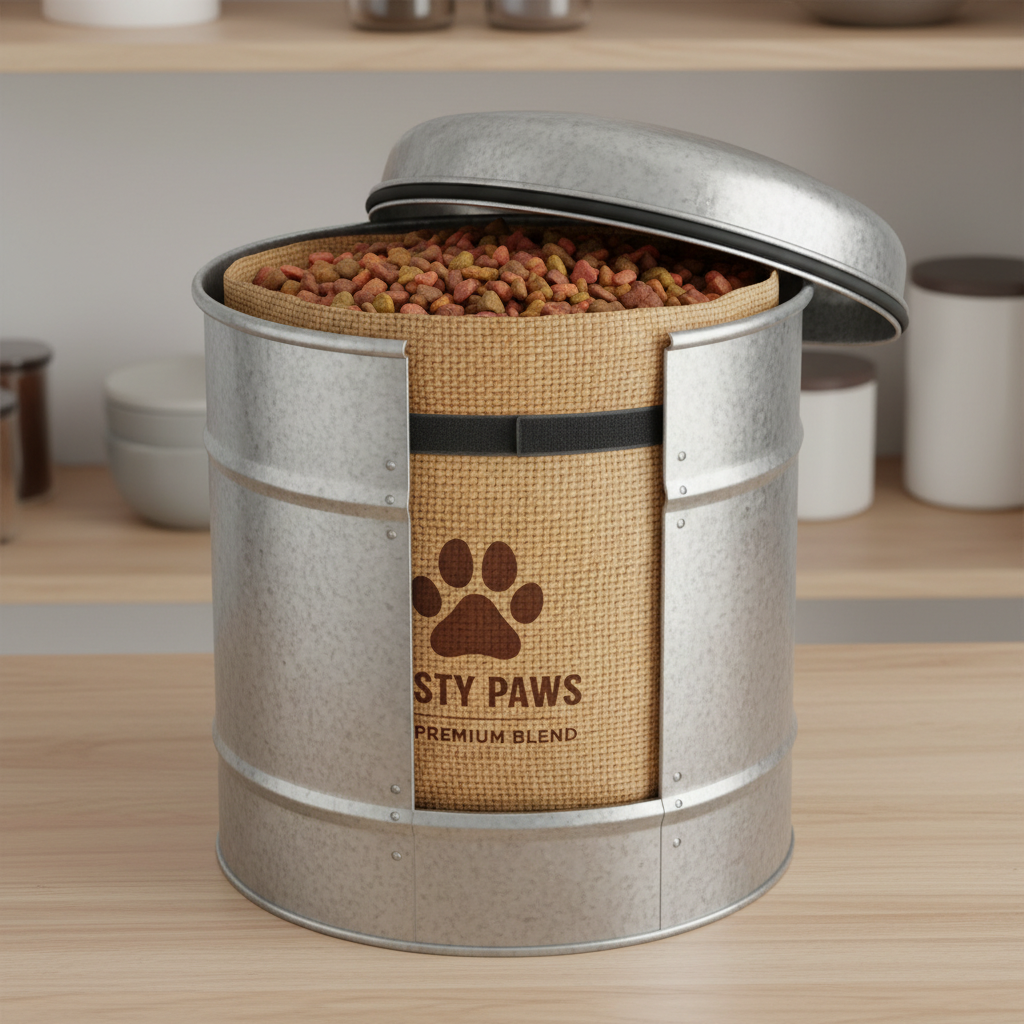
Hacker Tip: The professional hack is to get the best of both worlds. Place the entire original bag inside your large, airtight storage container. This gives you the protection of the bag’s liner and the airtight seal of the bin, while also preventing oil buildup on the container itself. It’s double the protection with less cleaning.
Hack #6: The Wall-Mount Maneuver
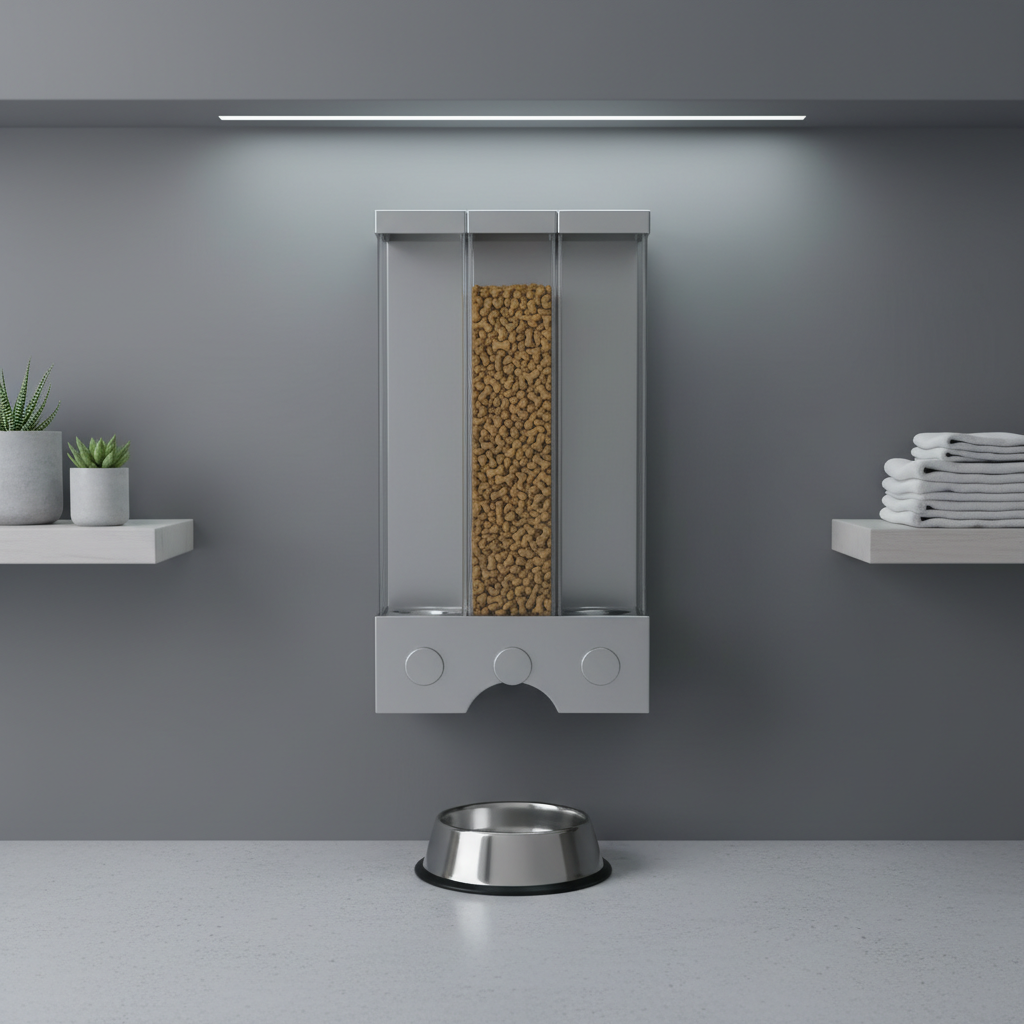
When you have zero floor space, the only place left to go is the wall.
Take a cue from candy stores and zero-waste grocers. Wall-mounted bulk dispensers, often sold for cereal or grains, can be a brilliant solution for dog food. They keep kibble off the floor and counters entirely, and the pull-handle mechanism makes dispensing a clean, one-handed operation.
Before you buy, check for two critical features:
- The Seal: Ensure the lid provides a genuinely airtight or near-airtight seal to protect the food inside.
- Kibble Size: Check reviews or product dimensions to make sure the opening and dispensing mechanism can handle the size of your dog’s kibble without crushing it or getting jammed.
Install it in a pantry, a utility closet, or on a kitchen wall. It’s a functional, space-age solution that turns feeding time into an efficient, mess-free process.
Hack #7: Think Outside the Kitchen – The Closet Cache
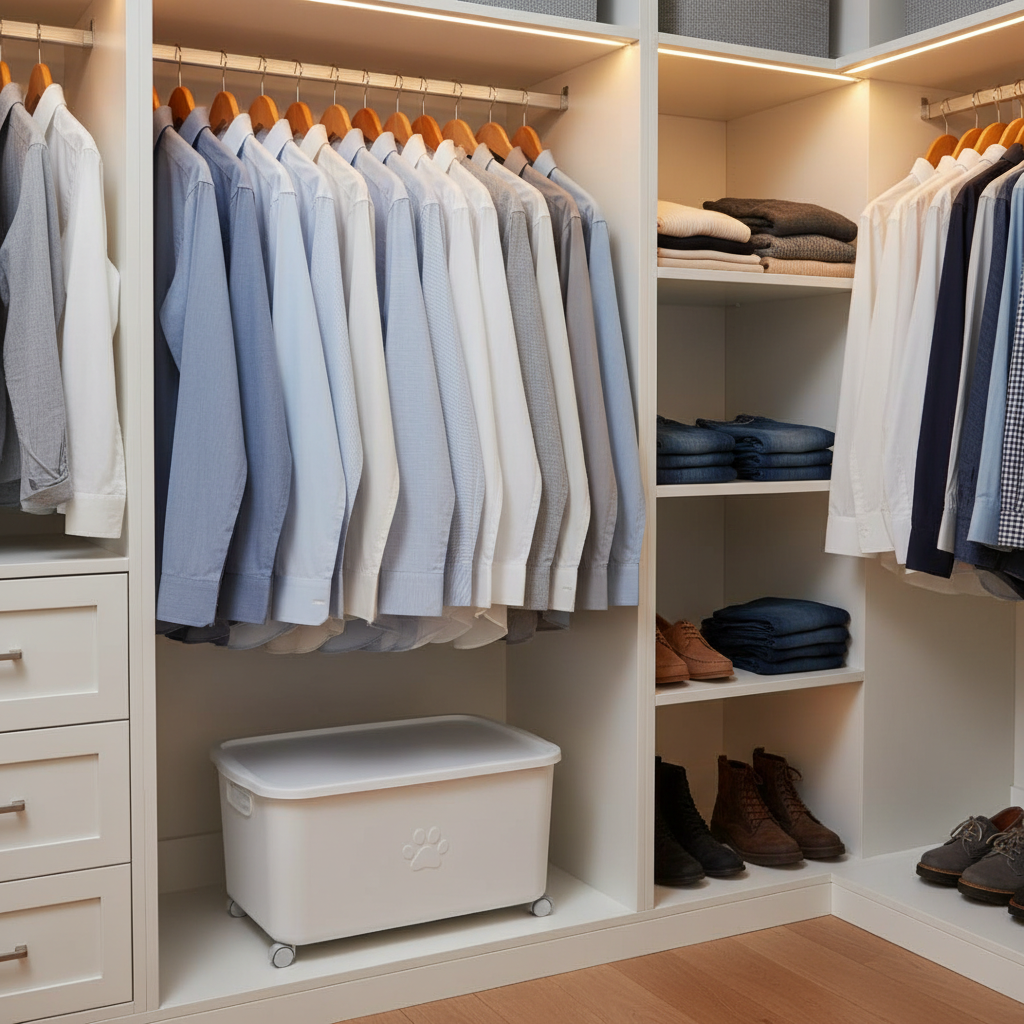
Your kitchen isn’t the only option. In fact, it’s often one of the worst places to store dog food.
Kitchens are high-traffic areas with fluctuating temperatures and humidity from cooking. The ideal storage environment is cool, dark, and dry. Sound familiar? That perfectly describes most closets.
A hall closet, bedroom closet, or pantry is a far superior location. To make it apartment-friendly, look for a low-profile, rolling airtight bin. These are designed to slide easily under hanging clothes or fit into the back of a deep closet. The wheels make it effortless to pull out for scooping, so you don’t have to dig around in the dark. By moving the food out of the kitchen, you free up valuable cabinet and floor space for your own needs.
Hack #8: Mobile Command Center – The Rolling Cart
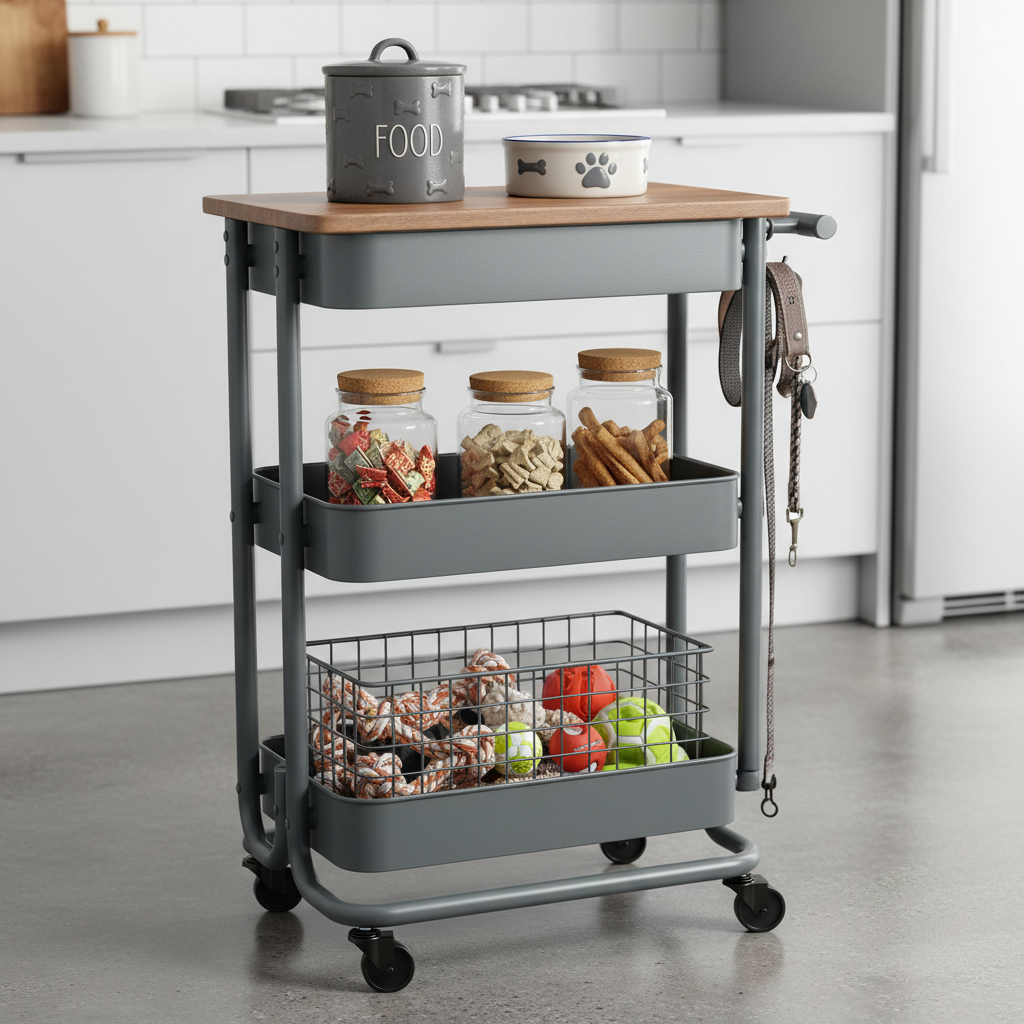
Consolidate all your dog’s supplies into one mobile, organized station.
A simple 3-tier rolling utility cart (like the ubiquitous IKEA RÅSKOG or similar models) can revolutionize your pet care routine. Instead of having items scattered across your apartment, you create a centralized hub that can be moved wherever you need it.
How to Organize Your Cart:
- Top Tier: The daily food dispenser, water bowl, and food scoop. This is the feeding station.
- Middle Tier: Jars of treats, dental chews, supplements, and medications. Everything for health and training.
- Bottom Tier: A basket for toys, neatly folded leashes, harnesses, and waste bags.
The beauty of this system is its mobility. You can keep it in the kitchen during the day and roll it into a closet or an unused corner at night or when guests come over. It’s organization on demand.
Hack #9: The Cool Down – Strategic Refrigeration and Freezing
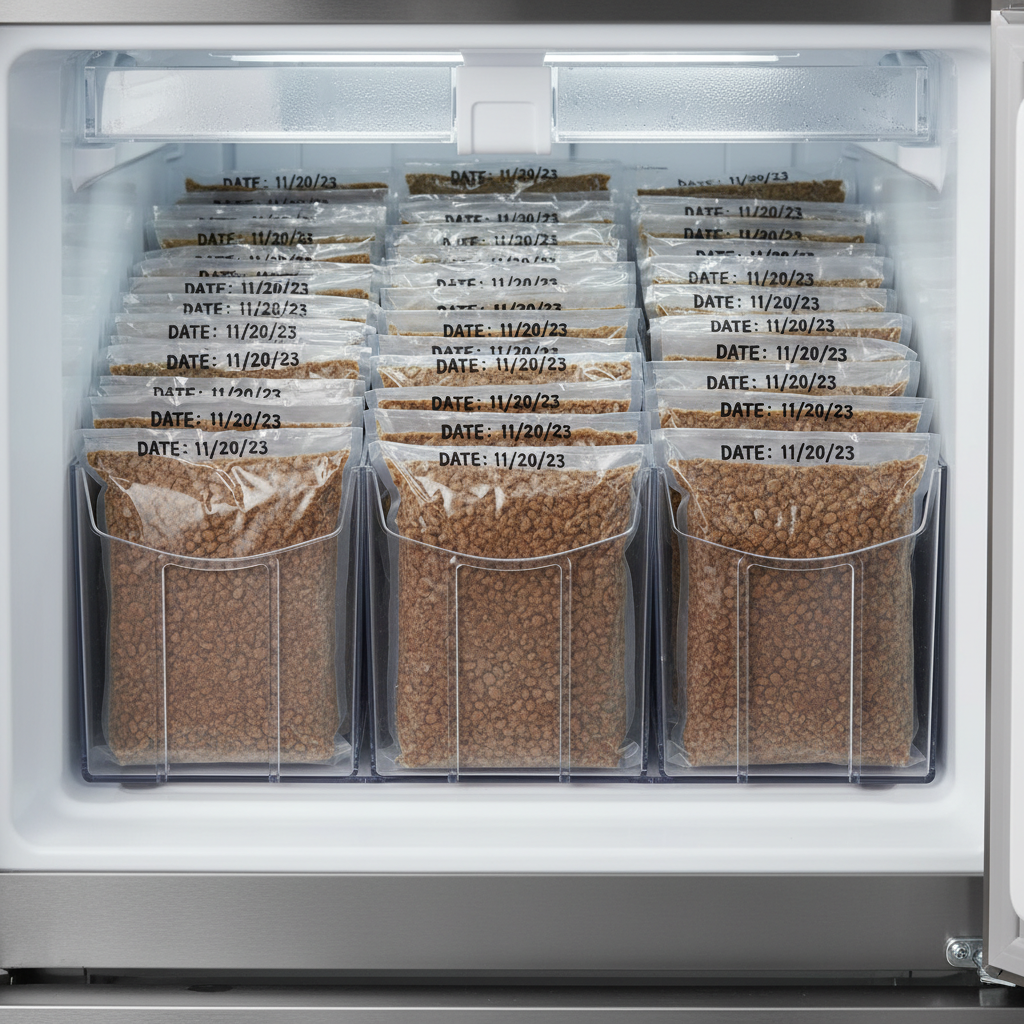
For maximum longevity, especially for high-fat or preservative-free foods, the cold is your friend.
While not necessary for all kibble, using your fridge or freezer is a power move for certain situations. If you’re feeding a fresh or raw diet, it’s non-negotiable. But even for kibble, it has its place.
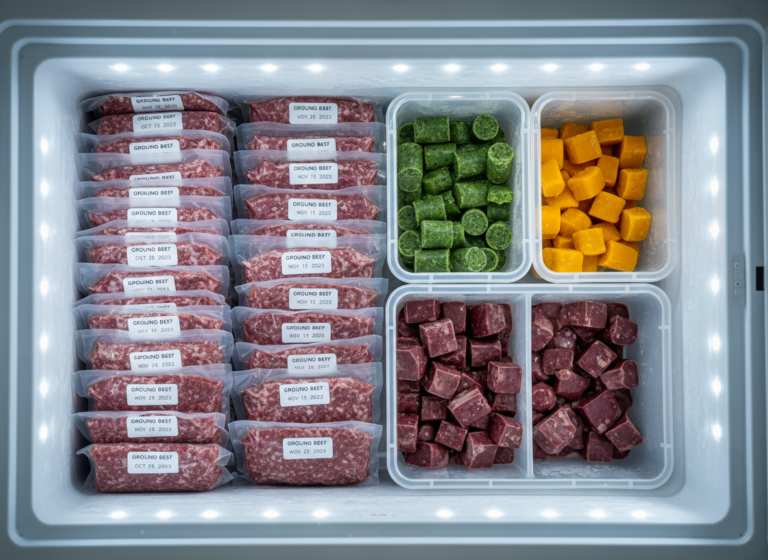
If you’ve vacuum-sealed your kibble portions (Hack #4), you can store them in the freezer to dramatically extend their shelf life, locking in freshness for months. This is perfect if you find an incredible sale and want to stock up. The key is to thaw a sealed bag completely before opening it to prevent condensation from forming and introducing moisture.
For canned wet food, once opened, it must be stored in the refrigerator in an airtight container (a silicone can cover works perfectly) and used within 3-4 days, max. Never leave it at room temperature.
Hack #10: Label Everything – The FIFO Imperative

The single biggest mistake owners make is topping off their food container. This creates a layer of old, potentially rancid crumbs at the bottom that never gets used.
You must implement the ‘First-In, First-Out’ (FIFO) system, a cornerstone of professional food safety. It means you always use the oldest food first.
- Empty Completely: Never add new food on top of old food. Let the container become completely empty.
- Wash and Dry: Before refilling, wash the container with soap and hot water to remove any residual oils. Dry it thoroughly.
- Label Clearly: Use a piece of masking tape or a label maker to note the ‘Date Opened’ or ‘Best By’ date from the original bag on the outside of your container.
This simple discipline ensures your dog is never eating stale food from the bottom of the bin and protects them from the health issues that can arise from consuming rancid fats. It’s a zero-cost hack that pays massive dividends in your dog’s health.
Conclusion
Living in a small apartment doesn’t mean you have to compromise on your dog’s nutrition or your own sanity. By implementing these ten hacks, you can move beyond the frustration of the giant food bag and create a system that is efficient, stylish, and, most importantly, safe. Proper storage is the final link in the chain of good nutrition. You’ve already done the hard work of researching and investing in quality food; now it’s time to protect that investment. Stop letting good food go bad. Reclaim your space, seal in the freshness, and give your dog the nutrient-packed, delicious meal they deserve, every single time.