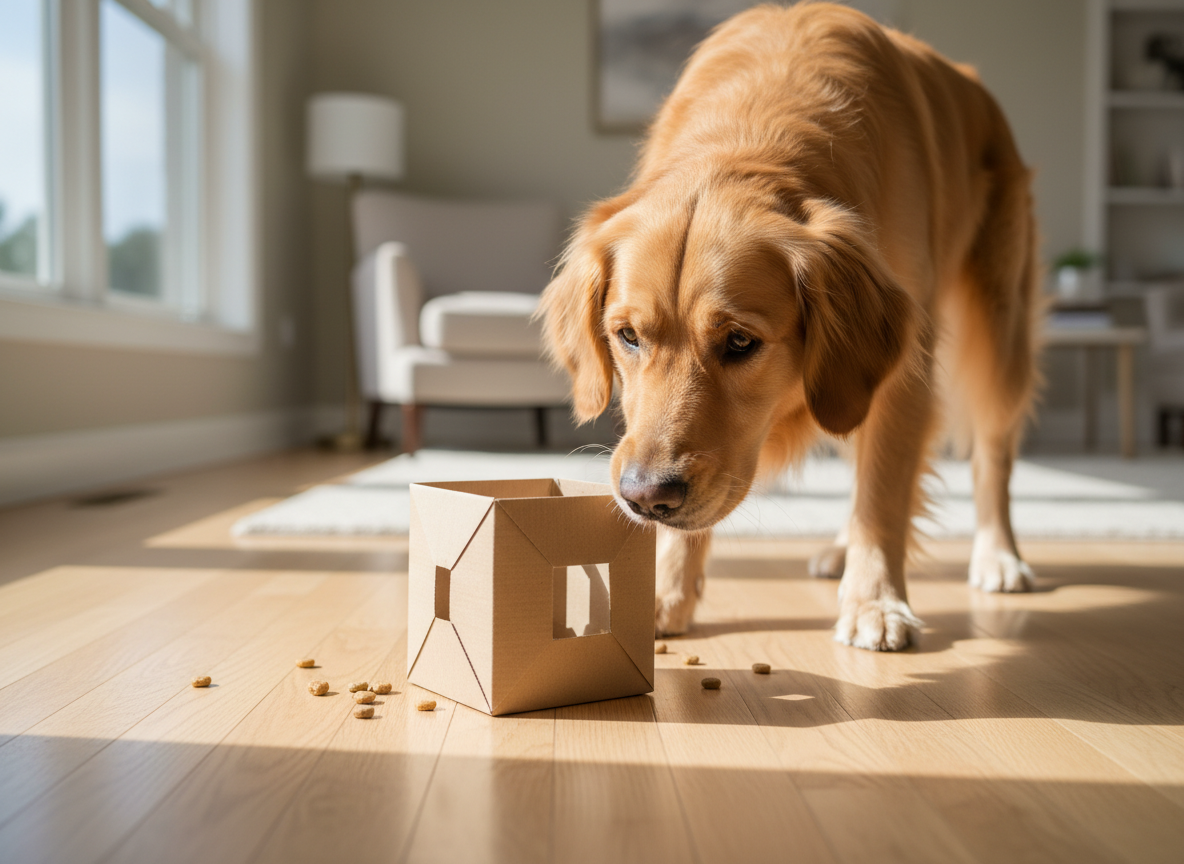
Upcycled Enrichment: Turn Cereal Boxes into Food Puzzles
Walk down any pet store aisle and you’ll be bombarded with an arsenal of brightly colored, plastic ‘brain games’ for your dog, each promising to end boredom forever. The price tags on these items? Often staggering. As the Canine Nutrition Hacker, I analyze labels on food bags to find value and expose filler. Today, we’re applying that same forensic lens to enrichment. Why are you paying upwards of $20 for a piece of molded plastic that your dog will solve in five minutes?
The truth is, you don’t need to. The enrichment industry often sells convenience at a premium. But the most effective mental stimulation for your dog doesn’t require a credit card. It requires a bit of savvy and resources you already have. In fact, you’re probably throwing the best possible materials into the recycling bin every week. This guide will empower you to stop wasting money and start ‘hacking’ your household trash. We will turn a simple, unassuming cereal box into a powerful tool for cognitive engagement, slowing down fast eaters, and busting canine boredom for good.
The Enrichment Racket: Why You’re Overpaying for Plastic Puzzles
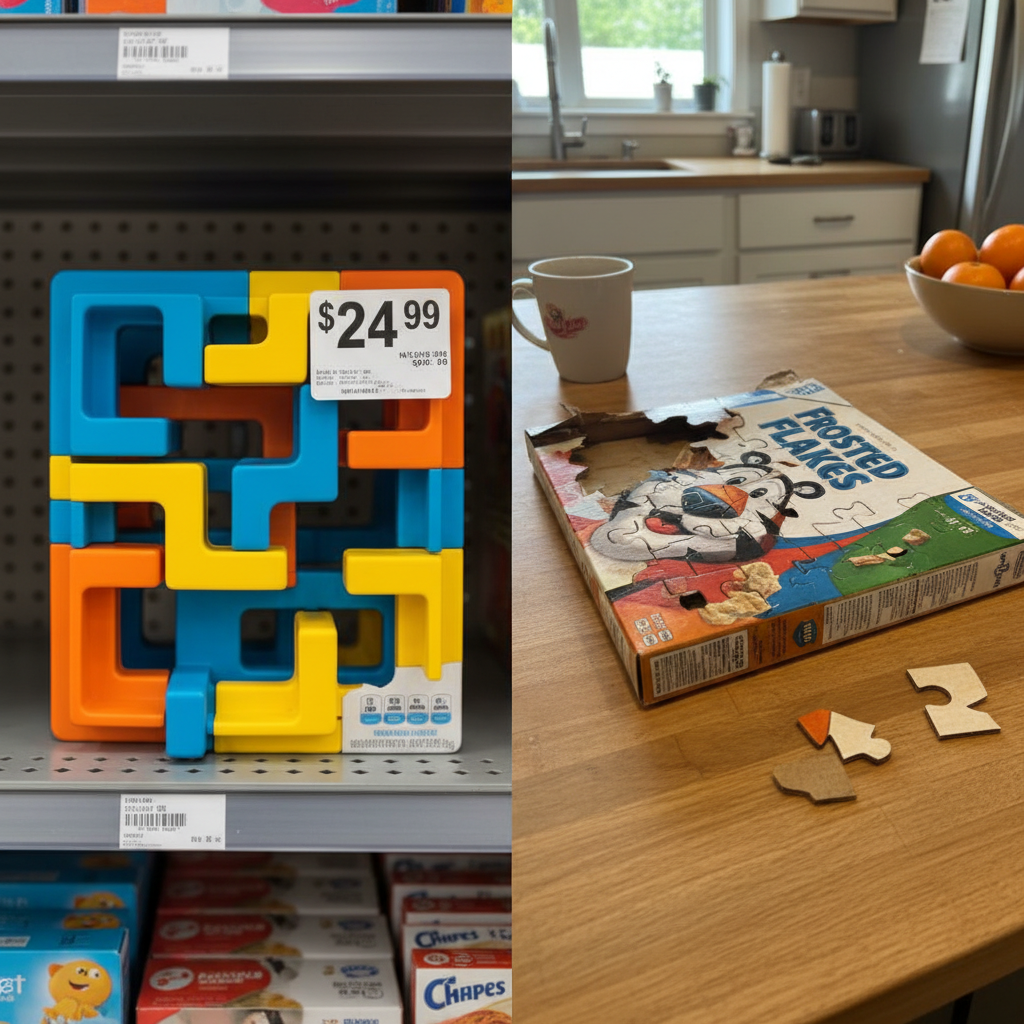
The commercial pet product market thrives on one simple idea: that you need to buy their specialized product to be a good pet owner. Food puzzles are a prime example. They are marketed as essential tools for canine mental health, and while the principle is sound, the products themselves are often overpriced and under-engineered. Most are made from simple injection-molded plastic with a design that a clever dog can master in just a few sessions, rendering it far less engaging over time.
Let’s conduct a cost-benefit analysis, hacker-style. The goal is mental stimulation and the delivery of a food reward. The variable is the tool used to achieve that goal. How does a store-bought puzzle stack up against our upcycled alternative?
Cost Breakdown: Commercial vs. Upcycled
The numbers don’t lie. The value proposition of DIY enrichment is undeniable when you look at the raw data. You are achieving the same, if not better, enrichment outcome for literally zero cost.
| Feature | Average Commercial Puzzle | DIY Cereal Box Puzzle |
|---|---|---|
| Initial Cost | $15 – $30 | $0 |
| Material | Plastic (Varies in durability) | Cardboard (Single-use, but infinite supply) |
| Novelty Factor | Decreases as dog masters the puzzle | Infinitely customizable for a new challenge every time |
| Environmental Impact | Plastic production and eventual disposal | Upcycles existing waste, fully recyclable |
| Verdict | A costly, single-solution tool. | A free, versatile, and eco-friendly system. |
Hacker Tip: A dog’s brain craves novelty. A $25 plastic puzzle that your dog solves the same way every day is less enriching than a free, oddly-shaped cardboard box they’ve never seen before. Don’t pay for repetition; create new challenges.
The Hacker’s Safety Protocol: Pre-Flight Checks for Your Cardboard Creations
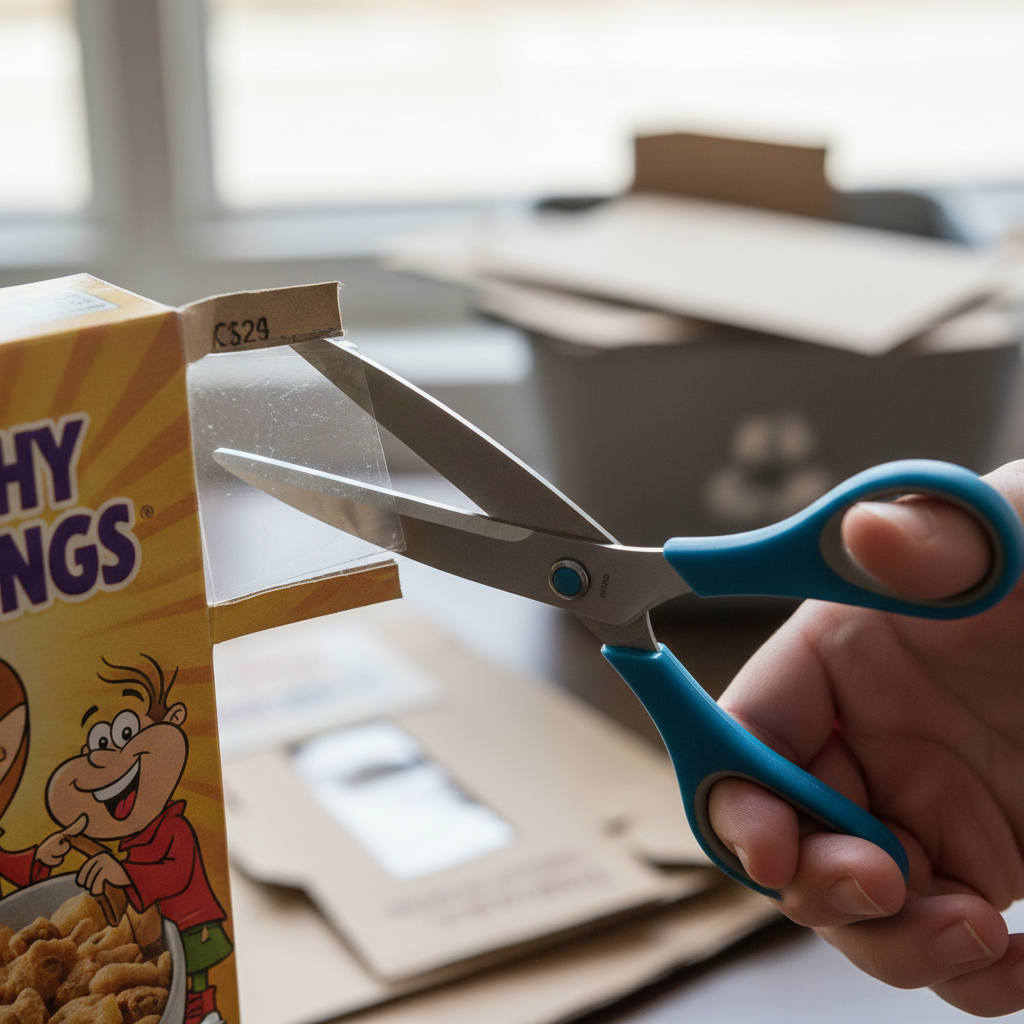
Before we turn your recycling bin into an enrichment arsenal, we need to establish the ground rules. Our approach is about being smart and resourceful, and that starts with safety. A food puzzle is not a chew toy. Your direct supervision is non-negotiable during these activities. The goal is for your dog to solve the puzzle with their brain and nose, not to simply ingest the materials.
Enemy Materials: What to Remove
Think of yourself as a quality control inspector. Before a box is ‘certified’ for enrichment, it must be stripped of all potential hazards. Your primary job is to ensure your dog only interacts with plain cardboard and their food.
- Plastic Liners: The single biggest hazard. Always remove the inner plastic bag from any cereal or cracker box.
- Adhesives: Peel off any tape, stickers, or heavy glue spots. The adhesive used to construct the box itself is minimal and generally fine, but external tapes must go.
- Staples: Some larger shipping boxes use metal staples. These are an absolute no-go. Inspect every seam.
- Plastic Windows: Many pasta or toy boxes have a small plastic ‘window.’ This must be completely cut out and removed.
- Excessive Inks: While most modern inks are non-toxic, if you have a dog who is a known shredder and ingester, you may opt for plainer cardboard boxes (like shipping boxes) to minimize ink consumption.
Is Cardboard Safe for Dogs?
This is the most common question, and the answer requires nuance. Is cardboard digestible? No. If your dog eats a large quantity of cardboard, it can pose a risk for an intestinal blockage. However, this is where your role as a supervisor is critical. The goal is for your dog to tear and shred the box to get the food, and you should remove the pieces as they work. A dog accidentally swallowing a small, torn piece of cardboard is typically not a cause for alarm and will pass through their system. The risk is minimized by active supervision and intervening if your dog begins eating the material instead of working the puzzle.
Blueprint 1: The ‘Beginner’s Box’ (Difficulty: Easy)

Every dog has to start somewhere. This first blueprint is the perfect introduction to cardboard puzzles. It teaches your dog the basic concept: ‘I have to interact with this object to get the food.’ It’s designed to be solved quickly to build confidence and prevent frustration in dogs who have never used a food puzzle before.
Step-by-Step Instructions:
- Acquire Your Material: Select a standard, empty cereal box. For this entry-level puzzle, a thinner cardboard is ideal as it’s easier to manipulate.
- Perform Safety Sweep: Following our protocol, remove the inner plastic bag. Check for and remove any external tape or stickers.
- Load the Payload: Drop a handful of your dog’s favorite high-value, smelly treats or a portion of their regular kibble into the bottom of the box. The smellier the treat, the more it will entice a hesitant dog.
- ‘Seal’ the Box Loosely: Fold the top flaps over each other, but do not tuck them in tightly or seal them. You want the top to be easily nudged open by a curious nose or paw.
- Deploy and Supervise: Place the box on the floor and encourage your dog to investigate. Praise them enthusiastically when they touch the box. Most dogs will quickly figure out they can knock it over or nudge the top open to get the reward.
Hacker Tip: If your dog is struggling, make it even easier. Leave the top flaps wide open so they just have to stick their head inside. Once they master that, start closing the flaps more on the next attempt. This process of gradual difficulty increase is called ‘shaping’ and is key to building a puzzle-solving champion.
Blueprint 2: The ‘Roller Rattle’ (Difficulty: Medium)

Once your dog has mastered the basic concept of getting into a box, it’s time to level up. The Roller Rattle introduces a new mechanical challenge. Instead of simply opening the container, the dog must learn to manipulate it in a specific way—rolling or shaking it—to dispense the food. This requires more advanced problem-solving skills and physical coordination.
Step-by-Step Instructions:
- Select and Prep: Choose an empty cereal or cracker box. A slightly sturdier box works well here. Complete your full safety sweep, removing all non-cardboard elements.
- Create Dispensing Ports: Using a pair of sharp scissors or a craft knife, carefully cut a few small holes, about the size of a quarter or a half-dollar, on the large front and back faces of the box. Make sure the holes are slightly larger than the kibble or treats you plan to use.
- Load the Puzzle: Drop a handful of kibble or small treats inside the box through the top opening.
- Secure the Container: This is the key difference. Firmly close the top flaps, tucking the final flap in securely to hold it shut. You can do the same with the bottom if it’s not fully glued. The box should be a sealed container with only the dispensing holes as exits for the food.
- Demonstrate and Deploy: Present the box to your dog. They may try to open the top as they did with the Beginner’s Box. When that fails, give the box a little nudge with your hand or foot to show them that rolling it causes food to fall out. Your demonstration is crucial for this level.
Troubleshooting: My Dog Is Just Ripping It Apart!
Don’t panic; this is not failure! For many dogs, the act of shredding and destroying the box is a huge part of the enrichment. It’s a natural, instinctual behavior. Let them have that fun. The beauty of a zero-cost toy is that its destruction is part of the intended experience. Simply supervise, remove and discard the torn pieces, and build them another one tomorrow. Over time, many dogs will learn that the more efficient, less destructive rolling method yields the food faster, but if they prefer to shred, let them—it’s their game!
Blueprint 3: The ‘Shredder’s Delight’ Muffin Tin Hack (Difficulty: Advanced)
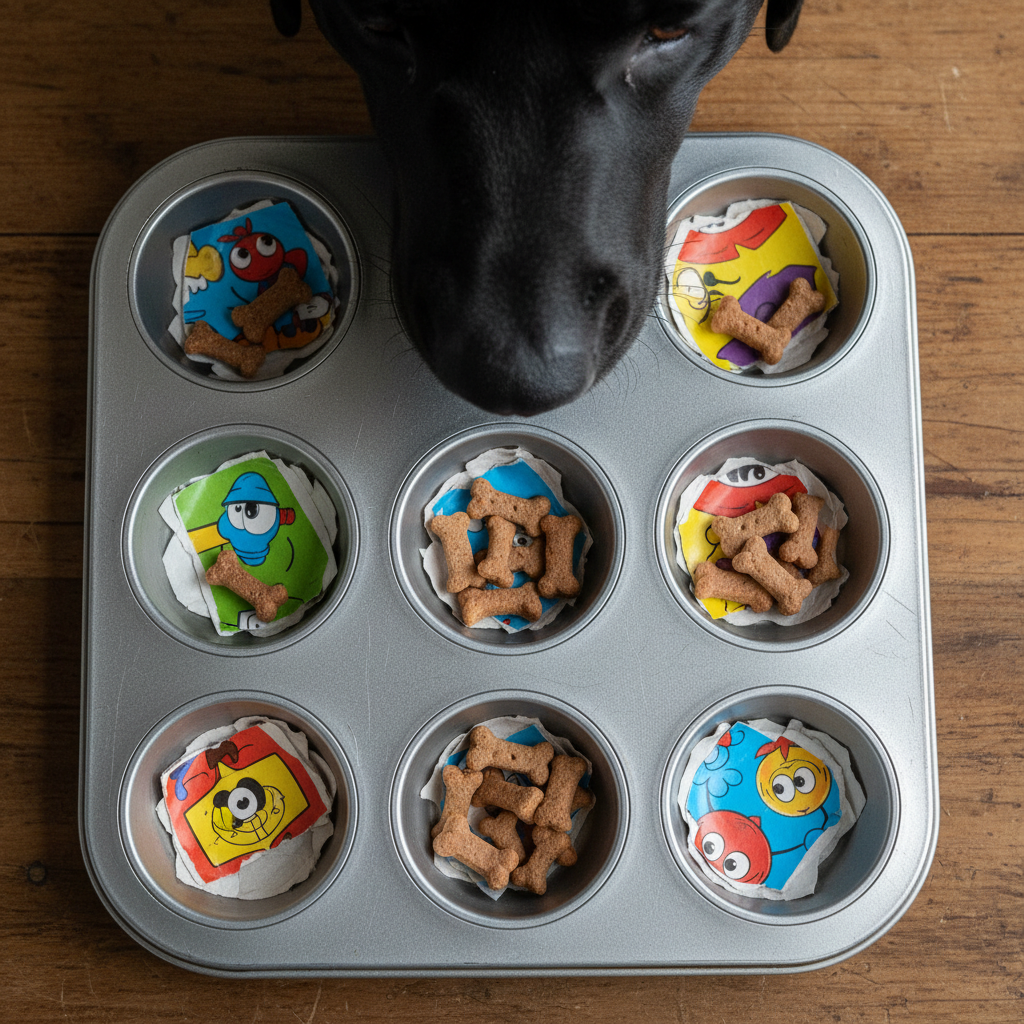
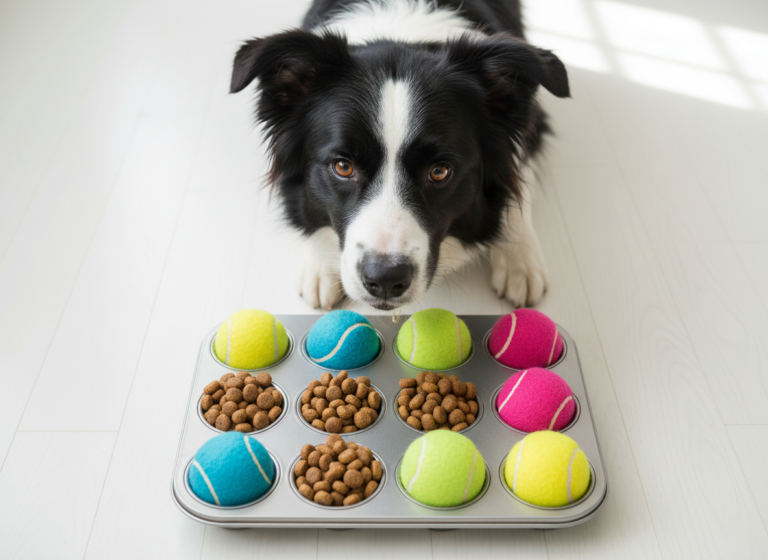
This is the master class. For the puzzle-savvy canine who needs a significant challenge, we combine our upcycled materials with another common household item: the muffin tin. This puzzle layers the challenge, requiring the dog to solve multiple small problems to get the full reward. It forces them to work methodically and is an excellent tool for slowing down even the most voracious eaters.
Step-by-Step Instructions:
- Assemble Your Arsenal: You will need a standard 6 or 12-cup muffin tin, an empty cereal box, scissors, and your dog’s food or treats.
- Process Your Cardboard: Cut the flat faces of the cereal box into small squares or circles. They should be large enough to completely cover the opening of one muffin cup. You’ll need one for each cup you plan to use.
- Bait the Traps: Place a few pieces of kibble or a single high-value treat into each cup of the muffin tin. For an added challenge, you can leave some cups empty.
- Set the First Obstacle: Place one of your cardboard cutouts over each of the baited cups, completely hiding the food. At this stage, the dog must figure out how to remove the cardboard covers to access the reward.
- Add a Second Layer (Optional): For a truly advanced puzzle, use other upcycled materials. Crumple up small pieces of paper (with supervision) or cut paper towel rolls into rings and place them inside the cups on top of the food but under the cardboard cover. This adds a textural challenge.
- Present the Challenge: Place the fully loaded muffin tin on the floor for your dog. They will have to use their nose and paws to systematically remove the covers and any other obstacles to get to the food in each cup.
Insider Secret: The ‘Shredder’s Delight’ is not a static puzzle. You can infinitely vary the difficulty. Start with just covering the cups. Then, add tennis balls on top of the cardboard covers. Then, use smaller, more difficult-to-remove cardboard pieces. The muffin tin is a platform; your upcycled materials are the software you use to challenge your dog’s brilliant mind.
Conclusion
You now possess the blueprints to provide your dog with endless, high-quality mental stimulation without ever spending another dime on a commercial plastic puzzle. By adopting the Canine Hacker mindset, you’ve learned to see your recycling bin not as trash, but as an untapped resource for your dog’s well-being. You’ve saved money, reduced waste, and provided a more engaging and novel experience than a static, store-bought toy ever could.
Remember the core principles: enrichment is about novelty and problem-solving, not expensive gadgets. Safety, through active supervision, is paramount. Embrace the destruction; the process is often more important than the puzzle’s longevity. Now go forth and hack your home for your dog’s happiness. You have the knowledge and the tools—they’ve been in your pantry all along.