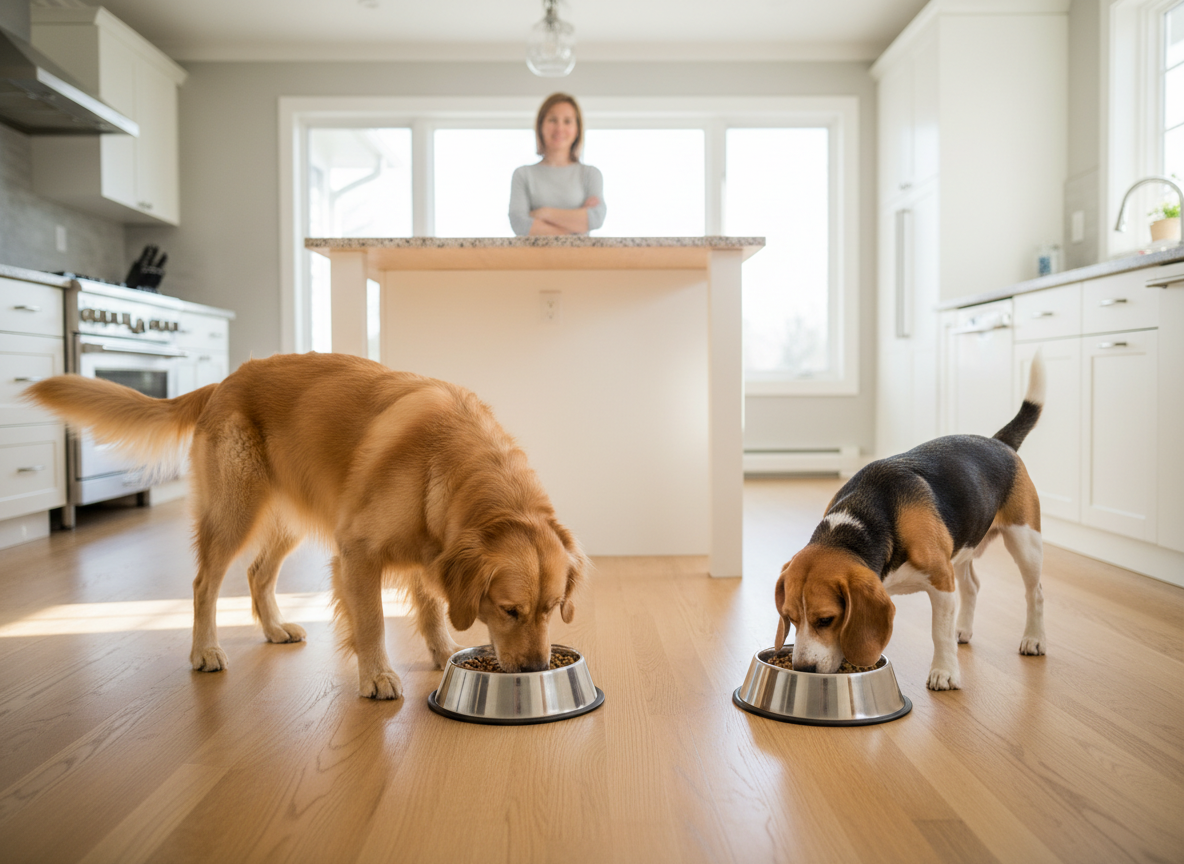
Chaos Control: How to Feed Multiple Dogs Without Fights
The dinner bell rings, and your home transforms into a battleground. Growling, snapping, frantic eating—it’s a scene of pure chaos. For many owners of multiple dogs, mealtime isn’t a moment of happy nourishment; it’s a high-stress tightrope walk. You might be juggling bowls, playing referee, and holding your breath, hoping a full-blown fight doesn’t erupt. This isn’t just stressful for you; it’s a dangerous and unhealthy environment for your dogs.
I’m The Canine Nutrition Hacker, and I don’t deal in fluff. I deal in strategy. The truth is, most feeding-time conflicts aren’t about ‘bad dogs’—they’re about bad systems. They stem from a fundamental misunderstanding of canine instinct and a lack of clear, authoritative structure. You’ve been led to believe that dogs should just ‘figure it out,’ but that’s a recipe for disaster. The key to peace isn’t hope; it’s control. You must become the master of resources, the architect of routine, and the calm leader of your pack.
This guide will serve as your blueprint. We will dissect the psychology behind food aggression, expose the critical mistakes many owners make, and provide you with an actionable, non-negotiable protocol to permanently end the mealtime wars. Prepare to take back control and transform feeding time from a source of anxiety into a testament to your leadership.
Decoding the Dinner-Time Drama: Why Fights Happen
Resource Guarding: An Ancient Instinct
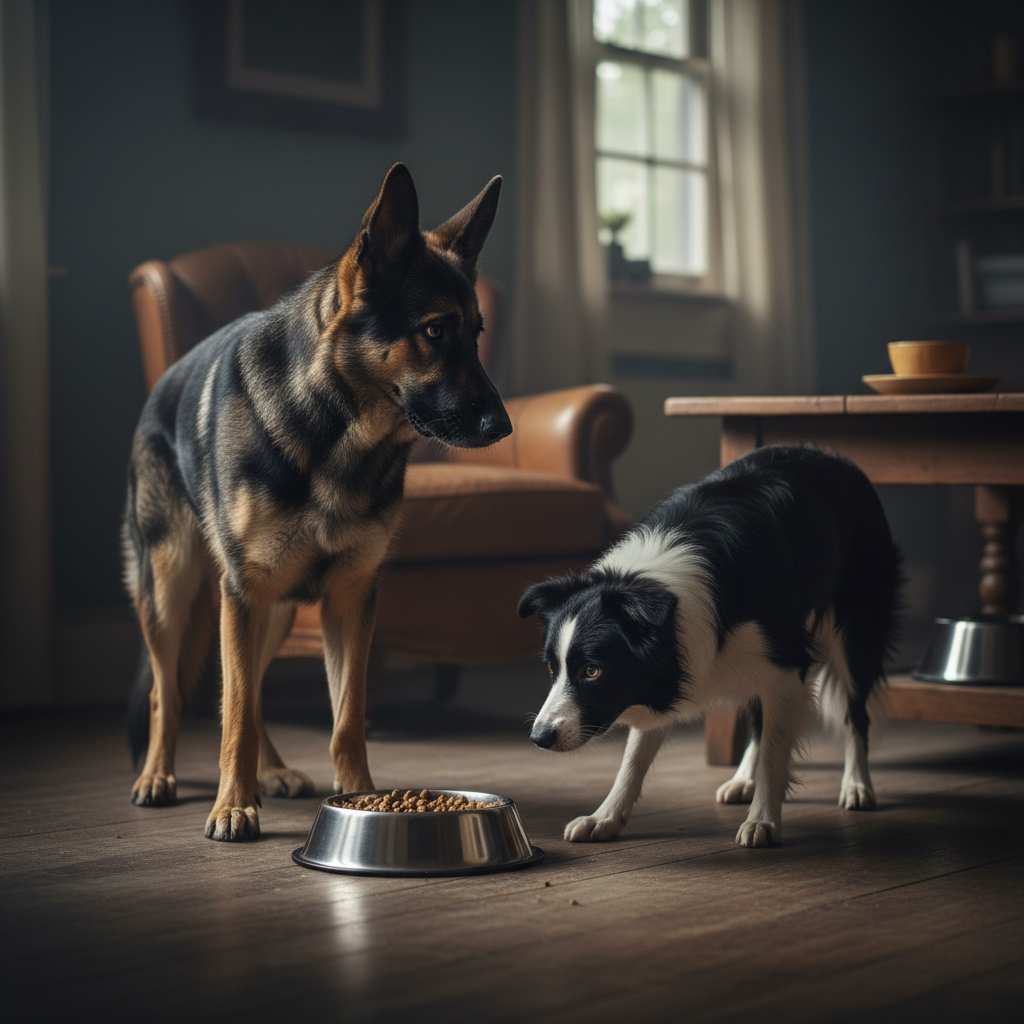
Before you can solve the problem, you must understand its origin. The root of almost all feeding-time conflict is resource guarding. This isn’t a learned behavior or a sign of a ‘dominant’ dog; it’s a hardwired survival instinct. In the wild, access to food means the difference between life and death. A wolf that couldn’t protect its kill wouldn’t pass on its genes. Your well-fed Labrador or pampered Poodle still carries that ancient software. When another dog approaches their bowl, their primal brain doesn’t see a housemate; it sees a threat to a vital resource.
This instinct is amplified by perceived scarcity. Even if you provide more than enough food, the simple presence of a competitor can trigger a guarding response. One dog’s body language—a subtle stiffening, a quick glance—can be interpreted as a challenge by another, leading to a rapid escalation. Recognizing this as instinct, not malice, is the first step toward implementing an effective strategy.
The Critical Failure of ‘Free-Feeding’
One of the most common and damaging practices in multi-dog homes is ‘free-feeding’—leaving a large bowl of food out for dogs to graze on throughout the day. From a management perspective, this is the equivalent of leaving a pile of cash on the floor and asking your dogs to share it politely. It creates a resource that must be guarded 24/7. This forces one dog, often the more anxious or assertive one, into the role of a constant guard. It creates chronic stress, prevents you from monitoring individual food intake, and makes resource-guarding behaviors exponentially worse. The food bowl becomes a perpetual source of tension. To establish order, this practice must be eliminated immediately. Food should be a resource that is provided by you, at set times, and under your direct control.
Insider Secret: The ‘guard’ dog isn’t necessarily the ‘alpha.’ Often, it’s the most insecure dog in the group. Their constant guarding is a symptom of anxiety, a desperate attempt to control the one thing they feel is valuable. By creating structure, you relieve them of this stressful job.
The Strategic Separation: Your First Line of Defense
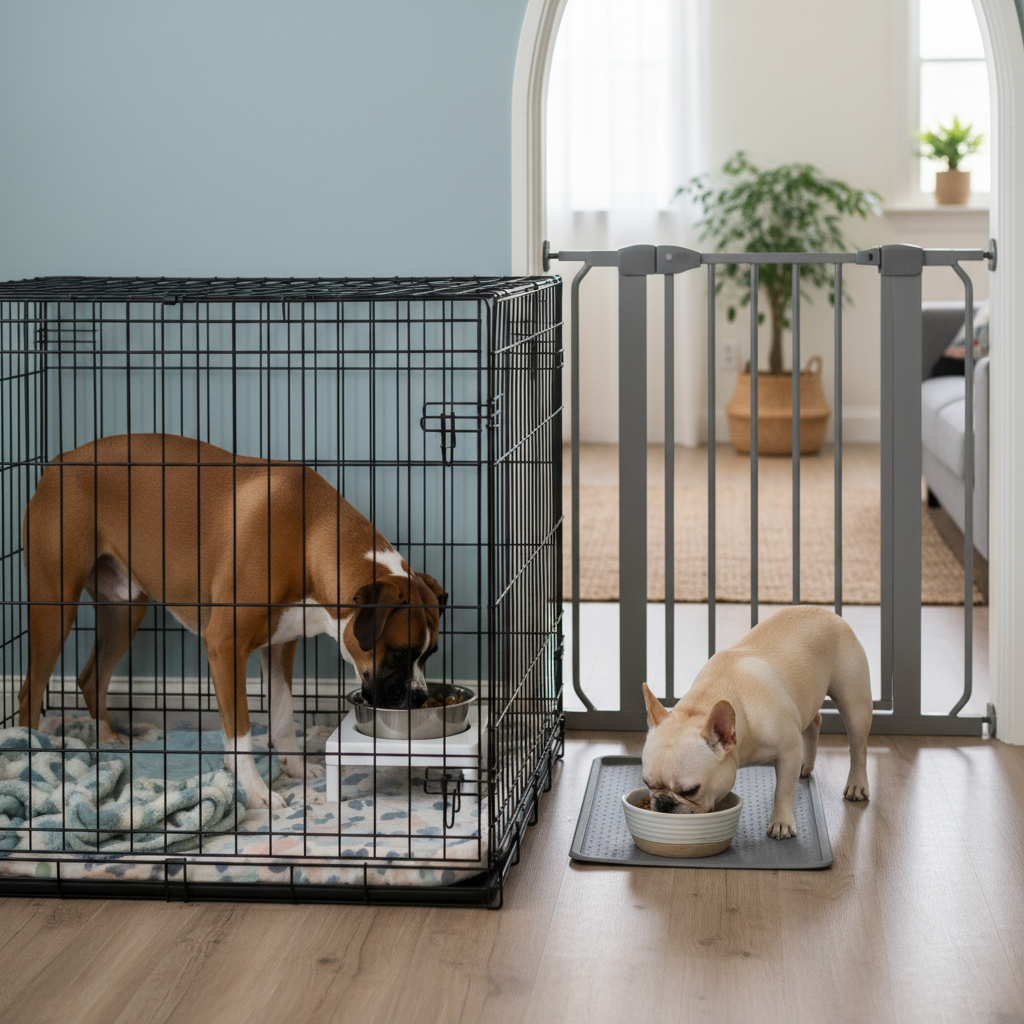
The single most effective tool in your arsenal is physical separation during meals. This is not a suggestion; it is a non-negotiable rule for a peaceful multi-dog household. Allowing dogs to eat in close proximity is an open invitation for conflict. It forces them to make complex social decisions under the duress of their feeding instincts. Your job is to remove that pressure entirely.
Separation ensures that each dog can eat at its own pace without feeling threatened or pressured. The slow eater doesn’t have to worry about the fast eater finishing and coming to steal their meal. The fast eater doesn’t feel the need to ‘wolf’ their food down before someone else gets it. It eliminates the possibility of one dog intimidating another with a look or a posture. This simple act of management solves 90% of mealtime squabbles instantly.
Methods of Effective Separation
The degree of separation required depends on the intensity of the conflict in your home. Choose the method that guarantees zero physical or visual contact during the meal.
- Separate Rooms: The gold standard. Place one dog in the kitchen, another in a laundry room or bathroom, and close the doors. This is the most secure and stress-free option.
- Crates: If your dogs are crate-trained, this is an excellent solution. Crates act as private, safe dining suites where each dog feels secure in their own space.
- Baby Gates or Exercise Pens: Use gates to block off doorways or segment a larger room. This works well if you can create enough distance that the dogs cannot see each other while they are eating.
- Visual Barriers: In a small space, even a simple visual barrier can help. You can tether dogs on opposite sides of a piece of furniture or a solid room divider. This should only be used for dogs with very mild tension, as it’s the least secure method.
Hacker Tip: Reframe the crate. Don’t present it as a ‘cage.’ Call it their ‘room,’ ‘den,’ or ‘diner.’ Feed them exclusively in their crates with the door open at first, tossing in high-value treats to build a powerful positive association. They will quickly learn that the crate is where the best things happen, transforming it from a management tool into a high-value location.
Establishing the Unbreakable Routine
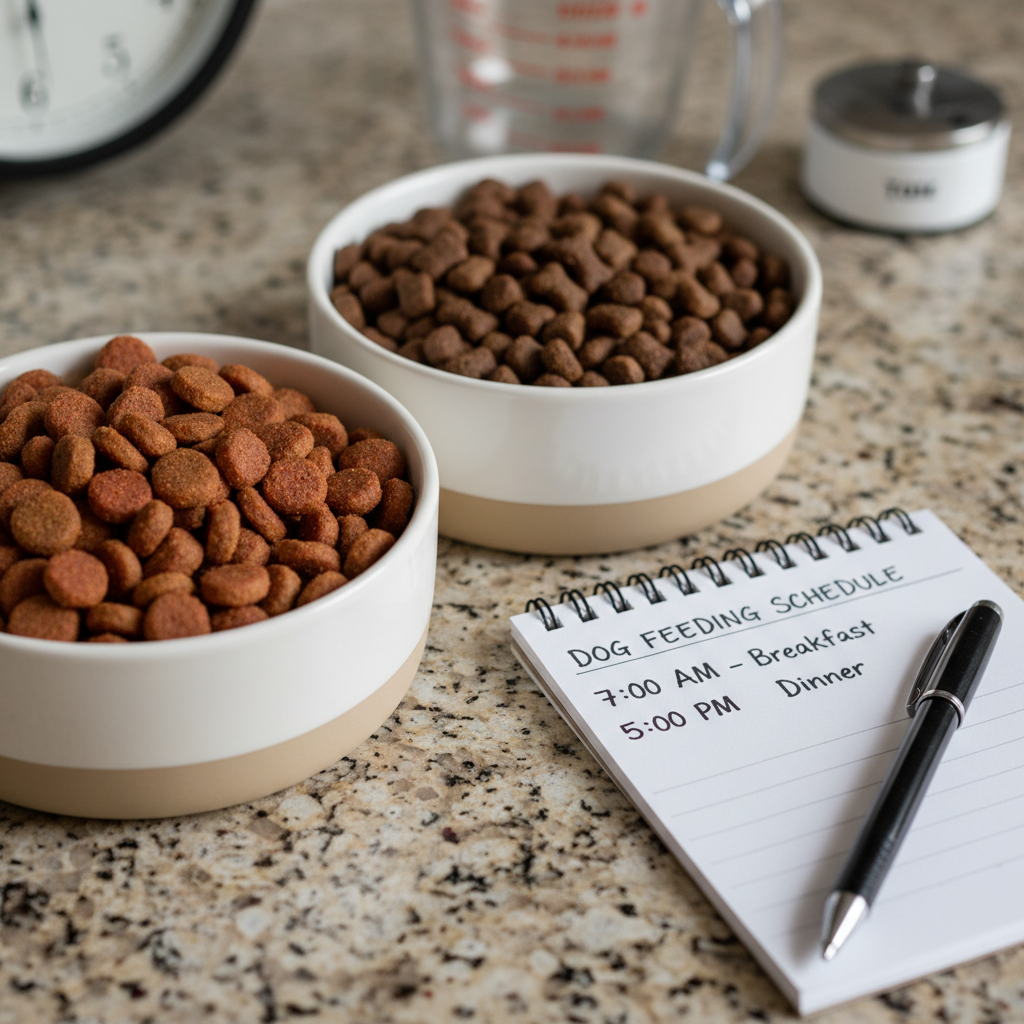
Dogs are creatures of habit. They thrive on predictability. A chaotic, unpredictable feeding schedule creates anxiety, which in turn fuels competition. When dogs don’t know when their next meal is coming, they place a higher value on the food right in front of them, increasing the likelihood of guarding. An unbreakable routine, on the other hand, communicates stability and security. It tells your dogs that food is a reliable resource provided by you, not something to be fought over.
Your routine must be precise and consistent. Feed your dogs at the exact same times every single day. This predictability lowers arousal levels around mealtime because the anticipation is managed. They learn that at 7 AM and 5 PM, food will appear without fail, reducing the frantic energy that often precedes feeding.
The Step-by-Step Feeding Protocol
This protocol must be followed to the letter every single time. Consistency is your greatest asset.
- Prepare Meals in Isolation: Prepare your dogs’ food bowls out of their sight. The sound of kibble hitting a metal bowl can trigger excitement and anxiety. Prepare the meals in the pantry or on a counter where they cannot see.
- Escort to Stations: Lead each dog to their designated, separate feeding station (crate, separate room, etc.). Do this calmly and one at a time. Do not let them rush the process.
- Implement a ‘Wait’ Command: Before placing the bowl down, ask for a simple, calm behavior. A ‘sit’ or ‘wait’ is perfect. They must be calm and focused on you, not fixated on the bowl. This reinforces that the food comes from you and is given only when they are in a calm state of mind.
- Place Bowls and Give Release Cue: Once the dog is sitting calmly, place their bowl on the floor. Use a release word like ‘Okay’ or ‘Eat.’ This signals that they now have permission to access the resource.
- Supervise and Remove Bowls Promptly: Do not leave the dogs unattended. Once a dog has finished eating, immediately pick up their bowl. Do not let them linger or go looking to see if another dog has left anything behind. A meal that lasts 10-15 minutes is ample time. This teaches them that feeding time has a clear start and a clear end.
The Alpha Protocol: You Control All Resources
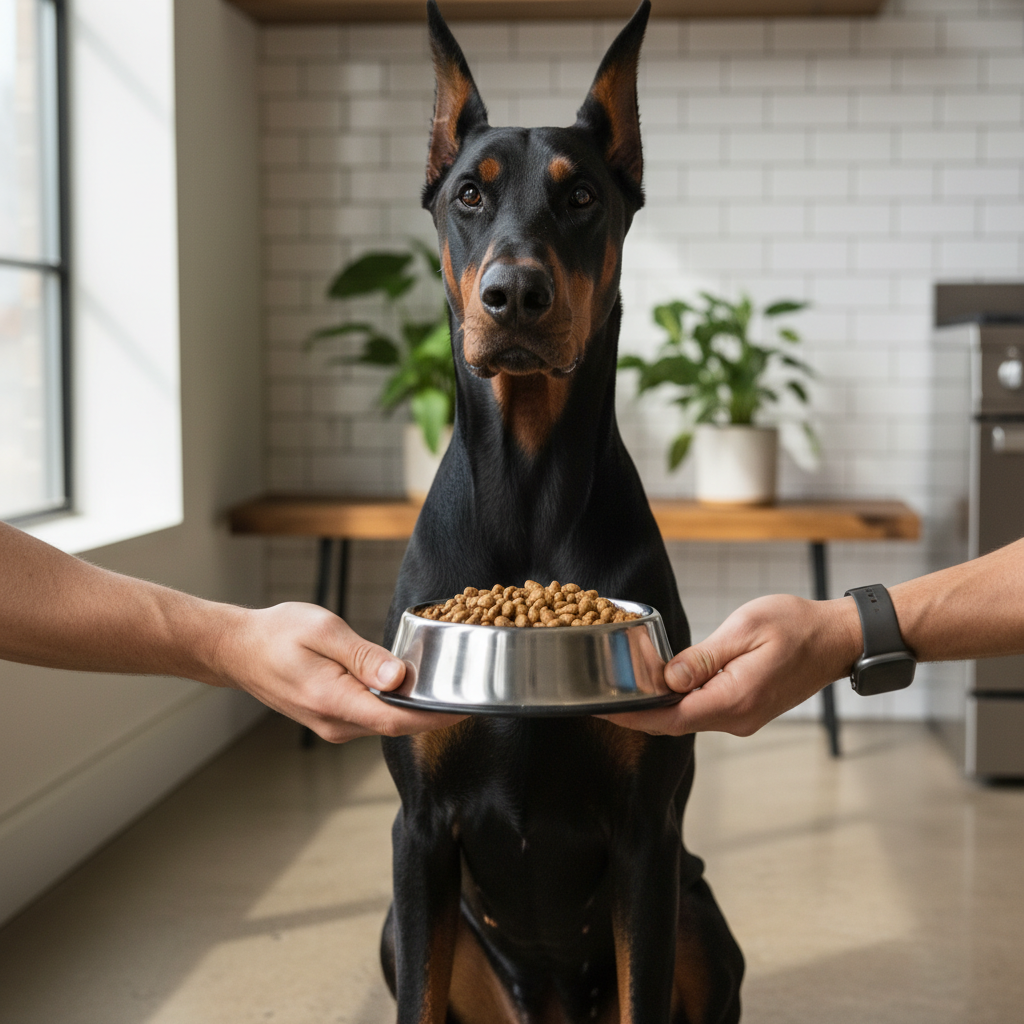
Let’s be clear: this is not about outdated, dominance-based ‘alpha roll’ nonsense. This is about quiet, confident leadership. In any canine social structure, the leader controls access to valuable resources. In your home, you are the leader, and food is the most valuable resource of all. Your dogs must understand, through your actions, that you are the sole provider of all good things. This mindset, often called ‘Nothing In Life Is Free’ (NILIF), is foundational to a well-behaved pack.
By controlling the resource, you remove the need for your dogs to compete with each other. Why would Dog A try to steal from Dog B when they know the ultimate source of food is you? Your calm authority is the cornerstone of a peaceful home. When you are flustered, anxious, or yelling during feeding time, you inject chaotic energy into the situation. Your dogs will mirror this. When you are calm, methodical, and in control, they learn to be calm as well.
Implementing the ‘Work-to-Eat’ Model
The ‘wait’ command mentioned in the previous section is a simple form of this. Before every meal, your dogs should be required to perform a simple task. This isn’t about obedience for the sake of it; it’s about shifting their mental state from frantic excitement to focused engagement with you.
- The Sit-Stay: The most basic and effective command. Require all dogs to sit and stay while you place their bowls down. They may not approach until you give the release word. Start with short durations and gradually increase their impulse control.
- Eye Contact: A more advanced technique. Teach your dog to make eye contact with you before you place the bowl down. This ensures their focus is entirely on you, the provider, not just the food.
- Station Training: Teach each dog a ‘go to your spot’ command. Their ‘spot’ could be their crate, a specific mat, or a corner of the room. They must go to their station and wait patiently before the meal is delivered.
This process fundamentally changes the dynamic. It’s no longer a mad dash for a scarce resource. It’s a structured, predictable transaction between a calm leader and respectful followers. You are not just dispensing food; you are reinforcing order and your position as the benevolent provider.
Managing Special Cases and Advanced Scenarios
While the core principles of separation, routine, and leadership will solve most issues, multi-dog households often present unique challenges. Here’s how to troubleshoot some common advanced scenarios.
The Slow Eater vs. The Food Gobbler
This is a classic recipe for conflict. The ‘Gobbler’ finishes in 30 seconds and immediately goes to pressure the ‘Slow Eater.’ This is where strict physical separation is paramount. The Slow Eater must be in a separate room with the door closed. This gives them the peace and security to eat at their own pace without anxiety. You can also use a slow-feeder bowl for the Gobbler to extend their mealtime, which can help sync up their finishing times more closely.
The Food Thief and Bowl-Licker
This refers to the dog who, after finishing their own meal, makes a beeline for everyone else’s bowl to ‘clean up.’ This behavior must be stopped. It’s a form of intimidation and a direct challenge to the other dogs. The solution is prompt bowl removal. The moment a dog walks away from their bowl, it gets picked up. The meal is over. There are no seconds and no leftovers. This reinforces that each dog gets their portion and nothing more.
Feeding Different Diets
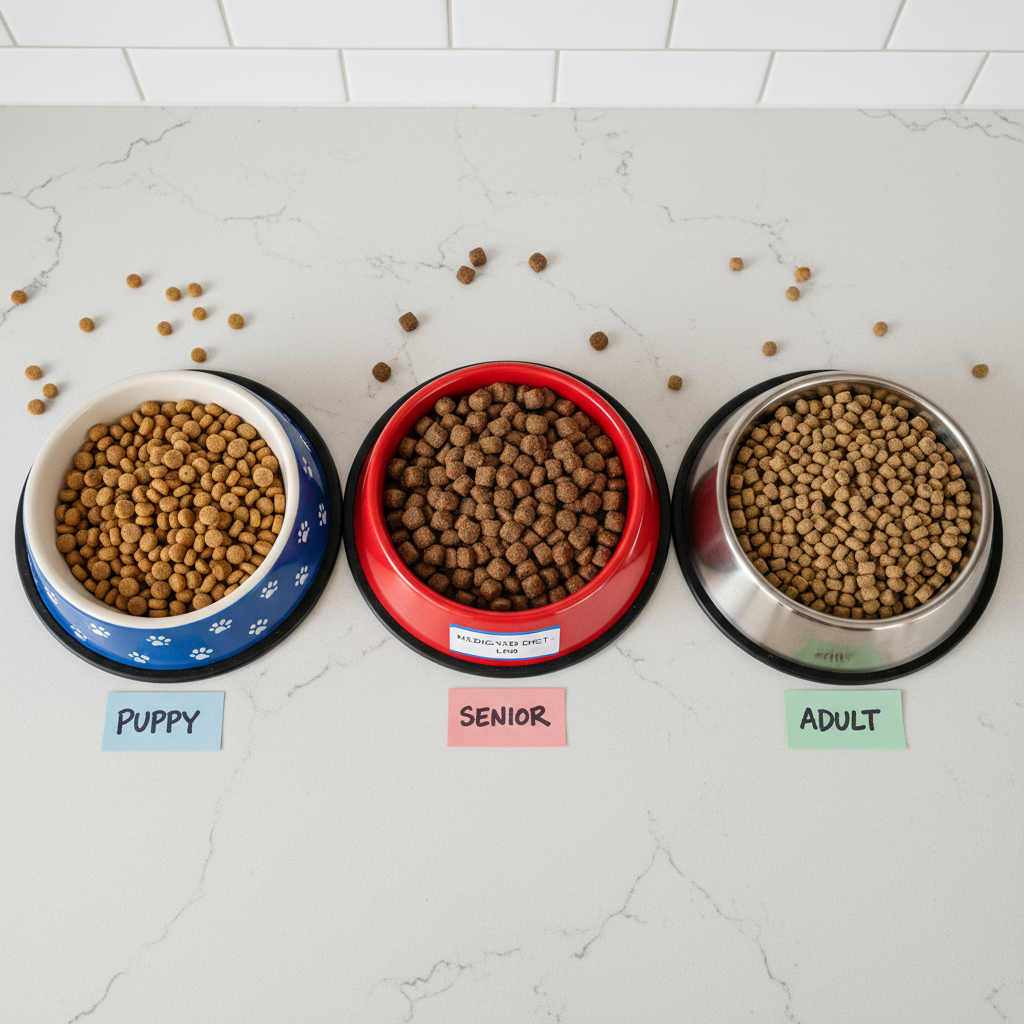
Managing multiple diets (e.g., puppy food, senior food, prescription diets) can feel like a logistical nightmare, but it’s simple with the right system. This is where your management protocol becomes a critical tool for health and safety.
| Dog Profile & Name | Dietary Requirement | Management Strategy |
|---|---|---|
| Puppy “Finn” | High-calorie puppy formula | Feed in his crate to prevent older dogs from accessing his rich food. Use a blue bowl. |
| Adult “Sadie” | Grain-free adult maintenance | Feed in the kitchen behind a baby gate. Use a stainless steel bowl. |
| Senior “Buster” | Prescription low-fat diet | Feed in a closed-off bedroom to ensure 100% dietary compliance. Use a red bowl. |
Using color-coded bowls is a simple but powerful hacker tip to prevent mix-ups. The key, as always, is absolute separation to ensure the dog with the medical issue doesn’t get access to the wrong food, which could have serious health consequences.
Conclusion
The chaos you’ve been experiencing at mealtime is not your destiny. It is a problem with a clear, strategic solution. By implementing the core principles of uncompromising separation, an unbreakable routine, and your own calm, confident leadership, you can systematically dismantle the triggers for conflict. You will replace anxiety and aggression with predictability and peace. This isn’t just about preventing fights; it’s about improving your dogs’ quality of life and strengthening your relationship with them.
Stop being a referee and start being a leader. Take this blueprint, implement it with absolute consistency, and watch as the dinner-time drama transforms into a quiet, orderly, and respectful process. You have the power to restore order. Now, go do it.