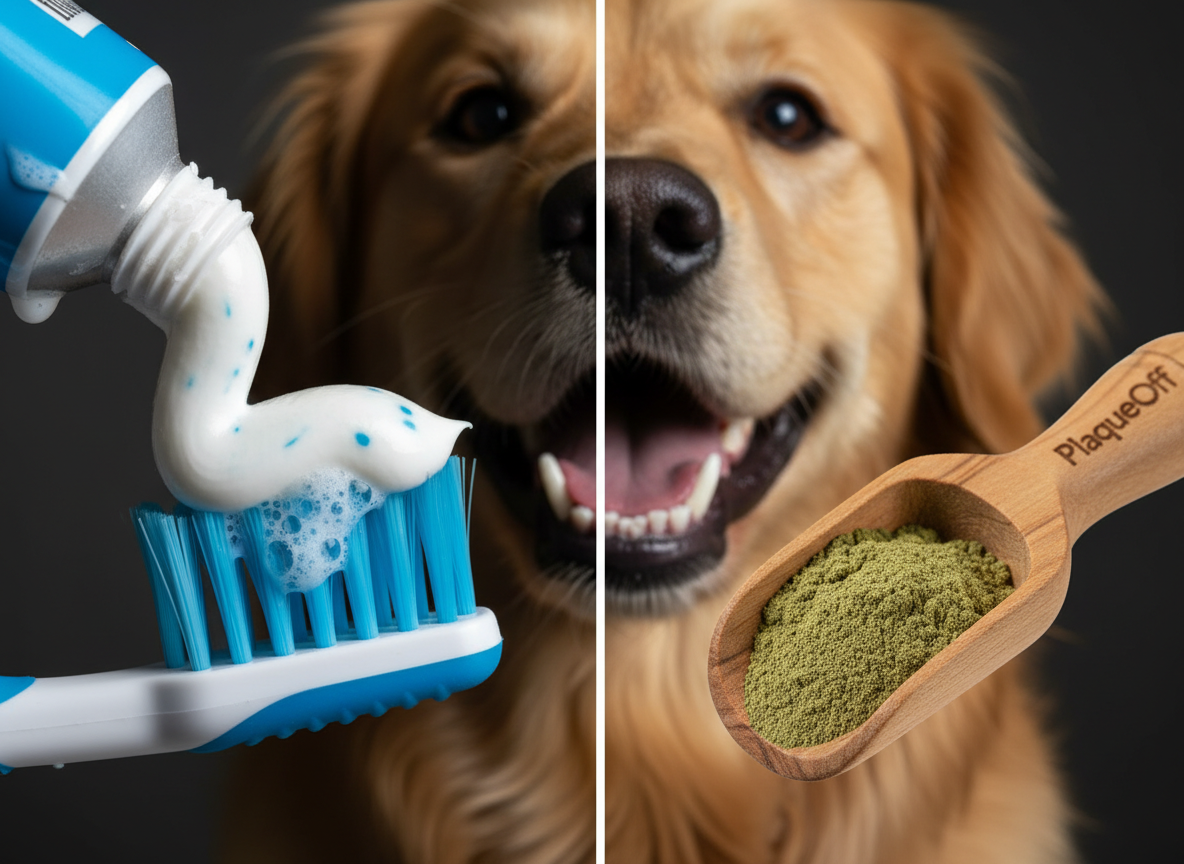
PlaqueOff Powder vs. Brushing: What Really Works for Tartar?
Dental disease is the silent epidemic plaguing our dogs. By the age of three, over 80% of dogs show signs of periodontal disease, a condition that doesn’t just cause bad breath but can lead to severe pain, tooth loss, and even systemic infections affecting the heart, liver, and kidneys. As a pet owner, you’re faced with a daily battle against plaque and tartar. In one corner, we have the undisputed, veterinarian-recommended champion: mechanical tooth brushing. In the other, a popular and convenient challenger: PlaqueOff powder, promising an effortless, systemic solution.
But in the world of canine health, convenience doesn’t always equal efficacy. As The Canine Nutrition Hacker, my job is to cut through the marketing noise and analyze what truly works. We’re going to put both methods under the microscope, examining their mechanisms, real-world effectiveness, and cost-benefit ratio. This isn’t just about clean teeth; it’s about investing in your dog’s long-term health and saving yourself thousands in potential veterinary bills.
MEDICAL DISCLAIMER: I am not a veterinarian. The information in this article is the result of extensive research and analysis. Always consult with your veterinarian before starting any new supplement or health regimen for your dog, especially if they have pre-existing conditions like thyroid issues.
The Unseen Enemy: Deconstructing Plaque and Tartar
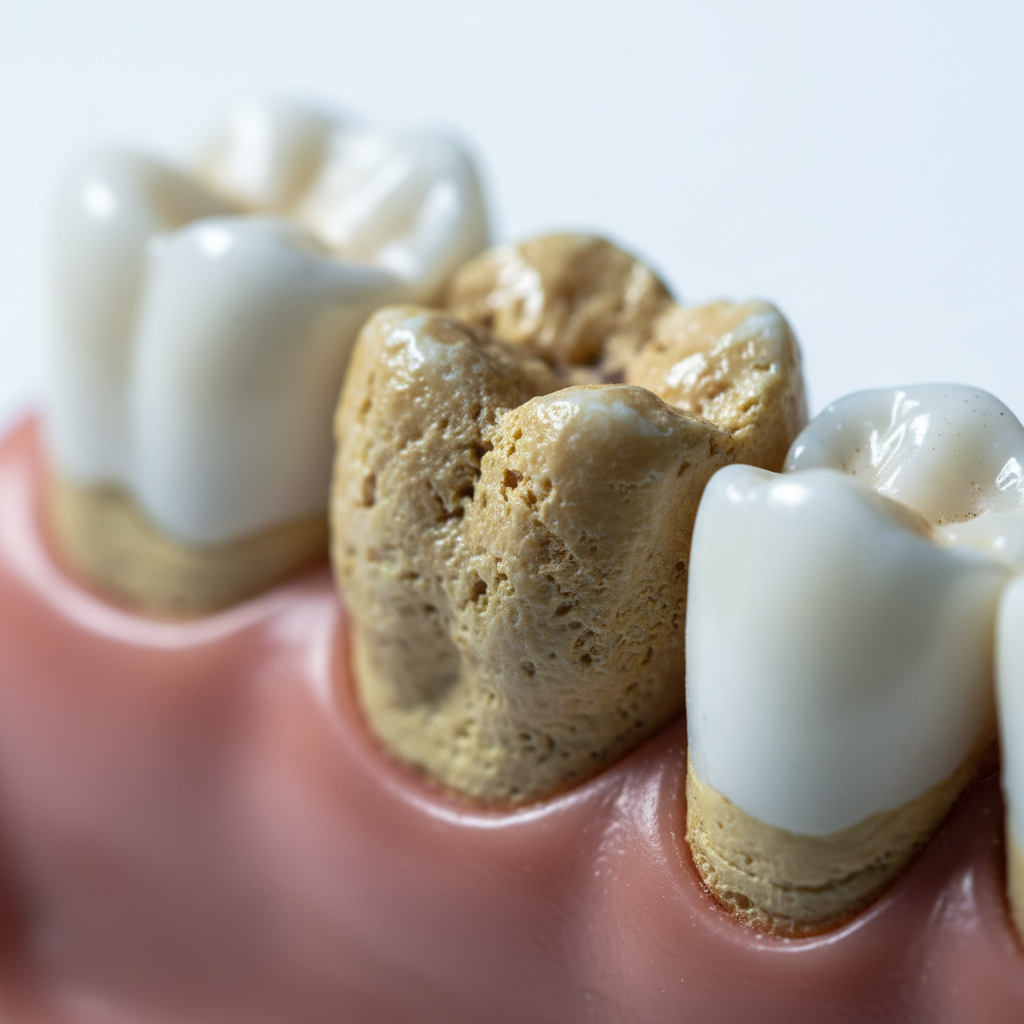
Before we can declare a winner, we must first understand the enemy. It’s a two-stage assault on your dog’s oral health.
Stage 1: The Plaque Biofilm
It all starts with plaque. This isn’t just food debris; it’s a sticky, colorless biofilm composed of bacteria, saliva, and food particles. Within hours of a meal, this microscopic film begins to coat the tooth surface, especially along the gumline. In its soft state, plaque is the primary target. It’s relatively easy to remove, but it’s relentless, constantly reforming.
Stage 2: The Tartar Fortress
If plaque is not removed within 24-72 hours, the minerals in your dog’s saliva (primarily calcium phosphate) begin to crystallize it. This hardened plaque is called tartar, or dental calculus. Unlike plaque, tartar is a hard, porous substance that forms a rock-like fortress on the teeth. It has a rough surface, which ironically makes it an ideal place for even more plaque to accumulate, accelerating the cycle. You cannot remove tartar with simple brushing. Once it has formed, it typically requires professional scaling by a veterinarian under anesthesia. This is the stage we are desperately trying to prevent, as it’s what leads directly to gingivitis (inflammation of the gums) and the more severe, irreversible periodontal disease.
The Gold Standard: A Forensic Look at Mechanical Brushing

There is a reason every veterinarian on the planet advocates for brushing your dog’s teeth: it is the single most effective method for removing plaque. The principle is brutally simple and effective: mechanical abrasion. You are physically scraping the soft plaque biofilm off the tooth surface before it has a chance to mineralize into tartar.
The Tools and Technique
Success with brushing hinges on two things: the right tools and the right approach. For tools, you need a dog-specific toothbrush (angled heads and softer bristles are key) and a dog-specific toothpaste. Never use human toothpaste, as it contains fluoride and foaming agents like sodium lauryl sulfate, which are toxic to dogs. Many canine toothpastes are enzymatic, meaning they contain enzymes like glucose oxidase and lactoperoxidase that help produce antibacterial ions, providing a chemical boost to your physical brushing efforts.
Hacker Tip: Don’t think of it as ‘brushing,’ think of it as a ‘treat.’ Start by letting your dog lick the tasty (poultry or beef flavored) toothpaste off your finger, then off the brush. Gradually progress to touching the brush to their teeth for a second, then a few seconds, always following with praise or a high-value reward. You are building a positive association, not starting a fight. Focus on the outside of the teeth, as this is where most tartar accumulates. Aim for at least 3-4 times a week for meaningful prevention.
Pros vs. Cons of Brushing
- Pros: Unmatched effectiveness at plaque removal, extremely low cost, strengthens the human-animal bond, allows you to regularly inspect your dog’s mouth for other issues.
- Cons: Requires a significant time and training commitment, many dogs resist it, can be difficult to do effectively on all teeth, especially in small or brachycephalic (flat-faced) breeds.
The Systemic Solution: Analyzing PlaqueOff Powder
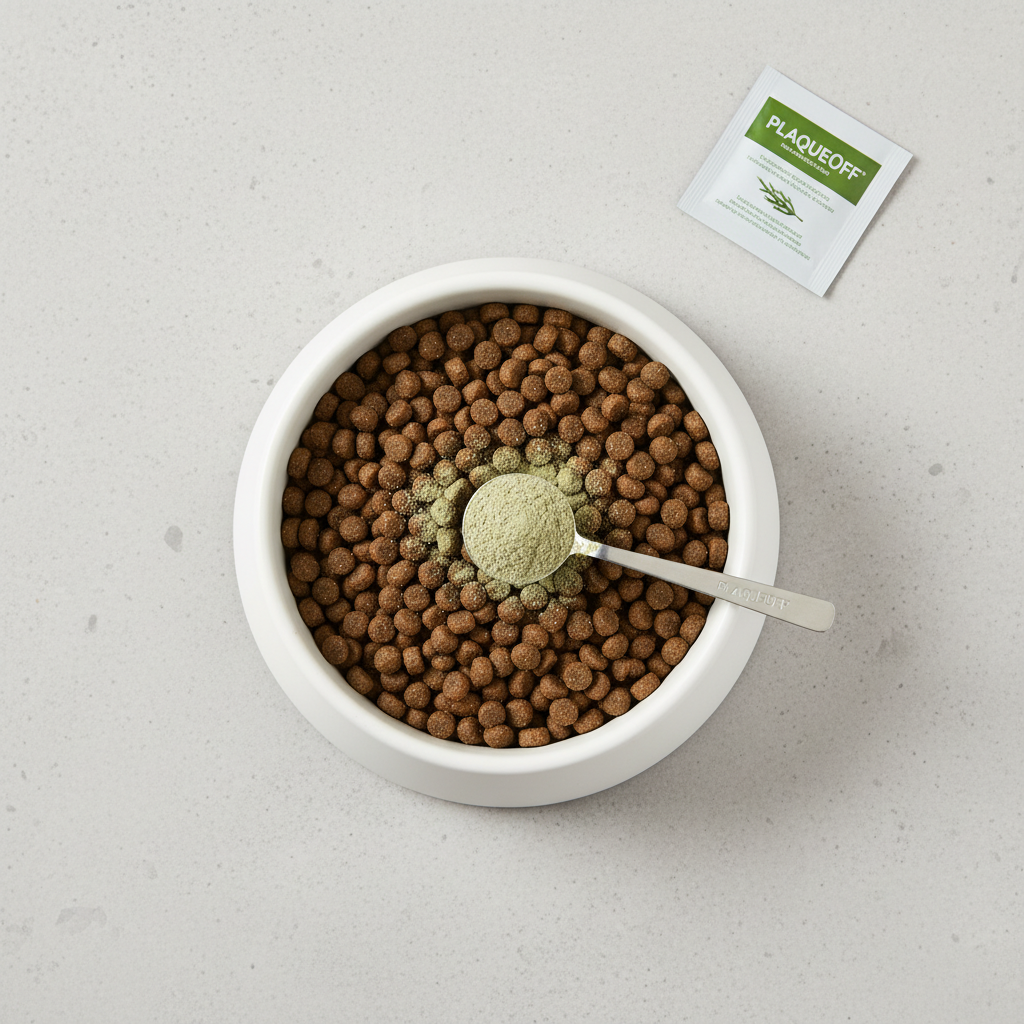
PlaqueOff represents a completely different approach. Instead of a frontal assault on the teeth, it’s a systemic solution that works from the inside out. The product’s primary and essentially only active ingredient is a specific type of seaweed, Ascophyllum nodosum, harvested from the North Atlantic.
Mechanism of Action
When ingested, the compounds in the seaweed are absorbed into the bloodstream and then excreted into the dog’s saliva. This changes the chemical composition of the saliva, making it less hospitable to the bacteria that form plaque. It is believed to alter the sticky glycoproteins in saliva, reducing the ability of plaque to adhere to the tooth surface. It also has been shown to help soften existing tartar over time, making it brittle and easier to remove through chewing or brushing.
This is a critical distinction: PlaqueOff does not mechanically remove plaque. It changes the oral environment to prevent plaque from sticking effectively and helps break down the structure of existing tartar. Results are not immediate; it typically takes 3 to 8 weeks of consistent daily use to see a noticeable difference in breath and the texture of tartar.
Because it contains natural iodine from the seaweed, it’s crucial to consult a vet before use in dogs with hyperthyroidism or other thyroid conditions.
| Feature | Tooth Brushing | PlaqueOff Powder |
|---|---|---|
| Mechanism of Action | Mechanical Abrasion (Physical Removal) | Systemic / Chemical (Alters Saliva) |
| Target | Primarily Soft Plaque | Plaque Adhesion & Existing Tartar |
| Speed of Results | Immediate (Plaque is gone after brushing) | Slow (3-8 weeks to see effects) |
| Ease of Use | Difficult (Requires training and daily effort) | Very Easy (Sprinkle on food once a day) |
| Veterinarian Consensus | Universally Recommended Gold Standard | Generally Positive as a Supplement |
| Verdict | Non-negotiable for plaque prevention. | Powerful supportive tool, not a replacement. |
The Real Cost-Benefit Analysis: Time, Money, and Anesthesia
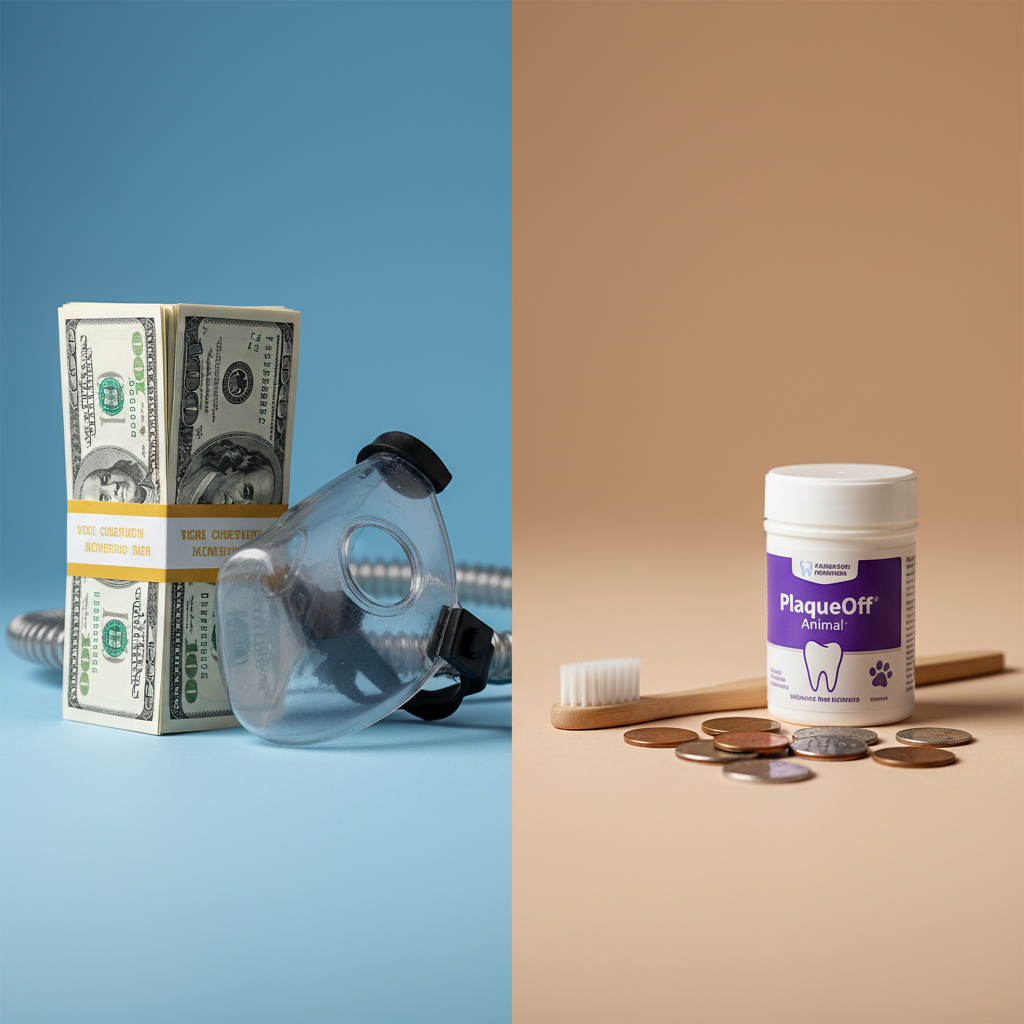
Let’s break down the real-world investment for a hypothetical 50lb dog.
The Cost of Brushing
- Monetary Cost: A high-quality dog toothbrush costs about $8 and should be replaced every 3 months. A tube of enzymatic toothpaste costs around $10 and lasts for about 2-3 months. Annual Cost: Approximately $50-$60 per year.
- Time Cost: This is the major investment. It requires an initial training period and then 2-5 minutes per day, 3-7 days a week. Annual Time Cost: Approximately 20-30 hours per year.
The Cost of PlaqueOff
- Monetary Cost: A 180g container costs around $45-$55. For a 50lb dog, the recommended dose is 2-3 scoops daily. The container holds approximately 540 scoops. This one container will last roughly 6-9 months. Annual Cost: Approximately $70-$90 per year.
- Time Cost: Negligible. It takes 10 seconds to sprinkle on food once a day.
The Cost of Inaction
This is the number that truly matters. When preventative measures fail, the solution is a Comprehensive Oral Health Assessment and Treatment (COHAT) performed by a veterinarian. This procedure requires general anesthesia, full-mouth X-rays, scaling, and polishing. Depending on the severity and whether extractions are needed, the cost can range from $500 to well over $2,000. Both brushing and PlaqueOff are investments designed to prevent this single, massive expense.
The Canine Nutrition Hacker’s Verdict: An Integrated Approach
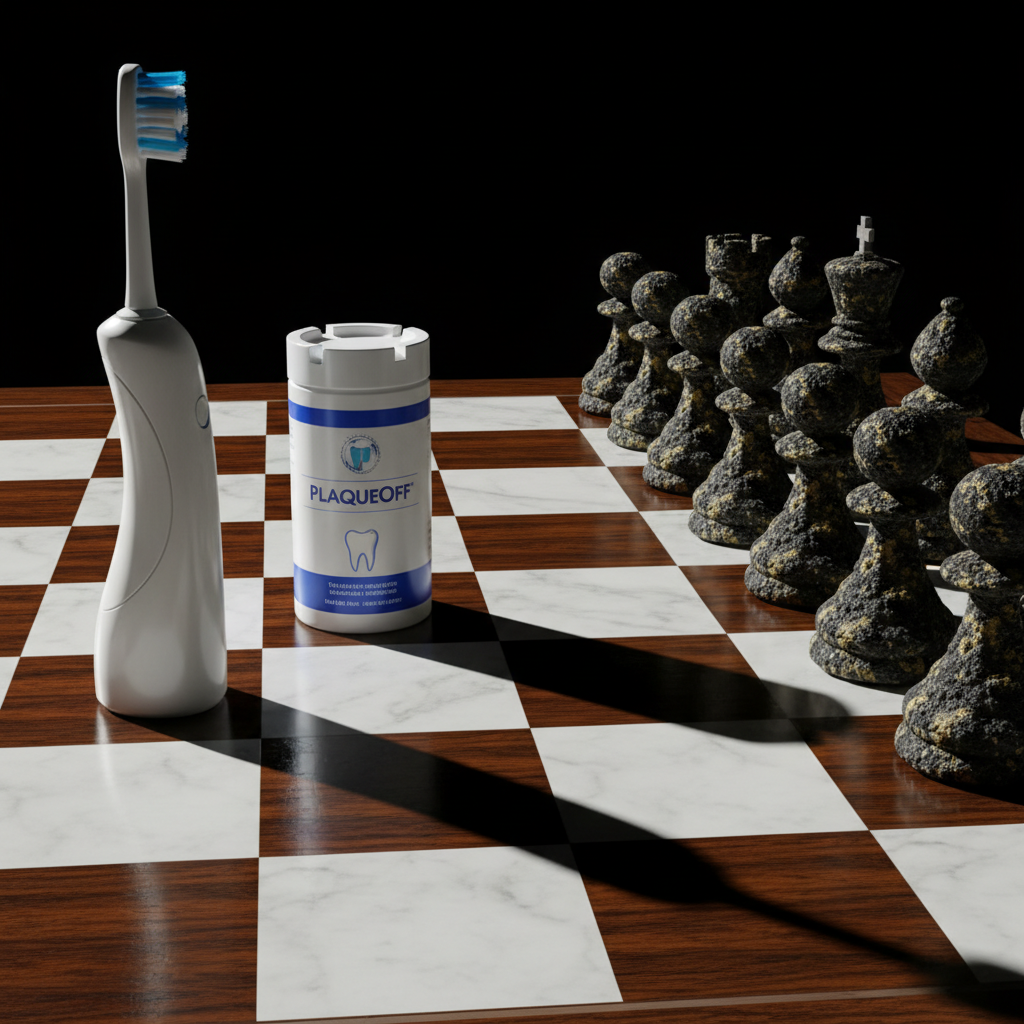
After analyzing the evidence, the conclusion is clear: this is not an ‘either/or’ debate. Framing it as PlaqueOff Powder vs. Brushing is asking the wrong question. One is an active assault weapon; the other is a 24/7 defense system. The ultimate strategy for bulletproof canine dental health is to use them together.
The Ultimate Protocol
- Brushing is your primary offensive weapon. It is non-negotiable. You must physically remove the plaque biofilm. Aim for a minimum of 3-4 times per week, focusing on the outer surfaces of the canines and molars where tartar accumulates most heavily. This is your active, daily warfare against plaque.
- PlaqueOff is your systemic support. This is your passive, round-the-clock defense that makes your brushing efforts more effective. By altering the saliva, it creates an oral environment where plaque struggles to gain a foothold. For dogs that already have mild to moderate tartar buildup, it acts as a secret weapon.
Insider Secret: For dogs with existing, mild tartar, a 60-day course of PlaqueOff can significantly soften the calculus. After this period, you may find that the tartar becomes brittle and can be scraped or flicked off more easily with a fingernail or a quality dental scraper during a brushing session. This combination can help reverse minor buildup without an immediate vet visit, but should be approached with caution and is no substitute for a professional opinion on heavy buildup.
By integrating these two methods, you are attacking the problem from both the outside-in and the inside-out. You are using the gold-standard mechanical removal process while simultaneously changing the very chemistry of your dog’s mouth to be more resistant to future attacks. This two-pronged strategy is the most effective way to ensure your dog’s oral health and protect your wallet from the staggering cost of professional dental procedures.
Conclusion
The battle for your dog’s dental health is won through consistent, intelligent strategy, not a search for a single magic bullet. Tooth brushing remains the undisputed champion of plaque removal, an essential, active measure no pet owner should ignore. Its effectiveness is proven and its cost is minimal. PlaqueOff, however, is not a competitor but a powerful ally. It works systemically, changing the battlefield itself to make your brushing more effective and to help manage existing tartar buildup.
Stop thinking of it as a choice. The professional, authoritative approach is an integrated one. Combine the mechanical power of brushing with the biochemical support of a product like PlaqueOff. This comprehensive defense system is your best investment against the pain, health risks, and extraordinary expense of advanced periodontal disease. You now have the insider’s knowledge to move beyond the marketing and implement a strategy that truly works for the long-term health of your companion.