Ancient Grains vs. Grain Free: Which is Safer for Your Dog?
Let’s cut right to the chase. The pet food aisle is a battleground of marketing buzzwords, and for the last decade, ‘Grain-Free’ has been the reigning champion. It was sold to you as the pinnacle of canine nutrition, a return to an ancestral diet. Then, in 2018, the FDA dropped a bombshell, linking these very foods to a potentially fatal heart condition, Dilated Cardiomyopathy (DCM). Confusion and fear spread like wildfire among loving pet owners. You were told you were doing the best for your dog, only to find out it might be dangerous.
I’m The Canine Nutrition Hacker. I don’t work for pet food companies, and I don’t fall for slick packaging. My job is to arm you with the data and forensic skills to see past the hype and analyze what’s actually in your dog’s bowl. The ‘Ancient Grains vs. Grain-Free’ debate isn’t about choosing a side; it’s about understanding the science of ingredient formulation. In this investigation, we will dissect the evidence, expose the real culprits behind the DCM crisis, and give you a definitive, no-nonsense answer on which path is safer for your canine companion.
Deconstructing the Grain-Free Hype: Marketing vs. Reality
The Grain-Free Gold Rush: How We Got Here
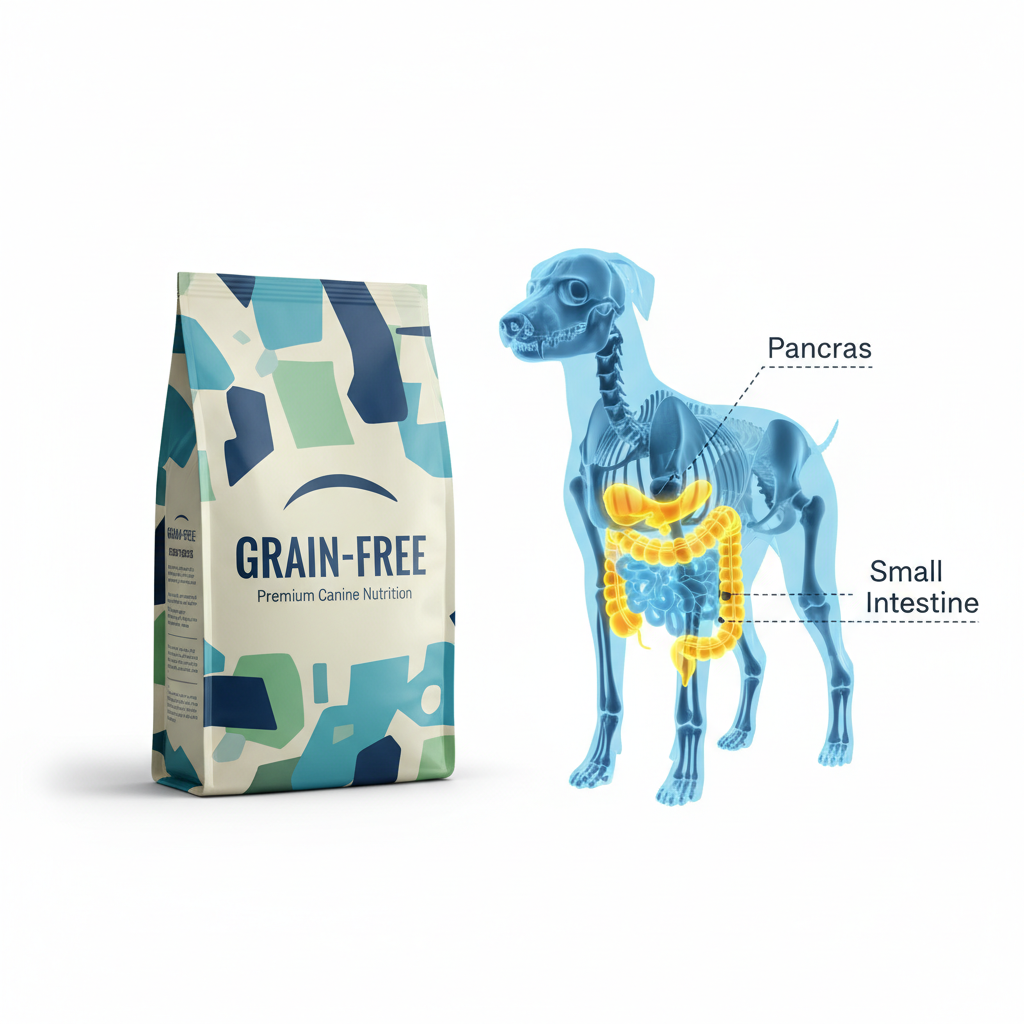
The grain-free movement was built on a simple, powerful, and deeply flawed premise: since wolves don’t eat grains, neither should your dog. Marketers painted a picture of grains like corn, wheat, and soy as cheap, allergy-inducing ‘fillers’ that provided no nutritional value. They positioned their grain-free formulas, packed with exotic-sounding ingredients like sweet potatoes, lentils, and peas, as the premium, ‘ancestral’ alternative.
This was a marketing masterstroke. It preyed on our desire to give our dogs the very best. But it conveniently ignored a few key scientific facts. First, dogs are not wolves. Thousands of years of domestication have occurred alongside humans and their agriculture, leading to genetic adaptations. Studies have shown that domestic dogs have multiple copies of the AMY2B gene, which is crucial for producing amylase, the enzyme that digests starch. Wolves have only two copies; dogs can have up to thirty. They are perfectly equipped to digest carbohydrates.
Second, not all grains are created equal. While it’s true that cheap fillers like corn gluten meal or wheat middlings offer limited nutritional value, lumping them in with nutrient-dense whole grains is a deliberate deception. The industry created a villain (‘grains’) to sell you a hero (‘grain-free’), and the public bought it hook, line, and sinker.
Hacker Tip: The term ‘filler’ is a marketing invention. In a well-formulated diet, every ingredient should serve a purpose, providing energy, fiber, vitamins, or minerals. The real question isn’t ‘grain vs. no grain,’ but ‘nutrient-dense ingredient vs. cheap byproduct.’
The DCM Crisis: What the FDA Investigation Really Uncovered

The Smoking Gun: Legumes, Pulses, and Taurine Blockers
The illusion of grain-free superiority shattered when the FDA began investigating a significant uptick in cases of non-hereditary Dilated Cardiomyopathy (DCM), a disease that weakens and enlarges the heart muscle. The common denominator? The overwhelming majority of affected dogs were eating grain-free diets.
But the investigation revealed a crucial secret: the problem wasn’t the absence of grain. The problem was the presence of what replaced it. To maintain kibble structure and boost protein content on the label without using grains, manufacturers loaded their formulas with massive quantities of legumes and pulses—ingredients like peas, lentils, chickpeas, and potatoes.
The leading hypothesis is that these ingredients, when used as a primary component of the diet, may interfere with the uptake or synthesis of taurine, an essential amino acid for heart health. Even if a food meets the minimum taurine requirements on paper, something about the high concentration of pulse ingredients appears to block its absorption, leading to a deficiency and, ultimately, heart failure in susceptible dogs.
The Deception of Ingredient Splitting
Pet food companies use a tactic called ‘ingredient splitting’ to manipulate their labels. Ingredients are listed by weight. By splitting a single source—like peas—into multiple forms (‘pea protein,’ ‘pea flour,’ ‘yellow peas’), they can push these cheaper ingredients further down the list, making it appear that meat is the more prominent ingredient. A label might read: ‘Chicken, Pea Protein, Lentils, Pea Flour…’ When you add up all the pea-based ingredients, they often outweigh the meat, revealing the food’s true composition.
Insider Secret: Always read the first 5-7 ingredients. If you see a meat meal followed by two or three different pulse ingredients (peas, lentils, potatoes, chickpeas), you are looking at a legume-based food, not a meat-based one. This is the exact formulation profile implicated in the FDA’s DCM investigation.
Ancient Grains: The Nutrient-Dense Alternative
‘Hero Ingredients’: Why Sorghum, Millet, and Quinoa are Superior
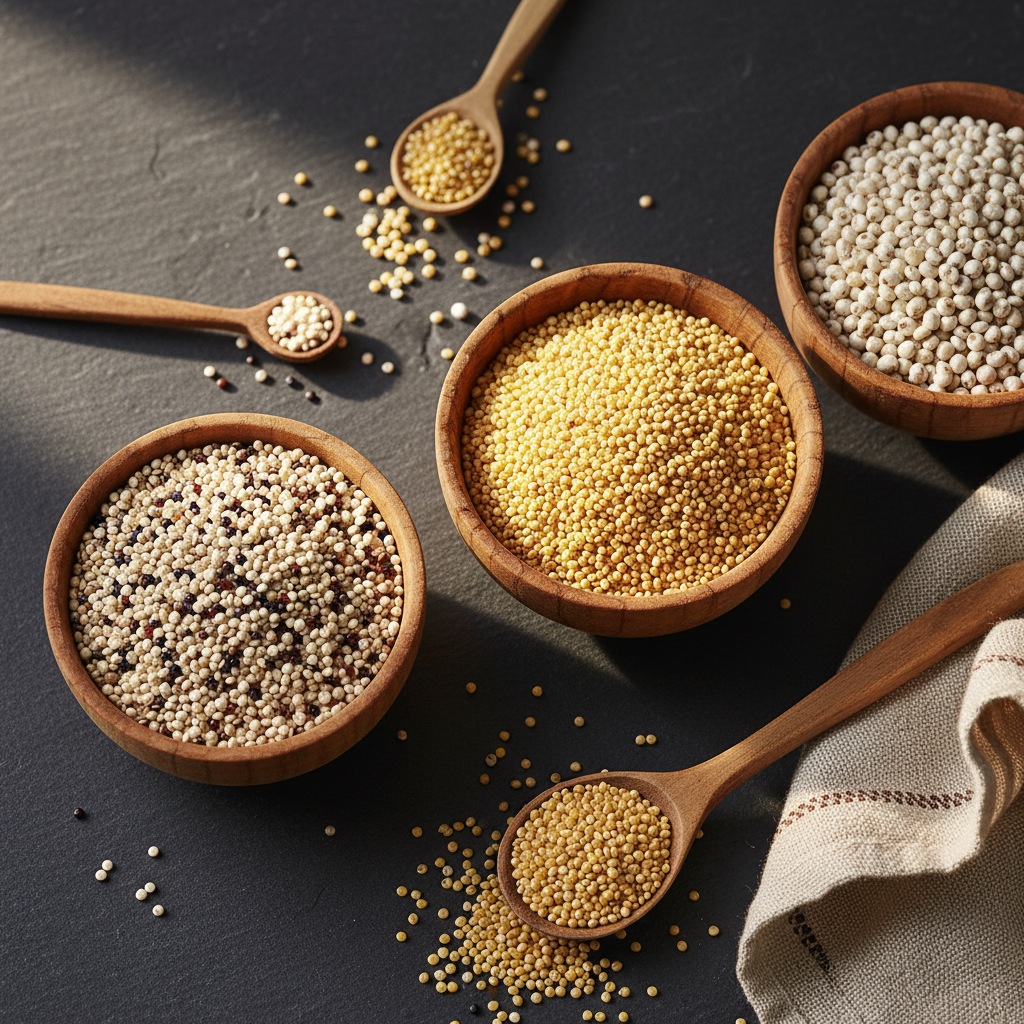
With legume-heavy grain-free foods now carrying a significant risk, savvy owners are turning to the true ancestral solution: ancient grains. These aren’t the cheap, processed grains that gave carbs a bad name. Ancient grains are nutritional powerhouses that have been cultivated in the same form for thousands of years.
Let’s analyze the heroes:
- Sorghum: This gluten-free grain is rich in antioxidants, B vitamins, and minerals like magnesium and iron. It’s a complex carbohydrate, meaning it digests slowly, providing sustained energy without spiking blood sugar.
- Millet: Another gluten-free seed, millet is high in fiber, which aids in digestion, and is a good source of phosphorus and magnesium, crucial for bone health.
- Quinoa: A complete protein, quinoa contains all nine essential amino acids. It’s also packed with fiber, iron, and manganese.
- Oats (Steel-Cut or Rolled): While not technically ‘ancient,’ whole oats are fantastic. They are rich in soluble fiber, which helps regulate glucose levels, and contain a unique antioxidant group called avenanthramides that have anti-inflammatory properties.
Unlike the legume fillers, these grains provide a robust nutritional profile without the associated risk of taurine-uptake interference. They are the smart, safe, and scientifically-backed choice for providing the carbohydrates your dog needs for energy and fiber they need for a healthy gut.
The Label Doesn’t Lie: A Forensic Ingredient Showdown
Putting Theory Into Practice: Analyzing Real-World Formulas
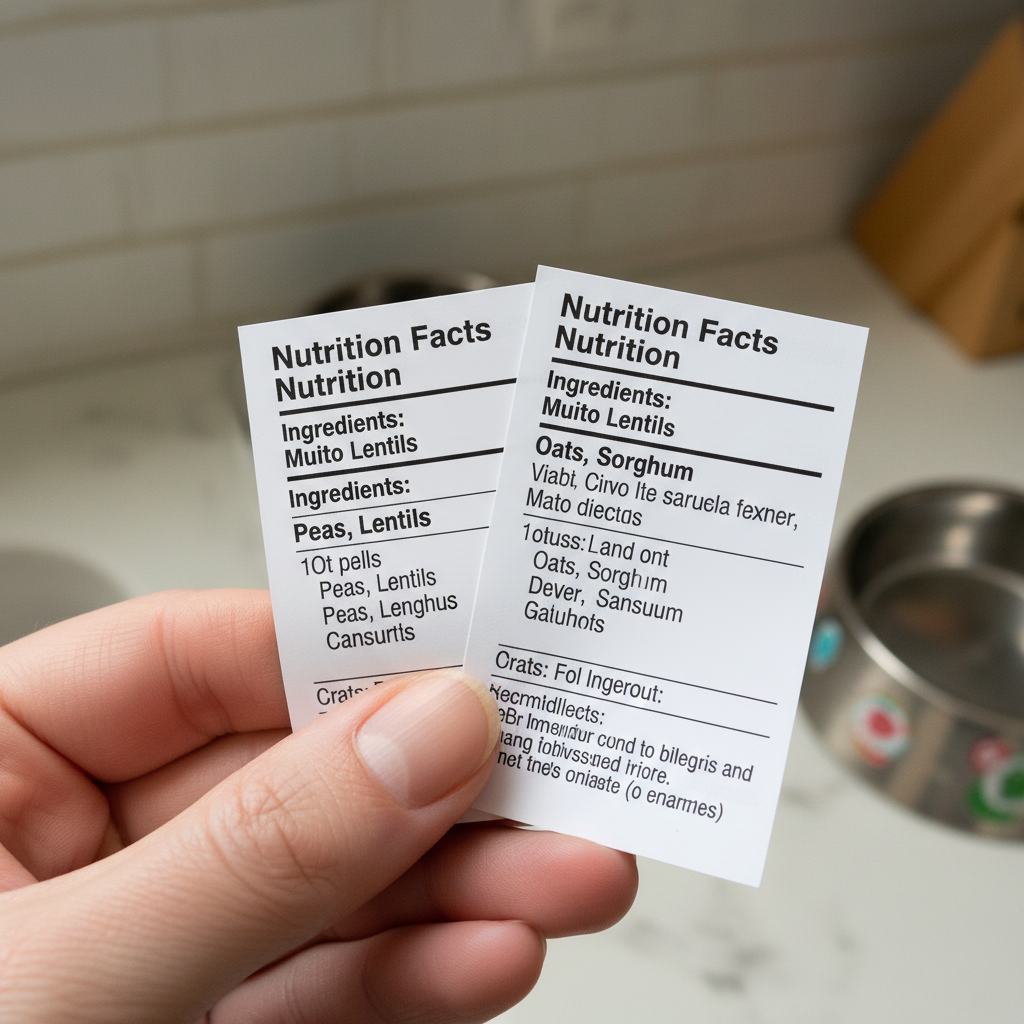
Talk is cheap. Let’s put on our forensic hats and compare two typical ingredient panels. One represents a popular style of grain-free food (‘Brand GF’), and the other a high-quality ancient grain formula (‘Brand AG’).
The ‘First 5’ Truth
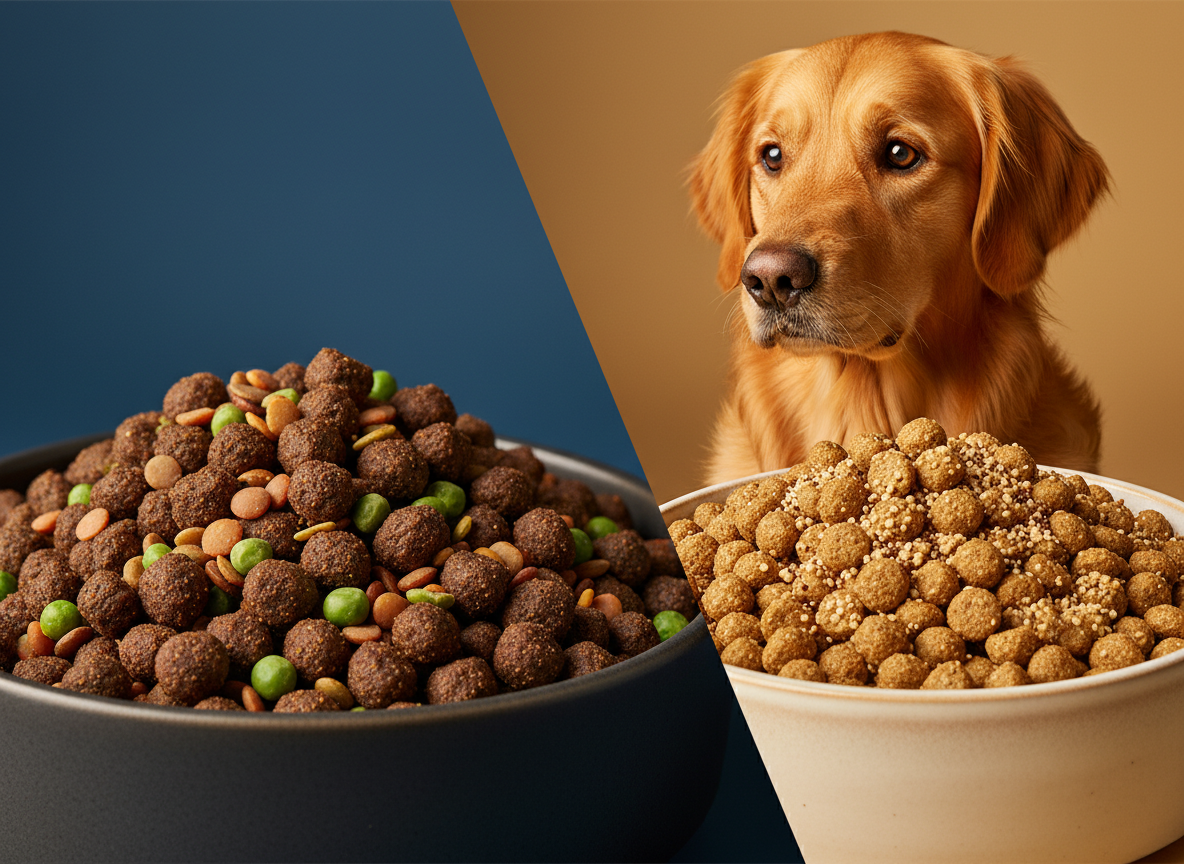
Brand GF First 5 Ingredients: Deboned Chicken, Chicken Meal, Peas, Lentils, Potato Starch.
Analysis: While chicken and chicken meal start strong, they are immediately followed by three separate legume/starch ingredients. This is a classic example of a legume-based food. The combined weight of the peas, lentils, and potato starch likely exceeds the meat content. This is a high-risk DCM profile.
Brand AG First 5 Ingredients: Deboned Lamb, Turkey Meal, Whole Oats, Sorghum, Millet.
Analysis: Two high-quality, named meat meals lead the list, providing a powerful protein base. They are followed by three distinct, nutrient-dense ancient grains. This formula provides carbohydrates for energy and fiber for digestion without relying on the risky pulse ingredients. This is a demonstrably safer profile.
Comparative Breakdown
Here is a direct, no-nonsense comparison of these formulation strategies.
| Attribute | Typical Grain-Free (Legume-Based) | Ancient Grain Formula |
|---|---|---|
| Primary Protein Source | Named Meat + High concentration of plant protein from peas/lentils. | Multiple high-quality named meat meals. |
| Primary Carb Source | Peas, Lentils, Chickpeas, Potatoes | Sorghum, Millet, Oats, Quinoa |
| Associated Health Risk | High. Directly implicated in FDA’s DCM investigation. | Low. No known link to diet-associated DCM. |
| Marketing Angle | ‘Ancestral,’ ‘No Fillers’ | ‘Wholesome,’ ‘Nutrient-Dense,’ ‘Low-Glycemic’ |
| The Hacker’s Verdict | AVOID. The risk is not worth the perceived benefit. | RECOMMENDED. The safer, more nutritionally transparent choice. |
Conclusion
The Final Verdict: Safety Over Hype
The evidence is clear and compelling. The war was never truly ‘Grains vs. Grain-Free.’ It was a battle between safe, effective carbohydrate sources and risky, high-legume formulations that were rushed to market on the back of a brilliant marketing campaign. While not every dog on a grain-free diet will develop DCM, the correlation is too strong for a responsible owner to ignore. Why take the risk when a safer, equally nutritious alternative exists?
Your new mission as a pet owner is to become a Canine Nutrition Hacker yourself. Ignore the flashy words on the front of the bag. Turn it over, and dissect the ingredient panel with the forensic knowledge you now possess. Look for multiple, high-quality meat sources at the top. Scrutinize the carbohydrate sources. If the list is dominated by peas, lentils, and potatoes, put the bag down and walk away. Opt for a formula that proudly includes nutrient-dense ancient grains like sorghum, millet, and oats.
You hold the power to protect your dog’s health. It starts with rejecting marketing hype and embracing nutritional science. Now go hack that label.
Medical Disclaimer: I am a canine nutrition analyst, not a veterinarian. The information in this article is for educational purposes only. Always consult with your veterinarian or a board-certified veterinary nutritionist before making any changes to your dog’s diet, especially if they have a pre-existing health condition.