
Genius Road Trip Dog Food Storage Hacks for Travel
The scene is tragically familiar: you’re two hours into your road trip, and a suspicious smell wafts from the back seat. It’s the expensive, high-protein kibble you bought, now slowly turning rancid in a poorly sealed plastic bag. Or worse, the cooler carrying your dog’s fresh food wasn’t cold enough, and now you’re facing a nutritional and bacterial nightmare. Travel often forces pet owners into a compromise between convenience and quality, but it doesn’t have to be that way.
I am The Canine Nutrition Hacker. I don’t write fluffy pet blogs; I dissect problems with forensic precision. Your dog’s nutrition is an investment in their health, and that investment shouldn’t evaporate the moment you lock your front door. The enemies on the road are oxygen, heat, light, and bacteria—all of which degrade nutrients and can make your dog sick. This guide is your new operational manual. We will delve into elite strategies for storing every type of dog food, ensuring the meal you serve in a hotel room is just as safe and nutritious as the one you serve in your kitchen. Prepare to upgrade your travel game from amateur to professional.
The Pre-Trip Triage: Auditing Your Arsenal
The Pre-Trip Triage: Auditing Your Arsenal
Before a single bag is packed, the mission begins with a critical gear audit. Most pet owners fail here, grabbing the original, flimsy food bag or a random plastic tub. This is a foundational error. The container is not just a vessel; it is your primary defense against nutritional degradation.
Container Forensics: Material Matters
The choice of material directly impacts the freshness and safety of the food. Let’s break down the options with no-nonsense clarity:
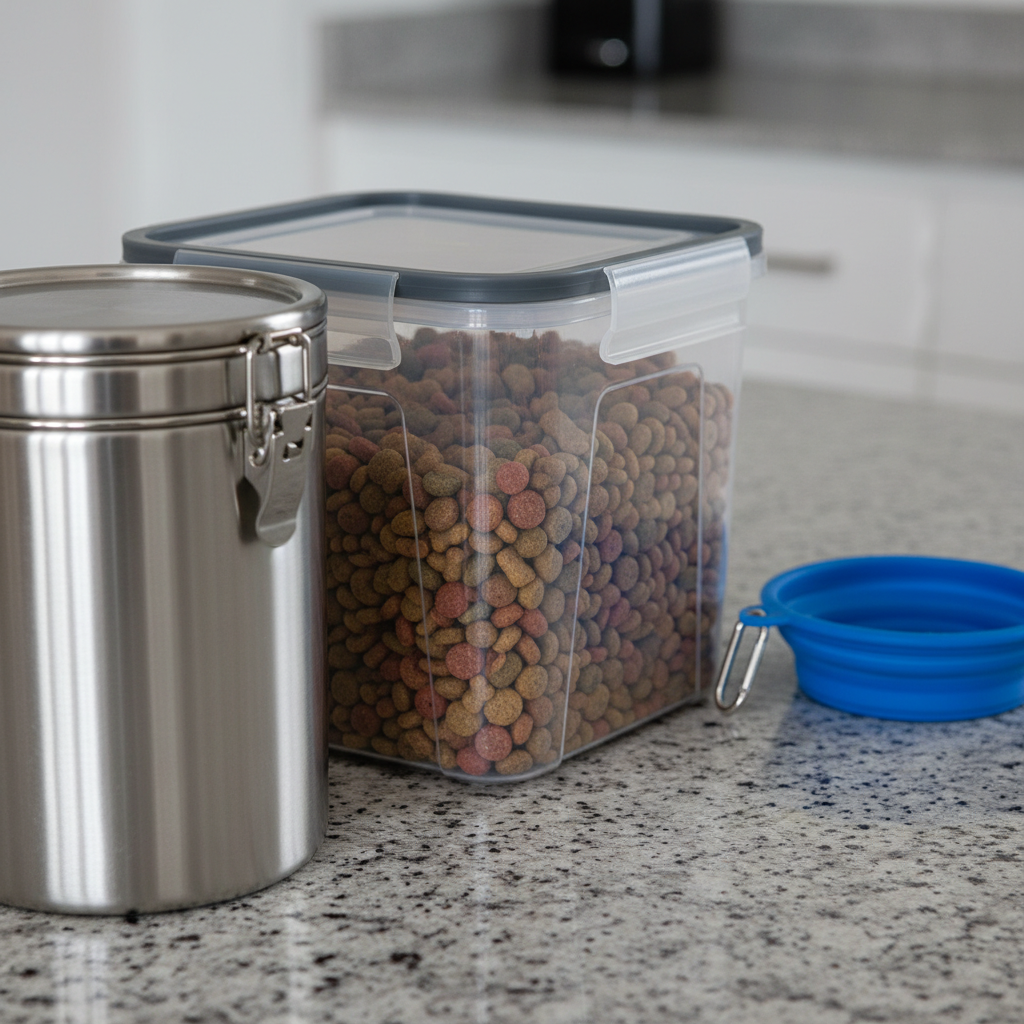
- Food-Grade, BPA-Free Plastic: A common and affordable choice. Look for an airtight seal, typically a silicone gasket and locking clamps. Its main weakness is that it can absorb oils and odors over time and can be scratched, creating micro-crevices where bacteria can hide. It is lightweight and practical for short trips.
- Stainless Steel: The superior choice for long-term freshness. Stainless steel is non-porous, meaning it won’t absorb oils or leach chemicals. It’s incredibly durable, easy to sanitize, and blocks 100% of light, which prevents the breakdown of light-sensitive vitamins. The only drawbacks are higher cost and weight.
- Silicone: Excellent for travel bowls and temporary storage. Collapsible silicone containers are fantastic space-savers. Ensure it’s 100% food-grade silicone with no plastic fillers. Not ideal for long-term storage but perfect for day trips or holding a single meal.
Hacker Tip: Stop using the original dog food bag as your primary storage container, especially on the road. It’s designed for shipping, not for preserving freshness. The lining is thin, the closure is poor, and it offers zero protection against oxygen, moisture, or pests once opened. Oxygen is the enemy of fats and vitamins. Every moment that bag is open, you are losing nutritional value.
Your top priority is an airtight seal. This is non-negotiable. Oxygen is the primary driver of oxidation, which turns healthy fats rancid, destroying their nutritional benefits and creating harmful free radicals. A proper seal also locks out moisture, which can lead to mold and bacterial growth.
| Container Material | Protection Level | Best For | Hacker Verdict |
|---|---|---|---|
| Original Food Bag | Very Low | Nowhere. Ever. | A marketing tool, not a storage solution. Discard. |
| BPA-Free Plastic | Good | Short trips (1-3 days), kibble. | Acceptable if airtight and cleaned meticulously. |
| Stainless Steel | Excellent | Any trip length, all food types (dry). | The professional’s choice. A worthy investment. |
| Silicone | Fair (Temporary) | Serving, holding single meals. | Essential for the travel kit, but not for bulk storage. |
The Kibble Code: Defeating Oxidation and Contamination

The Kibble Code: Defeating Oxidation and Contamination
Dry dog food seems indestructible, but it’s a delicate nutritional matrix. The fats sprayed onto kibble for palatability and energy are highly susceptible to oxidation. When these fats go rancid, they not only lose their nutritional value but can also cause digestive upset, vitamin deficiencies, and even severe health issues over time.
Hack 1: The Decoy Method
Never take the entire large bag of kibble on a trip. Every time you open it, you expose the entire contents to fresh, damaging oxygen. Instead, calculate the exact amount of food needed for your trip, plus a two-day emergency surplus. Transfer only this amount into a smaller, airtight travel container. The main bag stays at home, sealed tightly with as much air removed as possible, and stored in a cool, dark place.
Hack 2: The Vacuum Seal Offensive
For trips longer than a week, or for owners who demand peak freshness, the vacuum sealer is your ultimate weapon. This is how you achieve nutritional lockdown. Pre-portion each meal (or each day’s worth of food) into individual vacuum-seal bags. This removes virtually all oxygen, completely halting the oxidation process. The packets are flat, easy to pack, and guarantee that the last meal of the trip is as fresh as the first.
- Step 1: Use a kitchen scale to weigh out each meal portion precisely.
- Step 2: Place one portion into a vacuum-seal bag.
- Step 3: Use the vacuum sealer to remove all air and create a perfect seal.
- Step 4: Label each packet with the date and meal (e.g., ‘Day 3 – Breakfast’).
Hack 3: The Cooler Fortress
Heat is the accelerator for rancidity. A car’s interior can reach over 120°F (49°C) in an hour on a warm day. Storing kibble in these conditions is like putting it in an oven. Never leave your dog’s food in a hot car. Always store your travel container inside a cooler. It doesn’t even need ice; the insulation alone will protect the food from extreme temperature spikes, preserving the integrity of the fats and vitamins.
Insider Secret: That ‘stale dog food’ smell? It’s often the odor of fats going rancid. If your car or hotel room starts to smell like a kibble factory, you’re not just dealing with an unpleasant odor—you’re smelling nutrient degradation in real-time. This is a red flag for potential digestive upset.
Wet & Fresh Food Logistics: Maintaining the Cold Chain Command
Wet & Fresh Food Logistics: Maintaining the Cold Chain Command
Transporting canned, fresh, or gently cooked dog food elevates the challenge. Here, we are not just fighting oxidation; we are fighting a war against bacteria. The ‘danger zone’ for food is between 40°F and 140°F (4°C and 60°C), where bacteria like Salmonella and Listeria can multiply rapidly. Maintaining an unbroken ‘cold chain’ is your only mission.
Gear Analysis: Your Mobile Refrigerator
Your choice of cooler is critical. A cheap styrofoam box is an invitation for disaster.
- High-Performance Coolers (e.g., Yeti, RTIC): These are investments, not expenses. Their rotomolded construction and superior insulation can hold safe temperatures for days when packed correctly. They are the gold standard for reliability when you’re off-grid.
- Electric Coolers: These plug into your car’s 12V outlet and act as a mini-fridge. They are excellent for maintaining a constant temperature without the need for ice. However, they require power and are not suitable for camping or situations where the car will be off for extended periods.
Hack 1: The Frozen Core Strategy
Leverage your freezer. If you are feeding a homemade or fresh-frozen diet, pack the meals completely frozen. They will act as their own ice packs, thawing slowly over the course of your trip. This maximizes your cooler space and extends its cooling power. Even canned food can be pre-chilled in the refrigerator for 24 hours before packing to give your cooler a head start.
Hack 2: Strategic Packing Protocol
How you pack the cooler is as important as the cooler itself. Don’t just dump everything in.
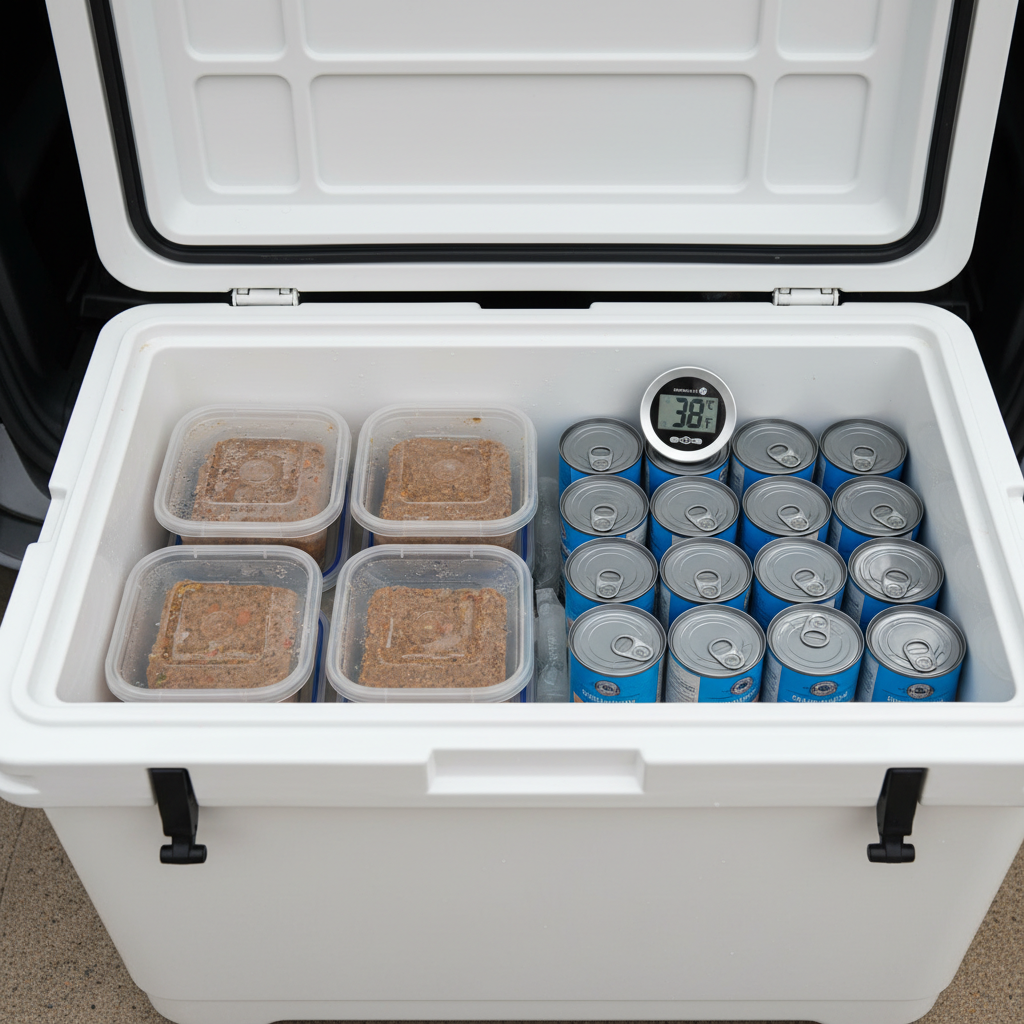
- Use Block Ice or Frozen Gel Packs: They melt far slower than cubed ice. Cubed ice also creates a mess of water that can compromise food packaging.
- Layer for Logic: The food you’ll need last goes on the bottom, on top of the ice packs. The food for the first day goes on the very top for easy access. This minimizes the time the cooler is open.
- Fill Empty Space: Air is the enemy of cold. Fill any empty space in the cooler with towels or extra water bottles to reduce air circulation and improve thermal efficiency.
Hacker Warning: Your dog’s gut is not a science experiment. A single meal of spoiled, bacteria-laden food can derail your entire trip with severe vomiting and diarrhea, leading to dehydration and an emergency vet visit. Do not guess about temperature. Buy a refrigerator thermometer and keep it inside the cooler. Glance at it every time you open the lid. If the temperature climbs above 40°F (4°C), the clock is ticking.
The Raw Feeder’s Road Map: A Zero-Compromise Guide
The Raw Feeder’s Road Map: A Zero-Compromise Guide
Traveling with a raw-fed dog is the highest level of difficulty, requiring meticulous planning and zero compromise on safety. The risk of pathogen cross-contamination is real, but it can be managed with a professional-grade system.
SAFETY DISCLAIMER: Handling raw meat carries inherent risks. Always follow safe food handling protocols. Wash hands, surfaces, and bowls thoroughly. Keep raw food separate from human food. These hacks are for experienced raw feeders.
Hack 1: The Freeze-Dried Advantage
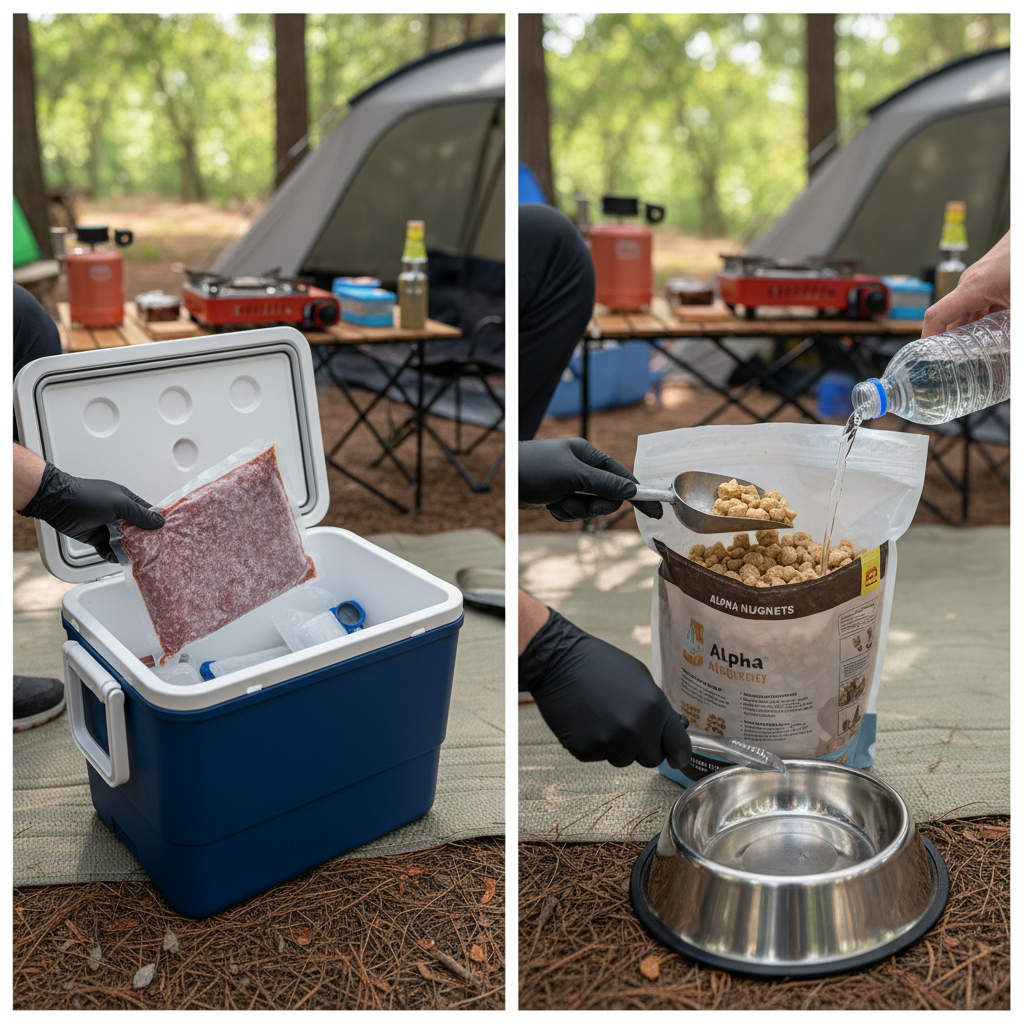
This is the single greatest innovation for the traveling raw feeder. High-quality, freeze-dried raw food offers the nutritional profile of raw in a lightweight, shelf-stable format. You simply rehydrate it with water at your destination. It completely eliminates the need for a cooler and the risks of spoilage. While the cost per meal is higher, the convenience and guaranteed safety are often worth the price for a trip.
| Travel Method | Convenience | Cost | Nutritional Integrity | Verdict |
|---|---|---|---|---|
| Frozen Raw | Low | Low | Excellent (if kept frozen) | Best for short trips with a reliable cooler setup. |
| Freeze-Dried Raw | Excellent | High | Excellent | The ultimate hacker solution for stress-free raw travel. |
Hack 2: The Pre-Portion Freeze & Double Bag
If you are committed to bringing frozen raw, preparation is everything. Weeks before your trip, portion each meal into its own container or, better yet, a vacuum-sealed bag. Freeze them solid. Then, place each sealed portion into a second zip-top freezer bag. This double barrier is crucial to prevent any potential leakage and cross-contamination inside your cooler.
Hack 3: The Dedicated & Sanitized System
Your raw food requires its own dedicated ecosystem.
- Dedicated Cooler: Use one cooler exclusively for your dog’s raw food. Do not mix it with human drinks or food. Label it clearly.
- Dedicated Utensils: Pack a separate set of utensils and a non-porous (e.g., silicone) cutting board if you need to portion anything on the road.
- The Clean-Up Kit: This is non-negotiable. Your kit must contain disposable gloves for handling, paper towels, and a bottle of pet-safe disinfectant spray or wipes. After every meal, the bowl and the preparation area must be thoroughly sanitized.
Hacker Tip: Use your dog’s stainless steel or ceramic food bowls from home. Avoid plastic bowls for raw feeding, as scratches can harbor bacteria that are difficult to remove. If you must use travel bowls, opt for high-quality, single-piece silicone that can be easily washed and sanitized with hot water.
Conclusion
You are now armed with the intelligence and strategies to execute a flawless nutritional plan for your dog on any road trip. The core principle of the Canine Nutrition Hacker is that proactive, precise planning eliminates the need for reactive compromises. Proper food storage is not a matter of convenience; it is a critical component of your dog’s health care, as important as their training or veterinary check-ups.
By investing in the right gear, understanding the enemies of freshness, and implementing these advanced protocols, you protect the financial and nutritional investment you’ve made in your dog’s well-being. You transform travel from a source of potential risk into a seamless adventure. Plan like a pro, pack like a hacker, and enjoy every mile with a healthy, thriving canine co-pilot by your side.