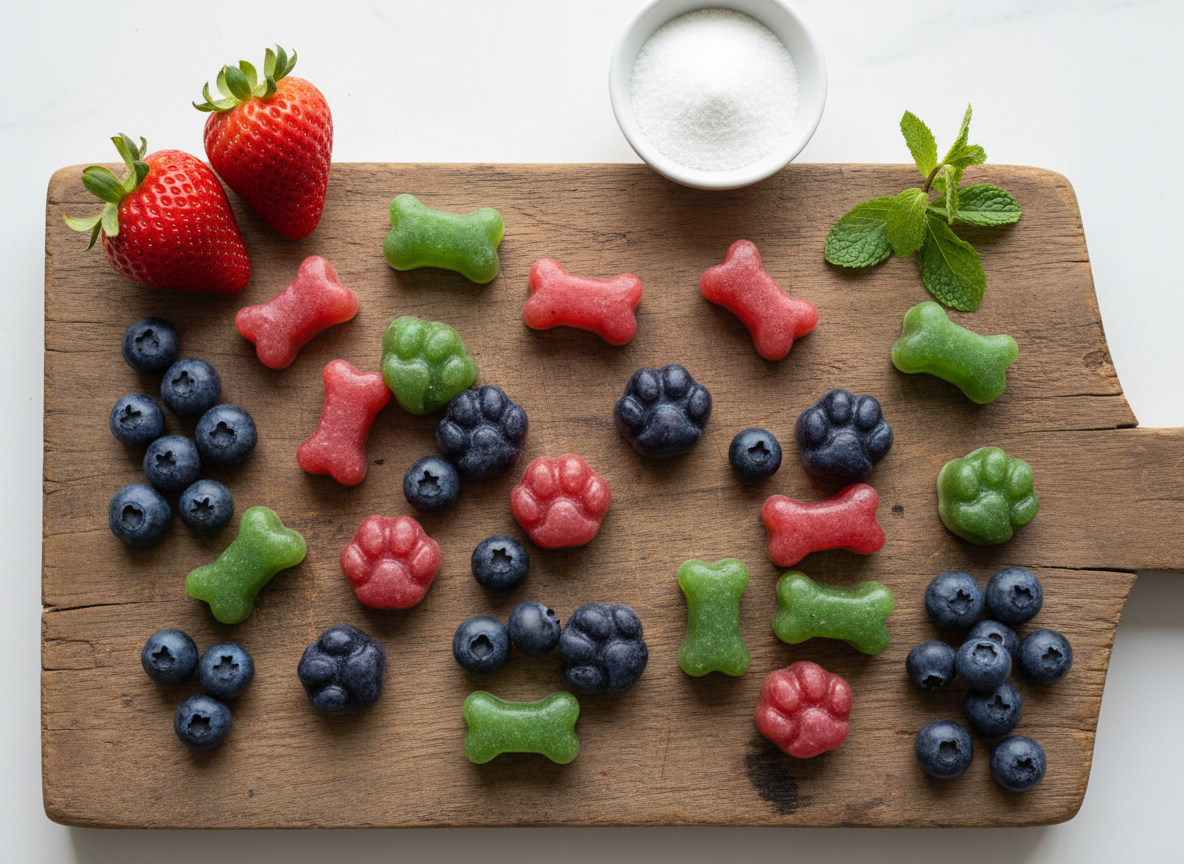
Vegan Gummy Dog Treats: How to Use Agar Agar Instead of Gelatin
Let’s cut to the chase. You’re here because you’re a savvy pet owner who reads labels. You’ve seen the vague ingredients, the artificial colors, and the animal byproducts lurking in most commercial dog treats. One of the most common culprits in gummy treats is gelatin—a substance derived from boiling the skin, tendons, ligaments, and bones of animals. For those seeking a plant-based, cruelty-free, or simply more transparent option for their canine companion, gelatin is a non-starter. This is where the game changes. Enter agar agar, the plant-powered secret weapon that will revolutionize your homemade treat game. It’s a seaweed-derived gelling agent that’s not only effective but also brings its own set of nutritional perks. In this guide, we’re not just sharing a recipe; we’re giving you the blueprint to become a more informed and empowered pet parent. We’ll break down the science, the costs, and the exact steps to create treats that are safer, healthier, and significantly cheaper than anything you can buy in a store.
Before You Cook: A Crucial Safety Disclaimer

Before You Cook: A Crucial Safety Disclaimer
Let me be unequivocally clear: I am The Canine Nutrition Hacker, not a veterinarian. The information and recipes provided here are for supplemental feeding and enrichment purposes only. These treats are not a meal replacement and should not constitute more than 10% of your dog’s daily caloric intake. Every dog is an individual with unique dietary needs, allergies, and health conditions. Before introducing any new food, including these homemade treats, it is imperative to consult with your trusted veterinarian. They can provide guidance based on your dog’s specific health profile. Furthermore, be relentlessly vigilant about ingredients. Many human foods are toxic to dogs. Never use any product containing xylitol (birch sugar), a common sweetener that is extremely poisonous to dogs. Always ensure your fruit and vegetable purees are 100% pure, with no added sugars, salts, or toxic ingredients like grapes, raisins, onions, or garlic. Your dog’s safety is your number one responsibility. Proceed with knowledge and caution.
The Forensic Ingredient Showdown: Agar Agar vs. Gelatin
The Forensic Ingredient Showdown: Agar Agar vs. Gelatin
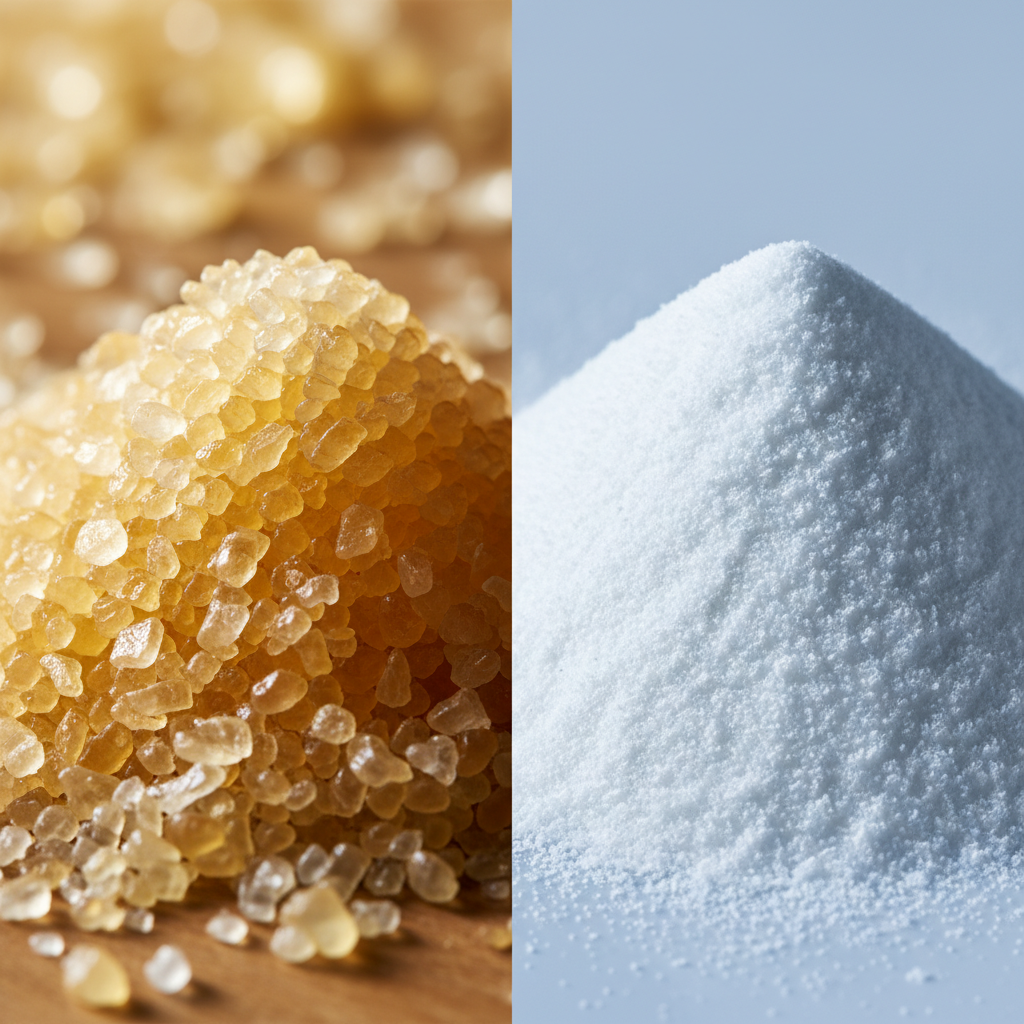
To truly understand why we’re making this switch, you need to analyze the core components like a forensic scientist. On the surface, both gelatin and agar agar create a jiggly, gummy texture. But their origins, properties, and nutritional profiles are worlds apart.
What is Gelatin, Really?
Gelatin is an animal-derived protein obtained by boiling the connective tissues—skin, tendons, ligaments, and bones—of cows and pigs. While it provides collagen, the sourcing can be opaque, and it’s unsuitable for owners seeking plant-based or single-source protein diets for their pets. It requires refrigeration to set and can melt at room temperature, making treats less stable.
The Plant-Powered Alternative: Agar Agar Uncovered
Agar agar (or just ‘agar’) is a vegan gelatin substitute derived from red seaweed. It’s a flavorless, odorless gelling powerhouse that’s been used in Asian cuisine for centuries. From a functional standpoint, it’s superior for our purposes: it sets more firmly than gelatin and, most importantly, it stays solid at room temperature. Nutritionally, it’s primarily composed of fiber, which can aid in digestion and promote feelings of fullness, making it a great low-calorie binder for treats.
| Attribute | Agar Agar | Gelatin |
|---|---|---|
| Source | Red Seaweed (Plant-Based) | Animal Collagen (Bones, Skin) |
| Dietary Type | Vegan, Cruelty-Free | Animal Byproduct |
| Gelling Power | Very Strong (approx. 2x gelatin) | Standard |
| Setting Temperature | Sets at Room Temperature | Requires Refrigeration |
| Melting Point | High (185°F / 85°C) | Low (Body Temperature) |
| Nutritional Profile | High in Fiber, Low Calorie | Protein (Collagen) |
| Verdict | Superior stability, plant-based, suitable for all diets. | Functional, but from opaque animal sources and not heat-stable. |
The Cost Breakdown: Hacking Your Treat Budget
The Cost Breakdown: Hacking Your Treat Budget
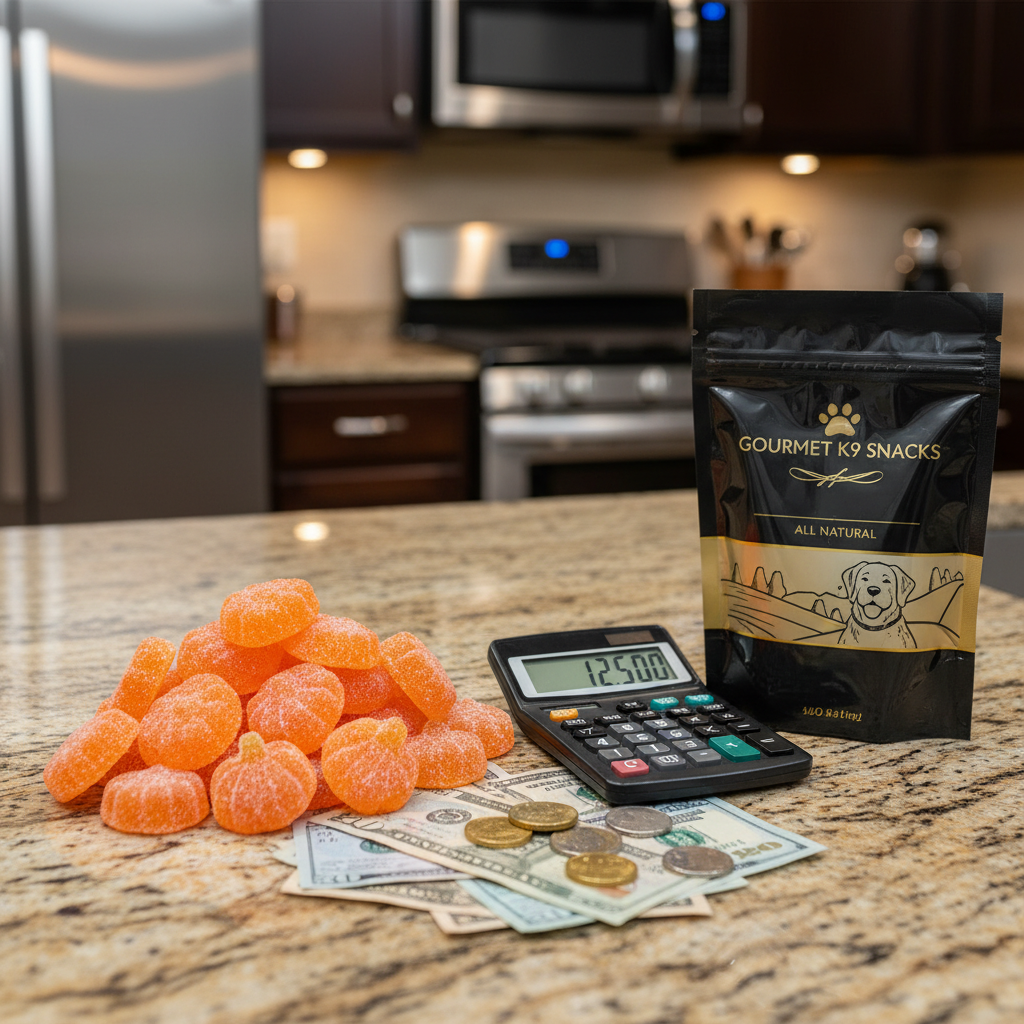
One of the biggest lies of the premium pet food industry is that you have to spend a fortune for quality. By taking control of the ingredients, you’re not just improving nutrition—you’re executing a brilliant financial maneuver. Let’s break down the real cost of making approximately 100 small gummy treats versus buying a comparable ‘premium’ vegan product from a boutique pet store.
| Ingredient / Item | Approximate Cost | Cost Per Batch (~100 Treats) | Notes |
|---|---|---|---|
| Agar Agar Powder (4oz container) | $10.00 | $0.63 | Uses ~2 tsp (0.25 oz) per batch. |
| Organic Pumpkin Puree (15oz can) | $2.50 | $2.50 | Uses one full can (approx. 1.75 cups). |
| Silicone Molds | $12.00 | N/A | One-time purchase, reusable indefinitely. |
| Total DIY Cost (First Batch) | $24.50 | $3.13 (ingredients only) | Includes one-time cost of molds. |
| Total DIY Cost (Subsequent Batches) | N/A | ~$3.13 | Just the cost of consumable ingredients. |
Commercial Brand Comparison
A typical 5oz bag of premium, store-bought vegan gummy treats contains roughly 40-50 treats and costs around $12.00. To get 100 treats, you’d need to buy two bags.
- Store-Bought Cost for 100 Treats: $12.00 x 2 = $24.00
- DIY Cost for 100 Treats: $3.13
Insider Secret: By making these treats at home, you are saving over 85% compared to buying a pre-packaged premium alternative. You’re paying for whole ingredients, not marketing, packaging, and supply chain markups. That’s a true nutrition hack.
The Blueprint: Your Step-by-Step Vegan Gummy Treat Recipe
The Blueprint: Your Step-by-Step Vegan Gummy Treat Recipe
This is the core formula. It’s simple, scalable, and customizable. Follow these steps precisely for a perfect set every time. Remember, accuracy with agar agar is key—it’s a potent ingredient.
Core Ingredients
- 1.5 cups of dog-safe liquid. This can be pure fruit/vegetable puree (like pumpkin or blueberry) mixed with water, or a low-sodium bone broth if you don’t require it to be vegan.
- 2 teaspoons of agar agar powder. Do not use flakes or bars unless you convert the measurement, as the powder is much more concentrated.
The Protocol: Step-by-Step Instructions
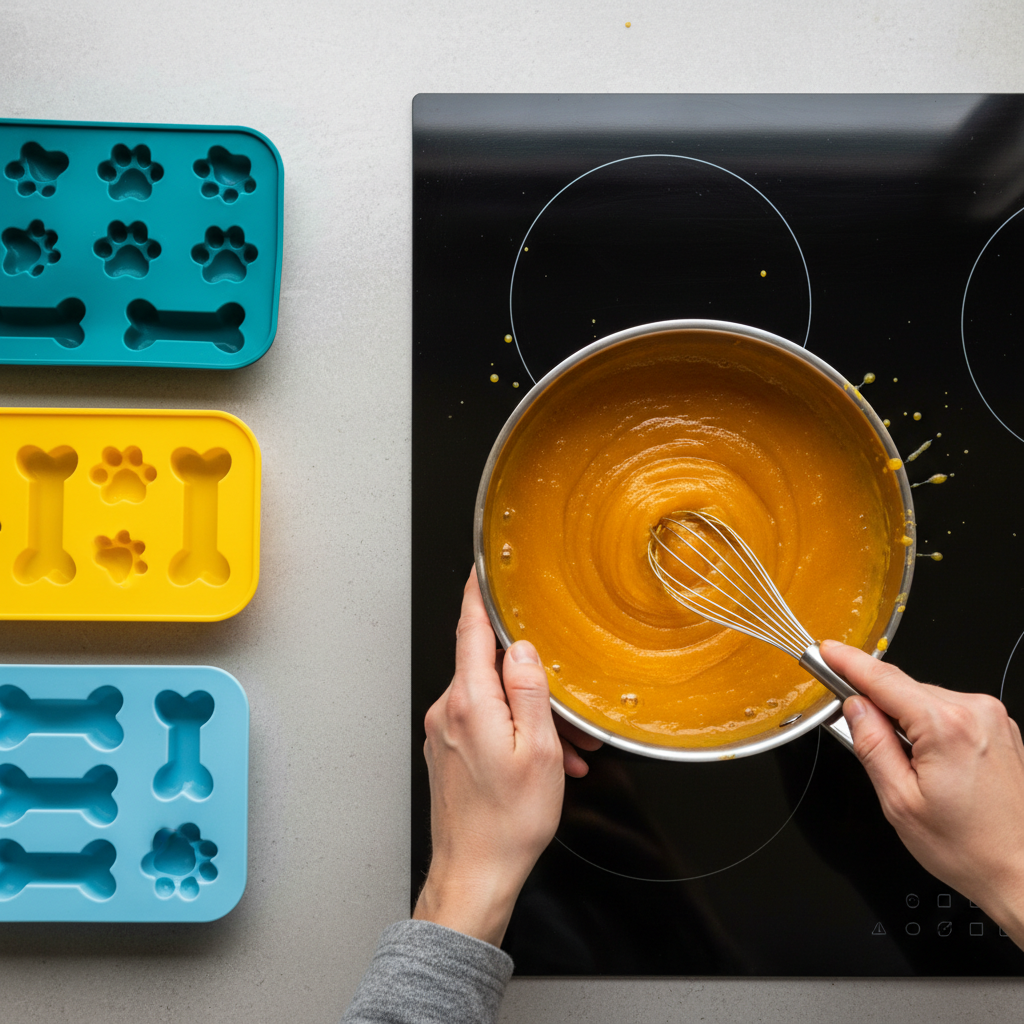
- Preparation: Have your silicone molds clean, dry, and ready on a flat, transportable surface like a baking sheet. This makes moving them to the fridge much easier.
- Combine Ingredients: In a small saucepan, add your 1.5 cups of liquid. Sprinkle the 2 teaspoons of agar agar powder evenly over the top of the liquid. Do not turn on the heat yet.
- Hydrate the Agar: Whisk the agar powder into the cool liquid until it’s fully dissolved. Let it sit for 5 minutes. This step is crucial for preventing clumps and ensuring a smooth final texture.
- Heat the Mixture: Place the saucepan over medium heat. Bring the mixture to a gentle boil, whisking continuously. Once it reaches a boil, reduce the heat to a simmer and continue to whisk for 2-3 minutes to ensure the agar is completely activated.
- Cool Slightly: Remove the pan from the heat. Let it cool for a few minutes. The liquid will still be very hot, but this brief cooling period makes it easier to handle.
- Fill the Molds: Carefully pour or use a dropper/turkey baster to fill your silicone molds with the mixture. Work quickly, as the mixture will begin to set as it cools.
- Set the Gummies: Place the baking sheet with the molds into the refrigerator for at least 30-60 minutes. While agar sets at room temperature, chilling makes the gummies firmer and easier to pop out of the molds.
- De-mold and Serve: Once fully firm, pop the treats out of the molds. They are now ready to serve to your eager dog!
Approved Flavor Hacks (Use 100% Pure Purees)
- Pumpkin Puree (great for digestion)
- Blueberry Puree (rich in antioxidants)
- Strawberry Puree
- Carrot Puree
- Mashed Banana
- Unsweetened Applesauce
CRITICAL WARNING: Ingredients to Blacklist
- Xylitol: Absolutely no products containing this sweetener. It is fatally toxic.
- Grapes & Raisins: Can cause kidney failure.
- Onions & Garlic: Toxic to dogs.
- Chocolate: Highly toxic.
- Avocado: Contains persin, which can be toxic.
Hacker Tip: For a nutritional boost, you can whisk in a teaspoon of finely ground flaxseed or chia seeds into the liquid before heating. This adds healthy omega-3 fatty acids and extra fiber.
The Long Game: Batch Cooking and Storage Protocol
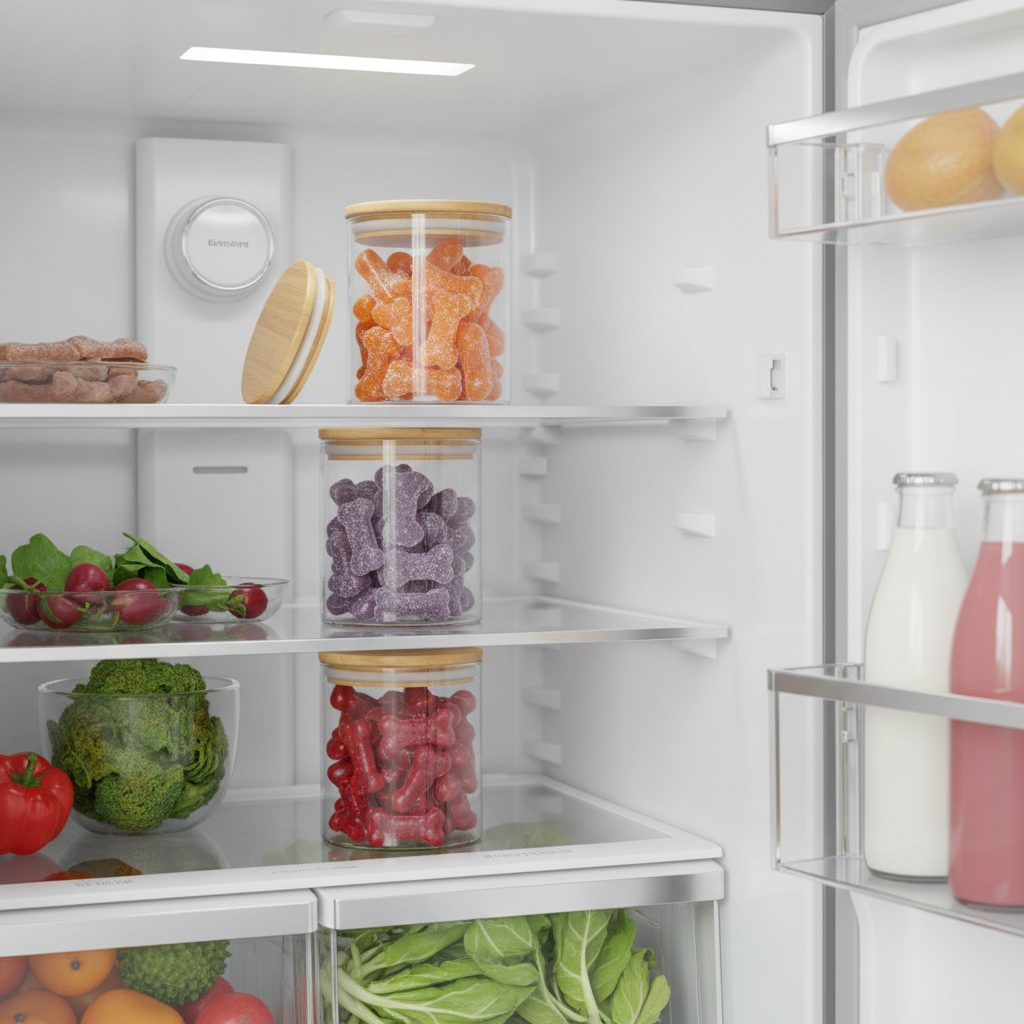
The Long Game: Batch Cooking and Storage Protocol
Your time is valuable. The most efficient way to implement this strategy is to batch cook. Making a double or triple batch of these gummies takes only marginally more time than a single batch and sets you up for weeks. But proper storage is non-negotiable to prevent spoilage and waste.
Refrigeration Protocol
Once de-molded, transfer the gummy treats into an airtight container. They will last in the refrigerator for 7-10 days. Because they are made with fresh ingredients and no preservatives, they will not last as long as commercial treats. If you notice any signs of mold or an off-smell, discard them immediately.
Freezing Protocol
For long-term storage, freezing is your best option. This is the ultimate hack for having treats on demand.
- Pre-Freeze: Place the finished gummies in a single layer on a parchment-lined baking sheet. Make sure they are not touching.
- Flash Freeze: Put the baking sheet in the freezer for 1-2 hours, or until the gummies are frozen solid. This crucial step prevents them from sticking together in a giant clump.
- Transfer to Storage: Once frozen, transfer the individual gummies into a freezer-safe bag or airtight container. Label it with the date and flavor.
- Storage Duration: They will maintain excellent quality in the freezer for up to 3 months.
Insider Secret: To serve from frozen, you can either give the frozen gummy directly to your dog as a cool, crunchy treat (perfect for summer or teething puppies), or you can let them thaw in the refrigerator for an hour to return them to their soft, gummy texture. Do not microwave them, as this will melt the agar and ruin the treat.
Conclusion
You now possess the knowledge and the formula to completely disrupt your dog’s treat routine. By switching from questionable, animal-based gelatin to clean, plant-powered agar agar, you’ve done more than just learn a new recipe. You have taken a definitive step toward nutritional sovereignty. You control the ingredients, you control the quality, and you control the cost. No more deciphering confusing labels or paying exorbitant prices for fancy packaging. You have hacked the system. Welcome to the inner circle of informed dog owners who refuse to settle for the industry standard. Go forth, cook with confidence, and watch your dog enjoy the fresh, healthy, and delicious rewards of your new expertise.