
Cod Skin Rolls: The Crunchy Omega-3 Boost Your Dog Needs
Walk down any pet food aisle and you’re bombarded with a cacophony of colorful bags promising dental health, shiny coats, and boundless energy. But turn those bags over. The ingredient lists often read like a chemical engineering textbook: glycerin, sorbitol, artificial flavors, and a litany of unpronounceable preservatives. As The Canine Nutrition Hacker, my job is to cut through the marketing noise and expose what you’re *really* giving your dog. Today, we’re putting one of nature’s simplest and most powerful supplements under the microscope: the cod skin roll.
This isn’t just another treat. It’s a single-ingredient powerhouse packed with bioavailable Omega-3 fatty acids, collagen, and a satisfying crunch that aids in dental hygiene. It’s the antithesis of the over-processed, filler-laden ‘junk food’ that dominates the market. We will deconstruct its nutritional profile, compare it forensically to its commercial competitors, and provide a no-nonsense guide to using it effectively.
Medical Disclaimer: I am a canine nutrition analyst, not a veterinarian. The information in this article is for educational purposes only. Before introducing any new food, treat, or supplement into your dog’s diet, it is imperative to consult with your trusted veterinarian to ensure it is appropriate for your dog’s specific health needs, age, and condition.
Deconstructing the Hype: What Exactly Are Cod Skin Rolls?

At its core, a high-quality cod skin roll is exactly what it sounds like: the skin of a cod, rolled up, and dehydrated. That’s it. There is no complex formula, no proprietary blend, and no list of 30+ ingredients. This elegant simplicity is its greatest strength.
The Power of Dehydration
The process used to create these treats is critical. Proper dehydration is a low-and-slow method of removing moisture, which concentrates the nutrients without destroying them through high-heat cooking. This means the delicate Omega-3 fatty acids (EPA and DHA), proteins, and collagen remain intact and bioavailable for your dog. It’s a stark contrast to many commercial treats that are extruded or baked at high temperatures, which can degrade sensitive nutrients and create harmful byproducts.
Single-Ingredient Integrity
In a world of ‘chicken-flavored’ treats that contain more grain than poultry, the single-ingredient nature of cod skin is a massive advantage for pet owners, especially those dealing with allergies or sensitivities. With a cod skin roll, you eliminate the guesswork. There is no hidden soy, corn, wheat, or artificial additives that could trigger an adverse reaction. This purity allows you to provide a high-value chew without the risk of introducing common allergens. It’s clean, simple, and transparent nutrition.
Insider Secret: When sourcing cod skins, look for brands that specify ‘wild-caught’ and ‘sustainably sourced,’ preferably from cold waters like the North Atlantic. These fish typically have a higher concentration of Omega-3s and a lower risk of contaminants compared to farm-raised alternatives.
The Omega-3 Powerhouse: Unpacking the Nutritional Payoff
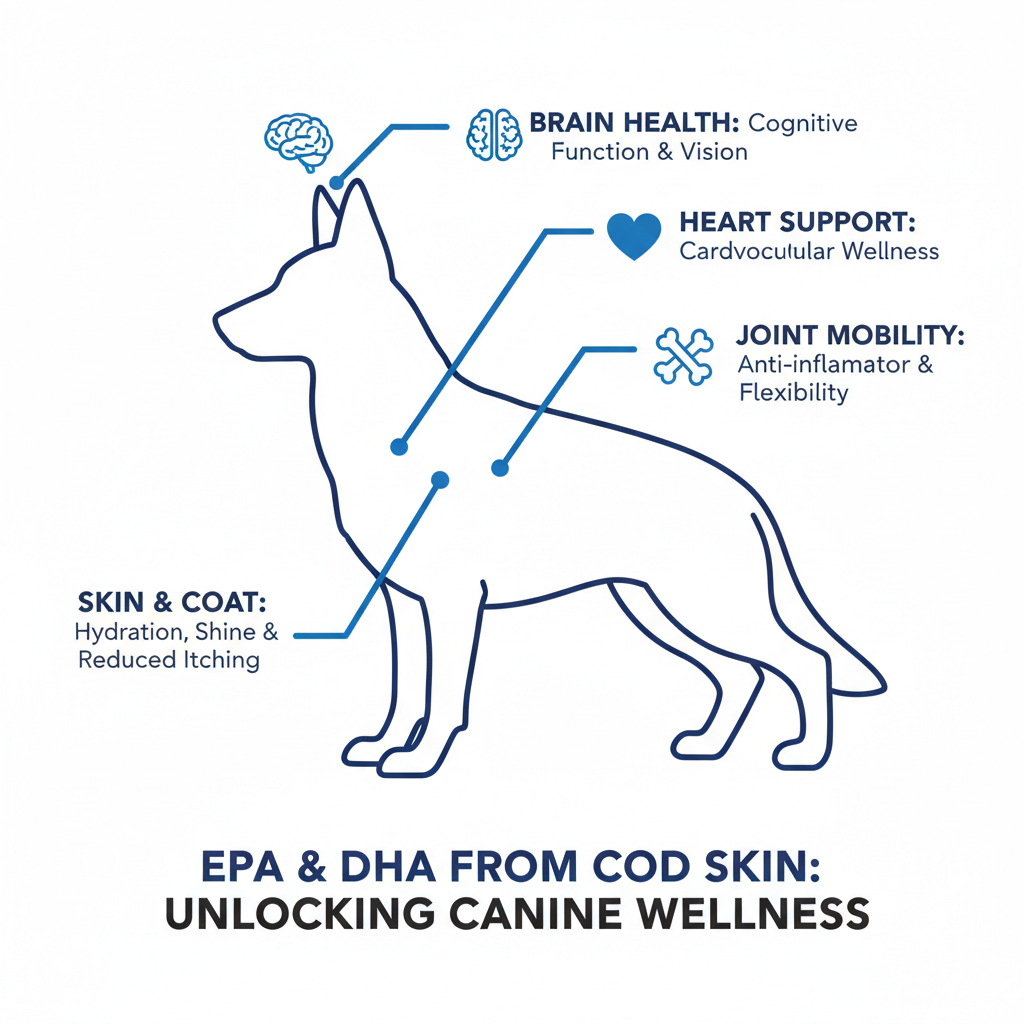
The primary reason cod skin rolls have gained a following among informed pet owners is their dense concentration of Omega-3 fatty acids. These are not just buzzwords; they are essential fats that a dog’s body cannot produce efficiently on its own. They must be obtained through diet, and cod skin is one of the most direct sources available.
The Critical Roles of EPA and DHA
The two most beneficial Omega-3s for dogs are eicosapentaenoic acid (EPA) and docosahexaenoic acid (DHA). They are cellular-level workers that provide profound benefits:
- Anti-Inflammatory Action: EPA is a natural anti-inflammatory. It can help manage conditions rooted in inflammation, such as arthritis, reducing joint pain and improving mobility in senior dogs or active breeds.
- Skin & Coat Health: Omega-3s are vital for a healthy skin barrier. They help reduce dryness, flakiness, and itching associated with allergies, leading to a stronger, shinier, and more resilient coat.
- Cognitive Function: DHA is a primary structural component of the brain and retina. Supplementing with DHA is crucial for puppy brain development and can help support cognitive function and slow mental decline in aging dogs.
- Cardiovascular Support: These fatty acids have been shown to support heart health by maintaining healthy blood pressure and triglyceride levels.
Beyond Omegas: The Collagen Connection
Fish skin is also a rich, natural source of Type I collagen. While many owners are now buying expensive collagen powders, cod skins provide it in its whole-food form. This protein is the building block for skin, tendons, ligaments, and bones. Providing a natural source of collagen can support joint integrity, improve skin elasticity, and contribute to overall connective tissue health, making it an excellent chew for dogs of all ages.
More Than a Treat: A Dental Health Secret Weapon

While the internal health benefits are immense, the external benefits for dental hygiene cannot be overstated. The very structure of a dried cod skin roll makes it a formidable tool against plaque and tartar.
When a dog chews on a cod skin roll, the tough, abrasive texture works mechanically to scrape away plaque buildup from the surface of the teeth, particularly the molars. Unlike starchy ‘dental’ biscuits that can turn to sugar-like paste in the mouth, cod skin doesn’t contribute to decay. Its fibrous nature requires significant gnawing, which stimulates saliva production. Saliva is the mouth’s natural defense mechanism, containing enzymes that help break down food particles and reduce oral bacteria.
Hacker Tip: For maximum dental benefit, don’t treat cod skin rolls like a quick snack. Give it to your dog in a calm environment where they will lie down and chew on it for 5-10 minutes. This extended gnawing time is what allows the treat to perform its plaque-scraping function effectively. It’s a perfect ‘cool down’ tool after a long walk or training session.
Using cod skin rolls can significantly reduce the frequency of professional dental cleanings, which require anesthesia and can be both costly and risky. It’s a proactive, natural approach to maintaining oral health between vet visits.
Forensic Label Analysis: Cod Skins vs. Conventional ‘Dental’ Chews
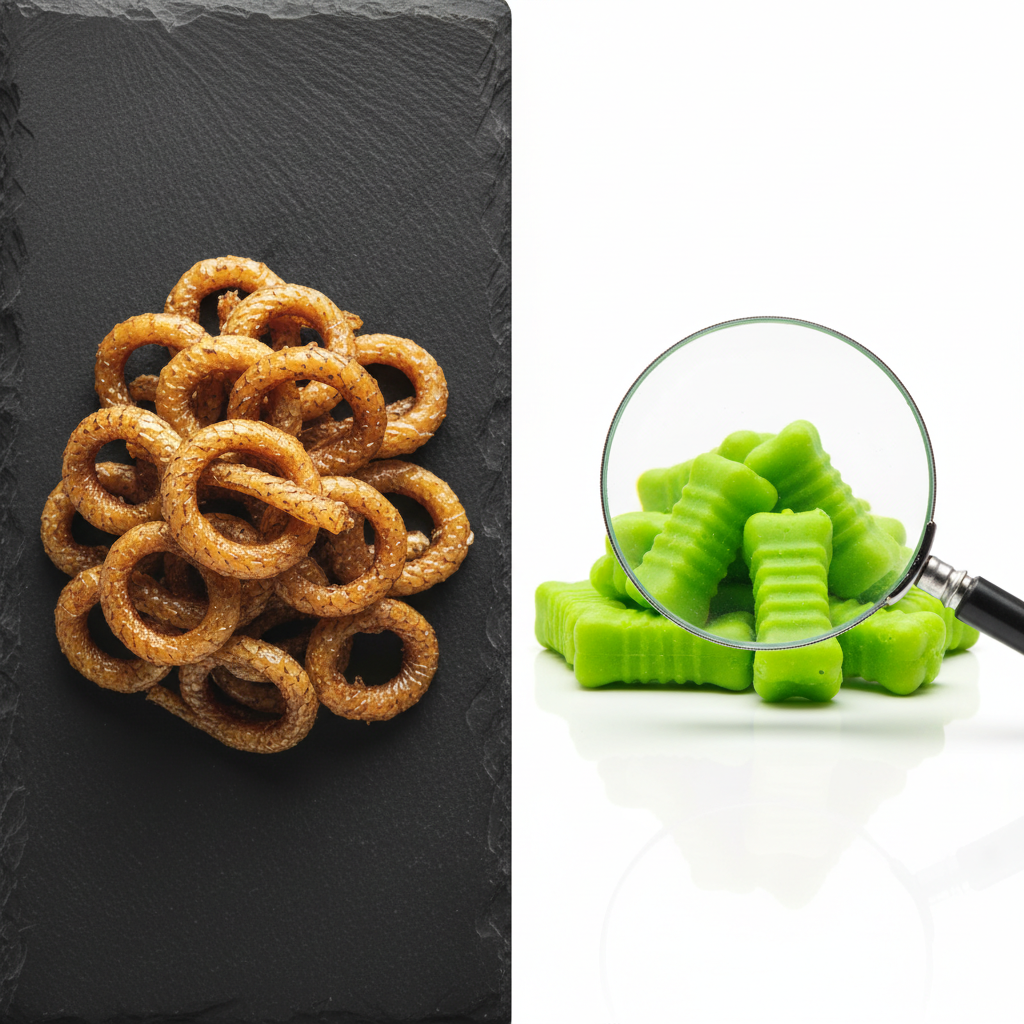
To truly understand the value of cod skin, we must compare it directly to a typical mass-market dental chew. Let’s put them side-by-side in a no-holds-barred comparison. The difference is not just noticeable; it’s staggering.
| Feature | Single-Ingredient Cod Skin Roll | Typical Mass-Market Dental Chew |
|---|---|---|
| Primary Ingredient | Cod Skin | Wheat Flour, Rice Flour, or Corn Starch |
| Protein Source | High-quality, bioavailable marine protein and collagen. | Often low-quality sources like chicken meal or plant-based proteins (e.g., wheat gluten). |
| Key Functional Nutrient | Omega-3 Fatty Acids (EPA/DHA) | Often none; relies solely on mechanical shape. |
| Fillers & Binders | None. The ingredient is the product. | Glycerin, gelatin, powdered cellulose. These add texture and bulk but offer little nutritional value. |
| Additives & Preservatives | None. Dehydration is the preservation method. | Artificial flavors (‘bacon flavor’), artificial colors (Green #3, Yellow #5), chemical preservatives (e.g., potassium sorbate). |
| Allergen Potential | Extremely low. Ideal for dogs with poultry or grain sensitivities. | High. Contains common allergens like wheat, corn, and sometimes soy or chicken. |
| Verdict | A nutritionally functional, whole-food chew that cleans teeth and delivers powerful health benefits. | A highly processed, starch-based product designed for texture, often laden with fillers and artificial ingredients. |
As the table clearly shows, you are paying for marketing and shape with many conventional treats. With cod skin, you are paying for pure, unadulterated nutrition. The choice for a discerning owner is obvious.
Hacker’s Guide: Safely Incorporating Cod Skin Rolls into Your Diet

Even the best treats need to be given correctly. Integrating cod skin rolls into your dog’s diet is simple, but following a few key protocols ensures safety and maximum benefit.
Choosing a Quality Product
Not all cod skins are created equal. Scrutinize the source. Look for brands that are transparent about their sourcing (e.g., ‘Wild-Caught Icelandic Cod’). The package should have only one ingredient: cod skin. Avoid any products with added salt, preservatives, or flavorings. The rolls should be hard and dry, not greasy or overly pliable.
Serving Size and Frequency
Cod skin rolls are nutrient-dense treats, not meal replacements. Moderation is key to prevent adding excessive calories to your dog’s diet.
- Small Dogs (under 25 lbs): Half a roll or one small stick, 2-3 times per week.
- Medium Dogs (25-60 lbs): One full roll, 3-4 times per week.
- Large Dogs (over 60 lbs): One to two rolls, 3-5 times per week.
Always adjust based on your dog’s activity level and total caloric intake. If you introduce cod skin rolls, you may need to slightly reduce their main meal portion to maintain a healthy weight.
Important Warning: Supervise All Chewing
Like any chew treat, cod skin rolls can pose a choking hazard. Never leave your dog unattended with a chew. Dogs, especially aggressive chewers, can break off large pieces. It is critical to supervise them and remove the treat once it becomes small enough to be swallowed whole. For ‘gulpers,’ consider holding one end of the roll while they chew the other to force them to slow down.
Conclusion
In the complex world of canine nutrition, simplicity is often the ultimate sophistication. Cod skin rolls are a testament to this principle. They are not a gimmick. They are a potent, single-ingredient tool that delivers on multiple fronts: providing essential Omega-3 fatty acids for systemic health, supplying collagen for joint and skin support, and offering a mechanical cleaning action for better dental hygiene. By swapping out a processed, filler-laden commercial chew for a simple cod skin roll, you are making a significant upgrade to your dog’s nutritional intake and overall well-being.
You, the pet owner, are the gatekeeper of your dog’s health. Your power lies in your ability to read a label, question marketing claims, and choose foods and treats based on nutritional merit, not flashy packaging. The cod skin roll is a prime example of a ‘hacker’s choice’—an uncomplicated, high-impact item that delivers real results. As always, discuss with your veterinarian, but be empowered by the knowledge that superior nutrition doesn’t have to be complicated.